August has a bad reputation among seasoned travellers: the highest prices of the year, packed beaches and +40°C where June offered +28°C. All of that is true — but only half the story. The problem isn't that August is bad; it's that most people go to the same places. While the queue for Dubrovnik stretches around the block, millions of wildebeest are crossing the Mara River in Kenya, Zanzibar is enjoying its finest weather of the year, and on the Azores and Madeira August is the most reliable month there is. The question isn't «should I travel in August» — it's «where should I go so that August works in my favour».
Three strategies for August 2026
- The classics, done smart. Turkey, Greece, Bulgaria and Albania still deliver in August — if you book 8–12 weeks ahead and know which resorts handle peak season better than others.
- Europe without the scorch. The Canary Islands, Madeira and Iceland offer +25–27°C instead of +38°C — summer without fighting the heat.
- Exotic destinations at their seasonal best. In August the southern hemisphere is in its «winter»: dry season on Bali and Zanzibar, the Great Migration in Kenya, whale season in Mauritius. For these destinations, August isn't a compromise — it's the best possible choice.
Quick pick:
- Sea ≥27°C and all inclusive → Turkey, Greece
- Budget under 3,500 zł for two → Bulgaria, Albania
- Summer without the heat → Canary Islands, Madeira, Iceland
- Sea + mountains in one trip → Georgia, Madeira
- Exotic at its seasonal peak → Bali, Zanzibar, Mauritius
- Trip of a lifetime → Kenya: safari + ocean
The Sea Nearby: Classics and New Names
Four destinations within 3.5 hours of Warsaw. Two you know well — and two that in 2026 are increasingly challenging the classics on value for money.
Turkey
«Hot, crowded, expensive — and still works better than anywhere else»
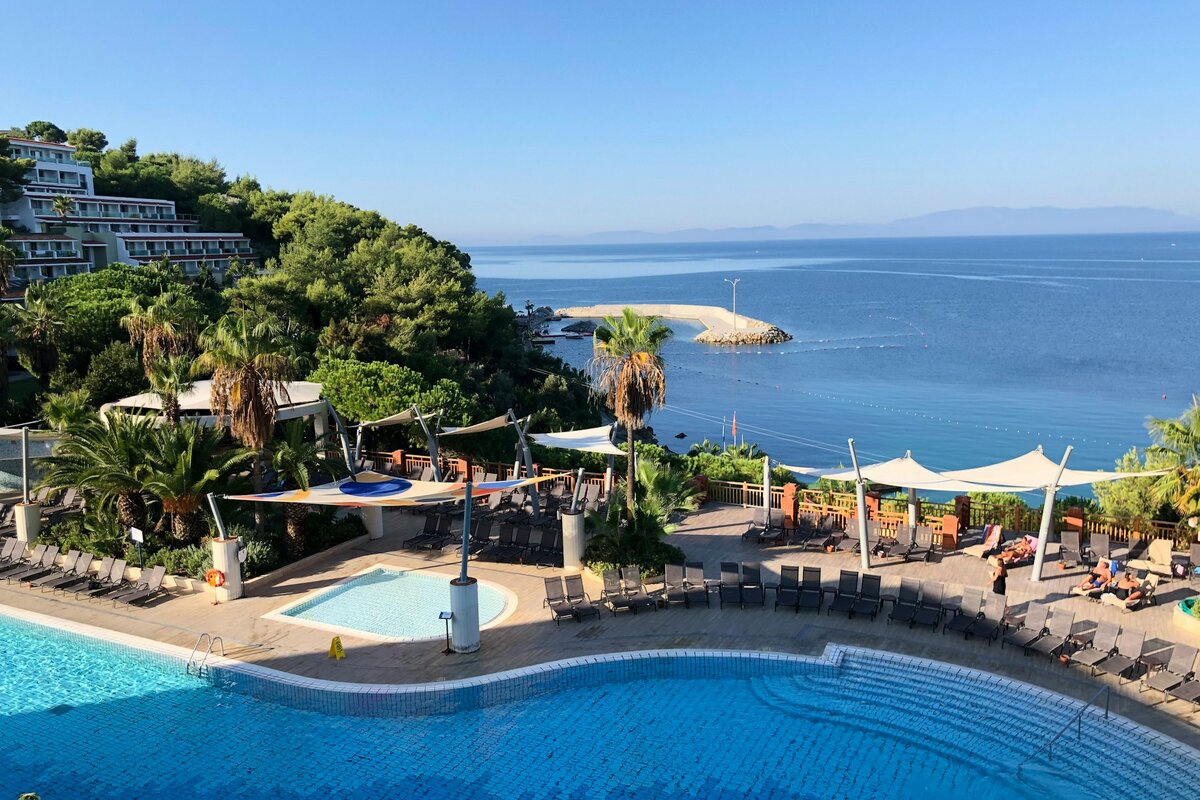
No destination handles the August peak as confidently as the Turkish Riviera. The infrastructure here is built for maximum occupancy: even with hotels at capacity there are no buffet queues, the entertainment programmes run at full throttle, and the beach zones have room to spare. Yes, Antalya hits +34–36°C, but the entire hotel experience is designed around it: air-conditioned lobbies, shaded pools, evening programmes once the heat breaks. The sea is heated to +28–29°C — you can swim at dawn or at midnight. The Aegean coast (Bodrum, Marmaris, Fethiye) runs 3–4 degrees cooler than the Mediterranean side in August — a sensible pick for anyone who struggles with intense heat.
| Resort / region | Air (day) | Sea | Sunshine (hrs/day) |
|---|---|---|---|
| Antalya / Belek / Side | +33–36°C | +28–29°C | 12 |
| Alanya | +33–36°C | +28–29°C | 12 |
| Bodrum / Marmaris | +30–33°C | +26–27°C | 11 |
| Fethiye / Ölüdeniz | +31–34°C | +27–28°C | 11 |
Package 7 nights / 2 people: 5,000–9,000 zł (all inclusive 5*) — peak annual pricing
When to book: 8–12 weeks ahead; last minute barely works in August — availability is scarce
Insider tip: Tuesday–Thursday departures run 10–15% cheaper than Saturdays; the second half of August is cheaper than the first
Who it suits
Families tied to the school calendar, and anyone who needs a guarantee: warm sea, well-oiled service, a 3.5-hour direct flight. Not recommended for those who struggle above +33°C — consider the Aegean coast or wait for September.
Worth doing
- Go white-water rafting in the Köprülü Canyon near Antalya — in August it beats any pool for escaping the heat.
- Take the cable car up Tahtalı (2,365 m) from Kemer — it's 12–15 degrees cooler at the top, with views over the entire coastline.
- Book a sunset cruise from Ölüdeniz — the water feels like soup at midday and turns perfect by evening.
- Visit the night market in Side — the stalls and street food come alive after 8 pm once the heat eases.
Entering Turkey
- Polish and EU citizens: visa-free entry up to 90 days
- UK citizens: visa-free entry up to 90 days
- Ukrainian citizens: visa-free entry up to 90 days (biometric passport)
Greece
«Peak season with all its pros and cons — plus one wind you need to know about»
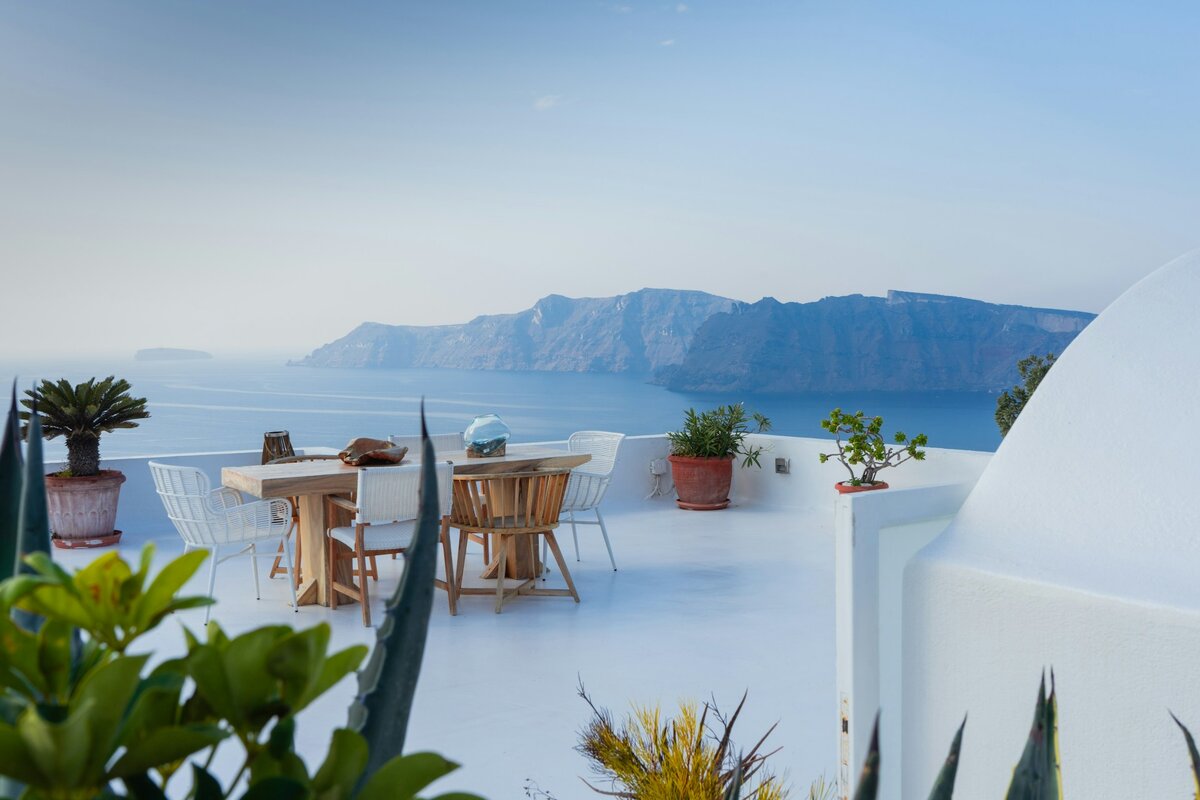
August in Greece is a month of contrasts. On one hand — the warmest sea of the year (+25–27°C), every ferry line and taverna in full operation, festivals on every island. On the other — the year's highest prices and the meltemi: a dry northern wind that batters the Cyclades (Santorini, Mykonos, Paros) through July and August with gusts up to force 7–8. It cancels ferries and sends sand flying on exposed beaches. The practical takeaway: in August, choose Crete, Rhodes or the Ionian islands (Corfu, Zakynthos, Kefalonia) — the meltemi barely touches them. Direct flights from Warsaw, Kraków and Katowice — from 3 hours.
| Resort / region | Air (day) | Sea | Sunshine (hrs/day) |
|---|---|---|---|
| Crete | +28–31°C | +25–26°C | 12 |
| Rhodes / Kos | +29–32°C | +25–26°C | 12 |
| Corfu / Zakynthos / Kefalonia | +29–32°C | +25–26°C | 11 |
| Santorini / Mykonos (Cyclades) | +27–29°C | +24–25°C | 12 (windy!) |
Package 7 nights / 2 people: 5,500–11,000 zł (Crete, Rhodes); Santorini in August — from 9,000 zł, early booking only
The meltemi: if the Cyclades are non-negotiable, pick hotels on the southern, leeward shores of the islands
15 August — Assumption Day: Greece's biggest summer holiday; ferries and hotels around this date sell out months ahead
Who it suits
Anyone who wants an island with history, tavernas and a genuinely warm sea — and is willing to pay peak-season rates. Not recommended: Santorini and Mykonos specifically in August — crowds, wind and double prices, when the same Greece on Crete costs half as much.
Worth doing
- Catch an August panigiri — a village festival with live music and shared tables; the schedule is posted on every square.
- Take a day trip to a small island without an airport (Symi from Rhodes, Gramvousa from Crete) — the crowds stay on the «big» islands.
- Get to the beach by 8 am — even famous Elafonisi and Balos stay pleasantly empty until 11.
- Book your waterfront taverna table for sunset in advance — in August, «just showing up» no longer works.
Entering Greece
- Polish and EU citizens: free movement — Greece is in the EU and Schengen area
- UK citizens: visa-free entry up to 90 days in any 180-day period
- Ukrainian citizens: visa-free entry up to 90 days (biometric passport)
Bulgaria
«An hour and a half in the air — and Europe's most affordable seaside in peak season»
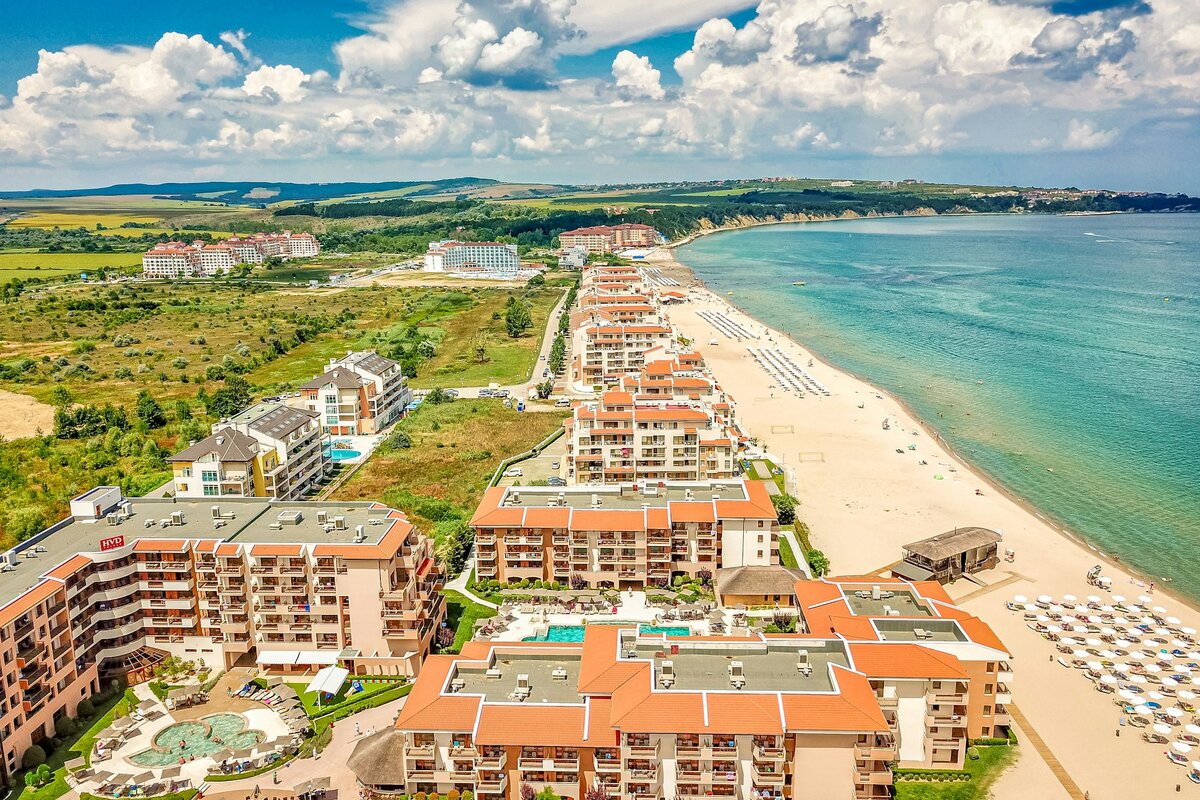
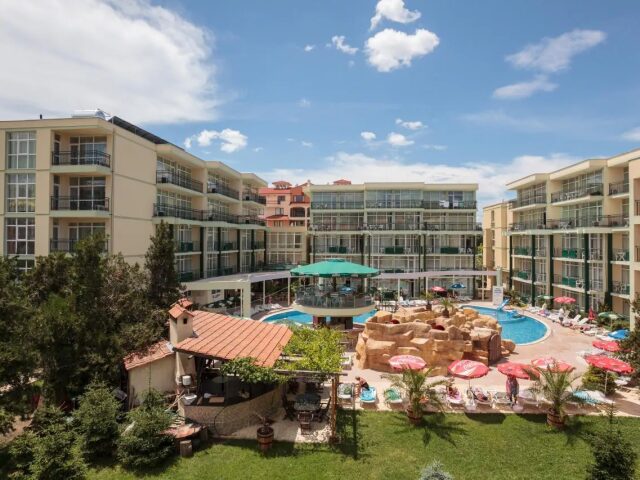
When the budget is tight and August is unavoidable, Bulgaria solves the problem better than anyone: the flight from Warsaw to Burgas takes 1 hour 40 minutes, and a week for two with breakfast starts from 3,000 zł — a price that wouldn't get you an apartment in Greece. The Black Sea reaches +25–26°C in August, the beaches are wide and sandy, and the spread of resorts lets you choose your style: rowdy Sunny Beach for the young crowd, calm Obzor and Duni for families, Sozopol and Nessebar for those who want an old town with real history within walking distance of the beach. Hotel standards are more modest than Turkey's — that's the honest trade-off for the price.
| Resort / region | Air (day) | Sea | Sunshine (hrs/day) |
|---|---|---|---|
| Sunny Beach / Nessebar | +27–30°C | +25–26°C | 10–11 |
| Golden Sands / Albena | +27–29°C | +24–25°C | 10 |
| Sozopol / Primorsko | +27–30°C | +25–26°C | 10–11 |
Package 7 nights / 2 people: 3,000–5,500 zł — the most affordable «proper seaside» of August
Flight: Warsaw → Burgas or Varna ~1 hr 40 min; charters from Katowice, Kraków, Poznań and Gdańsk
For families: Albena and Duni — enclosed resort zones with gently sloping beaches and no club scene
Who it suits
Families on a budget, groups of younger travellers (Sunny Beach), and anyone unwilling to spend more than two hours in transit. Not recommended for those expecting Turkish five-star service — at these prices, it isn't here.
Worth doing
- Stroll through old Nessebar in the evening — timber «mushroom» houses on a rocky peninsula, a UNESCO site 20 minutes from Sunny Beach.
- Head to Sozopol for a fish dinner — the oldest town on the Bulgarian coast out-cooks every resort.
- Spend a day at Aqua Paradise in Nessebar — one of the largest water parks in the Balkans.
- Try tarator and shopska salad not at the hotel but in a mehana — a village tavern with live music.
Entering Bulgaria
- Polish and EU citizens: free movement — Bulgaria is in the EU and Schengen area
- UK citizens: visa-free entry up to 90 days in any 180-day period
- Ukrainian citizens: visa-free entry up to 90 days (biometric passport)
Albania
«The Adriatic at prices from a decade ago — before everyone finds out»
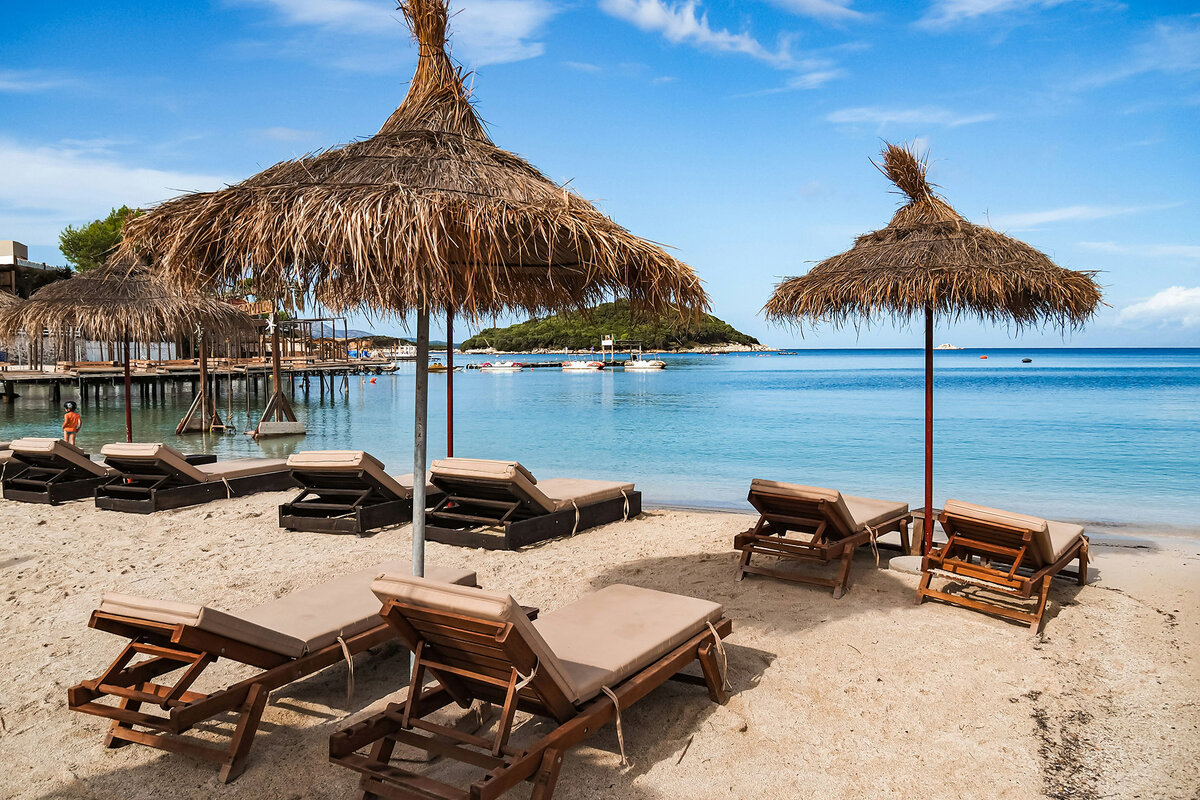
Five years ago this country wasn't in any Polish tour operator's catalogue; today charters to Tirana fly from four Polish cities. The reason is simple: the Albanian Riviera — the stretch of coast from Vlorë to Saranda — offers the same Ionian scenery as neighbouring Greek Corfu (visible from Ksamil beach with the naked eye), but 30–40% cheaper. The water hits +25–26°C in August, and the beaches range from wide and sandy (Durrës, Golem) to white-pebble coves with turquoise water (Dhërmi, Himarë, Ksamil). The infrastructure is growing fast but remains uneven: new hotels sit next to construction sites. That's the price of seeing the Riviera before it becomes «the next Dubrovnik».
| Resort / region | Air (day) | Sea | Sunshine (hrs/day) |
|---|---|---|---|
| Durrës / Golem | +29–32°C | +25–26°C | 11 |
| Vlorë | +29–32°C | +25–26°C | 11 |
| Dhërmi / Himarë (Riviera) | +29–31°C | +25–26°C | 11–12 |
| Saranda / Ksamil | +30–32°C | +25–26°C | 12 |
Package 7 nights / 2 people: 3,200–6,000 zł — 30–40% cheaper than equivalent Greece
Flight: Warsaw → Tirana ~2 hrs; charters from Katowice and Kraków; transfer to the Riviera is 3–4 hours on a mountain road
About Ksamil: the country's most photogenic beach is packed in August — arrive by 8 am or pick the neighbouring coves of Pulëbardha and Pasqyra
Who it suits
Young couples and travellers who want «Greece without Greek prices» and can forgive a country its growing pains. Not recommended for those expecting polished all-inclusive service and perfect roads — Albania isn't there yet.
Worth doing
- Drive the Llogara Pass — hairpin bends with a view over the entire Riviera from 1,000 metres; the best road in the Balkans.
- Visit the Blue Eye spring near Saranda — a karst spring more than 50 metres deep with impossibly blue water.
- Explore ancient Butrint — a Greco-Roman city in a lagoon, a UNESCO site 30 minutes from Ksamil.
- Have a seafood dinner in Himarë — octopus and sea bream cost half of what they do on Corfu.
Entering Albania
- Polish and EU citizens: visa-free entry up to 90 days; a national ID card is sufficient
- UK citizens: visa-free entry up to 90 days
- Ukrainian citizens: visa-free entry up to 90 days
Georgia
«Batumi, khachapuri and the mountains of Svaneti — a holiday where the sea is only half the story»
Few destinations pack this much variety into one trip: subtropical Batumi with its palm trees and casinos, the mountain villages of Svaneti with medieval towers, Kakhetian wineries and Tbilisi's sulphur baths. August on the Adjarian coast is warm and humid: air at +27–30°C, sea at +25–26°C, with occasional short downpours — the price of all that lush greenery. Batumi's beaches are pebbly; for sand you head to Ureki with its black magnetic sand, credited with therapeutic properties. But the main reason to fly to Georgia isn't the beach — it's the combination: three days by the sea, three days in the mountains, all fuelled by the best cuisine in the region. 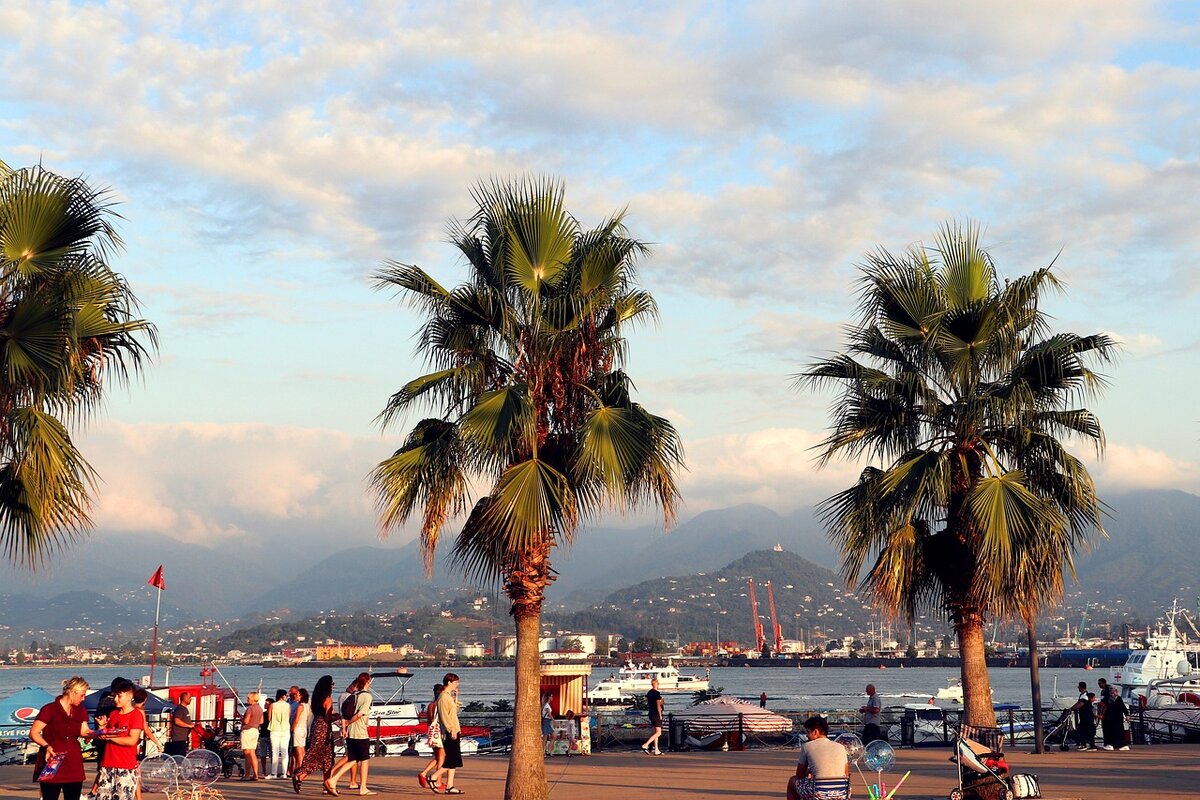
| Region | Air (day) | Sea | Highlights |
|---|---|---|---|
| Batumi / Kobuleti | +27–30°C | +25–26°C | Pebble beaches, seafront boulevard, casinos |
| Ureki | +27–29°C | +25–26°C | Black magnetic sand, family-friendly |
| Tbilisi | +30–34°C | — | Old town, sulphur baths |
| Svaneti / Kazbegi (mountains) | +18–24°C | — | Trekking, Ushguli towers, glaciers |
Budget 7 nights / 2 people: 3,500–6,500 zł (flights + hotels)
Flight: Warsaw → Kutaisi ~3 hrs (Wizz Air) — the cheapest way into the country; Kutaisi to Batumi is 2 hours
Best format: 3–4 days in Batumi + 3 days in Svaneti or Tbilisi — sea and mountains in one trip
Who it suits
Anyone bored by a week at the pool: food-driven travellers, mountain lovers, independent explorers. Not recommended for pure beach holidays — Batumi's pebbles and the humidity lose to Turkey on that front.
Worth doing
- Make it to Ushguli in Svaneti — Europe's highest permanently inhabited village, with 12th-century towers and UNESCO status.
- Have dinner at Batumi's fish market row — you buy the fish at the market and they fry it on the spot next door.
- Take a boat through Martvili Canyon — turquoise water between sheer rock walls.
- Try Adjarian khachapuri where it was invented — the egg-topped «boat» in Batumi is twice the size and half the price of Tbilisi's.
Entering Georgia
- Polish and EU citizens: visa-free entry up to 1 year; entry possible with a national ID card
- UK citizens: visa-free entry up to 1 year
- Ukrainian citizens: visa-free entry up to 1 year
Europe Without the Scorch
Three destinations for those who want sunshine in August but not a thermometer above +30°C. The Canaries and Madeira hold a steady +26°C thanks to the Atlantic, while Iceland offers an entirely different summer — glaciers, whales and a sun that barely sets.
Canary Islands (Spain)
«+27°C in August — while all of Madrid melts at +40°C»
The paradox of the Canaries is that summer is a better time to visit than winter: while mainland Spain suffers through heatwaves, the trade winds keep the islands at a steady +26–29°C — no scorching heat, no stuffiness. The ocean is cooler than the Mediterranean (+22–23°C), but in August that's arguably a plus: the water refreshes rather than stews. Tenerife offers maximum variety — from the dunes of the south to the laurel forests of the north and the Teide volcano; Fuerteventura has the archipelago's best beaches and a world-class surf scene; Gran Canaria is a «continent in miniature» with the Maspalomas dunes. The flight from Warsaw is 5.5 hours — but direct. 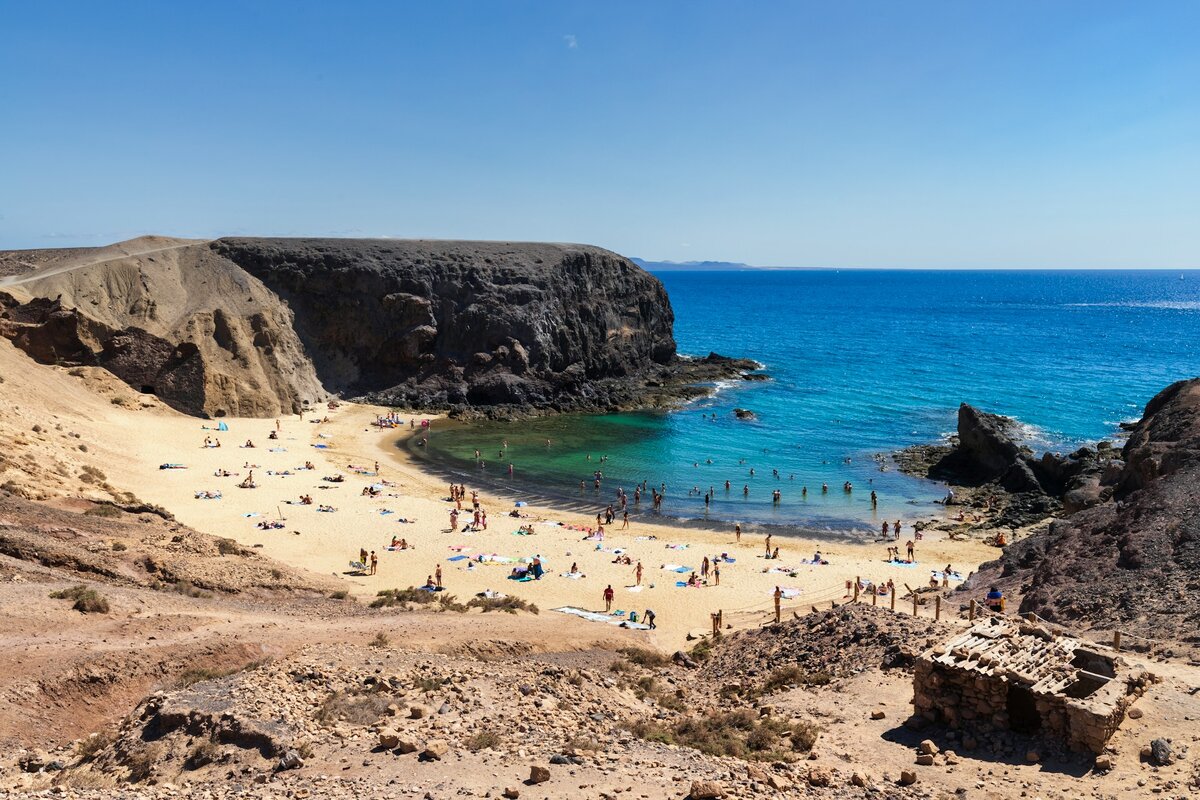
| Island | Air (day) | Ocean | Highlights |
|---|---|---|---|
| Tenerife | +27–29°C | +22–23°C | Mount Teide, most developed infrastructure |
| Gran Canaria | +26–29°C | +22–23°C | Maspalomas dunes, landscape variety |
| Fuerteventura | +26–28°C | +21–22°C | Best beaches, surfing, wind |
| Lanzarote | +27–29°C | +22°C | Volcanic landscapes, vineyards on lava |
Package 7 nights / 2 people: 5,000–9,000 zł
Flights: direct from Warsaw, Katowice and Kraków to Tenerife, Gran Canaria and Fuerteventura, ~5.5 hrs
Best format: a hotel in the island's south + 2–3 days with a hire car — the north of any Canary island is nothing like its south
Who it suits
Anyone who handles heat poorly: older travellers, families with small children, athletes. Not recommended if a +27°C sea is a dealbreaker — the Atlantic won't give you that, even in August.
Worth doing
- Go up Teide (3,715 m) by cable car or on foot — book the summit permit a month ahead.
- Join a whale-watching trip from southern Tenerife — pilot whales and dolphins live here year-round, so a sighting is close to guaranteed.
- Walk the Maspalomas dunes at sunrise — 6 km² of sandy desert right by the ocean.
- Taste wine from Lanzarote's volcanic vineyards — the vines grow in hollows dug into the lava.
Entering the Canary Islands
- Polish and EU citizens: free movement — the Canaries are part of Spain (EU, Schengen)
- UK citizens: visa-free entry up to 90 days in any 180-day period
- Ukrainian citizens: visa-free entry up to 90 days (biometric passport)
Madeira (Portugal)
«The island of eternal spring — and August is its most reliable month»
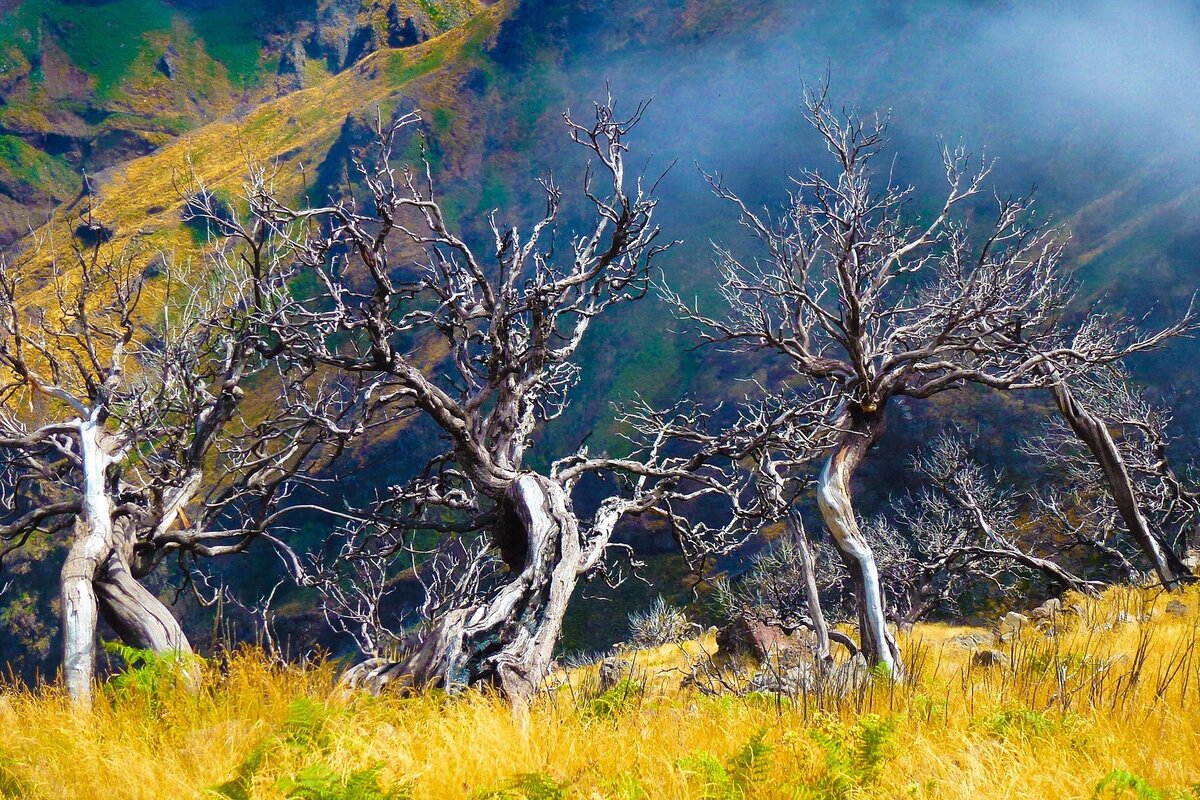
Hydrangeas along the roads, levadas cutting through laurel forests, the ocean flanking every walk — Madeira is the least beach-resort-like destination on this list, and that's its strength. August is statistically the driest, sunniest month here: +25–27°C, ocean at +23–24°C, and the rain retreats to the mountains. Beaches in the conventional sense are scarce (pebbles and lava pools; the sandy one is on neighbouring Porto Santo), but levada trekking — following the irrigation channels and their maintenance paths — is at its finest in August. Mid-month, Funchal celebrates two big events: the Wine Festival and the Assumption festivities. Direct seasonal flights from Warsaw — around 5 hours.
| Region | Air (day) | Ocean | Highlights |
|---|---|---|---|
| Funchal / south | +25–27°C | +23–24°C | Capital, lava pools, cable car |
| Porto Moniz / north | +23–25°C | +22–23°C | Natural lava pools |
| Porto Santo (island) | +25–27°C | +23–24°C | 9 km of golden sand, 2.5-hr ferry |
Package / hotel 7 nights / 2 people: 4,500–8,500 zł
Madeira Wine Festival: late August to early September; tastings, parades and grape-treading in the streets of Funchal
Essential: a hire car — public transport won't get you to the best levadas and viewpoints
Who it suits
Active couples, trekking enthusiasts, and anyone after something different without a long-haul flight. Not recommended for classic beach holidays — for sand you'll need to sail to Porto Santo.
Worth doing
- Walk the 25 Fontes levada (PR6) — a trail through UNESCO laurel forest to a cluster of waterfalls; start before 9 am.
- Watch sunrise from Pico do Arieiro — above the clouds, at 1,818 metres.
- Swim in the lava pools of Porto Moniz — ocean water in natural basins of solidified lava.
- Ride the toboggan from Monte down to Funchal — a wicker sledge steered by two men in straw hats; the tradition is 150 years old.
Entering Madeira
- Polish and EU citizens: free movement — Madeira is part of Portugal (EU, Schengen)
- UK citizens: visa-free entry up to 90 days in any 180-day period
- Ukrainian citizens: visa-free entry up to 90 days (biometric passport)
Iceland
«A completely different summer: glaciers, whales and roads open just three months a year»
Beach holidays are not on the menu here — which is exactly why Iceland makes the August list. August is the last month when the highland roads (Landmannalaugar, Askja) are open, every ferry and tour is running, and the temperature sits at a trekking-friendly +12–15°C. Whales off Húsavík, puffins on the cliffs (until mid-month), waterfalls at full power from glacial melt — Icelandic nature operates at maximum output in August. Daylight is still generous: darkness falls after 10 pm, and by month's end there's already a chance of catching the first northern lights. Direct flight from Warsaw — around 4 hours. 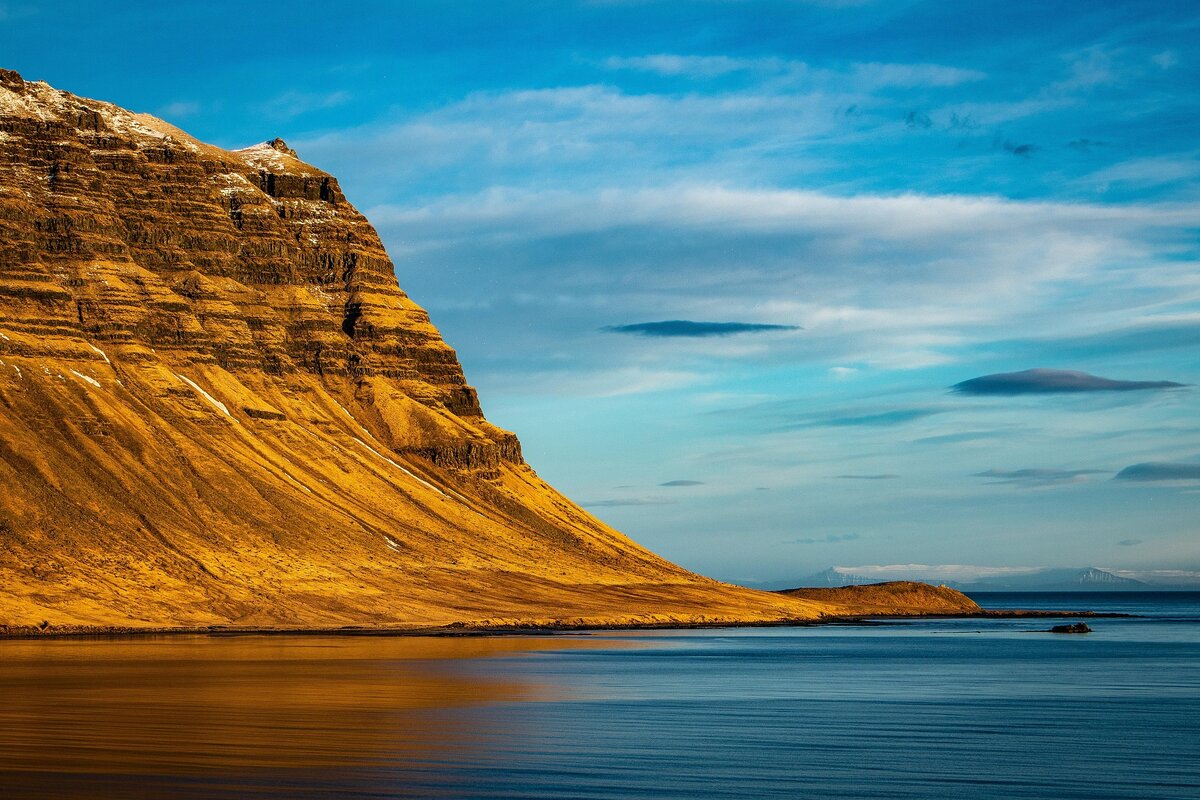
| Region | Air (day) | Conditions | Highlights |
|---|---|---|---|
| Reykjavik / south | +12–15°C | Changeable | Golden Circle, waterfalls, glacier lagoon |
| North (Akureyri, Húsavík) | +11–14°C | Drier than the south | Whales, Mývatn, Dettifoss waterfall |
| Highlands | +8–12°C | August–September only | Landmannalaugar, Laugavegur trek |
Budget 7 nights / 2 people: 7,000–13,000 zł (flights + car + guesthouses) — Iceland is expensive, but August runs 10–15% cheaper than July
Format: Ring Road no. 1 in a hire car over 7–10 days — the classic that never disappoints
Saving money: a campervan instead of hotels cuts the budget by a third; petrol-station hot dogs are the national fast food
Who it suits
Anyone who wants a holiday measured in experiences, not tan lines: photographers, trekkers, families with teenagers. Not recommended for those who shiver at +15°C and aren't prepared for rain on any given day.
Worth doing
- Sail among the icebergs of Jökulsárlón lagoon, then walk to Diamond Beach — ice chunks scattered on black sand.
- Go whale watching from Húsavík — humpbacks show up on 95% of trips.
- Hike to the warm river in Reykjadalur valley — an hour's trek and a soak in a hot stream amid the mountains.
- Catch the puffins at Dyrhólaey before 15–20 August — after that, the colonies head out to sea until spring.
Entering Iceland
- Polish and EU citizens: free movement — Iceland is in the Schengen area
- UK citizens: visa-free entry up to 90 days in any 180-day period
- Ukrainian citizens: visa-free entry up to 90 days (biometric passport)
Long-Haul Exotics at Their Seasonal Peak
While high season in Europe means crowds and surcharges, the southern hemisphere runs on the opposite calendar. For the four destinations below, August isn't a compromise — it's objectively one of the best months of the year.
Kenya: Safari + Ocean
«The Great Migration in full swing: one and a half million wildebeest are crossing the Mara River right now»
Once a year, nature stages a spectacle people fly halfway around the world to see: herds of wildebeest and zebra numbering close to two million move from the Serengeti into the Masai Mara, fording a river full of crocodiles. The crossings peak from late July through September, which puts August squarely in the bullseye. The weather plays along: dry season, +23–26°C by day, and the grass is short — animals are visible from far away. The classic trip formula: 3–4 days on safari in the Masai Mara plus 4–5 days on the ocean at Diani or Mombasa, where August is dry, +26–28°C, with the water at +25–26°C. Flight from Warsaw with one connection — around 10 hours. 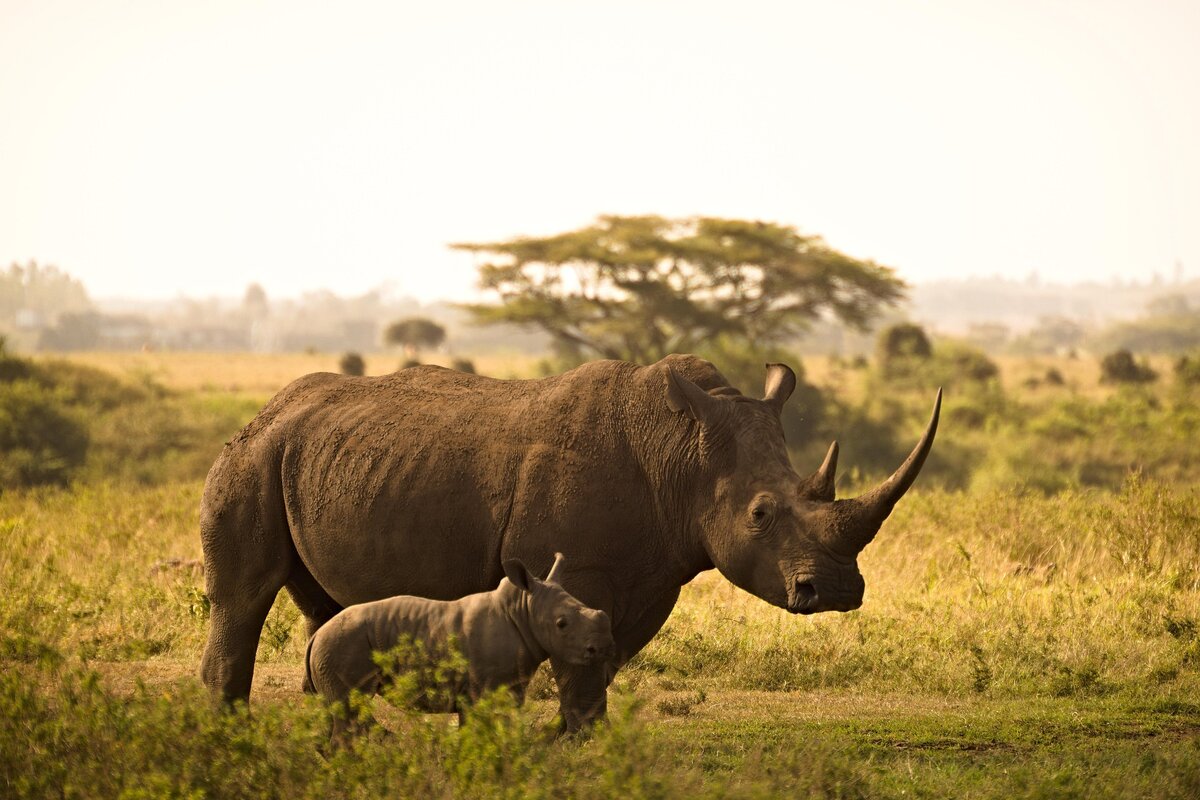
| Region | Air (day) | Conditions | Highlights |
|---|---|---|---|
| Masai Mara (safari) | +23–26°C | Dry, cool nights (+12°C) | Peak of the Great Migration |
| Amboseli | +24–26°C | Dry | Elephants against Kilimanjaro |
| Diani / Mombasa (ocean) | +26–28°C | Sea +25–26°C | White sand, reef, dry season |
Budget 9–10 nights / 2 people: 12,000–25,000 zł (flights + safari lodges + beach hotel) — expensive, but this is a once-in-a-lifetime trip
Booking: 4–6 months ahead — Masai Mara lodges for August sell out over the winter
Health: malaria prophylaxis is essential on the coast; yellow fever vaccination depends on your route (consult a travel medicine specialist)
Who it suits
Those who've been saving for a big journey: couples marking an anniversary, families with children aged 8–10 and up, photographers. Not recommended for anyone expecting European comfort at every turn — a safari remains an expedition, however comfortable.
Worth doing
- Allow at least two full days at the Mara crossings — no one can predict exactly when the herds will move.
- Take a dawn hot-air balloon flight over the savannah — pricey (~450 USD), but the best 60 minutes of the entire trip.
- Visit a Maasai village through your lodge's guide rather than a «show version» — the difference is enormous.
- End the trip on Diani Beach — after the dust of the savannah, white sand and the ocean feel like a reward.
Entering Kenya
- Polish and EU citizens: electronic travel authorisation (eTA) online (~$34), apply at least 3 days before departure
- UK citizens: electronic travel authorisation (eTA) online (~$34)
- Ukrainian citizens: electronic travel authorisation (eTA) online (~$34)
Zanzibar (Tanzania)
«Mid dry season: the spice island's best weather of the year»
July and August on Zanzibar deliver what the Maldives calls «high season» and charges double for: dry, sunny, +27–29°C without stuffiness thanks to the kusi trade wind. The ocean sits at +25–26°C, underwater visibility reaches 30 metres — prime time for the Mnemba reefs and the dive sites off Leven Bank. That same trade wind makes August the top kitesurfing season in Paje. The one caveat is the wind itself: the east coast (Paje, Jambiani) gets a noticeable blow, so for lie-on-the-beach holidays take the north — Nungwi and Kendwa, where the wind is gentler and low tide barely exposes the seabed. Flight from Warsaw with a connection — 10–11 hours; direct seasonal charters from Warsaw and Katowice do appear. 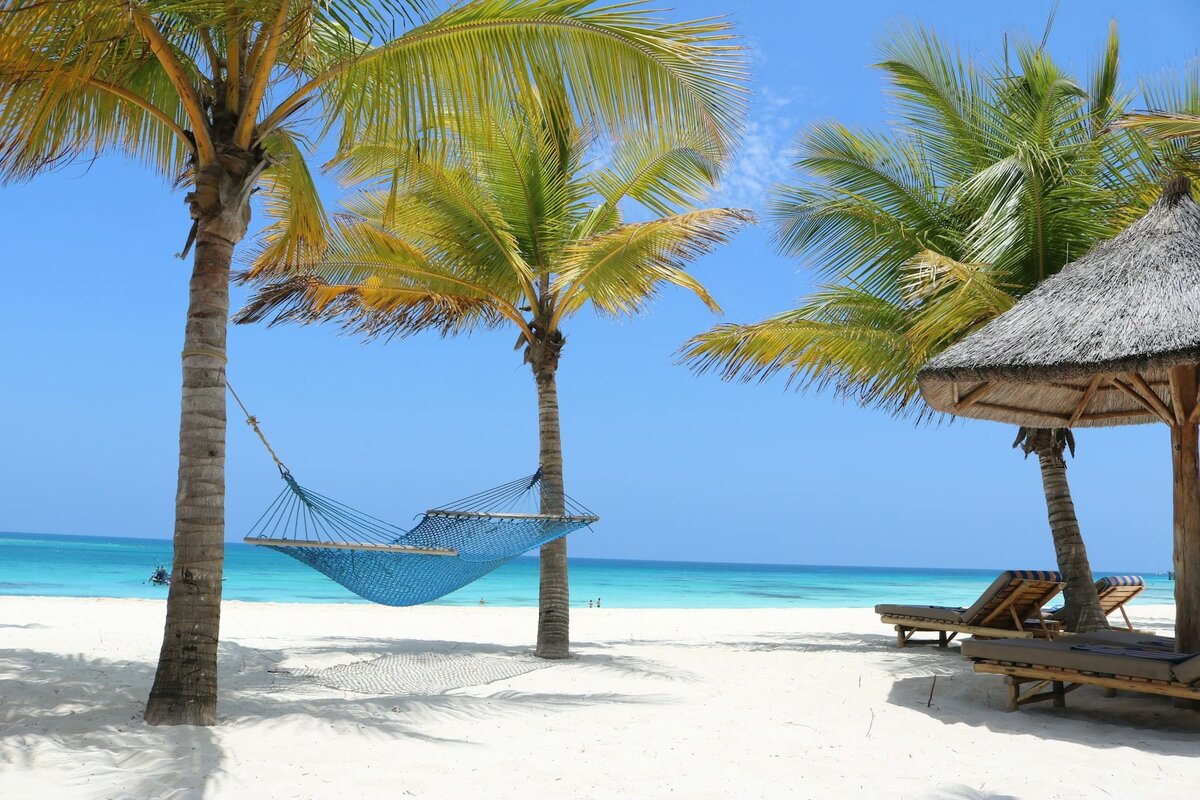
| Resort / region | Air (day) | Ocean | Highlights |
|---|---|---|---|
| Nungwi / Kendwa (north) | +28–29°C | +25–26°C | Less wind and tide, sunsets |
| Paje / Jambiani (east) | +27–28°C | +25–26°C | Kitesurfing, windy, big tides |
| Stone Town | +28–29°C | — | UNESCO, spice market |
Package 9–10 nights / 2 people: 8,000–17,000 zł — August costs more than September, but this is objectively the best weather of the year
Safari combo: Zanzibar pairs beautifully with the Serengeti (Tanzania) — in August the migration runs along the park's northern boundary
About the tides: on the east coast the ocean retreats hundreds of metres twice a day — check the tide tables when choosing a hotel
Who it suits
Couples, divers, kiters and anyone who wants the Indian Ocean at its best without Maldives prices. Not recommended for those expecting polished resort infrastructure — Zanzibar is charming, but not flawless.
Worth doing
- Snorkel at Mnemba Atoll — turtles and dolphins with 30-metre visibility.
- Explore Stone Town with a local guide — behind the carved doors of the Arab houses lies half a millennium of history.
- Have dinner at the Forodhani night market — Zanzibari «pizza» and seafood skewers under the open sky.
- Take a kite lesson in Paje — the August kusi is steady and beginner-friendly.
Entering Zanzibar / Tanzania
- Polish and EU citizens: visa on arrival or eVisa online — $50, up to 90 days
- UK citizens: visa on arrival or eVisa online — $50
- Ukrainian citizens: eVisa online — $50
Bali (Indonesia)
«Dry season at its peak: the island shows its best side in August»
If you had to pick one month for a first encounter with Bali, August would make the top three. Rain is virtually absent, humidity is as low as the tropics get, the temperature holds a steady +28–30°C, and the ocean is +27°C. The waves on the west coast (Kuta, Canggu, Uluwatu) are consistent — surf schools run like clockwork — while calm Nusa Dua and Sanur cover the «just a beach» brief. Up in Ubud the mornings are fresh (+22–24°C) — perfect for rice terraces and volcanoes. One caveat: August is also peak season for Australians and Europeans, so Canggu and Ubud get busy and villa prices climb. Flight from Warsaw with a connection — 15–16 hours. 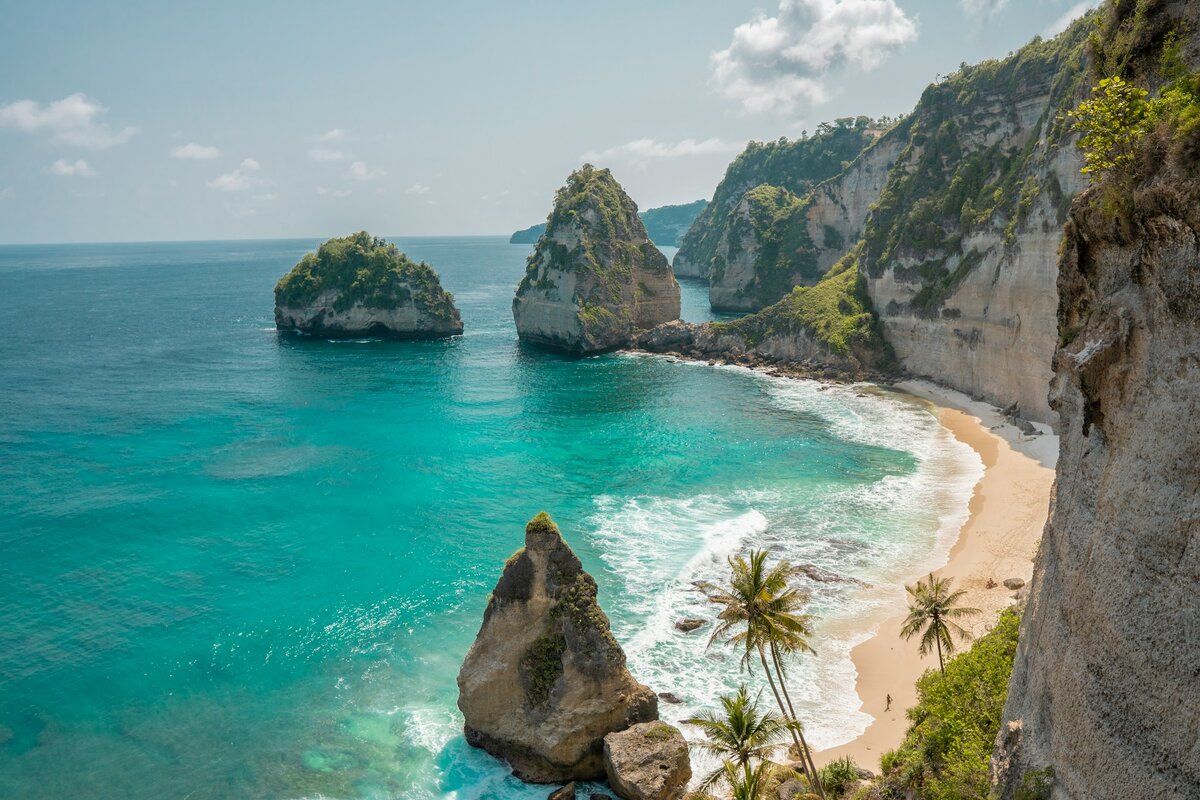
| Region | Air (day) | Ocean | Highlights |
|---|---|---|---|
| Nusa Dua / Sanur | +28–30°C | +27°C | Calm sea, family resorts |
| Kuta / Canggu / Uluwatu | +28–30°C | +27°C | Surfing, sunsets, bars |
| Ubud (island centre) | +26–28°C | — | Rice terraces, temples, yoga |
| Nusa Penida (island) | +27–29°C | +26–27°C | Kelingking cliffs, manta rays |
Package / hotel 7–10 nights / 2 people: 7,500–16,000 zł
17 August — Indonesian Independence Day: parades, ceremonies and decorated streets across the island
Strategy: 3–4 days in Ubud + 4–5 days on the coast; do Nusa Penida with an overnight stay, not as a day trip
Who it suits
Surfers, couples, and anyone who wants maximum tropics from a single holiday: ocean, volcanoes, temples, food. Not recommended for those unprepared for 15 hours in transit and the left-hand-drive chaos on the roads.
Worth doing
- Watch sunrise from Mount Batur — August offers the best odds of a clear sky.
- Swim with manta rays off Nusa Penida — the giant rays are here year-round, but dry-season visibility is unbeatable.
- Attend a temple ceremony — August odalan (temple festivals) happen all over the island; bring a sarong and respect.
- Ride a scooter through the Jatiluwih rice terraces — less hyped and far grander than Tegallalang.
Entering Indonesia (Bali)
- Polish and EU citizens: Visa on Arrival — $35, up to 30 days, extendable
- UK citizens: Visa on Arrival — $35, up to 30 days, extendable
- Ukrainian citizens: Visa on Arrival — $35, up to 30 days
Mauritius
«Southern winter as the secret season: whales off the coast and prices a third below January's»
August is winter in Mauritius — and that's the best news for those in the know. Daytime temperatures hold at +24–26°C, the lagoons sit at +23–24°C, rain is scarce and the humidity is gone. The season's headline act swims off the west coast: from July to September, humpback whales migrate past the island, and encountering them at this time is the norm, not a lottery. Sperm whales live here year-round. Hotel prices in the «winter» season run 25–35% below January's — the same luxury for very different money. One caveat: the south-east coast catches the trade wind, so book your hotel in the west (Flic-en-Flac) or north (Grand Baie). Flight from Warsaw with a connection — 12–13 hours. 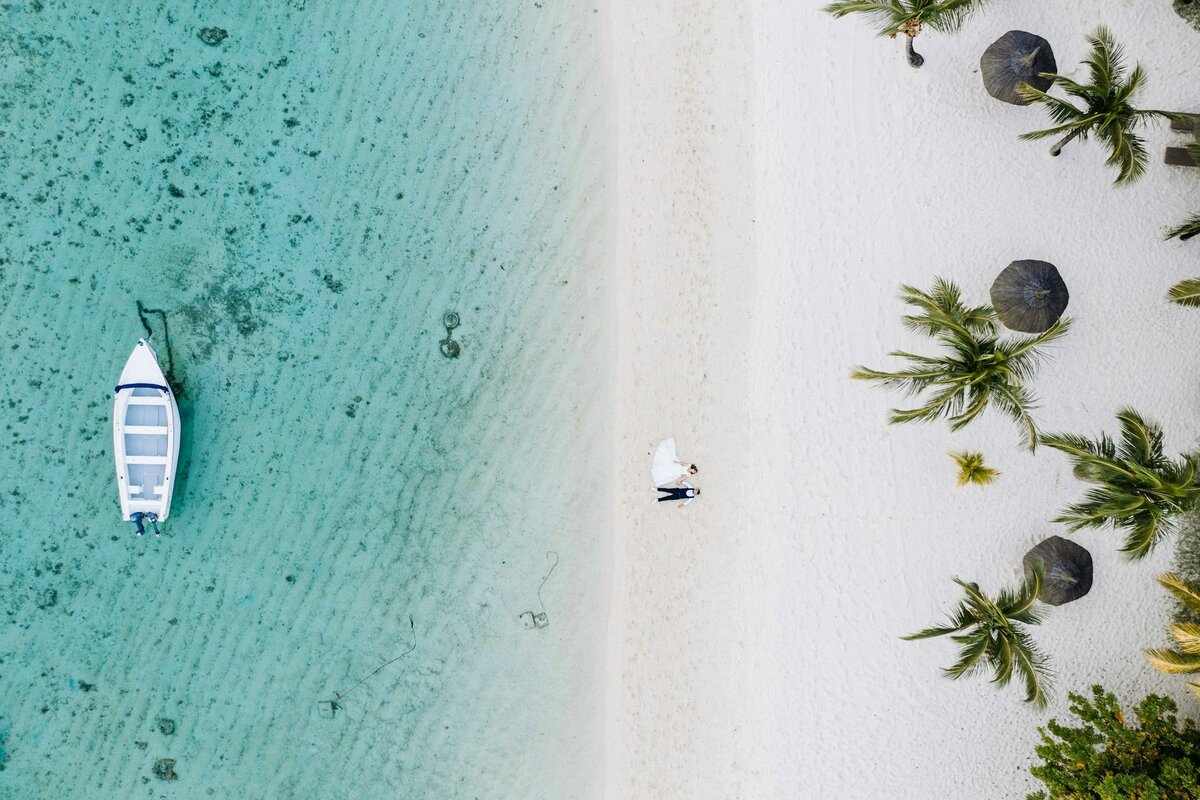
| Region | Air (day) | Ocean | Highlights |
|---|---|---|---|
| Flic-en-Flac / west | +25–26°C | +23–24°C | Whales, dolphins, sunsets, less wind |
| Grand Baie / north | +25–26°C | +23–24°C | Infrastructure, calm lagoons |
| Belle Mare / east | +24–25°C | +23°C | Best beaches, but windy in winter |
Package 9–10 nights / 2 people: 9,000–18,000 zł — 25–35% below high season (December–January)
Humpback whale season: July–September; boats depart from the west coast in the early morning
Lagoon water at +23°C: comfortable for daytime swimming; if you need +28°C «soup» — this isn't your season, come in November–April
Who it suits
Couples and honeymooners who want «Indian Ocean luxury» without the luxury price tag, and anyone who has dreamed of seeing whales. Not recommended for those who consider anything below +26°C not really an ocean.
Worth doing
- Head out to the humpbacks from Flic-en-Flac — August is guaranteed season, with near-daily encounters.
- Climb Le Morne — the island's symbol and a UNESCO site; 3–4 hours up, views that stay with you forever.
- Drive to the Seven Coloured Earths of Chamarel and its waterfall — a geological wonder in the crater of an ancient volcano.
- Try the street food in Port Louis — dholl puri and Creole curry are more honest than any hotel restaurant.
Entering Mauritius
- Polish and EU citizens: visa-free entry up to 90 days
- UK citizens: visa-free entry up to 90 days
- Ukrainian citizens: visa-free entry up to 90 days
❌ Where Not to Go in August
UAE, Qatar, Egypt (with a caveat)
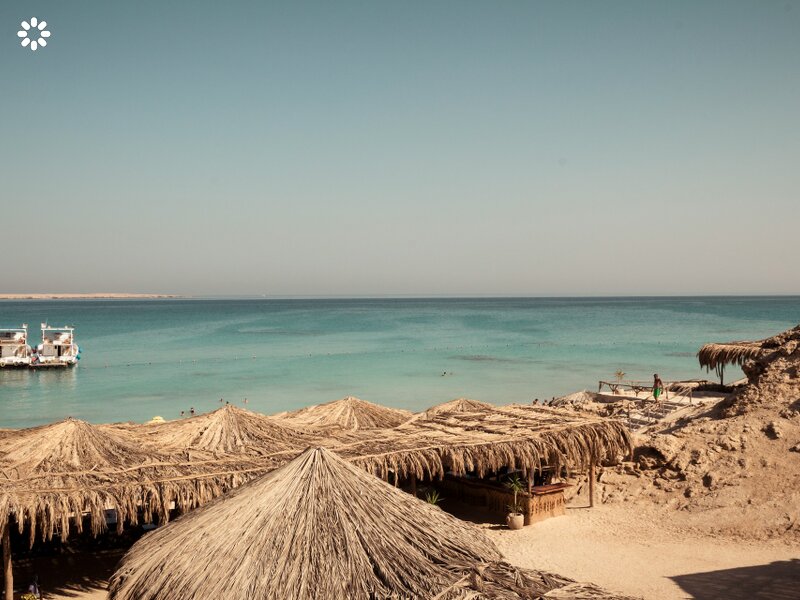
The Persian Gulf in August means +43–47°C and water at +35°C that refreshes nothing. Dubai lives in sprints between air conditioners. Egypt is slightly gentler (+38–40°C in Hurghada), and if your entire holiday is planned between the reef and the pool it's workable — but excursions to Luxor and Cairo at +45°C become an ordeal.
Thailand, Vietnam, Goa
South-East Asia in August is deep monsoon: Phuket and Samui get drenched, Goa's beaches are closed, and central Vietnam is waiting for typhoons. All of it reopens from November.
The Caribbean (Dominican Republic, Cuba, Mexico)
Hurricane season gathers strength precisely from August. Individual weeks can be perfect, but hotel evacuations are a reality tourists face every year. The Caribbean is honestly good from December to April.
Marrakesh and inland Morocco
+42–45°C in the medina makes walking impossible between 11 am and 6 pm. The Atlantic coast (Agadir, Essaouira) is the exception: +26–28°C and a steady trade wind.
The Practical Bit
When to book August 2026
- 4–6 months ahead (February–April): Kenya (migration lodges), Mauritius, Zanzibar, Bali, Iceland (car and accommodation), plus any specific «dream» hotels in Greece or Madeira.
- 8–12 weeks ahead (May–June): the sweet spot for Turkey, Greece, Bulgaria, Albania and the Canaries — early booking deals run 15–25% below summer rates.
- Last minute: barely functions in August — the only availability left is in the least desirable hotels. If budget is critical, it's more honest to shift the trip to September.
Classic August mistakes
- Counting on last minute. Unlike June or September, tour operators don't «dump» anything in August — demand exceeds supply.
- Booking the Cyclades without checking the meltemi. The northern wind on Santorini and Mykonos in August is the norm, not force majeure.
- Flying to Dubai «because it's cheap». It's cheap precisely because it's +45°C.
- Choosing a hotel on the east coast of Zanzibar or Mauritius and being surprised by the wind. The trade wind blows across the Indian Ocean in August — western and northern shores are more comfortable.
- Planning a Kenyan safari «a month out». August is migration peak; Masai Mara lodges sell out six months in advance.
- Ignoring the second half of August. After the 20th, prices soften noticeably — and the sea is warmer than ever.
Choose Your August
The most crowded month of the year can be spent queuing for the buffet — or somewhere August is objectively at its best: in a hot-air balloon over the Masai Mara, among the icebergs of an Icelandic lagoon, or on a Zanzibar reef with 30-metre visibility. The classics still work — Turkey, Greece and Bulgaria will absorb millions of tourists and cope — but they demand early booking and a clear-eyed choice of resort.
The rule of August is simple: either book the classics 8–12 weeks ahead, or look where the main current isn't flowing. The second path is almost always the more interesting one.



 Holidays


 Last minute
 Hotels


 Blog
Blog