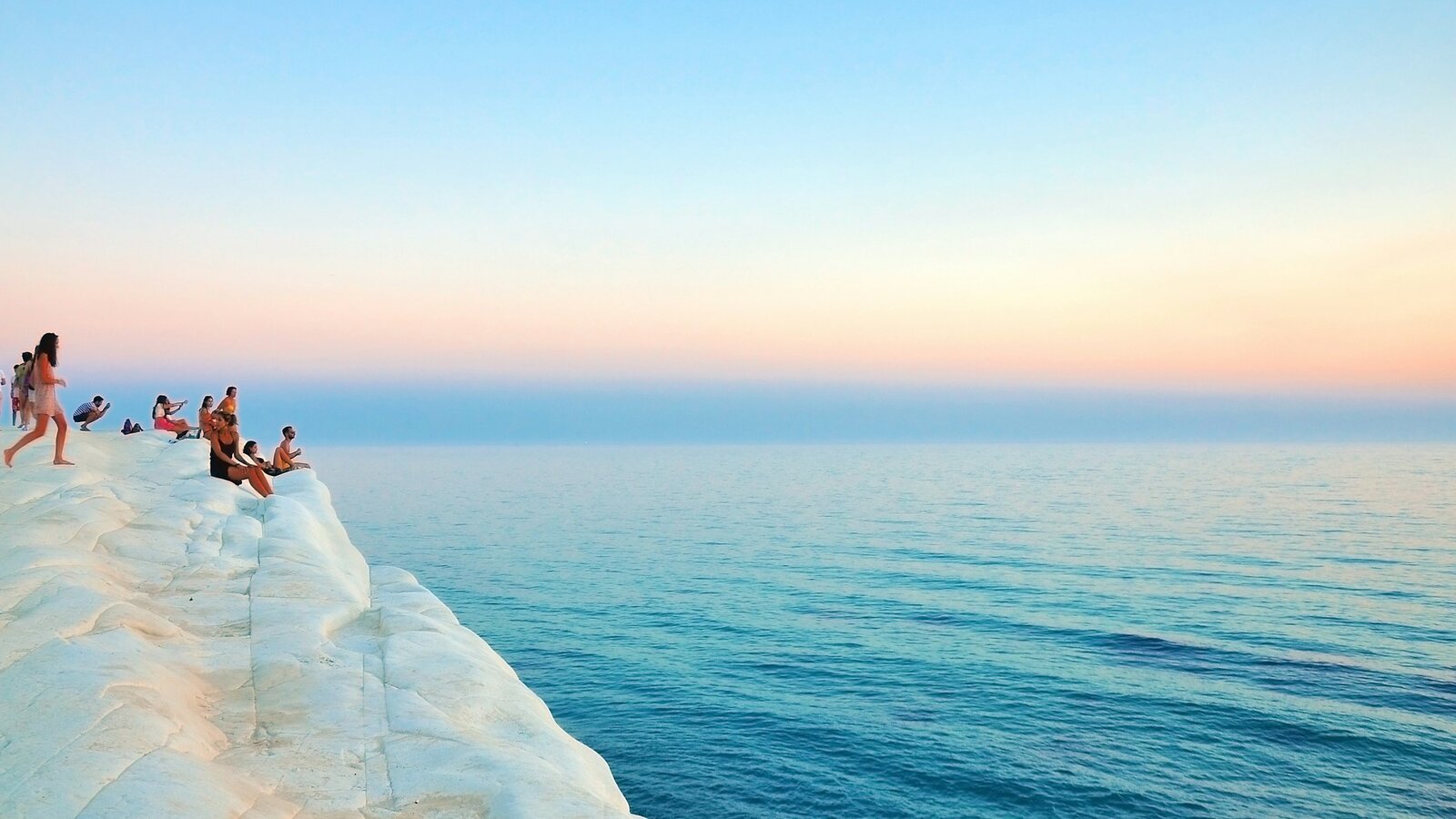
Try booking "Italy on all-inclusive" the way you would Turkey, and you'll come up nearly empty-handed: Italy doesn't work that way. It splits you in two before you've even chosen a beach. On one side, flat, sandy Adriatic Rimini: cheap, shallow, family-friendly, endless rows of parasols and water parks. On the other, expensive, scenic Italy on the west coast and islands: Amalfi, Cinque Terre, Sardinia, where the "beach" often turns out to be a rocky cove, and you're paying for views and food rather than an all-inclusive wristband. Between these two Italys there's almost none of the familiar beach conveyor belt — so the first question here isn't "which beach", but "which Italy". 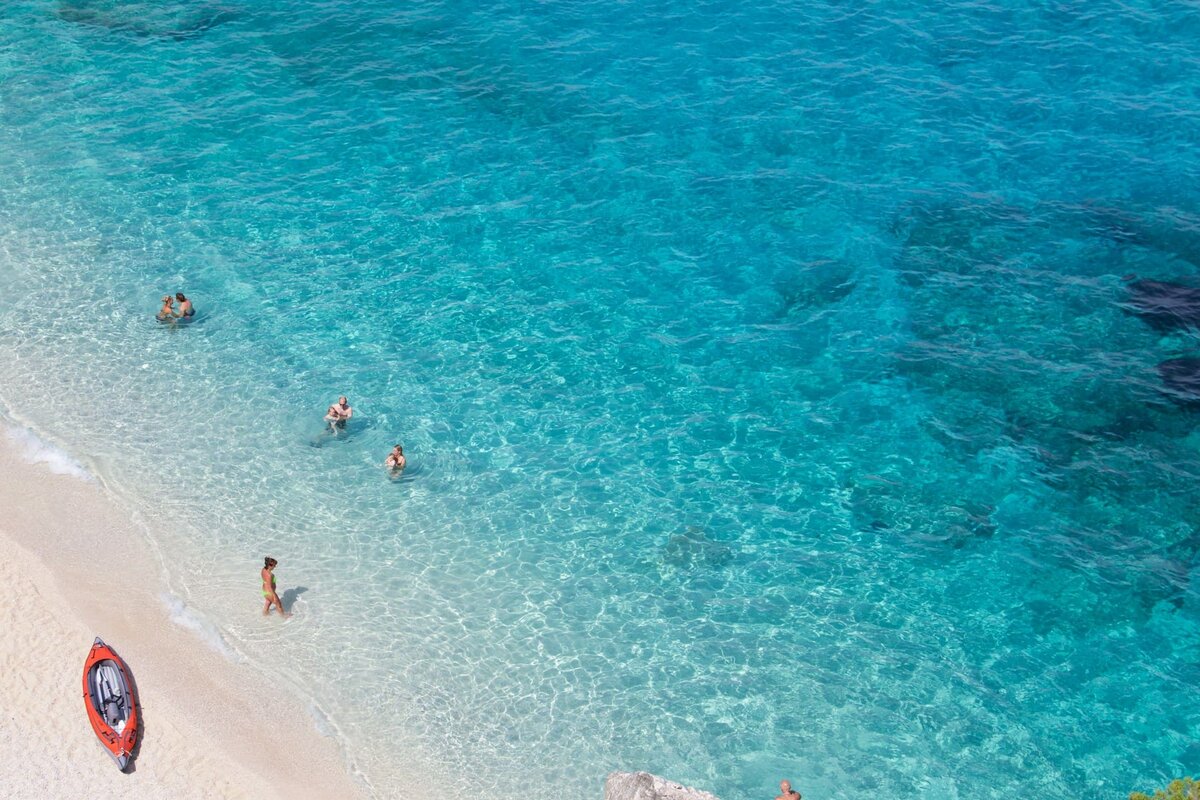
Below we break the country down by sea and region — sandy Adriatic, the scenic Tyrrhenian coast with Amalfi and Tuscany, dramatic Liguria with Cinque Terre, warm Sicily, and Sardinia with the best beaches — and explain what genuinely awaits at each: what's underfoot at the beach, how warm the sea runs, how long the flight from Poland takes, what a week costs, and what fees get added in 2026. At the end: a comparison table, a checklist, common mistakes, and the visa section.
- Cheap, sandy, family-friendly → The Adriatic (Rimini)
- Views, Amalfi, Tuscany → The Tyrrhenian coast
- Cinque Terre and pastel villages → Liguria
- The warmest sea and the longest season → Sicily
- The best beaches and turquoise water → Sardinia
- Puglia and cheaper south → The Adriatic, Calabria
- Rome, Florence, Venice → More than the sea
- Compare everything at once → Comparison
Seas, seasons and the quirks of an Italian beach
Italy stretches a long way north to south, so the season varies: in the north (the Adriatic, Liguria) it's shorter, roughly June to September, while in the south and on the islands (Sicily, Calabria, Sardinia) it's the longest and warmest, swimmable from May to October. The table below applies to the centre, south and islands; the northern Adriatic and Liguria run a touch cooler with a shorter season.
| Month | Air (day) | Sea | Notable feature |
|---|---|---|---|
| May | +22–24°C | +19–20°C | South and islands already swimming |
| June | +26–28°C | +22–23°C | In season everywhere |
| July | +29–31°C | +24–25°C | Hot, crowded |
| August | +30–32°C | +25–26°C | Peak prices and crowds (ferragosto) |
| September | +26–28°C | +24–25°C | The best month: warm, quieter |
| October | +21–24°C | +22–23°C | South and islands still swimming |
Two quirks worth knowing about specifically for Italy. First: most convenient beaches are paid lidos (stabilimenti balneari) with rows of parasols and loungers charged separately; free stretches (spiaggia libera) exist, but the best spots are often taken up by paid clubs, and prices there have risen in recent years. Second: nearly every town applies a tourist tax (tassa di soggiorno) — per person per night, with the amount depending on the municipality and accommodation category, higher in tourist towns. On top of that, August in Italy means ferragosto, when Italians themselves take their holidays: peak prices, peak crowds, and businesses closed for their own break.
The Adriatic: Rimini and sand for families
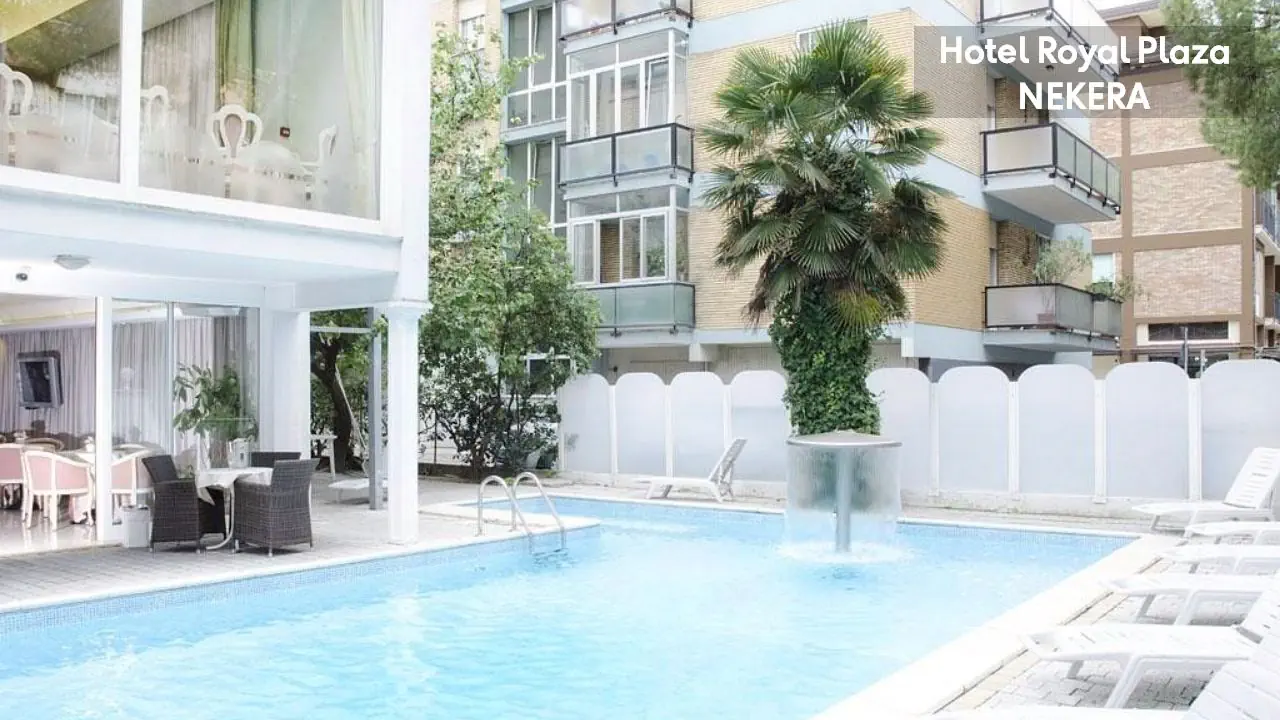
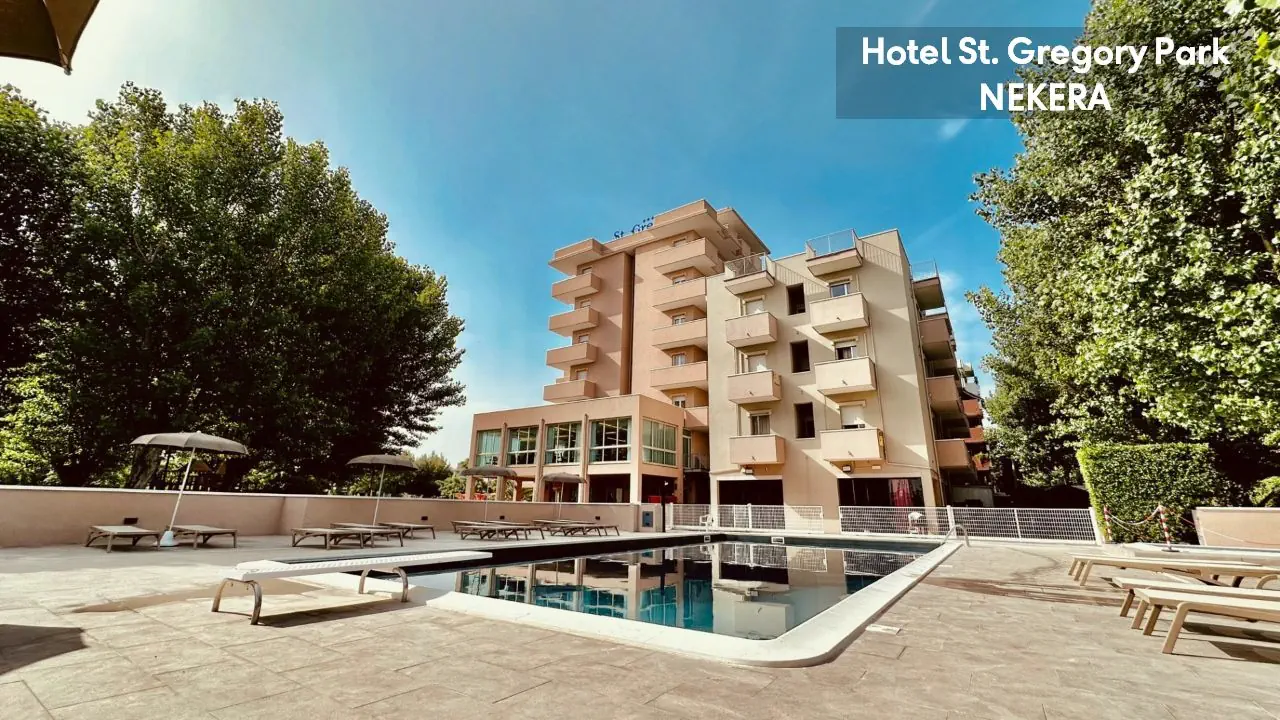
The east coast is Italy's "people's" version: long, flat beaches of fine sand with a very gentle entry, rows of parasols to the horizon, water parks and the most affordable prices in the country. The capital of this world is Rimini, with neighbouring Riccione and Cattolica in the Emilia-Romagna region: families with children and younger travellers come here (Rimini also has nightlife). Further south, in the "heel" of Italy's boot, lies Puglia (Salento) — a different, more authentic south, with towns of white stone, trulli houses, and turquoise water at Gallipoli. The Adriatic is Italy's closest equivalent to the familiar package beach holiday. 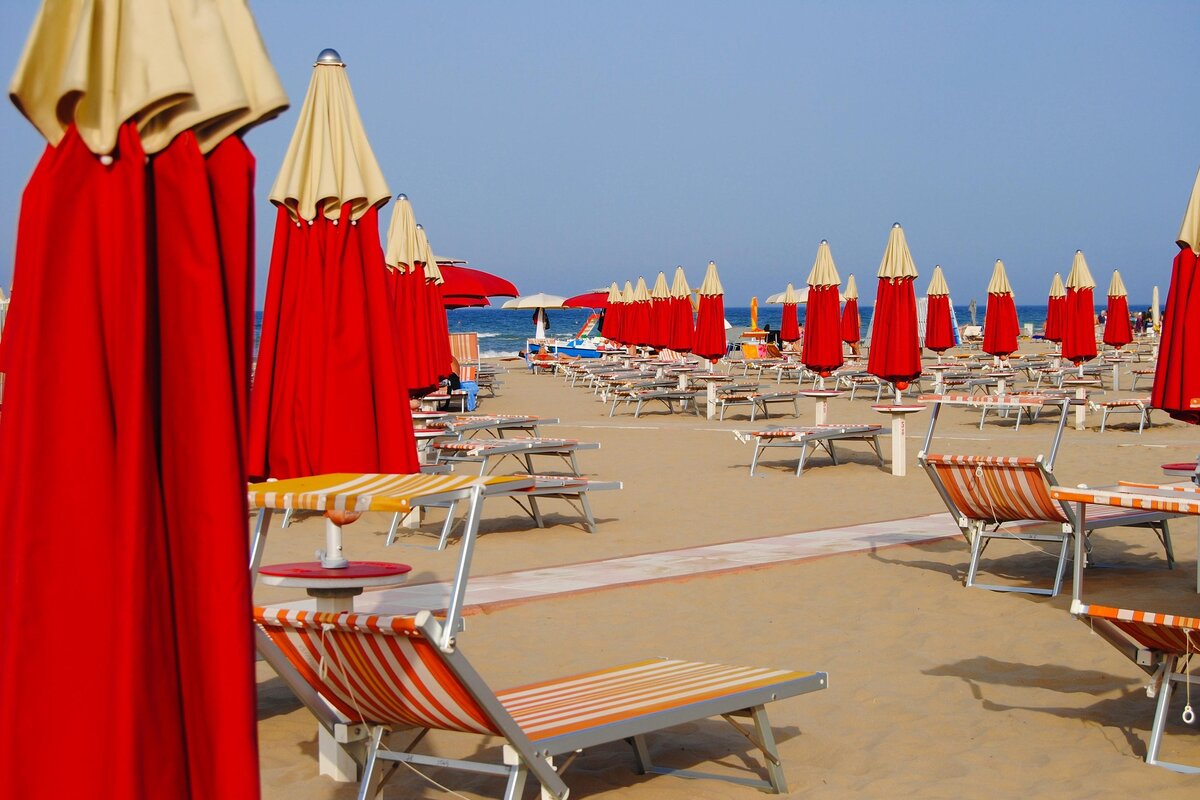
In front of the hotel: wide, fine sand, a very gentle entry — ideal with young children; mostly paid lidos
Flight from Warsaw: ~2 hrs to Bologna/Rimini; to Puglia ~2 hrs 30 min (Bari, Brindisi)
7 nights / 2 people: PLN 3,500–8,000 — the most affordable in Italy
Who is it for: families with children, budget travellers, younger travellers (Rimini)
Who is it for
The best choice for families with children and anyone wanting a beach holiday in Italy without the west coast's high prices: gentle sand, water parks, well-developed infrastructure. Puglia suits anyone wanting the same warm south, but more authentic and scenic. Not worth it if you're going to Rimini for postcard-scenic Italy: this is a flat, densely built coast without cliffs, coves or Amalfi's views. For that picture, choose the west coast or the islands instead.
The Tyrrhenian coast: Amalfi, Tuscany, Calabria
The west coast is the postcard Italy the country is loved for: cliffs, colourful towns above the sea, lemon terraces. Its jewel is the Amalfi Coast, with Positano, Amalfi and Sorrento, plus the islands of Capri and Ischia in the Bay of Naples: world-class scenery, but the beaches here are modest, often pebble and rocky, and prices are high. Further north, Versilia in Tuscany (Viareggio, Forte dei Marmi) offers sand and dunes. Further south, Calabria and its jewel Tropea offer white sand, turquoise water and far more down-to-earth prices than Amalfi. This coast is about views and atmosphere, not a sun lounger by the sea. 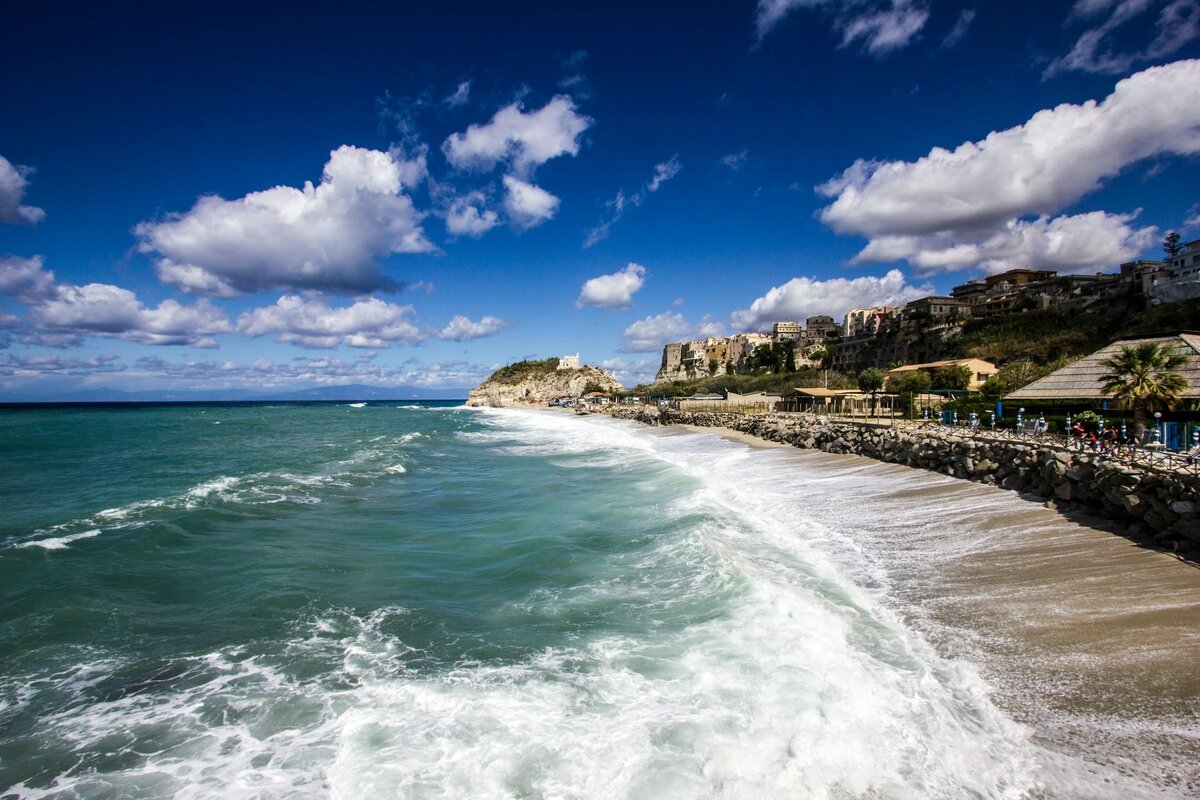
In front of the hotel: rocky coves and pebble at Amalfi; sand in Tuscany; white sand and turquoise in Calabria (Tropea)
Flight from Warsaw: ~2 hrs 20 min to Naples (Amalfi); ~2 hrs to Pisa (Tuscany); southern Calabria is further
7 nights / 2 people: Amalfi and Tuscany PLN 5,000–14,000; Calabria noticeably cheaper
Who is it for: couples and view-lovers (Amalfi), anyone travelling for atmosphere and food; Calabria for cheaper beach
Who is it for
Amalfi and Capri suit couples and anyone travelling for scenery, atmosphere and food, not for lying on a beach. Calabria (Tropea) suits genuine sand and turquoise at a more human price. Not worth it to go to Amalfi for a classic beach holiday: the beaches here are small, often paid and rocky, the roads narrow and jammed, and in July–August the towns are packed. This is a destination for anyone who values the view from a terrace over metres of sand under a lounger.
Liguria: Cinque Terre and pastel villages
The north-west coast, the Italian Riviera, means dramatic cliffs and pastel villages clinging to the rock face. The star attraction is Cinque Terre: five fishing villages above the sea, a UNESCO site, linked by trails and a railway. Nearby, glamorous Portofino with its yachts, and resort-town San Remo. The beauty here is exceptional, but it's worth understanding: this coast isn't about a beach holiday. There are few beaches, they're tiny and pebbly, the villages are packed, and prices are high. You come here to walk the trails, take photographs and admire the view, not to lie on sand. 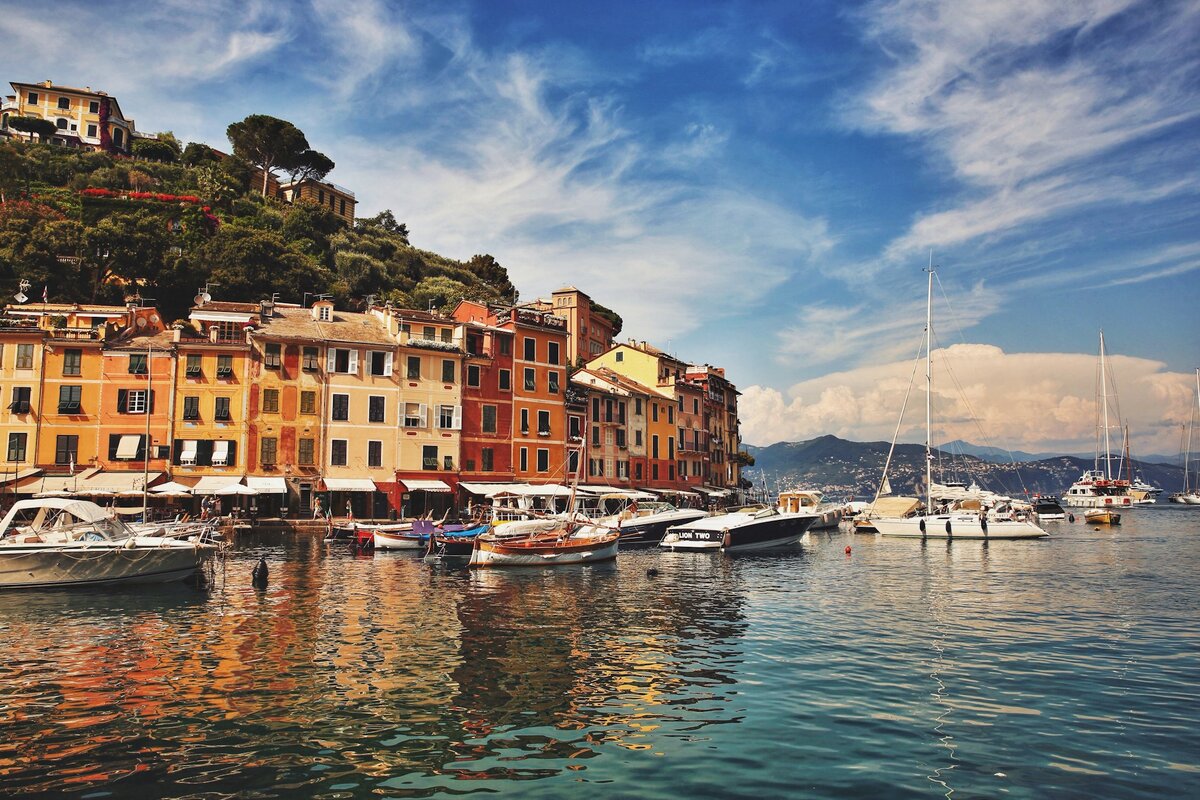
In front of the hotel: small pebble beaches and coves; swimming is possible, but this isn't a beach resort
Flight from Warsaw: ~2 hrs to Genoa or Milan plus a train/transfer
7 nights / 2 people: PLN 5,000–13,000, more often independent than a package
Who is it for: fans of scenery, trekking, photography and atmospheric villages
Who is it for
Ideal for anyone travelling for the views, the coastal trails and the atmosphere of pastel villages, not for the beach. It pairs well with a trip through northern Italy. Not worth it to go to Cinque Terre for a beach holiday with children: there are almost no beaches, the villages are packed, there are a lot of stairs and climbs, and in summer the trails and trains get crowded. For a beach in this corner of Italy, look elsewhere.
Sicily: the warmest sea and the longest season
The Mediterranean's largest island offers warm sea, Italy's longest season, and an extraordinary density of history. Taormina is the most spectacular resort, with its ancient theatre and view of Mount Etna. Cefalù is a postcard town with a sandy beach and a Norman cathedral. The south-east (Syracuse, Noto) offers baroque architecture and the Greek temples of Agrigento, which the mainland doesn't have. The beaches vary: sand, pebble and rock. Sicily also tends to be more affordable than Amalfi or Sardinia, and package holidays are more common here. And there's Etna itself, an active volcano that excursions run up to. 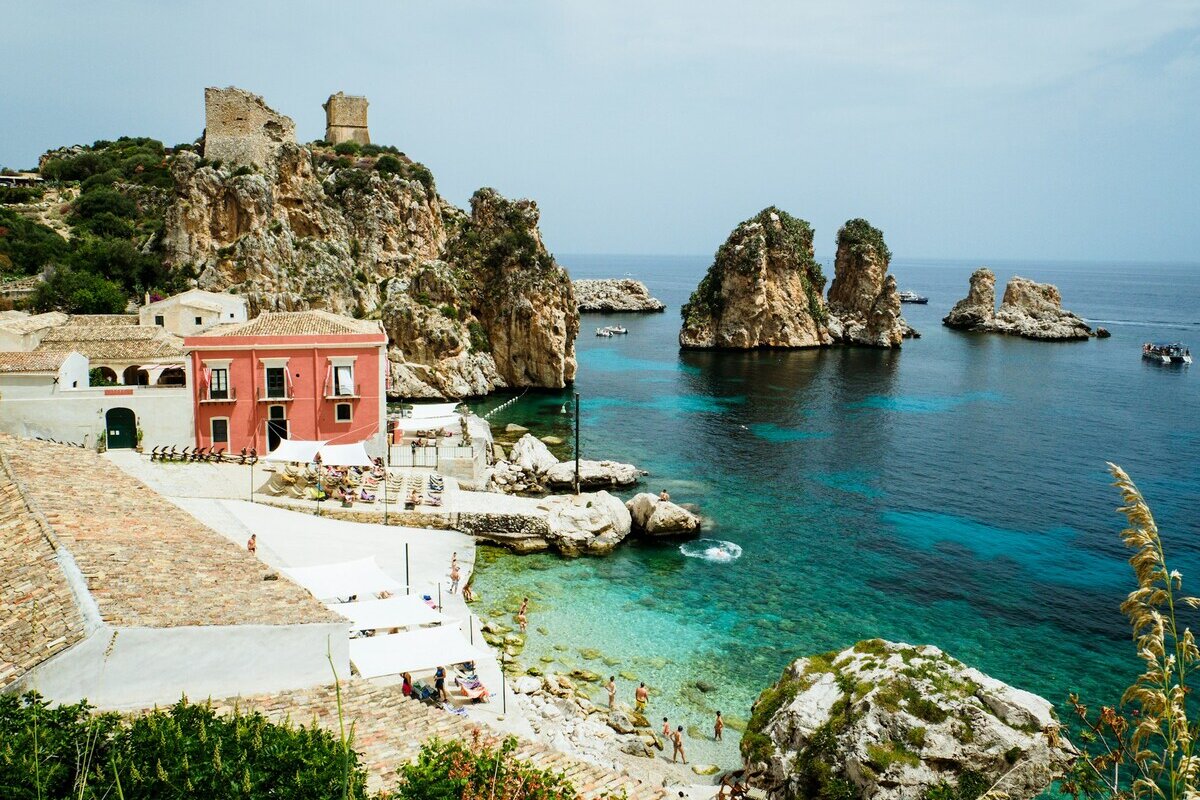
In front of the hotel: sand and pebble depending on the resort; the south is warmer and drier
Flight from Warsaw: ~2 hrs 50 min to Catania or Palermo
7 nights / 2 people: PLN 3,800–9,500 — good value for a southern destination
Who is it for: anyone wanting warm sea, history and a long season without Amalfi's prices
Who is it for
The best choice for anyone wanting to combine warm sea, the longest season and world-class history at a reasonable price. It suits couples, families and excursion fans (Etna, the Greek temples, baroque architecture). Not worth it if you're planning to see the whole island from one hotel: it's large, and the sights are spread out; without a car and a well-planned route, much will be missed.
Sardinia: the best beaches and turquoise water
If you're going to Italy specifically for Caribbean-standard beaches, it's Sardinia. It has the whitest sand and the most turquoise water in the country, especially on the famous Costa Smeralda in the north-east, a luxury address with yachts and high prices. But beyond it, the island is full of stunning coves: La Pelosa in the north-west, the wild Ogliastra coast in the east. The sea here is exceptional, the nature untouched, but it comes at a cost: Sardinia generally runs pricier than mainland beaches, and open coastlines can be windy (the mistral). This is an island about water and beaches, not towns and history. 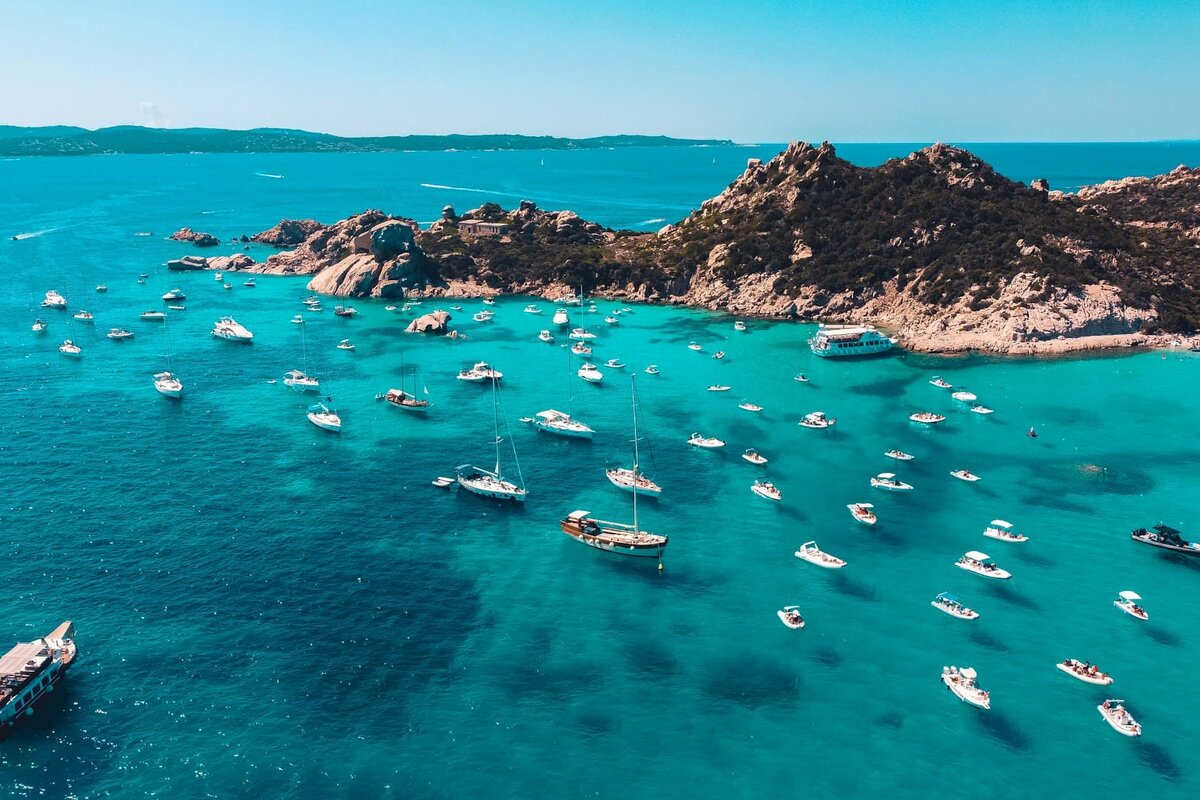
In front of the hotel: Italy's best white sand and turquoise water; open beaches can be windy
Flight from Warsaw: ~2 hrs 30 min to Olbia (north) or Cagliari (south)
7 nights / 2 people: PLN 4,500–12,000 (Costa Smeralda pricier)
Who is it for: anyone for whom island-standard beaches and water matter most, couples and families
Who is it for
The best choice for anyone travelling to Italy primarily for beaches and turquoise water, not towns and antiquity. Costa Smeralda for luxury, the rest of the island for beautiful coves at a more human price. Not worth it if you want a rich cultural programme and towns: the island is about nature and sea, not museums; for history, choose Sicily or the mainland instead. Also factor in the wind on open coastlines.
More than the sea: Rome, Florence and Venice
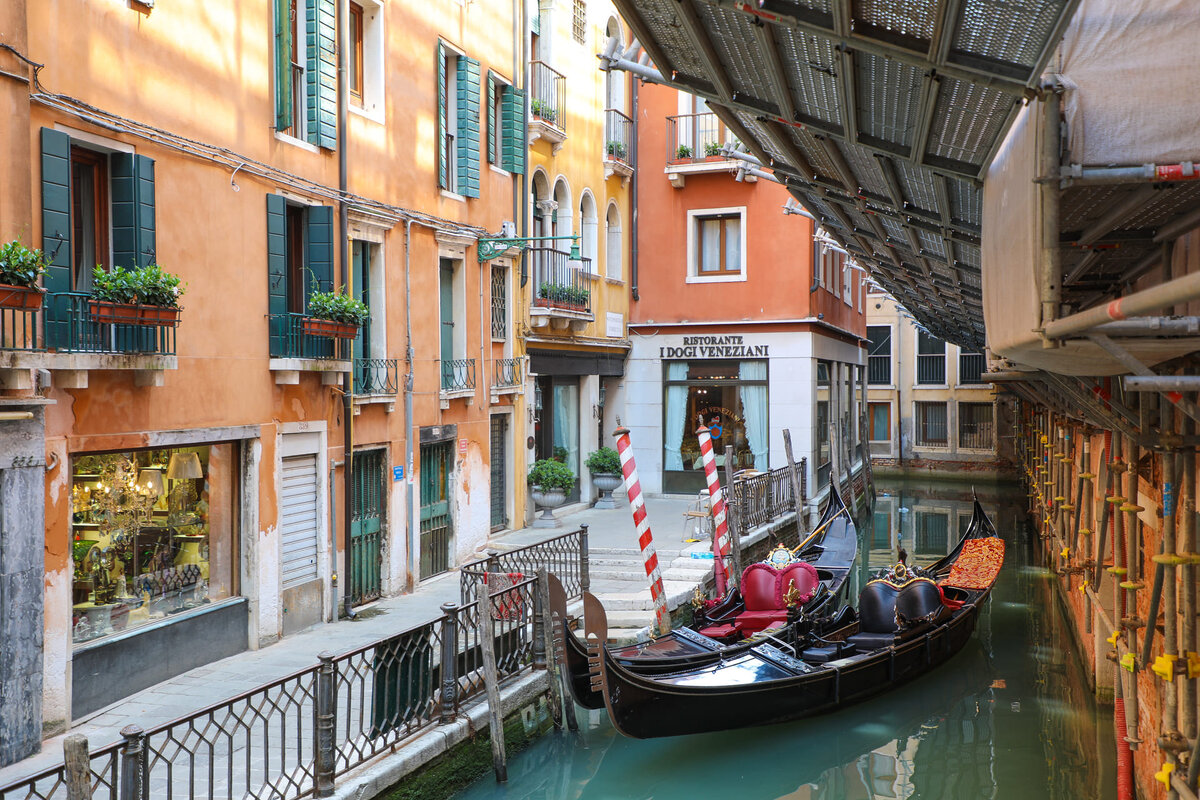
Italy is a country where sticking to the beach alone is almost an insult: the cultural offering here is among the strongest in the world, and almost any coast can be paired with a museum-city.
- Rome. The Colosseum, the Vatican, fountains and antiquity at every turn — easy to pair with the Tyrrhenian coast, or take as a standalone city break.
- Florence and Tuscany. The cradle of the Renaissance, the Uffizi Gallery, hills lined with vineyards — the ideal addition to the Tuscan coast.
- Venice. A unique city on water. Worth knowing: in 2026, an entry fee applies to the historic centre for day-trippers — €5 if booked in advance and €10 at the last minute, on peak days from April to July. Anyone staying overnight in Venice is exempt (though they still pay the usual city tourist tax).
- Pompeii and Naples. A city buried in the ash of Vesuvius — pairs perfectly with Amalfi and Capri.
- Sicily's antiquity. The Valley of the Temples at Agrigento and the Greek theatre at Taormina — ancient sites the mainland doesn't have.
 Quick comparison of Italy's resorts
Figures are indicative, for a 7-night trip for two departing Poland. The key columns are sea, price and character: Italy offers a very different holiday on its different coasts.
| Destination | Sea | Who is it for | Beaches | Price | 7 nights / 2 people |
|---|---|---|---|---|---|
| The Adriatic (Rimini) | Adriatic | Families, budget | Fine sand, gentle entry | Low | PLN 3,500–8,000 |
| Amalfi, Tuscany | Tyrrhenian | Views, couples, food | Rocks, pebble, modest | High | PLN 5,000–14,000 |
| Calabria (Tropea) | Tyrrhenian | Cheaper southern beach | White sand, turquoise | Moderate | PLN 4,000–9,000 |
| Liguria (Cinque Terre) | Ligurian | Views, trekking | Tiny, pebble | High | PLN 5,000–13,000 |
| Sicily | Mediterranean | Warmth, history, season | Sand and pebble | Moderate | PLN 3,800–9,500 |
| Sardinia | Mediterranean | The best beaches, water | White sand, turquoise | High | PLN 4,500–12,000 |
In short: for a cheap, sandy family holiday, the Adriatic with Rimini. For views, atmosphere and food (but not the beach), Amalfi and Tuscany. For cheaper southern beach, Calabria. For scenery and trails, Cinque Terre. For warm sea, history and a long season at a reasonable price, Sicily. For the country's best beaches and turquoise water, Sardinia. The golden rule: decide which Italy you need — cheap sand or expensive scenery — and only then choose the resort.
Pre-booking checklist:
- Choose "which Italy" first: cheap family sand (the Adriatic) or expensive, scenic Italy (the west coast and islands). This decides more than the specific resort.
- Don't expect all-inclusive like Turkey: Italy has almost no beach conveyor belt, and food and the beach are usually charged separately.
- Budget for the beach: most convenient spots are paid lidos with parasols and loungers; free stretches can be inconvenient or crowded.
- Factor in the tourist tax (tassa di soggiorno) per person per night, and for a day trip to Venice, the €5–10 entry fee on peak days from April to July.
- Avoid ferragosto in mid-August if you can: peak prices, peak crowds, businesses closed for their own holiday; September is the better month.
- For Sicily and Sardinia, plan on a car: the sights and best beaches are spread out, and much is inaccessible without one.
Common mistakes:
- Looking for Turkish-style all-inclusive in Italy. It barely exists here; Italy is either cheap Adriatic sand or expensive west-coast scenery, not a beach conveyor with a wristband.
- Going to Amalfi or Cinque Terre for a beach holiday. These are destinations for views and atmosphere; the beaches are small, rocky and often paid, and the towns are packed.
- Expecting "postcard" Italy from Rimini. It's a flat, built-up coast for a family budget; for cliffs and views, choose the west coast or islands.
- Planning to see Sicily or Sardinia from one hotel without a car. The islands are large and the best spots spread out; without a car, half of it is missed.
- Ignoring paid beaches and fees. Lidos, the tassa di soggiorno and the Venice entry fee noticeably affect the final budget.
- Travelling in mid-August without knowing about ferragosto. It's peak prices and crowds, with some businesses closed for their own break; September is noticeably more comfortable.
Entering Italy: the EU and Schengen
Italy is part of the EU and the Schengen Area, so the visa rules are the same across the whole country, including the mainland and the islands. Key changes this season: through 2026 the Schengen Area is progressively rolling out the automated Entry/Exit System (EES), which records biometric data on first entry, and by late 2026 the ETIAS pre-authorisation system is expected to launch for visa-free travellers from outside the EU.
- EU/EEA citizens, including Polish nationals: entry on a valid passport or national ID card, no visa, no limit on length of stay within EU rights.
- Non-EU residents of Poland: rules depend on nationality and residence status; a Polish residence permit grants the right to a short stay across Schengen, including Italy, without a separate Italian visa.
- Fees: a tourist tax (tassa di soggiorno) is added to accommodation costs per person per night, and for day visits to Venice's historic centre on peak days from April to July, an entry fee of €5–10 applies. The EES and ETIAS rules are being refined as they roll out, so confirm current requirements before travelling.
The verdict
So where in Italy should you holiday?
Decide first which Italy you need. For a cheap family holiday with sand and water parks, the Adriatic with Rimini, the country's most affordable coast. For views, atmosphere and food, and if you're willing to pay, Amalfi, Capri and Tuscany on the west coast (but remember, this isn't about the beach). For southern beach at a human price, Calabria and Tropea. For scenery and trails, Cinque Terre in Liguria. For warm sea, history and a long season without Amalfi's prices, Sicily. And for the country's best beaches and turquoise water, Sardinia. 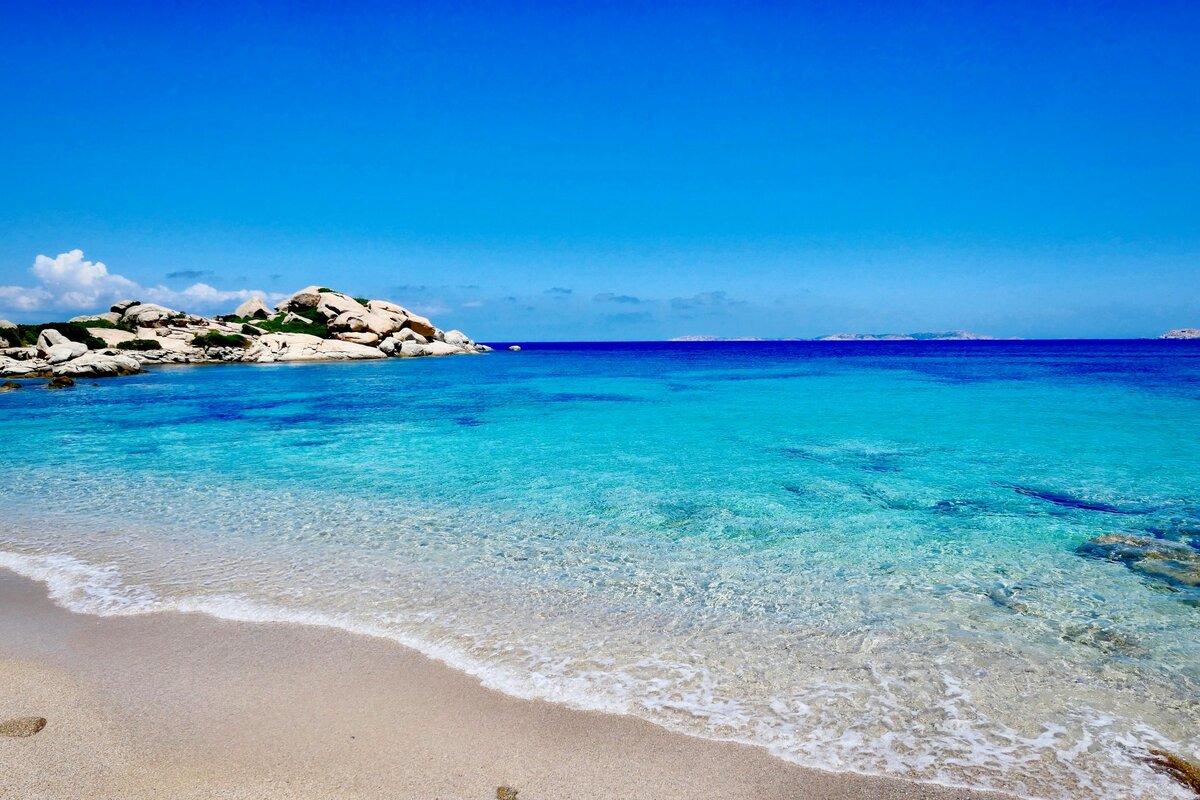
One last tip:
Don't expect Italy to deliver a Turkish-style beach conveyor belt — it doesn't have one, and that's its strength, not a shortcoming. Decide the main question first: do you want cheap sand and "don't think about anything" (the Adriatic or Sicily), or expensive, scenic Italy with views, trails and food (the west coast, Liguria, Sardinia)? And the best month is September: the sea is still warm, the heat and ferragosto crowds are behind you, and prices sit below August's.



 Holidays


 Last minute
 Hotels


 Blog
Blog