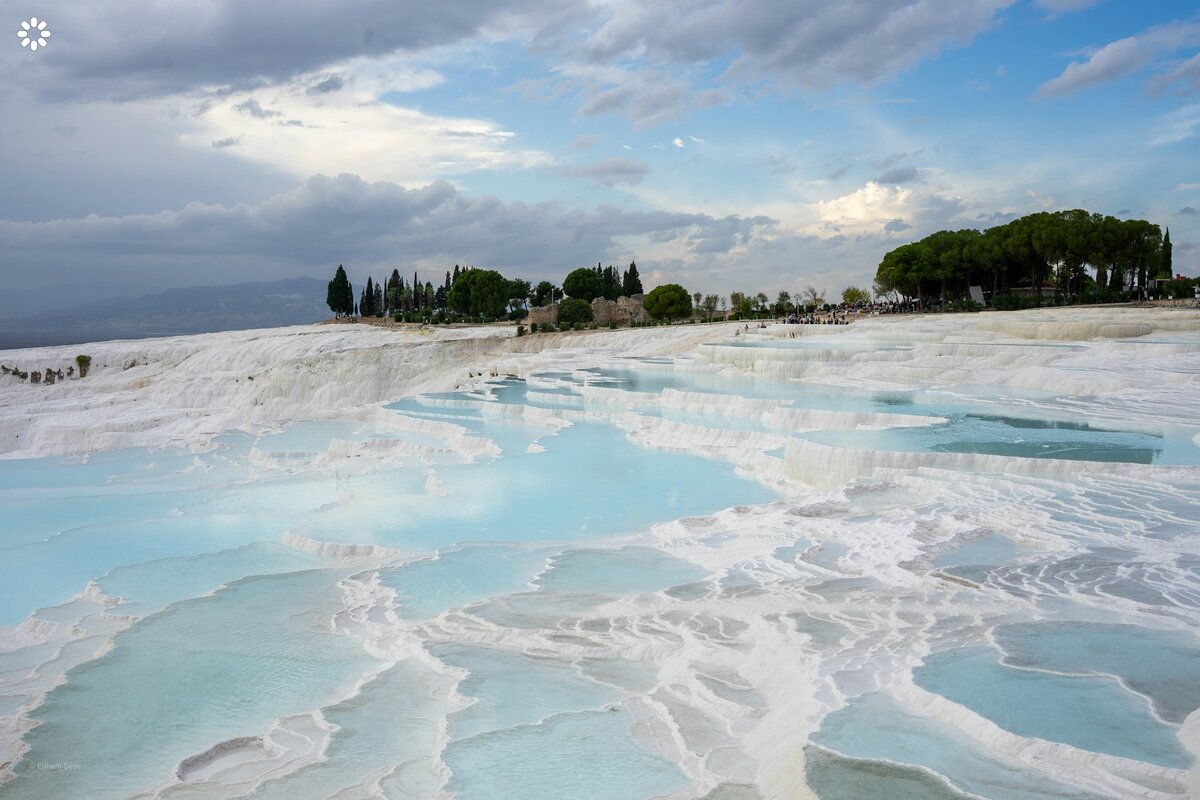
In November the warmest water you can get into in Turkey is not the sea. The Mediterranean off Antalya has slipped to 21–22°C — a plunge rather than a swim — while three hundred kilometres inland, Cleopatra's Antique Pool at Pamukkale holds a constant 36°C over the Roman columns that fell into it in an earthquake. That inversion is the whole month. Everything Turkey is sold on in July is finished by now, and everything July makes unbearable — the white travertine terraces, the hammams, the covered bazaars, a full day walking Ephesus — is finally at its best.
So this guide does not rank beach resorts. It answers the beach question honestly and quickly, then covers the five places that are genuinely better in November than in high summer, the practical constraints that only bite in this month — rain in bursts, winter opening hours, a two-hour time difference — and what a week costs in PLN in the cheapest month of the Turkish year.
- Whether you can still swim → the beach question, answered first
- Best value city break of the year → Istanbul
- Warm water without the sea → Pamukkale and Hierapolis
- Balloons, frost and cave hotels → Cappadocia
- Ancient sites without heat or queues → Ephesus and the Aegean
- A mild base that still works → Antalya as a city
- Planning around rain and closing times → the November constraints
- The cheapest month of the year → costs in PLN
- Travelling with children → Antalya as a city
- Passport questions → entry rules
First, the beach question
The short answer is no, and it is worth getting that out of the way before looking at what November is actually good for.
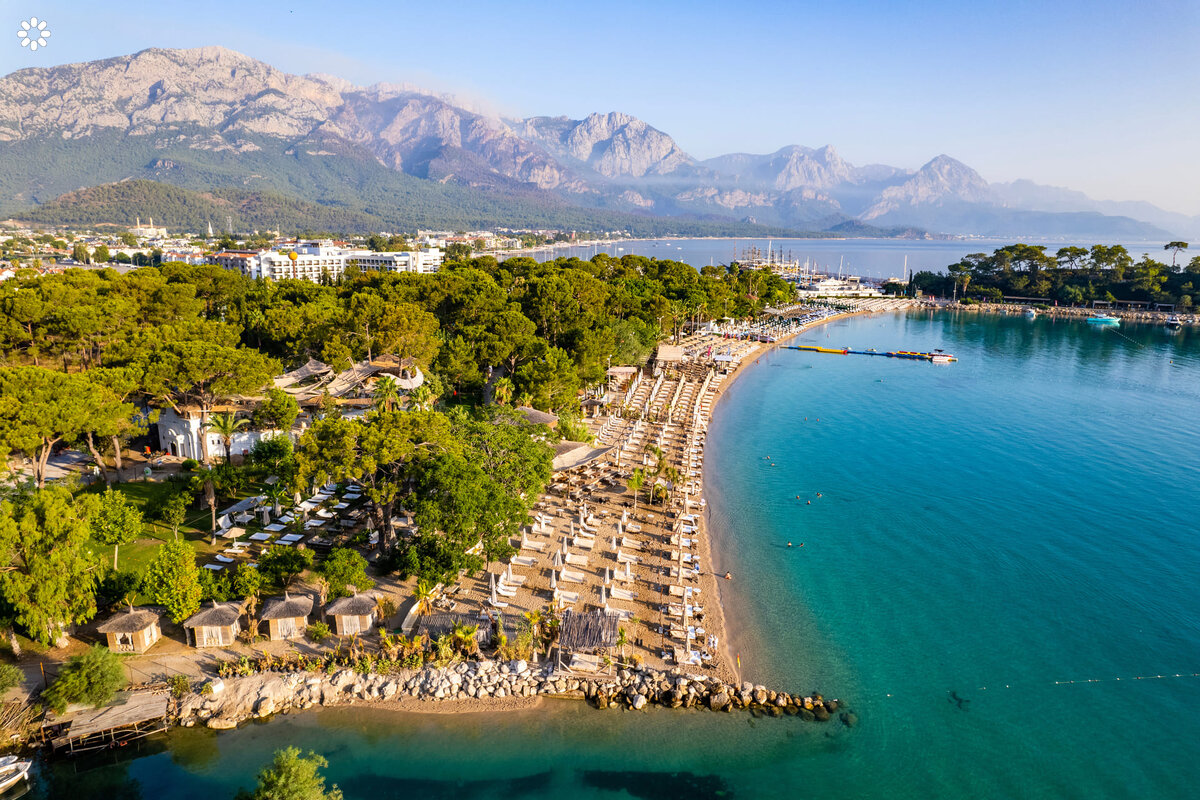
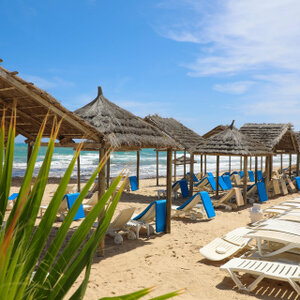
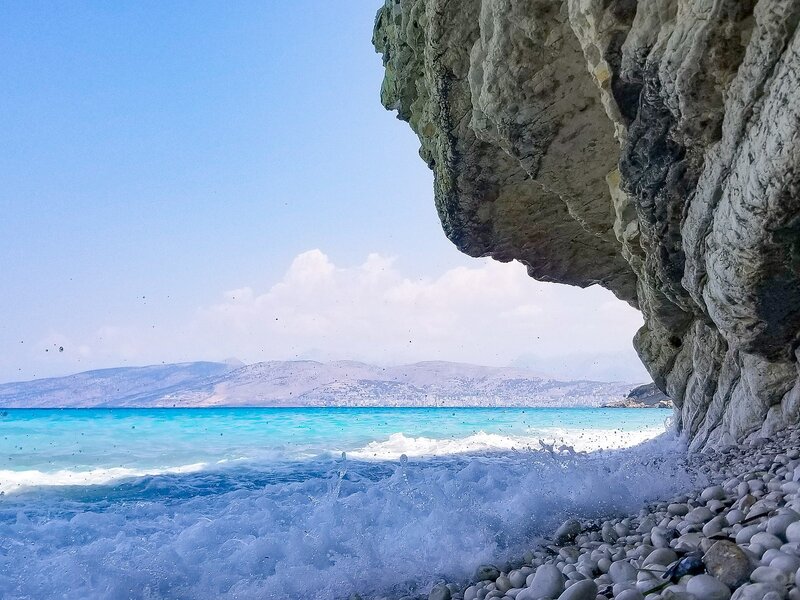
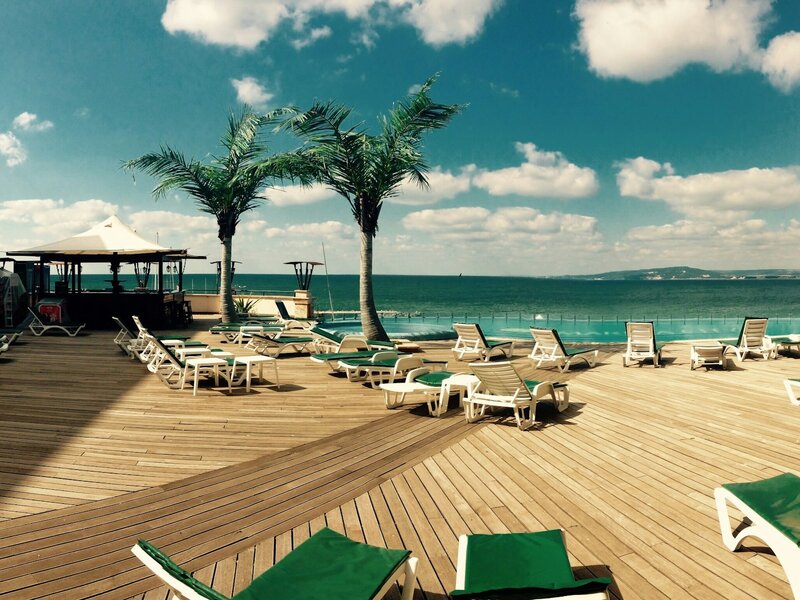
The Aegean closes first and closes properly: most beach-dependent businesses in Bodrum, Marmaris and Fethiye have shut by early November, and the sea there is well below anything most people would call swimmable. The Mediterranean side holds longer but not long enough. Antalya averages 18–22°C by day and around 21–22°C in the water, which sounds tolerable written down and feels like a cold plunge in practice, particularly with air temperatures in the low twenties rather than the low thirties. Hotel pools are colder still unless heated.
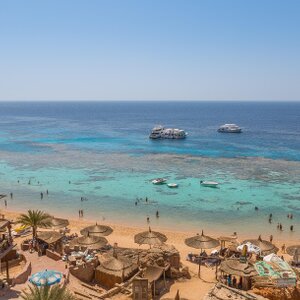
What survives on the coast is not the beach holiday but the coast itself: mild days, empty promenades, archaeological sites you can walk at midday, and prices at their lowest point of the year. The mistake is booking the first thing and expecting the second. If someone in the party will be unhappy without swimming, November in Turkey is the wrong month, and Egypt's Red Sea — still 24–26°C at the same distance from Warsaw — is the honest alternative.
| Place | Air, day | Air, night | Rainy days | What it is in November |
|---|---|---|---|---|
| Antalya | +18–22°C | +10–13°C | 8–10 | Mild city, sea at 21–22°C |
| Izmir, Kuşadası | +16–19°C | +9–12°C | 8–10 | Archaeology, resorts closed |
| Istanbul | +13–16°C | +9–11°C | 8–10 | Peak city-break value |
| Pamukkale, Denizli | +15–18°C | +5–8°C | 6–8 | Thermal season |
| Cappadocia | +8–13°C | +1–4°C | 5–7 | Frost, first snow possible |
Who is it for
November suits travellers whose holiday is made of walking, eating, looking at things and sitting in warm water that is not the sea — and it delivers that at the lowest prices Turkey charges outside deep winter. It is also the best month of the year for anyone who dislikes crowds or heat, which between them rule out most of the Turkish calendar. Not worth it for a family beach week under any circumstances, for anyone who has booked expecting an all-inclusive resort experience at full service, or for a first trip to Turkey where the main image in someone's head is a sunbed. Those expectations cannot be met in November at any price, and no hotel category fixes them.
Istanbul: the year's best value, in the year's greyest light
Hotel rates fall to their lowest outside midwinter, and the city is built for weather like this.
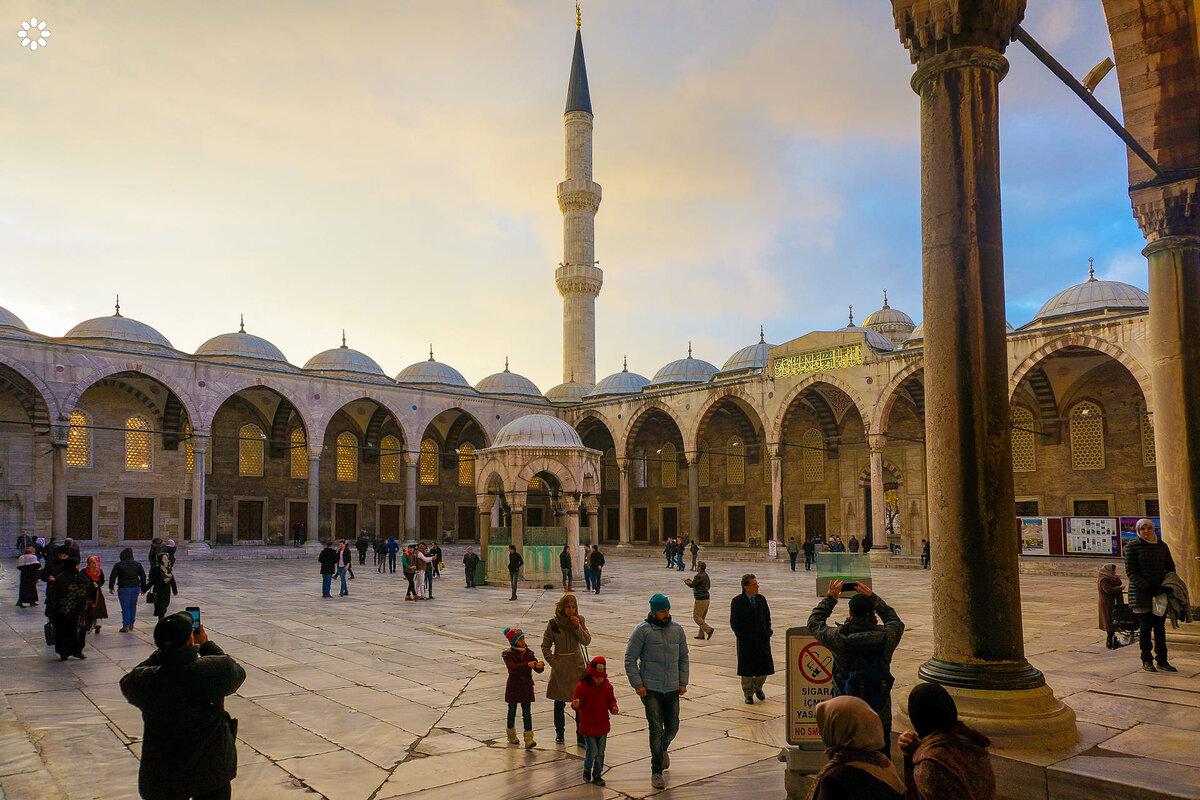
Istanbul in November runs 13–16°C by day and 9–11°C at night, with eight to ten rainy days and a wind off the Bosphorus that makes it feel sharper than the number suggests. None of that closes anything. Hagia Sophia, Topkapı, the Basilica Cistern, the Grand Bazaar and the Spice Bazaar are all indoor or covered; the hammams exist precisely for this weather; and the queues that define the summer experience have gone with the cruise season. A November city break here costs a fraction of a June one for a city whose main attractions do not depend on sunshine.
Flight from Warsaw: about 2 hours 40 minutes direct, the shortest of any Turkish route
3 nights for two: 1 200–3 000 PLN, the cheapest of the year outside December and January
November conditions: +13–16°C by day, +9–11°C at night, 8–10 rainy days
Pack: a waterproof layer and shoes with grip — the old city's marble and cobbles are slick when wet
Who is it for
City travellers, couples on a long weekend, food-led trips, and anyone who wants a European capital experience at a price no European capital offers. It is also the easiest Turkish destination to reach and the only one where a three-night trip makes complete sense. Not worth it if the plan involves a lot of outdoor sitting: the Bosphorus ferries and rooftop terraces that define summer Istanbul are cold and often wet now, and a run of grey days in the second half of the month is common rather than unlucky. Anyone who needs sun to enjoy a city should look at Antalya instead.
What to do
- Book a hammam properly rather than as a novelty — a full wash and scrub is a ninety-minute event and makes more sense in November than in any other month
- Take the Bosphorus ferry to Anadolu Kavağı on a clear morning and treat it as transport rather than a cruise; it costs a fraction of the tourist boats
- Spend a wet afternoon in the Basilica Cistern and the Archaeological Museums, which most summer itineraries skip because the weather pushes people outdoors
- Eat in Kadıköy on the Asian side, where prices are lower and the restaurants are full of residents rather than visitors
- Check opening hours before travelling across the city — several major sites shift to winter timetables from November
Pamukkale: the one place you can still get into warm water
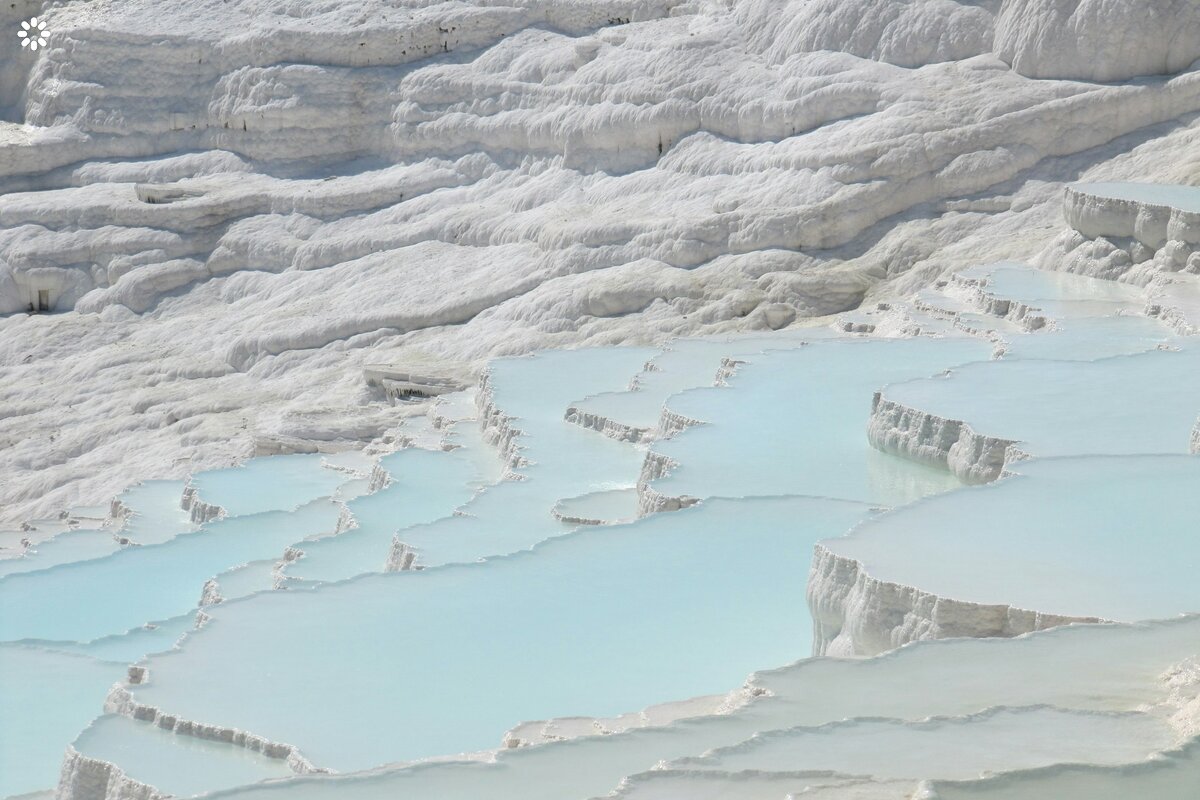
Thirty-six degrees, year-round, over submerged Roman columns — and the terraces that scorch your feet in August are comfortable now.
Pamukkale is the clearest example of the November inversion. The white travertine terraces are unshaded limestone; in August they reflect heat upwards and the walk across them is genuinely punishing. At 15–18°C it becomes a pleasure. Above them sits Cleopatra's Antique Pool, a thermal basin filled after an earthquake collapsed part of Hierapolis into it, where the water holds a constant 36°C and you swim between fallen columns and marble fragments while the air outside is crisp. It requires a separate ticket on top of the combined Hierapolis and travertine entry, and it is one of the few places in Turkey that is objectively better in cold weather.
Getting there: fly to Izmir or Antalya and drive, roughly 3 hours from either; often sold as a two-day trip rather than a day trip in winter
2 nights for two: 900–2 000 PLN in Pamukkale town, Denizli or the thermal hotels at Karahayıt
November conditions: +15–18°C by day, +5–8°C at night; travertine water 32–38°C, Antique Pool a constant 36°C
Winter hours: the site closes considerably earlier from November — plan an early start rather than an afternoon arrival
Who is it for
Anyone building a November itinerary that needs a warm-water element, couples, photographers, and travellers who tried Pamukkale in summer and found it a hot, crowded scramble. Staying overnight in Karahayıt, where the hotels run their own thermal water, turns a rushed stop into the point of the trip. Not worth it as a long day trip from the coast in November: the site shuts in the late afternoon on winter hours, so a three-hour drive each way leaves you very little time on the terraces, and arriving after lunch means you see it half-lit and half-closed. Two nights or don't bother.
What to do
- Swim in the Antique Pool rather than only photographing it — the separate fee is modest and it is the single most November-specific thing to do in Turkey
- Walk the travertines barefoot from the lower gate upwards, which is the direction most tour groups do not take
- Give Hierapolis proper time: the theatre, the necropolis and the museum inside the Roman bath complex are the reason the site is UNESCO-listed, not just the white slope
- Stay in Karahayıt and use a hotel with its own thermal pool, so the warm water is not limited to one paid hour
- Start at opening time, because winter closing is early and the light on the terraces is best in the first two hours
Cappadocia: frost on the ground, balloons still flying
The coldest destination in this guide and the one where the cave hotel finally makes sense.
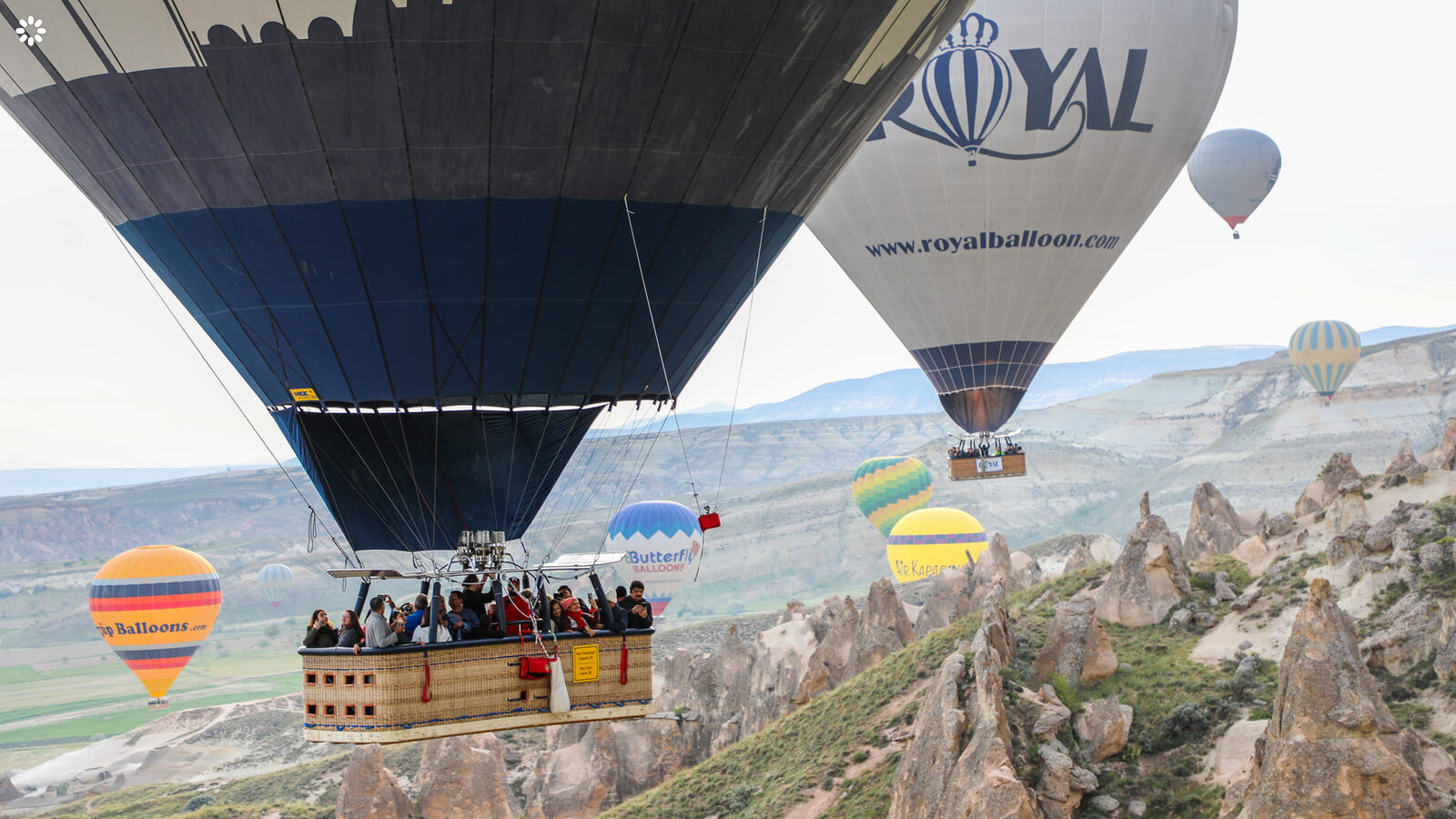
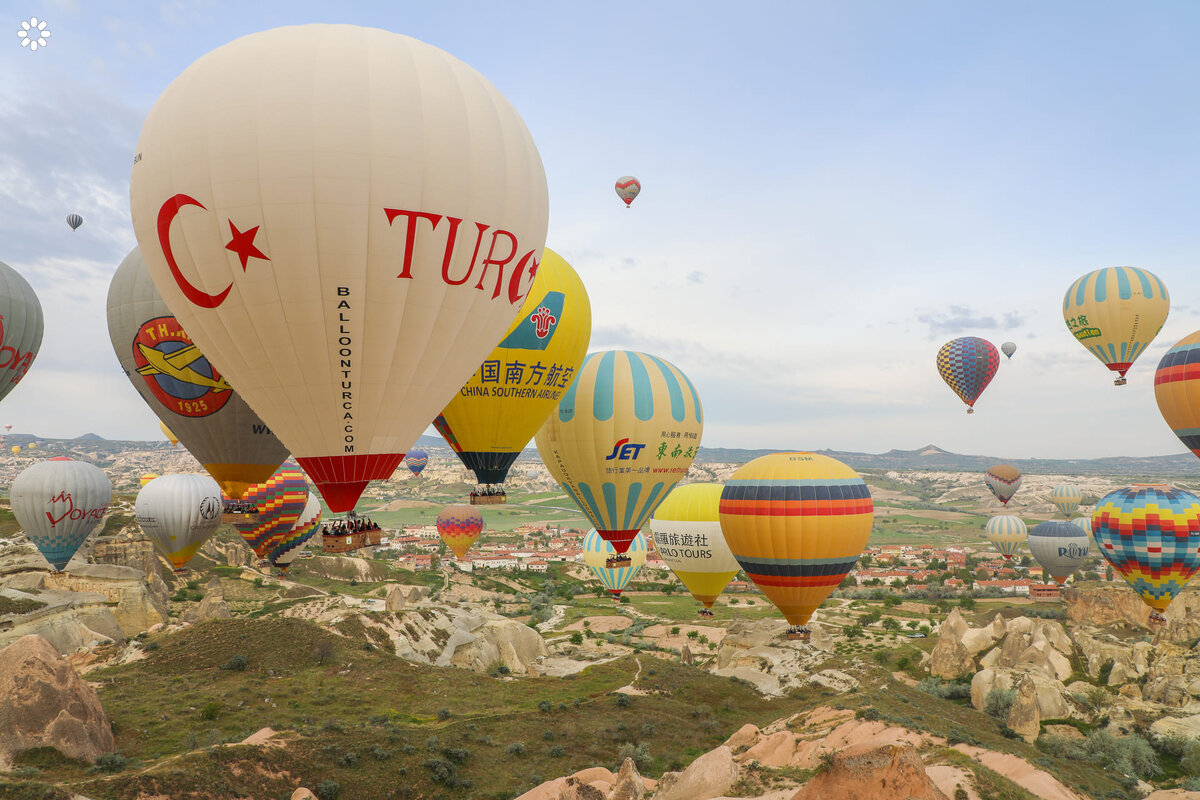
Cappadocia sits on a plateau above a thousand metres, and November is when that altitude starts to show: 8–13°C by day, 1–4°C at night, frost on many mornings and a real chance of the first snow towards the end of the month. Balloons continue to fly and the flights are cheaper than in high season, but cancellations become more frequent as autumn weather systems move through, so a single night gives you no second attempt. In exchange you get the valleys almost to yourself, cave hotels at winter rates, and — if the snow does arrive — a version of the landscape most visitors never see.
Getting there: internal flight to Kayseri or Nevşehir via Istanbul, roughly 4 hours 30 minutes total from Warsaw
3 nights for two: 1 500–3 500 PLN in a cave hotel, excluding the balloon
November conditions: +8–13°C by day, +1–4°C at night, first snow possible late in the month
Build in: three nights, because November cancellation rates are higher than in autumn's earlier months
Who is it for
Photographers, walkers who would rather hike Rose Valley at 10°C than 30°C, and travellers who want the balloon without the summer price or the summer sky traffic. Paired with three nights in Istanbul it makes the strongest November week Turkey offers. Not worth it if the balloon is the entire reason for the trip and your dates are rigid — November weather cancels more flights than September or October, refunds are the norm rather than rescheduling, and there is no way to buy certainty. It is also a poor choice for anyone travelling light on warm clothing: a pre-dawn launch field at 1°C is a different proposition from the photographs.
Ephesus and the Aegean: the archaeology month
The largest classical site in the eastern Mediterranean, walkable at midday for the first time since spring.
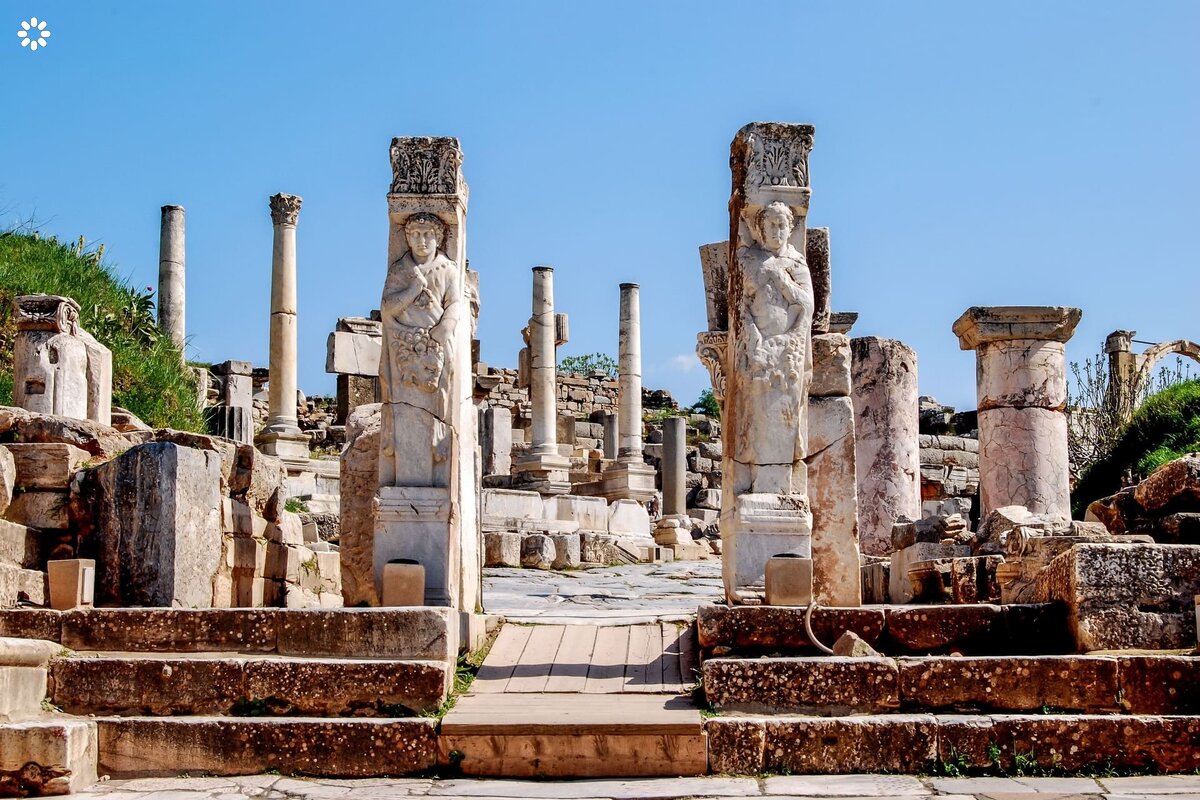
Ephesus is a marble city with almost no shade. In July, walking the Curetes Street at noon is an endurance exercise and the site is full of cruise groups; in November it is 16–19°C, the queues have gone with the cruise season, and you can take the four or five hours the place actually deserves. The same applies to Priene, Miletus and Didyma further south, and to Izmir itself, which is a working Turkish city rather than a resort and does not shut for winter. What has closed is everything beach-shaped: Kuşadası's resort strip largely stops trading, so this is a trip built around a city base and a car, not a hotel.
Flight from Warsaw: about 3 hours to Izmir; Ephesus is roughly an hour from the city by road
3 nights for two: 1 200–2 800 PLN, city hotels in Izmir rather than coastal resorts
November conditions: +16–19°C by day, +9–12°C at night, 8–10 rainy days
Pair it with: Pamukkale, about 3 hours east, for a four- or five-night inland loop
Who is it for
Anyone whose interest in Turkey is historical rather than coastal, travellers who have already done Istanbul and Cappadocia, and independent visitors comfortable hiring a car. Combined with Pamukkale it forms the most efficient short itinerary in the country. Not worth it without a car or an organised tour: public transport between the smaller sites thins out considerably in low season, and basing yourself in Kuşadası expecting a resort atmosphere will produce an empty promenade and a closed hotel restaurant. This is a city-and-car trip in November, not a package one.
Antalya as a city, not a beach
The mildest place in the guide, and the only coastal base that operates normally all winter.
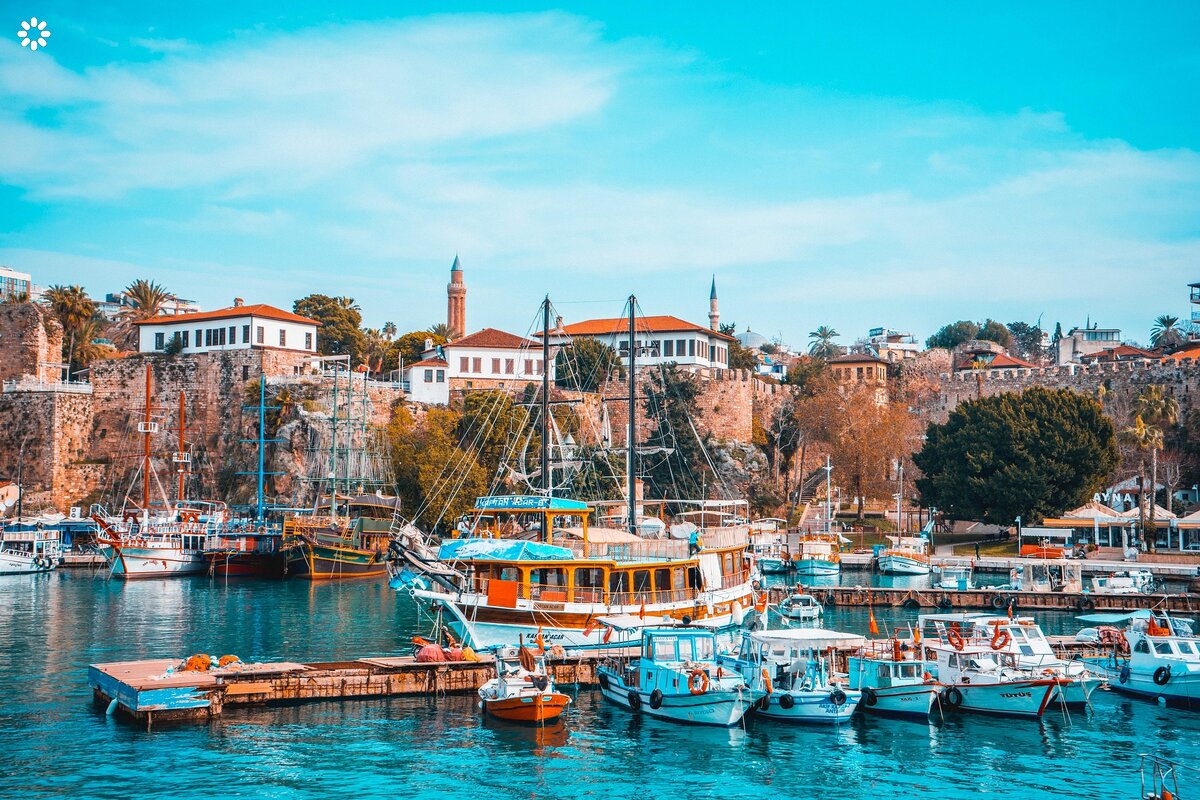
Antalya is a metropolis of well over a million people, and unlike the resort strips around it, it does not close. In November it holds 18–22°C by day, which is warmer than anywhere else in this article and warm enough for a full day outdoors without any of the summer heat. Kaleiçi, the walled old town, is a genuine neighbourhood rather than a reconstruction; the Antalya Museum is among the best archaeological collections in the country; Aspendos and Perge are short drives; and the Düden waterfalls run harder in the wet season than in summer. Hotel prices on this coast are at their annual floor.
Flight from Warsaw: about 3 hours 20 minutes direct
7 nights for two: 2 400–5 500 PLN all-inclusive, the lowest point of the year
November conditions: +18–22°C by day, +10–13°C at night, sea 21–22°C, 8–10 rainy days
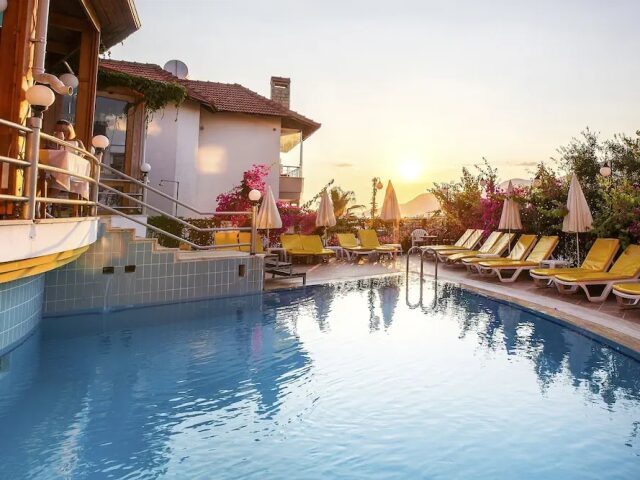
Ask before booking: whether the pool is heated and how many restaurants are open, because low-season service varies sharply
Who is it for
Travellers who want warmth and a base rather than a beach, families with children old enough to enjoy sites and waterfalls rather than a water park, and anyone wanting a week rather than a city break. It is also the only coastal option where a seven-night all-inclusive still makes any sense in November. Not worth it if the hotel is the holiday: many properties run reduced service in November, entertainment programmes shrink with occupancy, and an unheated pool in a resort designed for July is unusable. Book Antalya in November for what is outside the hotel, or book somewhere else.
What to do
- Walk Kaleiçi down to the Roman harbour in the late afternoon, when the old town is lit and the day's cruise traffic has thinned
- Give the Antalya Museum two hours rather than the forty minutes most itineraries allow — the sculpture halls from Perge are the reason to go
- Visit Aspendos and Perge on the same day; both are unshaded and both are far better at 20°C than at 35°C
- See the Düden waterfalls in the wet season, when the flow is at its strongest rather than its summer trickle
- Take the cable car up Tahtalı on a clear day, and treat the summit as a different climate — it sits above 2 000 metres and can be near freezing
Planning around rain, opening hours and the two-hour difference
Three constraints that do not exist in September and shape every November itinerary.
Rain arrives in bursts, not drizzle. November opens the wettest stretch of the Turkish year, which runs through to January, and most regions see eight to ten rainy days. The Mediterranean pattern matters more than the total: rather than a grey day of light rain, you get a few heavy hours and then clearing. That makes a flexible itinerary far more valuable than a waterproof one — plan indoor options you can swap into rather than assuming you will walk through it.
Opening hours become the real limit, not daylight. Because Turkey stays on UTC+3 year-round, late afternoons hold up better than you would expect at this latitude in November. The constraint is administrative instead: major sites move to winter timetables from November, and Pamukkale in particular closes several hours earlier than in summer. An itinerary planned on summer opening times will run out of site before it runs out of light.
Turkey is two hours ahead of Poland all month. Poland went onto winter time at the end of October while Turkey did not move, so the familiar one-hour gap is now two. This matters for transfer pickups quoted in local time, for early flights, and for anyone working remotely during the trip.
Prices in the cheapest month of the year
November is the floor. What you save on price you pay for in service levels, and the trade is worth understanding before booking.
Istanbul hotel rates fall to their lowest outside December and January, Cappadocia cave hotels run winter deals, and Antalya all-inclusive weeks reach their annual minimum at roughly 2 400–5 500 PLN for two. Flights are correspondingly cheap. The catch is consistent across the coast: low-season pricing reflects low-season operation, so the same property that ran four restaurants and an animation team in August may run one restaurant and a quiet lobby now.
On accommodation tax, Turkey remains simpler than its Mediterranean competitors. The tax is charged to the operator as a percentage and built into the quoted price rather than collected per person per night at reception, and the rate was temporarily reduced from 2% to 1% from 1 May, set to run at that level to the end of 2026. You should not be asked for it at check-in.
| Item | Typical price | Worth knowing |
|---|---|---|
| Istanbul, 3 nights for two | 1 200–3 000 PLN | Cheapest outside December and January |
| Antalya, 7 nights for two, all-inclusive | 2 400–5 500 PLN | Annual floor; check open restaurants and heated pool |
| Cappadocia cave hotel, 3 nights for two | 1 500–3 500 PLN | Winter rates; balloon booked separately |
| Cappadocia balloon, per person | Roughly 700–1 100 PLN | Cheaper than summer, cancelled more often |
| Accommodation tax | Included in the price | 1% to end of 2026, paid by the operator, not at reception |
Entry rules for travellers from Poland
Turkey is outside the Schengen area, so your passport decides this, not your residence in Poland.
The rules differ sharply between nationalities treated identically inside Schengen, which is exactly why the assumption catches people out on what feels like a routine European trip.
- EU and EEA citizens, including Polish nationals: visa-free entry for short tourist stays. Check the required remaining passport validity before booking — Turkey expresses it as a period beyond your intended departure, and it is not the familiar six-month rule in every case. Airlines apply it at check-in.
- Ukrainian nationals: visa-free entry for short stays is the long-standing position. Confirm the current permitted length and validity requirement for your dates rather than relying on a previous trip.
- Belarusian nationals: an e-Visa or visa is generally required and obtained in advance online. Apply before departure rather than assuming an airport option exists.
- Non-EU residents of Poland generally: a Polish residence card proves your right to live in and return to Poland. It creates no right of entry to Turkey, and a Schengen visa is not a Turkish one. Passport nationality decides.
- On the return leg: make sure your Polish residence permit or visa is valid for re-entry on your return date, not only on your departure date. This is the more common documentary failure, and it happens on the way back.
Requirements change without notice. Confirm with the Turkish consulate or your tour operator close to departure.
Quick comparison
| Destination | Who it suits | Air, day | Flight from Warsaw | Cost for two | November strength |
|---|---|---|---|---|---|
| Istanbul | City breaks, food, couples | +13–16°C | ~2 h 40 min | 1 200–3 000 PLN / 3 nights | Lowest prices, no queues |
| Pamukkale | Thermal, photography | +15–18°C | Via Izmir or Antalya | 900–2 000 PLN / 2 nights | 36°C pool, cool terraces |
| Cappadocia | Balloons, walking | +8–13°C | Via Istanbul | 1 500–3 500 PLN / 3 nights | Winter rates, empty valleys |
| Ephesus, Izmir | Archaeology, independent | +16–19°C | ~3 h to Izmir | 1 200–2 800 PLN / 3 nights | Walkable at midday |
| Antalya city | Warmth, families, a full week | +18–22°C | ~3 h 20 min | 2 400–5 500 PLN / 7 nights | Mildest, operates all winter |
The strongest November trip is a combination rather than a single base: three nights in Istanbul plus three in Cappadocia, or Izmir and Pamukkale as an inland loop. If you want one base and a full week, Antalya is the only coastal answer that holds up — but book it for the old town, the museum and Aspendos, not for the sea.
Checklist before booking:
- Decide honestly whether anyone in the party needs to swim. If yes, change month or change country.
- Check winter opening hours for every site in the itinerary, especially Pamukkale, which closes hours earlier than in summer.
- Confirm heated pool and number of open restaurants at any coastal hotel before paying — low-season service varies more than the star rating suggests.
- Allow three nights in Cappadocia if the balloon matters, because November cancellation rates are higher than in early autumn.
- Remember that Turkey is two hours ahead of Poland for the whole month, and read transfer times as local.
- Pack layers and waterproofs rather than beachwear: Cappadocia nights hit 1–4°C and coastal rain arrives in heavy bursts.
The most common mistakes:
- Booking a coastal all-inclusive expecting a beach week. The sea is 21–22°C at best, the Aegean resorts are shut, and no price reduction compensates for that if swimming was the plan.
- Treating a cheap November price as the same product. The discount reflects reduced service, not a bargain on the August experience.
- Planning Pamukkale as a day trip from the coast. Winter closing is early, the drive is three hours each way, and you will arrive to a half-open site.
- Booking one night in Cappadocia for the balloon. November cancels more flights than October and there is no rescheduling — one night is one chance.
- Assuming summer opening hours. Major sites move to winter timetables from November, and the itinerary breaks on closing times rather than on daylight.
- Treating Turkey as a Schengen destination. A Polish residence card is not entry permission, and passport validity rules differ by nationality.
So, is Turkey worth it in November?
Yes, provided you have stopped thinking of it as a beach country — which is exactly the adjustment November demands.
As a swimming destination Turkey is finished by now, and pretending otherwise is how November trips go wrong. As a city, thermal and archaeology destination it is at its annual best and its annual cheapest, which is an unusual combination. Istanbul offers the best-value European city break available at this distance from Warsaw. Pamukkale is objectively better in cold weather than in warm. Ephesus can finally be walked properly. Cappadocia trades some balloon reliability for empty valleys and winter rates. And Antalya remains mild enough to carry a full week if you book it as a city.
One practical recommendation:
Build the trip around a warm-water anchor that is not the sea. A night in a Karahayıt thermal hotel or an hour in the 36°C Antique Pool does the job the Mediterranean does in July, and it is the single thing that makes a November itinerary feel like a holiday rather than a well-priced sightseeing trip.

 Holidays


 Last minute


 Hotels


 Blog
Blog