The Atlantic around the Canary Islands is at its warmest in September and October, at 23–24°C off southern Tenerife, rather than in August. From February to April it falls to about 19°C, even though daytime temperatures on the southern coasts still reach 22–23°C.
This guide covers the weather in every month, how much the islands and their north and south coasts differ, rough holiday prices from Poland, and the school holiday dates that push those prices up. There is also a short section on the documents you need if you live in Poland on a non-EU passport.
- You want to swim in the sea every day → September to November
- You need sunshine in the middle of a Polish winter → Winter
- Price matters most → Spring, Prices
- You are travelling with children during ferie → Winter, Ferie dates for 2027
- You can only travel in the summer school holidays → Summer
- You kitesurf or windsurf → Summer, Choosing an island
- You want to hike and go up to Teide → Spring
- You live in Poland with a residence card → Documents
Canary Islands weather by month
The figures below are for southern Tenerife, where most hotels sold by tour operators are found. Air temperature, rainfall and sunshine come from the weather station at Tenerife South airport (Spanish meteorological agency AEMET, 1981–2010 averages). Sea temperatures are long-term averages for La Caleta bay in Costa Adeje.
| Month | Daytime high | Sea | Rainfall | Sunshine per day |
|---|---|---|---|---|
| January | 22°C | 20°C | 17 mm | 6 hrs |
| February | 22°C | 19°C | 20 mm | 7 hrs |
| March | 23°C | 19°C | 15 mm | 7 hrs |
| April | 23°C | 19–20°C | 7 mm | 7 hrs |
| May | 24°C | 20°C | 1 mm | 8 hrs |
| June | 25°C | 21°C | 0 mm | 8–9 hrs |
| July | 28°C | 22°C | 0 mm | 9–10 hrs |
| August | 28°C | 23°C | 1 mm | 9 hrs |
| September | 28°C | 24°C | 4 mm | 7 hrs |
| October | 27°C | 23–24°C | 12 mm | 7 hrs |
| November | 25°C | 22°C | 26 mm | 6 hrs |
| December | 23°C | 21°C | 30 mm | 6 hrs |
Gran Canaria and Fuerteventura are very close to these numbers. At both islands' airports, January averages 20–21°C during the day and August 27–28°C. The bigger difference is between the north and south coast of the same island, which is covered in the section on choosing an island.
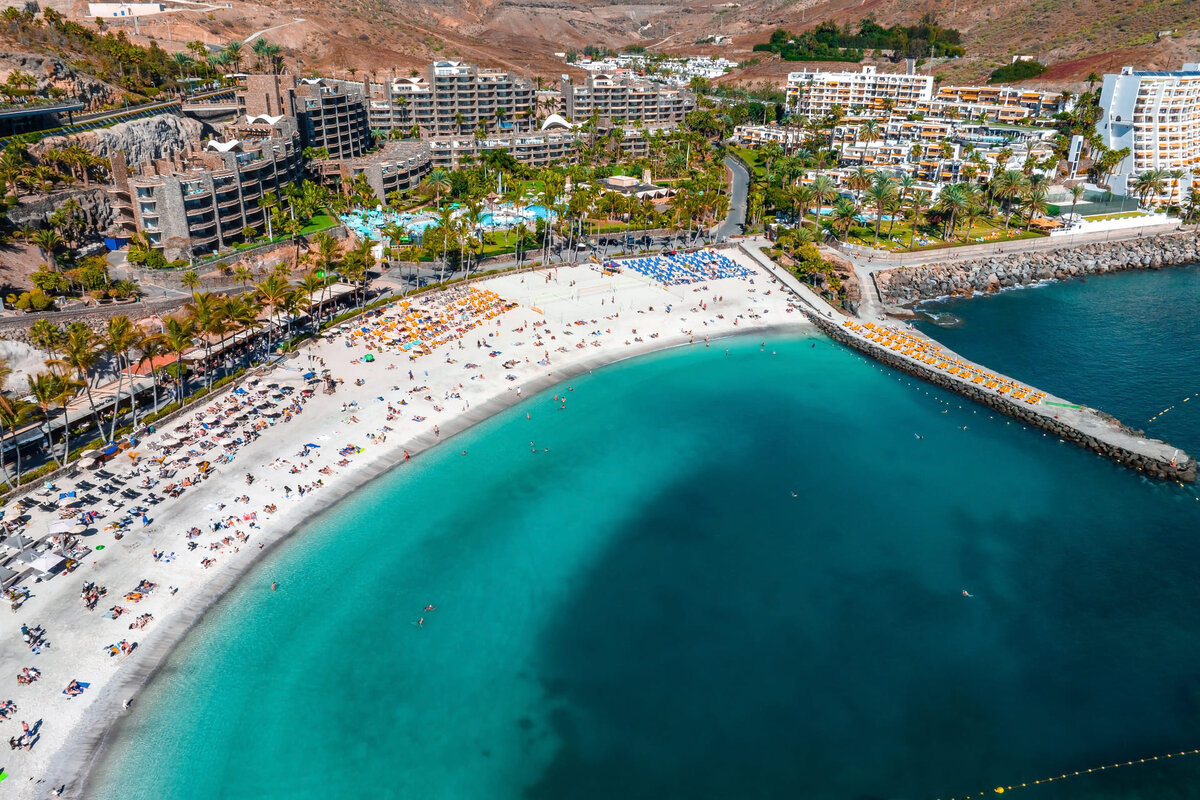
Over the whole year the sea only moves by about five degrees. The cool Canary Current keeps it from warming much in summer and from cooling much in winter. Recent years have run slightly warmer than the averages in the table, but August water rarely goes above 24°C.
September to November, when the sea is warmest
September and October are the only months when the water off southern Tenerife averages more than 23°C. Days reach 27–28°C, nights stay at 20–21°C, and a T-shirt is enough for dinner outside. It hardly rains: Tenerife South airport records an average of 4 mm in September and 12 mm in October. You still get 12 hours of daylight in September and 11 in October.
November is a few degrees cooler but still good for swimming, with the sea at 22°C and daytime highs of 25°C. Sunshine drops to around six hours a day, and showers become more frequent on the northern coasts. If you travel in November, book a hotel in the south of Tenerife or Gran Canaria.
Autumn also costs less than summer. With one large Polish tour operator, an eight-day all-inclusive holiday in late October has recently started at about PLN 4,400 per person, while a July departure started at about PLN 7,800. Two individual offers prove nothing on their own, but the pattern holds: prices fall once the school holidays end, and the sea is warmer than in July.
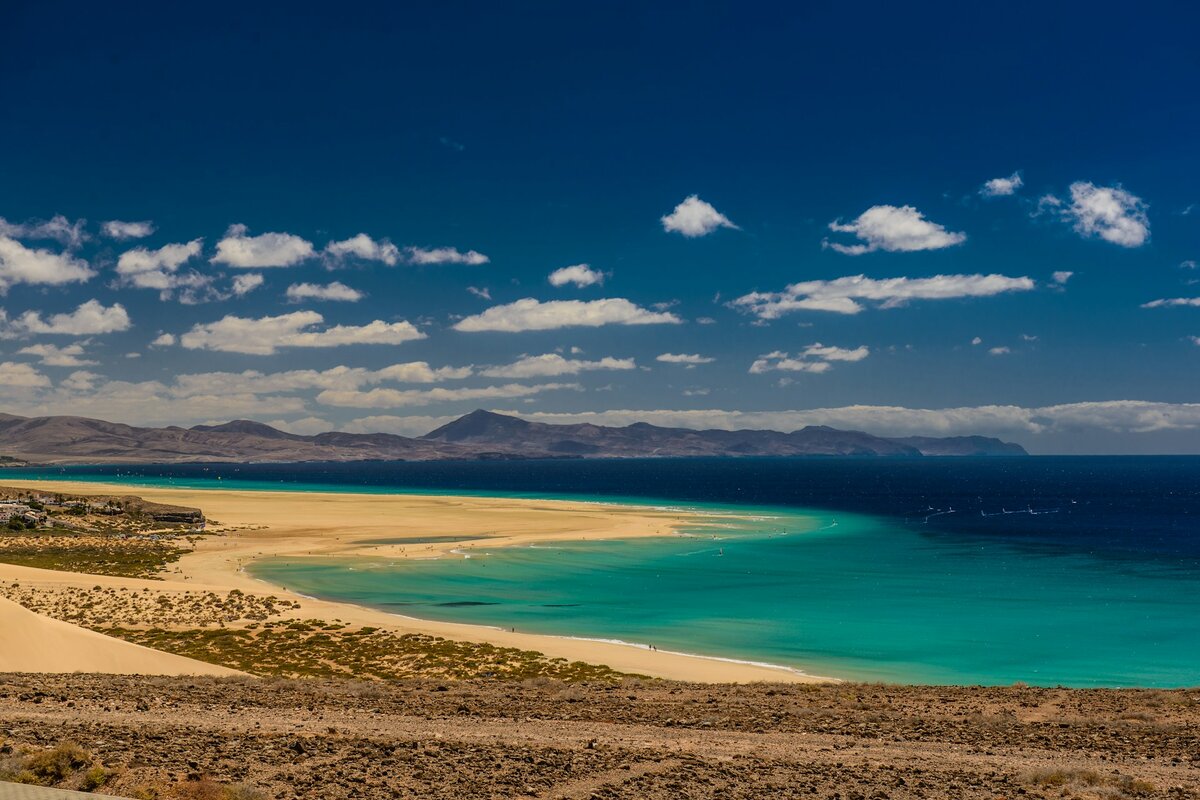
On Fuerteventura and Lanzarote the summer trade wind eases off in September. Beaches such as Corralejo and Costa Calma, where August gusts blow sand across your towel all day, become far more comfortable for a full day by the water.
Who is it for
Couples, anyone without school-age children, and people who want a daily swim but struggle with heat above 30°C. Not worth it for families tied to the school calendar, since apart from the odd day off you would have to take children out of lessons. In November, anyone who books a hotel on Tenerife's north coast is also likely to be disappointed, as Puerto de la Cruz is cooler and wetter than the south at that time of year.
Is winter warm enough for the beach?
For lying in the sun, yes. Between December and February, southern Tenerife reaches 22–23°C by day and about 15°C at night. Days last 10–11 hours, almost three hours longer than in Warsaw in December, with six or seven hours of sunshine on average.
For swimming in the sea, less so. The Atlantic is 20–21°C in December and January and 19°C in February. You can get in, but few people stay in for long, and the wind makes you cold as soon as you step out. In winter most of the swimming happens in hotel pools, so check whether the pool is heated before you book, because not all of them are.
December is the wettest month in the south of Tenerife, but its 30 mm usually falls over three or four days. Calima, the dust that blows in from the Sahara, is more often the problem. According to AEMET, the strongest episodes come between December and March: the sky turns hazy yellow, visibility drops and people with asthma feel it.
Prices vary a lot within the winter. The most expensive weeks are Christmas, New Year and the three rounds of Polish winter school holidays (ferie), which in 2027 run from 18 January to 28 February. Early December, the first half of January and March cost noticeably less with almost the same weather.
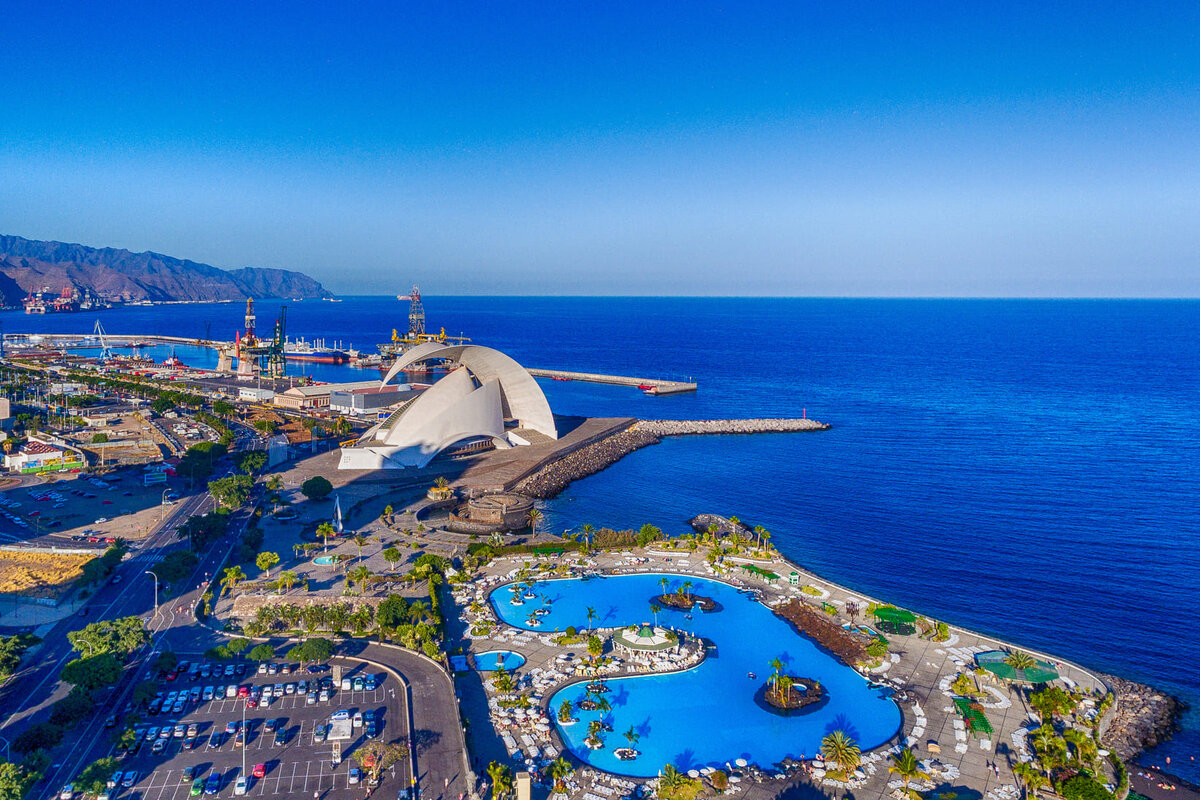
The Santa Cruz de Tenerife carnival has been moved two weeks later than usual in 2027, with street celebrations from 19 to 28 February. That overlaps with the third round of ferie, so families from Małopolska, Wielkopolska or West Pomerania can see the parades without a separate trip.
Who is it for
Anyone who wants to swap a grey Polish week for sunshine without flying halfway round the world, active travellers who would rather not hike in summer heat, and families on their ferie break. Not worth it if a holiday for you means swimming in the sea every day: at 19–20°C most people are out within a quarter of an hour. A family on a tight budget that can only travel during ferie may also be disappointed, because alongside Christmas and July it is the most expensive time of the year.
What to do
- Choose a hotel on the south coast, such as Costa Adeje or Los Cristianos on Tenerife or Maspalomas on Gran Canaria, where winter rain is lowest.
- Confirm the pool is heated before paying the deposit.
- Pack a warm jacket for the trip up to Teide: the summit stands at 3,718 m and can have snow in winter.
- Look at the AEMET dust forecast before you fly, especially if someone in the family has asthma.
- If your ferie falls in the third round, keep the evening of 19 February free for the parade that opens the Santa Cruz street carnival.
Spring brings the coldest sea and the lowest prices
March and April have the coolest water of the year, at around 19°C. On land it is 23°C during the day, rising to 24°C in May. Rain tails off quickly: 15 mm in March, 7 mm in April and about 1 mm in May. By May the days are 14 hours long.
Easter is early in 2027, on 28 March, and holiday prices rise in the weeks either side of it. After Easter, April and May are among the cheapest times of the year. The winter crowds have gone home and Polish schools are still in session.
Spring is the best season for walking. The trails in Teide National Park and the Anaga mountains are not yet baking hot, and in May and June the red tajinaste flowers in the Teide crater. It grows nowhere else in the world and can reach three metres.
Don't underestimate the sun at this time of year. The UV index reaches 9–10 in April and May, so a pleasant 23°C day can still leave you burnt on your first afternoon.
Who is it for
Hikers, couples, retired travellers and families with pre-school children who want to spend less and can manage without a warm sea. Not worth it for anyone planning to spend whole days in the ocean, or for parents of children who never want to leave the water: at 19°C little ones get cold fast, and the hotel pool ends up doing all the work.
Summer: mild heat, strong wind
From June to August southern Tenerife sees 25–28°C during the day and around 20°C at night, almost no rain and nine to ten hours of sunshine. The sea warms slowly, from 21°C in June to 22°C in July and 23°C in August.
At the same time Greece, Turkey and Bulgaria have noticeably warmer water, and the flight from Warsaw takes half as long or less. Summer in the Canaries therefore makes most sense if you want gentler heat: 28°C with a steady breeze is easier for sleeping and sightseeing than the 34–35°C you can expect in Antalya.
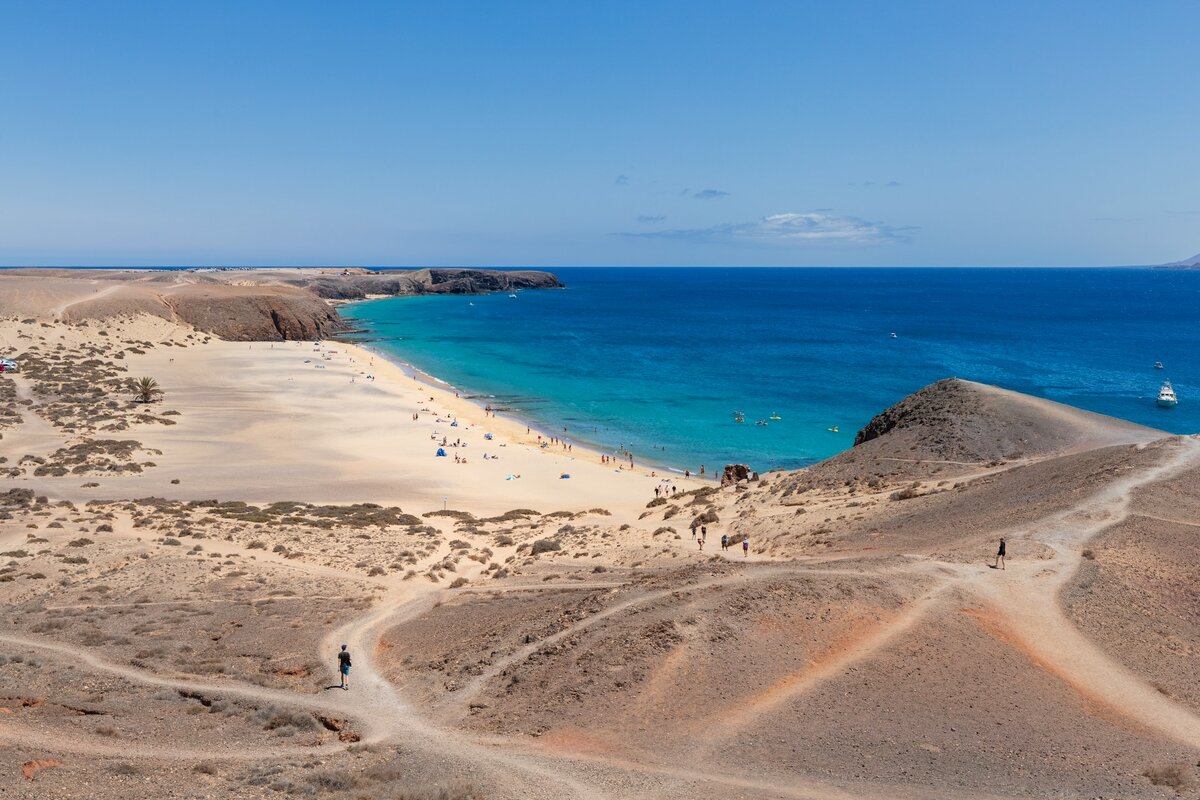
From May until late August a north-easterly trade wind blows across the islands. It is strongest on Fuerteventura and Lanzarote, where average wind speeds reach about 25 km/h in July and August. Kitesurfers plan their year around it; families with small children on the beach usually find it a nuisance. The wind also cools your skin, so sunburn can sneak up on you, and the UV index hits 11 in summer.
Summer calima happens too. When the wind brings air in from the Sahara, temperatures on Fuerteventura can jump to 40°C.
Polish summer school holidays start on 26 June in 2027, and prices climb sharply from that date. June before the end of term is cheaper and has the longest days of the year.
Who is it for
Families who can only travel in the school holidays and don't cope well with heat, plus kitesurfers and windsurfers heading to Fuerteventura. Not worth it if warm water is your priority in July and August: Greece or Turkey will give you a sea several degrees warmer and a flight two or three hours shorter. Parents of toddlers should also steer clear of Fuerteventura's most exposed beaches in summer.
Which island suits which season
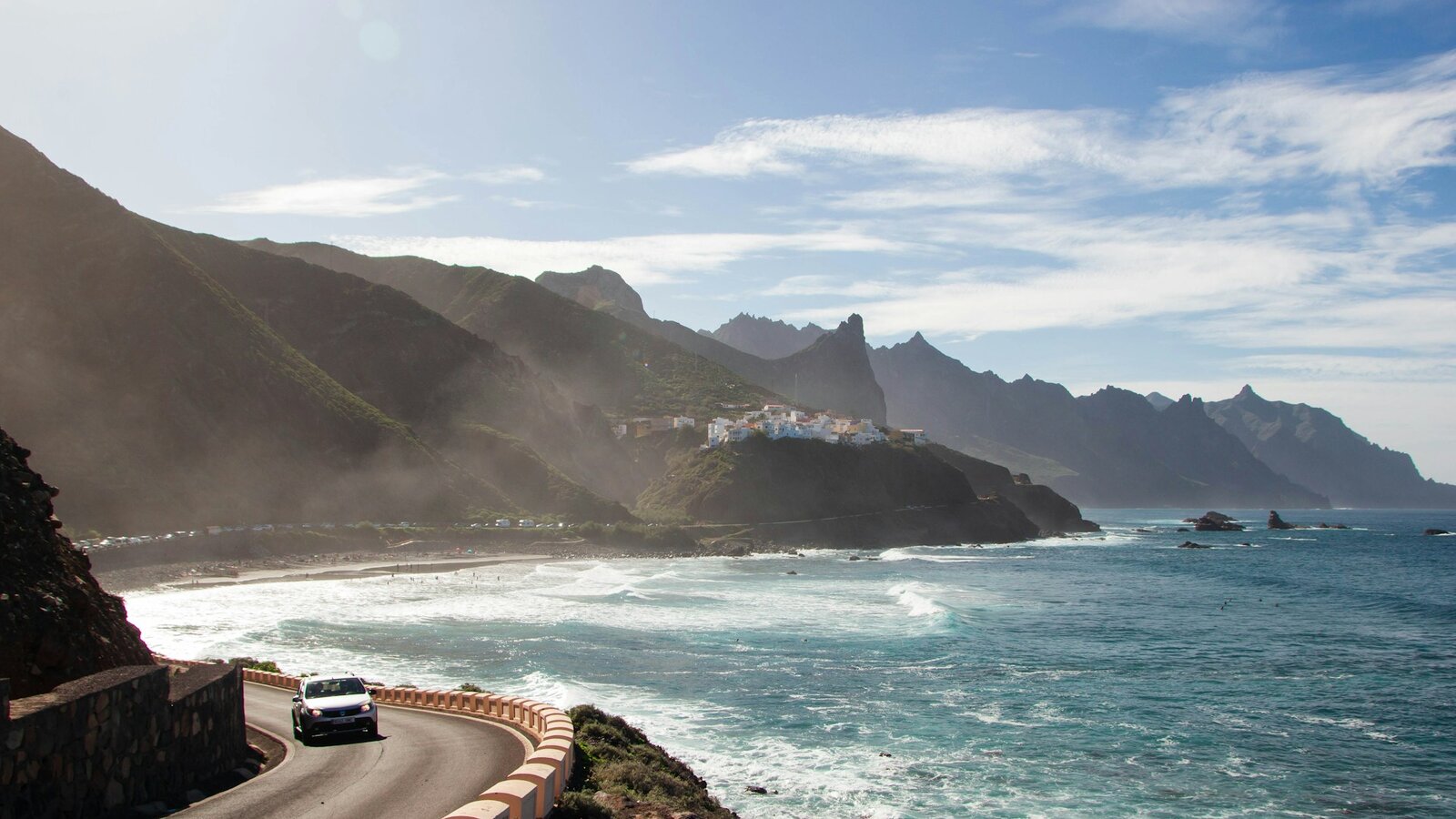
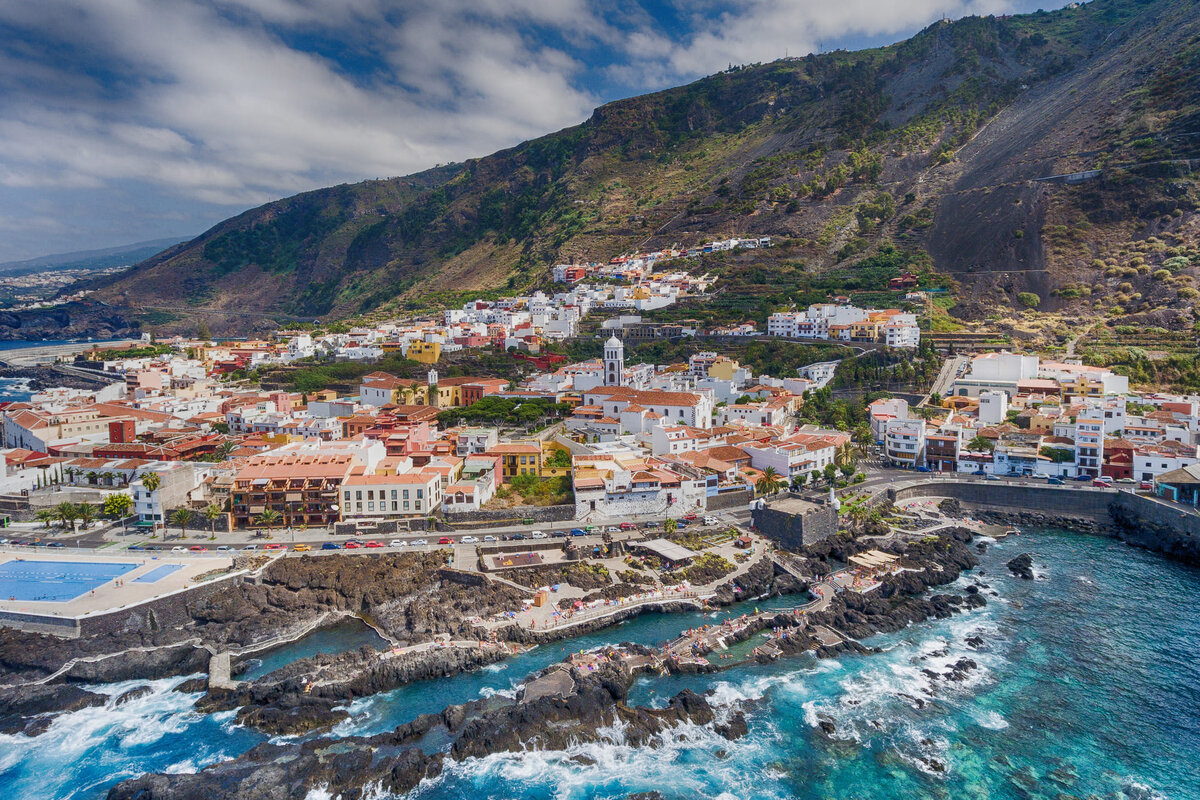
Each of the larger islands has two climates. Clouds carried by the trade wind get stuck on the northern slopes of the mountains, which keeps the north green and damp and the south dry and sunny. In January, Tenerife North airport gets an average of 80 mm of rain over almost eight wet days, while Tenerife South gets 17 mm over fewer than two. The northern airport sits at 632 m, higher than the resorts, but the gap is real on the coast too: Puerto de la Cruz can be two degrees cooler than Costa Adeje.
| Island and coast | Best time | Bear in mind |
|---|---|---|
| Tenerife, south | all year, most reliable sun in winter | beaches mostly dark volcanic sand |
| Tenerife, north | May to October | more cloud and rain from November to March |
| Gran Canaria, south | all year | winter evenings are cool, around 15°C |
| Fuerteventura | spring and September to November; summer for kitesurfing | strong wind in July and August |
| Lanzarote | spring and autumn | summer wind similar to Fuerteventura |
On a first visit in winter, the safest choice is southern Tenerife or southern Gran Canaria: the widest range of hotels, the least rain and mountains within a day trip. Fuerteventura has the longest pale sand beaches in the archipelago, including Corralejo and Sotavento, but for a pure beach holiday it is at its best in autumn, once the wind drops.
Who is it for
Tenerife and Gran Canaria suit people who want to mix the beach with mountains and day trips. Fuerteventura is for long walks on the sand and water sports, and Lanzarote for travellers who like quieter resorts without high-rise hotels. Not worth it for a winter beach holiday on Tenerife's north coast: between November and March it gets far less sun than the south.
Flights, prices and documents for residents of Poland
A direct flight from Warsaw to southern Tenerife takes between 5 hrs 45 mins and 6 hrs 10 mins, and the other islands are similar. That is nearly twice the flight to Antalya, so with young children it pays to keep the first day free. The Canaries are one hour behind Poland all year round. In winter, tour operators fly not only from Warsaw and Katowice but also from Wrocław, Gdańsk and Lublin, among others.
| Travel dates | 7 nights, 2 people | Sea | Notes |
|---|---|---|---|
| April after Easter to 25 June | PLN 8,000–11,000 | 19–21°C | cheapest time of year |
| September to November | PLN 9,000–13,000 | 22–24°C | warmest sea |
| Early December, January before ferie, March | PLN 9,000–12,000 | 19–21°C | sunshine, cool sea |
| Christmas, New Year, ferie, Easter | PLN 12,000–16,000 | 19–21°C | book well ahead |
| July and August | PLN 12,000–16,000 | 22–23°C | strong wind on Fuerteventura |
Prices are a rough guide for 3–4 star hotels including flights and transfers, checked in October 2026. Your dates may come out cheaper or dearer depending on the hotel, board basis and departure airport.
For ferie, Christmas and July–August, the best hotels in southern Tenerife sell out months in advance, so booking early is worth it. For May, October or November you can safely wait for last-minute deals, as there is plenty of choice.
Ferie 2027, round one (18–31 January): Dolnośląskie, Łódzkie, Opolskie, Podkarpackie, Podlaskie, Śląskie
Round two (1–14 February): Lubelskie, Mazowieckie, Pomorskie, Świętokrzyskie
Round three (15–28 February): Kujawsko-Pomorskie, Lubuskie, Małopolskie, Warmińsko-Mazurskie, Wielkopolskie, Zachodniopomorskie
Easter 2027: 28 March
The Canary Islands belong to Spain and the Schengen Area, so travelling there from Poland means no border control. What you need to carry depends on your nationality and status:
- Polish or other EU citizens can travel on a national ID card.
- Non-EU nationals with a Polish residence card (karta pobytu) need both the card and a valid passport, and can stay up to 90 days in any 180-day period.
- Visa-free nationals without a residence card, for example from the UK or Ukraine, need a passport valid for at least three months after leaving Schengen and issued within the last ten years.
- Nationals who normally need a Schengen visa and have no residence card must get the visa before travelling.
A residence card never replaces a passport, so you cannot fly with the card alone.
Checklist before booking:
- From November to March, stick to hotels on the south coast of Tenerife or Gran Canaria.
- In winter, get written confirmation that the hotel pool is heated.
- Compare your dates with your voivodeship's ferie: the week before or after is usually cheaper.
- In summer on Fuerteventura and Lanzarote, ask whether the hotel's beach is sheltered from the trade wind.
- Make sure your passport and residence card are valid for the whole trip.
- Take high-factor sun cream even in winter: the UV index on Tenerife reaches 6–8 in February and March.
Common mistakes:
- Going in August for the warmest sea. The water is warmer in September and October, and holidays are cheaper too.
- Expecting daily sea swims in winter. At 19–21°C, you will end up swimming in the pool.
- Booking a hotel on Tenerife's north coast in January for the beach. It gets several times more wet days than the south.
- Taking toddlers to Fuerteventura in July without checking the beach. On exposed stretches the wind blows sand around all day.
- Assuming a residence card is enough to fly. You need your passport as well.
- Treating it like a flight to mainland Spain. You will spend around six hours in the air, before check-in and the transfer.
So when should you go?
Go in September or October to swim, December to February for winter sun, and April after Easter or May to pay the least.
Couples and travellers without school-age children get the best value in the second half of October, when the sea is still above 23°C and prices are below summer levels. Families travelling during ferie should pick southern Tenerife or Gran Canaria and a hotel with a heated pool. If you can only get away in July or August, compare the Canaries with Greece and Turkey: the sea is warmer there, the heat is gentler here. Spring is for walkers and anyone keen to spend less.
One practical tip:
If your voivodeship has ferie in the third round, 15–28 February 2027, you will be on Tenerife during the Santa Cruz carnival. There is no need to stay in the capital for it. The southern resorts are about an hour's drive away, so you can go in for one evening of parades and spend the rest of the week where it rains less.


 Holidays


 Last minute
 Hotels


 Blog