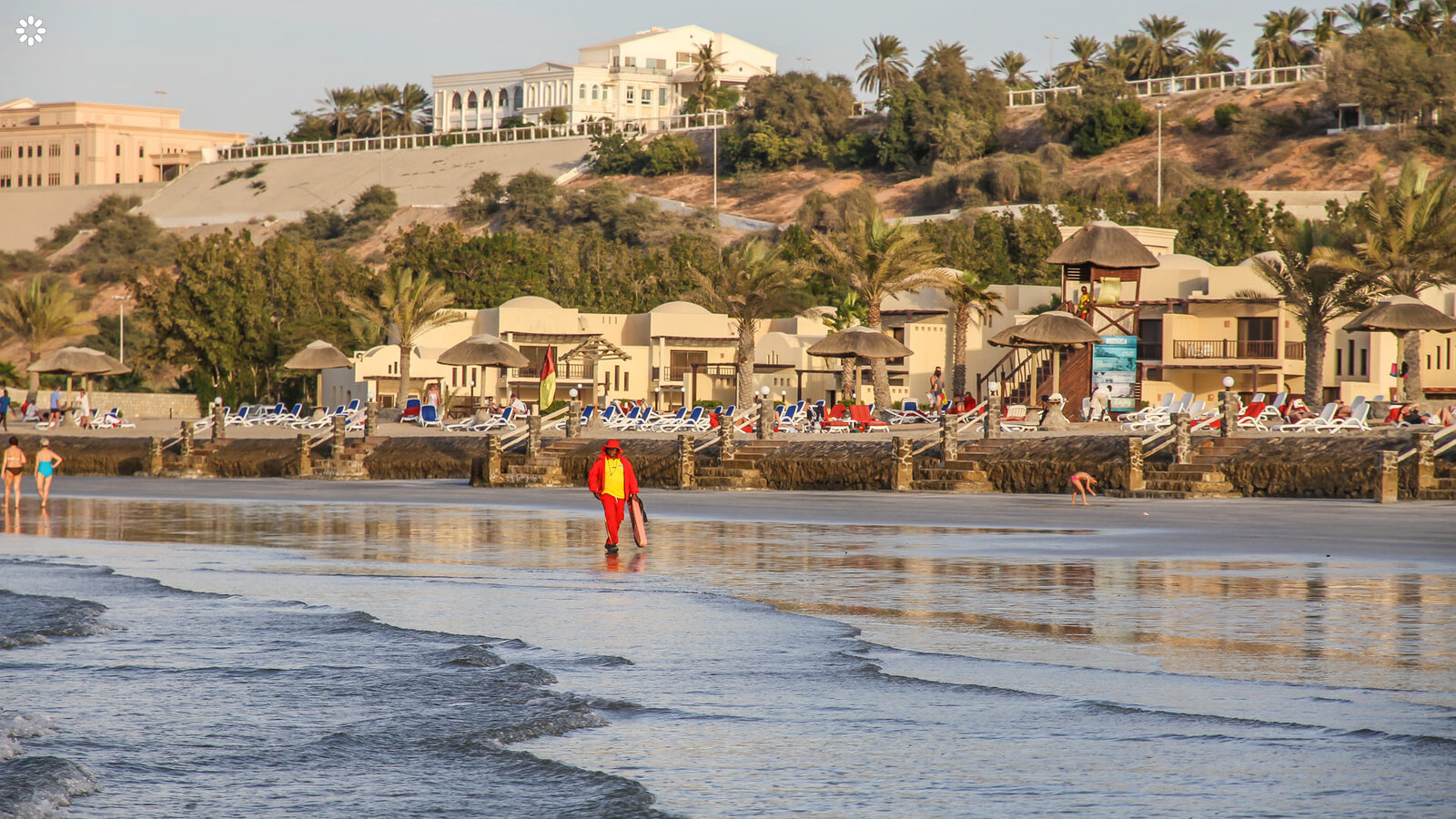
The sea off Dubai is at its coldest in February, around +22°C, and at its warmest in August, +34°C. August is also the month when the air hits +41°C by day and never drops below +31°C at night.
The Emirates take visitors in all twelve months and no month can be written off as out of season. What changes is how long you last outdoors, whether you get into the water without thinking twice, and how much a week in a hotel costs. Below is the year month by month — air and sea temperatures, rainfall, the dates of Ramadan and the things worth settling before you pay.
- You are here for the city, the desert and day trips → November and December
- Your dates land during the fasting month → Ramadan
- For affordable prices → April and May
- You travel with children during school holidays→ Summer
- For a warm sea → Late October
- You need documents, insurance and flight dates → Before you pay
Air and sea temperatures, month by month
The figures below are for Dubai and the Persian Gulf coast. Abu Dhabi, Sharjah, Ajman and Ras Al Khaimah sit on the same stretch of water, so the differences between them will not decide your month.
| Month | Day | Night | Sea | Rain | Sun |
|---|---|---|---|---|---|
| January | +24°C | +14°C | +22°C | 10 mm | 8 hrs |
| February | +25°C | +15°C | +22°C | 25 mm | 8 hrs |
| March | +28°C | +17°C | +23°C | 10 mm | 9 hrs |
| April | +33°C | +21°C | +26°C | 5 mm | 10 hrs |
| May | +38°C | +25°C | +29°C | 1 mm | 11 hrs |
| June | +40°C | +27°C | +32°C | 0 mm | 11 hrs |
| July | +41°C | +30°C | +33°C | 0 mm | 11 hrs |
| August | +41°C | +31°C | +34°C | 0 mm | 10 hrs |
| September | +39°C | +28°C | +33°C | 0 mm | 10 hrs |
| October | +35°C | +24°C | +31°C | 0 mm | 10 hrs |
| November | +30°C | +20°C | +28°C | 5 mm | 9 hrs |
| December | +26°C | +16°C | +25°C | 10 mm | 8 hrs |
Rain barely enters the planning. About 100 mm falls across the whole year, less than Warsaw gets in two months. All of it arrives between December and March, and February holds the record with 25 mm, a quarter of the annual total. It comes as short, heavy afternoon downpours, after which the roads stand under water for an hour, because the city has no storm drainage of the European kind.
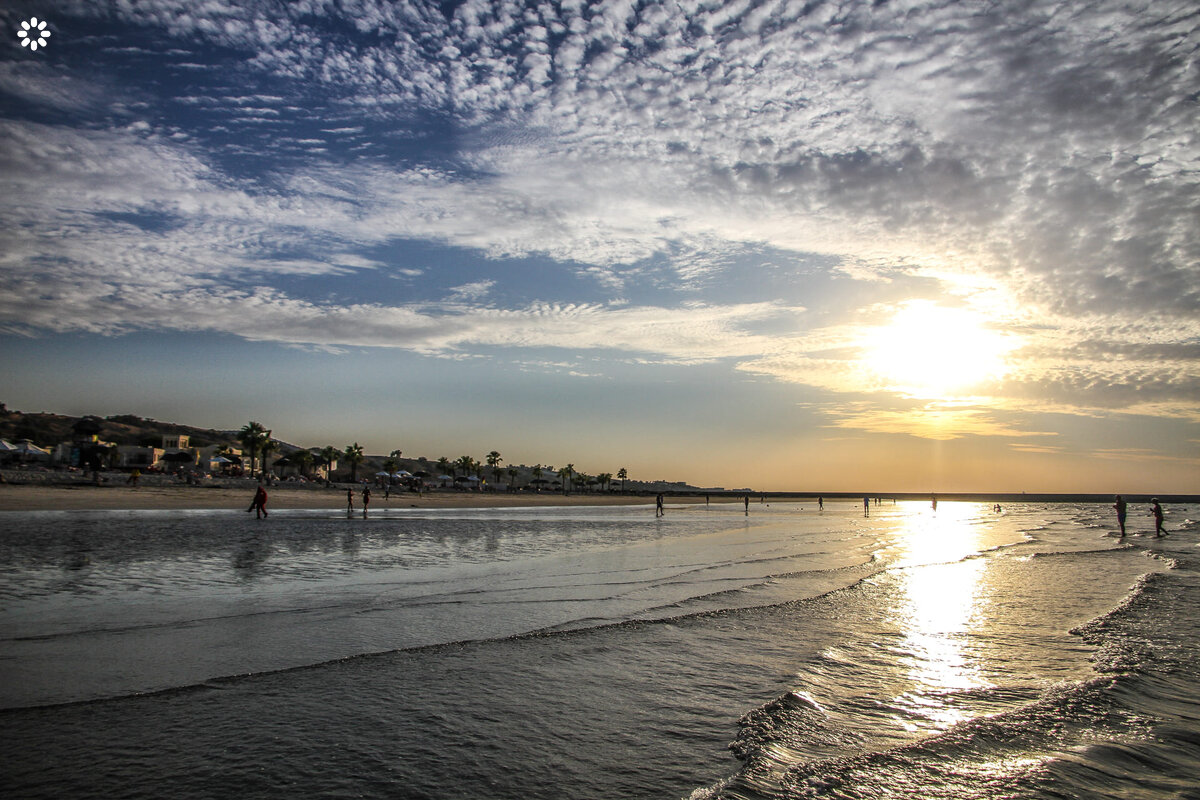
The mismatch matters more. Water and air warm up at different speeds, and the convenient overlap you get in Greece or Spain never happens here. While you can spend a whole day on your feet in the city, the sea holds +22–25°C and you go in for a few minutes. By the time the water reaches +33°C, a walk after ten in the morning turns into a dash from one air-conditioned door to the next.
In summer the humidity does more damage than the thermometer. From June to September the coast reads 80–90 per cent in the mornings, and that is why the worst afternoons feel like more than +50°C. Then there is the shamal, a hot north-westerly wind that carries dust and can cut visibility for a day or two. It blows most often between March and August, which includes months many travellers assume are weather-safe.
Why November costs the most
The easiest weather of the year and the highest prices of the year arrive together
November gives you +30°C by day, +20°C at night, a sea at +28°C, five millimetres of rain and nine hours of sun. You can stay outdoors all day, walk into the water without bracing yourself and sit outside at dinner without a jacket. December cools to +26°C by day and +25°C in the sea, and the nights turn noticeably sharp — +16°C before dawn means a jumper, and an unheated pool stops being fun.
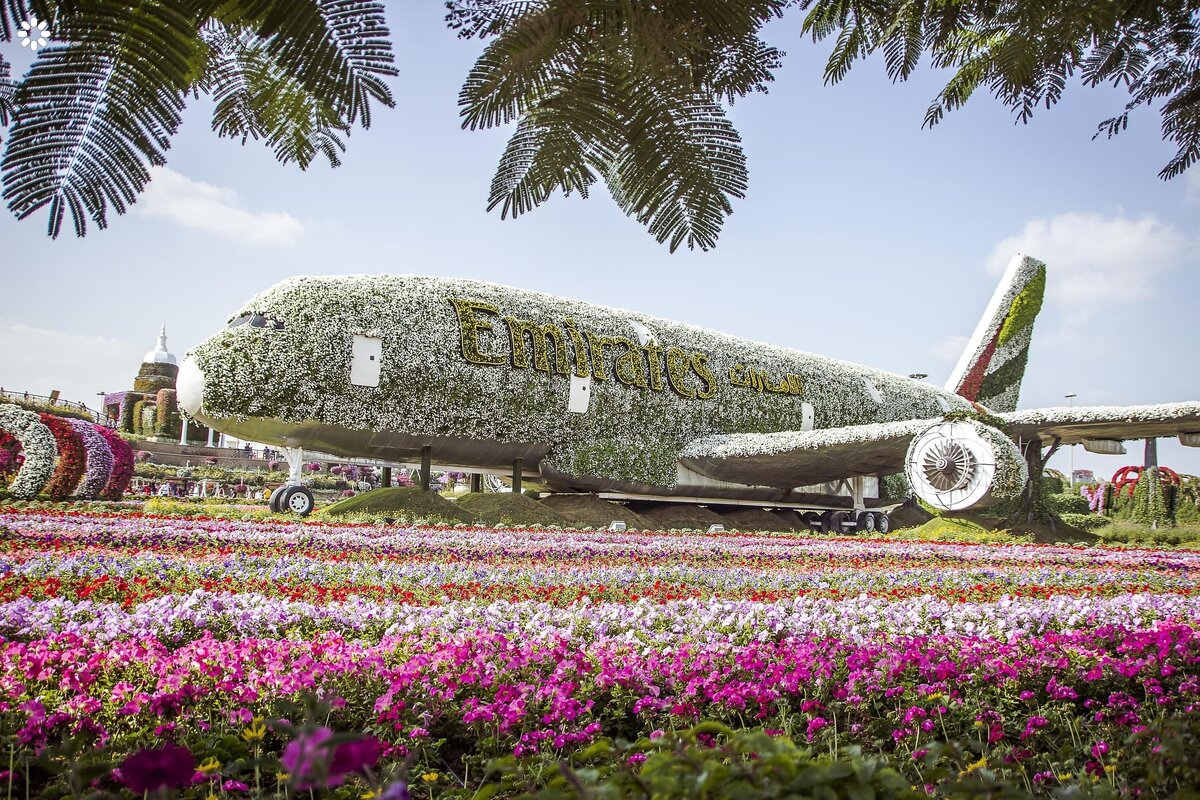
These two months also carry everything the Emirates run in the open air. Global Village opens in mid-October and stays open until May; Dubai Miracle Garden returns from its summer break in October. From 3 to 6 December 2026 the Yas Marina circuit in Abu Dhabi hosts the Formula 1 season finale, with concerts around it — Andrea Bocelli on 2 December, then Imagine Dragons, Zara Larsson, Lewis Capaldi, The Chainsmokers and The Script. That weekend pushes room rates up in Dubai as well as Abu Dhabi, since plenty of spectators sleep on the other side of the gulf.
The price climbs along with the comfort. Early-booking offers for winter 2026/27 start at roughly 2,750 PLN per person with the larger operators, and all-inclusive versions at roughly 5,550 PLN per person. Those are September 2026 figures and a guide rather than a promise — they rise as the aircraft fill. The peak sits over the New Year. Add the Tourism Dirham, charged at check-in: 10 AED per room per night in a three-star hotel, 15 AED in a four-star and 20 AED in a five-star. Hotels also tend to hold a deposit of around 500 AED.
Flight from Warsaw: 6 hrs 30 min non-stop with Emirates, flydubai and LOT
Sea: +28°C in November, +25°C in December
Price: from about 2,750 PLN per person, all-inclusive from about 5,550 PLN, peak over the New Year
Formula 1: Yas Marina, 3–6 December 2026
Who is it for
For anyone who wants more than a sunbed: skyscrapers, desert, souks, theme parks and dinner outdoors. November also suits people who struggle in heat, since it is the only stretch of the year when sightseeing at midday is realistic. Not worth it in December if you are counting the cost or planning long swims. These are the dearest dates of the year, the sea holds +25°C and evenings fall to the mid-teens — for the same money Egypt gives you warmer water.
Ramadan begins on 8 February 2027
First the numbers. January is the coolest month of the year: +24°C by day, +14°C at night, sea at +22°C. That is generous by European standards, but water at that temperature suits a quick dip rather than a swim, and a hotel without a heated pool loses half its point. February adds the rain — those 25 mm, the wettest month — and it is in early February that the sea bottoms out at around +21.8°C. March turns things round: +28°C by day, sea at +23°C, rainfall back to ten millimetres.
In the 2026/27 season, Ramadan lands on this stretch. Astronomical calculations put the start on 8 February 2027 and the end on 8 or 9 March, with the exact dates confirmed by the sighting of the moon closer to the time. Eid al-Fitr should fall on 9 or 10 March, with public holidays running to 12 March. For comparison, Ramadan began on 18 February in 2026, so this time it covers far more of the winter school break.
What does that mean in practice? Between sunrise and sunset, eating, drinking and smoking in public are not allowed, and the rule applies to visitors too, on the street and in the car. Hotels and tourist areas carry on as normal, but restaurant hours shift, some places open only after dark and offices work shorter days. The city comes alive in the evening, and iftar in a hotel restaurant is often the best meal of the trip. During Eid al-Fitr locals are off work and attractions fill up, so book Burj Khalifa tickets or an evening safari well ahead.
Sea: +22°C in January and February, annual low around 9 February
Rain: February 25 mm, a quarter of the year's total
Ramadan 2027: expected 8 February to 8 or 9 March, confirmed by moon sighting
Eid al-Fitr: 9 or 10 March, holidays until 12 March
Who is it for
For sightseers. In winter a day trip to Abu Dhabi, a dune safari, the Sharjah souks and a full day on your feet in Dubai are all doable, which is not true in May or September. Ramadan itself suits anyone who wants to see the country rather than just the hotel. Not worth it in February if the sea is the reason you are going. The water is at its annual low and the only real rain of the year falls then — for a beach holiday, move the dates to March at least.
April still works for sightseeing, May does not
April holds +33°C by day and +21°C at night, with the sea up to +26°C. It is the first month when the water is genuinely warm and the last when walking around at midday makes sense. Rain has effectively stopped and the sun is out for ten hours. May shifts everything five degrees higher: +38°C by day, +25°C at night, sea at +29°C. Evenings stop bringing relief, and a plan that starts with a stroll along the marina ends twenty minutes later.
These months also close the outdoor season — Global Village runs until May, then shuts for the whole summer. Keep the shamal in mind as well: dust storms are most common from March to August and can take away the view from an observation deck you have already paid for.
Who is it for
For couples and anyone free of the school calendar who can travel outside the holidays. April delivers both halves of the deal: a sea at +26°C and evenings you still want to spend outside. Not worth it in May if your plans include anything beyond the pool and the shopping centre. At +38°C with eleven hours of sun, a desert safari, a wander through Al Fahidi or a queue for the Burj Khalifa lift stop being enjoyable, and that goes double with a small child.
Summer costs half as much and feels like +50°C
From June to September life in the Emirates moves indoors. June brings +40°C, July and August +41°C each, September +39°C. The nights give nothing back: August bottoms out at +31°C, higher than the daytime maximum of a hot Polish summer day. The sea warms to +33–34°C and stops cooling you down — you come out of it warmer than you went in. There is no rain at all, morning humidity reaches 90 per cent, and the worst afternoons feel like more than +50°C.
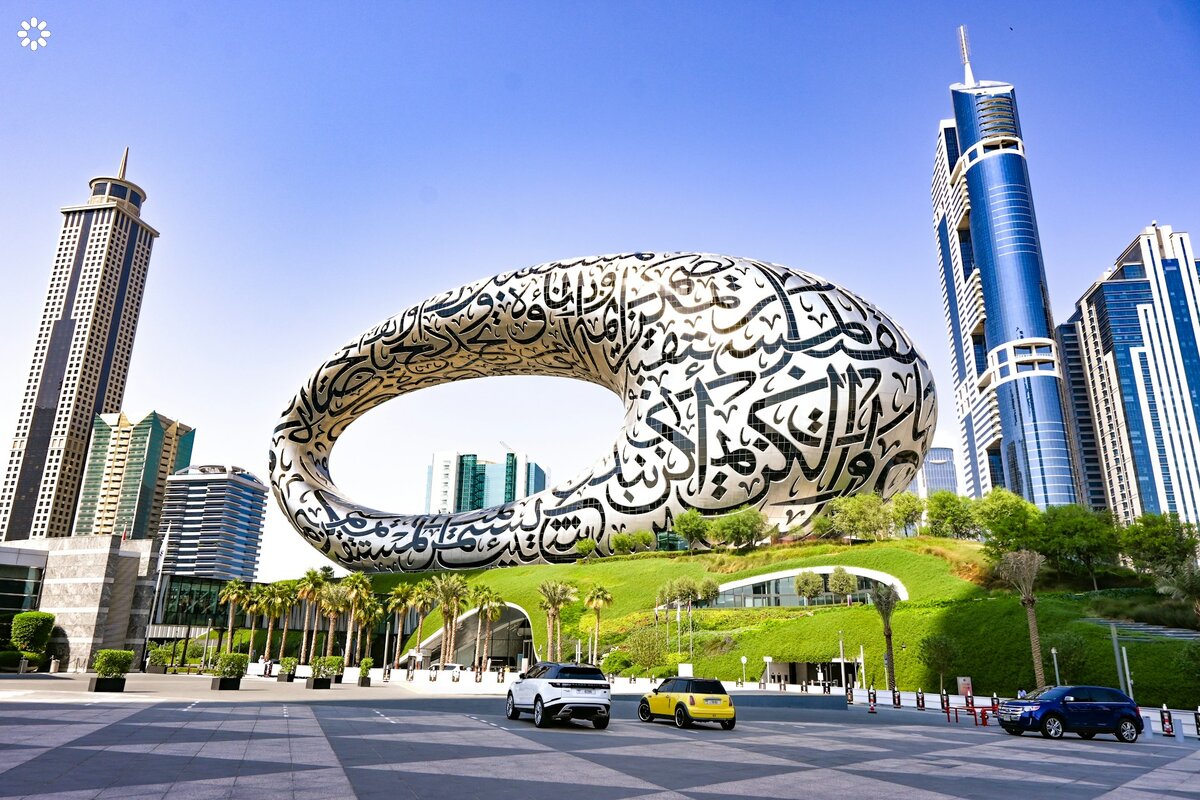
The pay-off is the price. Hotel rates in these months run 40–50 per cent below peak, so the money that buys a four-star room in December buys one with a water park and a private beach in August. You only need to know what will be missing: Global Village and Miracle Garden are closed until October, evening markets and open-air concerts do not run, and desert trips only set off after sunset.
What to do
- Plan anything outdoors before nine in the morning or after sunset, and stay near air conditioning in between
- Pick a hotel with a water park or a pool that is chilled in summer — ask before booking, because not every property does it
- Book Dubai Aquarium, the Museum of the Future and the observation decks for the middle of the day, when you would be indoors anyway
- Take the evening version of the dune safari, with dinner and a drive back after dark
- Pack a light long sleeve: air conditioning in malls and restaurants is often set to +18°C
Who is it for
For families tied to the school holidays who want a better hotel for the same money, and for anyone happy with a beach, a pool and slides. Children handle it better than adults, largely because they spend the day in the water. Not worth it in summer if you plan to see the city, visit the desert by day or do anything that involves walking. September is no different from August in this respect — the first real relief comes in the second half of October.
Late October: a sea at +31°C
October works the other way round from April. The air has come down to +35°C by day and +24°C at night, while the sea still holds its summer heat at +31°C — five degrees warmer than April for almost identical air temperatures. No rain falls at all. The first fortnight is hard going because the humidity fades slowly; the second half of the month is clearly easier, and that is where the season really starts.
Global Village returns in mid-October, with season 31 announced for October 2026 to May 2027; the exact opening day has not been published yet, though it usually lands in the middle of the month. Miracle Garden opens around the same time. Flights change too: Wizz Air resumes Katowice to Abu Dhabi from 25 October, five times a week, and Kraków to Dubai from 27 October, three times a week. Before those dates, Warsaw is the only Polish airport with a non-stop service.
Sea: +31°C, the warmest outside summer
Rain: 0 mm
Flights: Katowice to Abu Dhabi from 25 October, Kraków to Dubai from 27 October
Attractions: Global Village and Miracle Garden open mid-month
Who is it for
For travellers whose first priority is the water, with sightseeing as a bonus. The second half of October gives you a warmer sea than any month outside the school holidays, weather you can cope with and prices that have not reached the December peak. Not worth it in the first week of October if humid heat defeats you. Thirty-five degrees with high humidity is a different experience from thirty-five in Spain, and the night never falls below +24°C.
What to sort out before you pay
The Emirates ask less of you than most long-haul destinations, but three things are worth checking yourself: the current Polish Foreign Ministry advisory, the scope of your own insurance and the documents of everyone on the booking.
Polish Foreign Ministry advisory — as of 02 October 2026:
- On 9 September 2026 the ministry lowered its warning level for the UAE from four ("do not travel") to three ("avoid travel"), and still advises against tourist trips.
- The country profile on the embassy site was updated earlier and still carries the wording of the previous level. Use the Odyseusz service instead, and check it twice: on the day you book and again before departure.
- The level affects your policy. At level four, cover is often excluded or needs a war-and-terrorism extension; at lower levels a policy usually holds, but the exact wording sits only in your insurer's terms and conditions.
- Cancellation cover does not pay out simply because the advisory level has changed — that is separate from the right to withdraw from a contract.
- Where unavoidable and extraordinary circumstances occur at the destination, the Polish package travel act gives you the right to withdraw without a fee. Operators used that mechanism in spring 2026 and offered clients a free cancellation or a change of destination.
Documents come next, and here your passport does the work rather than your Polish paperwork. Entry to the UAE depends on citizenship, and a Polish residence card gives you no right of entry, because the Emirates lie outside the Schengen area; a Schengen visa is no help either. Polish and other EU citizens enter visa-free for up to 90 days. Belarusian citizens have visa-free entry of up to 90 days within any 180, according to the Belarusian consulate general in Dubai, and Ukrainian citizens up to 30 days. Everyone needs a passport valid for at least six months from the date of entry; temporary passports and ID cards are refused at the border. If your family holds different passports, check the conditions for each one separately.
The rest is local law, and it catches people out. You may bring in no more than a three-month supply of medication, in its original packaging, and some products sold freely in Poland need a prescription here plus clearance from the UAE health ministry. Alcohol is legal in hotels and clubs but banned in Sharjah, including carrying it through the emirate by car. Hiring a car for a stay of up to 30 days calls for an international driving permit and a credit card.
Checklist before booking:
- Open the ministry advisory on Odyseusz and note the date you read it
- Find the clause in your policy that covers countries under travel advisories and war risk
- Count the passport validity from the date of entry, not the date you buy the holiday
- Check entry conditions separately for the citizenship of every traveller
- Ask the hotel whether the pool is heated if you travel between December and March
- Budget for the Tourism Dirham on every night and the 500 AED deposit at check-in
Common mistakes:
- Choosing February for a beach holiday. The coldest sea of the year coincides with the heaviest rainfall, which makes it the weakest month of twelve for the beach.
- Planning sightseeing for May or September. At +38°C with high humidity the day ends after one stop, and tickets bought in advance go to waste.
- Treating a residence card as an entry document. The border works from your passport and citizenship, and Polish residence papers play no part.
- Picking dates without checking Ramadan. In 2027 it starts on 8 February and covers most of the winter school break.
- Expecting to eat cheaply outside the hotel. The Emirates are the priciest of the short-haul winter destinations, and meals in town can double the budget of a trip.
Which month to book
If the dates are yours to choose, go in November: +30°C by day, a sea at +28°C, five millimetres of rain and every outdoor attraction already open.
After that it depends on what you are travelling for. Anyone whose priority is swimming should look at the second half of October, when the sea is at +31°C, warmer than in November or December, and prices have not yet reached their peak. If the city, the desert and day trips are the point, December to March is yours, on the understanding that the sea will only be good for a quick dip. Families tied to school holidays and watching the price get a better hotel for the same money in summer, provided the day is spent under a roof. April and May belong to couples without children, and May is already too hot for anything but the pool.
One practical tip:
If you are weighing April against October, take October. The air is almost identical and the water is five degrees warmer, which is the difference between a sea you enter briefly and one you stay in for half a day. While you are at it, check the flight dates from Katowice and Kraków, because until the last week of October only Warsaw has a non-stop service.




 Holidays


 Last minute
 Hotels


 Blog