The item that most often delays a family at check-in is not a missing swimsuit — it is a document. A child without their own passport, a single parent without a signed consent letter, or a 150 ml tube of sun cream in the wrong bag causes more real delays than anything left off a clothing list, yet most packing guides put "swim nappies" above "passport" and never mention the paperwork at all.
This checklist is ordered the way a departure morning actually goes: documents and insurance first, carry-on survival kit for the flight itself, then clothing, footwear, sun protection, first aid, hygiene and beach gear. It is built for families flying out of Warsaw, Kraków or Gdańsk to the Mediterranean, Egypt, Turkey or further afield, including households where the adults hold different passports or residence status.
- Sorting paperwork first → Documents and insurance
- Packing the flight, not the suitcase → Carry-on for the travel day
- How many outfits, really → Clothing
- Sand, pool edges, rocky beaches → Footwear
- Sun, water, and what actually protects a child → Sun and water accessories
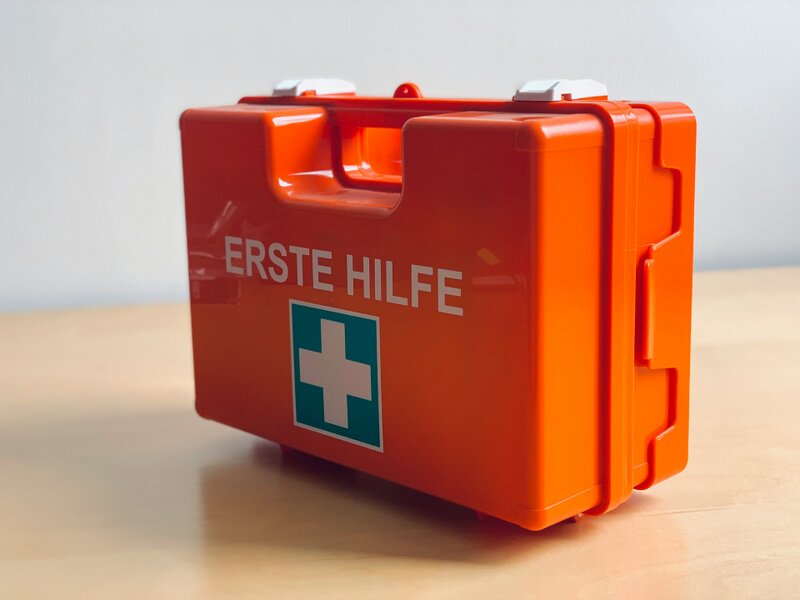
- What to put in the first-aid pouch → First-aid kit
- Toiletries worth packing vs buying there → Hygiene items
- Stroller, shade, water toys → Extra gear for the beach
- What families get wrong every summer → Common mistakes
Documents and insurance: sort this before you open a suitcase
Every child needs their own travel document. Being entered into a parent's passport is no longer accepted for EU travel, so even an infant needs an individual passport or, for EU-national children travelling within the Schengen area, their own ID card. A child's Polish residence card is proof of status, not a travel document, and will not substitute for a passport at the gate.
If a child is travelling with only one parent, a grandparent, or another adult without parental authority, several airlines — including KLM on connections through Amsterdam — ask for a signed consent form at check-in or security, and some destination countries add their own requirement for a notarised letter from the absent parent. Check the specific rule for your destination rather than assuming an EU norm applies everywhere, and carry the child's birth certificate if their surname differs from the accompanying adult's.
Health cover. A European Health Insurance Card only works inside the EU/EEA — it does nothing in Turkey, Egypt, Tunisia or the Dominican Republic, so buy separate travel medical insurance for the child on any non-EU trip.
Prescriptions. If your child takes regular medication, carry it in original, labelled packaging in the cabin bag, not the hold, and bring a short doctor's note for anything unusual — it speeds up questions at security far more than the medicine itself.
Passport validity. Many non-EU destinations require at least three to six months of validity beyond the return date — check this for the child's passport specifically, since it often expires sooner than a parent's.
Not worth risking: assuming a residence card, a family booklet, or "we've flown before without it" will cover a document requirement — airlines apply these checks at the gate, not only at border control, and a missing consent letter can mean the child is not boarded at all.
Carry-on for the travel day, not the whole holiday
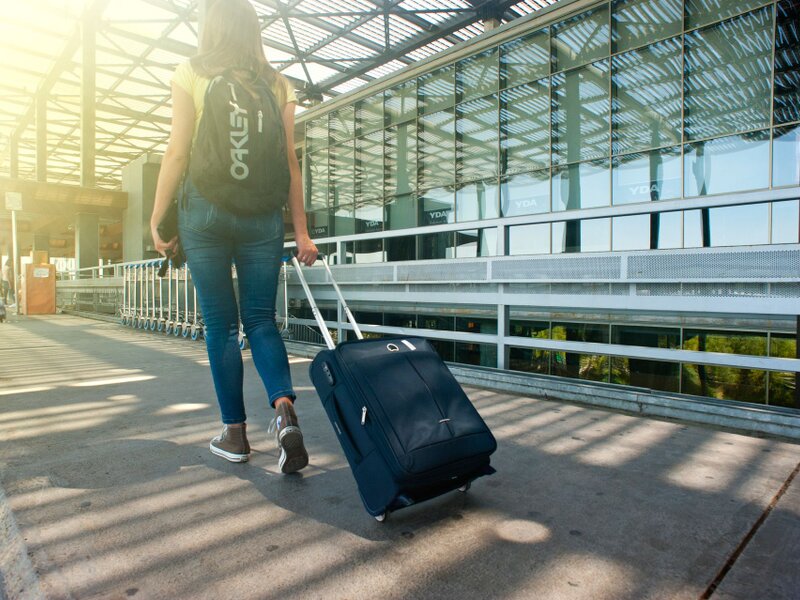
Warsaw Chopin has family-specific facilities worth knowing about before you get to security: marked family lanes at every security checkpoint, free strollers past security marked with the airport's elephant mascot, baby-care rooms with a changing table and feeding chair, and small play areas near several gates. Family check-in counters are also marked separately, which matters more than it sounds like on an early departure with a toddler in tow.
What actually needs to be in the cabin bag, not the suitcase:
- A full change of clothes per child, including socks — spills happen on the plane, not just at the beach.
- Snacks and an empty bottle to fill after security, since liquids bought before the checkpoint won't pass through.
- Baby food, formula, breast milk or sterilised water in whatever quantity the child needs — these are exempt from the standard 100 ml liquid limit at EU airports, but must be declared separately at the security tray.
- Wet wipes, a small hand sanitiser, and at least two extra nappies or pull-ups per hour of total travel time.
- One familiar toy or comfort object — not a new one bought for the trip, since novelty doesn't soothe the way familiarity does during takeoff.
- A light blanket or muslin, since cabin air conditioning runs cooler than most people expect.
- Screen-free entertainment as a backup — sticker books, a small colouring set — for the descent, when screens sometimes have to go away before headphones do.
- A spare plastic bag for wet or soiled clothing, sealed inside the cabin bag rather than dug out mid-flight.
- Something to suck or chew during take-off and landing — a bottle, a dummy, or a snack — since swallowing helps equalise ear pressure and matters more for children than adults.
Clothing: pack for humidity and air conditioning, not just heat
Resort air conditioning and evening sea breezes catch out more families than the daytime heat does.
| Item | Suggested quantity for a 7-night trip | Why |
|---|---|---|
| T-shirts, short and long sleeve | 4–5 | Long sleeves double as sun cover for reef-safe midday hours |
| Shorts | 2–3 | One pair inevitably ends up sandy and stays that way |
| Lightweight trousers | 1–2 | Evenings, air-conditioned restaurants, the flight home |
| Zip-up fleece or light jumper | 1 | Cabin AC and evening sea breeze both run cooler than the beach |
| Swimwear | 2 | One dries while the other is worn — chlorine and salt water shorten fabric life fast |
| Sleepwear | 2 sets | Unfamiliar bed, unfamiliar heat, higher chance of a change mid-night |
Footwear: three pairs, each doing a different job
Closed water shoes matter more on rocky Mediterranean and Adriatic coastlines than on the sandy beaches of Egypt or Tunisia — check your specific resort's shoreline before deciding whether to bring them. Beyond that, a soft, quick-drying sandal handles the pool deck and hot pavement, and one closed pair of trainers covers the airport, transfer, and any cooler evening excursion. Flip-flops alone are worth skipping for younger children, since they offer no grip on wet tile around a pool edge, which is exactly where falls happen.
Sun and water accessories: what actually protects, not just what looks the part
A wide-brimmed hat protects the neck and ears in a way a cap does not, and it is worth packing over buying one at the resort, since sizing for a young child is easier to get right at home. For sunglasses, look for a UV400 or "100% UV protection" label rather than dark lenses alone — dark, unrated lenses can make a child's pupils dilate without blocking UV, which is worse than no sunglasses at all.
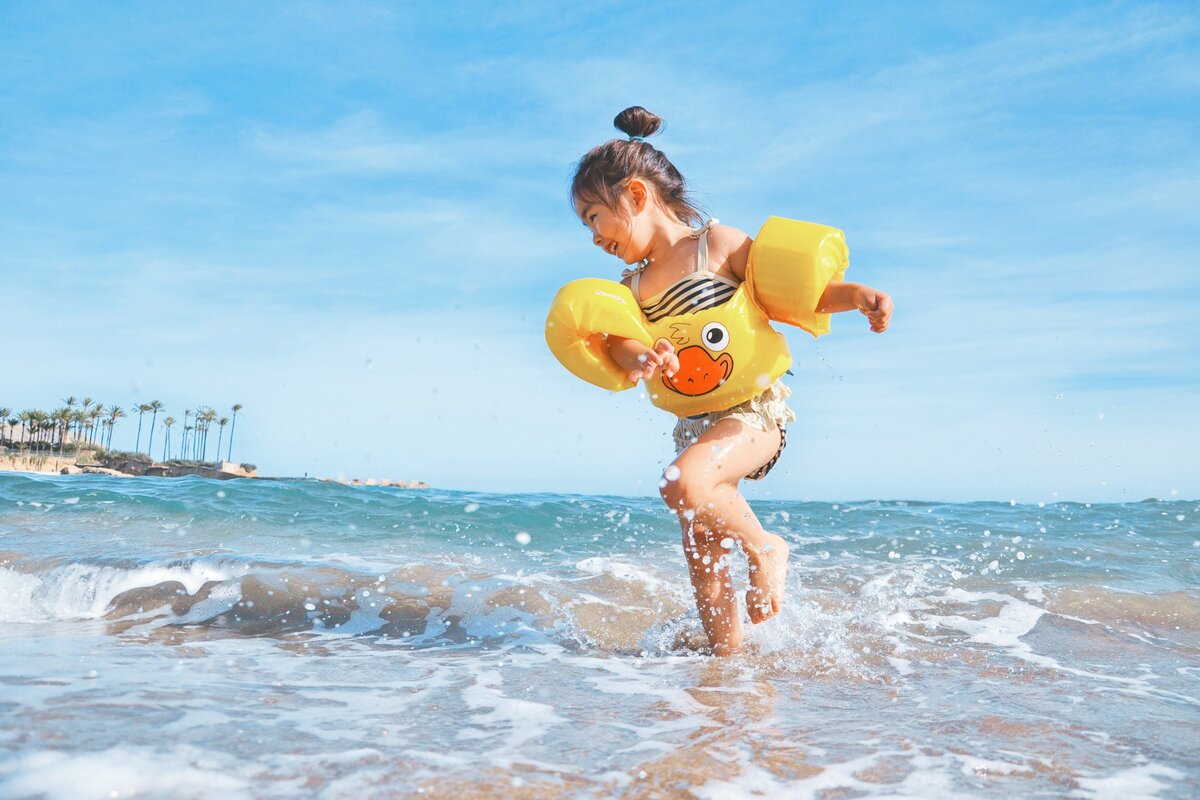
For water confidence, a snugly fitting swim vest or "puddle jumper" is generally considered a better choice than inflatable armbands, which can slip and don't keep a child's head reliably above water. A UPF-rated rash guard reduces how much bare skin needs reapplied sunscreen every two hours, which matters more on a long beach day than most parents expect. Pack a lightweight backpack sized for the child to carry their own hat, water bottle and a small toy — it gives them one job to manage and takes one item off the adult's hands.
First-aid kit: build it around your destination's actual risks
Skip the temptation to pack a full home medicine cabinet — a focused kit for the specific risks of sun, sand and unfamiliar food travels better and gets used more.
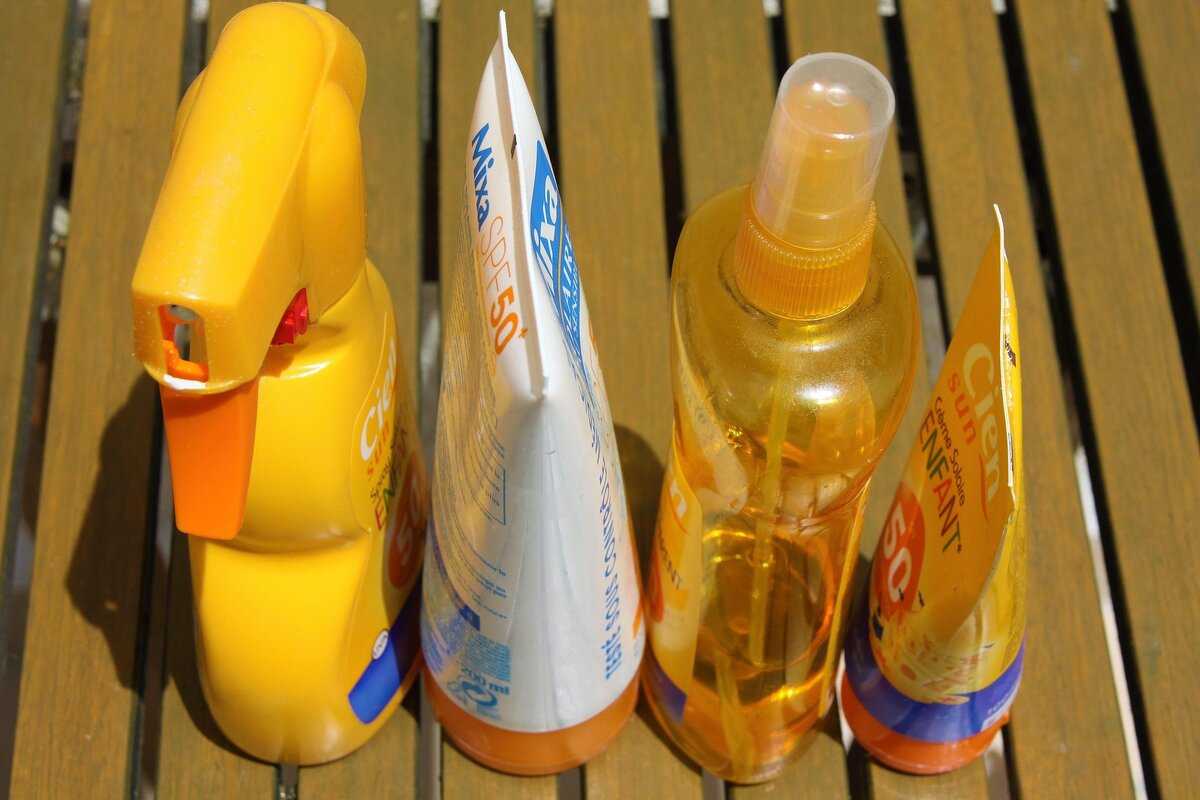
Sun protection. A high-SPF, water-resistant sunscreen suitable for children's skin, reapplied every two hours regardless of the label's claimed water resistance, plus an after-sun gel for the evening a reapplication gets missed.
Everyday remedies. An age-appropriate antihistamine for bites or a heat rash, a fever reducer suitable for your child's age, something for travel or motion sickness, and oral rehydration sachets — children dehydrate faster than adults in Mediterranean or Red Sea heat, and a stomach upset from unfamiliar food is common enough to plan for.
Minor injuries. A range of plaster sizes, antiseptic wipes, and a soothing gel for insect bites, since mosquito activity picks up at dusk on most resort grounds near water or greenery.
Ask your GP before travel about doses and any destination-specific advice for your child's age — this checklist names categories, not doses, on purpose.
 Q&A / Travel FAQ
Travel Medicine Kit: Full List of Medicines and a Pre-Trip Checklist

Hygiene items: pack the essentials, buy bulk locally
A child-specific toothbrush and a small tube of children's toothpaste, along with familiar shampoo and soap for sensitive skin, are worth packing rather than trusting to resort-supplied toiletries, which are rarely formulated for a child. For nappies, pack enough for the travel day and the first 24 hours at the resort, then plan to buy the bulk locally — the weight saved in the suitcase is significant, and most resort towns in Turkey, Egypt and the Mediterranean stock familiar international brands.
Extra gear for the beach
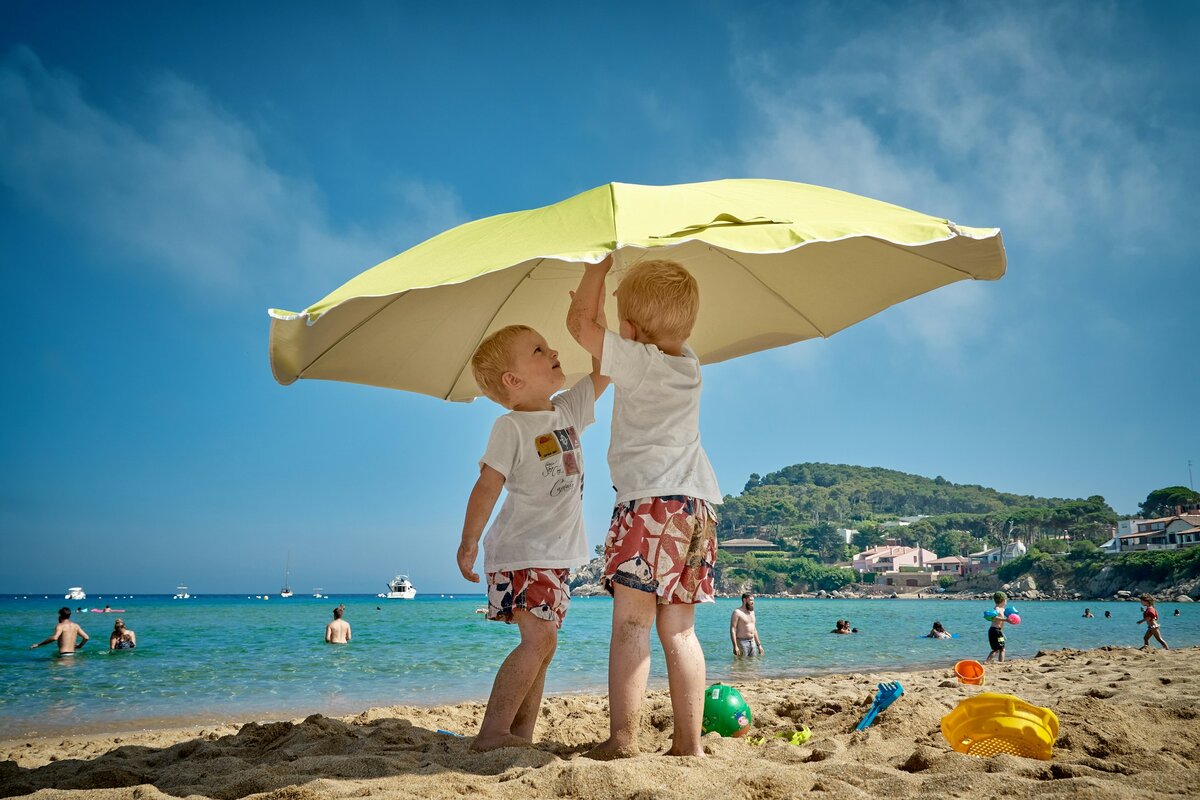
- A lightweight umbrella stroller travels better than a full-size one for a beach holiday and usually gates-checks for free at Warsaw Chopin and most EU airports — check your specific airline's policy before assuming it is included.
- A pop-up beach shade or UV tent buys shaded time on the sand during the 11:00–15:00 window, when sunscreen alone is not enough for young skin.
- A wide beach towel that doubles as a changing surface saves a separate item, and a mesh bag for sandy toys keeps sand out of the suitcase on the way home.
- A handful of simple sand and water toys go further than an elaborate set — a bucket, a spade and something that pours occupies most toddlers longer than a themed play set does.
Common mistakes
Packing the child's medication or a large sunscreen bottle in the checked bag. Both are better carried on — the medication because it needs to be accessible and declared, the sunscreen because oversized checked-bag toiletries are the easiest thing to lose to a delayed or misrouted bag.
Assuming any adult can fly with any child. Airlines and destination border officials both check for consent documentation when the accompanying adult isn't both parents, and this is enforced more consistently than families expect.
Trusting armbands over a proper swim vest. They are worth reconsidering for open water or a pool with any current or depth, since a snug vest keeps a child's head above water more reliably.
Buying a new comfort toy for the trip. A brand-new toy doesn't soothe the way a familiar one does during takeoff turbulence or an unfamiliar bed on night one.
The bottom line before you close the suitcase
Sort documents and insurance a week before departure, not the night before — a missing consent letter or an expired child passport is the one problem this checklist can't fix at the airport. Pack the carry-on as if the flight itself is the first day of the holiday, since a hungry, overheated toddler on a delayed flight sets the tone for everything after landing. Everything else on this list — clothing, footwear, first aid, beach gear — is replaceable at most resort towns in Turkey, Egypt, Tunisia or the Mediterranean if something gets left behind; the paperwork is not.



 Holidays


 Last minute
 Hotels


 Blog
Blog