Smoking has been banned on every scheduled passenger flight serving Poland since long before most of today's travellers started flying, yet cabin crew still deal with cigarettes, vapes and heated tobacco sticks on a routine basis. The rule survives not because of etiquette, but because a lit cigarette in a pressurised, recirculated-air cabin has caused real fires — including ones that started in the lavatory bin, not the seat rows.
This guide covers why the ban exists, how it developed, what LOT, Ryanair, Wizz Air and other carriers flying out of Warsaw, Kraków and Gdańsk actually do when a passenger is caught, and how the rule applies to e-cigarettes and heated tobacco. It also covers what to do with a nicotine craving on a long-haul flight instead of testing the lavatory smoke detector.
- Just want the short answer? → Can you smoke on a plane in 2026
- Want to know why it's actually banned → The real reasons behind the ban
- Curious how the ban started → A short history of the smoking ban
- Flying LOT, Ryanair or Wizz Air from Poland → Airline rules from Poland
- Wondering what happens if you're caught → Fines and real consequences
- Travelling with a vape or IQOS → E-cigarettes and heated tobacco
- Need to survive a long flight without nicotine → Getting through the flight
Can you smoke on a plane in 2026: no exceptions on scheduled flights
No scheduled passenger airline operating from a Polish airport allows smoking, vaping or heated tobacco use onboard, on any route length, in any cabin class. This applies to LOT Polish Airlines, every low-cost carrier flying from Warsaw Chopin, Kraków or Gdańsk, and every long-haul partner airline reached via a connection. The rule holds from taxi to touchdown, not only above a set altitude, and it does not loosen on charter flights either.
| Airline (routes from Poland) | Cigarettes/heated tobacco | E-cigarettes/vapes | Typical penalty if caught |
|---|---|---|---|
| LOT Polish Airlines | Banned onboard, all routes | Carry in cabin only, use and charging banned onboard | Case-by-case, can include police handover on landing |
| Ryanair | Banned onboard, all routes | Carry in cabin only, use and charging banned onboard | Fines up to €2,000 documented, automatic flight ban |
| Wizz Air | Banned onboard, all routes | Carry in cabin only, use and charging banned onboard | Case-by-case, offloading and rebooking refusal possible |
| easyJet | Banned onboard, all routes | Carry in cabin only, use and charging banned onboard | Case-by-case, treated as a criminal offence in the UK |
Why smoking is actually banned, not just discouraged
The ban is a safety rule before it is a comfort rule, and three separate risks sit behind it.
Fire risk in a sealed space. Cabin interiors, seat foam and lavatory waste bins are flammable, and a fire above cruising altitude cannot be fought by outside services — the crew has minutes, not a fire brigade.
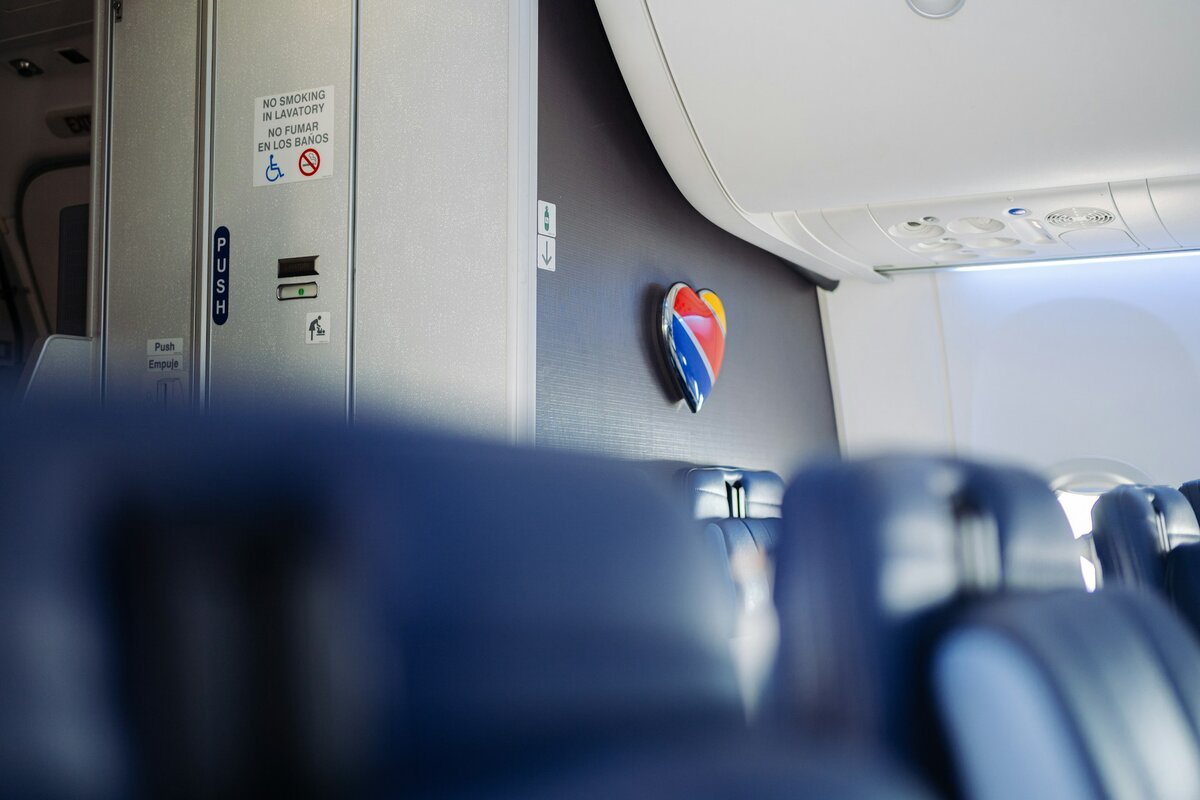
Detection wired straight to the flight deck. Every lavatory on a modern commercial aircraft carries a smoke detector that also reacts to vapour from e-cigarettes, and its alarm goes directly to the cockpit, not just a light in the cabin.
Shared, recirculated air. Cabin air is filtered and partly recirculated among all passengers, so second-hand smoke does not stay near one row — it reaches crew working the galley and passengers with asthma or heart conditions several rows away.
A short history of the ban: it started in the toilet, not the cabin
The first restriction, in the early 1970s, targeted lavatories specifically, because a discarded cigarette in a paper-lined waste bin was already a known ignition source. Cabin smoking sections lasted much longer. In the United States, flights under two hours went smoke-free in 1988, flights under six hours followed in 1990, and by 2000 the ban covered every domestic and international flight operated by a US carrier. European and Gulf carriers phased out onboard smoking sections over roughly the same two decades, and by the early 2000s a smoking seat on a scheduled flight had effectively disappeared worldwide. The rule that survived from that first lavatory ban — a hard-wired smoke detector reporting straight to the cockpit — is still standard equipment on every aircraft flying from Poland today.
What LOT, Ryanair and Wizz Air actually do from Warsaw, Kraków and Gdańsk
LOT Polish Airlines, the flag carrier based at Warsaw Chopin, bans smoking and e-cigarette use on every route in its network, including charter flights operated under the LOT Charters brand. Ryanair and Wizz Air, which between them run most of the low-cost network out of Poland, apply the same onboard ban and both explicitly forbid charging a vape battery in flight. easyJet, flying seasonal routes from several Polish cities, treats smoking in the cabin as a criminal matter under UK law on UK-registered aircraft, which matters if your itinerary connects through London.
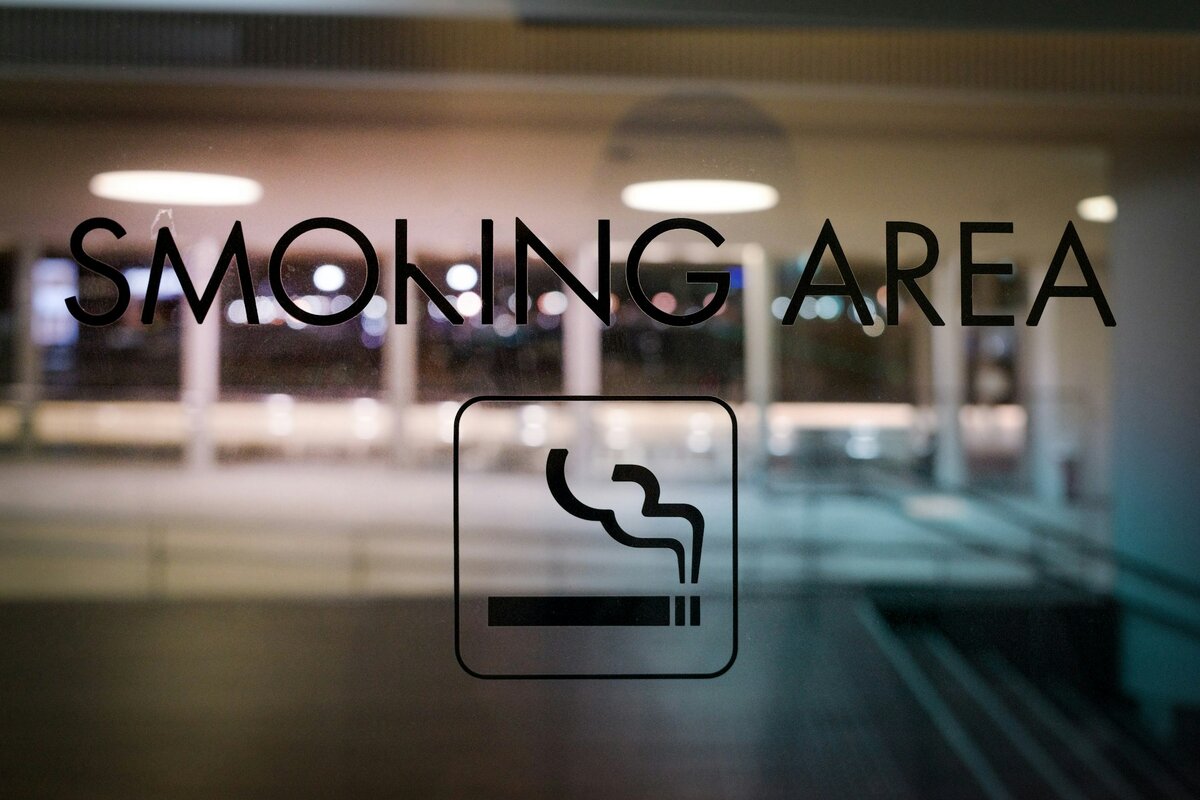
One detail worth knowing before departure: Warsaw Chopin Airport has enclosed, airside smoking booths past security — near gates 23 and 33 on the Schengen side, and near gate 1N on the non-Schengen side — plus a heated-tobacco lounge near gate 33. That means a transit passenger with a tight connection does not need to leave security to have a cigarette before boarding, which is the legal alternative to testing the lavatory detector at 11,000 metres.
Fines and what actually happens if you're caught
The consequences are not a stern warning followed by nothing. In the United States, the FAA issues civil penalties around $4,000 for a standard smoking or vaping violation, and that figure escalates sharply — into the tens of thousands of dollars — if the incident forces a diversion. Tampering with a lavatory smoke detector is treated as a separate offence with its own fine, and interfering with a crew member can be prosecuted as a federal crime with far heavier penalties than a civil fine.
On European carriers, Ryanair has both a published policy of fines up to €2,000 for smoking or vaping onboard and a real, court-confirmed case: a passenger fined €2,000 by a Maltese court for smoking on a Cologne–Malta flight after ignoring crew instructions. Wizz Air and other EU carriers do not publish a fixed number, but the response follows the same pattern — confiscation, a report to police on landing in the country of arrival, and a block on future bookings with that airline. On flights landing in Poland, the aircraft's captain can have the passenger met by police, and the incident can be pursued under Polish aviation and criminal law rather than treated as an internal disciplinary matter.
Not worth it for: anyone assuming a busy short-haul crew "won't notice" one cigarette in the toilet — the smoke detector reports before a flight attendant does, and the fine plus flight ban is not proportional to a five-minute craving.
E-cigarettes and heated tobacco: same ban, different packing rule
Vapes, e-cigars and heated-tobacco devices such as IQOS are treated as smoking under every airline policy listed above — using or charging one onboard is banned exactly like a cigarette, and the lavatory smoke detector is calibrated to pick up vapour, not just smoke. The packing rule is stricter than for cigarettes: because these devices run on lithium batteries that can ignite if damaged, they must travel in carry-on baggage only, never in checked luggage, where a fire could burn undetected in the cargo hold. LOT, Ryanair, easyJet and Wizz Air all state this explicitly in their prohibited-items guidance, and airport security will pull a vape out of a checked bag if it is found during screening.
Getting through the flight without a cigarette
A long-haul flight from Warsaw with a smoking craving is manageable with some preparation rather than luck.
- Carry nicotine gum, lozenges or patches in your hand luggage rather than packing them in the hold, so they are usable from boarding onward.
- Use Warsaw Chopin's airside smoking booths near gates 23, 33 or 1N right before boarding, instead of counting on a short taxi delay at the gate.
- Choose an itinerary with one longer connection over two tight ones if craving management matters to you — a 90-minute layover leaves time to step outside or use an airside smoking area at hubs that have one.
- Avoid stacking pre-flight alcohol on top of nicotine withdrawal; irritability from both together is a common trigger for exactly the kind of incident that ends in a police meeting on arrival.
- Book an aisle seat if restlessness rather than nicotine itself is the main issue, since it removes the "trapped in a middle seat" pressure that makes a craving feel worse.
Common mistakes
Treating a vape as "not really smoking." Every airline on this list bans e-cigarette use onboard exactly like tobacco, and the detector does not distinguish between the two.
Packing a vape or spare batteries in checked luggage. This is banned for fire-safety reasons, not convenience, and bags are opened if a lithium battery is detected during screening.
Assuming a budget carrier is more relaxed. Ryanair's €2,000 fine and automatic flight ban show the opposite — low-cost carriers enforce the rule at least as strictly as legacy airlines.
Believing the lavatory is private enough to risk it. The smoke detector alarm goes to the flight deck immediately, not to a light the crew might miss.
The bottom line before you book
Every scheduled airline flying out of Poland in 2026 — LOT, Ryanair, Wizz Air, easyJet and their long-haul partners — bans smoking, vaping and heated tobacco onboard without exception, and enforcement runs from a four-figure fine to a police handover on landing. If nicotine management is part of your trip planning, build it around the ground: Warsaw Chopin's airside smoking booths, a longer connection instead of a tight one, and nicotine replacement carried in your hand luggage rather than assumed available onboard. Check the current baggage and prohibited-items page for your specific carrier before you fly, since packing rules for vapes are updated more often than the smoking ban itself.
- Airline Baggage Rules
- Damaged Baggage at the Airport
- Laptop in Carry-On Luggage
- How to Carry Alcohol on a Plane
- What's Banned on a Plane










 Holidays


 Last minute
 Hotels


 Blog
Blog