You're allowed to travel with alcohol, but three separate sets of rules apply. In carry-on, the liquids rule kicks in: containers up to 100 ml each, unless the bottle came from Duty Free. In checked baggage, you can bring up to 5 litres of spirits and considerably more wine or beer. What you can actually bring home duty-free is decided by customs — and that's the strictest limit of all. Here's the full picture.
Contents
- What determines the rules: three levels
- The core rule: alcohol strength
- Alcohol in carry-on luggage
- Alcohol in checked baggage
- Leaving Poland and flying within the EU
- How much alcohol you can bring into Poland
- Import allowances for popular destinations
- What happens if you go over the limit
- FAQ: common questions
What determines the rules: three levels
Confusion around alcohol usually comes from the fact that three different bodies set the rules, and they don't always match up.
Aviation security governs liquids in carry-on. These are international ICAO and IATA standards followed by every airport: no more than 100 ml per container. The reason is simple — a standard checkpoint can't quickly inspect the contents of every passenger's bottle.
Airline policy can add stricter requirements on top: an airline can, for instance, cap the number of bottles in checked baggage or ban passengers from drinking their own alcohol on board. Always check your specific carrier's terms.
Destination-country customs is the strictest limit of all. Even if you legally brought alcohol on board, duty-free allowances apply the moment you arrive. Going over means paying duty; failing to declare it can mean confiscation and a fine. Import rules always outrank airline policy.
The core rule: alcohol strength
Every rule around carrying alcohol comes back to one thing — how strong the drink is. That's what decides what you can bring and what you can't.
| Strength | Drinks | Carry-on | Checked baggage | Note |
|---|---|---|---|---|
| Up to 24% | Beer, wine, cider, champagne | Duty Free only, or containers under 100 ml | ✅ No IATA limit | Baggage weight and destination customs are the real limits |
| 24–70% | Vodka, whisky, rum, gin, cognac, liqueurs | Duty Free only, or containers under 100 ml | ✅ Up to 5 l per passenger | Original sealed packaging, containers up to 5 l |
| Over 70% | 96% spirit, strong tinctures 80%+ | ❌ | ❌ | Banned on passenger flights entirely |
These IATA rules are the international baseline. Individual airlines can impose stricter limits, so check your specific carrier's policy before you fly. 
Alcohol in carry-on luggage
In carry-on, alcohol follows the general liquids rule — 100 ml per container. There's no exception by strength, except for one specific case: Duty Free.
⚠️ Drinking your own alcohol on board isn't allowed. You can only drink what the crew offers. Cabin crew have the right to confiscate any alcohol you brought yourself.
If the alcohol isn't from Duty Free
Standard liquids restrictions apply:
- Strength: 70% or under (anything stronger than 70% is banned outright)
- Each container: 100 ml or less
- All liquids combined: up to 1 litre, in one clear resealable bag
A bottle of wine (0.75 l) or beer (0.33–0.5 l) can't go in carry-on — it's over the 100 ml limit. Realistically, only mini bottles of 50–100 ml make it through, and they need to fit in your one clear bag alongside your other liquids and toiletries.
Alcohol from Duty Free
This is a separate case. Alcohol bought at Duty Free in the departure or transit area is exempt from the 100 ml rule — a full-size bottle can travel with you.
The one condition: the item has to be sealed in an official STEB security bag with the receipt inside. Don't open the bag before your trip is over — otherwise it'll be confiscated at your next security check.
Watch out on connections: some countries (Australia and China, for example) don't recognise Duty Free purchases from other airports, and the sealed bag can be opened and confiscated on transit. On top of that, the total amount is still capped by your destination country's customs allowance.
Alcohol in checked baggage
Checked baggage comes with fewer volume restrictions. Taking alcohol out of your departure country is barely restricted at all — the strict rules apply to bringing it into your destination.
| Strength | Type of alcohol | Checked baggage rules |
|---|---|---|
| Up to 24% | Beer, wine, cider, prosecco | No IATA quantity limit; the real limit comes from the airline and destination customs |
| 24–70% | Vodka, whisky, cognac, rum, gin | Up to 5 litres per passenger without declaring; airlines can set their own cap |
| Over 70% | Industrial-grade spirit, high-proof absinthe | Banned — in both checked and carry-on baggage |
 How to pack bottles so they don't break
Airlines aren't liable for broken glass in checked baggage — packing it properly is entirely on you.
Wrap each bottle in bubble wrap or clothing, at least 3–4 layers.
Put the bottle in a sealed plastic bag — if it does break, the contents won't ruin the rest of your luggage.
Position it in the centre of your suitcase, surrounded by soft items. Don't pack bottles against the sides — that's where pressure is highest during loading.
For two or more bottles, get foam or inflatable wine sleeves — sold at airports and online.
Check the weight: glass bottles are heavy, and it's easy to go over your baggage allowance.
Leaving Poland and flying within the EU
Taking alcohol out of Poland for personal use is barely restricted — the only real constraints are baggage weight and airline policy.
Flights within the EU (Poland to Greece, Spain, Italy, Bulgaria, and so on) are the most relaxed case of all. There are no customs borders inside the EU, only indicative "personal use" guidelines: up to 10 l of spirits, 20 l of fortified wine, 90 l of wine (of which no more than 60 l sparkling), and 110 l of beer per person. Going over these on holiday is essentially unrealistic, but if the quantity is clearly commercial in scale, customs can still ask questions.
☝️ Watch out for EU territories outside the customs union. The Canary Islands, Gibraltar, and a few other territories of EU member states are treated as non-EU for customs purposes. Coming back from one of these, you fall under the strict non-EU import allowances below, not the relaxed intra-EU rules.
How much alcohol you can bring into Poland
This depends entirely on where you're flying in from.
From an EU country
The same relaxed, indicative personal-use allowances above apply. No duty, nothing to declare, as long as the alcohol is for yourself rather than for resale.
From a country outside the EU
Coming back from Turkey, Egypt, the UAE, the UK, or any other non-EU country, you're subject to strict duty-free allowances. According to Poland's tax authority (KAS), for an air passenger aged 17 or over, they are:
| Category | Duty-free allowance |
|---|---|
| Spirits (over 22%) | 1 litre |
| Alcohol under 22%, fortified and sparkling wine | 2 litres |
| Still wine | 4 litres |
| Beer | 16 litres |
| Total value of goods in baggage (air/sea) | up to €430 |
The spirits and fortified/sparkling wine allowances can be combined proportionally: for example, 0.5 l of vodka (50% of that allowance) plus 1 l of port (50% of that allowance). This combining rule doesn't apply to still wine or beer — they each have their own separate limit.
☝️ Worth clearing up — the "6 litres from 2026" claim. You'll see it repeated online that Poland raised the duty-free spirits allowance to 6 litres in 2026. That's a mix-up: those figures refer to excise-duty thresholds, not the tourist's duty-free allowance. The official duty-free allowance for spirits from outside the EU remains 1 litre. Go by Poland's official tax authority (KAS) figures, not by what's repeated across travel blogs.
Import allowances for popular destinations
If you're heading on holiday and want to bring alcohol along, or bring some home, check your destination's import allowance. Below are reference figures for destinations popular with travellers from Poland (per adult passenger). Rules change, so double-check the destination's customs site before you fly.
| Country | Duty-free allowance | Age | Notes |
|---|---|---|---|
| Turkey | 1 l of spirits (over 22%) or 2 l under 22% | 18 | Extra can be bought at arrivals Duty Free; strictly per person, allowances can't be pooled between travellers |
| Egypt | 1 l on arrival + up to 3 l at arrivals Duty Free within 48 hours | 18+ | Arrivals Duty Free is available at resort airports |
| Tunisia | 1 l of spirits (over 22%) or 2 l of wine/beer | 18 | Separate strict currency controls apply too |
| UAE | 4 l of alcohol (non-Muslim travellers) | 18 | Sharjah emirate is dry — no alcohol at all |
| Thailand | 1 l | 20 | Going over means confiscation and a fine |
| EU countries (Greece, Spain, Italy, Bulgaria, Cyprus) | Effectively no limit for personal use | 18 | No customs allowance inside the EU, only guidance |
🚫 Worth flagging separately: importing e-cigarettes into Turkey is effectively banned — don't lump vapes in with alcohol allowances or bring them along. Several other Asian destinations enforce similarly strict vape rules.
What happens if you go over the limit
Possible consequences of exceeding the duty-free allowance:
- If you declare the excess — you'll pay duty, excise tax, and VAT; the rate depends on the type and quantity of alcohol
- If you don't declare it and get caught — the entire item gets confiscated, plus a fine, and in serious cases customs-tax proceedings can follow
- If the quantity looks clearly commercial — customs can treat the import as a business activity, with everything that entails
Practical tip: always keep receipts for any alcohol you buy — it's proof of value and that it was legally purchased for your own use. If in doubt, take the "red channel" and declare it: an honest declaration always costs less than confiscation.
FAQ: common questions
Can I bring a bottle of wine in my carry-on?
No, not if it's bought at a regular shop — 0.75 l is well over the 100 ml limit. The exception is a bottle from Duty Free in a sealed STEB bag with the receipt inside — that one you can carry on.
How much spirits can I bring in checked baggage?
Up to 5 litres per passenger under IATA rules — this applies to drinks between 24% and 70% strength. Wine and beer (under 24%) have no set IATA limit; the real constraint is baggage weight and destination-country import allowances. Anything over 70% is banned outright.
How much alcohol can I bring back into Poland from Turkey or Egypt?
That counts as an import from outside the EU, so duty-free you can bring 1 litre of spirits (over 22%) or 2 litres under 22%, plus a separate 4 litres of still wine and 16 litres of beer, for a passenger aged 17 or over. Anything over that needs to be declared and paid for.
What about from Greece, Spain, or Bulgaria?
That's a flight within the EU — there's effectively no customs limit as long as the alcohol is for personal use. The indicative "personal use" ceiling is 10 l of spirits, 90 l of wine, and 110 l of beer — not realistic to exceed on a normal holiday.
Can I drink my own alcohol on board?
No. Drinking alcohol you brought yourself isn't allowed — only drinks served by the crew. Cabin crew are entitled to confiscate any alcohol you brought with you. 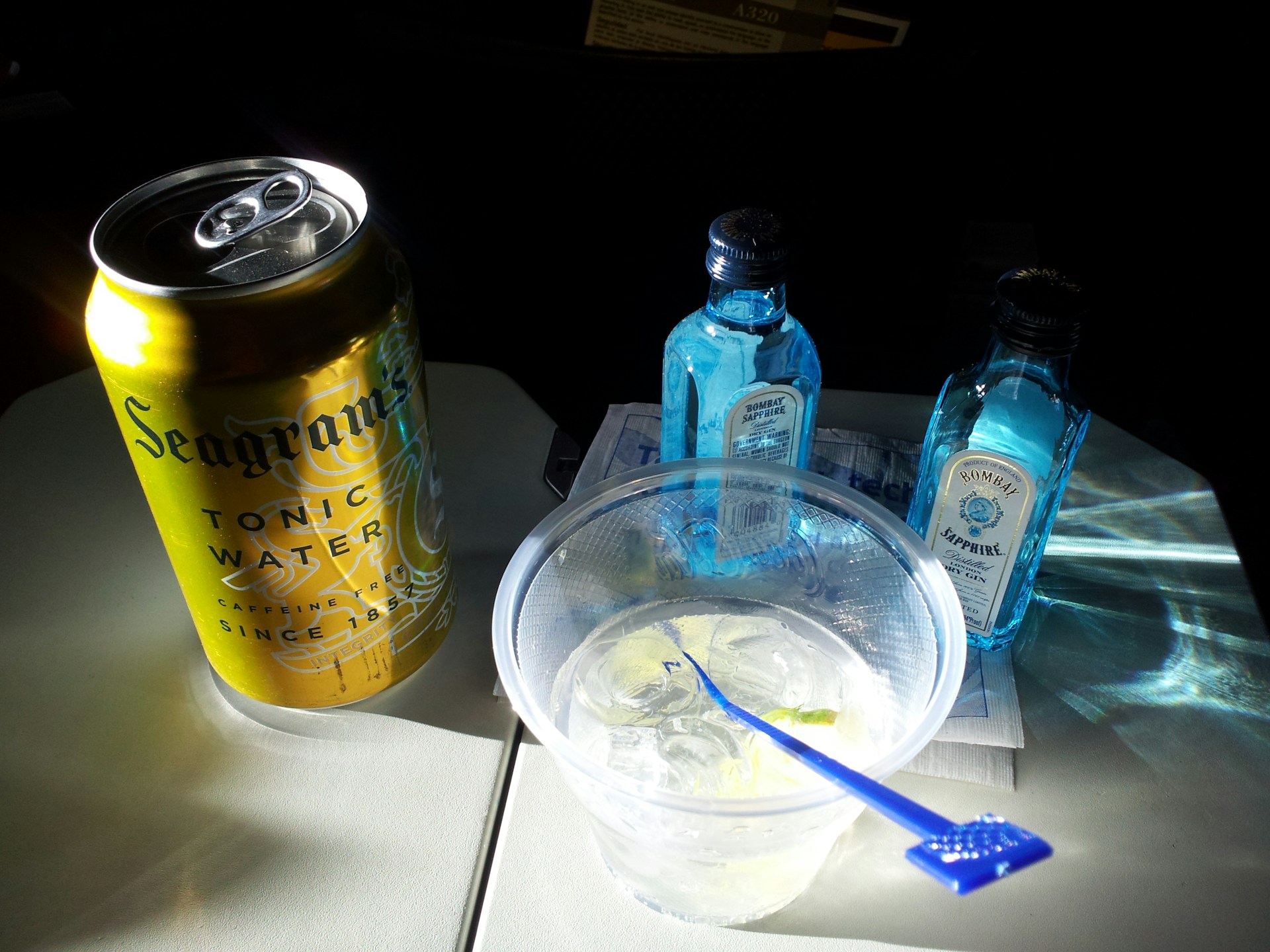
Can I carry Duty Free alcohol through a connecting flight?
Yes, as long as the STEB bag is unopened and the receipt is inside. That said, some countries don't recognise Duty Free from other airports on transit and may confiscate the bottle. And either way, the total quantity is still capped by your final destination's customs allowance.
Key things to remember:
- Carry-on: Duty Free (in a STEB bag) or mini bottles under 100 ml only
- Checked baggage: up to 5 l of spirits (24–70%), more wine and beer allowed; anything over 70% is banned
- Flights within the EU: effectively no limit for personal use
- Bringing alcohol into Poland from outside the EU: 1 l spirits, 2 l under 22%, 4 l wine, 16 l beer, age 17+
- "6 litres from 2026" is a blog myth — the official spirits allowance is 1 litre
- Destination-country customs is stricter than airline policy — check your specific destination
Also worth reading: our full breakdown of what's banned on a plane:


 Holidays


 Last minute


 Hotels


 Blog
Blog