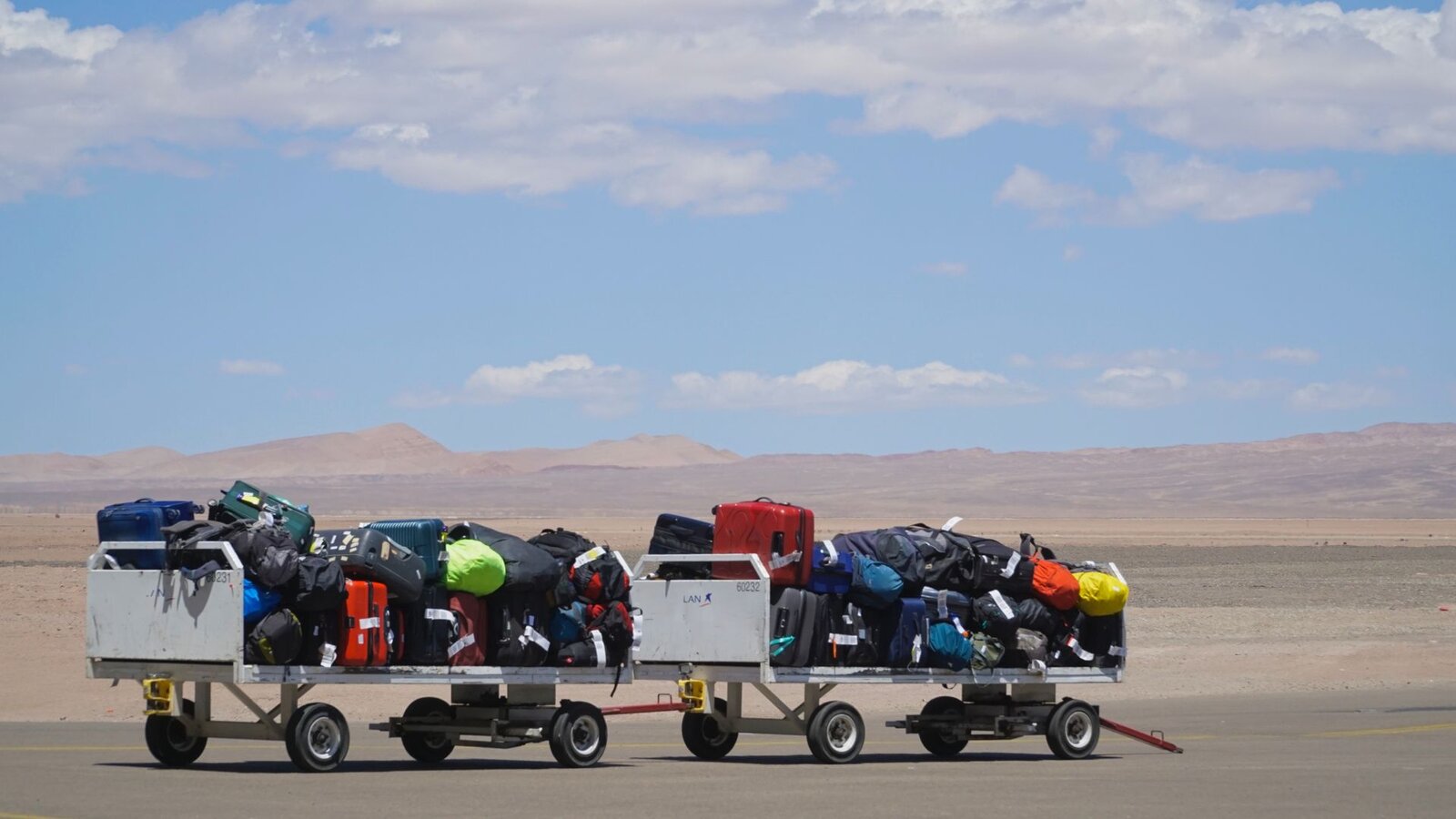
Most problems at security screening aren't about bad intentions — they're about not knowing the rules: a passenger packs a power bank in checked luggage, brings a full bottle of water in carry-on, or forgets about a jar of honey in their bag. Here's a full breakdown of what's banned on a plane, how carry-on and checked baggage rules differ, what changed with battery regulations in 2026, and what matters when flying out of Poland.
Contents
- Two levels of restrictions: security and customs
- What's banned in carry-on luggage
- What's banned in checked baggage
- Power banks and lithium batteries: new 2026 rules
- Security at Warsaw's Chopin Airport
- Destination-country customs restrictions
- What happens if you carry a banned item
- FAQ: common questions
Two levels of restrictions: security and customs
Air travel restrictions work on two separate levels, and it's worth not mixing them up.
The first is aviation security. These rules are nearly identical worldwide, set by ICAO and IATA, and — when flying from Poland — supplemented by EU regulation. They decide what you can bring on board and what has to go in checked baggage.
The second is destination-country customs. Every country has its own import rules, and they don't match airline rules. An item that cleared security on departure can still be confiscated on arrival — most often this applies to food, medication, and souvenirs.
The biggest change of 2026 is the new, stricter ICAO and IATA rules on power banks, which took effect on 27 March 2026. There's a dedicated section on that below. 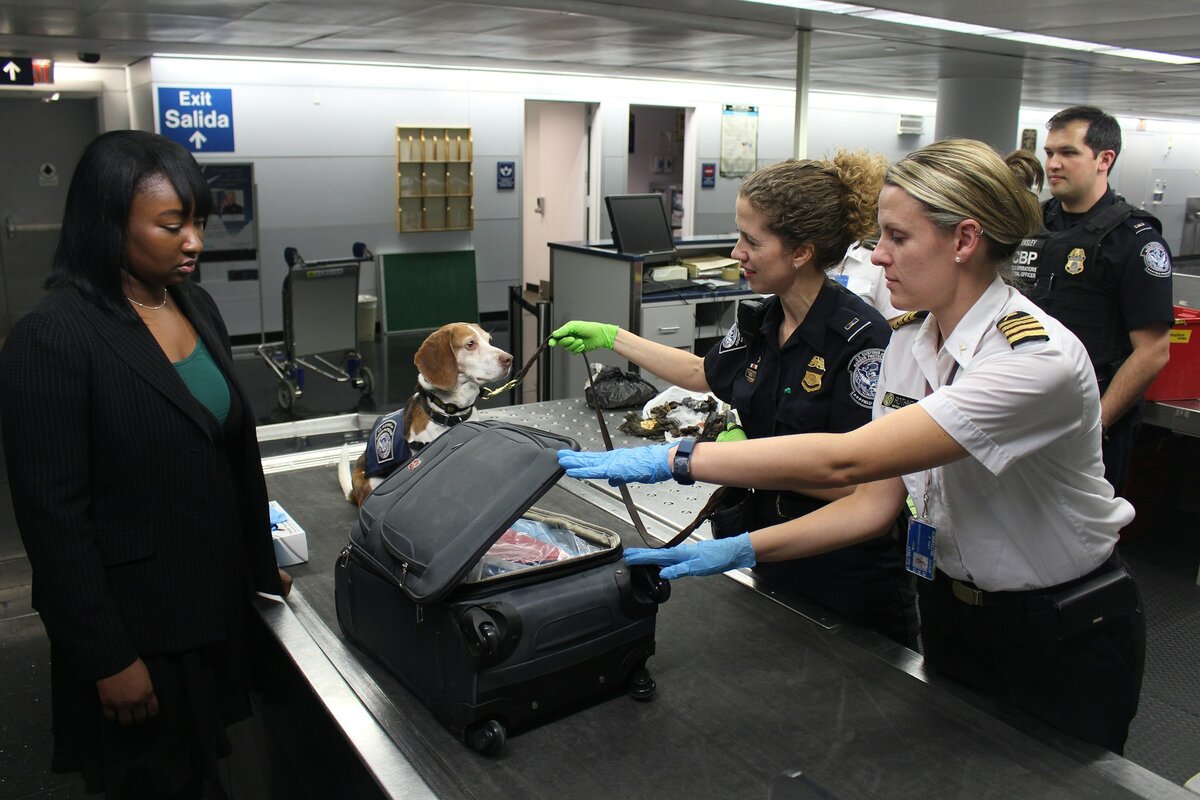
What's banned in carry-on luggage
Carry-on bans cover anything that could become a weapon or a threat in the cabin: sharp objects, liquids over the limit, potentially dangerous tools.
Liquids
Anything that pours, spreads, or spills counts as a liquid at security — not just water and drinks, but also honey, jam, peanut butter, chocolate spread, yogurt, soft cheese, gels, creams, toothpaste, roll-on deodorant. So that 250g jar of honey you bought at a market won't make it through in carry-on.
The EU liquids rule:
- Containers of 100 ml or less only
- Everything together in one clear, resealable bag of up to 1 litre
- One bag per passenger
There's an important exception for new scanners — see the Chopin Airport section below.
Sharp objects
Anything that could cut or stab goes in checked baggage only. That includes knives of any kind, straight razors and shavettes, loose blades, box cutters, large scissors, forks, corkscrews with a built-in blade, multitools, pliers, and long-bladed nail scissors.
Exception: electric shavers, trimmers, cartridge razors (Gillette and similar) with a protective cap, and disposable razors with an enclosed blade — those can go in your carry-on. More on that in a separate article on bringing a razor on a plane (link at the end).
Electronics
Airlines barely restrict electronics in carry-on as long as they fit the size limits: laptops, tablets, smartphones, cameras. If they're in checked baggage, it's better to remove any battery first.
E-cigarettes and vapes go in carry-on only — smoking isn't allowed on board, and you can't check them in. 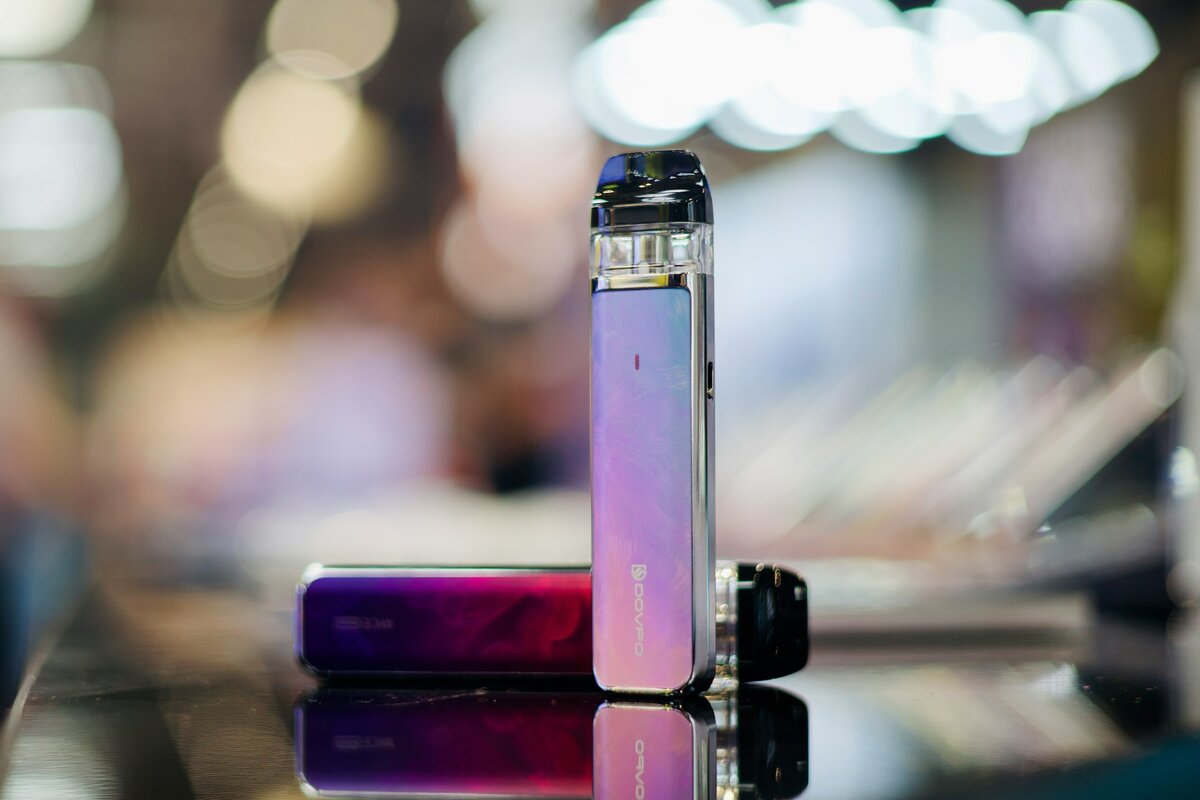
⚠️ If a gadget's battery is swollen or damaged, the airline has the right to refuse transport — such devices pose a fire risk.
Food and drink
Liquid-form food follows the liquids rule — no more than 100 ml in carry-on. Honey, spreads, yogurt, and soft cheese all count as liquids under aviation classification.
Solid food — nuts, chocolate, hard cheese, cured meats, sandwiches, fruit — can go in carry-on without restriction. From there it's up to destination customs: the EU, US, Australia, and New Zealand, for instance, ban imports of meat and dairy products, even if bought at a shop right before boarding (see the customs section).
Medication
Solid tablets and capsules travel with no quantity limit. Keep them in the original packaging with the leaflet — it makes any questions at security easier.
Things to know about medication:
- Liquid medication over 100 ml needs a doctor's prescription, ideally translated into English
- Strong and psychotropic medication (codeine-based, tramadol, and similar) requires a prescription and a doctor's note
- Insulin, lancets, insulin pumps, and injection needles are allowed with a medical certificate
- Mercury thermometers are banned by most airlines; digital ones are fine
☝️ Worth noting: medication that's freely available at home can be restricted elsewhere. Nimesulide, for example, isn't approved in the US, Canada, Japan, and several other countries. Not knowing local law doesn't exempt you from it — check whether your specific medication is allowed at your destination in advance.
Sports equipment and hobbies
Musical instruments are usually allowed in carry-on even if they exceed standard size limits, but it's worth confirming with the airline in advance.
Large sports equipment — skates, skis, snowboards, bows and arrows, surfboards — goes in checked baggage only. Balls can travel in your carry-on.
Most airlines ban e-scooters and hoverboards outright because of their built-in lithium batteries. Drones typically travel with the battery in carry-on and the body in checked baggage. Keep in mind some countries require registration or a permit to fly a drone at all.
| Category | Carry-on | Checked baggage | Comment |
|---|---|---|---|
| Knives, scissors >6 cm, blades, multitools | ❌ | ✅ | Sharp objects — checked baggage only |
| Straight razor, shavette | ❌ | ✅ | Exposed blade |
| Liquids, cosmetics, food >100 ml | ❌ | ✅ | Except at counters with new scanners (see below) |
| Power bank, spare lithium batteries | ✅ | ❌ | Banned in checked baggage — fire risk |
| E-cigarettes, vapes | ✅ | ❌ | Cabin only |
| Laptop, tablet, camera | ✅ | ⚠️ | Allowed checked, but cabin is safer |
| E-scooter, hoverboard | ❌ | ❌ | Usually banned due to the battery |
| Weapons, replicas, ammunition | ❌ | ⚠️ | Checked baggage only, with prior approval and paperwork |
| Pepper spray, stun guns | ❌ | ❌ | Self-defense items banned everywhere |
What's banned in checked baggage
Here the logic flips: in the cargo hold, the danger isn't sharpness — it's anything that could catch fire or explode on its own, unattended, mid-flight.
Explosives and flammable materials
Specific rules for common items:
- Lighters — 1 per passenger, carried on your person in the cabin; not allowed in checked baggage
- Matches — 1 box in carry-on; not allowed in checked baggage
- Camping gas canisters — banned entirely, in both carry-on and checked baggage
- Aerosols: cosmetic ones in carry-on — up to 100 ml; in checked baggage — up to 500 ml/500 g per item, 2 kg/2 l total
- Spray paint, expanding foam, solvents — banned
🚫 Banned entirely, in any form: gunpowder, firecrackers, fireworks, flares, sparklers, petrol, lighter fluid and refills, acetone.
Chemicals, toxic and radioactive substances, compressed gases
🚫 Banned entirely: bleach, mercury, acids, oxidizing substances and organic peroxides, toxic and radioactive materials.
Scuba tanks and CO₂ cartridges (including bike ones) are banned. Diving gear itself can travel — tanks get refilled at your destination. Biological samples (blood, tissue) require special medical packaging and accompanying paperwork.
Weapons
Firearms in checked baggage are allowed under specific conditions: a valid firearms and export permit, a locked hard case, the weapon unloaded, ammunition packed separately in its original packaging (up to 5 kg). All of this needs to be arranged with the airline in advance.
Bladed weapons (knives, sabres, machetes, kitchen knives), along with airsoft and paintball equipment, go in checked baggage only, often with airline approval. Replicas and toy weapons can't go in carry-on — security can't visually tell them apart from the real thing — but they are allowed in checked baggage. Stun guns and pepper spray are banned everywhere, in both carry-on and checked baggage. 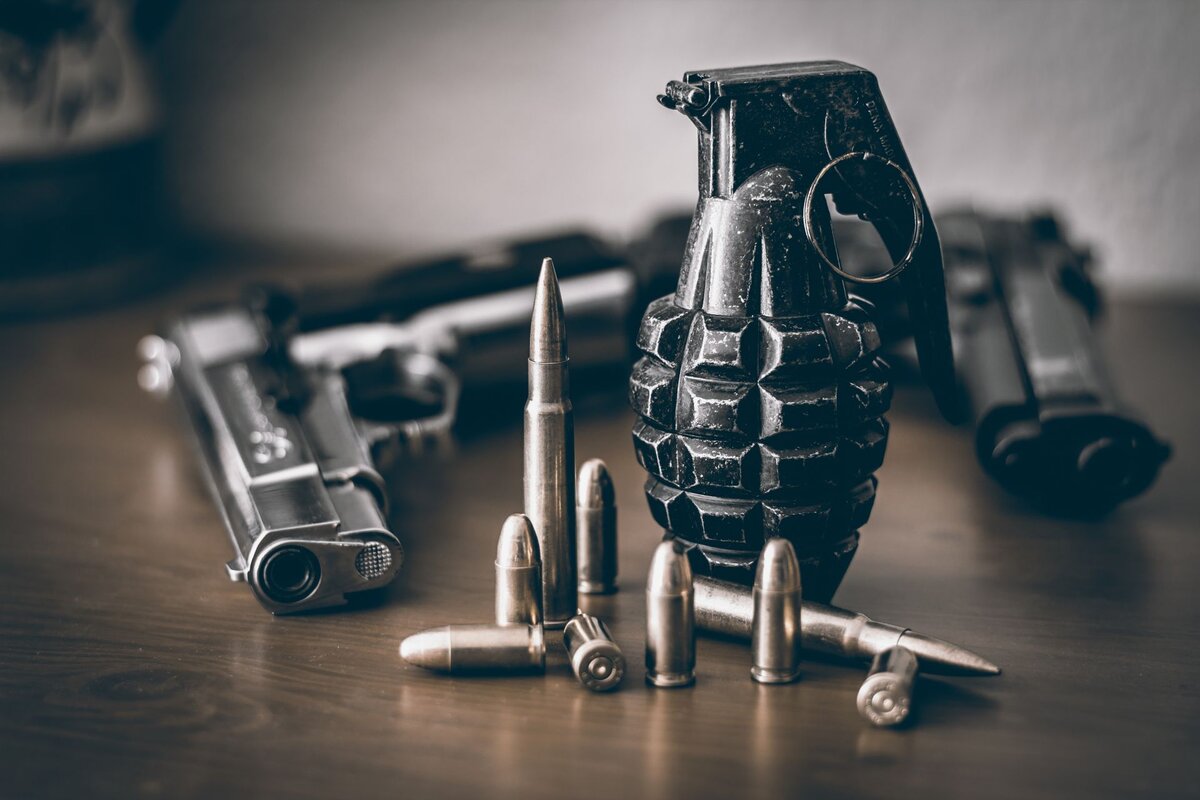
Power banks and lithium batteries: new 2026 rules
This is the biggest story of the year. New ICAO power bank rules took effect on 27 March 2026, and the 67th edition of IATA's Dangerous Goods Regulations locked in the restrictions for all of 2026. The trigger was a fire that destroyed an Air Busan aircraft on the ground at Gimhae Airport in South Korea in January 2025 — investigators named a power bank in the overhead bin as the cause. According to aviation regulators, lithium battery incidents on board hit a record high in 2025.
The core rule, unchanged from before: power banks can only travel in carry-on luggage — never in checked baggage.
| Rule | Standard since 27 March 2026 |
|---|---|
| Maximum power banks | 2 per passenger |
| Up to 100 Wh | Allowed without approval |
| 100–160 Wh | Requires airline approval |
| Over 160 Wh | Banned |
| In-flight storage | Under the seat or on your person only — not in the overhead bin |
| Charging devices from a power bank | Banned on most flights |
| Charging the power bank itself from an outlet | Banned for the entire flight |
To work out watt-hours (Wh): divide the milliamp-hour (mAh) rating by 1,000 and multiply by 3.7. A 25,000mAh power bank comes out to about 92.5 Wh — well within the limit. If a Wh figure is already printed on the casing, go with that instead. 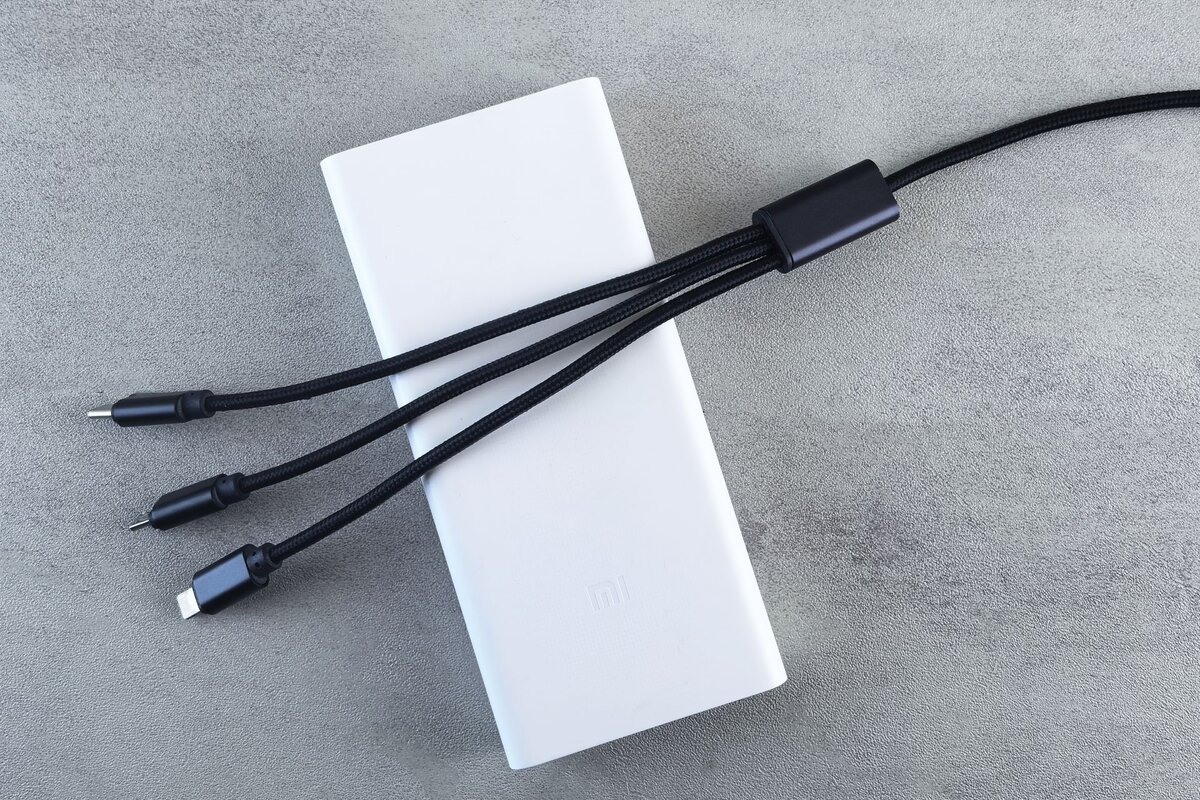
Rules by airline flying out of Poland
The ICAO baseline is universal, but individual carriers apply stricter requirements on top:
| Airline | Power bank policy |
|---|---|
| LOT Polish Airlines | Carry-on only, up to 100 Wh without approval, in-flight charging banned, terminals must be protected from short-circuiting |
| Wizz Air | Maximum 1 power bank per passenger, in-flight use banned |
| Ryanair | Cabin only, must be stored under the seat rather than the overhead bin; treated as a spare battery |
| easyJet | Carry-on only, standard EU and ICAO rules |
Tip: airlines recommend keeping a power bank charged below 25% and protecting its terminals from short-circuiting (a separate case or pouch works well). Always check your specific carrier's policy before flying — some are stricter than the base standard.
Smart suitcases with a built-in battery: the battery needs to be removed and carried in your carry-on. Laptops and cameras going in checked baggage should also have the battery removed where possible.
Security at Warsaw's Chopin Airport: what changed in 2026
Warsaw Chopin Airport (Warszawa-Okęcie) is Poland's largest, and 2026 has brought a major overhaul of its security screening area. The airport is installing new CT-based scanners (C3 standard), which produce a 3D image of a bag's contents.
What this means for passengers at lanes with the new scanners:
The liquids limit is raised from 100 ml to 2 litres. You can go through with a full water bottle, a full-size shampoo, or a drink bought before your flight.
No need to remove electronics. Laptops, tablets, and cameras can stay in your bag — the scanner sees straight through it.
Screening moves faster — no need to lay items out in separate trays or decant cosmetics into tiny bottles.
⚠️ Important detail: the new rules only apply at lanes where C3 scanners are already installed. As of 2026, most lanes at Chopin Airport still run the old process — a 100 ml limit and mandatory removal of electronics. The full rollout to all 15 new units is expected to be complete by the end of 2026.
Until the rollout finishes, you won't know in advance which lane you'll get. So the safest approach is to pack your carry-on by the older, stricter rules — liquids under 100 ml in a clear bag, electronics easy to reach. If you do get a new scanner, you'll just move through faster.
C3 scanners in Poland aren't limited to Warsaw — they're already running at the airports in Kraków, Poznań, Gdańsk, and Rzeszów, with Katowice and Modlin planned next.
Destination-country customs restrictions
Airline and departure-security rules are one thing. Destination-country customs is a separate matter entirely — and it's where most confiscations actually happen. Check the customs rules for your destination before you travel, since they don't match airline policies.
What customs officers most often flag on arrival:
- Food — meat and dairy products are banned from import into the EU, US, Australia, and New Zealand, even if bought at a shop. Fresh fruit and vegetables face phytosanitary restrictions in most countries
- Vapes and e-cigarettes — Thailand imposes hefty fines or jail time for importing them; Australia and Singapore also enforce strict limits
- Medication — codeine-based drugs, tramadol, and similar can count as controlled substances abroad; bring a prescription and leaflet, ideally translated
- Narcotic substances — even CBD oil or medical cannabis, legal elsewhere, can be banned at your destination
- CITES-protected souvenirs — ivory items, coral, rare-animal hides get confiscated along with a fine
- Cash — amounts over the equivalent of $10,000 (or €10,000) need to be declared in most countries
What happens if you carry a banned item
Possible consequences:
- Confiscation with no compensation — the most common outcome at security; the item is simply taken
- Delays at screening — if questions come up, the process can take long enough to make you miss your flight
- Administrative fines — especially likely for weapon or power bank violations
- Criminal liability — for carrying banned substances or undeclared weapons; penalties are severe in some countries (Singapore, Malaysia, Thailand)
💡 If you're already at the airport and discover a banned item in your bag, you still have options before the security checkpoint: leave it in a storage locker, mail it, or hand it to whoever's seeing you off. Once you're through security, there's no choice left — it gets confiscated. Not many travellers know this option exists.
FAQ: common questions
Can I bring water in my carry-on?
At standard lanes — only in containers of 100 ml or less. At Chopin Airport's lanes with new C3 scanners — up to 2 litres. Since you won't know in advance which lane you'll get, it's safer to buy water after security, in the departure area.
How many power banks can I bring on a plane?
Under ICAO rules in effect since 27 March 2026, up to 2 per passenger, carry-on only, each under 100 Wh. Some airlines are stricter — Wizz Air, for example, allows only 1. Charging devices from a power bank, or charging the power bank itself, isn't allowed on board.
Can I bring honey, jam, or spreads in carry-on?
These count as liquids under aviation classification, so in carry-on it's containers of 100 ml or less only. A full-size jar of honey will need to go in checked baggage.
Can I bring an e-cigarette?
Carry-on only, protected against accidental activation. Vapes and spare cartridges can't be checked. Keep in mind: importing a vape into Thailand, Australia, or Singapore can carry serious penalties.
Can I travel with medication?
Tablets and capsules travel freely, in their original packaging. Liquid medication over 100 ml and strong medication need a prescription and a doctor's note, ideally translated. Check whether your specific medication is restricted at your destination. 
What happens if a banned item is found at security?
Most often it's simply confiscated with no compensation. Sometimes you can go back and check it into your baggage, but a tight schedule may not leave time for that. It's easier to sort out anything questionable before you get to the airport.
Key things to remember:
- Sharp objects, liquids over the limit, and weapons — not allowed in carry-on
- Power banks, vapes, and lithium batteries — carry-on only; as of 2026, maximum 2 power banks (1 on Wizz Air), no charging on board
- Lighters and matches — 1 each, kept on your person, not in checked baggage
- Self-defense items, flammable, and toxic substances are banned everywhere
- At Chopin Airport, the liquids limit is now 2 l — but only at some lanes so far, so pack by the stricter rules
- Destination-country customs are stricter than airline rules — especially for food, medication, and souvenirs
Also worth reading: whether you can bring a razor on a plane and how to pack it properly:


 Holidays


 Last minute
 Hotels


 Blog
Blog