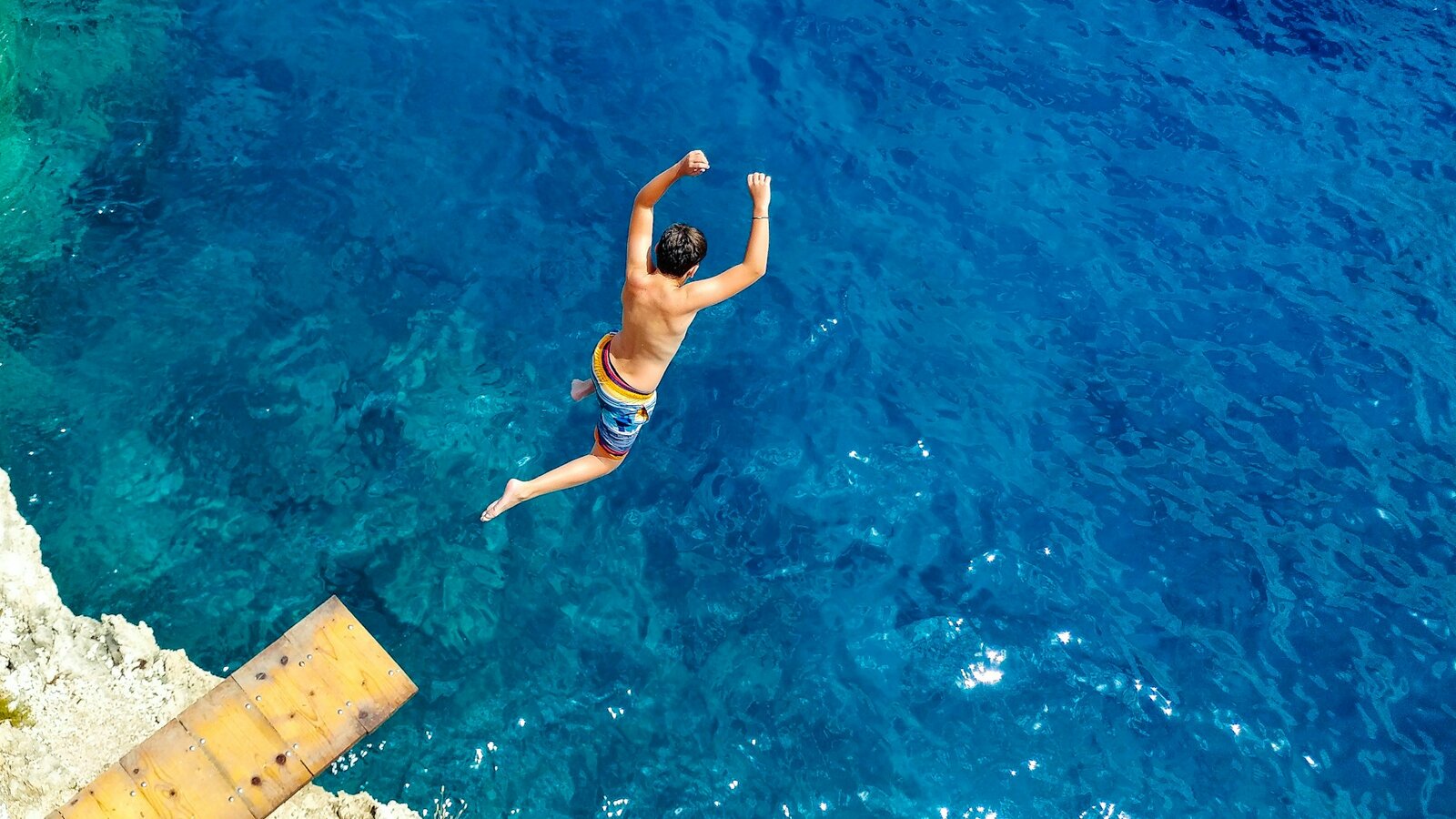
The most common misconception when choosing a Greek island for July runs like this: "it's warm everywhere in Greece, so it makes no difference." In fact, there is a real 2–3°C gap between the warmest and the coolest water among the popular destinations, and on top of that comes the wind: in the Cyclades (Santorini, Mykonos) the July meltemi pushes the warm surface water away from north-facing beaches and draws cooler water up from below, so the swim can feel distinctly colder than the latitude suggests. The warmest and calmest water in the country, meanwhile, is in the Dodecanese (Rhodes, Kos), on Crete's south coast, and on the wind-sheltered Ionian islands.
If you're going to Greece mainly to swim, this single factor can decide whether the holiday lands. Below we rank the Greek destinations by July water temperature and wind strength — with concrete figures, the flight time from Warsaw, the cost of a week for two, and a quick-choice block:
- Warmest, calm water → Dodecanese (Rhodes, Kos), Crete
- Warm and green, no wind → Ionian islands
- Stylish scene, wind accepted → Cyclades
- With small children (shallow, warm bays) → Crete, Kos
- Shortest flight from Poland → Halkidiki, Corfu
- Wind sports (windsurf, kite) → Cyclades
- Cheapest warm-water option → Halkidiki, Kos
- Where the water is coolest → Northern Greece
- Why the sea varies in temperature → The explanation
Why "Greece" doesn't have one sea temperature
Greece is several seas at once. The warmest is the south-eastern Aegean — the Dodecanese, right up against the Turkish coast — together with the sheltered Ionian Sea in the west. The coolest in summer is the north: Halkidiki, Thassos and the islands of the northern Aegean. In July itself the differences are smaller than in August, but still noticeable, and the wind layers on top of them.
| Region | Sea (July) | Meltemi wind | Character of the swim |
|---|---|---|---|
| Dodecanese (Rhodes, Kos) | +25–26°C | Weak | Warmest, calm |
| Crete (south coast) | +25–26°C | Moderate | Warm, locally choppy |
| Ionian islands | +24–25°C | Very weak | Warm and calm |
| Cyclades (Santorini, Mykonos) | +24–25°C | Strong | Cooler on north-facing beaches |
| North (Halkidiki, Thassos) | +23–25°C | Weak | Coolest in summer |
The key mechanism behind this table is the meltemi — a dry northerly wind blowing across the Aegean from June to September, strongest in the Cyclades. It pushes the warm surface water away from north-facing shores, and cooler water rises from the deep to replace it. As a result, a north-facing beach on Naxos or Paros can run 2–3°C colder than a south-facing one on the same day. So with the question of "warmest water", what matters is not only the island but which side of it your hotel sits on.
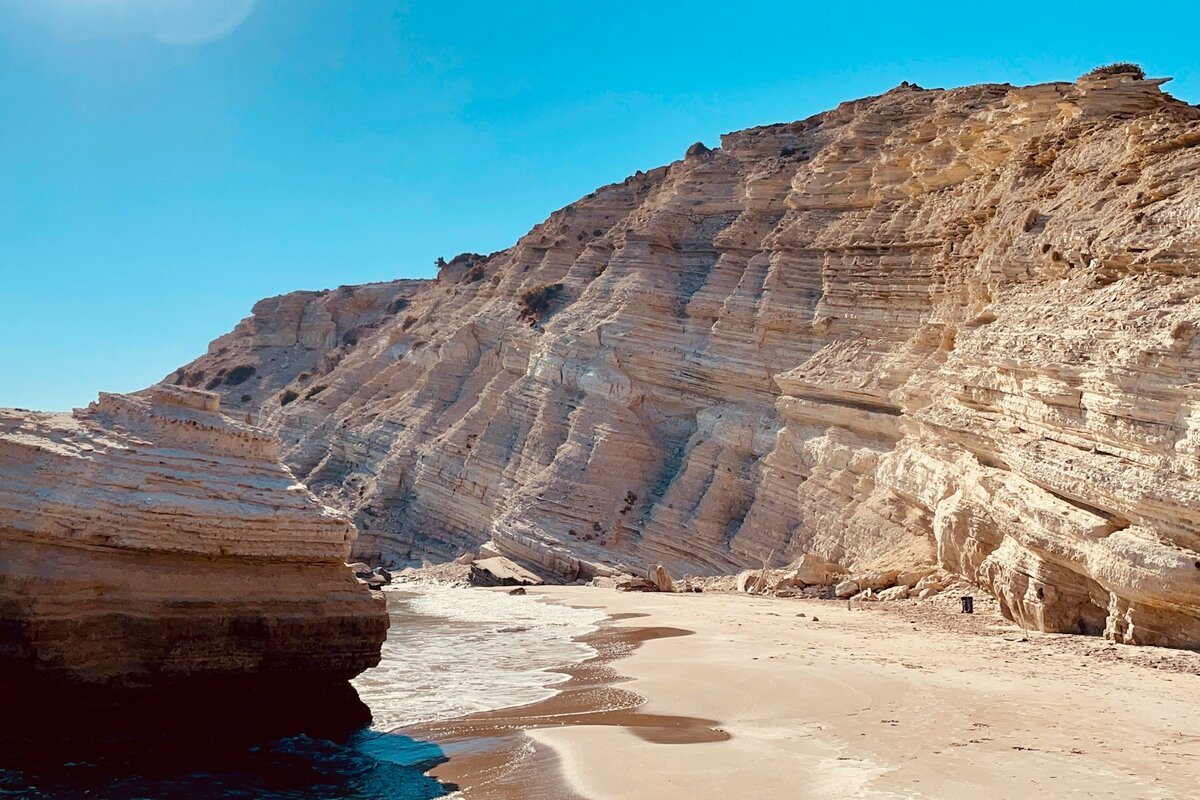
Dodecanese: the warmest and most reliable water
If your only criterion is a warm, calm swim — this is it
Rhodes and Kos lie furthest to the south-east, a few to a dozen kilometres off the Turkish coast, and it shows in the water: +25–26°C in July, warmer in shallow bays, with the meltemi reaching here far weaker than in the Cyclades. Rhodes adds around 300 sunny days a year and air at +30–33°C; Kos is flat, family-friendly and cheaper. This is the country's safest bet for warm sea without surprises.
Water in July: +25–26°C, wind weak
Flight from Warsaw: Rhodes ~3 hrs 30 min, Kos ~3 hrs 40 min (direct)
7 nights / 2 people: Rhodes PLN 3,800–9,500, Kos PLN 3,000–7,000
Who is it for
The best choice for families with children and anyone whose priority is warm, calm water and a long swimming season. Kos additionally for a lower budget and lovers of flat terrain (cycling). Not worth it if you cope badly with heat — Rhodes in July is often +32–33°C in the air with fierce sun, and shade on the beaches can be scarce.
What to do
- Pick a beach on the eastern (leeward) side of Rhodes when the wind blows from the north — the water there is warmer and calmer
- Take the ferry from Kos to Turkish Bodrum for the day (30 min) — note that entry into Turkey depends on your nationality and document
- Wade into the warm, shallow bays near Lindos on Rhodes — ideal for small children
- Snorkel off the eastern coast, where the clarity is usually at its best
Crete: warm water and the secret of the south coast
The largest island, where the side matters: the south is warmer than the north
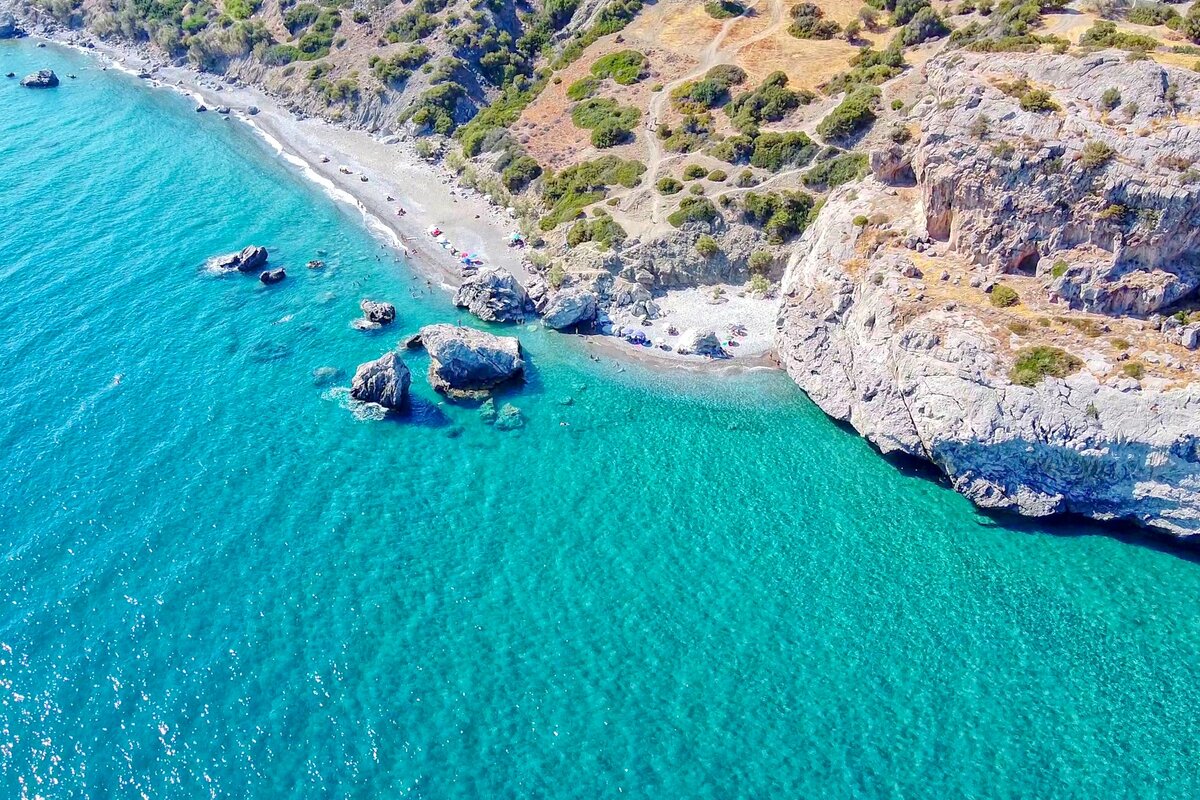
Crete delivers +24–25°C in July on the north coast (Heraklion, Chania, Rethymno) and one of the country's longest swimming seasons. Few realise that its south coast is washed by the Libyan Sea — the warmest water touching Greece — so spots like Plakias, Matala or Preveli can run about 1°C warmer than the north. That is a real difference when choosing a hotel if a warmer swim is what you're after. The direct flight from Warsaw takes about 3 hours 20 minutes.
Water in July: +24–25°C in the north, +25–26°C in the south
Flight from Warsaw: ~3 hrs 20 min (direct)
7 nights / 2 people: PLN 3,500–9,000
Who is it for
A solid choice for a first trip to Greece and for families: warm water, broad beaches, local food and plenty to do on windy days. Not worth it without a plan for which part of the island to stay on — Crete is 260 km long, and crossing from one end to the other takes up to five hours. A hotel on the wrong side can cut you off from the warmer southern sea.
What to do
- Choose a hotel in the south (Plakias, around Matala) if the warmest possible water matters most
- Head to the Elafonisi lagoon, where shallow water heats up fast — great for children
- Swim early or after 17:00, when the sun on open beaches is least punishing
- Rent a car for a day or two to reach the warmer, less crowded southern coves
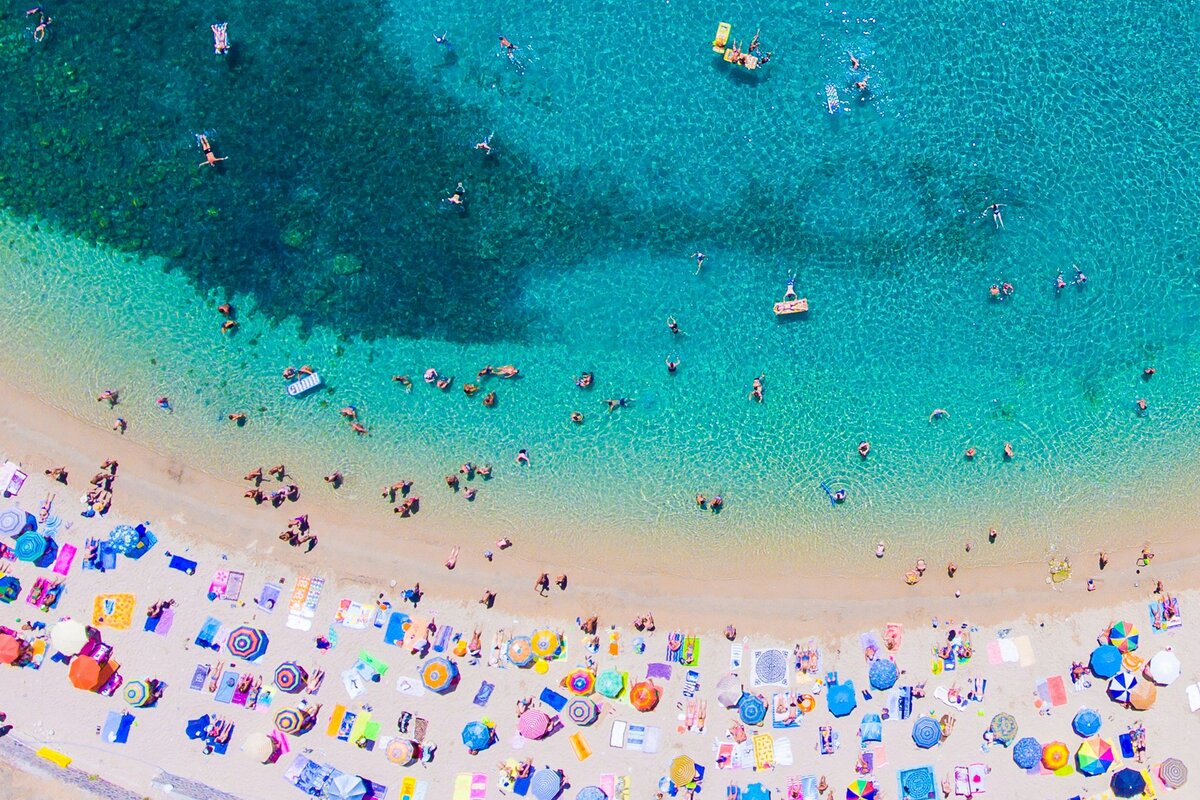
Ionian islands: warm and calm, free of the meltemi
Water only slightly cooler than the Dodecanese, but almost waveless
Zakynthos, Kefalonia, Lefkada and Corfu lie on the country's western side, sheltered from the meltemi, so the sea here is calm and clear and holds +24–25°C in July (the southern part of the group, like Lefkada and Zakynthos, can run a degree warmer than Corfu). This is the best compromise for those who want warm but smooth water, without the chop of the open Aegean beaches. Direct flights: Corfu ~2 hrs 40 min (one of the shortest to Greece), Zakynthos ~3 hrs.
Water in July: +24–25°C, wind and waves minimal
Flight from Warsaw: Corfu ~2 hrs 40 min, Zakynthos ~3 hrs
7 nights / 2 people: PLN 2,800–8,000
Who is it for
The best choice for families with children and anyone who can't stand waves and wind on the beach but wants warm, calm swimming and greenery instead of scorched rock. Not worth it if you're after that bone-dry Aegean weather — the Ionian is more humid and green, summers can feel muggy, and the odd rainy day is more likely here than in the Cyclades.
What to do
- Swim in the sheltered bays of eastern Zakynthos, where the water is warmest and calmest
- Take a boat along the west-coast cliffs, reachable only from the water
- Choose Lefkada for both the warmer Ionian water and windsurfing conditions in Vassiliki bay
- Leave the old-town walks for early morning and spend the middle of the day in the water
Cyclades: beautiful but windy — water cooler than the map suggests
Santorini and Mykonos tempt with the view, but the meltemi chills the swim
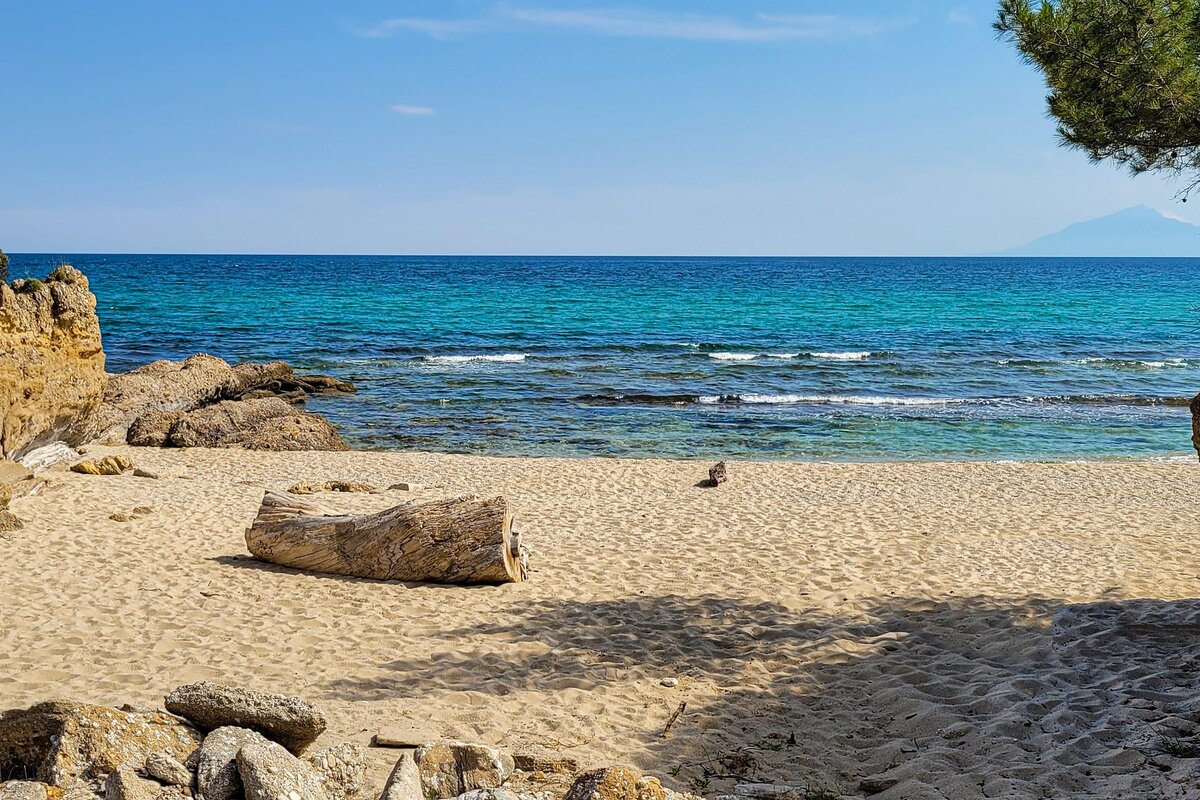
The Cyclades lie far to the south, so on paper the water should be hot — it sits at +24–25°C — the catch being that these are the "islands of the wind". The July meltemi disperses the heat, but it also raises the waves and, by drawing cool water up from the deep, can lower the temperature on north-facing, exposed beaches by 2–3°C compared with sheltered southern coves. On top of that, Santorini has volcanic beaches (black, scorching sand) and awkward access to the water. Direct flights from Poland are essentially absent — usually a change in Athens (4–5 hrs).
Water in July: +24–25°C, but north-facing beaches noticeably cooler in wind
Flight from Warsaw: 4–5 hrs (change in Athens)
7 nights / 2 people: PLN 6,000–22,000 (Santorini and Mykonos are among the priciest)
Who is it for
A choice for couples after aesthetics, sunsets and stylish beach clubs, and for wind-sports fans who find the waves a help rather than a hindrance. Not worth it purely for warm, calm swimming — on a windy July day the sea on an open beach can be cool and choppy, and Santorini is one of the least comfortable destinations in Greece for lounging by the water.
What to do
- Check the wind forecast and pick beaches on the southern, leeward side of the island
- On Naxos and Paros, aim for sheltered bays rather than the broad northern beaches
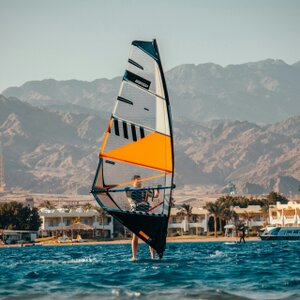
- Put the wind to use with a windsurfing or kitesurfing lesson when it's blowing anyway
- Watch the Santorini sunset from Imerovigli rather than crowded Oia
Northern Greece: Halkidiki and Thassos — the coolest summer water
But cheaper, greener and with the shortest flight from Poland
Halkidiki (the three "fingers" of the peninsula below Thessaloniki) and the island of Thassos are the northern Aegean, where July water is the coolest among the popular destinations: +23–25°C, warmer in August. This is not the choice when you're after the warmest swim — but it's offset by lower prices, pine forests running down to the sea, quieter beaches and one of the shortest flights: direct to Thessaloniki is about 2 hours 20 minutes from Warsaw.
Water in July: +23–25°C (the coolest of the popular regions)
Flight from Warsaw: ~2 hrs 20 min to Thessaloniki (direct)
7 nights / 2 people: PLN 3,000–7,000
Who is it for
A good choice for families and anyone valuing greenery, quiet and a short flight on a moderate budget, for whom +24°C in the water is plenty. Not worth it if your sole aim is the warmest possible swim — in July the water here is 1–2°C cooler than the Dodecanese or southern Crete, and in early July the gap can be marked.
What to do
- Pick the sheltered, shallow bays of Kassandra (the first "finger" of Halkidiki), which warm up fastest
- Go to Thassos for clear water over a white marble seabed (Marble Beach)
- Plan your trip for the second half of July or August, when the northern water is warmest
- Combine the beach with a day trip to Thessaloniki, 1–1.5 hrs from Kassandra
Quick comparison of regions
July water, air, flight from Warsaw and the cost of a week for two. Figures are indicative.
| Region | Sea (July) | Air (day) | Flight from Warsaw | 7 nights / 2 people |
|---|---|---|---|---|
| Dodecanese (Rhodes, Kos) | +25–26°C | +30–33°C | ~3 hrs 30 min | PLN 3,000–9,500 |
| Crete | +24–26°C | +27–30°C | ~3 hrs 20 min | PLN 3,500–9,000 |
| Ionian islands | +24–25°C | +29–32°C | ~2 hrs 40 min – 3 hrs | PLN 2,800–8,000 |
| Cyclades (Santorini, Mykonos) | +24–25°C | +26–29°C | 4–5 hrs (change) | PLN 6,000–22,000 |
| Halkidiki / Thassos | +23–25°C | +29–32°C | ~2 hrs 20 min | PLN 3,000–7,000 |
For the warmest, most reliable water, head to the Dodecanese or southern Crete. For warm but smooth, wind-free sea, the Ionian islands. Choose the Cyclades for the views and the scene, accepting the wind. Halkidiki and Thassos give you the shortest flight and a lower price, but also the coolest water of the summer.
How to catch the warmest water — and why September beats July
The temperature on the map is a regional average; on a specific beach it's the wind, the shape of the bay and the depth that decide. A few rules genuinely raise the comfort of a swim.
What to do
- Check the day's wind forecast and pick a beach on the leeward (usually southern) side of the island
- Aim for shallow, sheltered bays and lagoons — they warm up faster and more than open, deep beaches
- Avoid exposed north-facing beaches in the Cyclades on days with a strong meltemi
- Consider the second half of August or September: the sea heats up with a lag behind the air, so the warmest water in Greece is not in July but in late summer — if temperature is your only concern, September wins
Which region suits whom, and whom it doesn't
It suits
Families with children and anyone whose priority is warm, calm water — the Dodecanese (Rhodes, Kos) and southern Crete. Those who can't stand waves — the Ionian islands. Couples after views and a stylish scene, ready for the wind — the Cyclades. Those wanting a short flight and a lower price — Halkidiki, if +24°C in the water is enough.
It doesn't suit
Those who want the warmest swim but plan the Cyclades or the north — in July they'll meet water cooler than they expect. Those who cope badly with heat yet choose Rhodes or the Ionian in a windless week. Budget-minded travellers eyeing Santorini or Mykonos — these are the priciest destinations in the country, whatever the water temperature.
Entering Greece
Greece is in the EU and the Schengen Area, and the requirements are the same for every Greek region and island.
- EU/EEA citizens: visa-free, on a valid national ID card or passport.
- Non-EU residents of Poland: entry requires a valid passport plus either a valid Schengen visa or a valid Polish residence permit. Because Greece is in the Schengen Area, a Polish residence permit allows a short tourist stay — including in Greece — without a separate Greek visa. The residence permit does not, however, replace a passport, and the details depend on nationality.
For a trip to neighbouring Turkey (for example a day trip from Kos), entry rules depend on nationality and can differ from those for the Schengen Area — check them separately before you travel.
Pre-booking checklist:
- Set your priority: warmest and calm water → Dodecanese, southern Crete; warm without waves → Ionian; views despite wind → Cyclades.
- Check which side of the island the hotel sits on — in a meltemi, southern beaches are warmer and calmer than northern ones.
- Choose the beach type: sand with a shallow entry warms the water fastest; deep, open beaches are cooler.
- Check for a direct flight: Rhodes, Kos, Crete, Corfu, Zakynthos, Halkidiki — direct; Santorini and Mykonos — usually via Athens.
- If temperature alone is what matters, consider September over July.
- Planning a day trip to Turkey, verify the entry rules for your document.
Common mistakes:
- Assuming the water is the same across all of Greece. The gap between the Dodecanese and the northern Aegean reaches 2–3°C in July.
- Choosing the Cyclades purely for warm swimming. The meltemi can cool and churn the sea on exposed beaches — the worst region for "guaranteed" warm water.
- Ignoring the side of the island. A north and a south beach on the same island can differ by 2–3°C on a windy day.
- Booking Santorini for lounging by the sea. The beaches are volcanic and scorching, and water access is awkward — it's a destination for views, not swimming.
- Expecting "pool-warm" water in early July. The sea warms more slowly than the air; it's warmest in late summer.
- Confusing Turkey's entry rules with Schengen. The right to enter Greece does not automatically grant the right to enter Turkey.
When to book and what it costs
July is peak season — prices and occupancy are high, and the best hotels sell out early. Direct flights from Warsaw and regional airports serve Rhodes, Kos, Crete, Corfu, Zakynthos and Thessaloniki (Halkidiki); Santorini and Mykonos usually require a change in Athens.
Booking early: the best choice of hotels and lower prices than at the season's peak. As a guide, 7 nights / 2 people in July: Dodecanese PLN 3,000–9,500, Crete PLN 3,500–9,000, Ionian PLN 2,800–8,000, Halkidiki PLN 3,000–7,000, Cyclades PLN 6,000–22,000.
September instead of July: warmer water than in July, prices 20–30% lower, fewer crowds — for the swim alone, an objectively better moment.
Last minute: deals turn up for Crete, Rhodes and Kos, but at the height of July the choice of dates and resorts is limited.
The verdict
Where is the warmest sea in Greece in July?
In the Dodecanese — Rhodes and Kos give the warmest, most reliable swim at +25–26°C, with light wind. Just behind comes southern Crete (the Libyan Sea). If you want warm but smooth water without waves, choose the Ionian islands. Take the Cyclades (Santorini, Mykonos) for the views, accepting that the meltemi will chill the sea on north-facing beaches. Halkidiki and Thassos mean the shortest flight and a lower price, but also the coolest water of the summer.
One last tip:
If the warmest swim is your only goal, combine two things: choose the Dodecanese or southern Crete and — if your dates are flexible — shift the trip to late August or September, when the sea is at its warmest of the whole season. In July, stick to one rule: a hotel and beach on the leeward, southern side of the island.

 Holidays


 Last minute
 Hotels


 Blog
Blog