August is the one month Egypt sells at 30–40% off its winter prices, and that isn't operator generosity — it's compensation. Compensation for +40°C in the shade, for a sun you can't be out in between 11am and 4pm, and for a sea that warms to +29–30°C and stops refreshing you: you step out of the water and feel no difference from the air. But the same weather has a flip side. It's precisely in August that the Red Sea stays flat for weeks on end, and it's the best season for liveaboard diving to the far reefs you can't reach in winter for the swell. In one and the same August, some people get a ruined holiday and others the best of their year — and the difference isn't luck, it's why they came.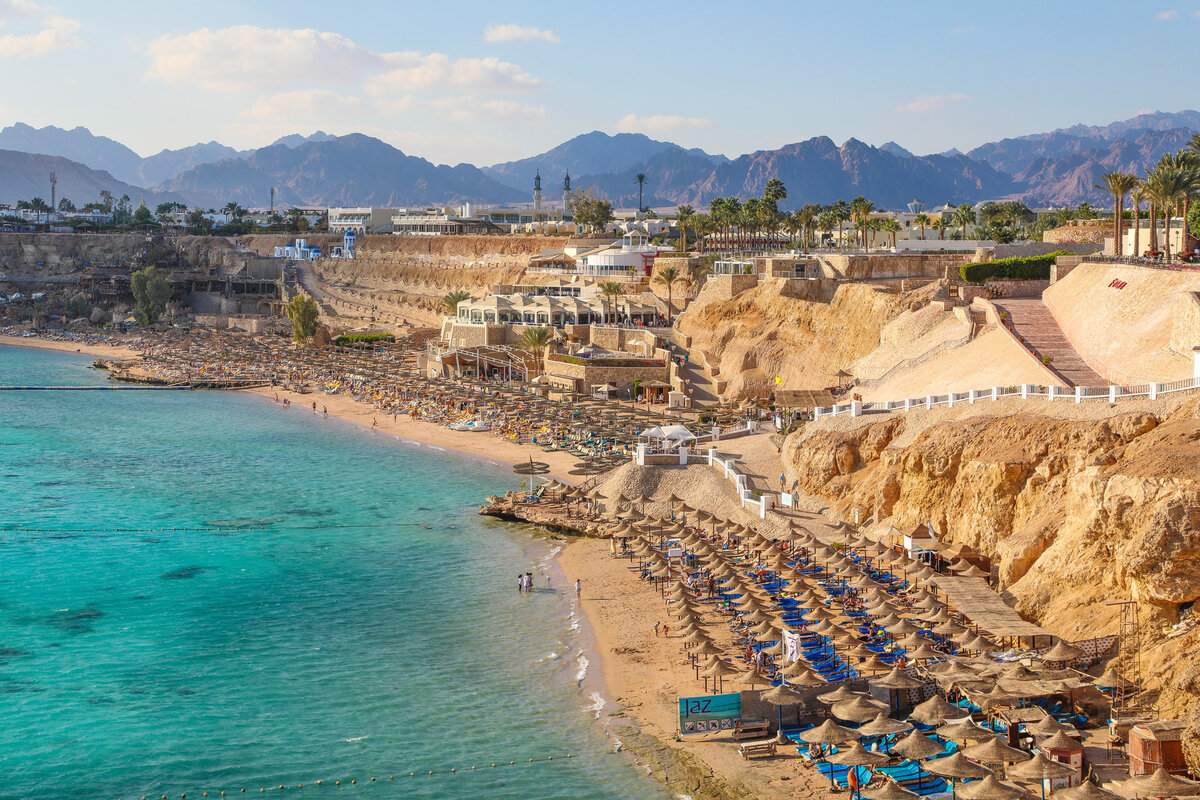
Below is the honest breakdown: how hot it actually gets in Hurghada, Sharm El Sheikh, Marsa Alam and on the Mediterranean coast, how Egypt's August heat differs from Turkey's, which excursions aren't worth booking this month at any price, how much a package saves, and how to build a week so the heat stays in the background rather than becoming the main event. At the end: a summary table, who should go, and who should move the trip to October.
- The short answer, no preamble → Who should and shouldn't go
- The temperatures by resort → The weather in August
- Why the sea doesn't help → A +30°C sea
- The wind that changes everything → Hurghada
- The hottest option → Sharm El Sheikh
- The best month for diving → Marsa Alam and diving
- Where Egyptians go in August → The Mediterranean coast
- Excursions: what to cancel → Pyramids and Luxor
- How much you save → Prices
- How to handle the heat → In practice
- Documents and visas → Entry rules
The short answer: who should go and who shouldn't
If you want the answer without reading the whole piece — it splits in two, and that's the honest version.
Worth going: divers and snorkellers, fans of the "hotel, pool, air conditioning, sea" format, anyone travelling for the price, and anyone who handles dry heat well
Not worth going: with children under 3–4, for elderly relatives, for people with cardiovascular conditions, and for anyone who planned the holiday around excursions to Luxor, Cairo and the pyramids
The compromise: move the departure to late September or October — the sea stays +28°C, the air drops to +32–34°C, and prices are still below winter
What follows is the detail behind why the answer is exactly that.
The weather in August: how hot it actually gets
August is the peak of summer and the hottest month of the year in Egypt. But "hot" means different things depending on where you land: the spread between Red Sea resorts reaches 4–5 degrees, and between the coast and the Nile valley up to eight. More important than the numbers is something else: Egypt's heat is dry, humidity on the Red Sea sits around 30–45%, and +40°C here is noticeably easier to take than +33°C in a humid climate. That doesn't cancel the danger of the sun, but it does explain why some people come back happy.
| Place | Air (day) | Night | Sea | Note |
|---|---|---|---|---|
| Hurghada | +37–40°C | +27–29°C | +29–30°C | Constant northerly wind |
| Sharm El Sheikh | +39–42°C | +29–31°C | +29–30°C | Mountain bowl, less wind |
| Marsa Alam | +38–41°C | +28–30°C | +29–30°C | Hottest of the beach resorts |
| Dahab | +38–40°C | +27–29°C | +28–29°C | Windy, drier |
| Alexandria | +30–32°C | +24–26°C | +27–28°C | Mediterranean, humid |
| Cairo | +36–39°C | +25–27°C | — | Smog deepens the mugginess |
| Luxor and Aswan | +42–46°C | +28–30°C | — | Extreme, almost no shade |
Two more things worth knowing in advance. The khamsin — the dusty desert wind Egypt is warned about — falls in March–May, not August, so sandstorms are rare at this time. And August nights bring no relief: in Sharm the air still holds +30°C at three in the morning, which makes air conditioning in the room not a luxury but a condition of sleep.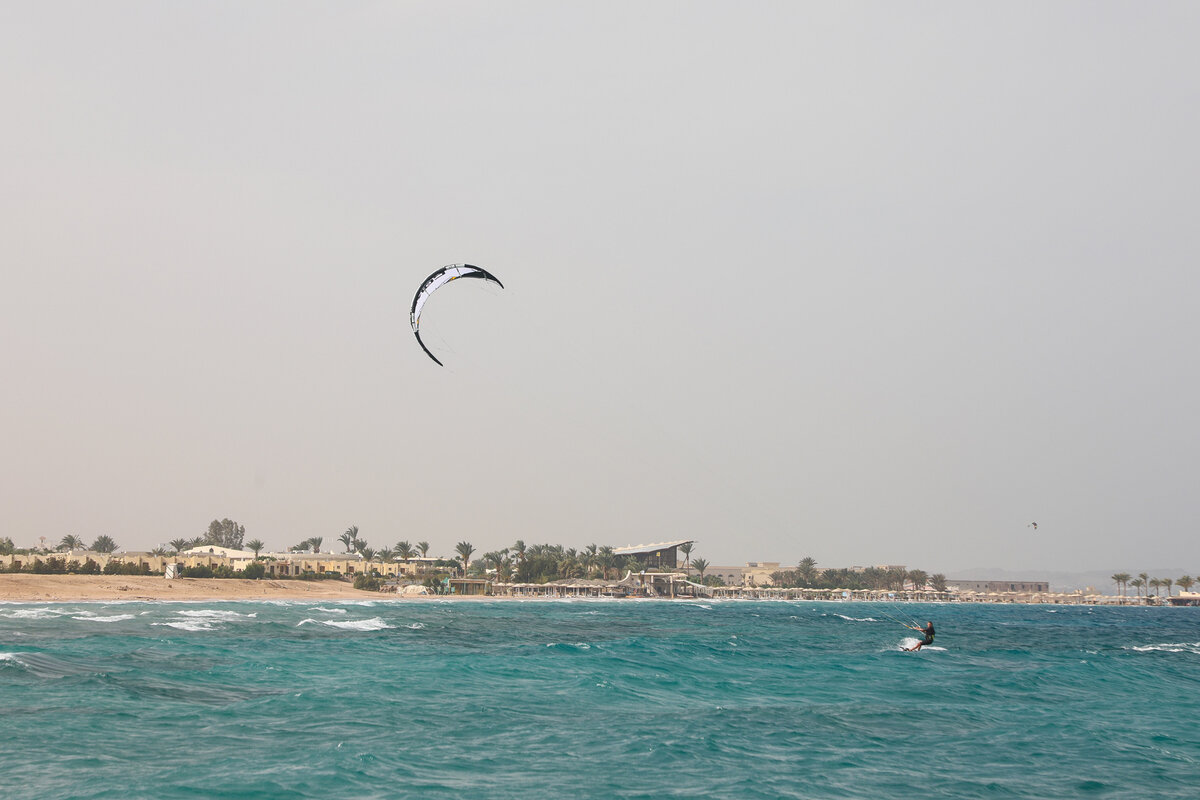
A +30°C sea: why it isn't as good as it sounds
In the brochures, "a +30-degree sea" reads like a selling point. In practice it's August's main disappointment for the unprepared: water at body temperature doesn't cool you. After fifteen minutes in it, the effect you get into the sea for in the heat never arrives — you come out just as overheated. Parents of small children notice it first: a child in warm water doesn't cool down but overheats even faster, because they play and don't ask to come out.
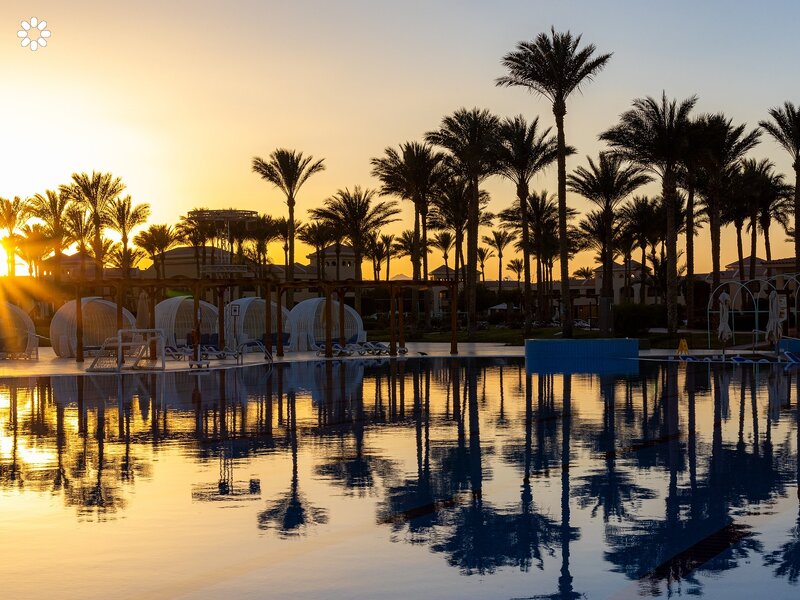
There's a practical consequence for the pool too. In August the water in open hotel pools warms to +31–33°C, which is already warmer than comfortable. Some good hotels run pools with a water-cooling system — if you're travelling in August specifically for the pool, this is worth checking in the listing alongside whether there's a water park.
The warm water does have one indisputable plus: no wetsuit is needed for snorkelling or diving, and visibility on the Red Sea reaches 30–40 metres in summer. You can swim over a reef for hours without getting cold — something that in winter, at +22°C, is only possible in neoprene.
Hurghada and Sahl Hasheesh: the wind as the main advantage
"The most sensible August choice on the Red Sea"
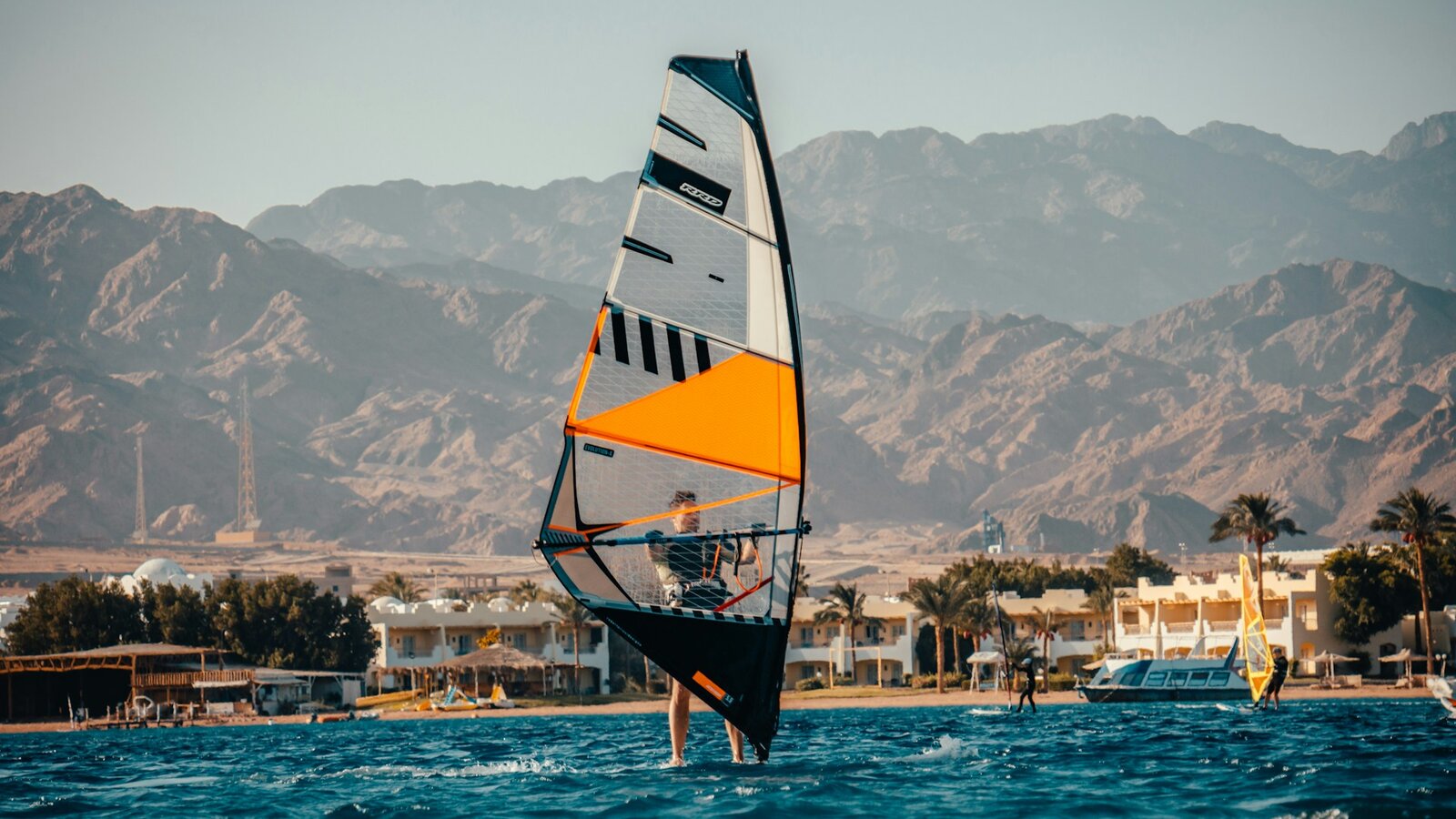
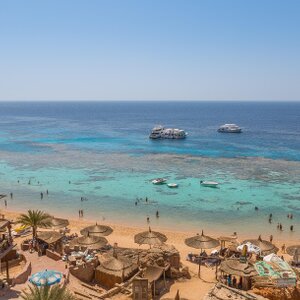
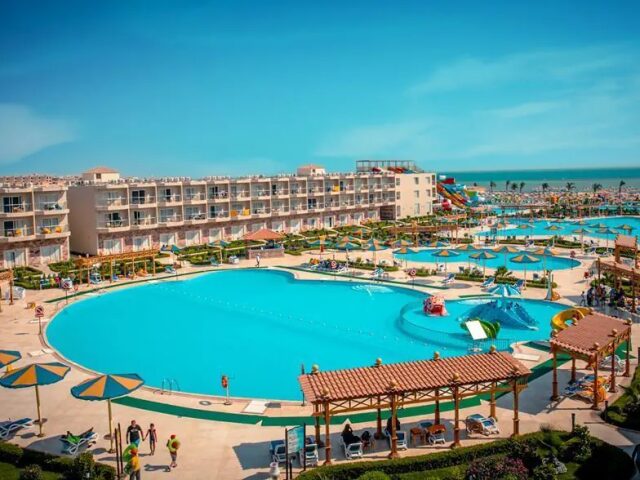
Hurghada and the resort zones strung out to the south — Sahl Hasheesh, Makadi Bay, El Gouna — sit on an open coast where a northerly wind blows almost constantly. The gap with Sharm in figures is small, two or three degrees, but in how it feels it's decisive: moving air works as natural ventilation, and +38°C with wind is easier to take than +40°C in still air. That same wind makes Hurghada and El Gouna a kite- and windsurfing hub, and the summer months here are the season of reliable wind. The downside: open beaches can bring a chop and blowing sand, and you'll need to plant your parasol firmly.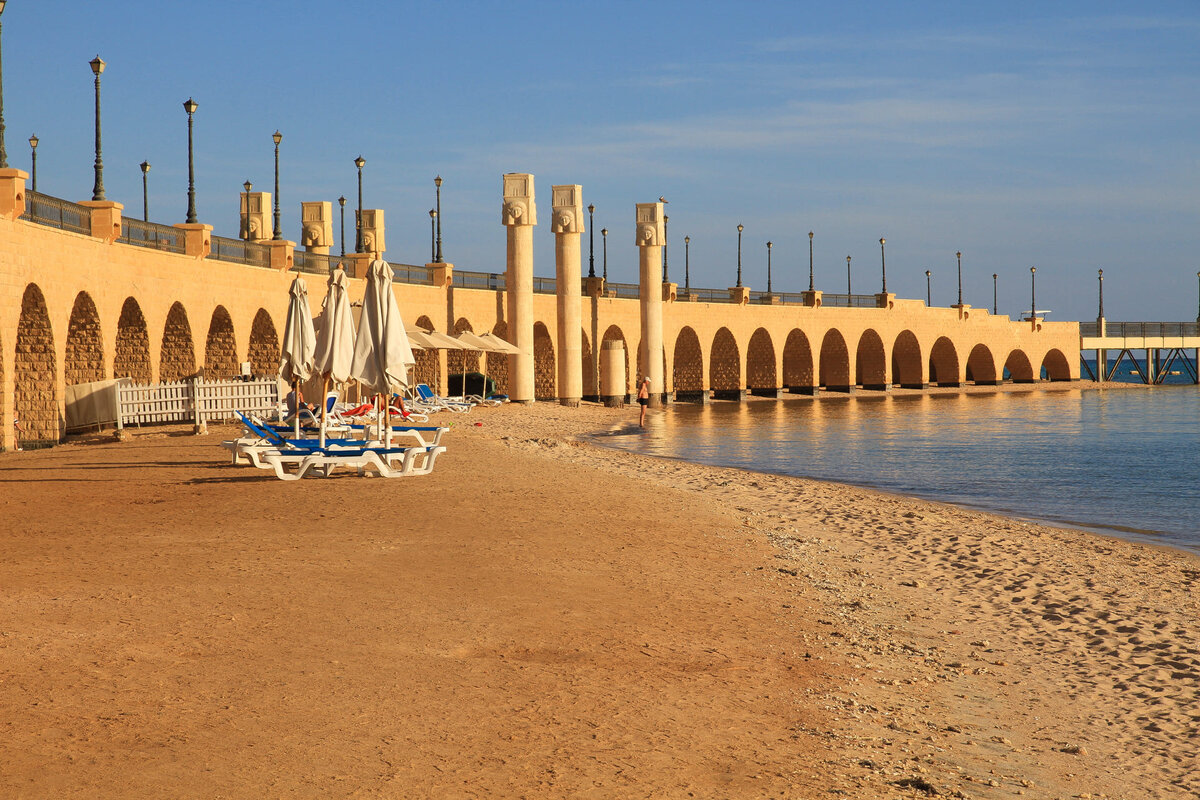
Flight from Warsaw: ~4 hrs 20–40 min, transfer from 20 minutes to 1 hour depending on the zone
7 nights / 2 people in August: PLN 3,500–7,500 all-inclusive
Weather: +37–40°C by day, sea +29–30°C, wind almost every day
Who for: kiters, families with school-age children, anyone who handles mugginess badly
Who is it for
The best August option for anyone travelling with children who still wants the Red Sea: the wind lowers the felt temperature, the infrastructure is the most developed in the country, there are more water parks than anywhere else, and the airport transfer is short — an important point when it's +39°C outside. Not worth it in Hurghada if you want a perfect entry into the sea straight off the beach: many hotels have a coral bottom and entry via a pontoon, and anyone counting on a sandy walk-in with a child should check the specific hotel, not the resort as a whole.
Sharm El Sheikh: the hottest, but with the best reefs right off the shore
"Here you'll have to reckon seriously with the temperature"
Sharm lies in a basin ringed by the mountains of Sinai, and that's its August problem: the wind reaches it less well, daytime temperatures regularly pass +41°C, and at night the air cools only to +30°C. Walking around Naama Bay in August makes sense only after sunset. The compensation is serious: off the shore of Sharm lie the reefs people come from all over the world for — Ras Mohammed, Tiran, the reef at Shark's Bay — and many can be reached from the beach with a mask, no boat or certification required. The water is clear, the corals alive, the fish plentiful year-round.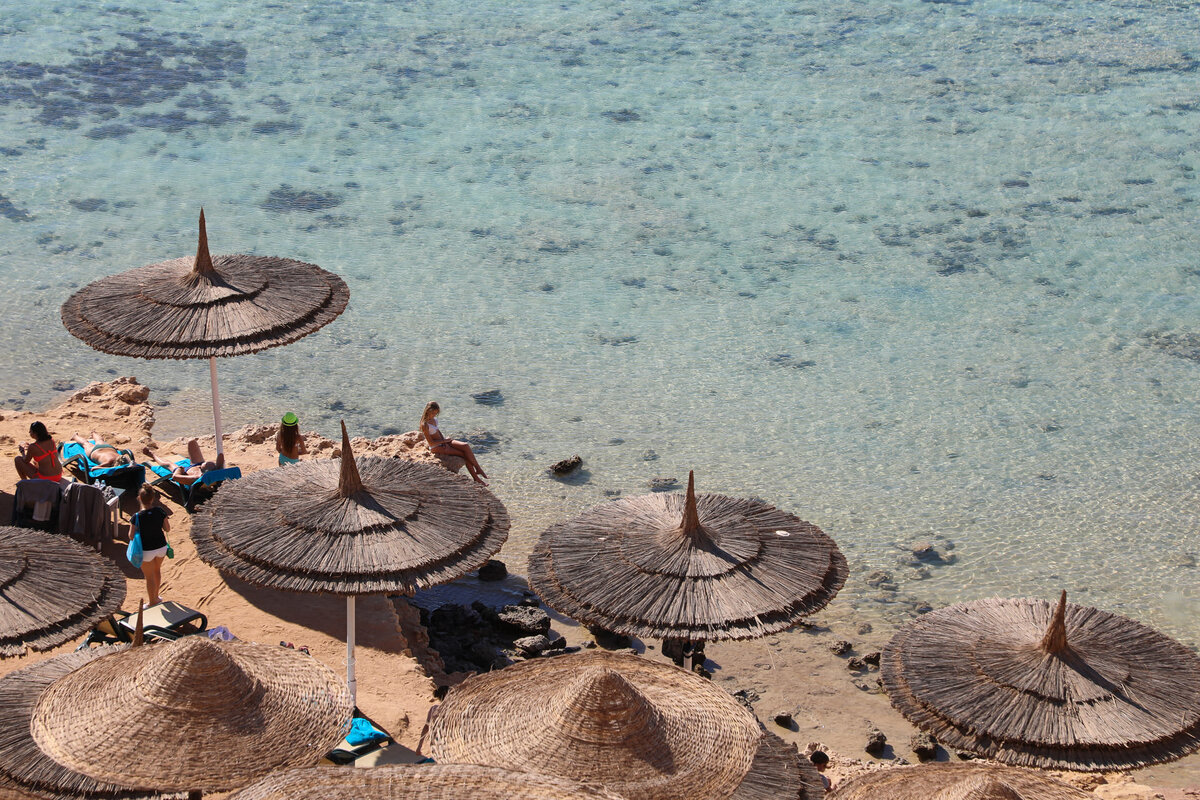
Flight from Warsaw: ~4 hrs 30 min, transfer usually 15–40 minutes
7 nights / 2 people in August: PLN 3,800–8,000 all-inclusive
Weather: +39–42°C by day, +29–31°C at night, little wind
Who for: snorkellers and divers, couples without children, anyone ready to live on a "morning and evening" schedule
Who is it for
The right choice for those whose main aim is the reef rather than lying on the beach: in August you can dive and snorkel in Sharm without a wetsuit, and visibility stays excellent. It suits couples and adult groups ready to reshape the day around the heat. Not worth it in Sharm in August with small children and the elderly: the combination of +41°C by day, +30°C at night and weak wind is the toughest of all the Egyptian options, and it's here that heatstroke most often catches out those who underestimated the climate.
What to do
- Head out to the reef at 7–9am — the water is calmer, the light for snorkelling is better, and the sun isn't yet scorching
- Take a boat trip to Ras Mohammed in the first half of the day — out at sea there's wind even when the bay is flat calm
- Move all walks around the Old Market and the promenade to after 7pm
- Check when booking whether the hotel has its own pontoon — in August, walking to the next beach along a baking promenade is a dubious pleasure
Marsa Alam and diving: the one reason to choose August on purpose
"A calm that only comes in summer"
This is the case where you don't tolerate August but choose it deliberately. In summer the Red Sea settles, the swell drops, and the routes open up to the far reefs that boats can't reach for weeks in winter because of the weather: Elphinstone, the Brothers, Daedalus. Liveaboards schedule these routes precisely for the summer months, and divers plan a holiday around them six months ahead. Add the district's resident wildlife — dugongs and sea turtles in Abu Dabbab bay, dolphins in the Sataya lagoon. Visibility is the best of the year, the water +30°C, no wetsuit needed.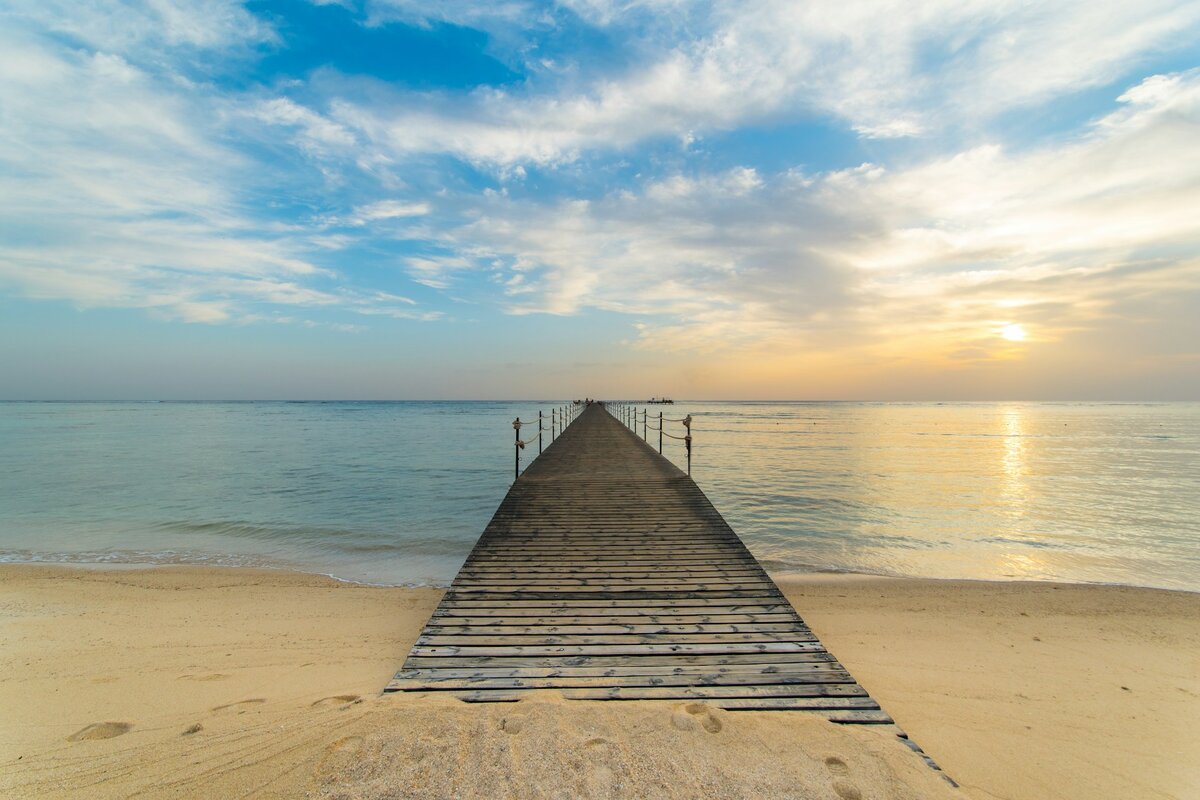
Flight from Warsaw: ~4 hrs 40 min, transfer from Marsa Alam airport 10–60 minutes
7 nights / 2 people in August: PLN 4,000–8,500 all-inclusive
Weather: +38–41°C, sea +29–30°C, low humidity
Who for: divers, snorkellers, anyone wanting quiet hotels away from the town bustle
Who is it for
Ideal for those travelling for what's underwater rather than the shore: the reefs here are younger and more intact than around Hurghada, the hotels sit scattered along the coast, and there are no crowds. Not worth it if you want a town, shopping and a choice of restaurants outside the hotel: Marsa Alam is essentially an airport, a highway and a chain of hotel complexes, and anything not included in "all-inclusive" is hard to come by. Anyone who doesn't dive or snorkel will find August here frankly short on things to do.
The Mediterranean coast: where Egyptians go in August
A fact little known outside the country: in August Cairo's residents leave in numbers not for the Red Sea but for the north — for Alexandria, Marsa Matrouh and the Sahel resort strip west of Alexandria. The reason is simple: it's 8–10 degrees cooler there. The Mediterranean gives +30–32°C by day instead of +40°C, and water at +27–28°C that genuinely refreshes. The flip side is that humidity is markedly higher than on the Red Sea, so +31°C feels heavier than a dry +38°C in Hurghada.
For a traveller from Poland there's a practical snag: there are almost no package tours to this coast, the infrastructure is built for the domestic market, and there are no reefs or coral beaches at all. Alexandria makes more sense as a two-day add-on to a trip than as a substitute for a beach holiday: the Roman amphitheatre, the Kom El Shoqafa catacombs, the Qaitbay fort on the site of the Pharos lighthouse, and the Bibliotheca Alexandrina, built in memory of the ancient library.
Excursions in August: what to cancel in advance
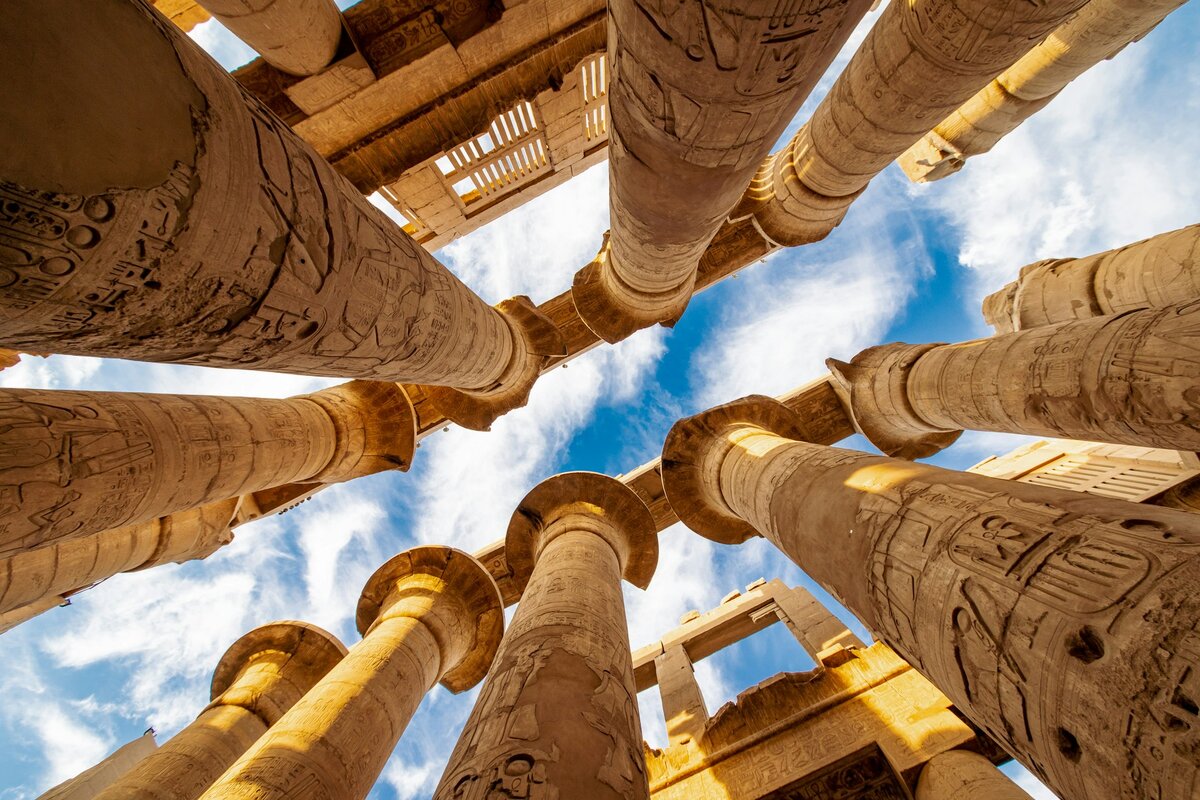
This is the main point that makes an August Egypt ruin the holiday for people who bought it for the cultural programme. The Nile valley bakes harder in summer than the coast: +42–46°C is normal in Luxor and Aswan, and the Valley of the Kings is a stone bowl without a single tree, where the temperature at the bottom of the tomb gorges climbs higher still. Excursions there are technically sold year-round, but in August it's an ordeal the elderly and children take badly, and sometimes dangerously.
How to prioritise excursions:
- Luxor as a day trip from Hurghada. A 4–5 hour drive each way plus sightseeing at +45°C. In August it's wiser to pass and leave this trip for November–March.
- Cairo and the pyramids in a day. Possible, but only with an early start: the Giza plateau opens at 7am, and everything seen before 11 goes fine. After midday, sightseeing turns into dashes between patches of shade.
- The Grand Egyptian Museum. A fully enclosed complex by the pyramids — a rare case of an excursion that works better in August than in winter: it's air-conditioned inside, and the Tutankhamun collection is displayed in full.
- Boat trips and snorkelling tours. August's optimal format: it's always cooler on the water than on land, and there's wind.
- Jeep safaris and quad bikes in the desert. Sunset only. Daytime runs in August mean dust, +45°C and no pleasure at all.
- Liveaboard diving to the far reefs. The best season of the year, and the reason August gets chosen deliberately.
Prices: how much you actually save
August is low season in Egypt, and that shows directly in the price lists. A week's all-inclusive package for two in August costs roughly 30–40% less than the same hotel over New Year or in February, when Egypt runs as Europe's number-one winter destination. The spread between resorts is small: Hurghada is traditionally cheaper than Sharm and Marsa Alam, with 10–15% between them.
| Resort | 7 nts / 2 people (August) | Same hotel in winter | Air | Flight |
|---|---|---|---|---|
| Hurghada | PLN 3,500–7,500 | +30–40% | +37–40°C | ~4 hrs 20 min |
| Sharm El Sheikh | PLN 3,800–8,000 | +30–40% | +39–42°C | ~4 hrs 30 min |
| Marsa Alam | PLN 4,000–8,500 | +25–35% | +38–41°C | ~4 hrs 40 min |
| El Gouna and Sahl Hasheesh | PLN 4,500–10,000 | +30–40% | +37–40°C | ~4 hrs 20 min |
One nuance softens that saving: August is school holiday season, and demand from Europe for specific mid-month dates is high after all. The lowest prices usually fall in the second half of August and the first days of September, when the holiday wave recedes and the weather doesn't change at all.
How to build a week so the heat doesn't get in the way
An August Egypt works fine on one condition: the day is built differently from Turkey or Greece. The scheme is simple and proven — activity in the morning and evening, the hotel and the water in the middle of the day.
Practical rules:
- Plan everything, on the water and on land, for before 11am and after 5pm. The stretch from 11 to 4 is for the pool, the shade, the air conditioning and lunch, not for walks.
- Drink more than you feel like: in dry air, thirst arrives late but dehydration doesn't. Aim for 3–4 litres of water a day per adult, and not only in the room.
- Take SPF 50+ sunscreen and a hat seriously: the UV index here in August is extreme, and you can burn in 20 minutes even under light cloud.
- Check when booking whether the hotel has a water-cooled pool and enough shade on the beach — in August that matters more than the number of restaurants.
- Choose a hotel with a short transfer: an hour on a bus after a four-hour flight in +40°C feels very different from winter.
- For snorkelling, wear a rash guard rather than putting cream on your back — people spend hours in the warm water and burn their backs without noticing.
Common August-Egypt mistakes:
- Buying the tour for the sightseeing programme. Luxor and the Valley of the Kings in August mean +45°C with no shade. If the trip was conceived around the antiquities, it's better moved to November–March.
- Assuming the sea will cool you. Water at +29–30°C gives no refreshing effect, and it overheats children faster than the shore does. Shade and air conditioning save you, not swimming.
- Taking Sharm El Sheikh with toddlers and the elderly. A windless basin, +41°C by day and +30°C at night — the country's toughest climatic option this month.
- Skimping on the hotel at the expense of air conditioning and shade. In August the gap between a good and a bad hotel is measured not in stars but in whether the climate system works across the whole site and whether there's anywhere to shelter from the sun by day.
- Planning a jeep safari in the daytime. The desert at midday in August isn't an adventure but a risk; the same routes at sunset go fine.
- Expecting sandstorms. The khamsin falls in spring, March–May. In August the main problem isn't dust but temperature, and that's what to prepare for.
Entry rules: nationality decides, not where you live
Egypt belongs to neither the EU nor the Schengen Area, and a visa is required for practically all European tourists, including Polish nationals. A Polish residence permit, a Schengen visa and EU resident status have no bearing on Egyptian rules — what matters is your nationality and passport, so check the requirements for your specific document.
- General rule: an Egyptian tourist visa is required. It's arranged in advance online as an e-visa or stamped on arrival at the airport; from 1 March 2026 the cost is USD 25 for the e-visa and USD 30 if arranged at the border. The passport must be valid for at least 6 months from the date of entry.
- Ukrainian and Belarusian citizens: a visa is required on the general basis. Some travellers arrange it through the tour operator along with the package — check this point when booking, so you don't have to handle it yourself.
- The separate Sinai rule: on arrival at Sharm El Sheikh, staying only within the South Sinai resort zone, you can get a free stamp valid for up to 15 days. But it doesn't allow you to travel beyond that zone — a trip to Cairo, Luxor or the mainland coast needs a full visa, and you should get it straight away if such excursions are on the plan.
- General note: the visa cost, the rules for arranging it and the terms of the Sinai stamp change, so confirm the current requirements with your tour operator or official sources before booking.
The verdict
So is Egypt worth it in August?
It is — if you're buying the sea, the reef and the hotel, rather than the country around them. For divers and snorkellers, August gives the best visibility of the year, flat calm on the far reefs and water that needs no wetsuit; for those travelling for the "pool, shade, air conditioning, all-inclusive" format, a 30–40% discount on the very same hotel. Among the resorts, all else being equal, choose Hurghada and its surroundings: the wind here works as natural ventilation, and +38°C is easier to take than +41°C in windless Sharm. It's not worth it if Luxor, the Valley of the Kings and the pyramids at an unhurried pace are on the plan, if you're travelling with toddlers or elderly relatives, or if you struggle with heat in general. In those cases the saving won't pay off: it is the price of the risk.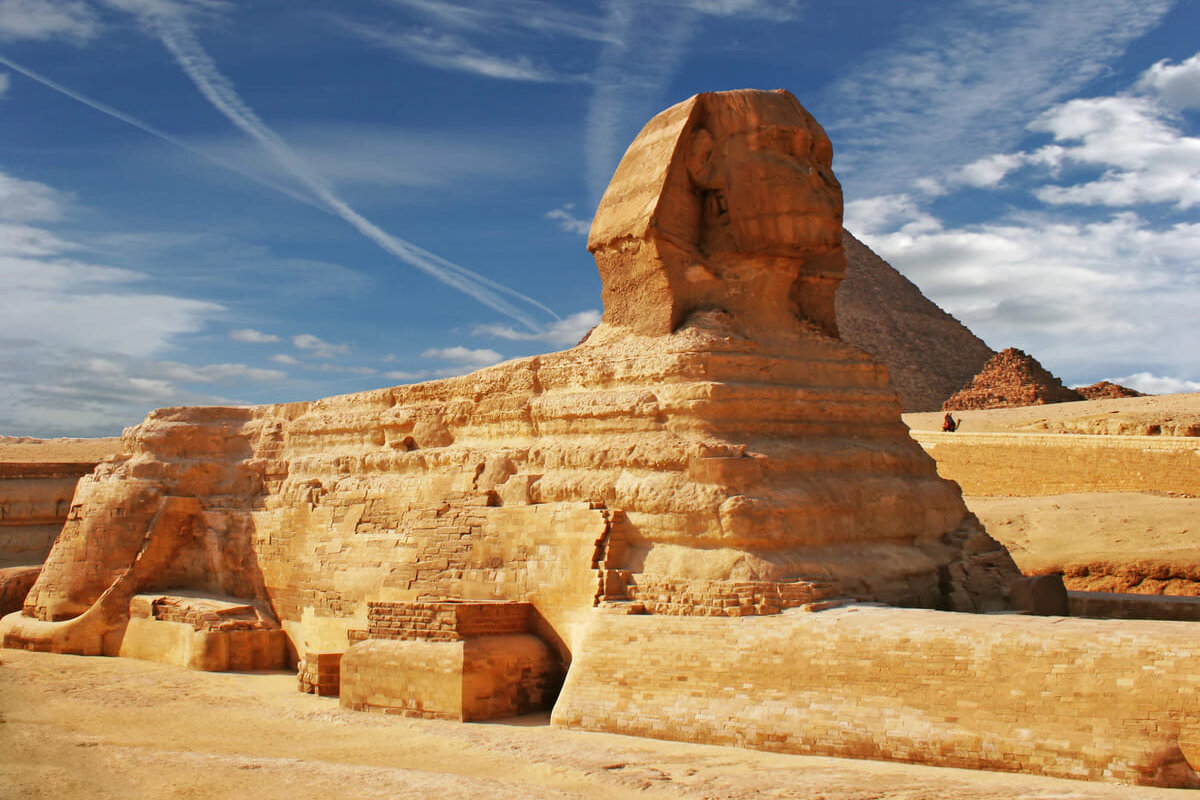
One last tip:
If in doubt — shift the dates to late September or October. The sea stays +27–28°C, the air drops to +32–34°C, excursions become possible again, and prices are still noticeably below winter. It's that rare case where the compromise beats both extremes.

 Holidays


 Last minute
 Hotels


 Blog
Blog