Every "shoulder season" guide tells you the same thing about Montenegro in September: warm sea, fewer crowds, lower prices. All three are true, and none of them tell you the thing that actually changes your trip — the airport with the direct flight from Warsaw isn't the one next to the beach.
This guide compares the five parts of the Montenegrin coast that matter for a September holiday — Budva, the Bay of Kotor, Herceg Novi, the southern beaches around Bar and Ulcinj, and the smaller resorts of Sveti Stefan, Petrovac and Bečići — by temperature, crowd pattern, price timing and who each one actually suits. It also covers the flight and entry details that differ by nationality, since a Ukrainian passport, a Belarusian passport and a Polish residence card each mean something slightly different at Montenegrin border control this year.
- Want nightlife and a proper beach town → Budva
- Came for the bay views, can live without a beach → Kotor
- Want it calmer and cheaper without leaving the bay → Herceg Novi
- Want the warmest water and the longest sandy beach → Bar and Ulcinj
- Want a quieter, more polished stay → Sveti Stefan, Petrovac, Bečići
- Need flight and visa specifics before booking → Getting there and entry rules
Is September actually worth it: the short version
Early September on the coast runs 26-28°C by day, easing to 22-26°C after the middle of the month. The sea holds at 23-24°C through most of September, which in practice feels warmer than June, since the Adriatic has spent all summer storing heat. The first week of the month still moves at August prices and August crowds — Kotor's old town fills up on cruise-ship days, and Budva's beach clubs run at full capacity. The shift happens specifically from around 15 September, when accommodation prices typically drop 25-35% and sun loungers stop being a competitive sport.
| Period | Air / sea temp | Crowds | Prices |
|---|---|---|---|
| 1-14 September | 26-28°C / 24°C | Near-August levels, cruise days busy in Kotor | Near-August levels |
| 15-30 September | 22-26°C / 23°C | Noticeably thinner, loungers freely available | 25-35% below August |
The trade-off is rain risk: September brings roughly 6-8 rain days across the coast, usually short afternoon showers rather than washed-out days. If your priority is guaranteed sun every single day, July still beats September on that one metric alone.
Budva: best if you want a beach town with a pulse
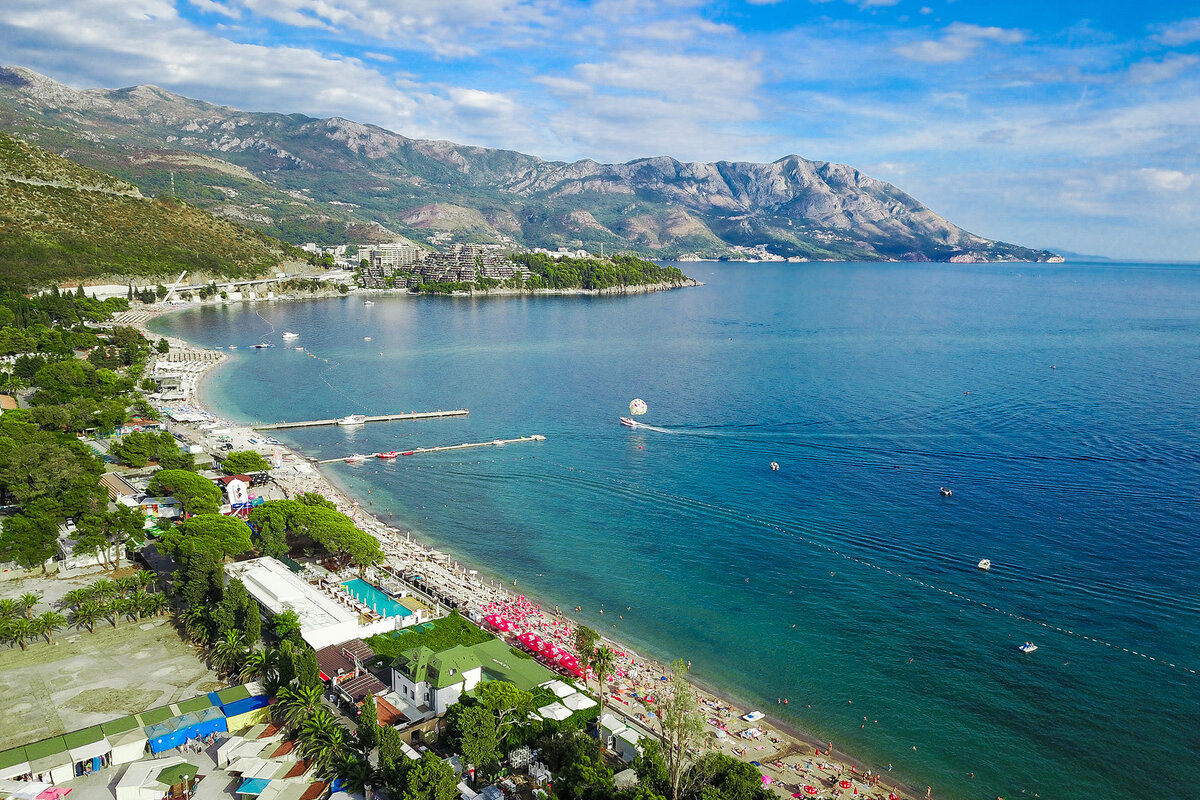
Budva is the coast's main resort town: a walled old town wedged between two sandy-pebble bays, backed by the densest concentration of hotels, beach clubs and restaurants in the country. In the first half of September it still runs close to peak-season energy; after the 15th, the same beaches empty out considerably while the water stays at a comfortable 23-24°C.
Who is it for
Couples and groups who want an actual beach in walking distance of nightlife, and families who prefer organised beach clubs over quiet coves. Not worth it for anyone hoping to avoid other tourists entirely in the first two weeks of the month — Budva doesn't thin out until mid-month, and its beaches are shingle rather than soft sand, which matters if you're travelling with small children who dislike pebbles underfoot.
Bay of Kotor: the scenery is unmatched, the midday crowds aren't optional
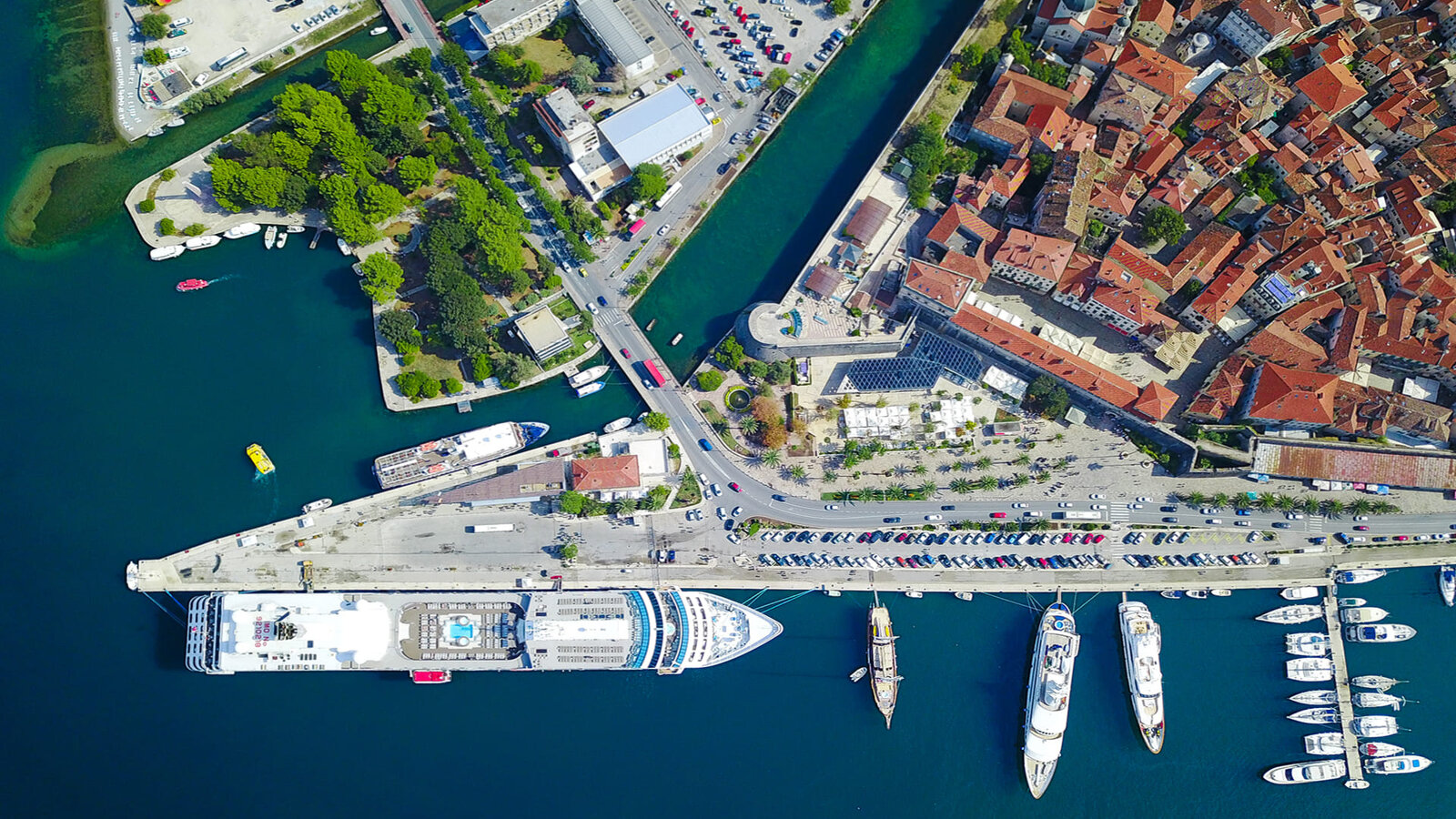
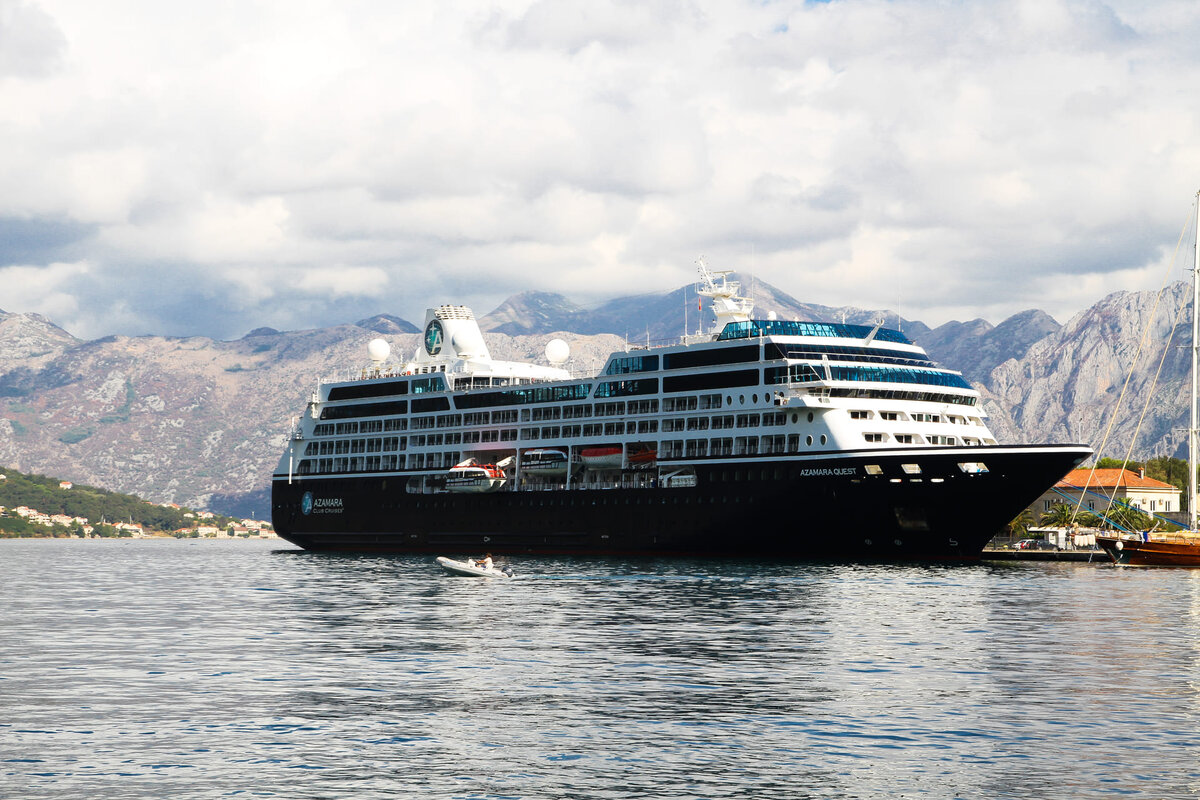
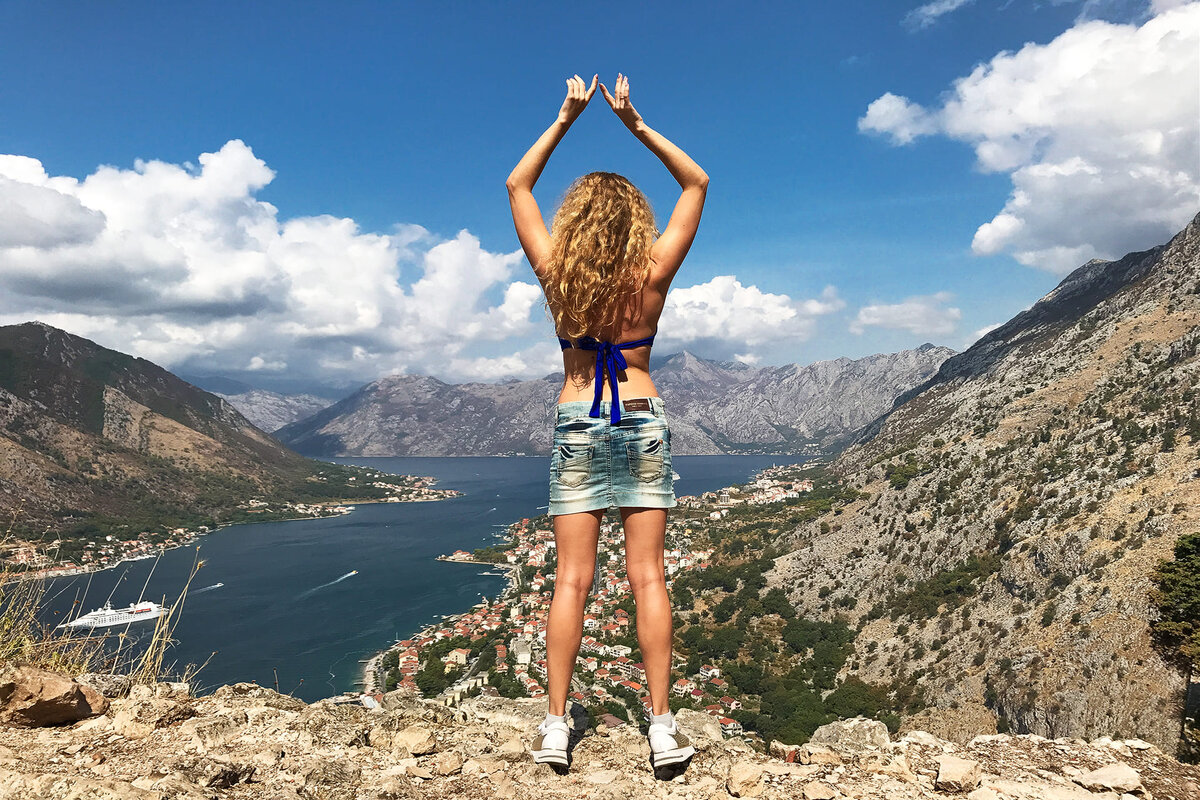
Kotor's old town sits at the head of a fjord-like bay ringed by 1,300-metre limestone walls, and it's genuinely one of the most striking settings on the Adriatic. The catch in September: cruise ships still call regularly through the first half of the month, and on a call day the old town's narrow streets fill up between roughly 10:00 and 16:00. Outside those hours — early morning or after the ship departs in late afternoon — the same streets are close to empty.
Who is it for
Travellers prioritising history, architecture and the bay drive over beach time, and anyone happy to plan around ship schedules rather than fight them. Not worth it as a beach base — the town itself has no real beach, and the closest decent swimming spots are a short drive away in Dobrota or across the bay in Perast, which turns "just a quick swim" into a 20-30 minute round trip.
Herceg Novi: the calmer, greener, cheaper bay option
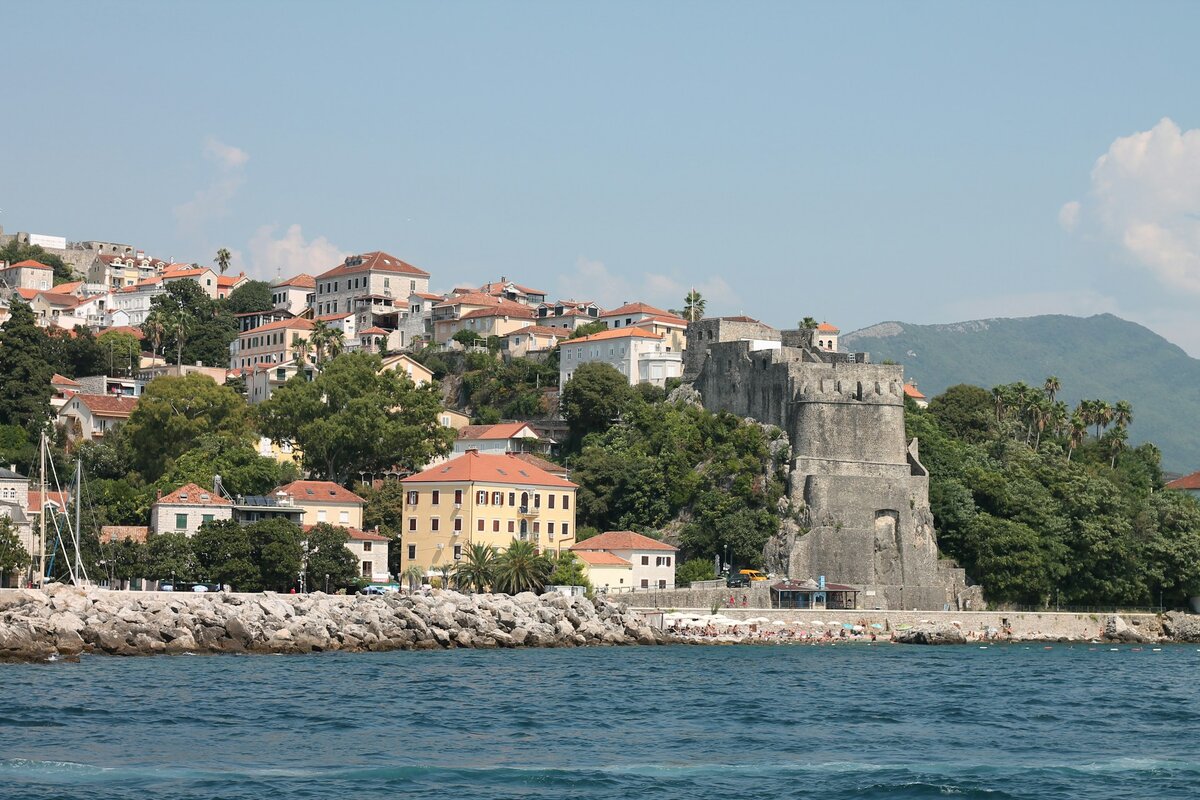
At the mouth of the bay, Herceg Novi trades Kotor's crowds for terraced streets, subtropical gardens and the Kanli Kula fortress, at accommodation prices that typically run below both Budva and Kotor for a comparable standard. It's also the natural stop if you're combining Montenegro with a short hop into Croatia, since the border crossing toward Dubrovnik sits close by.
Who is it for
Travellers who want the bay's atmosphere without the cruise-day chaos, and anyone building a slower, greener trip rather than a beach-club one. Not worth it if a wide sandy beach is the main point of the holiday — the town's own waterfront is mostly rocky, and swimming spots are smaller and more scattered than in Budva or further south.
Bar and Ulcinj: the warmest water and the only proper long sandy beach
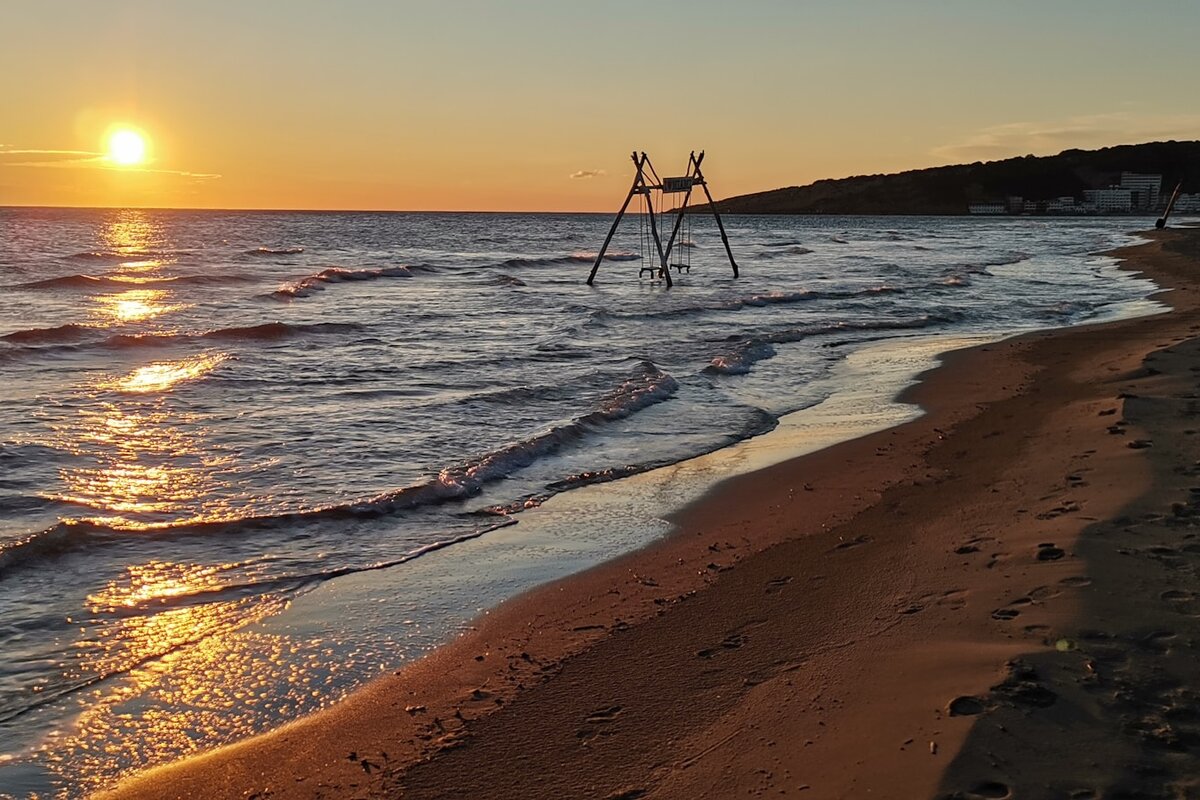
The southern coast runs slightly warmer than the bay for longer into autumn, and Ulcinj holds the country's actual sandy-beach card: Velika Plaža, a roughly 13-kilometre stretch of fine sand, a different texture entirely from the shingle further north. Infrastructure here is noticeably less polished than Budva's — fewer beach clubs, more independent guesthouses, lower prices across the board.
Who is it for
Families who specifically want sand rather than pebbles, and budget-conscious travellers happy to trade five-star polish for value and space. Not worth it for anyone who wants a walkable old-town base with restaurants and bars on the doorstep — Ulcinj's town centre is more spread out, and the best beach stretches sit outside easy walking distance from most accommodation.
Sveti Stefan, Petrovac and Bečići: smaller, calmer, more polished
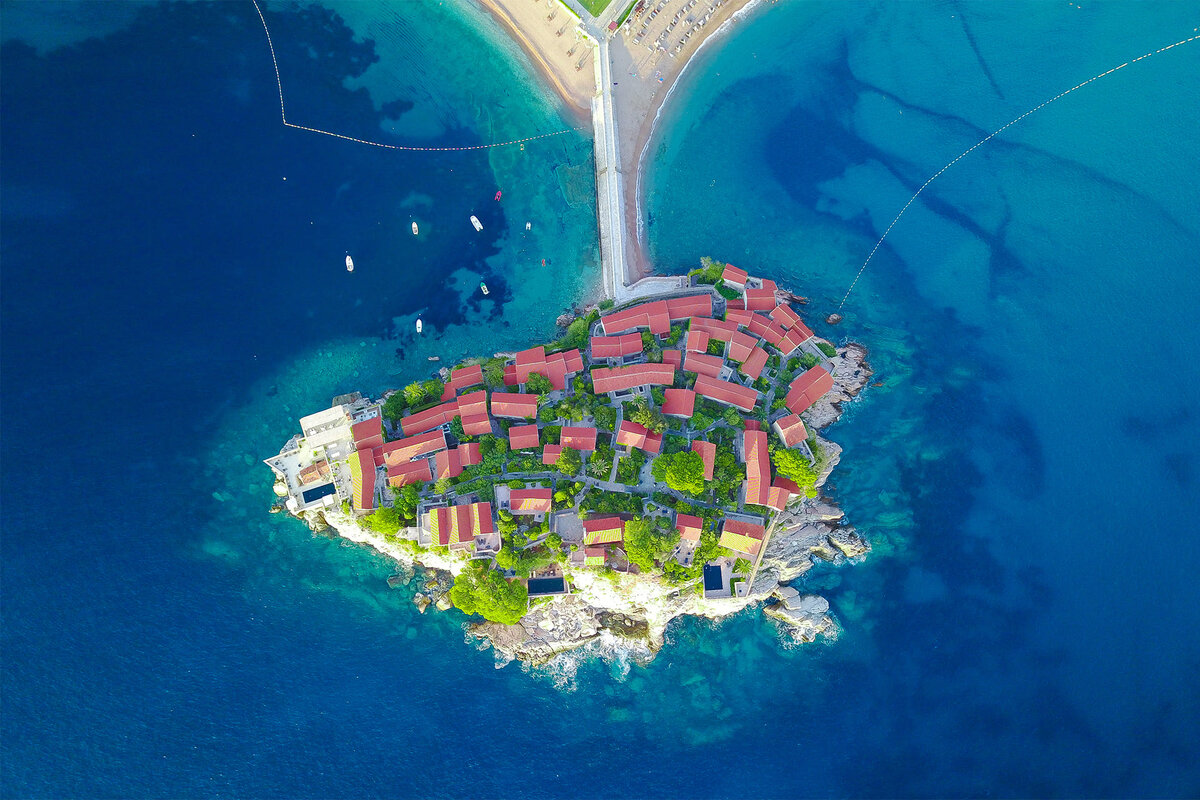
Between Budva and the south coast sit three resorts with a different character each. Sveti Stefan, the walled islet resort, is Montenegro's high-end reference point and photographs everyone recognises even without knowing the name — visiting the peninsula itself typically means booking the resort, but the public beaches either side are open and considerably quieter than Budva's. Petrovac is a small family-oriented bay with two beaches and a low-rise skyline. Bečići has one of the coast's longer continuous beach strips, backed by a denser run of resort hotels than Petrovac but with none of Budva's nightlife density.
Who is it for
Couples and families who want a beach holiday without the bar-crawl atmosphere, and anyone who values a shorter, calmer stretch of coast over Budva's scale. Not worth it if evening entertainment matters — all three go quiet after dinner, and the nearest real nightlife means a taxi into Budva.
Getting there and entry rules from Poland
Flights: LOT operates a direct route from Warsaw Chopin to Podgorica, roughly 2 hours, with September usually among the cheaper months to fly it. There is currently no direct flight from Warsaw to Tivat — the airport actually closest to Budva, Kotor and Herceg Novi — so a Tivat arrival normally means a connection, while landing in Podgorica means a further 1-1.5 hour transfer to the coast. Weigh transfer time against flight price before booking either way.
Tourist tax: Montenegro charges a residence fee of around €1 per adult per night (children under 12 exempt), collected automatically by hotels and most registered apartments and usually already folded into a package tour price.
Booking window: Rooms for the first half of September go at close to August rates and sell out on the same timeline as peak summer. If flexibility allows it, shifting a trip to after 15 September gets a materially cheaper stay for a small drop in temperature.
Entry rules depend on nationality rather than on Polish residence status. EU/EEA citizens and non-EU residents of Poland travel to Montenegro on their own passport, not their Polish residence card — the card does not itself grant entry, since Montenegro is outside both the EU and the Schengen area. Ukrainian citizens can currently enter visa-free for stays of up to 90 days within a 180-day period, and nothing about a September trip changes that. Belarusian citizens can still travel visa-free for now, but Montenegro's government has confirmed a visa requirement for Belarusian passport holders starting 1 November 2026, as part of aligning its border policy with the EU — a September trip lands before that date, but it's worth checking the rule again before booking anything for October onward. In all cases, carry a passport valid well beyond your return date and keep proof of accommodation on hand, since Montenegro still requires visitor registration within 24 hours of arrival.
Verdict
For a beach-first trip with some nightlife, Budva through mid-September still delivers a proper high-season atmosphere; after the 15th, the same town gets noticeably calmer for less money. For scenery over swimming, Kotor rewards an early or late-day visit around the cruise schedule rather than a midday one. Herceg Novi is the value pick for travellers who want the bay without the crowd. Families chasing actual sand, rather than shingle, do better heading south to Ulcinj. And anyone who wants a quieter, more composed week without giving up beach access should look at Bečići or Petrovac over Budva itself.
The one decision worth making before anything else is the airport: check whether your dates land a direct LOT flight into Podgorica or force a connection into Tivat, and price the transfer time into your choice of resort — not just the ticket.

 Holidays


 Last minute


 Hotels


 Blog
Blog