In August, Spain stops being one country and splits into two. The first is baking and half-empty: Madrid and Seville hold 38-42°C, and small restaurants and family shops close for the whole month because their owners are on holiday along with everyone else. The second is packed: the coasts and islands take in all of Europe at once, plus those same Spaniards who fled the cities. The logic of the month is simple and inconvenient: where the heat is bearable, the crowds are thick, and where it's empty, it's hard to be. The August question in Spain isn't "is it hot" but "which Spain did you actually book".
Below is the honest breakdown: how hot it really gets on the coasts, in Andalusia and in the north, why the Canary Islands turn out to be the mildest part of the country in August rather than the hottest, what exactly is shut for the whole month and how that affects the trip, how much a week costs, and which tourist taxes went up from April 2026. At the end: a region-by-region comparison table, a checklist, common mistakes and entry rules for travellers flying from Poland.
- Short answer, no preamble → Who should and shouldn't
- Why August works this way → The logic of the month
- How hot by region → Weather in August
- The classic beach option → The Mediterranean coasts
- Islands at peak season → The Balearics
- Unexpectedly the mildest spot → The Canaries
- Cool air, cold ocean → The green north
- What to save for autumn → Madrid, Seville, Andalusia
- Prices and tourist taxes → What it costs
- How to handle the heat → Practicalities
- Documents and visas → Entry rules
- Compare the regions → Comparison
Short answer: who should go, and who shouldn't
If you want the answer without reading the whole article - Spain in August works, but only as a beach-and-islands trip.
Worth going: for those coming for the sea and the coast, for families with children on the Costa Dorada and Costa Blanca, for island lovers, and for anyone willing to accept peak prices in exchange for guaranteed weather
Not worth going: for those who planned Madrid, Seville, Granada and the Andalusian cities, for anyone who copes badly with dry heat above 38°C, and for those hoping for a slow pace without queues
The compromise: move the trip to the second half of September - the sea stays at 24-26°C, the air drops to 27-30°C, the cities reopen, and prices fall by 25-40%
What follows are the details that make this answer what it is.
How the Spanish August works: why half the country is shut
August in Spain isn't just the hottest month, it's the month of the national holiday. A large share of small businesses in the inland cities close for two to four weeks: family restaurants, workshops, shops, some galleries and small museums. It doesn't mean the city dies - the big museums, chain venues and everything touristy stay open. But the very Spain people come to Madrid and Seville for runs at half speed in August, and in its place stands a tourist in 40°C in front of a locked door.
What's shut: some small restaurants, family shops and workshops in the inland cities - usually for two to four weeks of August
What always works: the big museums, resort infrastructure, the coasts and the islands - there August is high season, not a holiday
15 August: the Assumption public holiday and the peak of domestic travel; roads, ferries and hotels are at their busiest on these days
The Spanish rhythm: lunch around 2-3pm, dinner from 9pm; in the daytime heat life stops, and activity has to be planned for the morning and evening
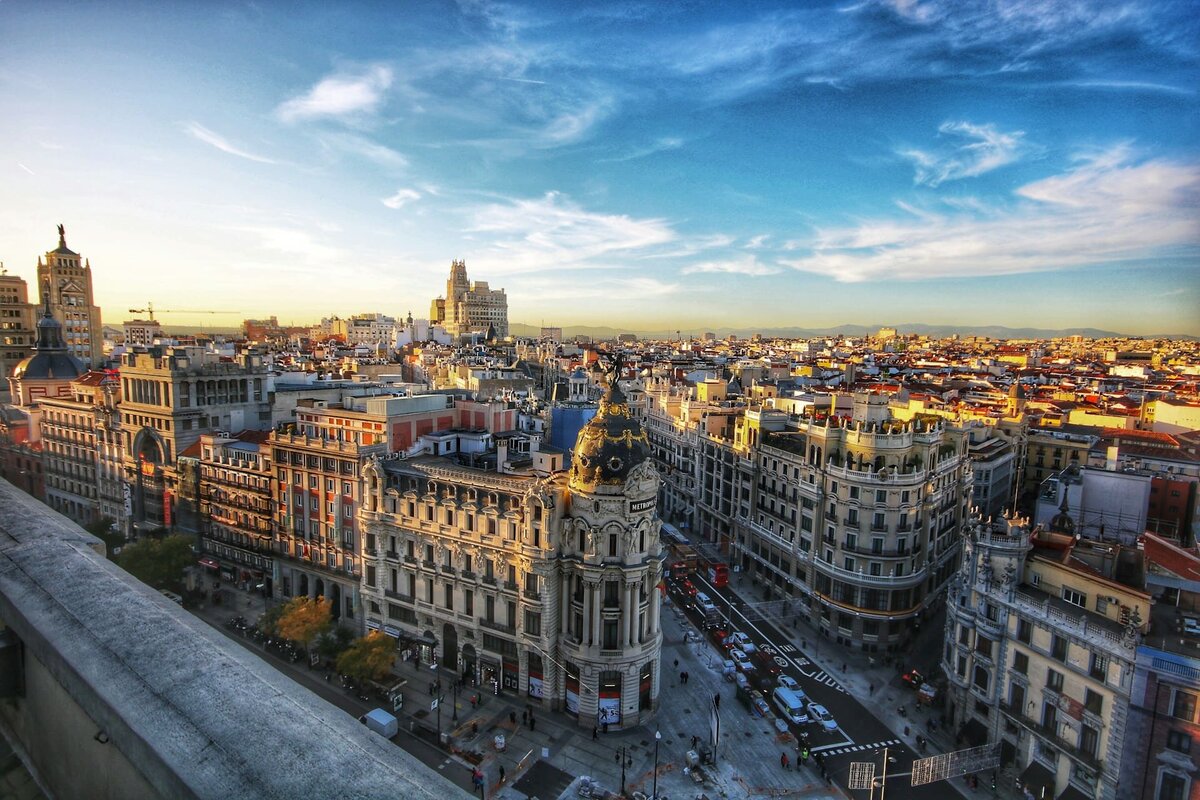 The practical takeaway: if the trip was conceived as a cultural one, August is the worst month of the year for it. If it was conceived as a beach trip, all is well - just budget for peak prices and crowds.
Weather in August: a spread of up to 15 degrees
"The weather in Spain" in August is a meaningless phrase without naming the region: the difference between Seville and the Galician coast reaches 15 degrees on the same day. The key divide runs not north to south but between the interior and the coasts: the sea takes the edge off the peak heat, and inland there's nothing to take it off with.
| Region | Daytime air | Sea | Characteristic |
|---|---|---|---|
| Costa Brava and Costa Dorada | 28-31°C | 25-26°C | The mildest of the mainland coasts |
| Costa Blanca and Costa del Sol | 30-33°C | 26-27°C | Warmer water, hotter air |
| The Balearics (Mallorca, Ibiza) | 30-32°C | 26-27°C | Peak season and peak prices |
| The Canaries (Tenerife, Gran Canaria) | 27-29°C | 22-23°C | Cooler than the mainland, fresh ocean |
| Madrid and inland Spain | 35-40°C | No sea | Dry heat, the city radiates it |
| Seville and Cordoba | 38-42°C | No sea | The hottest part of the country |
| The green north (San Sebastián, Asturias) | 22-26°C | 19-21°C | Cool, but the ocean is cold |
It's worth understanding the character of the heat separately. Spanish heat is dry, and 35°C on the coast is easier to bear than 30°C in a humid climate. But above 38°C in the inland cities, the dryness stops helping: asphalt and stone give off heat late into the night, and Seville in August doesn't cool down even by midnight.
The Mediterranean coasts: the classic August option
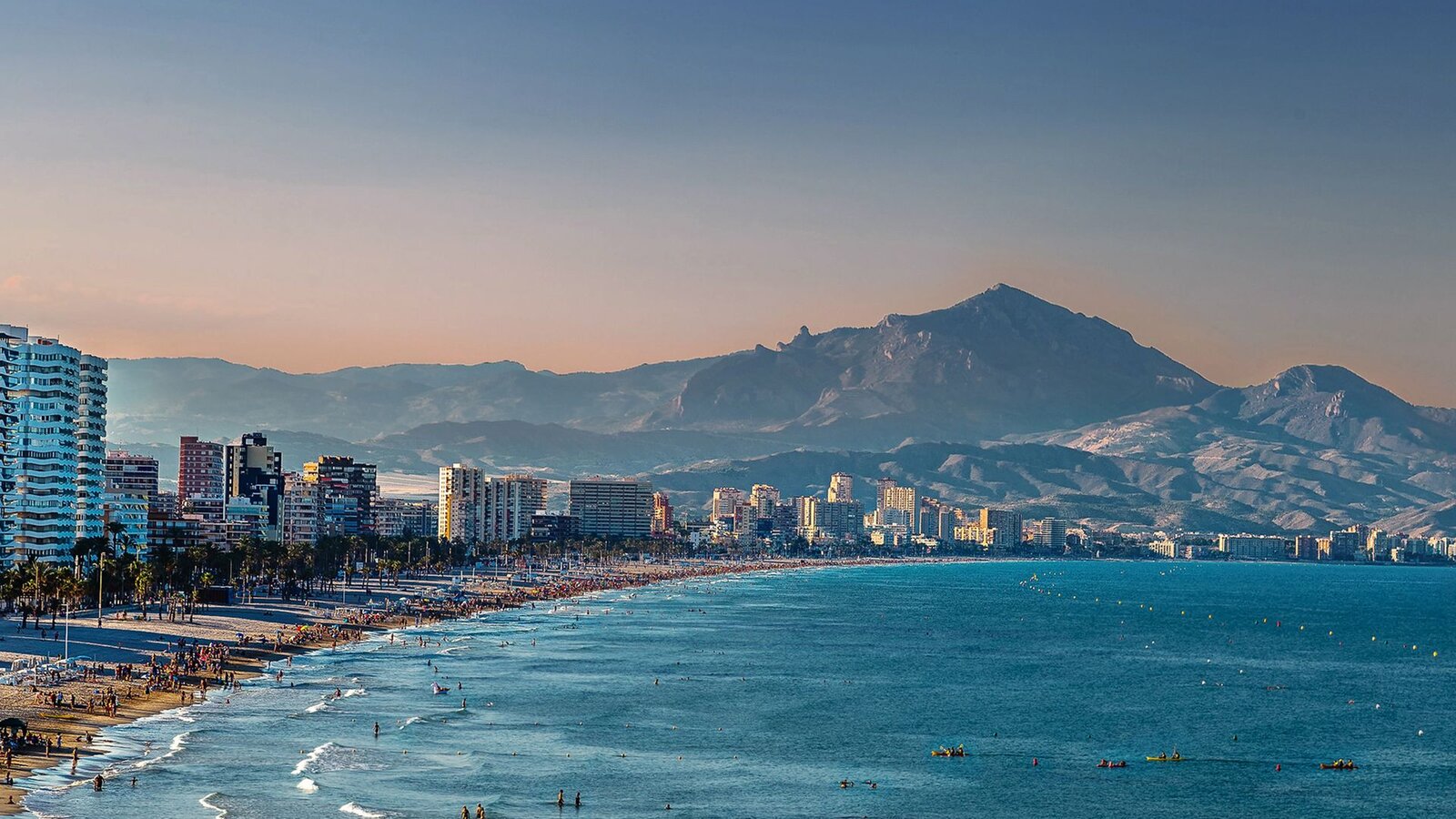
The mainland coasts are what people come to Spain for in August, and they differ in character. The Costa Brava in the north-east - rocky coves, pines and the mildest summer of all: 28-31°C rather than the southern forties. The Costa Dorada south of Barcelona - long, gently shelving sandy beaches and the country's main family format. The Costa Blanca around Alicante and the Costa del Sol in Andalusia - warmer water, but noticeably hotter air too. A direct flight from Warsaw to Barcelona, Alicante or Malaga takes about 3-3.5 hours. 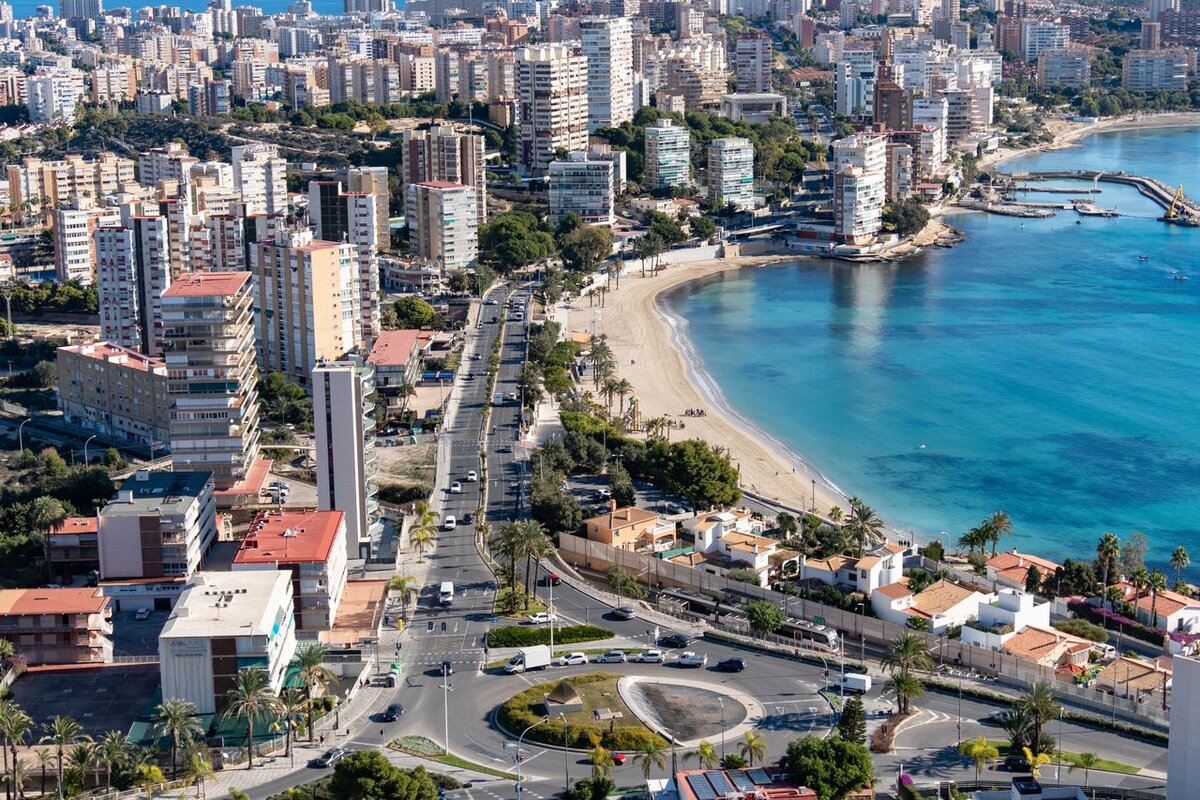
Who is it for
The coasts in August suit those coming specifically for the sea: the beach, water at 25-27°C, evening promenades and food. The Costa Dorada works especially well for families with children thanks to the gentle sea entry and the theme parks nearby. It's not worth going here if you're expecting a quiet holiday with empty beaches: August is the top of the season, and on popular resorts a spot on the beach is taken by 10am, while a dinner table needs booking in advance. For quiet, it's more honest to come in June or the second half of September.
What to do
- Get to the beach before 11am and after 5pm, and spend the middle of the day in the shade, the pool or over a long Spanish lunch - this isn't advice for the lazy, it's the working routine for August.
- Take a day out to the Costa Brava coves between Begur and Calella de Palafrugell - a rocky coast with clear water that's harder to reach and therefore noticeably less crowded.
- Have dinner on the local schedule, after 9pm: by then the heat has dropped and venues run at a normal pace rather than a touristy one.
- Plan one inland trip with an early start - Girona or Tarragona in the morning, for instance, before the cities heat up.
The Balearic Islands: peak season and peak price
Mallorca, Menorca and Ibiza run at full tilt in August: water at 26-27°C, guaranteed sun, developed resort infrastructure and full occupancy. That also means the top of the price curve and maximum crowds on the beaches and roads. Menorca is quieter and more family-oriented, Ibiza is about clubs and nightlife, and Mallorca combines both scenarios and adds a mountainous north-west with coves. The flight from Warsaw to Palma is about 3 hours. 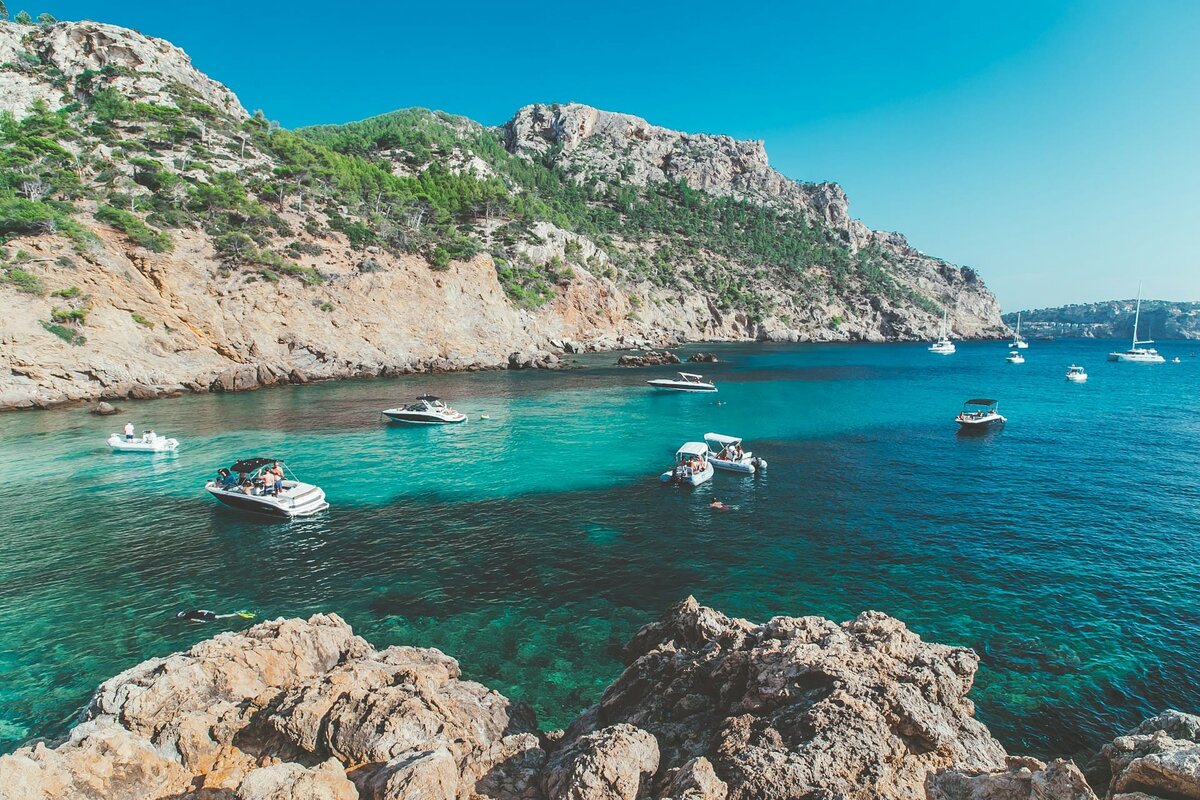
Who is it for
The Balearics in August suit those who want a guaranteed island summer and are willing to pay for it: warm water, a short flight, good hotels. Menorca for families, Ibiza for those coming for the nightlife, Mallorca as the all-rounder. It's not worth going in August if your budget is tight: these are the most expensive weeks of the year on the islands, and the difference from June or September for the same package reaches a third. It's also worth remembering the Balearic eco-tax, charged at a higher rate in the high season from May to October.
The Canaries: unexpectedly the mildest part of Spain
This is where most people's intuition breaks. The Canary Islands lie south of all of mainland Spain and closer to Africa, yet in August they're cooler than the mainland: 27-29°C of air against 38-42°C in Seville. The reason is the ocean and the trade winds - the Atlantic around the islands is cooler than the Mediterranean and acts as natural air conditioning. The flip side of the same coin: water at 22-23°C, noticeably fresher than the Mediterranean, and not everyone finds that comfortable for a long swim. The flight from Warsaw to Tenerife is about 6 hours, longer than to the mainland. 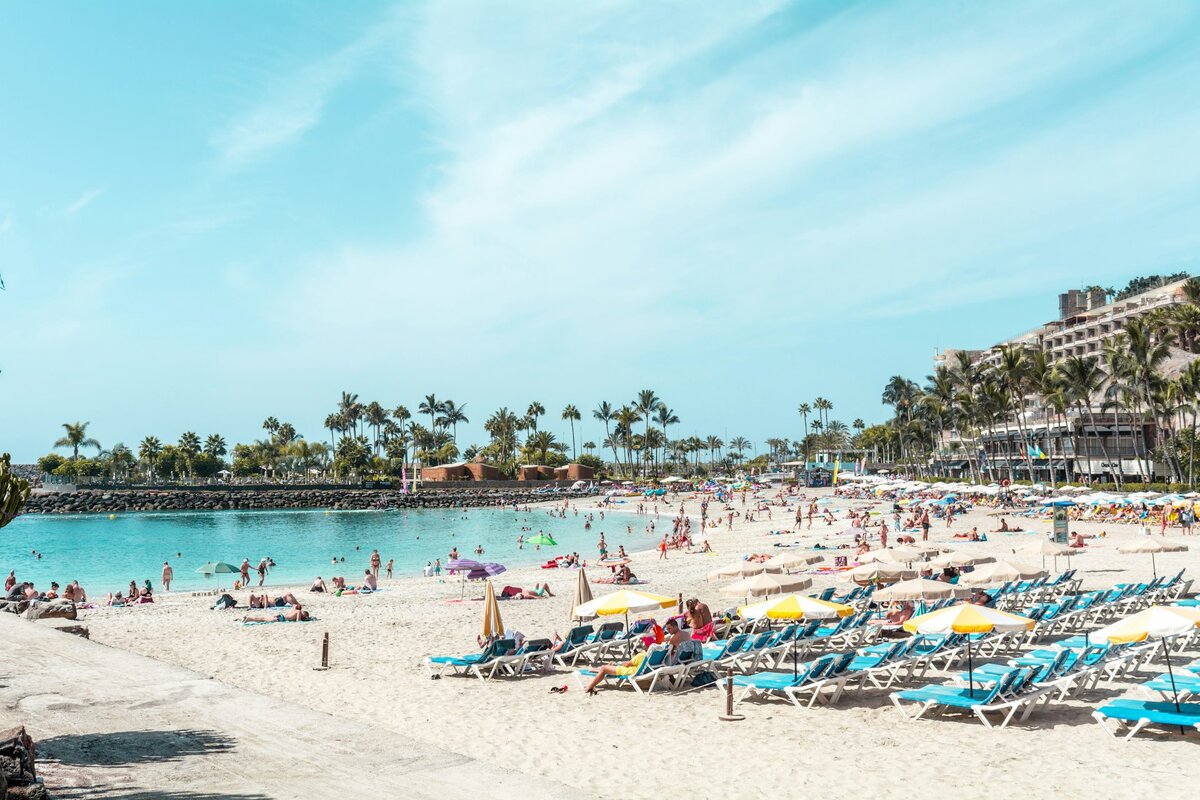
Who is it for
The Canaries in August are for those who cope badly with heat but want sun and sea: this is the only part of Spain where you can walk around normally during the day at the height of summer. It works well for families and for those planning activity - volcanic trails, trekking, ocean sports. It's not worth going if you want warm, bath-like water as in the Balearics: the Atlantic at 22-23°C is bracing, and some beaches have swell and currents. Beyond that, August isn't the best season here in terms of value for the weather - the Canaries are comfortable year-round, and in winter they beat the mainland far more clearly.
The green north: cool air at the cost of a cold ocean
The Basque Country, Cantabria, Asturias and Galicia are the Spain that doesn't fit the stereotype: 22-26°C, green mountains, rain even in August, and gastronomy on the level of San Sebastián. This is exactly where the Spanish themselves escape the heat, and in August the north is full of domestic tourism. The logistics are harder: there are few direct charters from Poland to the north, more often with a connection, and the trip is planned as a road journey rather than a hotel stay.
Who is it for
The north is for those coming for the food, the nature and the moderate temperatures, treating the sea as scenery. It works well for couples and for travellers who have already seen resort Spain. It's not worth going here for a classic beach holiday: the ocean is 19-21°C, the weather is changeable, rain is possible on any day in August, and you can't count on two weeks of guaranteed sun.
Madrid, Seville and Andalusia: what to put off
The main mistake of the Spanish August is planning the holiday around the inland cities. They're the best thing Spain has, and this is exactly the month they work worst.
What to bear in mind with cities and excursions:
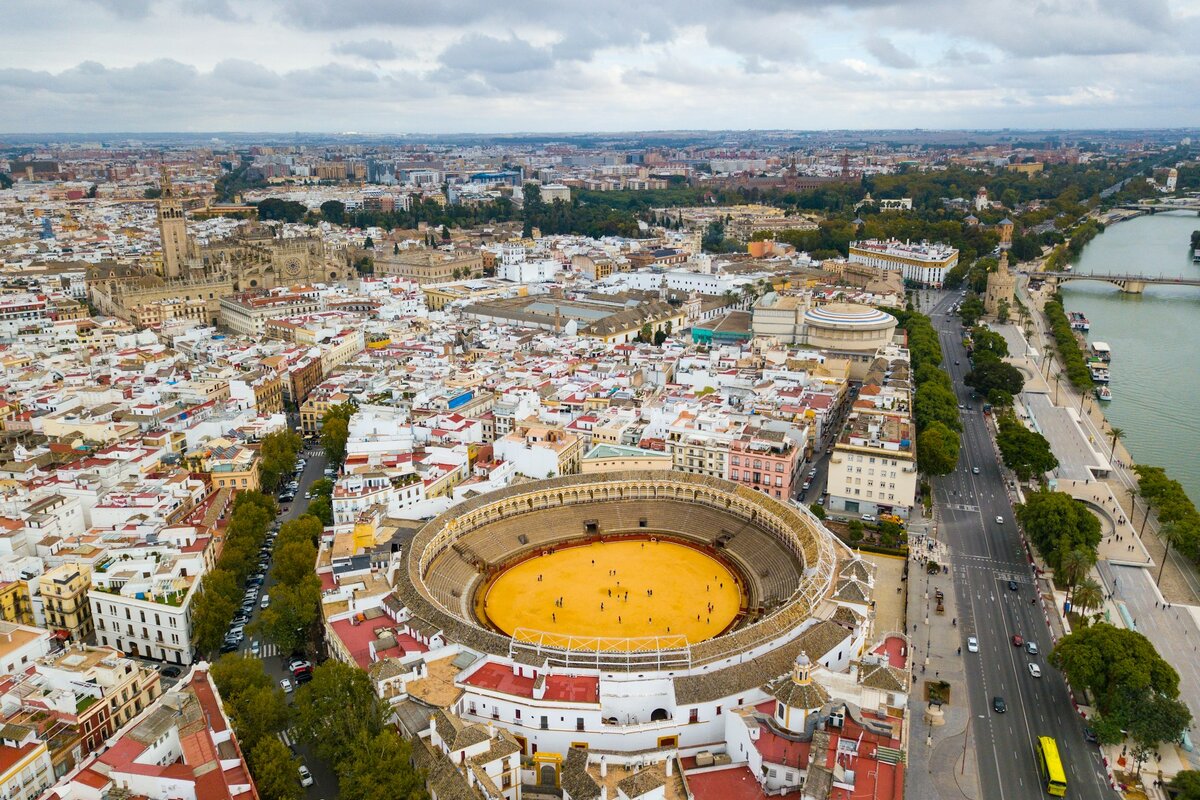
- Seville and Cordoba. 38-42°C by day isn't an exaggeration, it's the norm for the month. Stone and asphalt don't cool by night, and a walk around the city turns into dashes between air conditioners. Both cities are more honestly left for April-May or October.
- Madrid. The city is baking, some small venues are shut for the month, and the everyday Madrid life people come for is muted in August. The big museums are open, but that's half the point of the trip.
- Granada and the Alhambra. Tickets sell out in advance, and the visit runs under open sun. If you go, go only on the first morning slot and with plenty of water.
- Barcelona. It works as an exception: a city by the sea, milder heat, and tourist infrastructure that doesn't go on holiday. But it's peak queue season, and entry to the Sagrada Família and Park Güell needs booking in advance.
- What to take in August. Anything involving water and altitude: coves, canyons, mountain routes with an early start, evening walks around coastal towns.
 The short principle: in August take coastal Spain and leave the interior for the shoulder season. The difference in the quality of the experience is greater here than the difference in price.
Prices: what a week costs and what's going on with tourist taxes
August is the top of the price curve: school holidays across Europe and the Spanish domestic holiday coincide, so competition for hotels and flights is at its highest. On top of the package price it's worth adding the tourist taxes, which are paid locally and rose noticeably in Catalonia in 2026.
Flight from Warsaw: Barcelona, Alicante, Malaga around 3-3.5hr; Palma de Mallorca around 3hr; Tenerife around 6hr (direct seasonal flights and charters)
7 nights / 2 people in August: roughly PLN 6,000-14,000 depending on the region, hotel and dates; the Balearics and Canaries are usually pricier than the mainland coasts
Catalonia tourist tax: rates rose on 1 April 2026; in Barcelona the combined total is around EUR 8-12 per person per night depending on accommodation category, noticeably lower outside Barcelona. It's charged for the first 7 nights, and children under 16 are exempt
Balearic eco-tax: charged per person per night, at a higher rate in the high season from May to October, usually in the range of EUR 1-4 depending on hotel category
A word on the taxes: they're paid on the spot, they're not included in the package price, and for a family of four over a week in Barcelona that's a noticeable sum on top of the booking. Madrid and Andalusia have no such per-night tax - one of the few financial arguments for the south. Shifting the trip to the second half of September cuts the package price itself by 25-40% for almost the same sea.
How to handle the Spanish August: practicalities
A Spanish August is comfortable exactly to the extent that you adapt to the local rhythm rather than trying to live by your own.
What actually helps:
- Reset the day the Spanish way: activity before noon and after 6pm, a long lunch and rest in the hottest hours. Trying to walk around at 3pm is the main source of ruined days.
- Choose the coast over the inland cities: a difference of 8-12 degrees matters more than the star rating of your hotel.
- Book entry tickets to popular sites in advance - in August the queues are at their worst, and some slots sell out weeks ahead.
- Budget the tourist taxes separately: they're paid locally, and in Catalonia they rose in 2026.
- Drink more water than at home: dry heat dehydrates you without your noticing, and there's almost no shade in Spanish cities at midday.
- Factor in 15 August: the Assumption holiday, the peak of domestic travel, and busy roads, ferries and restaurants.
Entry rules when flying from Poland
Spain is in the European Union and the Schengen area, so no separate Spanish visa is needed - the rules are common to all of Schengen. Rules change, so check current requirements before departure.
- EU/EEA citizens, including Polish citizens: entry on a valid national ID card or passport, no visa required.
- Non-EU residents of Poland: the rules depend on your passport's nationality and document type. A valid residence card allows short trips within Schengen, including to Spain, but does not replace a passport - take both documents. For some nationalities the 90/180 rule applies, counted across the whole area rather than a single country, and Polish residence documents do not create identical travel rights for every nationality.
- What to factor in for 2026: the EES entry-exit system with biometric registration is being rolled out at Schengen's external borders, which may mean extra checks and queues at the border. The ETIAS pre-authorisation system is expected later and will affect citizens of visa-free non-EU countries. Check the status of these systems before travelling.
Quick comparison of the regions
Figures are approximate. The key difference in August isn't price - it's the combination of heat, water and whether the region is running in tourist mode.
| Region | Who it's for | Air | Sea | Honest caveat |
|---|---|---|---|---|
| Costa Brava, Costa Dorada | Families, first trip | 28-31°C | 25-26°C | Crowded, Catalonia tax rose |
| Costa Blanca, Costa del Sol | Beach, warm water | 30-33°C | 26-27°C | Hotter air, resort format |
| The Balearics | Islands, guaranteed season | 30-32°C | 26-27°C | The most expensive weeks of the year |
| The Canaries | Those who cope badly with heat | 27-29°C | 22-23°C | Fresh ocean, flight around 6hr |
| The green north | Food, nature | 22-26°C | 19-21°C | Rain, cold ocean |
| Madrid, Seville, Andalusia | Cities - but not in August | 35-42°C | No sea | Heat and shut venues |
Checklist before booking for August:
- Decide on the scenario: sea and coast → the mainland costas or the Balearics; cope badly with heat → the Canaries; food and nature → the north; inland cities → move to autumn.
- Check the distance from the hotel to the beach and the type of sea entry - Spanish coasts have both sand and shingle, and it's crucial for children.
- Budget the tourist tax as a separate line: it rose in Catalonia from April 2026 and is paid locally.
- Book tickets to popular sites in advance, especially the Sagrada Família and the Alhambra - in August slots sell out weeks ahead.
- Check the dates around 15 August: a holiday and the peak of domestic travel, with everything busier than usual.
- Make sure the room has working air conditioning - in the south and inland in August that's a condition for sleep, not an option.
Common mistakes:
- Planning Seville and Cordoba in August. 38-42°C and baking stone that doesn't cool by night; it's the worst version of the best Spanish cities.
- Assuming the Canaries are the hottest part of Spain. In August they're the opposite - the mildest: 27-29°C against the forties in the mainland south, but the ocean is only 22-23°C.
- Going to the green north for the beach. The air is pleasant, but the ocean is 19-21°C and rain is possible on any day - it's a food and nature destination, not a beach one.
- Not accounting for tourist taxes. They're paid locally on top of the package, and in Catalonia they rose noticeably in 2026; for a family over a week that's a meaningful sum.
- Living by your own schedule. A walk at 3pm and dinner at 6pm in Spain in August is a way to find locked doors and get sunstroke.
- Counting on quiet beaches. August is the peak for Europeans and Spaniards alike; the quiet begins in the second half of September.
 The verdict
So is Spain worth it in August 2026?
It is if you're going for the sea, and it isn't if you're going for the country. The coasts and islands run at full tilt in August: water at 25-27°C, guaranteed sun with no rain at all, all the resort infrastructure in season. Inland Spain in the same month gives you its worst version - 38-42°C, venues shut for the holidays, and muted city life. A separate option for those who cope badly with heat is the Canaries, the only part of the country where you can walk around calmly during the day at the height of summer, at the cost of a cooler ocean and a six-hour flight.
One last piece of advice:
If your dates don't tie you to August specifically, shift the trip to the second half of September: the sea stays warm, the cities reopen, the queues thin out, and prices fall by a quarter to a third. And if August really is the only option because of the holidays - choose the coast rather than inland Spain, and plan the day by the local schedule rather than your own.



 Holidays


 Last minute
 Hotels


 Blog
Blog