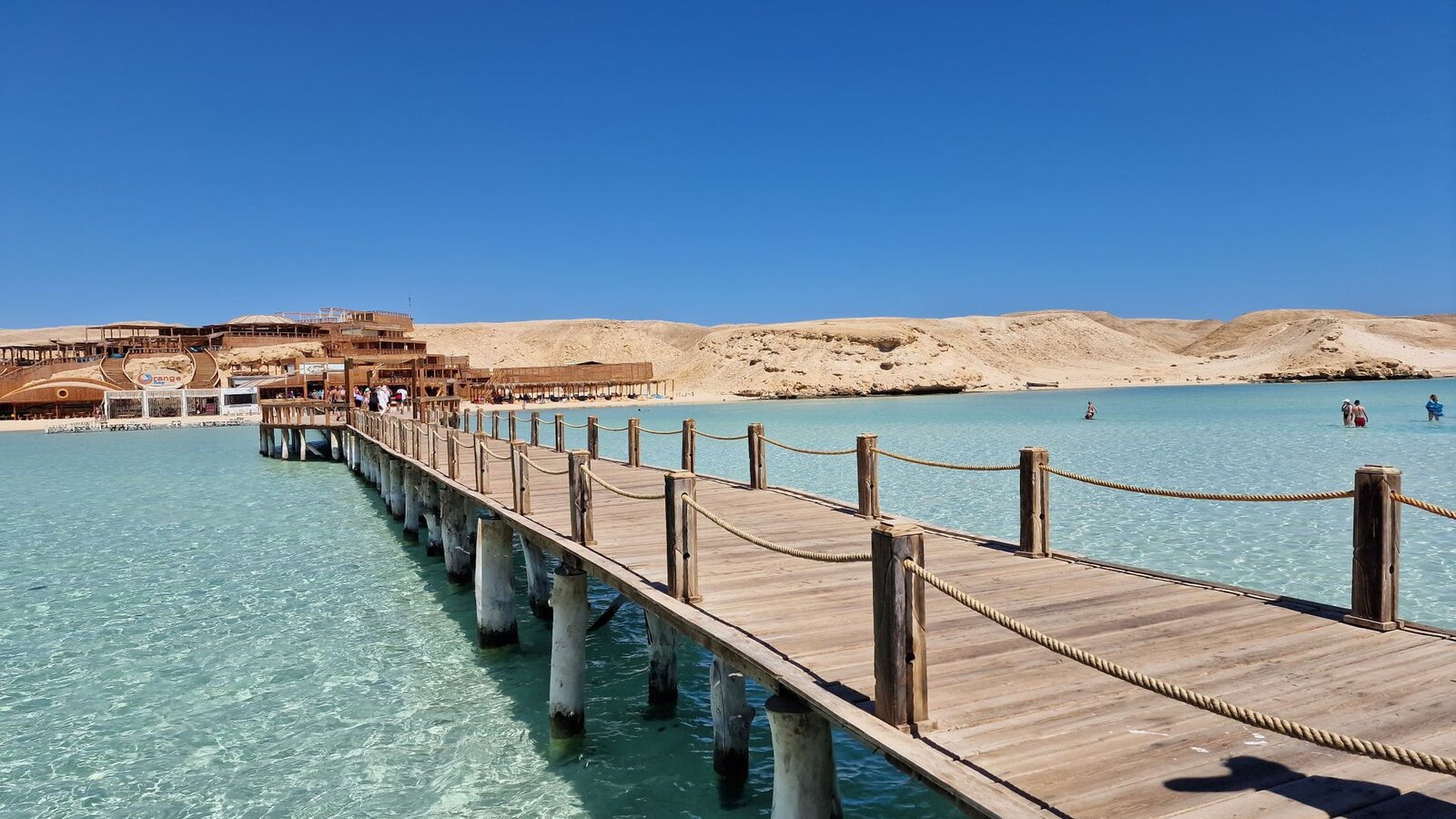
September in Egypt isn't one month - it's two different holidays sold at almost the same price. Fly to Hurghada in the first week and you get August with a different name on the calendar: 38-40°C, the kind of heat where the walk from the pool to the buffet is a decision. Fly in the last week and the air has dropped several degrees while the Red Sea sits at its annual maximum of around 28-29°C. Nowhere else in the Egyptian year do two weeks so close together deliver such different trips. The mistake isn't choosing September - it's booking "September" without looking at which half of it you've actually bought.
Below is the honest breakdown: how the temperature actually moves through the month, why the sea peaks exactly when the air begins to ease, and which of the Red Sea resorts suits which kind of traveller - because Hurghada, Sharm el-Sheikh, Marsa Alam and Dahab are far less interchangeable than the brochures suggest. Then the trap almost everyone falls into: the coast improves in September, but inland does not, and a Luxor day trip in this month is a very different proposition from the same trip in November. Plus prices, sun and reef practicalities, and what changed in Egypt's entry rules in 2026.
- Short answer, no preamble → Who should and shouldn't
- Why the month splits in two → The two Septembers
- The year's warmest water → The Red Sea in September
- Which resort fits you → Comparing the resorts
- The mistake most people make → Luxor and Cairo excursions
- What it costs this month → Prices and value
- Sun, reefs and practicalities → Surviving the heat safely
- Entry rules and 2026 changes → Visas and documents
- Compare everything → Comparison table
Short answer: who should go, and who shouldn't
If you want the answer without reading the whole article - September works well in Egypt, provided you pick your dates within the month rather than treating it as a single block.
Worth going: for divers and snorkellers (the water is at its annual best), for couples and adults who can travel in the second half of the month, and for anyone wanting warm-sea certainty at shoulder-season prices rather than winter high-season ones
Not worth going: for anyone who copes badly with dry heat above 38°C and is tied to the first week, for those whose main goal is the Pyramids and Luxor rather than the coast, and for families needing long daytime activity outdoors with small children
The compromise: book the last week of September or early October - the sea is still 27-28°C, the air drops to a manageable 32-34°C, and the inland excursions finally become sensible rather than punishing
What follows are the details that make this answer what it is.
The two Septembers: how the month actually moves
Egypt's summer doesn't end on a date - it drains away week by week, and September is precisely the month in which it happens. That's why generic "September in Egypt" figures are close to useless: an average for the month describes a fortnight that doesn't really exist, sitting between two halves that feel materially different on the ground. 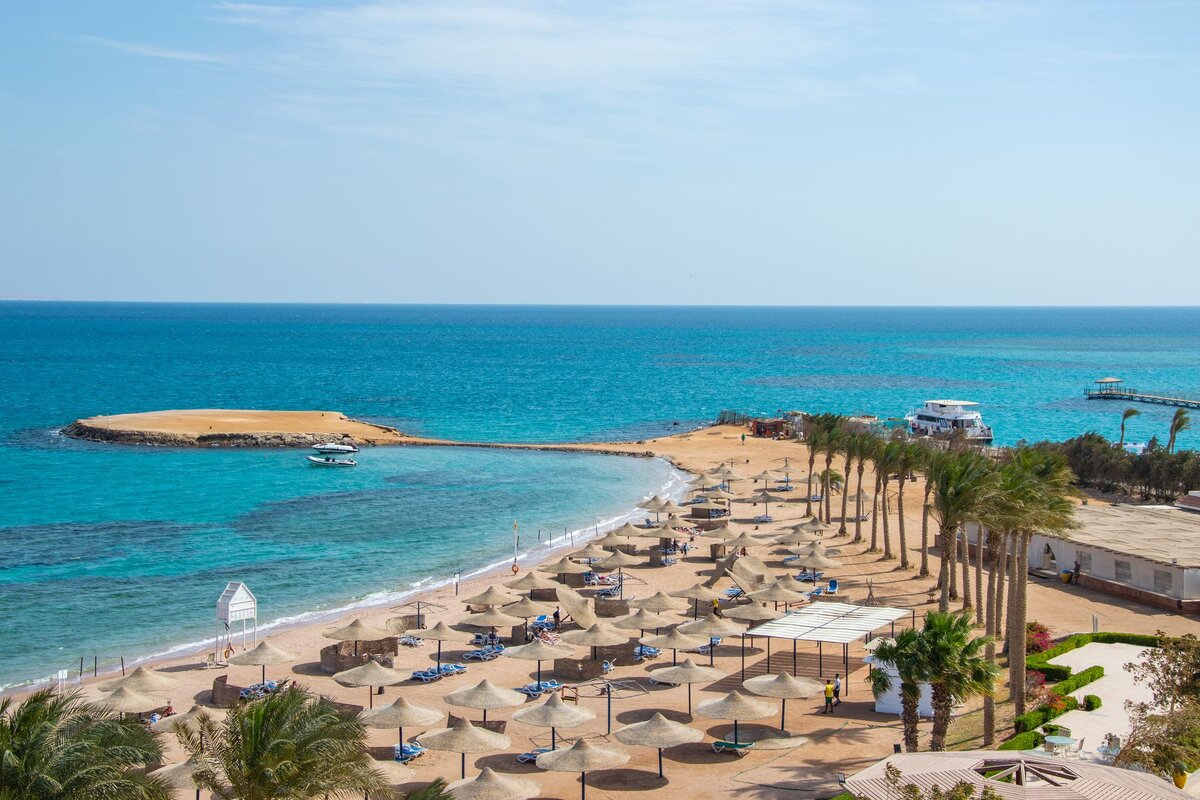
| Period | Hurghada, air | Sharm el-Sheikh, air | Sea | What it feels like |
|---|---|---|---|---|
| 1-10 September | 36-40°C | 37-40°C | 28-29°C | Effectively August; midday outdoors is off the table |
| 11-20 September | 34-37°C | 35-38°C | 28-29°C | Easing, but still a hot-weather holiday |
| 21-30 September | 32-35°C | 33-36°C | 27-28°C | The sweet spot: warm sea, workable air |
| Nights, whole month | 23-26°C | 24-27°C | - | Warm evenings, no need for anything but light layers |
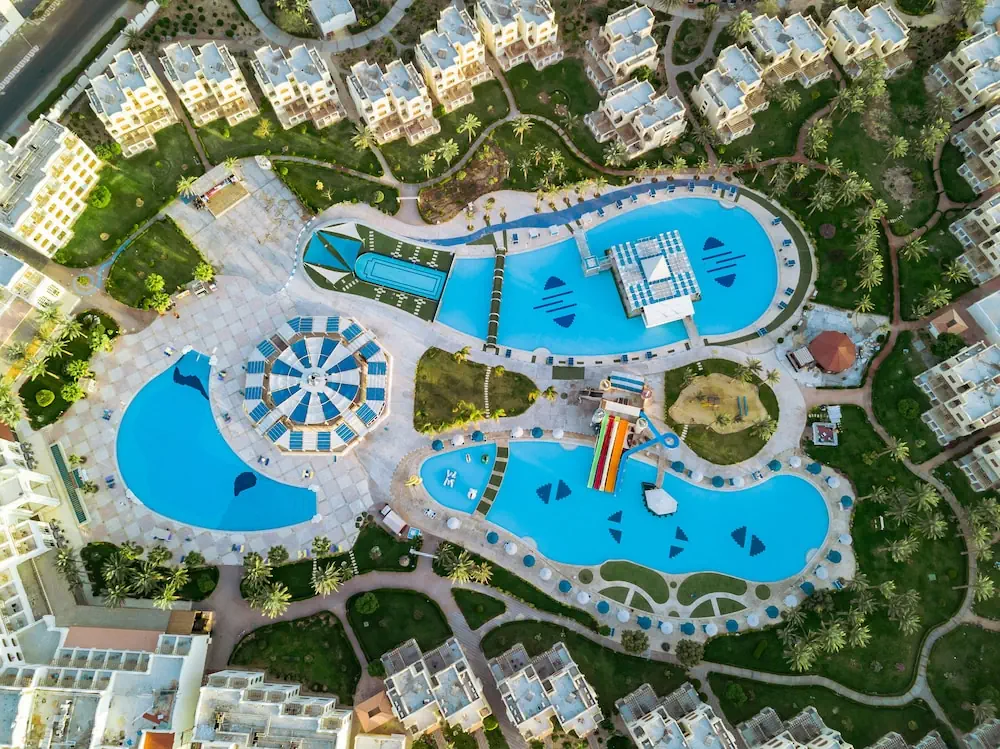
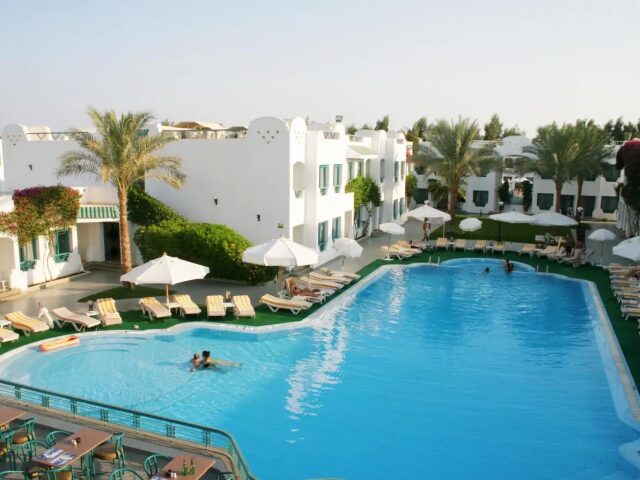
Two things follow from this. First, if your dates are flexible even by ten days, moving later within the month buys you a noticeably better holiday for roughly the same money - a rare situation, since usually better weather costs more. Second, if your dates are fixed to early September, plan the trip as a hot-weather one: an all-inclusive with a good pool area, activity restricted to mornings and evenings, and no ambitious sightseeing schedule.
One characteristic of Egyptian heat worth understanding: it's dry, and 36°C on the Red Sea is more bearable than 30°C somewhere humid. But dryness cuts both ways - it dehydrates you quietly and sunburn arrives faster than the sensation of heat suggests. People routinely underestimate this in the first two days.
The Red Sea in September: the year's warmest water
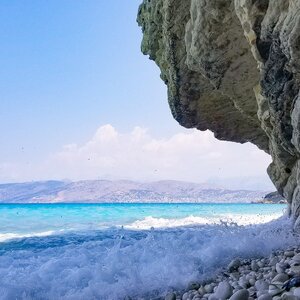
This is September's genuine argument, and it's the reverse of how most destinations work. In Europe, the sea lags the air by about two months, which is why September is good there. In Egypt the same lag exists, but from a much higher baseline: the Red Sea peaks in late August and September at around 28-29°C, and stays near that through the month. So you get the warmest water of the entire year at the exact moment the air is starting to become manageable.
Water temperature: 28-29°C in the first half, 27-28°C by the end - warm enough that a wetsuit is optional even for long dives
Visibility: typically excellent, often 20-30 metres; the Red Sea has no monsoon season and no river silt to cloud it
For divers: September is one of the strongest months of the year - warm water, long daylight, and the full range of sites accessible
Worth knowing: the northern resorts get more wind than the southern ones, which affects both boat trips and how choppy the shore entry feels
The honest caveat: warm water in September is also the reason some divers prefer other months. Marine life behaviour shifts with water temperature, and a few species are more reliably seen in the cooler season. If you're travelling specifically to see something particular underwater, check the timing for that species rather than assuming warmest equals best.
Which resort to choose: they're less interchangeable than they look
Egypt's Red Sea resorts get sold as one product, and they aren't. The differences that matter in September are wind, reef access from shore, and how far you are from the things you might want to do.
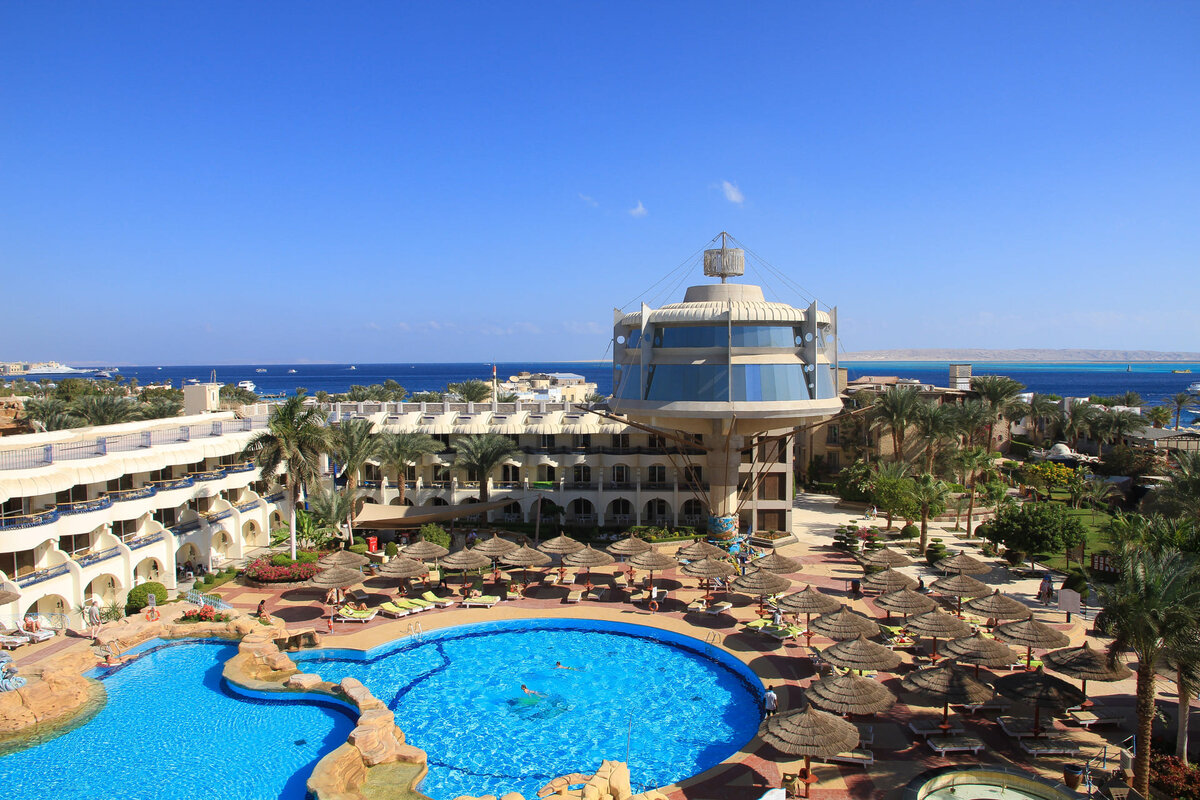
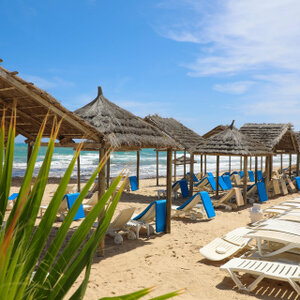
- Hurghada. The most developed and best-connected, with the widest hotel choice at every price point. Reliably windy, which takes the edge off the heat and makes it a serious kitesurfing destination - but the same wind means choppier water and more cancelled boat days than the south. Reefs are generally reached by boat rather than from the beach.
- Sharm el-Sheikh. Sits on the Sinai side with the best shore-accessible reefs in the country - at several hotels you can snorkel straight off a jetty into a proper coral wall. More sheltered than Hurghada, so the heat feels heavier, but the sea is calmer. Also the gateway to Ras Mohammed and Dahab.
- Marsa Alam. The southernmost mainstream option: hotter, quieter, less built up, and the best odds of seeing larger marine life. It's the choice for people whose holiday genuinely revolves around the water. The trade-off is fewer restaurants and less to do outside the resort.
- Dahab. Smaller, more informal and considerably less resort-like - a Bedouin town turned diving and freediving hub. Excellent for independent travellers and divers, a poor fit for anyone wanting a large all-inclusive complex with entertainment.
- El Gouna. A purpose-built lagoon town near Hurghada, tidier and more expensive, popular with families and longer-stay visitors. Windy like Hurghada, with better dining than a standard resort strip.
- Taba. Far north on the Sinai coast, quiet, dramatic mountain scenery, and the fewest people. Limited in scope, which is exactly the point for some travellers.
Quick tour search for September:
Who is it for
September on the Red Sea suits divers and snorkellers above all, plus couples and adult groups who can work around the middle of the day. Families do fine in the second half of the month with a good pool and shaded areas. It's not worth going in September if you struggle with intense dry heat and can only travel in the first ten days, or if the real reason for the trip is the Pyramids and Luxor - in that case, waiting until late October or November gives you a fundamentally better trip for the same money. Also not ideal for anyone who wants to explore on foot: outside the resorts, midday walking in September is genuinely unpleasant.
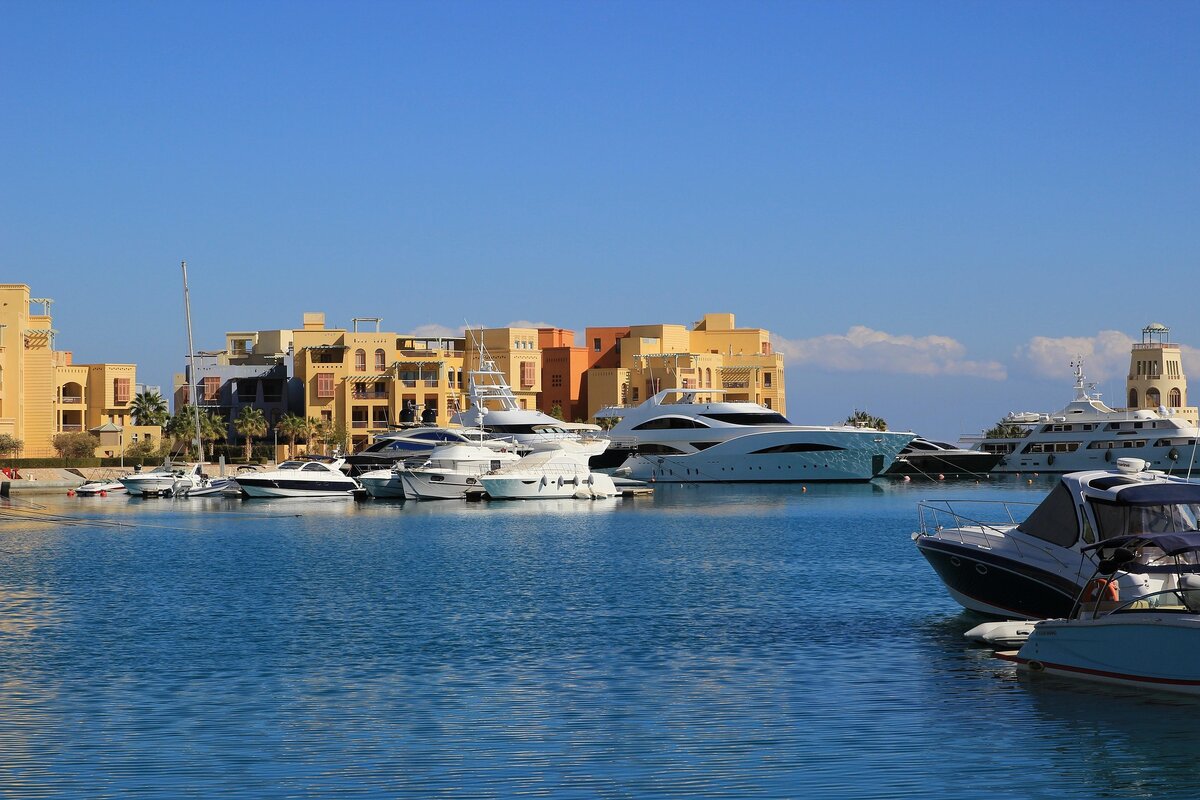
What to do
- Get in the water early - the best snorkelling light is between about 9am and 11am, before the wind picks up and while visibility is at its best.
- Choose a hotel with a genuine house reef if snorkelling matters to you, rather than one that advertises "sea access" and means a sandy beach with nothing to see.
- Take a boat trip to Ras Mohammed from Sharm, or to the offshore islands from Hurghada - the sites are meaningfully better than what's reachable from the shore.
- Plan any desert excursion for sunset rather than daytime: the same landscape, a fraction of the heat, and far better photographs.
- Book anything weather-dependent for early in your stay, not the last day, so a windy day doesn't cost you the activity entirely.
The September trap: Luxor and Cairo excursions
Here's where most September trips go wrong. The coast improves through the month because the sea moderates the air near it. Inland Egypt has no such moderation, and in September the Nile Valley and Cairo are still brutally hot - routinely 38-40°C in Luxor and Aswan, with the sightseeing itself taking place in open sun with almost no shade. 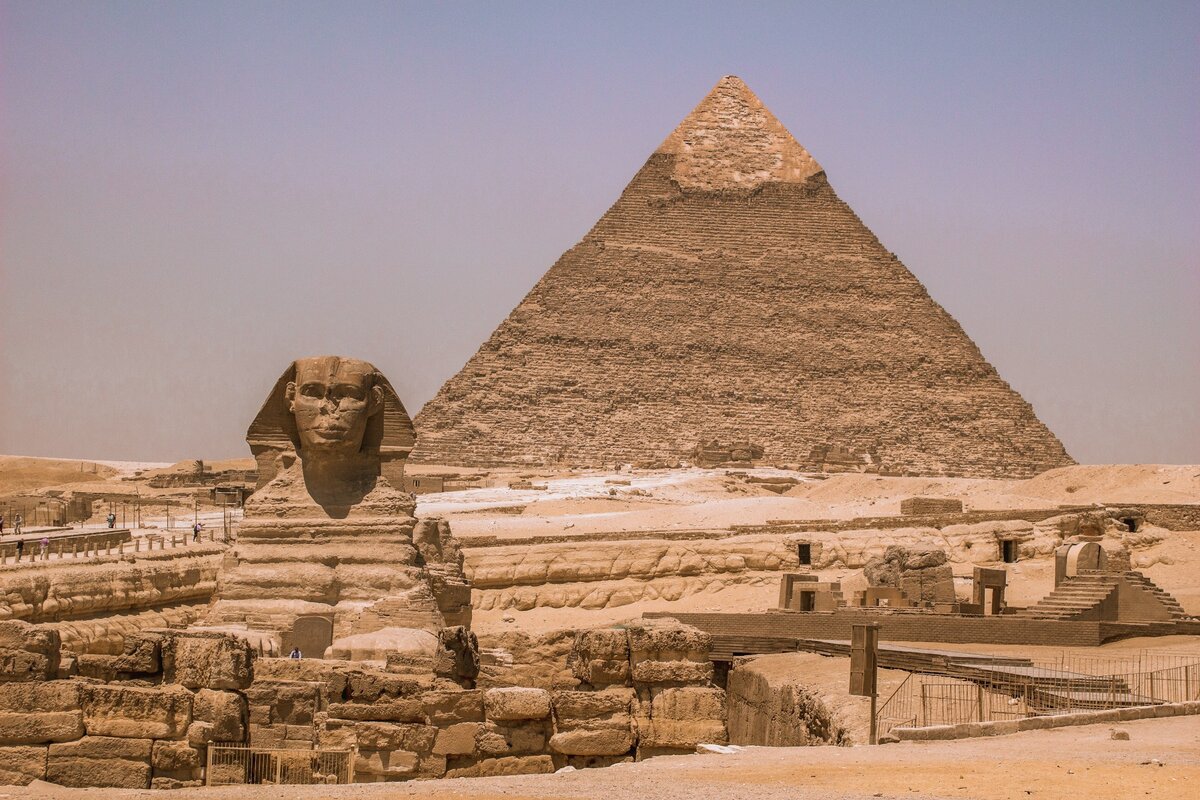
What this means in practice:
- A Luxor day trip from Hurghada is a long day. It's roughly four to five hours each way by road, meaning a pre-dawn start, and the temple sites are walked in full sun at the hottest part of the day. In September this is genuinely demanding, and it's the single most common source of "we ruined a day of our holiday" stories.
- Cairo and the Pyramids have the same problem. The Giza plateau is open desert with no shade at all. The Grand Egyptian Museum is air-conditioned and works in any month, but the plateau itself in September is punishing before mid-morning is over.
- The honest recommendation. If Egypt's ancient sites are the main reason for your trip, September is the wrong month - November to March is when that holiday works properly. Egypt's culture season and its beach season are not the same season.
- If you're going anyway. Take the earliest departure available, carry far more water than seems necessary, wear a proper hat rather than a cap, and accept that you'll see fewer sites than the itinerary promises.
- The better September alternative. Keep the trip coastal and save the inland circuit for a separate winter trip - it's a stronger experience and, in the low season for beaches, often not much more expensive.
Prices: why September is good value
Egypt's pricing runs opposite to Europe's. Its high season is the European winter, when the Red Sea is one of the few places within a five-hour flight offering reliable warmth. Summer, when the heat peaks, is its low season. September sits at the tail of that low season, which is why the value is unusually good: you get the year's warmest sea at prices closer to the quiet months than the busy ones.
Flight from Warsaw: around 4-4.5 hours to Hurghada or Sharm el-Sheikh, with direct charter flights running through the season
7 nights / 2 people, all-inclusive: roughly PLN 5,000-11,000 depending on the hotel category and how late in the month you travel
Compared with winter: the same hotel over Christmas and New Year can cost double or more; September is one of the cheapest windows for a warm-sea holiday all year
Budget separately: the entry visa, tipping (widely expected and part of the local economy), and excursions, which are rarely included
 Sun, reefs and staying safe in the heat
A short list of things that reliably catch people out in September, none of them complicated to avoid.
What actually matters:
- Sun exposure is deceptive. Dry air and constant sea breeze mask how strong the sun is; serious burns typically happen on day one, often in the water where people don't notice. High-factor sunscreen, reapplied after swimming, and a rash vest for long snorkelling sessions.
- Hydration. You lose fluid faster than you register thirst in dry heat. Drink more than feels necessary, and be cautious with alcohol during the hottest hours.
- Don't touch or stand on coral. It's fragile, protected, and cuts from coral become infected easily in warm water. Reef shoes for shore entries, and fins that let you stay off the bottom.
- Respect the flags and the guides. Currents around some reef edges and drop-offs are stronger than they appear from the surface, and boat traffic is heavy near popular sites.
- Water and food. Drink bottled water, including for brushing teeth, and be sensible about buffet food that's been standing in heat.
- Insurance. Take a policy covering medical evacuation, and check that diving is included if you plan to dive - it's the most common exclusion in basic travel cover, and decompression treatment is not something to be uninsured for.
- Modesty outside resorts. Beachwear is fine within hotel grounds; in towns, markets and anywhere outside the resort, covered shoulders and knees avoid unnecessary attention.
Entry rules when flying from Poland, and what changed in 2026
Egypt is outside the Schengen area, so entry follows the nationality on your passport, not your residence status in Poland. A Polish residence card doesn't substitute for a visa here. Rules and fees changed during 2026, so confirm the current position before you travel.
- The main 2026 change: on 1 March 2026 the visa on arrival rose from USD 25 to USD 30 for a single entry, valid for a 30-day stay. Reports on the online e-visa fee differ, with some sources listing it at the previous rate and others at the new one - check the current price on the official portal rather than assuming.
- EU/EEA citizens, including Polish citizens: eligible both for the visa on arrival, bought at a bank counter in the arrivals hall before immigration, and for the e-visa arranged online in advance. The e-visa mainly saves queueing time rather than money.
- Non-EU residents of Poland: eligibility depends entirely on your passport's nationality. Many nationalities can use the e-visa or visa on arrival, but some must apply at an Egyptian consulate in advance, and Polish residence documents do not create identical entry rights for every nationality. Check your specific passport well before booking.
- The Sinai exception worth knowing: arriving directly into Sharm el-Sheikh, Dahab, Nuweiba or Taba, many travellers can receive a free entry permission stamp for up to 15 days. The catch is significant: it covers South Sinai only. It does not permit travel to Cairo, Luxor or Hurghada, so if there's any chance of an inland excursion, buy the full visa instead.
- For everyone: the passport must be valid for at least six months from the date of entry, with a blank page for the sticker. Apply for an e-visa only through the official government portal - third-party sites charge substantially more for the same document.
- At the airport: arrival processing is increasingly digital at Cairo, Hurghada and Sharm el-Sheikh, but carry a printed copy of any e-visa approval as a backup for check-in and immigration.
Quick comparison of the resorts
Figures are approximate. The key differences in September are wind, shore reef access and how far you are from everything else. 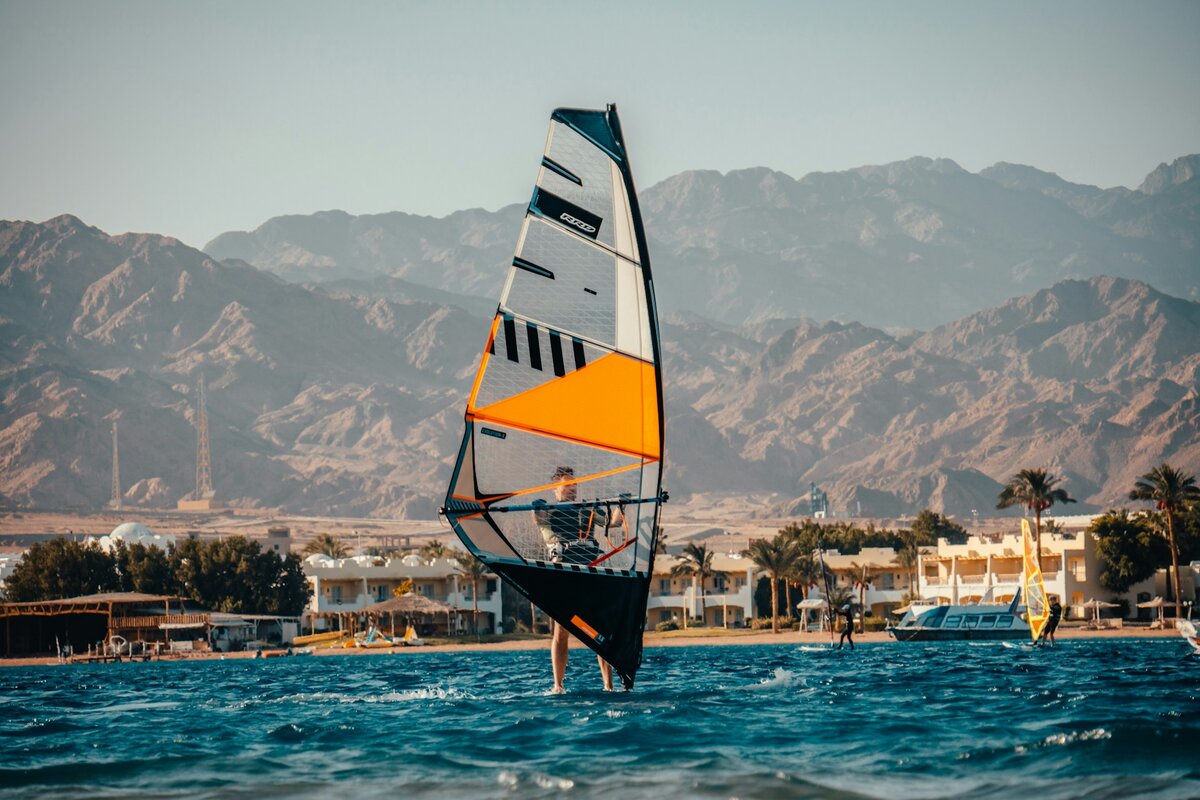
| Resort | Who it's for | Wind | Reef from shore | Honest caveat |
|---|---|---|---|---|
| Hurghada | First trip, families, kitesurfers | High | Mostly by boat | Choppier water, some boat days cancelled |
| Sharm el-Sheikh | Snorkellers, divers, families | Moderate | Excellent | More sheltered, so the heat feels heavier |
| Marsa Alam | Divers, quiet-seekers | Lower | Very good | Hottest of the mainstream resorts, little to do off-site |
| Dahab | Independent travellers, divers | Moderate | Excellent | Not a large-resort destination at all |
| El Gouna | Families, longer stays | High | Limited | Pricier than comparable Hurghada hotels |
| Taba | Quiet, scenery | Moderate | Good | Few hotels and limited choice of everything |
Checklist before booking for September:
- Look at which half of the month your dates fall in - the last ten days are a materially better holiday than the first ten for roughly the same price.
- Decide whether snorkelling from the beach matters; if it does, check for a genuine house reef rather than just "beach access".
- Don't build the trip around Luxor or the Pyramids in September - save the inland circuit for November to March.
- Check the visa position for your specific passport, and remember the free Sinai stamp doesn't cover mainland excursions.
- Apply for any e-visa only via the official government portal, and carry a printed copy.
- Take insurance covering medical evacuation, and confirm diving is included if you'll be diving.
- Book wind-dependent boat trips early in the stay rather than on the final day.
- Pack high-factor sunscreen, a rash vest and reef shoes - all three get used more than people expect.
Common mistakes:
- Treating September as one month. The first week is August in disguise at 38-40°C; the last week is the year's best combination of warm sea and workable air.
- Adding a Luxor day trip because "it's autumn now". Inland Egypt doesn't cool when the coast does - it's still 38-40°C in the Nile Valley, walked in open sun.
- Assuming all Red Sea resorts are the same. Wind and shore reef access differ enormously; Hurghada and Marsa Alam offer genuinely different holidays.
- Taking the free Sinai stamp and then booking a Cairo excursion. The stamp covers South Sinai only - the mainland trip needs the full visa.
- Underestimating the sun because the air is dry. The sea breeze masks the intensity, and the worst burns happen in the water on day one.
- Buying a visa through a third-party website. The official portal charges the standard fee; intermediaries charge substantially more for the identical document.
 The verdict
So is Egypt worth it in September 2026?
It is - with the date chosen deliberately rather than by month. September delivers something no other month manages: the Red Sea at its annual peak of 28-29°C at prices that belong to the low season, because Egypt's expensive months are the European winter. The catch is that the month contains two different climates. Early September is still full summer, with heat that confines you to a pool and shade for most of the day. The final ten days are the genuine sweet spot, when the air finally drops into the low thirties while the water barely moves. And whichever week you pick, keep the trip on the coast: the Pyramids and Luxor in September are a considerably worse version of a trip that's excellent three months later.
One last piece of advice:
If your dates have any flexibility at all, push them to the last week of September or the first week of October. It's the cheapest adjustment available in travel planning - the price barely moves, the sea stays warm, and the holiday improves substantially. And if you're set on seeing ancient Egypt as well as the reef, treat them as two separate trips rather than trying to compress both into one week in the wrong month.


 Holidays


 Last minute
 Hotels


 Blog
Blog