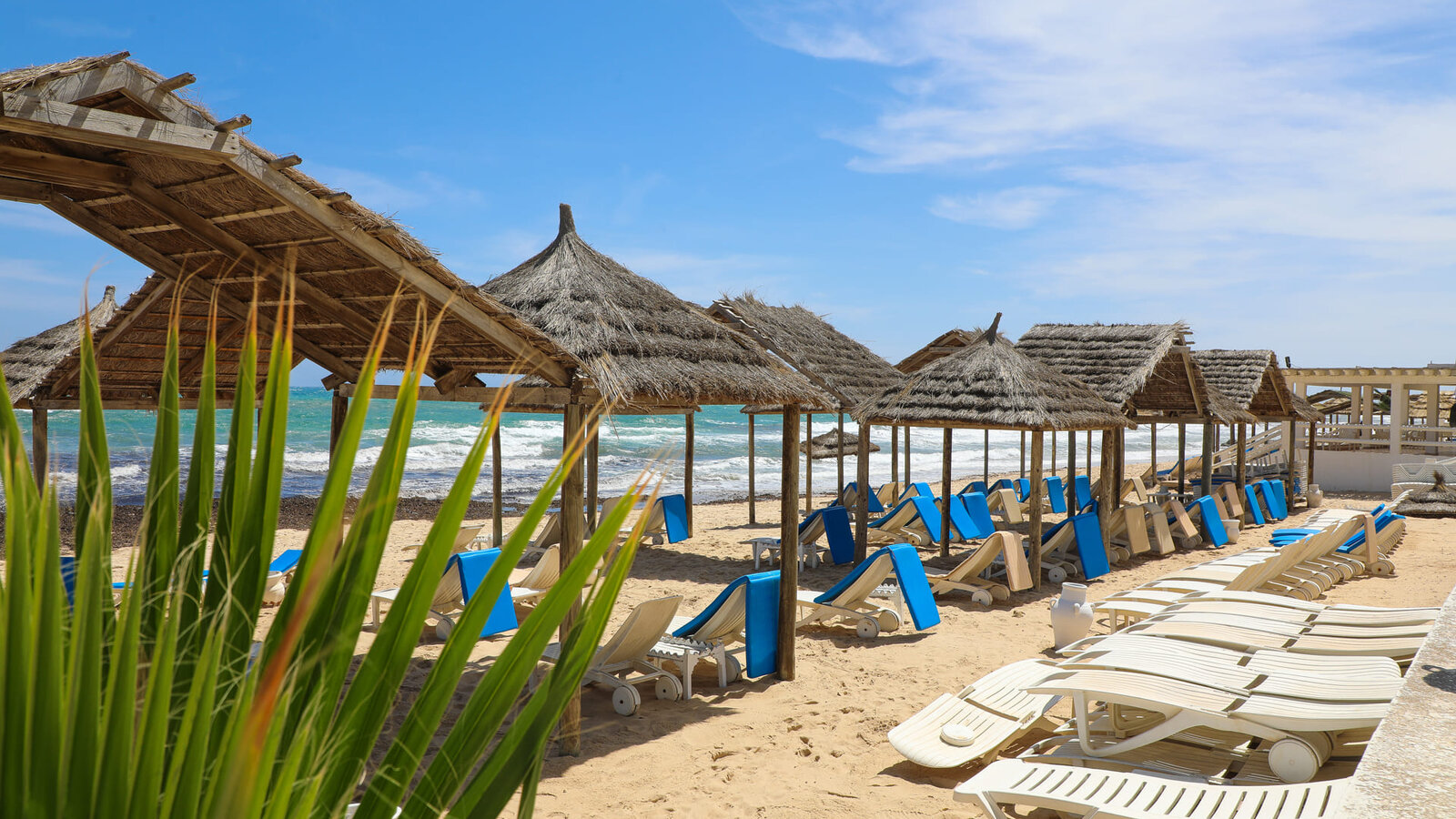
Under the standard Tunisian hotel rules that tour operators work to, air conditioning is guaranteed only between 15 June and 15 September and the sea off Djerba does not reach its warmest until the very end of that month. That single mismatch explains most disappointed September reviews: the water is 26–28°C, about two degrees warmer than in July, prices fall the moment Polish school holidays end, and then a chehili wind off the Sahara lifts the air 10–15°C above normal in a hotel that has already switched the cooling down.
September is not one month in Tunisia, it is two halves with different rules, and the answer also changes by 300 kilometres of coast. Below is what the air and sea actually do by region, what a week costs in PLN once the hotel tax and the closed-currency problem are counted, which of the five resort areas suits which traveller, and when the Sahara becomes bearable enough to be worth two days of your holiday.
- Warmest sea and the longest season → Djerba
- First trip to Tunisia → Hammamet, Sousse
- Families with children → Hammamet, Monastir
- Couples wanting a slower pace → Mahdia, Tabarka
- Thalasso, spa and golf → Hammamet, Djerba
- Roman ruins and medinas → Sousse, Tabarka
- Diving and green landscapes → Tabarka
- A desert trip that is not punishing → the Sahara in late September
- Travelling in the second half of the month → Djerba, read the weather section first
- Working out the real budget → costs in PLN
September weather: the sea peaks as the crowds leave
The month splits cleanly around 15 September, and the two halves are almost different products.
The first fortnight is still full summer: 31–33°C on the Sahel coast, hotels at high-season occupancy, air conditioning guaranteed, prices only slightly below August. The second fortnight is the part worth booking — daytime air settles to 28–30°C, evenings drop to 20–22°C, hotels empty out as European school terms restart, and the Mediterranean is at its annual maximum because water lags air temperature by roughly a month. Rain stays marginal in the south and centre: Djerba averages around 10 mm across the whole month, usually delivered in short evening showers rather than washed-out days. The north is the exception and gets noticeably wetter towards the end of September. 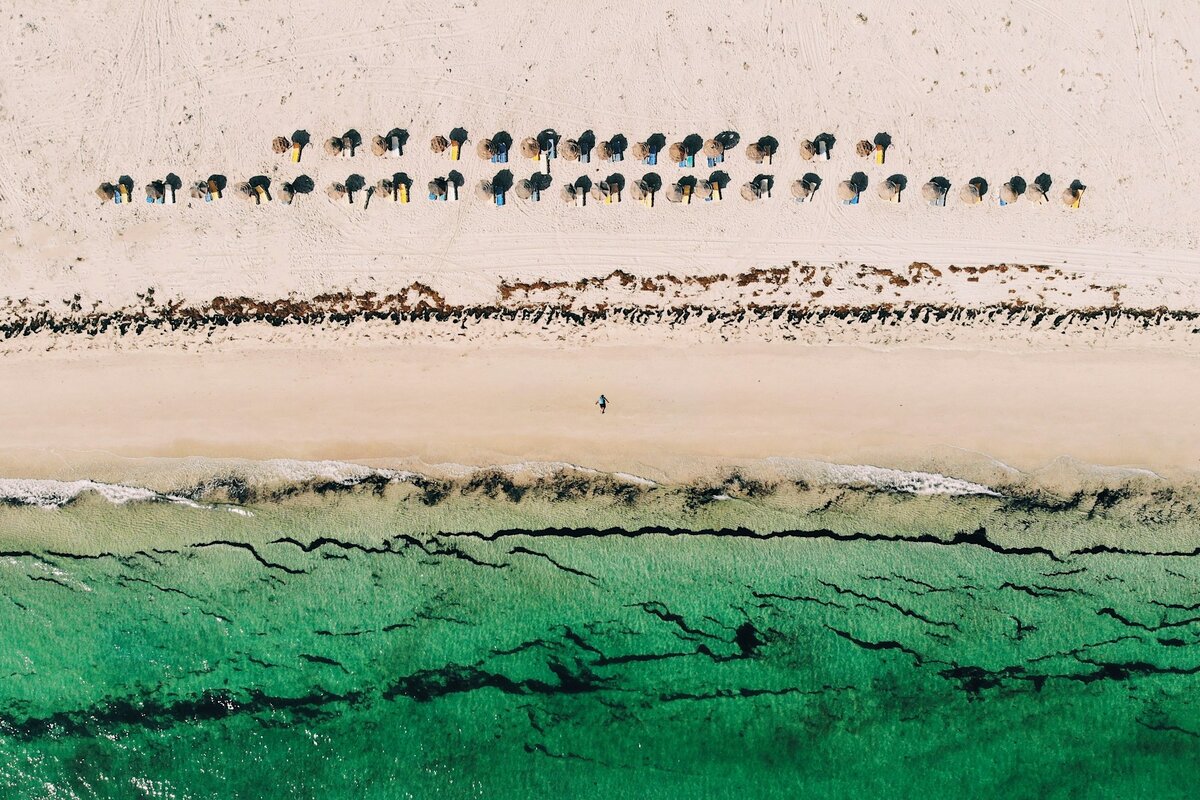
The variable nobody plans for is the chehili, the Tunisian sirocco. It arrives from the Sahara for one to three days at a time, pushes temperatures 10–15°C above the norm, drops humidity below 20% and carries fine dust that dulls the light and reduces visibility. On the coast it is uncomfortable rather than dangerous, but it makes shade essential, turns a beach day into a pool day, and is the reason the mid-September air-conditioning cut-off matters.
| Region | Air, day | Sea | Rain days |
|---|---|---|---|
| Djerba (south) | +30–32°C | +27–28°C | 4–6 |
| Sousse, Monastir, Mahdia | +30–32°C | +25–26°C | 2–3 |
| Hammamet, Nabeul | +29–31°C | +25–26°C | 3–4 |
| Tunis, Carthage | +29–31°C | +24–25°C | 4–5 |
| Tabarka (north) | +28–30°C | +24–25°C | 5–6 |
| Sahara (Tozeur, Douz) | +33–36°C | — | 0–1 |
Who is it for
September suits anyone whose priority is warm water rather than guaranteed heat, and anyone who can travel after the first week — the price gap between 1 September and 20 September on the same hotel is routinely 25–35%. It also suits travellers who want to combine a beach week with inland sightseeing, because El Jem, Kairouan and the desert stop being punishing. Not worth it if you are locked into the last week of September and want a northern resort: Tabarka and the Cap Bon coast start collecting rain days then, some hotels begin closing sections for the winter, and the sea north of Tunis is already two to three degrees cooler than off Djerba.
Hammamet and Nabeul: the mildest heat on the coast
The safest first booking, and the one that copes best with a chehili day.
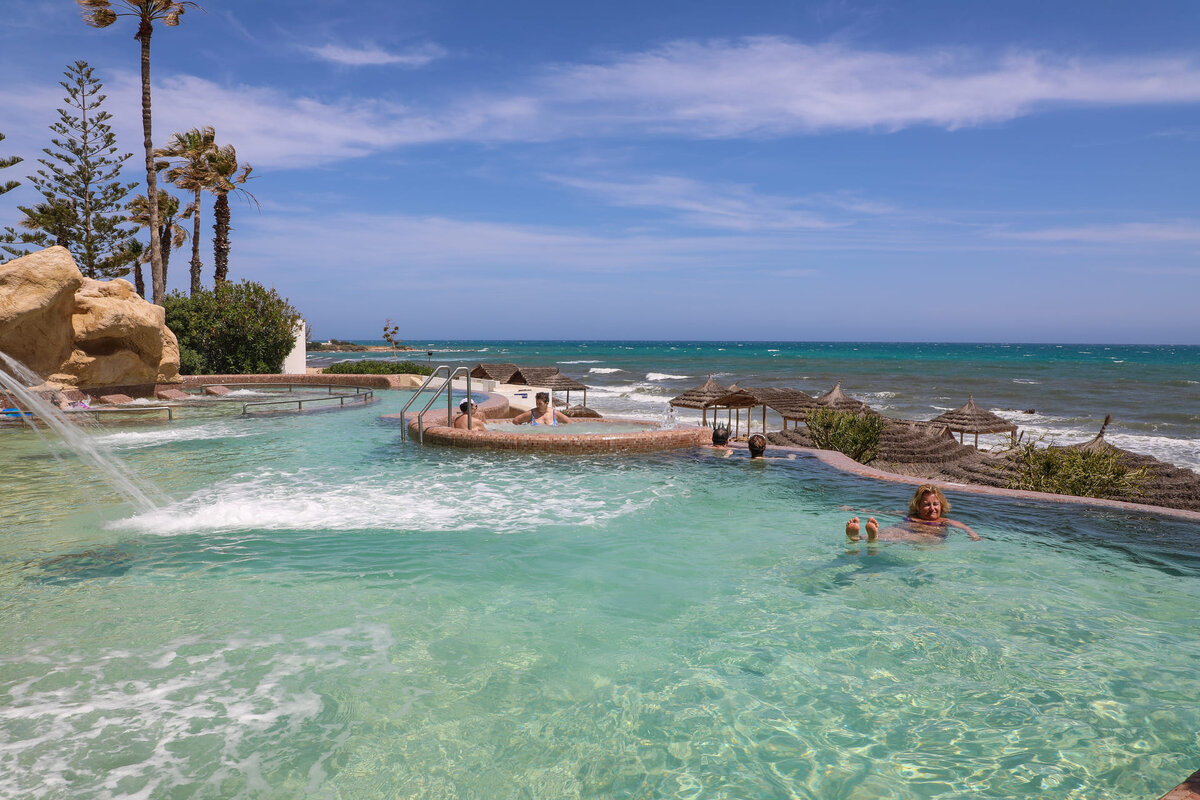
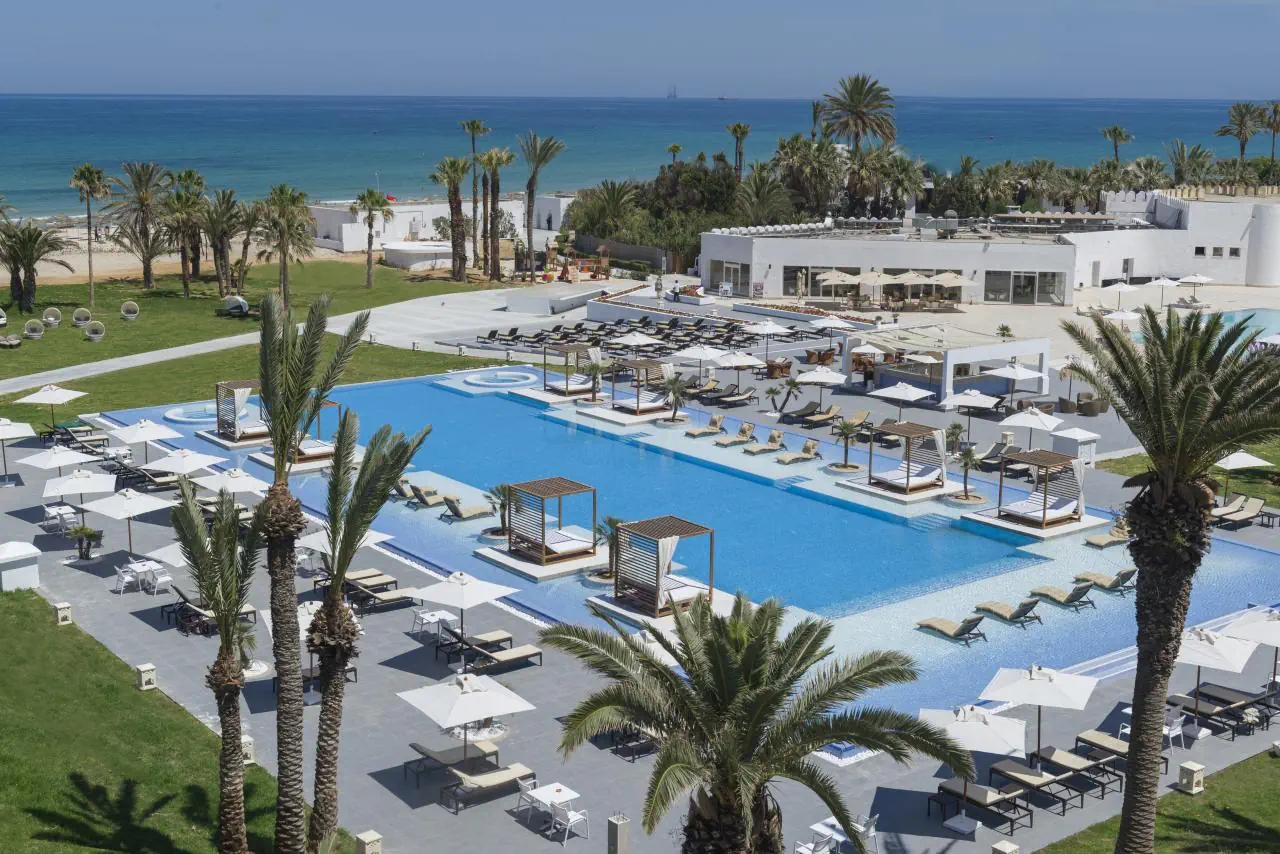
Sitting on the Cap Bon peninsula with sea on two sides, Hammamet runs one to two degrees cooler than Sousse or Monastir through September, which sounds trivial until the sirocco arrives and it is the difference between 34°C and 37°C. The resort splits into two: Yasmine Hammamet, a purpose-built strip of large four- and five-star hotels around a marina, with wide sand and every hotel within walking distance of the next; and old Hammamet, built around a 15th-century kasbah, where the beaches are narrower and the hotels older but the town is an actual town. Nabeul, 15 kilometres north, is the working ceramics centre of Tunisia and the reason Cap Bon has the best market in the country. Flights from Warsaw land at Enfidha-Hammamet, roughly 45 minutes by road.
Flight from Warsaw: about 3 hours to Enfidha-Hammamet (seasonal charter and low-cost services), transfer 45 minutes
7 nights for two: 4 500–8 500 PLN, all-inclusive four-star, September
September air and sea: +29–31°C air, +25–26°C sea
Best window: 10–25 September — heat has eased, hotels still fully staffed
Who is it for
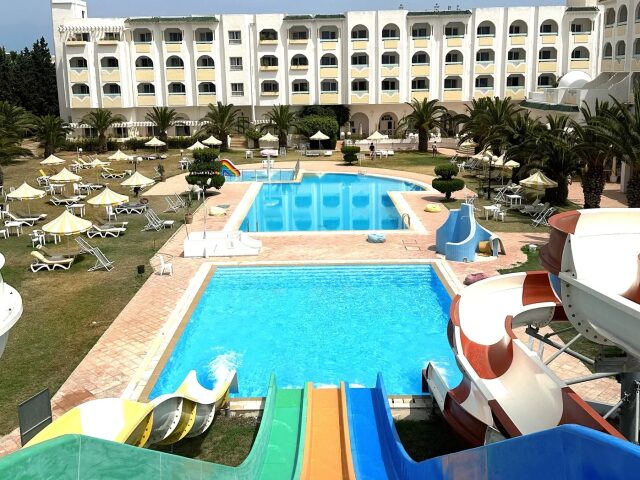
Families with children under 12, first-time visitors, and anyone booking a large all-inclusive property where the hotel is most of the holiday. Yasmine Hammamet has the flattest, widest beaches in Tunisia and the highest concentration of thalasso centres, which is a genuine reason to come in September rather than August. Not worth it if you want a Tunisian town rather than a resort strip: Yasmine is a planned zone from the 2000s with a marina, a mock medina and very little that predates it, and travellers who came for North Africa often find it could be almost anywhere on the Mediterranean.
 What to do
- Walk the kasbah walls in old Hammamet an hour before sunset, when the cemetery below the fort and the bay behind it are lit from the side and the entrance costs a few dinars
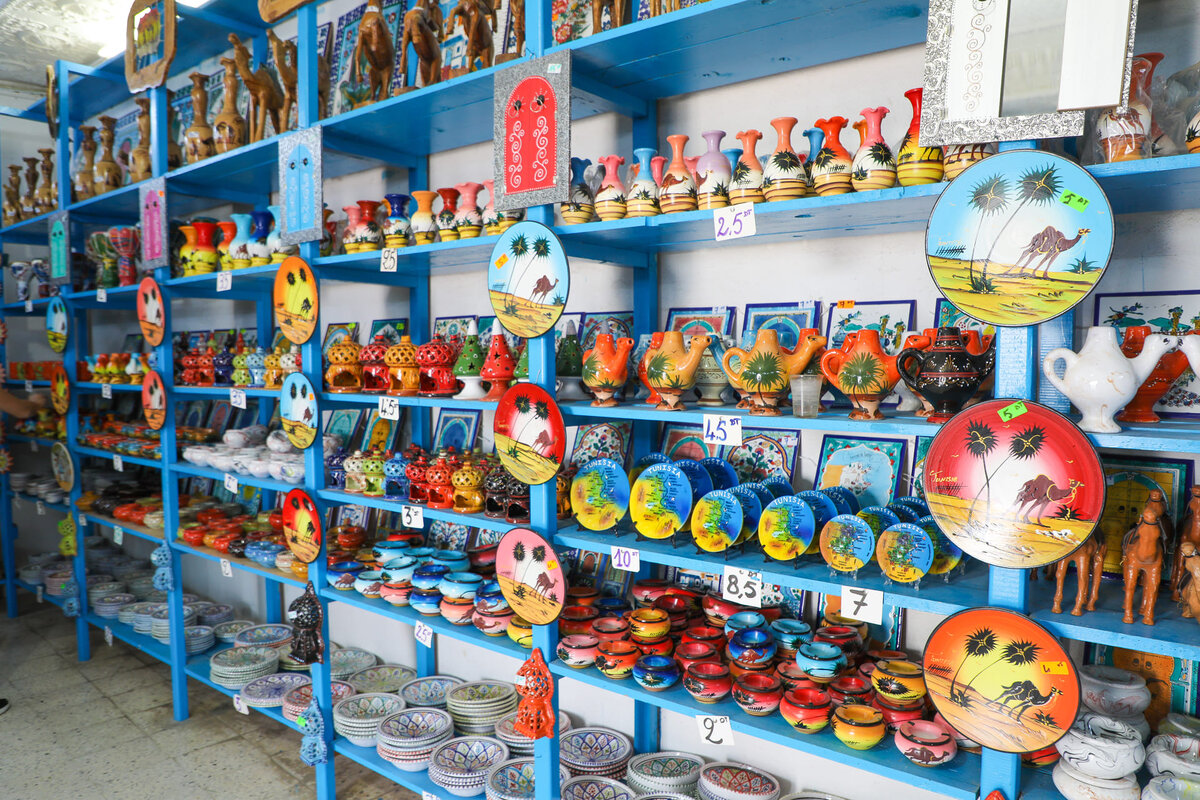
- Buy pottery at Nabeul's Friday market rather than in the hotel arcade — the same Guellala and Nabeul ceramics run 40–60% cheaper, and the Friday livestock section is where the town actually shops
- Book a half-day thalasso circuit rather than a single massage: Tunisia's seawater centres are regulated and cheap by European standards, 60–120 TND for two to three hours
- Drive out to Kelibia and El Haouaria at the tip of Cap Bon — a Byzantine fort above a fishing harbour, Roman quarry caves cut into the cliff, and a beach that stays quiet even in high season
- Eat at a restaurant in Hammamet town centre instead of the Yasmine marina; expect no alcohol at most of them, which is exactly why the prices are half
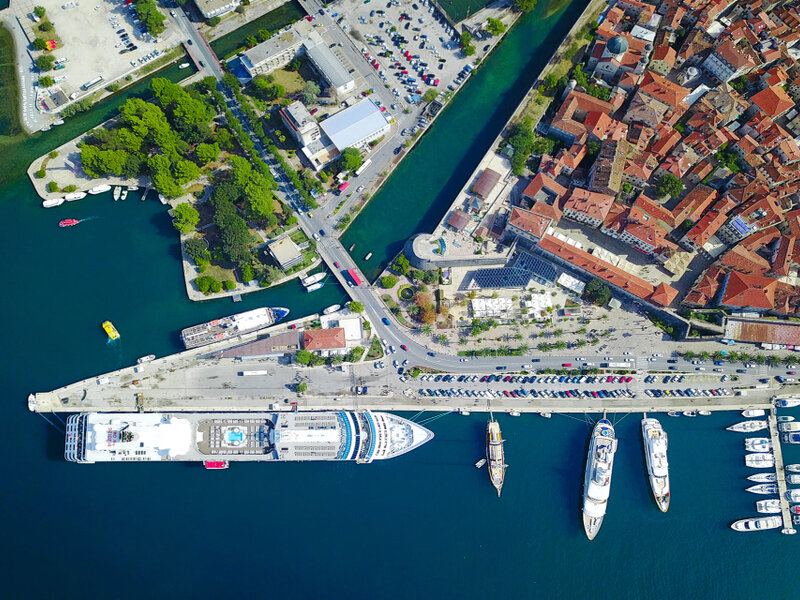
Sousse and Port El Kantaoui: the most choice, the most noise
The widest hotel market in Tunisia, and the coast where September prices fall furthest.
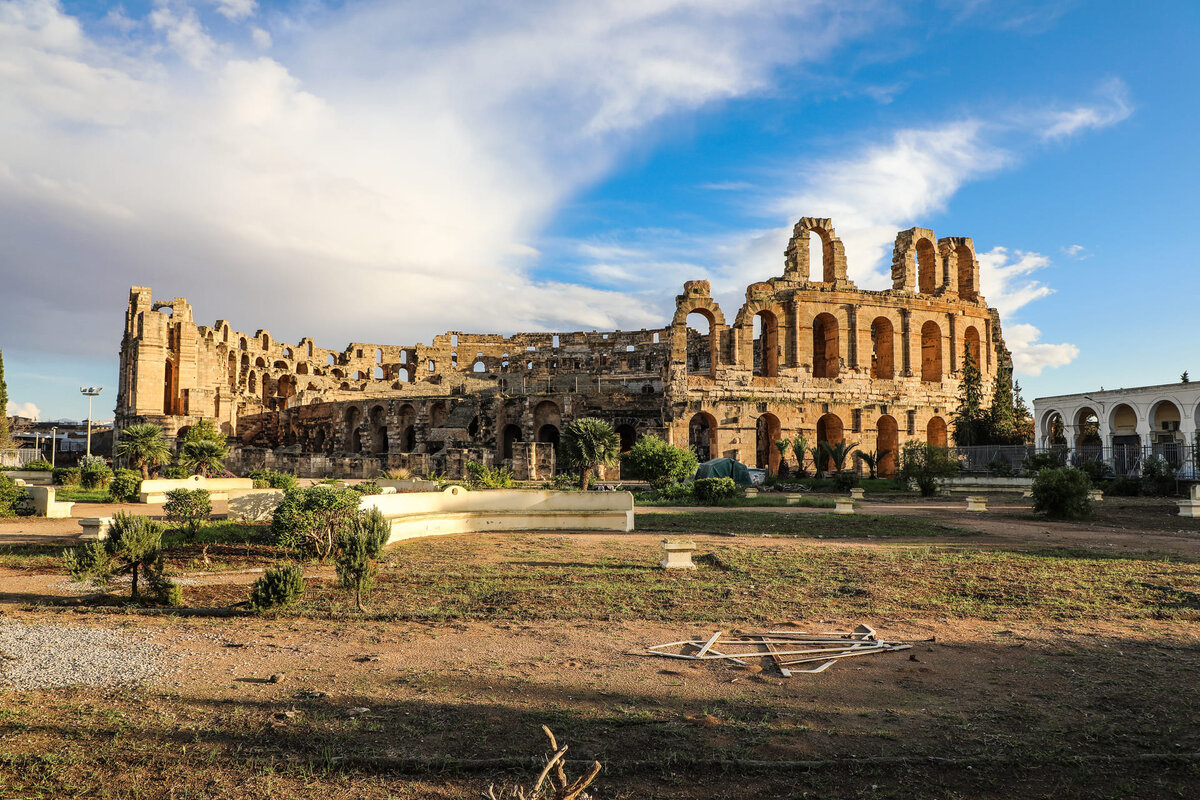
Sousse is a city of some 250,000 people with a UNESCO-listed medina and a ninth-century ribat at its centre, wrapped in a long hotel strip that runs north into Port El Kantaoui, a marina resort built in the 1970s. The practical consequence is choice: more four- and five-star properties within 20 kilometres than anywhere else in the country, which is why September discounting is sharpest here. The trade-off is that Sousse is genuinely urban — traffic, touts along the beach promenade, and a nightlife strip that runs late. El Jem, the best-preserved Roman amphitheatre in Africa and a structure built for 35,000 spectators, is 60 kilometres south and reachable by louage or organised trip in a morning.
Flight from Warsaw: about 3 hours to Enfidha-Hammamet or Monastir, transfer 45–60 minutes
7 nights for two: 4 800–9 000 PLN, all-inclusive four-star, September
September air and sea: +30–32°C air, +25–26°C sea
Best window: from 12 September, once the last European family peak clears
Who is it for
Travellers who want a beach base with a real city attached, groups who want restaurants and bars within walking distance, and anyone shopping hard on price — the same hotel category costs less here than in Hammamet or on Djerba. Port El Kantaoui is the calmer half and better for couples. Not worth it for anyone sensitive to being approached: the stretch of public beach between Sousse centre and the hotel zone has persistent vendors and camel-ride touts, and this is the single most common complaint in September reviews of the area, when hotels are quieter and the sellers are more determined.
 What to do
- Climb the nador tower of the Ribat of Sousse first thing — 73 steps, a few dinars, and the only view that shows how the medina, the port and the modern city fit together
- Take the morning louage to El Jem and go underground into the gladiator passages beneath the arena floor, which most coach tours skip entirely
- Spend a half day in Kairouan, 60 kilometres inland: the Great Mosque, the Aghlabid water basins, and a carpet trade that predates the tourist one by a thousand years
- Ride the Sahel Metro light rail between Sousse and Monastir for a couple of dinars rather than paying taxi rates — it runs along the coast and takes about 50 minutes
- Choose a hotel in Port El Kantaoui if you want to swim before breakfast; the marina end has the cleaner, better-maintained beach and far fewer sellers
Monastir and Mahdia: quieter Sahel, shorter beaches
Same sea as Sousse, a fraction of the crowd, and considerably less to do after dinner.
Monastir has the airport, an enormous white ribat that most visitors recognise from film, and a compact centre that can be walked in an afternoon. Mahdia, 45 kilometres further south, is the more interesting of the two: a fishing town on a narrow cape, entered through the Skifa el-Kahla, a fortified gate with a 44-metre vaulted passage, with a hotel zone strung along a genuinely good sandy beach north of the old town. The Sahel's other advantage in September is dryness — this stretch averages only two to three rain days in the month, the lowest on the tourist coast.
Flight from Warsaw: about 3 hours to Monastir, transfer 10 minutes to Monastir or about 50 minutes to Mahdia
7 nights for two: 4 400–8 000 PLN, all-inclusive four-star, September
September air and sea: +30–32°C air, +25–26°C sea
Best window: mid-September onwards; Mahdia hotels thin out noticeably after the 20th
Who is it for
Couples and older travellers who want the Sahel climate without the Sousse promenade, and anyone flying with small children who values a ten-minute transfer from the aircraft to the hotel. Mahdia in particular attracts repeat visitors who have already done Hammamet and Sousse. Not worth it if you expect a resort to fill your evenings: Monastir's hotel strip at Skanes is a row of properties separated from the town by the airport road, several of the older ones are tired, and once the animation programme finishes at 22:00 there is very little within walking distance.
 What to do
- Walk the ramparts of the Ribat of Monastir at opening time — the interior courtyard was used as a filming location in the 1970s and the roof gives the cleanest view along the Sahel coast
- Pass through Mahdia's Skifa el-Kahla into the old town and follow the cape all the way to the Fatimid cemetery on the rocks, about 25 minutes on foot
- Watch the fish auction at Mahdia's port in the early morning — it runs on weekdays and is a working market, not a demonstration for visitors
- Buy silk from the weavers still operating in workshops off Mahdia's Place du Caire, one of very few places in Tunisia where the trade survives
- Combine a day trip to El Jem from either town — it sits almost exactly between Mahdia and Sousse and is under an hour from both
Djerba: the warmest sea and the longest season
The one part of Tunisia where late September is better than early September.
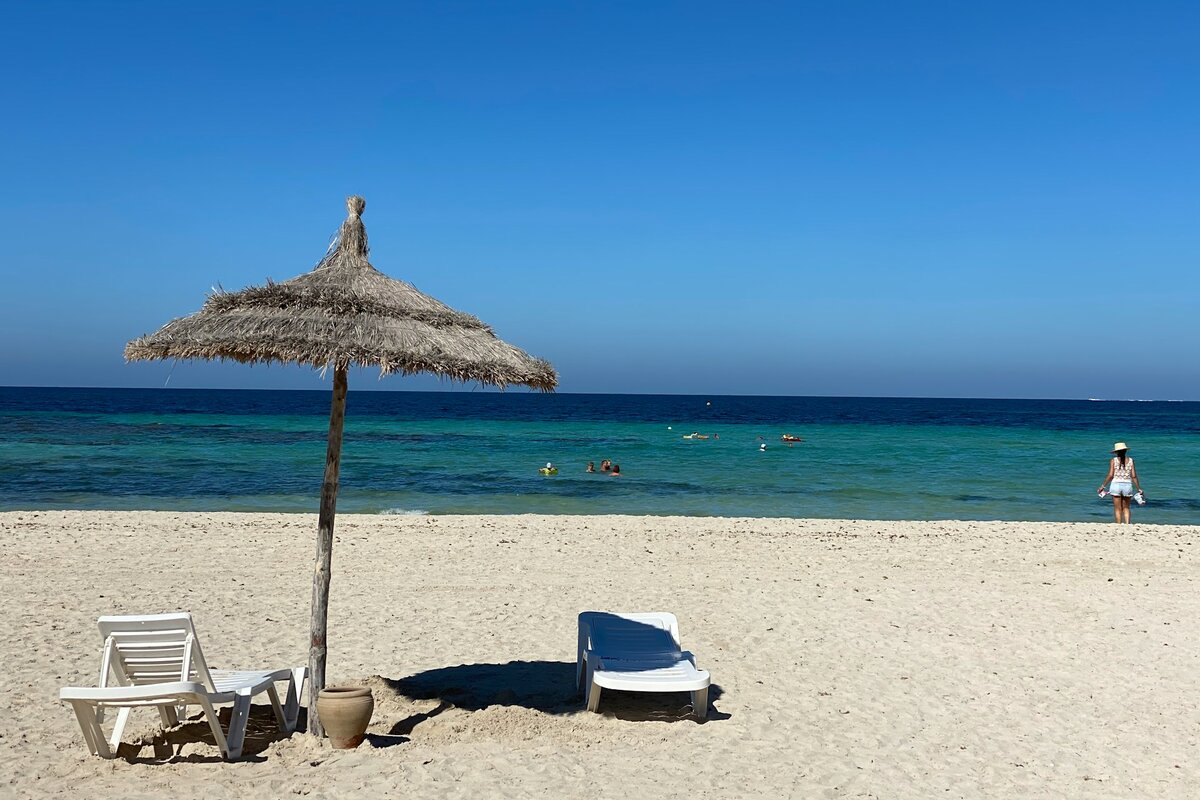
Djerba is a flat island of 514 square kilometres in the Gulf of Gabès, connected to the mainland by a Roman-era causeway, and its position 200 kilometres south of Sousse changes the numbers. The sea averages 27–28°C in September, holds above 20°C from May to November, and is shallow and sandy over long stretches — the Gulf warms more than the open Mediterranean because it is enclosed. Air runs 30–32°C with warm nights around 22–24°C. The island is also culturally distinct: a Jewish community that has been present for well over a millennium and maintains the El Ghriba synagogue, a Berber pottery tradition at Guellala, and Erriadh village, where an international street-art project painted more than 250 murals onto the whitewashed houses.
Flight from Warsaw: about 3 hours 30 minutes to Djerba-Zarzis (seasonal charter services, fewer departures than to Enfidha)
7 nights for two: 5 200–10 000 PLN, all-inclusive four-star, September
September air and sea: +30–32°C air, +27–28°C sea
Best window: the last ten days of September, and Djerba stays viable through October
Who is it for
Anyone whose main criterion is water temperature, couples travelling late in the month, and families with young children who want shallow, gently shelving sand. It is also the strongest choice for a two-week holiday, because the season runs on into October here when the north is already winding down. Not worth it if you want variety within walking distance: the hotel zone runs along the north-east coast in a single line, Houmt Souk is a taxi ride away, and the flat, sparsely built interior gives you almost nothing to look at between the resort and the island's few sights. Charter capacity is also thinner than to Enfidha, so departure days are less flexible.
 What to do
- Walk Erriadh village slowly and find the murals on the back lanes rather than the main street — the project involved artists from over 30 countries and the best pieces are not the signposted ones
- Visit the El Ghriba synagogue, one of the oldest continuously used in North Africa; dress modestly and expect a security check at the entrance
- Take the boat to Ras Rmel, the sandbar off the north coast, in the morning — flamingos gather on the flats and the crossing is short enough to be back for lunch
- Buy directly from a potter's workshop in Guellala, where the local clay is worked without glaze on the inside of water jars, and compare prices before the second stop
- Eat grilled fish at Houmt Souk's covered market: choose from the fish stalls, then hand it to one of the adjacent grills, which cook it for a small fee
Tabarka and the north: green coast, cooler water
The part of Tunisia that looks nothing like the brochure, and the first to close.
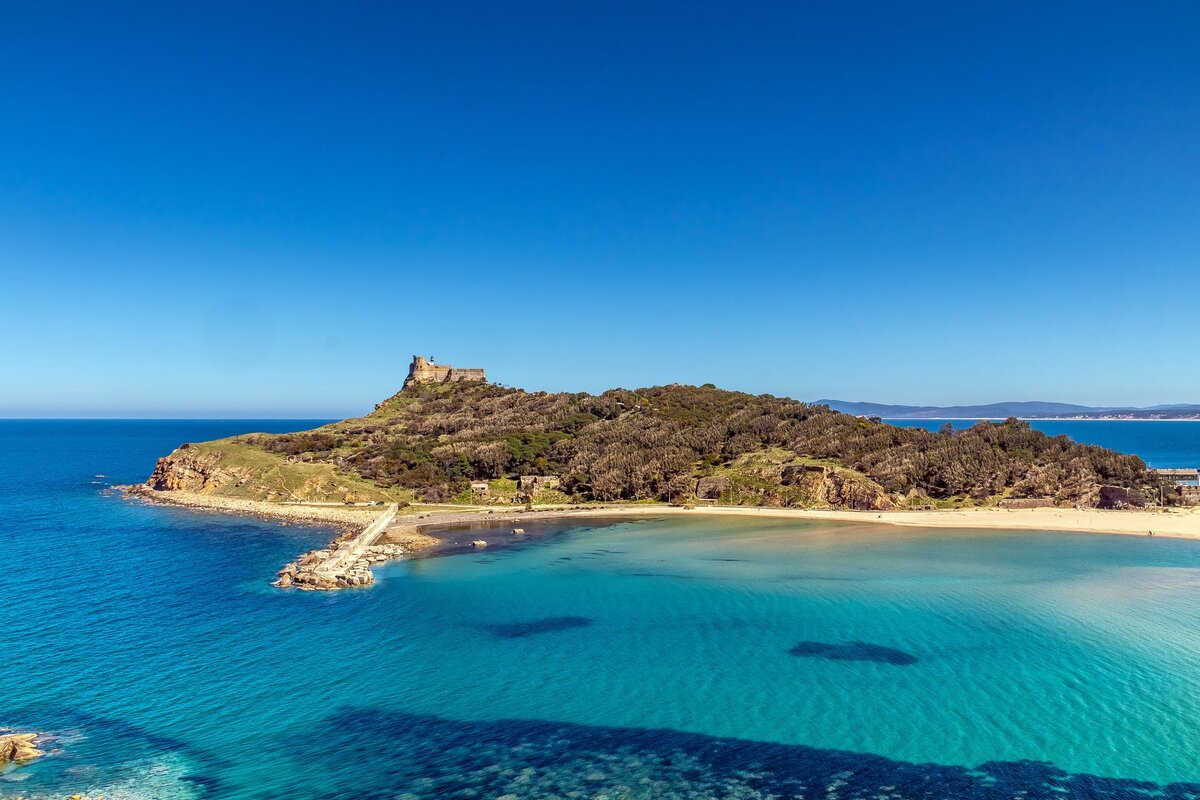
North-west of Tunis the country turns green: cork oak forests around Ain Draham, mountains rising to 1 000 metres, and a coastline of red rock rather than long sand. Tabarka sits under a Genoese fort on an island joined to the shore, with the Aiguilles — a row of sandstone needles up to 25 metres tall — standing directly out of the sea beside the town. This is Tunisia's diving coast, built on coral and rock formations rather than reefs, with visibility that holds well into autumn. The catch in September is meteorological: the north gets 5–6 rain days in the month against 2–3 in the Sahel, the sea runs 24–25°C rather than 27–28°C, and the season here ends earlier than anywhere else.
Flight from Warsaw: about 3 hours to Tunis-Carthage, then roughly 2 hours 30 minutes by road (about 170 km); direct charters to Tabarka are rare
7 nights for two: 4 000–7 500 PLN, September
September air and sea: +28–30°C air, +24–25°C sea
Best window: the first two weeks of September only
Who is it for
Divers, walkers, and travellers who have already done the Sahel and want landscape rather than a beach club. It also works well as a two- or three-night add-on to a Tunis stay, combined with Bulla Regia and Dougga. Not worth it as a standard beach week booked from Poland: the transfer from Tunis eats most of a day at each end, the all-inclusive stock is small and dated compared with Hammamet, and if you book the last week of September you may find both the weather turning and hotel facilities already scaling back for the low season.
 What to do
- Dive or snorkel around the Aiguilles and the Tabarka drop-offs, where the seabed falls away close to shore and the visibility is best before the autumn swell
- Go underground at Bulla Regia, the Roman town where the wealthy built entire villas below ground level to escape the heat — mosaics still in place, and unlike anywhere else in the empire
- Walk the cork oak forest above Ain Draham, 25 kilometres inland and about 800 metres up, where September temperatures run five to seven degrees below the coast
- Climb to the Genoese fort above Tabarka late in the day for the view back along the coral coast towards Algeria
- Stop at Dougga on the way back to Tunis — the best-preserved Roman town in North Africa, on a hillside with the capitol standing almost intact
The Sahara in September: the month it becomes doable
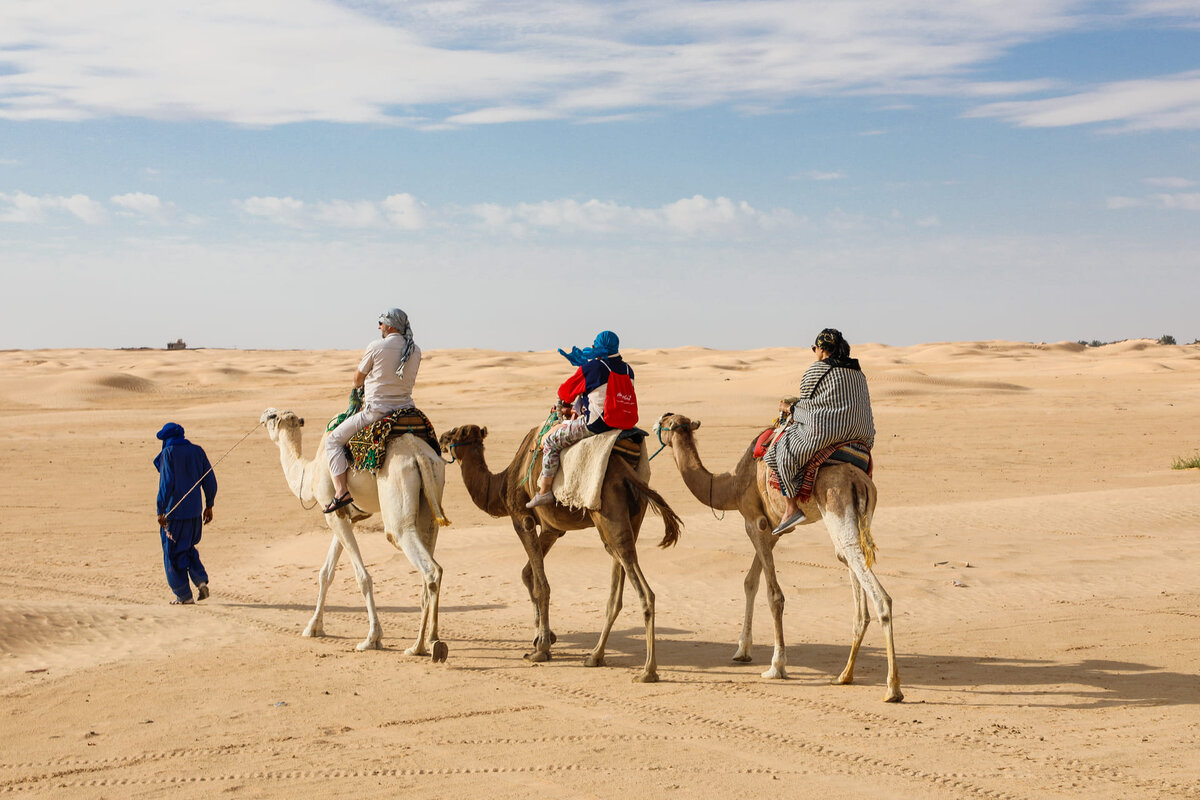
In August a desert excursion is endurance; from about the 20th of September it becomes a reasonable use of two days.
The standard trip runs from the coastal resorts to Tozeur and Douz, taking in the Chott el Djerid salt flat, the mountain oases at Chebika and Tamerza, the troglodyte houses of Matmata, and the film sets left in the dunes at Ong Jemel. Daytime highs in the south still reach 33–36°C in September, but the difference from August's 40°C-plus is decisive, and desert nights fall to 18–20°C, which is what makes an overnight in a desert camp worth doing rather than merely survivable. Rain is effectively nil. Trips are sold at every hotel desk and are usually cheaper booked locally than pre-purchased, though the vehicles and the guiding vary considerably.
From the coast: Douz is roughly 400 km from Sousse and 250 km from Djerba, so Djerba is much the better base
Typical cost: 320–450 TND per person for a two-day trip with an overnight stay, roughly 400–560 PLN
September conditions: +33–36°C by day, +18–20°C at night, almost no rain
Best window: after 20 September, when the interior cools ahead of the coast
Who is it for
Travellers who would otherwise find a full week of beach repetitive, photographers, and anyone visiting Tunisia for a second time. Families with children over about ten manage it well; the driving is long but broken up. Not worth it from Hammamet or Tabarka on a short holiday: from the northern resorts the round trip means eight to ten hours in a minibus each way, which takes two of your seven days and delivers you to the dunes tired. If the desert is the reason you are going, base yourself on Djerba or in the south and treat the coast as secondary.
 What to do
- Cross the Chott el Djerid in the early morning, when the salt crust throws mirages and the light is usable — by midday the haze flattens everything
- Stand in the Mos Espa set at Ong Jemel, still standing in the dunes near Nefta and slowly being buried; it is free to enter and rarely busy
- Stay one night in a desert camp near Ksar Ghilane rather than returning to a hotel — the temperature drop after dark is the whole point
- Look inside a working troglodyte house at Matmata, not only the hotel one; the underground courtyards stay around 20°C when the surface is above 35°C
- Ask which vehicle you are getting before you pay: 4x4 for six people and a minibus for forty are sold under the same excursion name at very different comfort levels
What a week actually costs in September
The headline price is honest; the two things that surprise people are the hotel tax and the currency.
An all-inclusive week for two in a four-star property runs roughly 4 000–9 000 PLN in September depending on the resort and the date, with the second half of the month typically 25–35% below the first. On top of that sits a compulsory tourist tax, collected by the hotel in cash on arrival and not included in the holiday price: 12 TND per person per night in four- and five-star hotels, 8 TND in three-star, charged for a maximum of ten nights and not charged for children under 12. For two adults over seven nights in a four-star that is 168 TND, roughly 210 PLN.
The second surprise is the dinar itself. It is a closed currency: it cannot legally be bought outside Tunisia or taken out of the country, so you arrive with euros or PLN and exchange on the spot. Keep the exchange receipts, because converting leftover dinars back at the airport requires them, and there is a ceiling on how much can be reconverted. Card acceptance in large hotels is normal; in medinas, taxis and the desert it is not.
| Item | Typical price | Worth knowing |
|---|---|---|
| Tourist tax, 4–5* | 12 TND per adult per night (~15 PLN) | Cash on arrival, capped at 10 nights, under-12s exempt |
| Taxi, Enfidha airport to Hammamet | 60–90 TND (~75–115 PLN) | Agree the fare before setting off |
| Two-day Sahara excursion | 320–450 TND per person (~400–560 PLN) | Usually cheaper booked at the hotel desk than in advance |
| Thalasso session | 60–120 TND (~75–150 PLN) | Hammamet and Djerba have the most centres |
| Dinner for two outside the hotel | 70–120 TND (~90–150 PLN) | Many restaurants do not serve alcohol, which is part of why it is cheap |
Entry rules for travellers from Poland
Tunisia is outside the Schengen area, so residence in Poland does not settle the question — nationality does.
The single most common mistake made by travellers leaving from Warsaw is assuming a Greece-style trip. It is not one, and the rules differ by passport rather than by where you live.
- EU and EEA citizens, including Polish nationals: visa-free for stays of up to 90 days, but a passport is required. A national ID card is not sufficient for Tunisia, unlike travel within the EU. Check the required remaining validity before booking — six months beyond the return date is the safe standard, and airlines can refuse boarding on a document that falls short.
- Non-EU residents of Poland: a Polish residence card is proof of your right to live in and return to Poland. It does not create a right to enter Tunisia. Your passport nationality decides whether you need a visa, and the answer varies considerably between nationalities that are otherwise treated alike within Schengen.
- Ukrainian nationals: the position depends on how you travel. Independent travel generally requires a visa obtained in advance from a Tunisian diplomatic mission. Travelling as part of an organised tour with a hotel voucher issued by a licensed operator is treated differently and is commonly visa-exempt, with the operator submitting the passenger list ahead of arrival. Confirm which basis applies to your specific booking before you pay.
- Belarusian nationals: sources differ on whether entry is visa-free outright or conditional on travelling as part of an organised tour with a hotel voucher, and the two arrangements have been listed inconsistently. Treat this as something to verify for your travel dates rather than assume.
- Everyone: Tunisia is a single-entry proposition on a tourist stamp. If you plan to leave the country during your holiday and come back, that needs checking separately. Returning to Poland is governed by your Schengen status, so make sure a residence permit or visa is valid for re-entry on your return date and not only on your departure date.
Entry rules change without notice. Treat the above as the shape of the question and confirm the detail with the Tunisian embassy or your tour operator close to departure.
Quick comparison
| Resort area | Who it suits | Sea in September | Flight from Warsaw | 7 nights / 2 people | Best window |
|---|---|---|---|---|---|
| Hammamet, Nabeul | Families, first visit | +25–26°C | ~3 h to Enfidha | 4 500–8 500 PLN | 10–25 September |
| Sousse, Port El Kantaoui | Choice, budget, nightlife | +25–26°C | ~3 h to Enfidha or Monastir | 4 800–9 000 PLN | from 12 September |
| Monastir, Mahdia | Couples, short transfers | +25–26°C | ~3 h to Monastir | 4 400–8 000 PLN | mid-September on |
| Djerba | Warmest sea, late bookings | +27–28°C | ~3 h 30 min to Djerba | 5 200–10 000 PLN | last 10 days, and October |
| Tabarka, the north | Diving, landscape | +24–25°C | ~3 h to Tunis + 2.5 h road | 4 000–7 500 PLN | first two weeks only |
On the numbers, Djerba wins September outright for anyone whose priority is swimming, and it is the only area that improves as the month goes on. Hammamet is the safer all-round family booking and the most comfortable during a chehili episode. Sousse gives the deepest discounts and the most hotels to choose between. Tabarka is a two-week-of-September destination at most and a poor choice for the last week.
Checklist before booking:
- Fix your dates around 15 September: after it, confirm in writing that the hotel will run air conditioning for your stay, because the guaranteed period ends there.
- Check which airport your transfer runs from — Enfidha, Monastir, Tunis and Djerba serve different stretches of coast, and the wrong pairing adds two hours each way.
- Budget the tourist tax separately in cash: 12 TND per adult per night at four and five stars, payable on arrival and not part of the package price.
- Confirm your entry basis by passport, not by residence card, and for Ukrainian and Belarusian nationals confirm whether your booking counts as an organised tour.
- If the Sahara is a priority, book Djerba or the southern Sahel rather than Hammamet — the excursion distance is the single biggest variable.
- For the last week of September, choose Djerba or Mahdia over the north, and check whether hotel pools are heated in case the sea drops.
The most common mistakes:
- Booking the north for a late-September beach week. Tabarka and the Cap Bon coast run 24–25°C in the sea against Djerba's 27–28°C, collect twice as many rain days, and start closing facilities first.
- Treating the trip like a Schengen holiday. Tunisia is outside Schengen, an ID card will not get a Polish citizen through the border, and a Polish residence card does not substitute for a passport or a visa.
- Arriving with no cash and no plan for the dinar. It cannot be bought in Poland and cannot be taken out, and the hotel tax is collected in cash at check-in before you have exchanged anything.
- Assuming a chehili day is a one-off. The sirocco typically runs one to three days at a time and pushes the air 10–15°C above the norm, so a hotel with good shade, indoor space and a working pool matters more in September than the beach photograph suggests.
- Buying the cheapest 4* in Skanes or central Sousse without checking the beach. The Sahel strip includes properties separated from the sand by a road, and September reviews of the public beach sections are dominated by vendor pressure.
- Booking a two-day desert excursion from Hammamet. The distance means most of two days in a vehicle; the same trip from Djerba is roughly 150 kilometres shorter each way.
So, is Tunisia worth it in September?
Yes — with one date and one region attached to the answer.
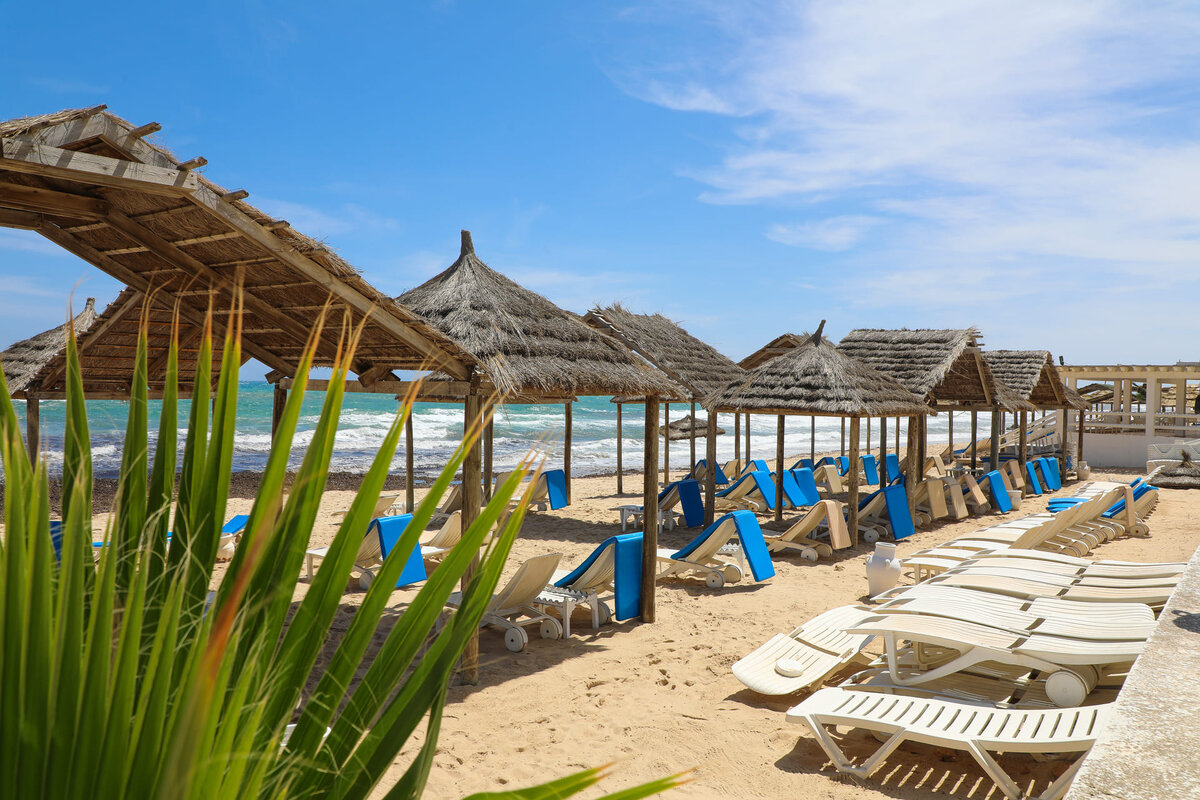
For a swimming holiday, September is the best month Tunisia has: the sea is at its annual peak, the air has come off the August extreme, and prices drop sharply once the European school year restarts. Djerba is the strongest booking of the five areas and the only one that gets better through the month, holding 27–28°C water into October. Hammamet is the safer choice for families and the most comfortable when the sirocco arrives. Sousse and Port El Kantaoui deliver the widest hotel choice at the lowest prices, at the cost of an urban setting. Monastir and Mahdia suit couples who want the same coast without the crowds, and Tabarka is worth the journey for divers and walkers in the first fortnight only.
 One practical recommendation:
Book departure between 15 and 25 September rather than in the first week. You lose almost nothing in sea temperature, you gain a substantial price reduction and much quieter hotels — but make the air conditioning an explicit question before you pay, because that is exactly the point in the calendar where the guarantee lapses.

 Holidays


 Last minute
 Hotels


 Blog
Blog