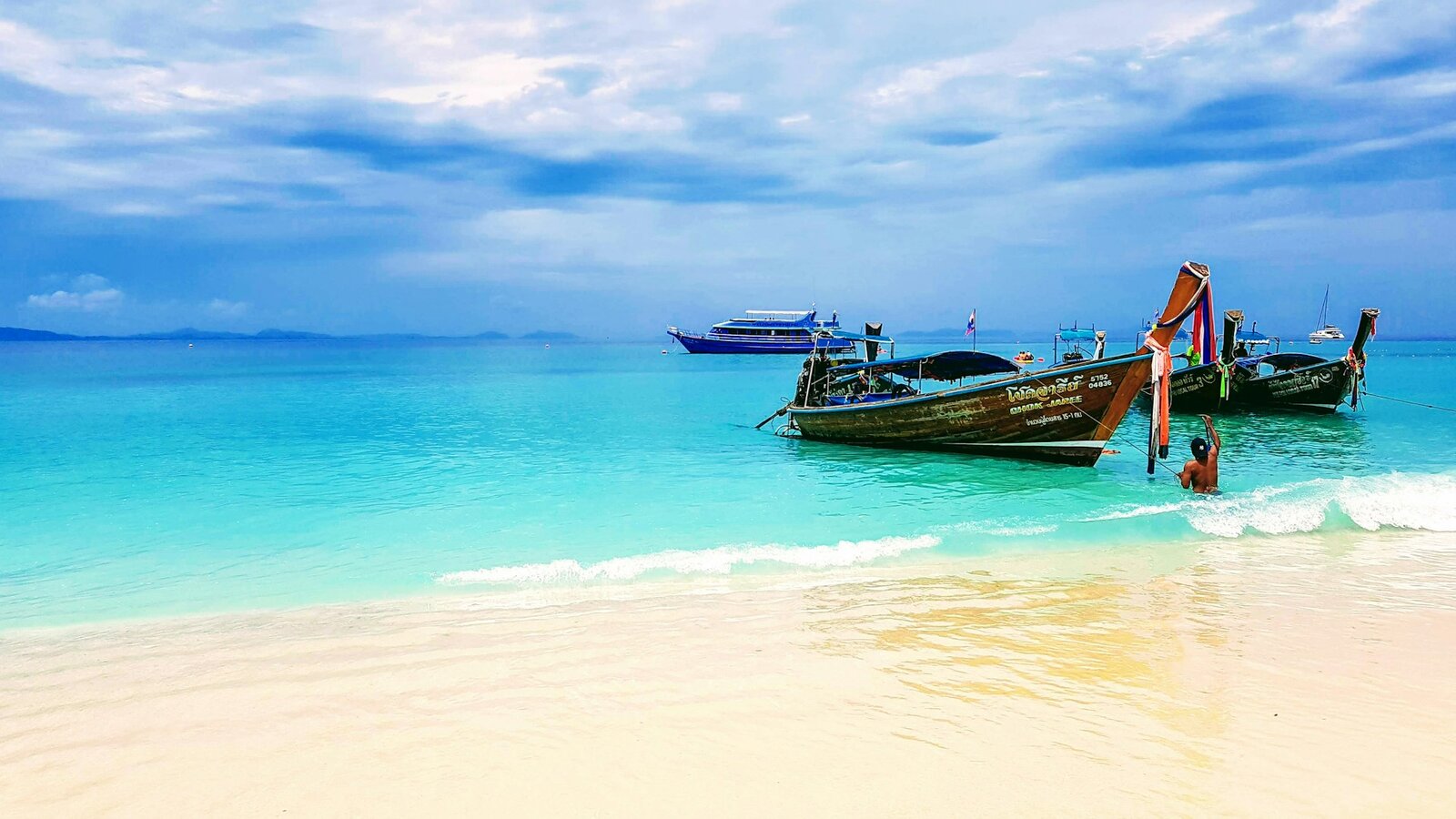
Before a trip to Thailand in August, almost everyone studies the rainfall forecast - and almost everyone is looking in the wrong place. Rain in the tropics doesn't work the way European experience suggests: it's not a grey drizzle all day, but an hour and a half of heavy downpour, more often in the afternoon, with sun between the bursts. The real problem of August isn't in the sky, it's in the water. From May to October, the south-west monsoon churns up the Andaman Sea, and red flags fly on the west coast beaches of Phuket, rip currents run, and the Similan Islands - the country's main diving spot - are closed until 15 October. People plan their holiday around the rain and collide with a sea they can't get into.
Below is the honest breakdown: how much it really rains and what it looks like hour by hour, what makes the sea dangerous in the monsoon and how people work around it, why Thailand's two coasts run out of phase and Samui is drier than Phuket in August, what's shut until mid-October, how much a week costs in low season, and what to do when the sea is off the table. At the end: a region-by-region comparison table, a checklist, common mistakes and entry rules, which changed noticeably in 2026.
- Short answer, no preamble → Who should and shouldn't
- What "the rainy season" means → How the rain works
- The month's main risk → The sea, not the rain
- Two coasts out of phase → Andaman and the gulf
- Phuket in August → Phuket and the Andaman
- Where it's drier in August → Samui and the gulf
- What's shut until October → The Similans and Surin
- If the sea is off → What to do instead
- How much low season saves → Prices and savings
- Documents and visas → Entry rules
- Compare the regions → Comparison
Short answer: who should go, and who shouldn't
If you want the answer without reading the whole article - Thailand in August works, but only with the right coast and the right expectations. 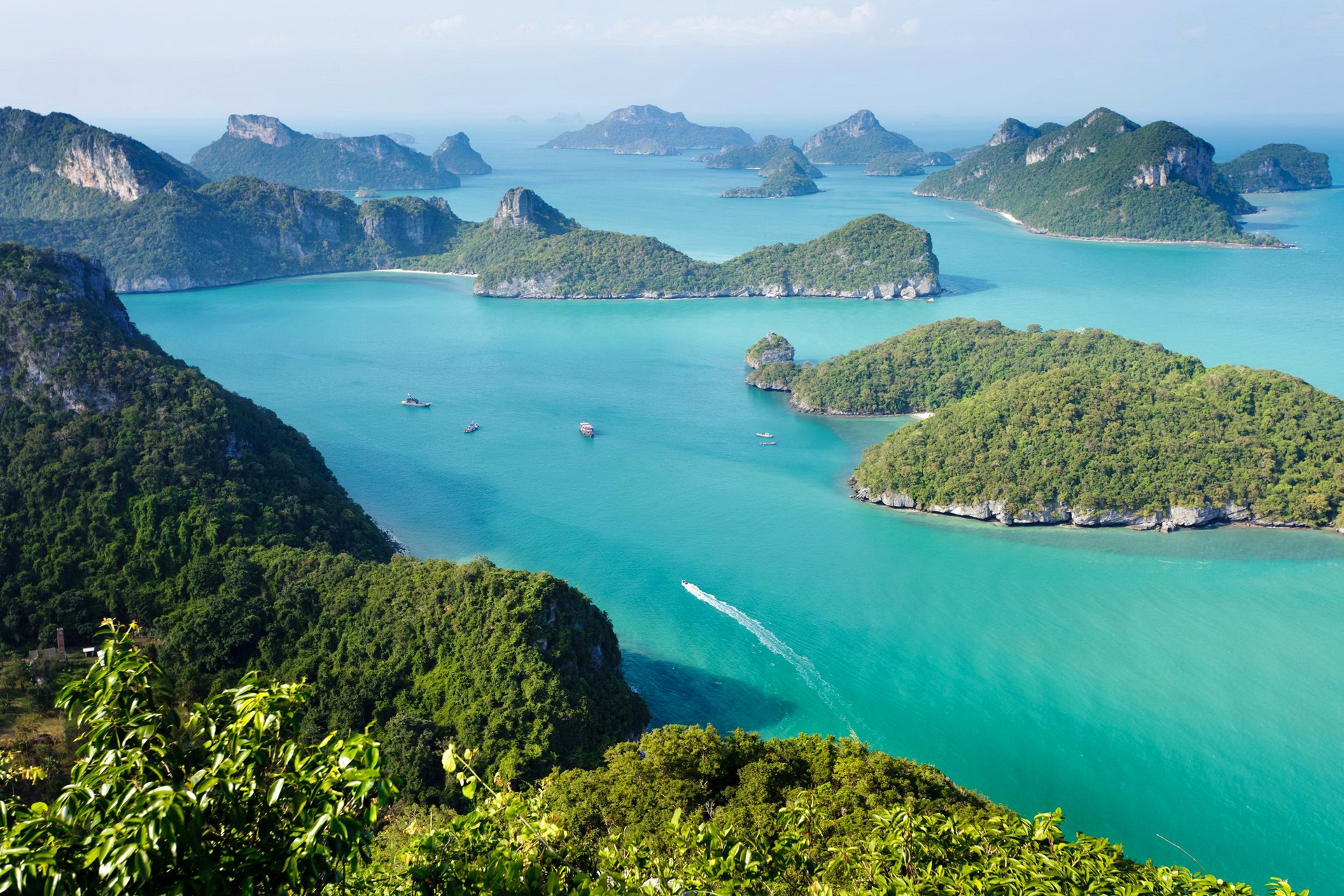
Worth going: for those willing to pick Samui, Pha Ngan or Tao instead of Phuket, for anyone who values low-season savings, and for those whose holiday isn't just swimming - temples, food, spas, the north and elephant sanctuaries all run through August
Not worth going: for divers coming for the Similans (closed until 15 October), for families with small children who need calm water, and for those counting on a guaranteed beach holiday with no changes to the plan
The compromise: move the trip to November-February - dry season on the Andaman, calm sea and open Similans, but at the cost of high season and noticeably pricier trips
What follows are the details that make this answer what it is.
What "the rainy season" really means
The main misunderstanding around the Thai August is transferring a European idea of rain onto the tropics. Here the rain works differently: it comes in a short, hard burst, more often after lunch or at night, lasts an hour to an hour and a half, and stops. Between those bursts the sun usually shines, and the day is rarely overcast in its entirety. That's exactly why the statistic "twenty rainy days a month" frightens more than the reality: it rained on twenty days, but not for twenty days straight.
Temperature: 28-32°C by day all month, around 25°C at night; the heat is milder than in April thanks to the cloud cover
Humidity: high, 80% and above - this is the main difference from the dry season and the hardest thing to bear
Nature of the rainfall: short, intense downpours, more often in the afternoon; solid multi-day bad weather does happen, but it's not the norm for the month
What it means for the plan: put excursions and activity in the first half of the day and keep the second half flexible
So the rain itself rarely breaks a holiday. Something else does.
The main risk of August: the sea, not the rain
From May to October, the south-west monsoon drives up the swell on the west coast, and swimming there stops being safe by default. Phuket's beaches use a flag system, and a red flag means swimming is banned, not merely discouraged. The main hazard is rip currents: narrow, fast channels that pull you away from shore, hard to spot from the water, and beyond even a strong swimmer. Every season there are incidents on Phuket, and almost all of them fall in the monsoon months. 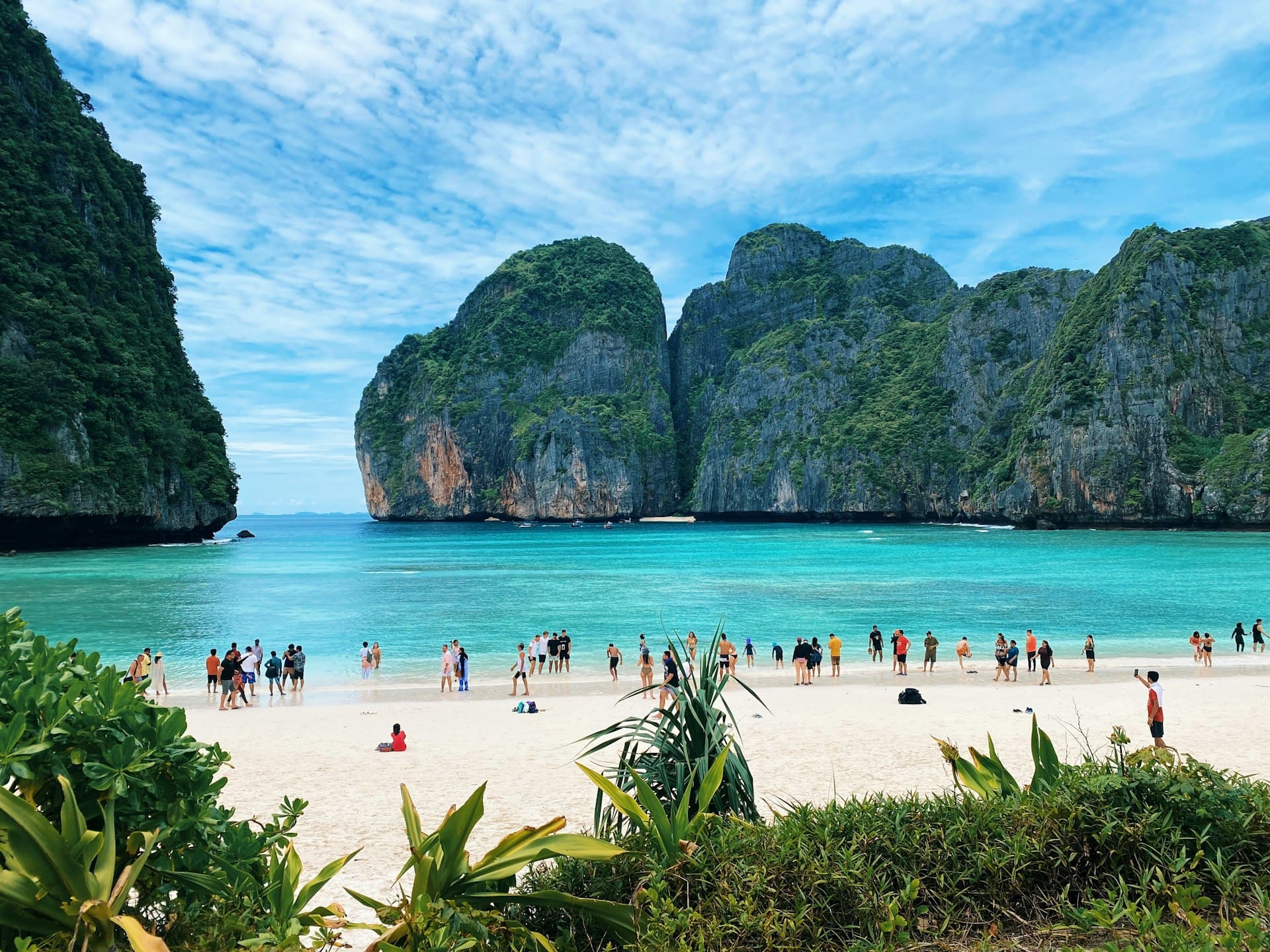
What to bear in mind about the sea in August:
- Flags are a rule, not advice. A red flag means you must not enter the water, even if the sea looks calm from the shore. Monsoon conditions change within minutes.
- Lifeguards aren't everywhere. Not all beaches are patrolled, and not around the clock; once the lifeguards leave, swimming is entirely at your own risk.
- Rip currents. The signs are a band of darker, murkier or foamy water cutting through the surf, and a suspiciously calm "corridor" among the breakers. If you're caught, swim parallel to the shore, not against the current.
- Jellyfish and sea urchins. Activity is higher in the monsoon; on rocky stretches it's worth wearing reef shoes.
- Water clarity. The swell lifts sand, and the underwater picture on the Andaman in August is far from the brochure - snorkelling near the shore almost loses its point.
- Ferries and boat trips. In heavy seas, island runs are cancelled or postponed; don't build day boat trips into a rigid plan.
The conclusion isn't that swimming is off entirely. It's that on the west coast in August the sea stops being predictable, and you can't plan a holiday there as a guaranteed beach one. You can, though, somewhere else.
Two coasts out of phase: why this decides everything
A key feature of Thailand that rarely makes it into trip listings: the country has two coasts, and their rainy seasons don't coincide. The western, Andaman coast (Phuket, Krabi, Phi Phi, Khao Lak) falls under the south-west monsoon from May to October. The eastern coast, on the Gulf of Thailand side (Samui, Pha Ngan, Tao), works differently: its wettest period is at the end of the year, October to December, and August is a relatively fair month for it. 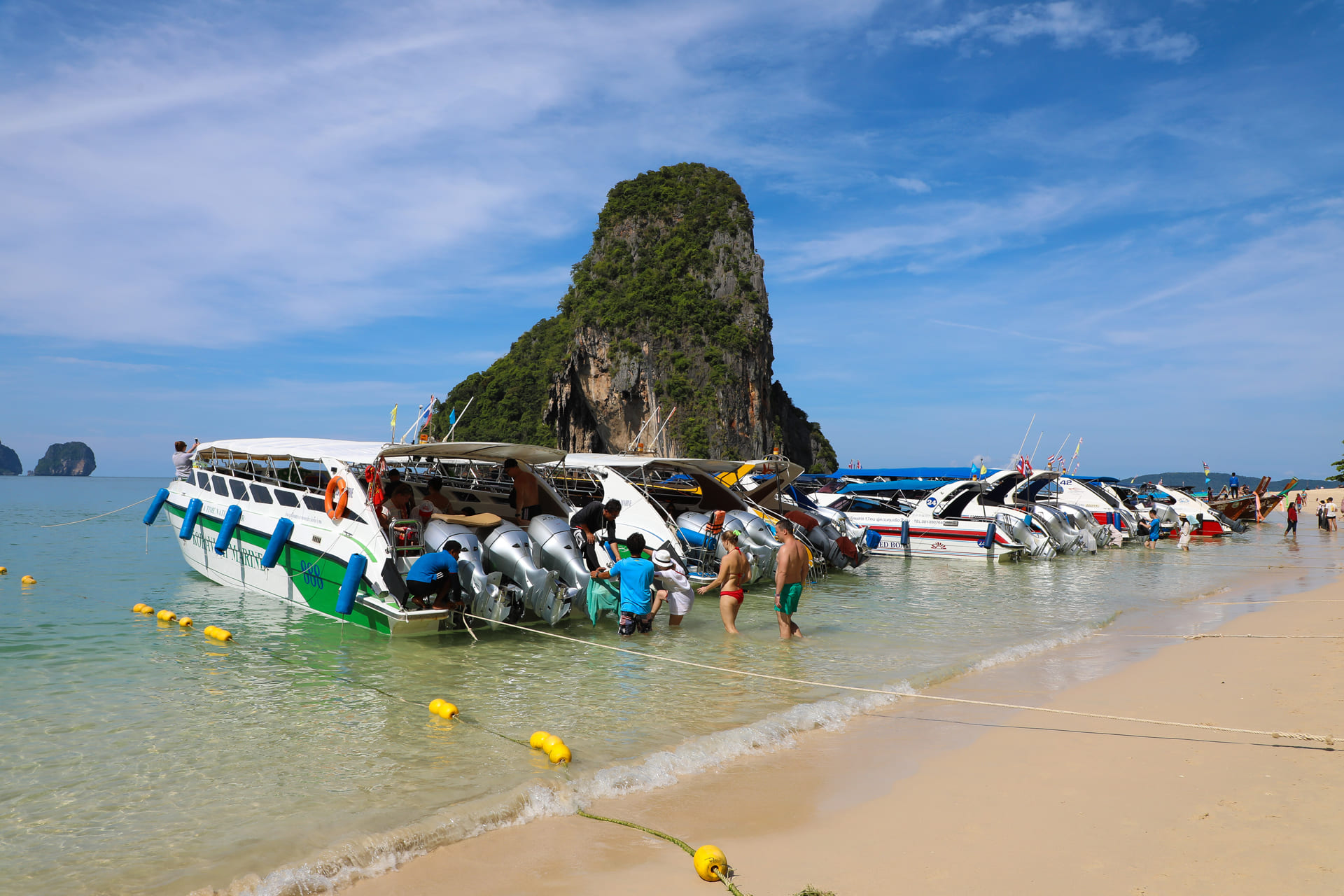
In practice this means the question "should I go to Thailand in August" is badly framed. The right one is: which coast to go to. The same month gives you red flags and murky water on Phuket, and a perfectly workable beach holiday with a calmer sea on Samui. The difference between these two options is greater than the difference between Thailand and a neighbouring country.
Phuket and the Andaman coast in August
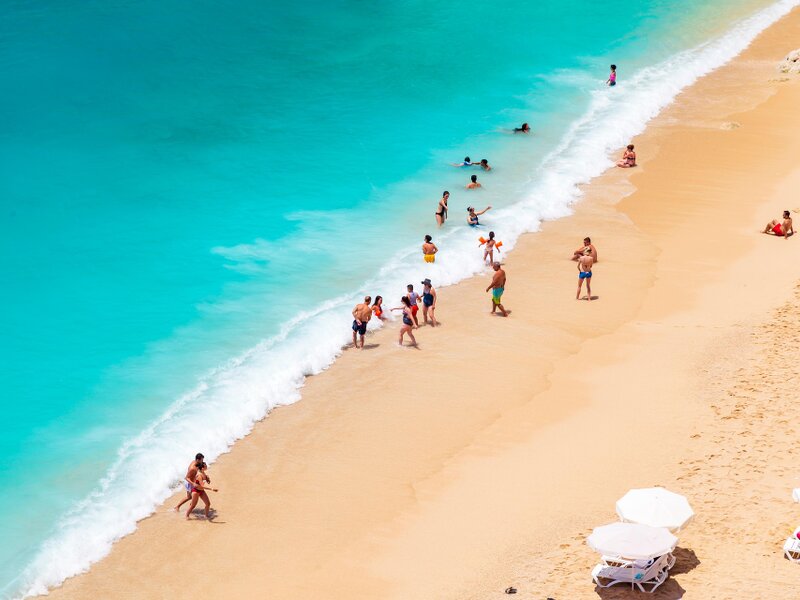
Phuket in August doesn't shut down or empty out - it simply stops being a pure beach destination. Hotels are open, restaurants are working, prices are noticeably lower than high season, and the greenery after the rains stands like a dense wall. But the west coast beaches - Patong, Karon, Kata, Bang Tao, Kamala - are open to the Andaman Sea and take the swell and currents at full force. The eastern, leeward side of the island and the inner bays are calmer, but they don't have the beach quality of the west coast.
Who is it for
Phuket in August is for those coming for more than the sea: an island with good infrastructure, food, spas, markets and land-based excursions, all noticeably cheaper in low season. A good choice for those willing to alternate the pool and outings rather than swim in the sea every day. It's not worth going here in August if the goal is a calm sea and snorkelling near the shore: swell, murky water and red flags on the west coast beaches are the norm this month, not the exception. For families with small children in this period, it's more honest to choose the Gulf of Thailand or a hotel with a strong pool area.
What to do 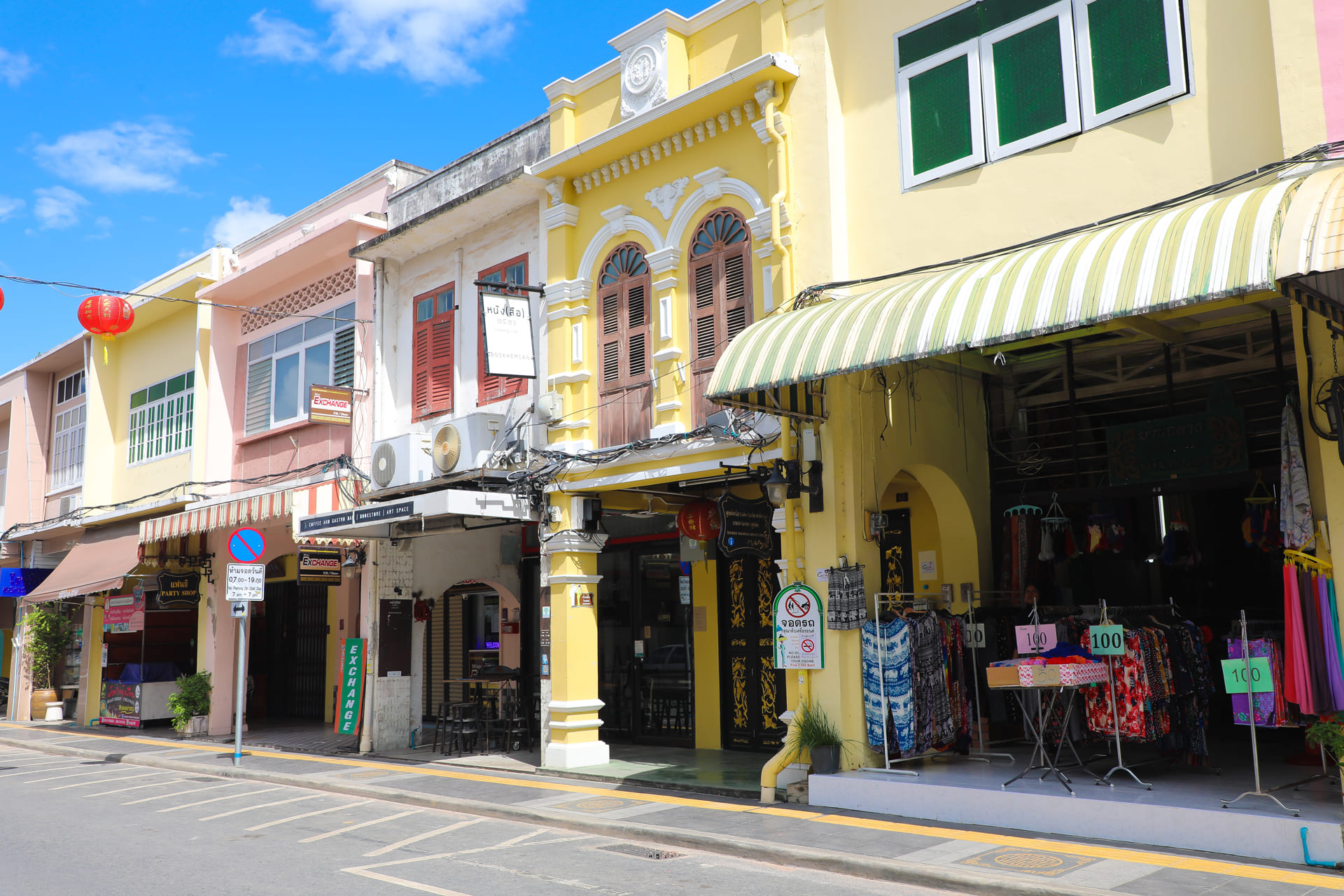
- Check the beach flags every day before swimming and don't enter the water on a red one - conditions change faster than they look from the shore.
- Choose a hotel with a good pool area: in August that's not an add-on to the sea but a partial substitute for it.
- Visit Phuket Town's old quarter - Sino-Portuguese architecture, cafés and street food; rain doesn't get in the way here, as you shelter under the arcades.
- Take a land excursion rather than a sea one: waterfalls, viewpoints and temples look better after the rains than in the dry season.
- Plan activity for the morning: the chance of a downpour in the afternoon is noticeably higher.
Samui, Pha Ngan and Tao: where it's drier in August
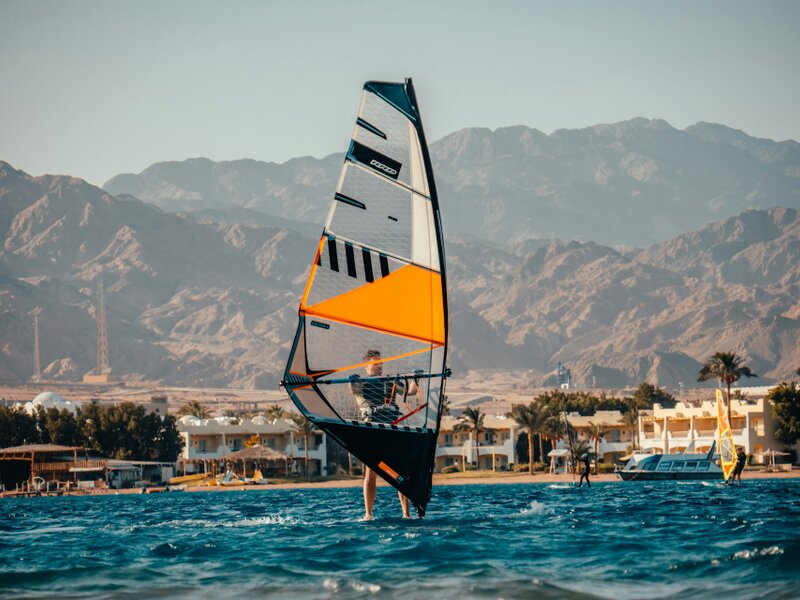
The Gulf of Thailand islands are exactly the answer to the August monsoon. Their rainy peak is in autumn and early winter, and the summer months, August included, run noticeably calmer: a milder sea, lower swell, less risk of cancelled boat trips. It's not a guarantee of dry weather - short downpours happen here too - but a fundamentally different level of predictability than the Andaman in the same month.
Who is it for
Samui in August suits those who want a beach holiday with a more reliable sea: developed resort infrastructure, good hotels, calm bays. Pha Ngan for those coming for a more relaxed format and parties, Tao for the diving and snorkelling, which are viable here at this time unlike on the Andaman. It's not worth going if you expect a perfect picture with no rain at all: short showers and cloud cover happen in the gulf too, and humidity is high across the whole country. The logistics are also harder - Samui is more often reached via Bangkok with a domestic flight, which adds time and money to the route.
What's shut: the Similans and Surin until mid-October
This is the most concrete argument against August for some travellers. The marine national parks of the Similan and Surin Islands - the best diving and snorkelling spots in the Andaman Sea - close for the entire monsoon.
The Similans and Surin: closed from 15 May to 15 October 2026; in August neither day boats nor dive safaris run there
The reason: navigation safety in the monsoon and reef recovery; it's an annual scheduled measure, not a one-off decision
What it means: if the trip was conceived for the Similans, August is ruled out entirely - you'll need to move it to the mid-October to mid-May window
The August alternative: diving and snorkelling on the Gulf of Thailand side, above all around Tao
Some of the Andaman islands are accessible in August, but trips to them depend on the state of the sea and are cancelled more often than usual. It's not worth pinning firm dates to them.
If the sea is off: how to fill a week
Thailand is convenient in that the beach isn't its only point, and in August that works in your favour. Everything not tied to the open sea functions normally. 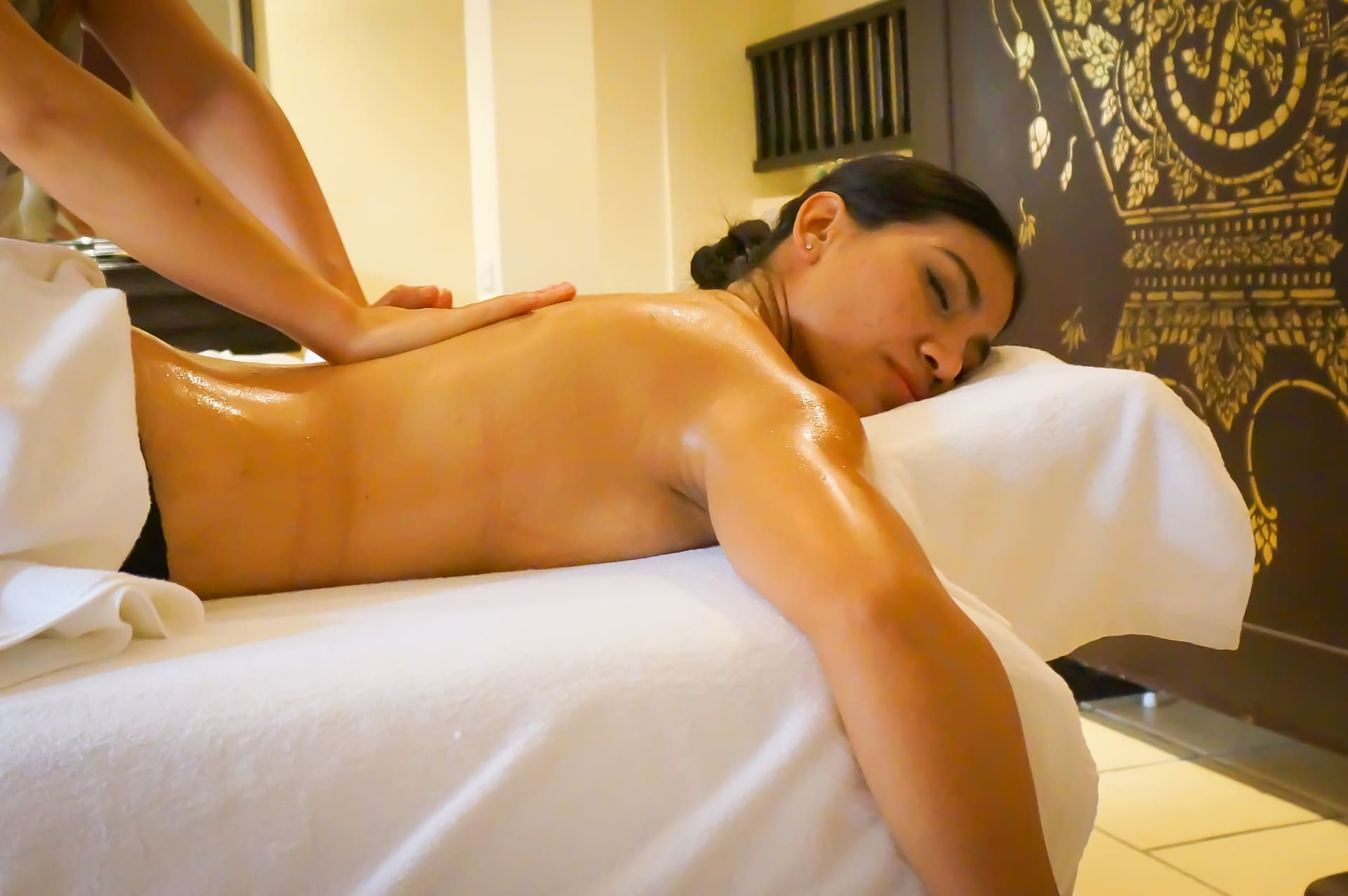
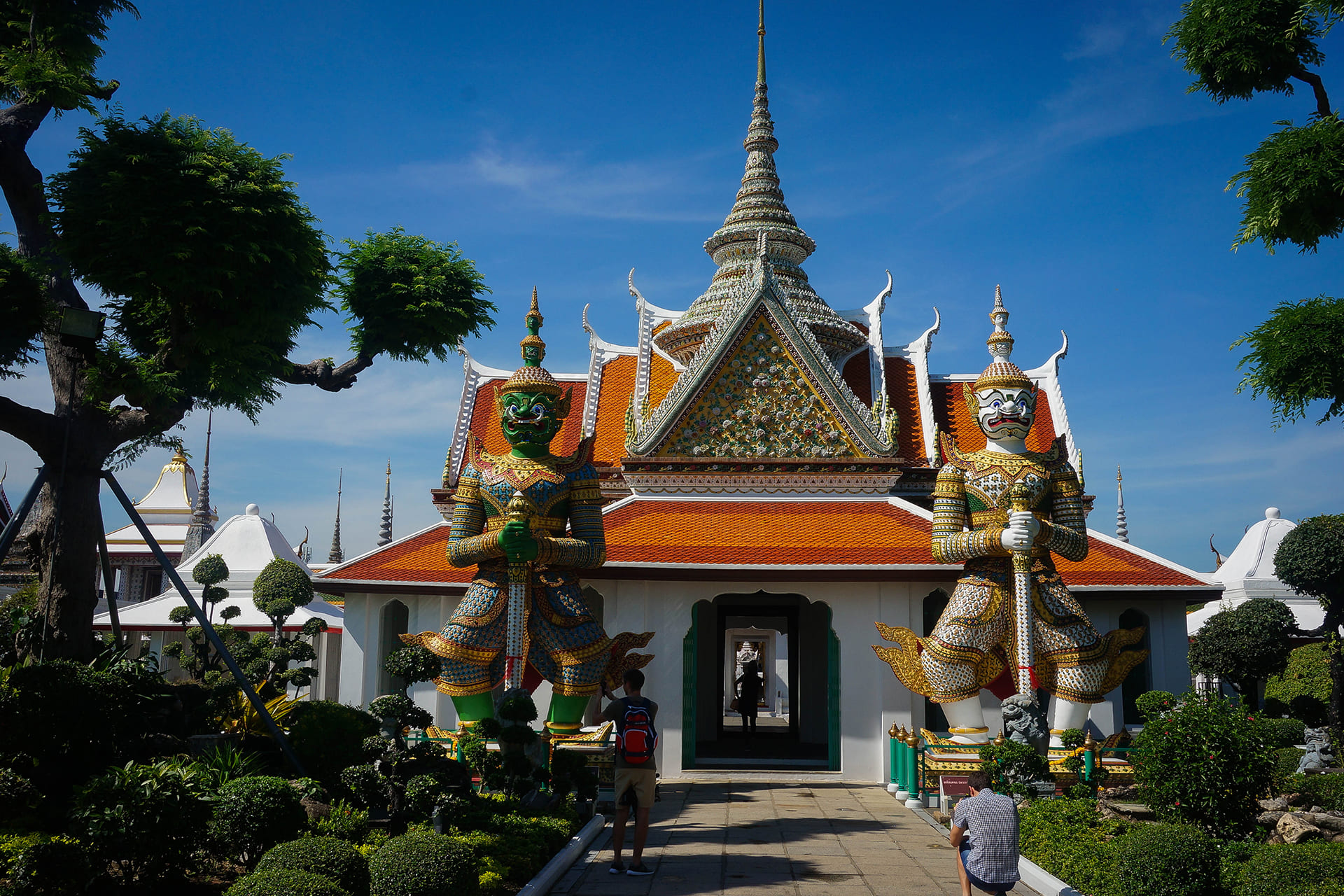
- Bangkok. Temples, markets, river transport and food don't depend on the swell; a downpour is waited out in a mall or café, and the city copes with rain better than many.
- The north: Chiang Mai and Chiang Rai. Also rainy season, but the north looks its best right after the rains: greenery, waterfalls at full force, mist in the mountains. Ethical elephant sanctuaries operate year-round.
- Food and cooking classes. A format entirely independent of the weather, and one of the most underrated ways to spend a rainy day.
- SPA and massage. Cheaper and queue-free in low season; exactly what many people come back for.
- Domestic flights. If the weather has turned on one coast for a while, a flight to the other takes an hour to an hour and a half and costs little - a real strategy for rescuing a holiday.
 Prices: how much you save in low season
August is low season for the Andaman coast, and that's the main argument in its favour. Hotels that are expensive and booked up in advance in January are available and noticeably cheaper in August. The flight from Poland, however, doesn't drop as much, because August is peak holiday season in Europe itself.
Travel from Warsaw: roughly 12-16 hours en route with one connection to Bangkok or Phuket; direct flights aren't always available and depend on the season - check the schedule for your dates
7 nights / 2 people in August: roughly PLN 9,000-18,000 with flights, depending on the hotel and destination; noticeably below the December-February level
Difference from high season: on Andaman accommodation the saving often reaches 30-50% for the same hotel
What doesn't get cheaper: domestic flights, excursions and food cost roughly the same year-round
A word on insurance. For Thailand in any season it's worth taking a policy covering medical treatment and evacuation, and all the more so in the monsoon, since some of the risk is tied specifically to the water and activities. If you're planning diving or a scooter, check they aren't excluded from cover: that's the most common place a policy turns out to be useless.
Entry rules when flying from Poland
Thailand is not connected to Schengen, so entry rules follow the nationality on your passport, not your Polish residence status. A Polish residence card grants no rights here and does not replace a passport. Rules changed noticeably in 2026, so check current requirements right before departure.
- Mandatory for everyone: the electronic TDAC arrival card (Thailand Digital Arrival Card). It replaced the paper form and is completed online before arrival, usually within the three days before entry. Registration is free - complete it only on the official immigration service website; paid intermediary sites are not needed.
- EU/EEA citizens, including Polish citizens: visa-free entry for tourism. The visa-free stay was revised in 2026 - Thailand decided to cut the previous 60-day period to around 30 days, so the exact length for your travel date needs checking.
- Non-EU residents of Poland: the rules depend entirely on your nationality. Some enter visa-free, others need a visa on arrival or a visa arranged in advance; Polish residence documents and a Schengen visa do not create the right to enter Thailand.
- For everyone: the passport must be valid for at least 6 months, and you may be asked for a return or onward ticket, proof of accommodation and funds. The right to reside in Poland or a Schengen visa has no bearing on entry to Thailand.
Quick comparison of the regions in August
Figures are approximate. The key difference isn't price or hotels - it's the state of the sea and the predictability of the plan.
| Region | Sea in August | Who it's for | Honest caveat |
|---|---|---|---|
| Phuket, Krabi, Khao Lak | Swell, currents, red flags | More than beach: town, spa, land | Swimming unpredictable, weak snorkelling |
| Samui | Calmer, the gulf in a quiet phase | Beach holiday, families | Reached via Bangkok, rain still happens |
| Pha Ngan | Calmer | Relaxed format, parties | Simpler infrastructure than Samui |
| Tao | Workable diving and snorkelling | Divers | Small island, limited hotel choice |
| The Similans and Surin | Closed until 15 October | No one - inaccessible in August | Move to October-May |
| Bangkok and the north | No sea | Cities, temples, food, nature | Humid, downpours, but plan free of swell |
Checklist before booking for August:
- Choose the coast deliberately: need a reliable beach → the Gulf of Thailand (Samui, Pha Ngan, Tao); happy with a mixed programme → the Andaman is cheaper.
- If the trip is for the Similans or Surin, move the dates: the parks are closed from 15 May to 15 October 2026.
- Check the hotel's pool area: on the west coast in the monsoon it substitutes for the sea more often than you'd like.
- Complete the TDAC in advance on the official site and don't pay intermediaries - the form is free.
- Confirm your visa-free stay length or need for a visa by nationality: the rules changed in 2026.
- Take insurance with medical evacuation and check that diving and scooters aren't excluded from cover.
- Don't put boat trips on the last day of the trip - they're the most likely to be postponed due to swell.
Common mistakes:
- Planning August on Phuket as a guaranteed beach holiday. The west coast in the monsoon gives swell, murky water and red flags; it's a month for a mixed programme, not daily swimming.
- Ignoring a red flag. It's a ban, not advice: rip currents pull you from shore in seconds, and a calm view from the beach guarantees nothing.
- Counting on the Similans. They're closed until 15 October, and no operator can take you there - it's a national park decision.
- Assuming "the rainy season" means rain all day. It's usually an hour to an hour and a half of downpour, more often after lunch; this myth makes people cancel perfectly workable trips.
- Choosing the Andaman when a reliable beach is exactly what you need. In the same August, Samui and the gulf offer a noticeably calmer sea - just switch coasts.
- Not checking visa terms. The visa-free period was revised in 2026, and entry depends on nationality - some of it is only sorted out at the airport.
The verdict
So is Thailand worth it in August 2026?
It is, if you choose the coast well and don't build the whole holiday around swimming. Rain in August is rarely the main problem: it comes in short bursts, with sun between them, and the temperature holds at a comfortable 28-32°C. The problem is the sea: the south-west monsoon drives up the swell on the Andaman, swimming on Phuket's west coast beaches becomes unpredictable, and the Similans and Surin are closed until 15 October. The solution, though, is simple and doesn't require changing countries - the Gulf of Thailand islands run out of phase, and in August the sea is noticeably calmer on Samui, Pha Ngan and Tao. On top of that, low season on the Andaman offers savings on accommodation of up to half the price. 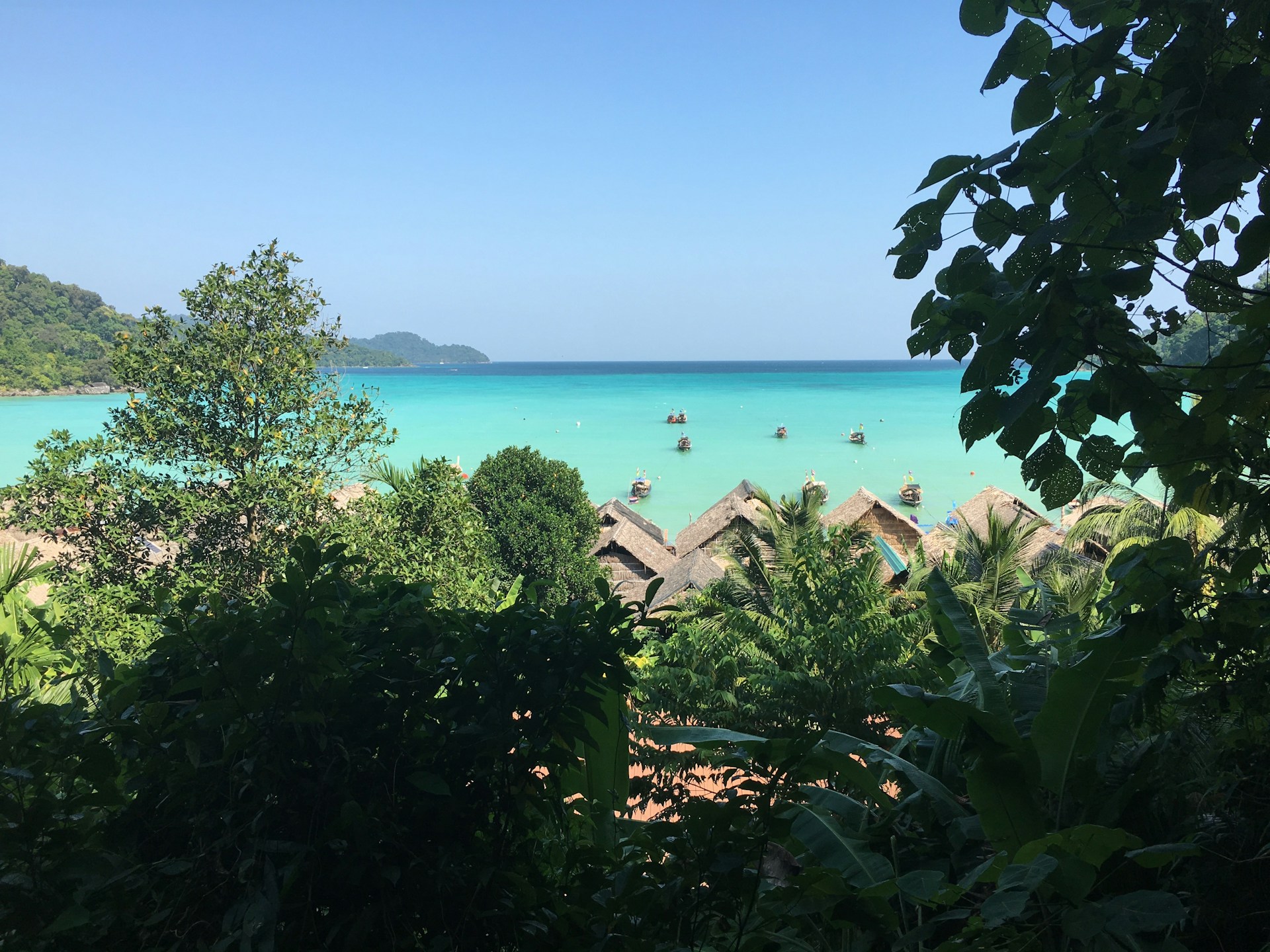
One last piece of advice:
If you're going in August, plan the route with some flexibility to spare: activity in the morning, boat trips not on the last day, and a domestic flight between coasts as a fallback - it takes an hour to an hour and a half and costs little. And if the trip was conceived for diving in the Similans, it's more honest to move it to the mid-October onward window: the same Thailand, but with open parks and clear water.



 Holidays


 Last minute


 Hotels


 Blog
Blog