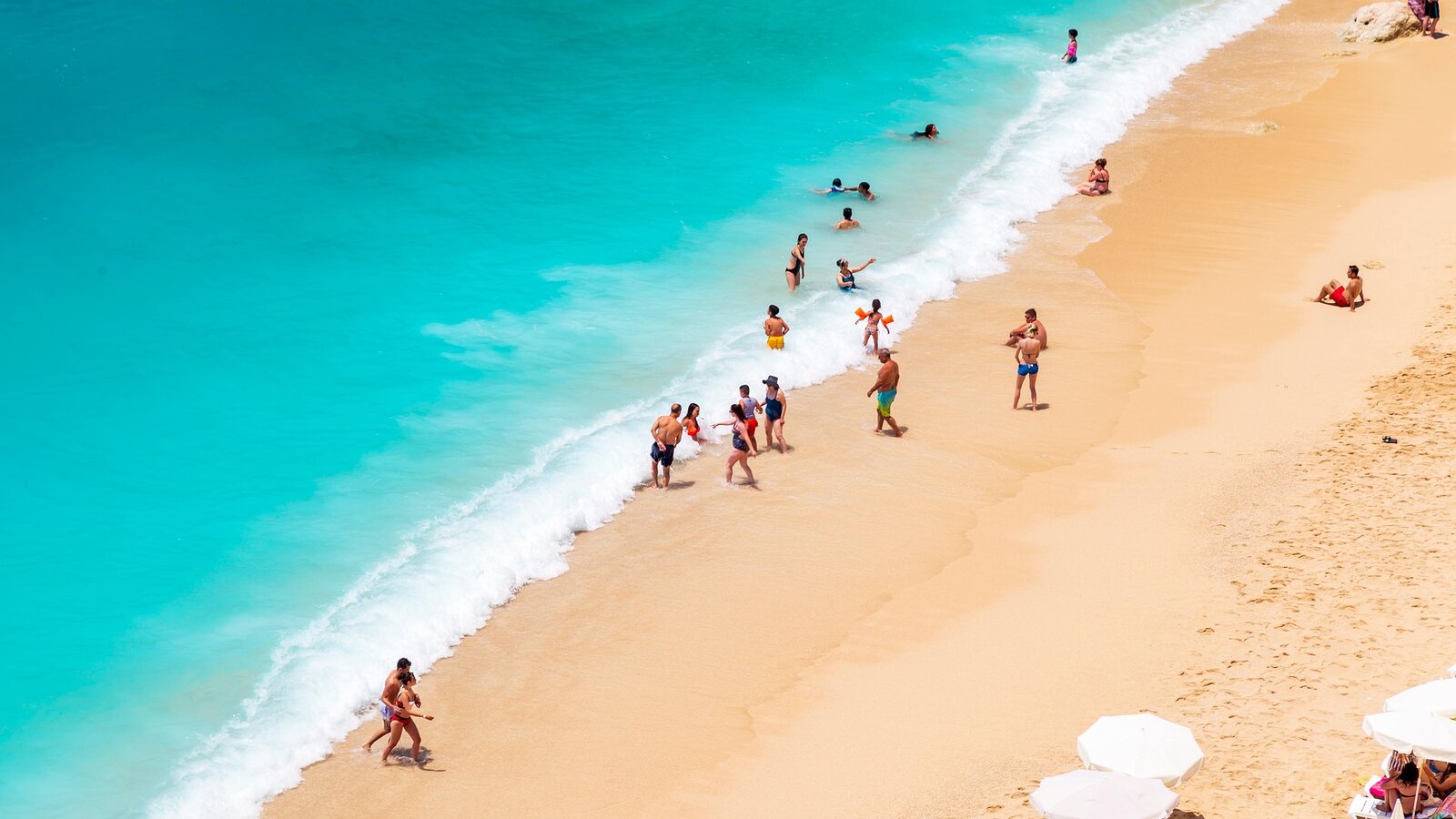
In August, Turkey makes you choose. The heat is severe enough that the country splits into places you can be and places you can only endure, and picking the wrong coast or the wrong inland excursion costs you days of the holiday. September removes the choice entirely. For roughly four weeks, and only these four, the Mediterranean sits at its annual sea peak of 27-28°C while Cappadocia drops to a walkable 26-28°C by day and Istanbul becomes a city you can actually cross on foot. No other month in the Turkish calendar puts the beach, the highlands and the city in season at the same time - in July the interior is punishing, and by November the coast has closed for the year.
That overlap is the real argument for September, and it's also the thing most guides miss, because they treat Turkey as a beach destination with excursions attached rather than three separate holidays that happen to briefly coincide. Below: how the month actually moves week by week, why the Mediterranean and the Aegean drift apart as September goes on, exactly when the window shuts, what a week costs now that the accommodation tax has changed, and the entry rules - which depend on the passport you hold, not on where you live.
- Short answer, no preamble → Who should and shouldn't
- Why everything overlaps this month → The September window
- Mediterranean or Aegean → The two coasts diverge
- Balloons and cool nights → Cappadocia and the interior
- The city at its best → Istanbul in September
- When it all ends → How the window closes
- Costs and the tax change → Prices in 2026
- Entry rules by passport → Visas and documents
- Compare the regions → Comparison table
Short answer: who should go, and who shouldn't
If you want the answer without the full article - September is arguably the best month of the Turkish year, with one significant caveat about which half of it you book.
Worth going: for anyone wanting to combine a beach with Cappadocia or Istanbul in a single trip, for couples and adults travelling after the school holidays end, and for those who want August's sea temperature without August's prices or crowds
Not worth going: for families tied to the first week who wanted lower prices (the drop comes once European schools return), for anyone whose plan is a late-September Aegean beach holiday, and for travellers wanting guaranteed hot swimming weather right through to the end of the month
The compromise: the middle two weeks of September on the Mediterranean coast - the sea is still at its peak, the crowds have thinned, prices have fallen, and inland excursions are finally comfortable rather than punishing
 What follows are the details behind that answer.
The September window: why everything works at once
Turkey's problem as a destination is that its best assets peak at different times. The coast needs warm water, which arrives late. The interior needs moderate air, which summer destroys. Istanbul needs weather you can walk in, which July and August don't provide. September is the short period when all three conditions hold simultaneously.
| Region | Air, early Sept | Air, late Sept | Sea | Status in September |
|---|---|---|---|---|
| Mediterranean (Antalya, Side, Belek) | 31-34°C | 28-31°C | 27-28°C | Peak sea, full season |
| Aegean (Bodrum, Çeşme, Kuşadası) | 29-32°C | 26-29°C | 25-26°C | Good, but cooling faster |
| Cappadocia | 27-30°C day | 23-26°C day | No sea | Best season of the year |
| Istanbul | 27-29°C | 23-26°C | Not a swimming city | Best season of the year |
| Pamukkale and the interior | 32-35°C | 28-31°C | No sea | Workable from mid-month |
The practical consequence is that September is the one month where a combined itinerary genuinely makes sense: a week on the coast plus two or three days in Cappadocia, or a coastal stay bookended by a few days in Istanbul. Attempt the same thing in July and the inland half is spent hiding from 38°C; attempt it in November and the coastal half has no sea to speak of. This is also why September fills up with a different kind of traveller than August - fewer families with small children, more couples and independent travellers building multi-stop trips.
 The two coasts diverge as the month goes on
Both Turkish coasts work in September, but they don't work equally, and the gap widens week by week. The Mediterranean holds its warmth far longer; the Aegean cools noticeably faster.
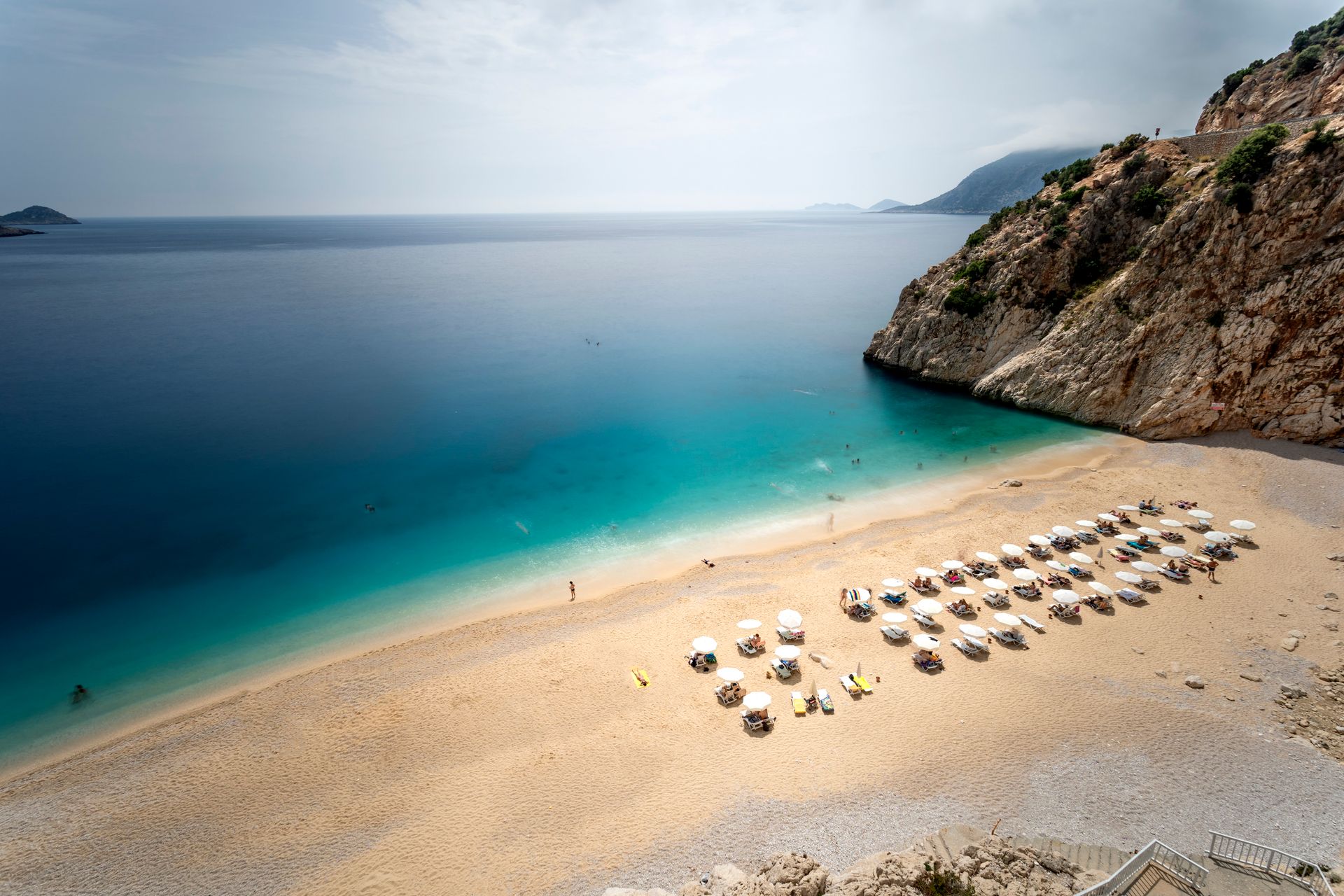
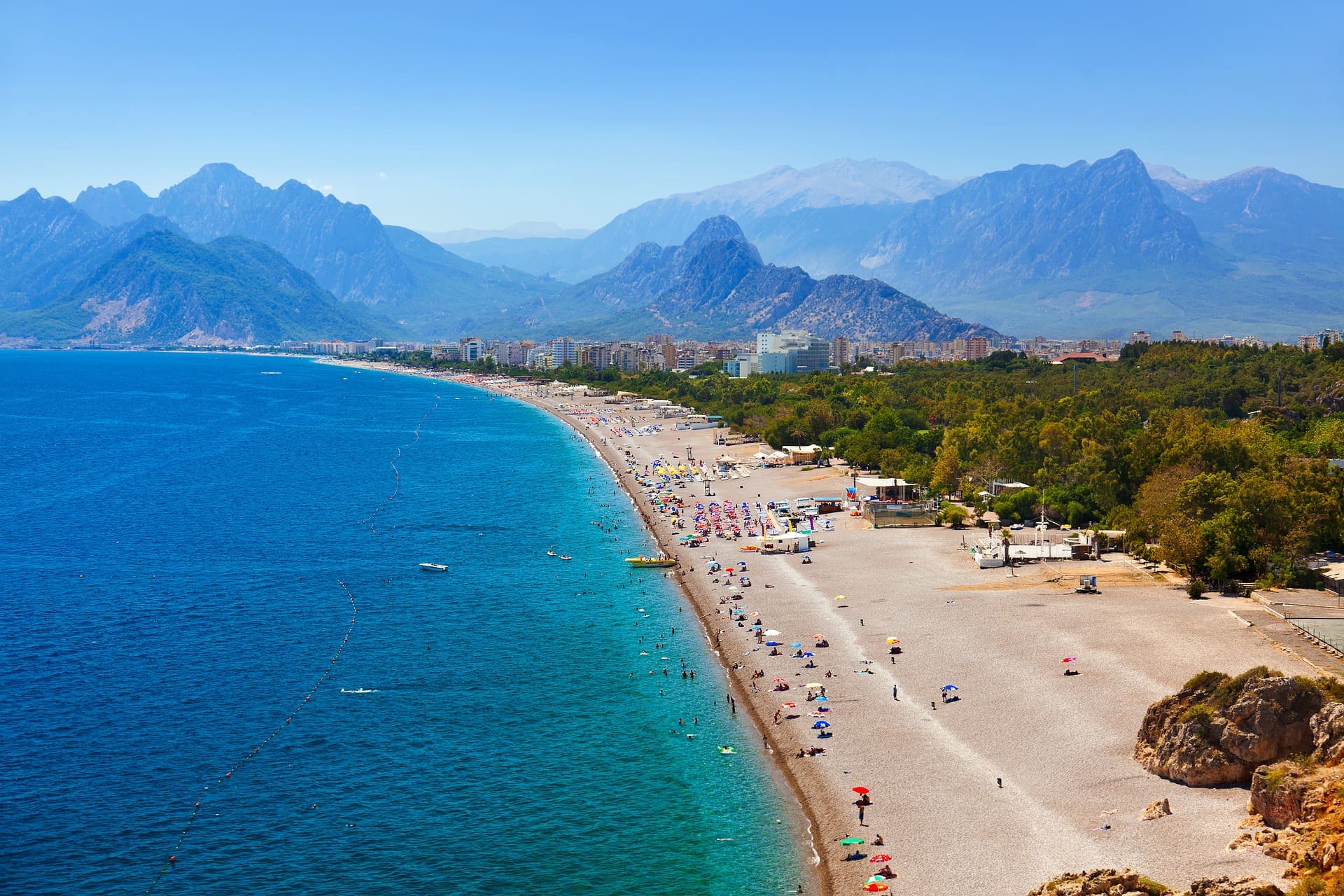
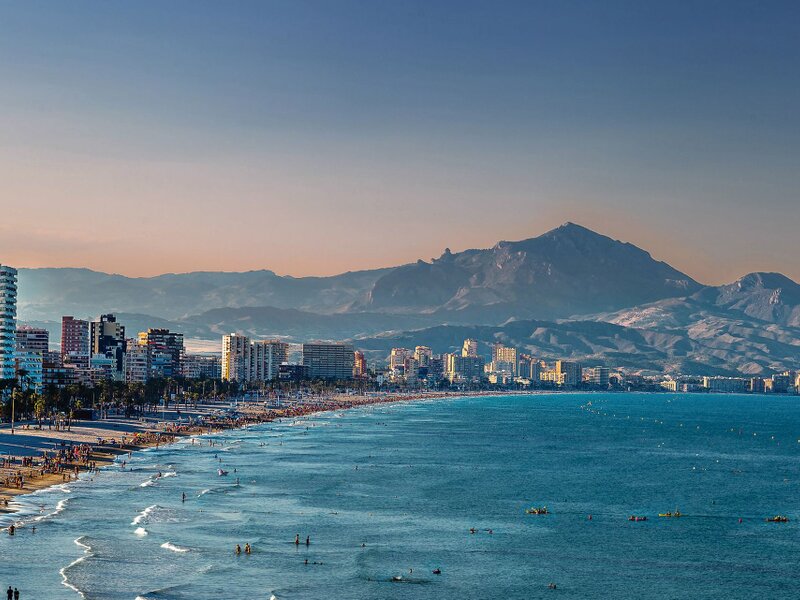
Mediterranean coast: sea at 27-28°C essentially all month, and still swimmable well into October - this is the safer choice if the beach is the point of the trip
Aegean coast: sea at 25-26°C and dropping; by the last week, evenings turn genuinely cool and some smaller resorts start winding down
The meltemi: the northerly summer wind that shapes the Aegean in July and August eases through September, so the water is calmer and boat trips are cancelled less often
Practical rule: first half of September, either coast works; second half, the Mediterranean is the clearly better bet for swimming
Who is it for
The Mediterranean around Antalya, Side and Belek suits anyone who wants the beach to be the reliable centre of the trip, families included, and it has the deepest all-inclusive infrastructure in the country. The Aegean around Bodrum and Çeşme suits travellers who want more town life, better restaurants and a less resort-shaped holiday, and who can accept slightly cooler water. It's not worth choosing the Aegean for the last week of September if swimming matters most to you - the sea has cooled, the evenings need a jacket, and you'd get a better beach holiday on the Mediterranean coast for the same money. Equally, it's not worth choosing a large all-inclusive resort if what you actually want from September is the combined itinerary; the resort format quietly discourages leaving.
 What to do
- Book any boat trip for September rather than August if you have the choice - the meltemi has eased and cancellations are far less frequent.
- Take the Lycian coast between Fethiye and Kaş seriously: the water is at its warmest and the summer crowding has gone.
- Visit Ephesus in the morning from the Aegean coast - in September it's finally walkable, unlike the midday furnace of high summer.
- Eat in the towns rather than the resort strips; September is when restaurants stop running at capacity and service returns to normal.
- Swim in the late afternoon - the sea holds its heat while the air has started to drop, which is the most comfortable combination of the day.
Cappadocia and the interior: this is the month
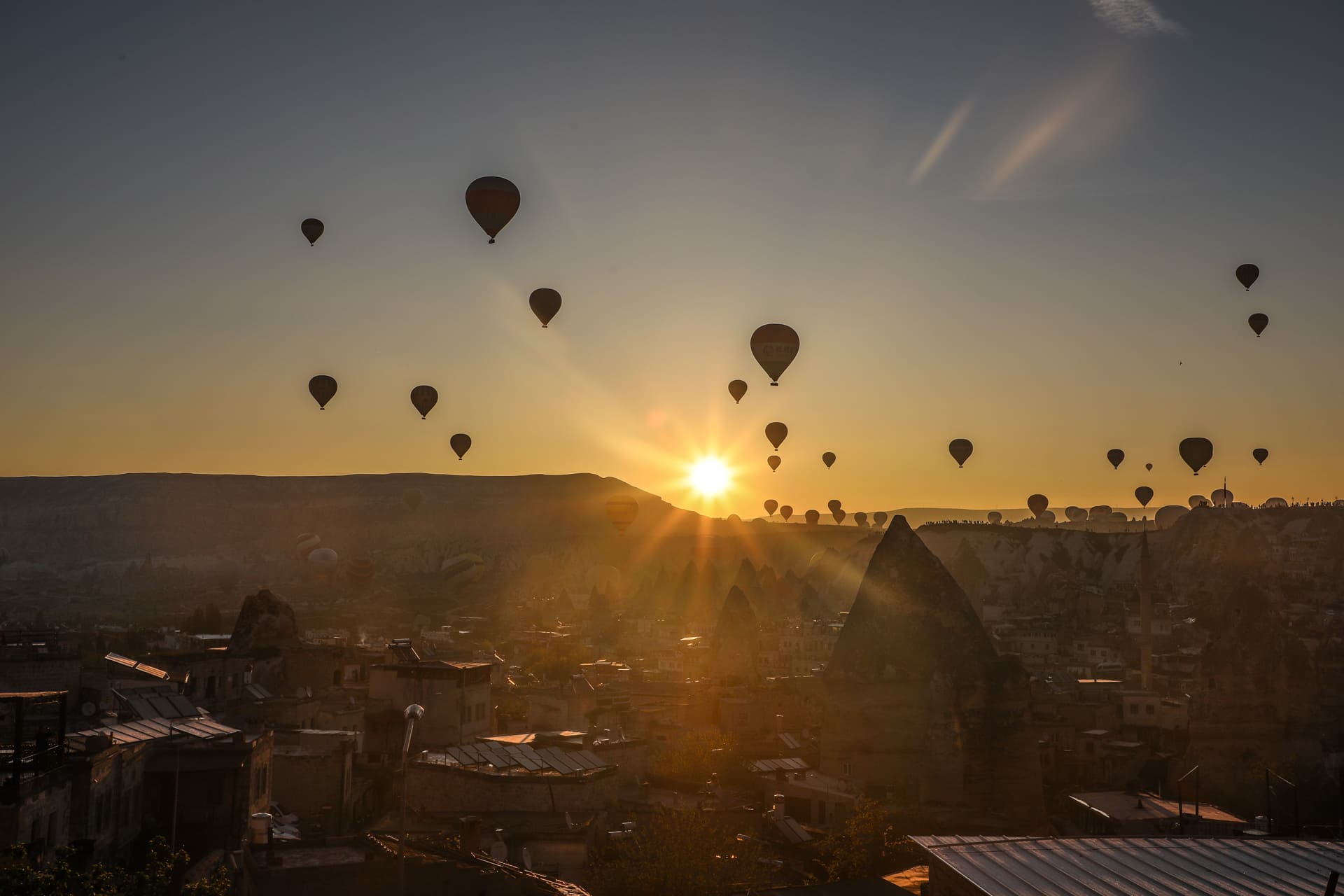
Cappadocia is where September's advantage is most obvious. The region sits over 1,000 metres above sea level, which makes summer days hot and dry and winter mornings bitter. In September the days settle into the mid-to-high twenties and the nights cool sharply - and that combination is exactly what the balloon flights need.
Balloon flights: launch around dawn and depend entirely on wind conditions; September has one of the highest rates of flights actually going ahead, though cancellations remain possible in any month
Temperature swing: 26-28°C by day early in the month, but nights fall to around 10-12°C by late September - pack a proper layer, not just a light jacket
Booking: balloon slots for September sell out well in advance, and a cancelled flight is usually rescheduled to the next morning, so build in a spare day
Getting there: domestic flights from the coast typically route via Istanbul or Ankara; allow a full travel day in each direction
 Who is it for
Cappadocia in September suits couples, photographers and anyone who wants the trip to contain something other than a beach. It works well as a two-to-three-night add-on rather than a standalone week. It's not worth adding if your total holiday is only seven days and the beach is the priority - the travel days eat a disproportionate share of a short trip, and you'd arrive in Cappadocia tired. It's also a poor fit for travellers who won't get up before dawn, since the balloons, the light and the quiet all belong to the early morning.
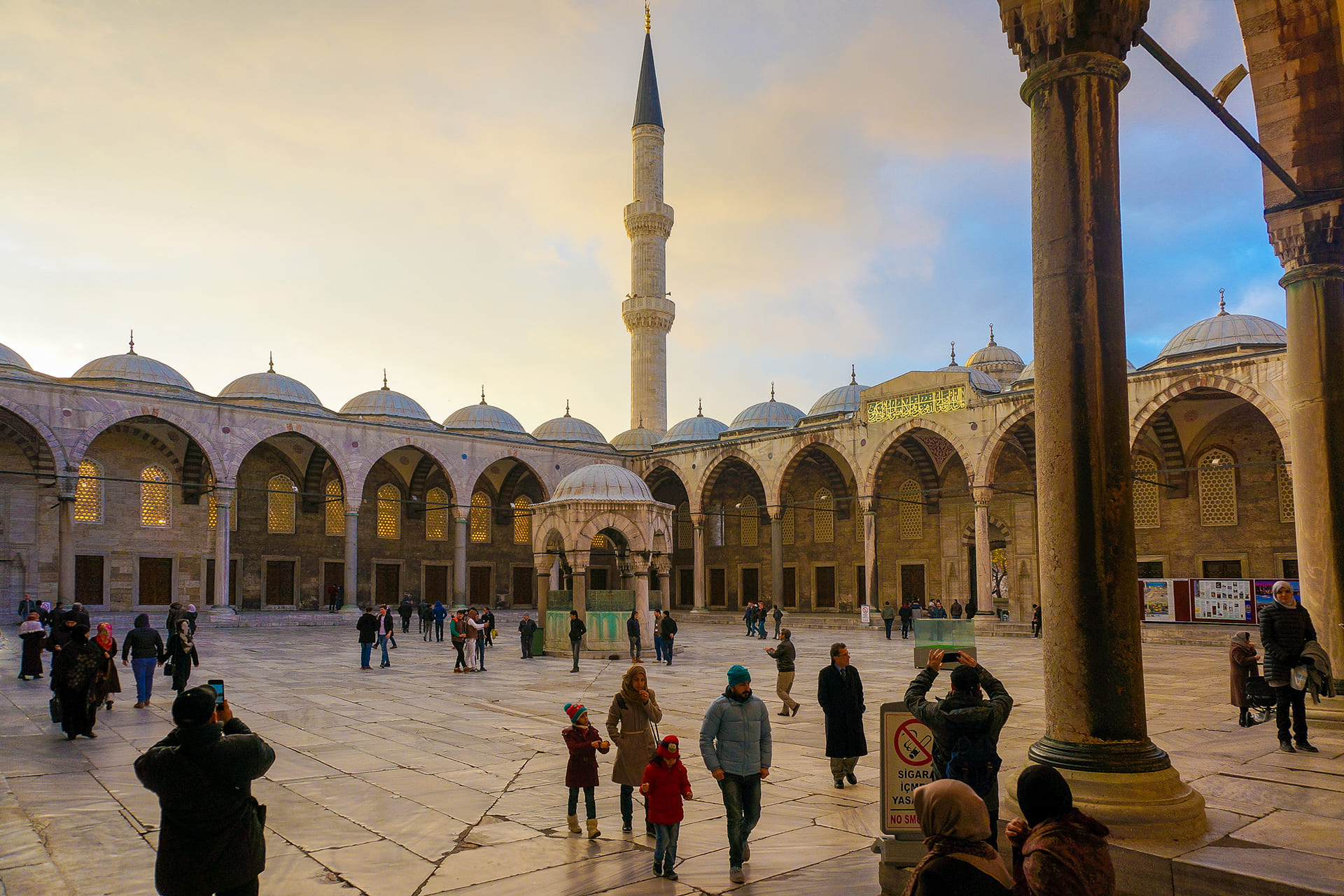
Istanbul in September: the city becomes walkable again
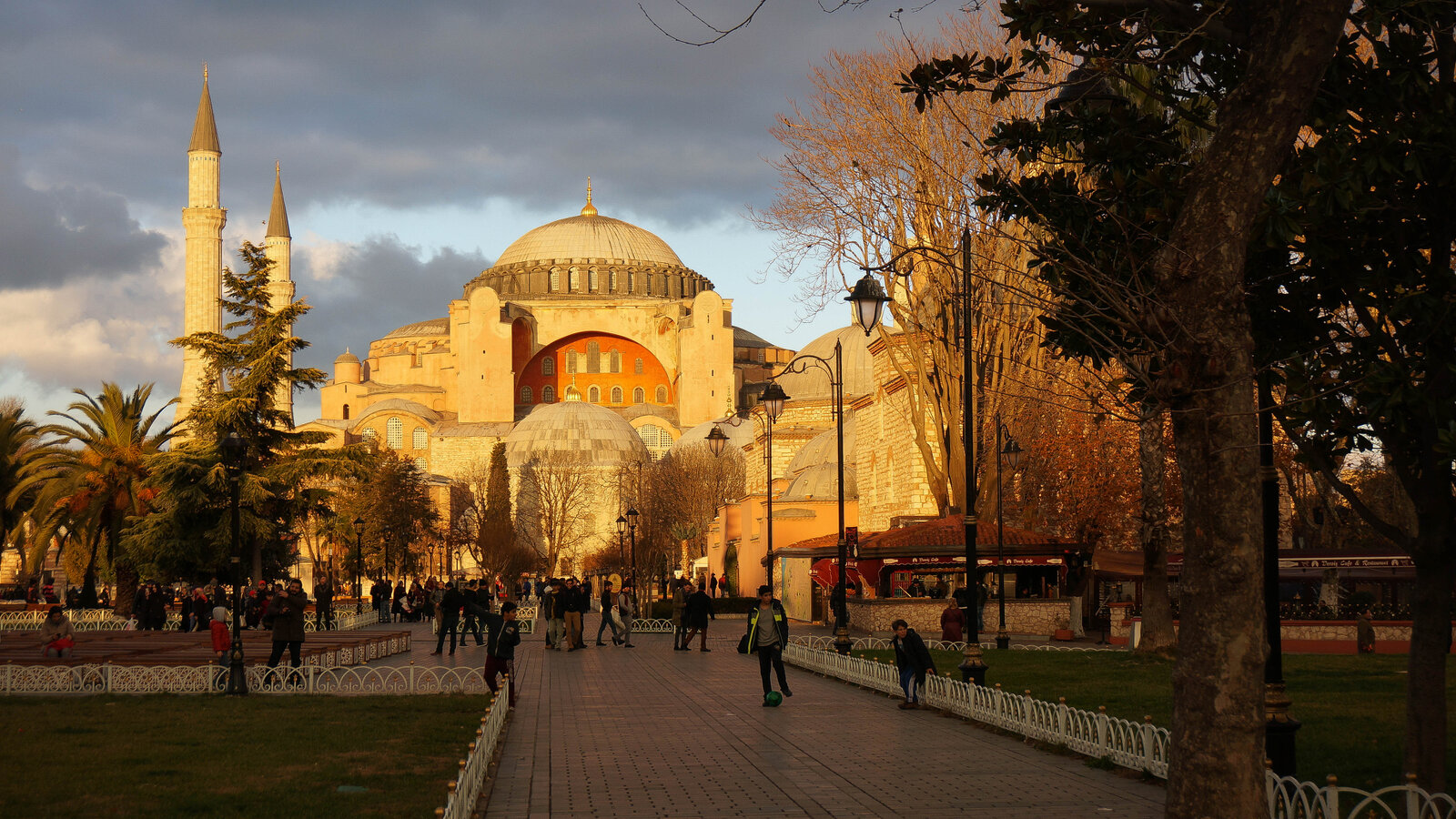
Istanbul in July and August is hot, humid and crowded in a way that undermines what the city is for. September changes that. Daytime temperatures ease into the mid-to-high twenties, humidity drops, and the long walks that Istanbul rewards - between the old city, the Bosphorus and the neighbourhoods on the Asian side - stop being an endurance exercise.
It also pairs naturally with a coastal week. Flights from Warsaw to Istanbul run around three hours, and internal connections onward to the coast are frequent and cheap, so a few days at the start or end of the trip cost relatively little in logistics. If you've been to Turkey several times for the beach and never seen the city, September is the month to fix that.
Who is it for
Istanbul suits travellers who want food, history and urban life, and it's one of the strongest city destinations within a three-hour flight. It's not worth adding if you're travelling with small children and a fixed beach plan - the city demands walking, crowds and public transport, and after a week of resort routine it can be a difficult adjustment. It's also not a swimming destination in any sense, so treat it as a separate component rather than an extension of the beach holiday.
 How the window closes
September's overlap is real but short, and it ends unevenly. Knowing the sequence helps you decide how late in the month to travel.
What changes and when:
- Early September. Effectively late summer: hot on both coasts, still busy in the first week while some European school holidays run on, prices only starting to fall.
- Mid September. The sweet spot. Prices have dropped, crowds have thinned, the sea is still at its peak on both coasts, and inland temperatures have become comfortable.
- Late September. The Aegean begins to cool and evenings need a layer; Cappadocia nights drop towards 10°C; the Mediterranean is still fully in season.
- Early October. The Mediterranean coast still swims well, but smaller Aegean resorts start closing hotels and restaurants for the season.
- Late October onwards. Coastal season effectively over outside Antalya; Istanbul and Cappadocia continue year-round but with cold, wet weather arriving.
The takeaway: if your dates are flexible, mid-September is the strongest fortnight of the Turkish year. If you can only travel at the end of the month, choose the Mediterranean coast rather than the Aegean, and don't build the trip around swimming if you're going later still.
Prices in 2026: the drop and the tax change
September's pricing follows the European school calendar more than the weather. Once schools return, demand falls sharply while the sea stays exactly as warm as it was - which is the clearest price-to-weather mismatch Turkey offers all year.
Flight from Warsaw: around 3 hours to Antalya or Bodrum, around 2hr 50min to Istanbul, with direct flights and charters running throughout September
7 nights / 2 people, all-inclusive: roughly PLN 5,000-12,000 depending on the resort, hotel category and how early in the month you travel
Compared with August: the same hotel typically drops substantially once the school holidays end, with the largest fall between the first and third weeks of the month
Accommodation tax in 2026: Turkey temporarily cut its accommodation tax from 2% to 1%, effective from 1 May 2026 until the end of the year. Unlike the per-night tourist taxes in Greece or Spain, it's levied on the accommodation provider and normally built into the price rather than collected separately at check-in
A note on how this differs from other Mediterranean destinations: in Spain and Greece you should budget a separate per-person, per-night charge paid at the hotel. In Turkey the equivalent is a percentage tax on the operator's revenue, so in practice it's already inside the rate you were quoted. It's worth knowing mainly so you don't expect an extra bill - and so you can query it if a hotel tries to add one on top.
 Practicalities and entry rules
Turkey is not in the Schengen area, so entry depends on the nationality in your passport rather than your residence status in Poland. A Polish residence card doesn't extend Schengen rights here, because Schengen rights don't apply. Rules change, so confirm before booking.
Entry rules when flying from Poland
- EU/EEA citizens, including Polish citizens: visa-free for tourism, generally up to 90 days within any 180-day period. Many EU nationalities, Poles included, may enter on a national ID card rather than a passport, though a passport is usually the smoother option at the border.
- Non-EU residents of Poland: your entitlement follows your passport's nationality, not your Polish residence permit. Some nationalities are visa-free, others need an e-visa arranged in advance, and the permitted length of stay varies considerably between them. Polish residence documents do not create identical entry rights for every nationality.
- If you need an e-visa: apply only through the official Turkish government portal. Numerous third-party sites charge several times the official fee for the same document.
- For everyone: check the passport validity your nationality requires for Turkey - it varies, and several nationalities need validity well beyond the dates of the trip itself. Confirm the specific requirement before you book.
Other things worth knowing in September:
- Sun is still strong. September sun on the Turkish coast burns much like August's; the cooler air simply hides it better. Sunscreen and midday shade still apply.
- Evenings need a layer. By late September, coastal evenings and Cappadocia nights are genuinely cool - most people underpack for this.
- Currency and cards. Cards are widely accepted in resorts and cities; carry some cash for markets, small towns and taxis, and use official exchange offices rather than street changers.
- Insurance. Take a policy covering medical treatment and evacuation, and check that any watersports or paragliding you plan is actually included - it's a common exclusion.
- Modesty at religious sites. Mosques require covered shoulders and knees, and women need a headscarf; most major mosques provide coverings at the entrance.
Quick comparison of the regions
Figures are approximate. The key difference in September isn't price - it's how long each region stays in season. 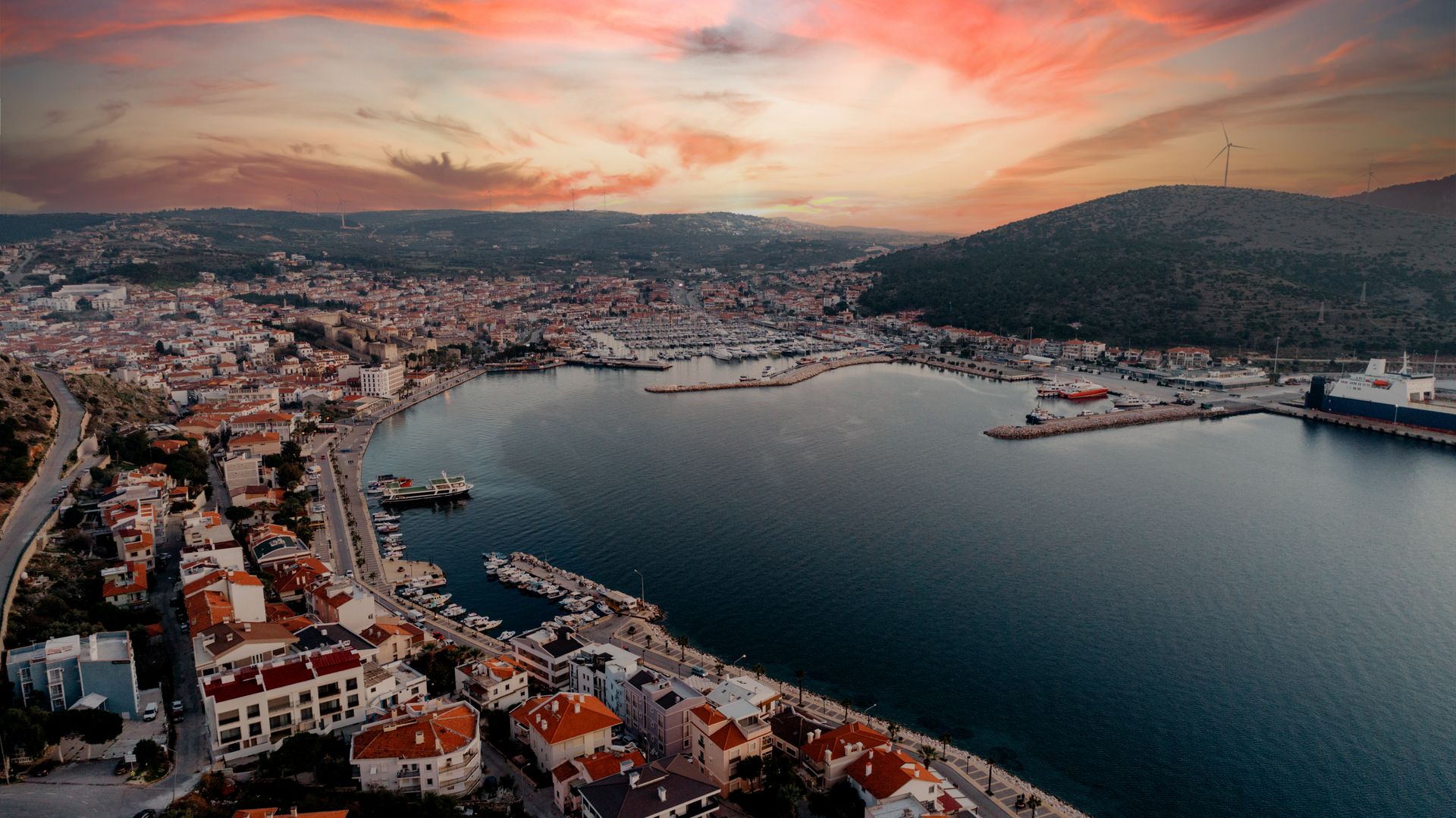
| Region | Who it's for | Sea in September | Stays in season until | Honest caveat |
|---|---|---|---|---|
| Antalya, Side, Belek | Families, reliable beach | 27-28°C | Well into October | Most resort-shaped, least local character |
| Lycian coast (Fethiye, Kaş) | Couples, scenery, boat trips | 27-28°C | Into October | Hillier, more transfers, fewer huge resorts |
| Bodrum, Çeşme | Town life, food, nightlife | 25-26°C | Late September | Cools faster; late-month swimming is marginal |
| Kuşadası | Beach plus Ephesus | 25-26°C | Late September | Busy with cruise traffic on peak days |
| Cappadocia | Balloons, landscape, couples | No sea | Year-round, best now | Cold nights; needs a spare day for balloon reschedules |
| Istanbul | City, food, history | No sea | Year-round, best now | Demanding pace after a resort week |
Checklist before booking for September:
- Decide whether you want a beach week or a combined trip - September is the only month when the combination genuinely works, so it's worth using.
- Travelling in the second half of the month? Choose the Mediterranean over the Aegean for swimming.
- Aim for mid-September if you can: prices have fallen, the sea hasn't.
- Book balloon flights in Cappadocia well in advance, and leave a spare morning in case of a weather reschedule.
- Check the entry requirements for your specific passport, including the passport validity rule, which varies by nationality.
- If you need an e-visa, use only the official government portal.
- Pack a warm layer for evenings and for Cappadocia nights, not just beachwear.
- Confirm your insurance covers any watersports or paragliding you're planning.
Common mistakes:
- Booking the Aegean for late September expecting August water. It cools noticeably faster than the Mediterranean, and by the final week evenings need a jacket.
- Treating September as a pure beach month. It's the one month the interior and the cities are also at their best - building the trip around the coast alone wastes the overlap.
- Booking Cappadocia for a single night. Balloon flights get cancelled for wind, and with no spare morning you simply lose the thing you came for.
- Expecting the first week to be cheap. The price drop tracks the school calendar, not the date - it arrives once European schools have returned.
- Underestimating September sun. Cooler air masks the same UV as August, and burns still happen on day one.
- Assuming a Polish residence card governs entry. Turkey isn't in Schengen - your passport's nationality determines both the visa requirement and the permitted stay.
The verdict
So is Turkey worth it in September 2026?
It is, and more than in most months - because September is the only point in the year when Turkey stops making you choose. The Mediterranean sits at its warmest of the entire year at 27-28°C, which is warmer than the Aegean manages even in August. Cappadocia and Istanbul, both largely unusable in the July heat, reach their best conditions in the same weeks. Meanwhile the prices fall away once European schools go back, and the accommodation tax was temporarily halved to 1% for the rest of 2026. The one genuine caveat is the Aegean, which cools faster than people expect: if you're travelling in the last week of the month and swimming is the priority, the Mediterranean coast is the safer booking.
 One last piece of advice:
Use the overlap rather than ignoring it. If you've been to Turkey several times and only ever seen a resort, September is the month to add three days in Cappadocia or Istanbul to the end of a coastal week - in July that combination is an ordeal, and by November half of it has shut down. It's a narrow window, and it's the main reason to pick this month over any other.




 Holidays


 Last minute


 Hotels


 Blog
Blog