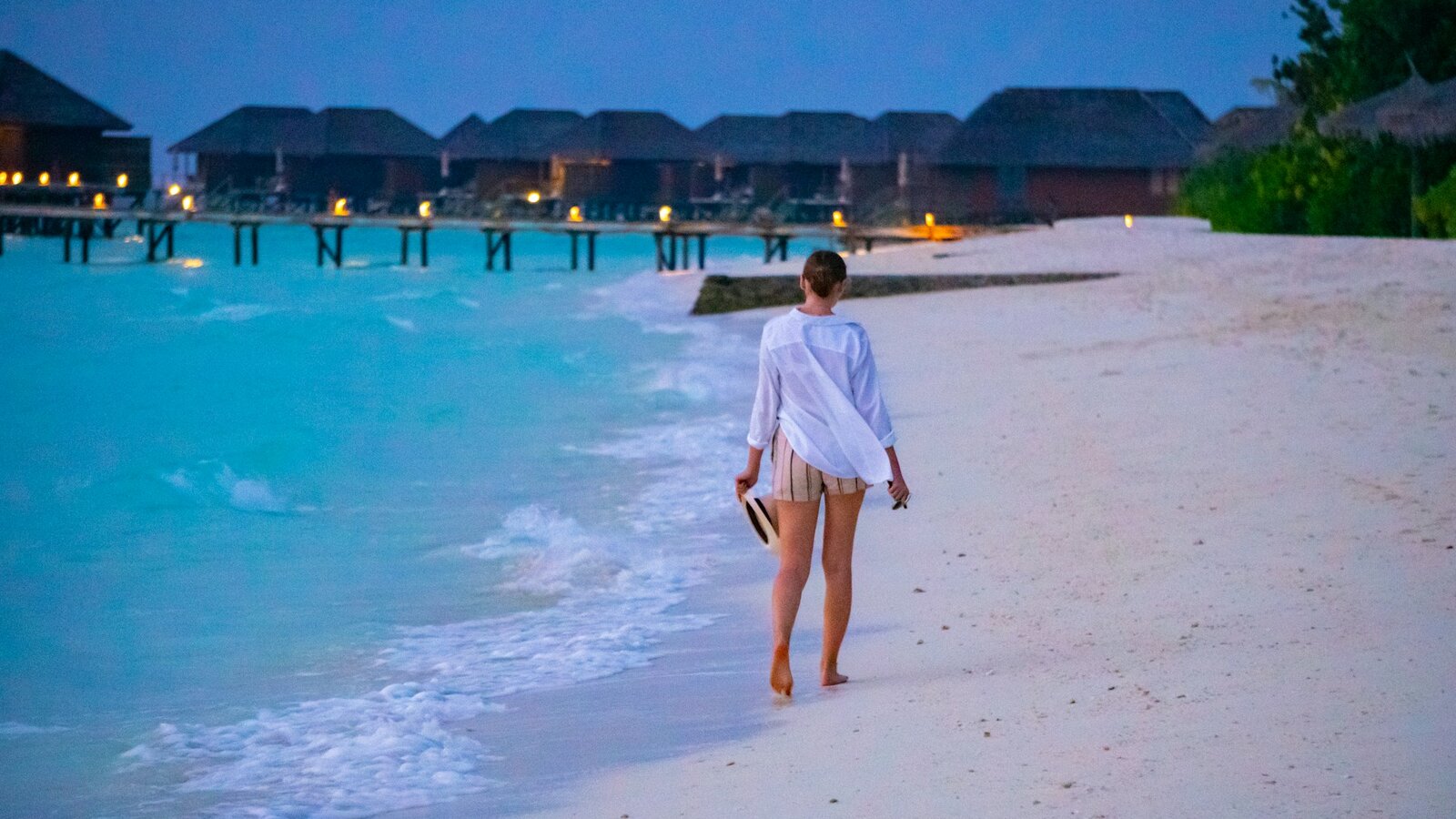
The same overwater villa costs 30–50% less in July than in January — and there's no catch in that discount beyond a single word: monsoon. From May to November the Maldives lives through the wet hulhangu season, and the question "is summer worth it" really means something else: are you willing to trade a guarantee of cloudless sky for a half-empty island, a price a third lower, and the chance to swim beside manta rays that simply aren't there in those numbers in winter. The answer depends on what you're flying for in the first place — and on the month: June, July and August only look alike at first glance.
Below: how summer rain in the Maldives actually works (spoiler: it is not "two weeks under a grey sky"), a month-by-month breakdown of each summer month, advice on choosing an island for the monsoon, and the practical side — flights from Poland, the taxes that went up in 2025, and a visa that, unusually, is equally free for every passport.
- Understand how the monsoon works → What summer actually means here
- The start of manta season, the fewest people → June
- Peak surf and the best sun-to-price balance → July
- Hanifaru Bay in full swing → August
- Resort or local island, north or south → Choosing an island in summer
- Summer versus high season in numbers → Comparison
- Visa, taxes, the IMUGA declaration → Entry rules
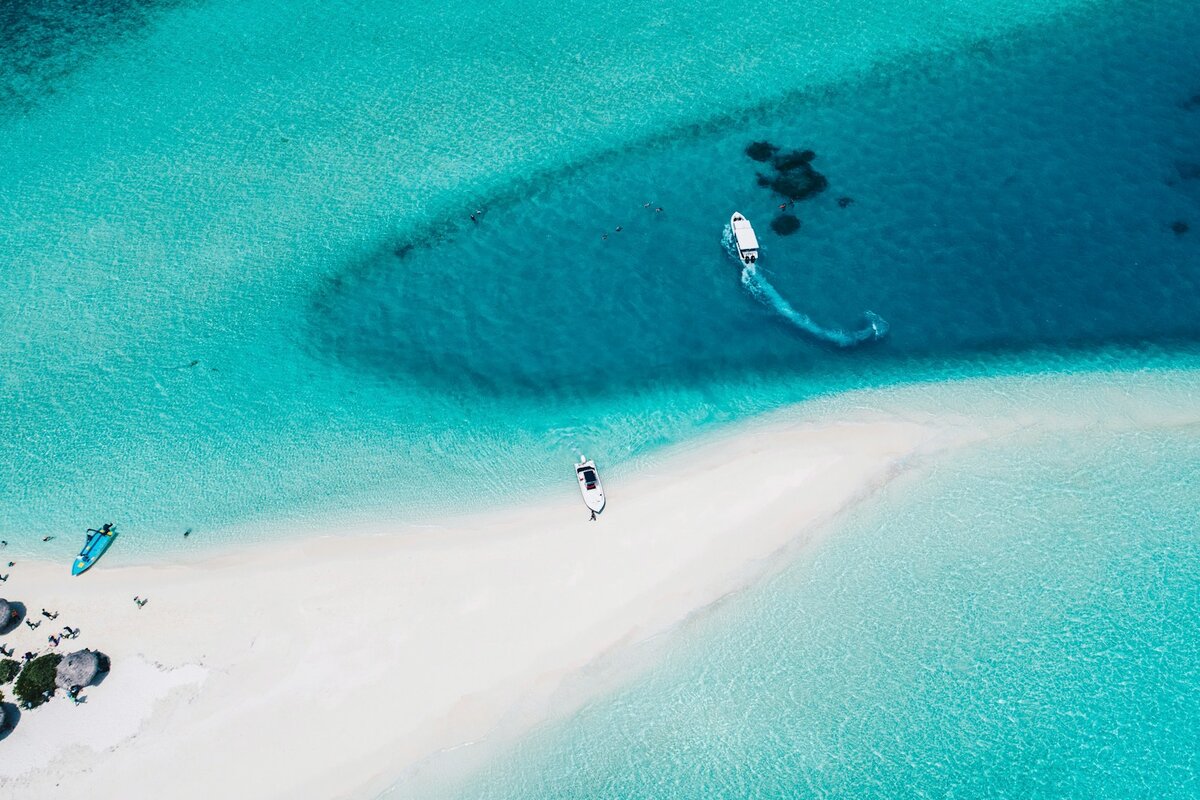
What summer in the Maldives actually means
The year here divides not into four seasons but two monsoons: the dry north-easterly iruvai from December to April and the wet south-westerly hulhangu from May to November. The summer months sit in the middle of the wet one — but "wet" on the equator works differently from the two-week downpour most people picture. Rain usually arrives in short, heavy bursts of an hour or two, typically in the afternoon, after which the sky clears — on average you still get 6–7 hours of sunshine a day even in mid-monsoon. Temperatures, meanwhile, barely move all year: air at +27–30°C, water at +28–29°C — swimming is on in any month without exception.
Three things worth knowing about summer weather in advance. First: there are no cyclones or hurricanes in the Maldives — the archipelago sits right on the equator, outside the tropical storm belt, so "monsoon" does not mean "disaster". Second: the summer wind blows from the south-west, so the sea is livelier, boat crossings are bumpier, and western beaches can see waves and washed-up seaweed — all fixable by choosing the right side of the island and the villa. Third: the archipelago stretches 900 km from north to south and microclimates are real — on the same day it can rain on one island while the sun shines on its neighbour; the northern atolls are on average slightly drier than the southern ones in summer.
And the main reason summer is worth considering at all: the south-west monsoon brings plankton into the water, and with it come manta rays and whale sharks. Hanifaru Bay in Baa Atoll (a UNESCO biosphere reserve) gathers the world's largest manta aggregations from June to November — on a good day, dozens or even hundreds of rays in a single bay. In winter, in the "perfect" season, you won't see anything like it.
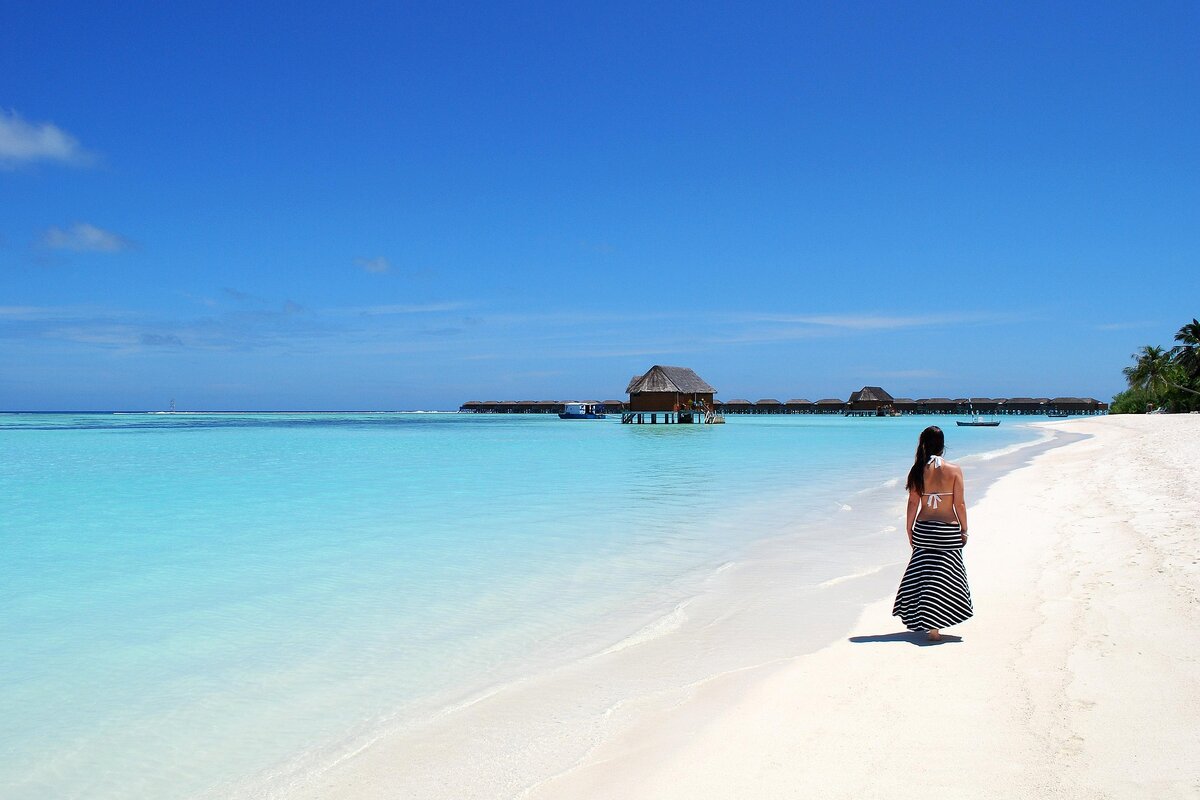
June: the fewest people and the start of manta season
"The quietest month of summer — for those who want the island almost to themselves"
The first full month of the monsoon: the rain is now regular, tourist numbers are the lowest of the entire year, and hotels hand out their boldest discounts. The sea has more energy than in winter — speedboat crossings can splash — but the water is still the same +28°C. Underwater, the main event begins: plankton-rich currents kick off the Hanifaru Bay season, and the first big manta gatherings arrive precisely in June. Surfers are already catching consistent swells on the Malé atolls.
| Measure | June |
|---|---|
| Air (day) | +27–30°C |
| Water | +28–29°C |
| Rain pattern | Short bursts, mostly afternoons; 6–7 hrs of sun a day |
| Prices | Among the lowest of the year, 30–50% below winter |
| Headline event | The manta season opens in Hanifaru Bay |
Who is it for
The best month for couples who value seclusion and price over a guarantee of postcard skies, and for divers and snorkellers chasing mantas at the start of the season. Not worth it in June if the whole point of the trip is flawless photos with an even blue horizon and sunbathing to a schedule: there will be more cloudy frames than the brochures suggest.
What to do
- Book a resort or guesthouse in Baa Atoll close to Hanifaru Bay — early in the season there are fewer boats in the bay than in August
- Take a first surf lesson on Thulusdhoo or at the North Malé schools — the swells are already consistent while the waves are still forgiving
- Ask for a villa on the eastern, leeward side of the island when booking — fewer waves and less seaweed
- Keep an evening free for sunsets: the humidity gives post-rain skies the most dramatic colours of the year
July: peak surf and a workable sun-to-price balance
"Mid-monsoon — yet often sunnier than August"
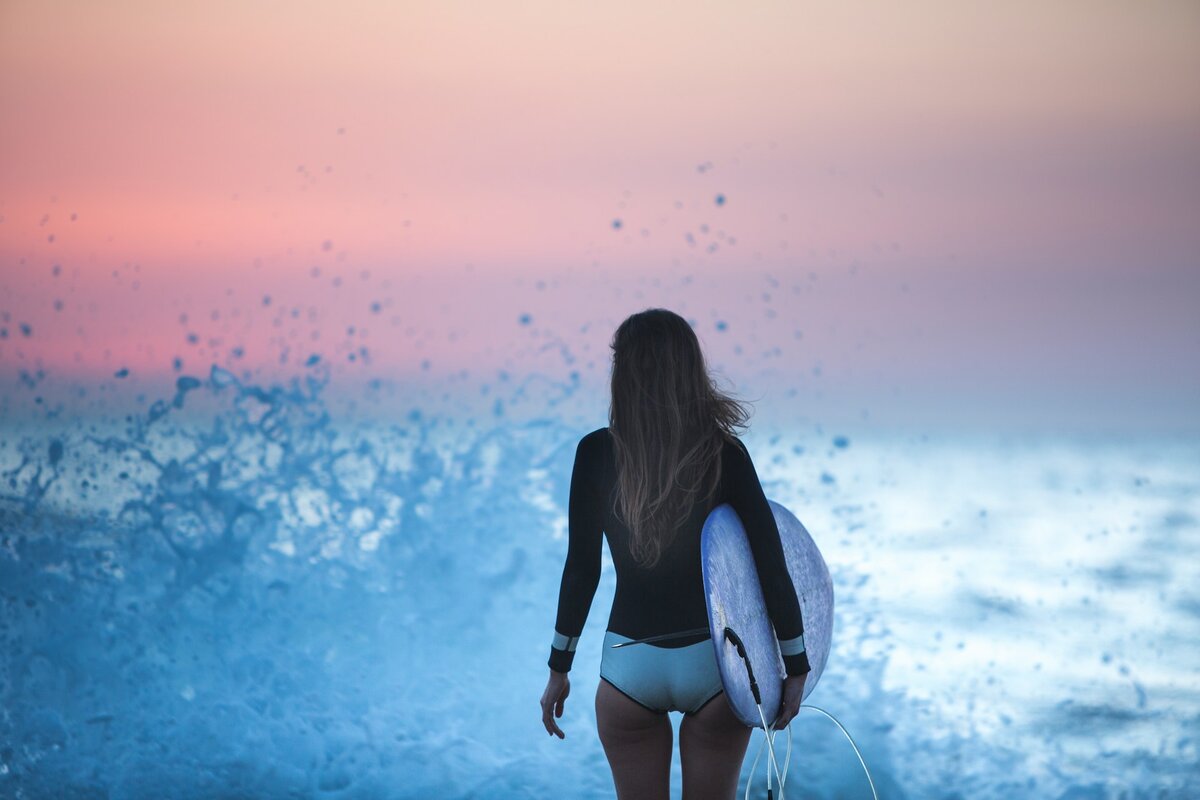
The depths of the wet season by the calendar, but in practice July often delivers more sunny spells than August: the rain squalls pass quickly, with hours of clear sky in between. The waves on the Malé atoll reef breaks hit peak form — July shares with August the title of the best months of the Maldivian surf season. The mantas in Hanifaru are in full swing, and whale sharks feed along the plankton lines off South Ari. On 26 July the country celebrates Independence Day — on local islands you may catch parades and festivities.
| Measure | July |
|---|---|
| Air (day) | +27–30°C |
| Water | +28–29°C |
| Rain pattern | Fast squalls; often sunnier than August |
| Prices | Low season, 30–50% below winter |
| Headline event | Peak surf season; mantas and whale sharks in full swing |
Who is it for
The best all-round summer month for most people: surfers get the finest waves of the year, snorkellers get the mantas, and everyone else gets five-star service at a four-star price. Good for couples and anyone relaxed about the fact that one day in seven may turn out overcast. Not worth it if maximum water clarity is essential for your diving: the plankton that feeds the mantas cuts visibility — it's noticeably better in winter.
What to do
- Join a snorkelling safari to the mantas in Hanifaru Bay — only snorkelling is allowed in the bay, no scuba, and that's a deliberate reserve rule
- Set aside a surf day on the North Malé breaks (Cokes, Sultans, Jailbreaks) — the waves peak precisely in July–August
- Catch the Independence Day celebrations on 26 July if you're staying on a local island or out on an excursion
- Schedule boat trips for the morning — statistically, the rain bursts arrive more often after 2pm
August: Hanifaru at its peak and the school-holiday compromise
"The most family-friendly month of summer — school holidays versus the monsoon"
Weather-wise August is close to July — the same short downpours, the same warm water, just slightly more rainy episodes on average. In return, it's the peak of the manta aggregations in Hanifaru Bay: on a good day, dozens or even hundreds of rays feed in the bay at once — a spectacle people fly in for from around the world. For families, August is the only summer month that fits the school holidays without compromise, and the hotels know it: demand runs slightly above June's, but prices are still a long way from winter's.
| Measure | August |
|---|---|
| Air (day) | +27–30°C |
| Water | +28–29°C |
| Rain pattern | Short heavy downpours, slightly more frequent than July |
| Prices | Low season, demand a touch above June due to the holidays |
| Headline event | Peak manta aggregations in Hanifaru Bay |
Who is it for
The best summer month for families with school-age children and anyone who wants to catch Hanifaru Bay at its height. The warm, shallow lagoon by the villa works in any weather, and a couple of rainy hours a day with children is easier to live with than it sounds. Not worth it if the trip hinges on one short 4–5-night break with no slack: on a short visit, a couple of overcast days sting far more than they do across 7–10 nights.
What to do
- Book the Hanifaru Bay trip for the first days of your stay, not the last — you keep a buffer in case a day is lost to weather
- Choose a hotel with a large, well-equipped lagoon and a kids' club — a rainy hour passes unnoticed when there's plenty to do
- Ask the hotel about seasonal offers — in August resorts often add free nights and upgrades to compete for family demand
- Go night snorkelling or take a beach walk after the rain — bioluminescent plankton shows up along the waterline more often in summer
Choosing an island in summer
In summer the choice of island matters more than in winter: the monsoon rewards good geography and punishes a random pick. Four decisions worth making before you book.
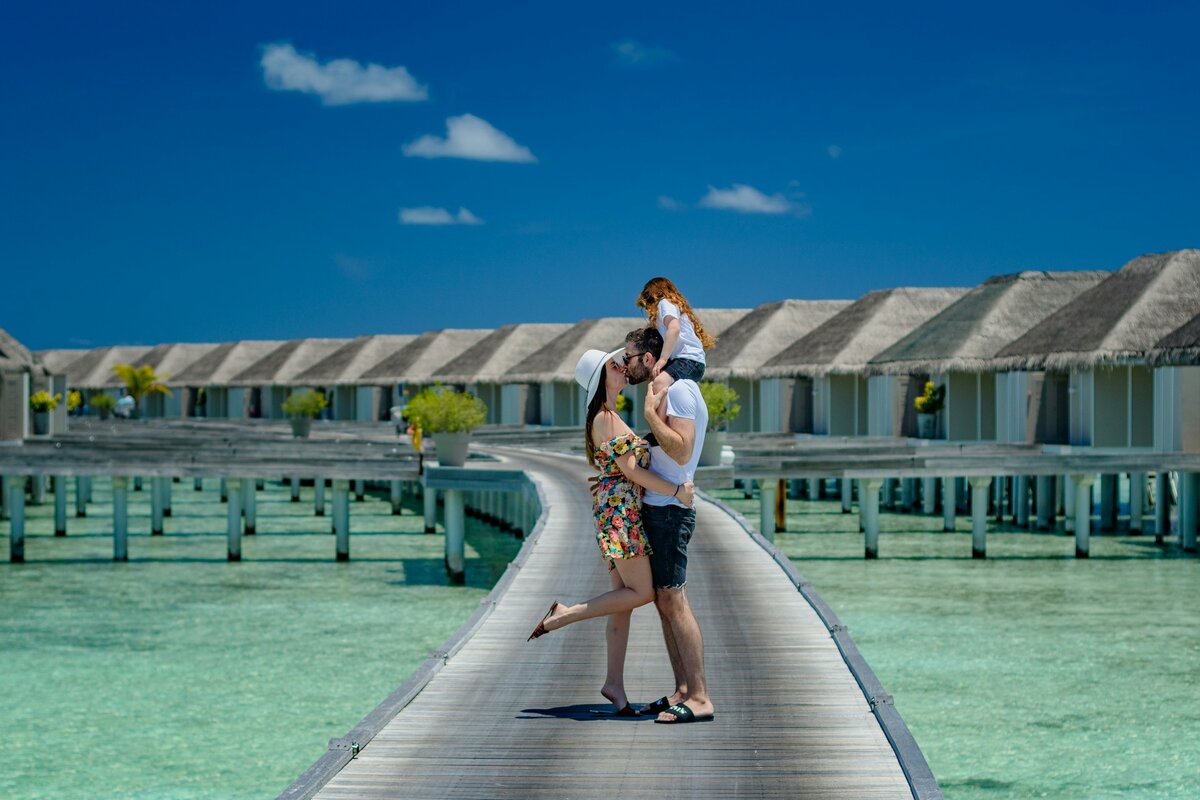
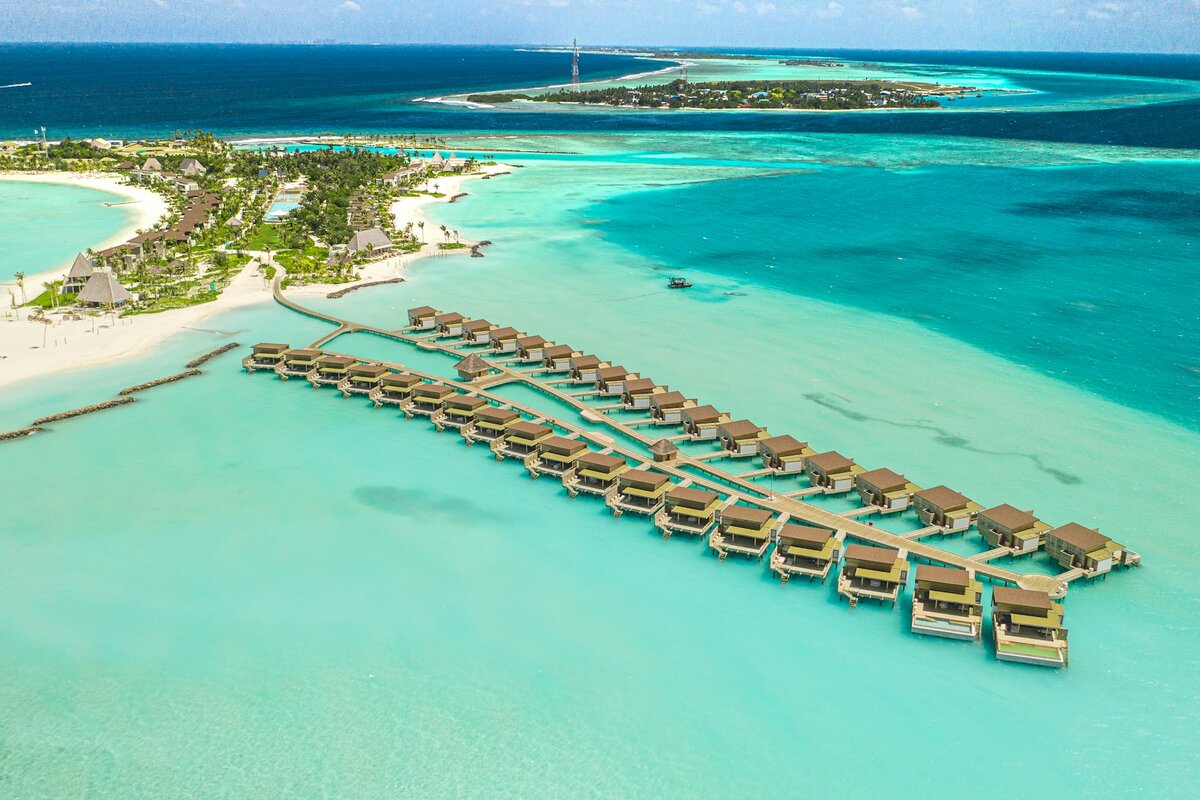
- Resort or local island. A resort is an entire hotel-island with its own rules and alcohol in the bars. Local islands (Maafushi, Thoddoo, Ukulhas, Dhigurah, Dharavandhoo) mean guesthouses two to four times cheaper and genuine Maldivian life — but a dry law outside the resorts and swimming in bikinis only on the designated bikini beaches. In summer, guesthouses are the cheapest way into the Maldives full stop.
- North or south. During the south-west monsoon the northern atolls are on average drier than the southern ones. If your aim is to minimise rain, look north; if your aim is the mantas, Baa Atoll (Hanifaru) happens to sit in the north-west anyway — a happy coincidence.
- The side of the island and the villa. The summer wind blows from the south-west: eastern and north-eastern beaches and villas are better sheltered — fewer waves, less spray and less washed-up seaweed. When booking an overwater villa, don't hesitate to ask which way it faces.
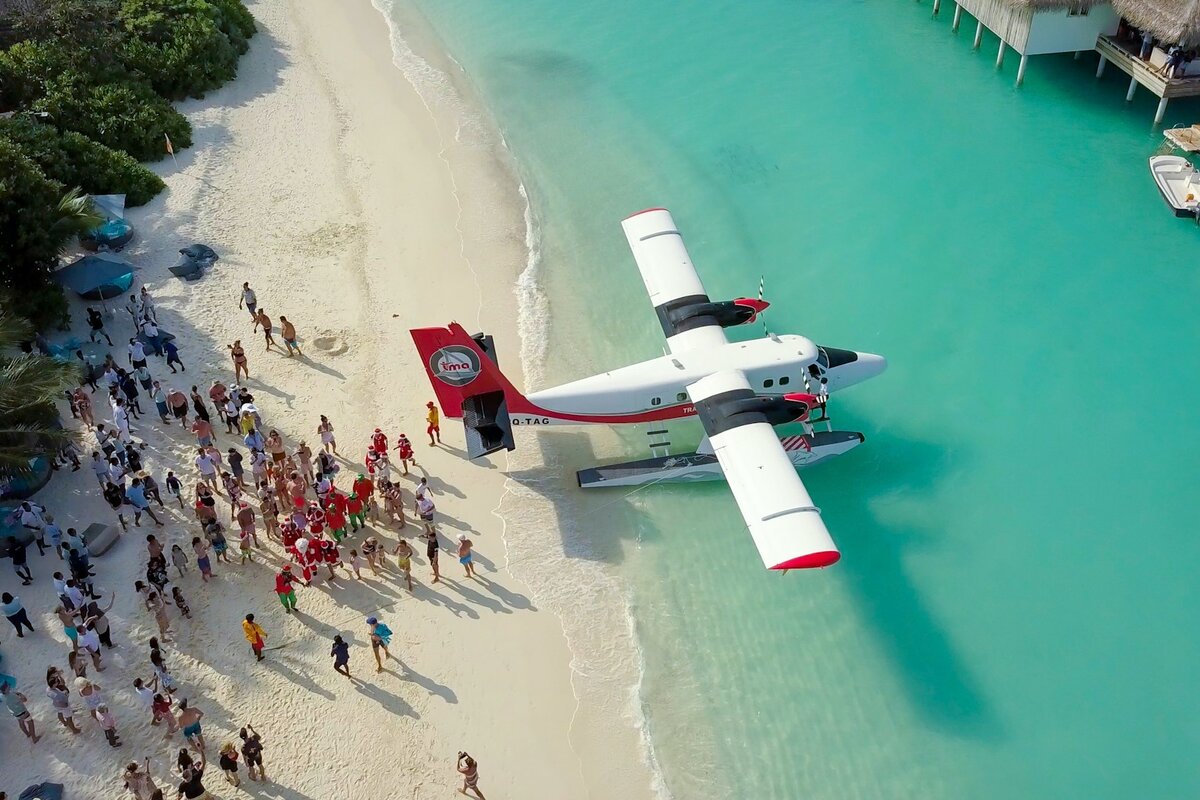
- Transfer logistics. Seaplanes fly in daylight only (until roughly 3.30pm), and weather delays are noticeably more common in the monsoon. If your international flight lands in the afternoon, allow for a night in Malé or choose an island with a speedboat transfer — otherwise you risk losing your first day.
Summer versus high season: an honest comparison
Figures are indicative; prices are for a 7-night trip for two including connecting flights from Poland.
| Criterion | June | July | August | Dec–Apr (peak) |
|---|---|---|---|---|
| Water | +28–29°C | +28–29°C | +28–29°C | +27–29°C |
| Sunshine | 6–7 hrs/day | 6–7 hrs/day, often sunnier than August | 6–7 hrs/day | 8–9 hrs/day |
| Rain | Short bursts | Fast squalls | Slightly more than July | Rare |
| Mantas (Hanifaru) | Season opens | In full swing | Peak | Season closed |
| Surf | Consistent swells | Peak | Peak | Weak |
| Guesthouse, 7n/2 people | PLN 8,000–13,000 | PLN 8,000–13,000 | PLN 9,000–14,000 | PLN 12,000–18,000 |
| 4–5* resort, 7n/2 people | PLN 14,000–30,000 | PLN 14,000–30,000 | PLN 15,000–32,000 | PLN 22,000–50,000+ |
The table's conclusion is simple: for the same money in summer you get a hotel category higher — or the same Maldives, but with a genuine shot at mantas and waves that winter doesn't offer. What you pay with is sunshine statistics: 6–7 hours a day instead of 8–9, and the chance that one or two days in a week turn out overcast.
Pre-booking checklist:
- Settle your priority: guaranteed sun means December–April at a higher price; price, mantas, surf and seclusion mean summer, chosen deliberately.
- Plan at least 7 nights: over a week, a couple of rainy episodes dissolve; over four days, they spoil the impression.
- Check which way the villa and beach face: in summer the eastern sides, sheltered from the south-westerly wind, win.
- Count the full price: resort rates carry 17% TGST, ~10% service charge and the Green Tax — USD 12 per person per night (USD 6 in small guesthouses) — roughly +27% on top of the "website price".
- Complete the free IMUGA traveller declaration on the official immigration portal within 96 hours of each flight — inbound and outbound. Third-party sites charging for it have no business doing so.
- If you land after 2pm and your island is far out, allow a night in Malé: seaplanes don't fly after dark, and summer weather delays are not rare.
Common mistakes:
- Picturing the monsoon as two weeks of solid downpour. Summer rain in the Maldives comes in one-to-two-hour bursts, mostly in the afternoon; genuinely washed-out days number one or two a week, and not every week.
- Flying in summer for perfect diving visibility. The plankton that brings the mantas cuts the clarity. If you want crystal water, it's winter; if you want mantas, it's summer. You don't get both at once.
- Trading trip length for hotel category. In summer the logic runs the other way: better 7–10 nights in a simpler hotel than 4 nights in a flagship — only length smooths out the weather risk.
- Ignoring the taxes. The Green Tax doubled from 2025 and TGST rose to 17% from July 2025 — the "from" price on a resort's website and the final bill differ by roughly a quarter.
- Bringing alcohol with you. Importing alcohol into the Maldives is banned for everyone — it's confiscated at the airport. Alcohol is legal only in resort bars; on local islands there is none at all.
- Ignoring local-island rules. Swimwear belongs only on the designated bikini beaches; beyond them, modest dress is the norm. That's not strictness towards tourists — it's how life works on inhabited islands.
 Entering the Maldives: what to know
The Maldives is a rare case where the entry rules are the same for everyone: a free 30-day tourist visa is stamped on arrival for citizens of any country. No advance visa, no Schengen visa, and no Polish residence permit is needed — none of them plays any role.
- Visa on arrival (every passport, EU or otherwise): a free 30-day stamp. You need a valid passport (at least 6 months' validity is recommended), confirmation of your hotel or package booking, a return ticket, and sufficient funds for the stay.
- The IMUGA traveller declaration: completed online, free of charge, on the official Maldives Immigration portal within 96 hours of each flight — both before arrival and before departure. Immigration explicitly warns that third-party websites charging a fee have nothing to do with the declaration.
- Taxes on the ground: the Green Tax — USD 12 per person per night at resorts and USD 6 at guesthouses of up to 50 rooms (children under 2 exempt) — plus 17% TGST and a ~10% service charge on all services. Package prices usually include them; book independently and they're added to the bill.
Rules and rates change — check the current requirements on the official Maldives Immigration portal or with your tour operator before travelling.
The verdict
So are the Maldives worth it in summer?
Yes — if you know what you're flying for. Summer is the Maldives for those who trade guaranteed sun for a price a third lower, half-empty islands, the best waves of the year, and mantas that winter simply doesn't have. Take June for the quiet and the opening of the Hanifaru season, July for the best balance of sun, waves and price, and August for peak mantas and the only summer window that fits the school holidays. Summer is a poor idea in one case only: when the trip is short and its entire point is a flawless sky in every photo. Then it's more honest to pay for December–April.
One last tip:
In summer, the length of the trip matters more than the hotel's stars: seven nights or more turn the rain bursts into a statistical footnote, and the money saved on the season is better invested not in an extra star but in the manta trip to Hanifaru Bay — which is exactly what the summer Maldives exists for.


 Holidays


 Last minute
 Hotels


 Blog
Blog