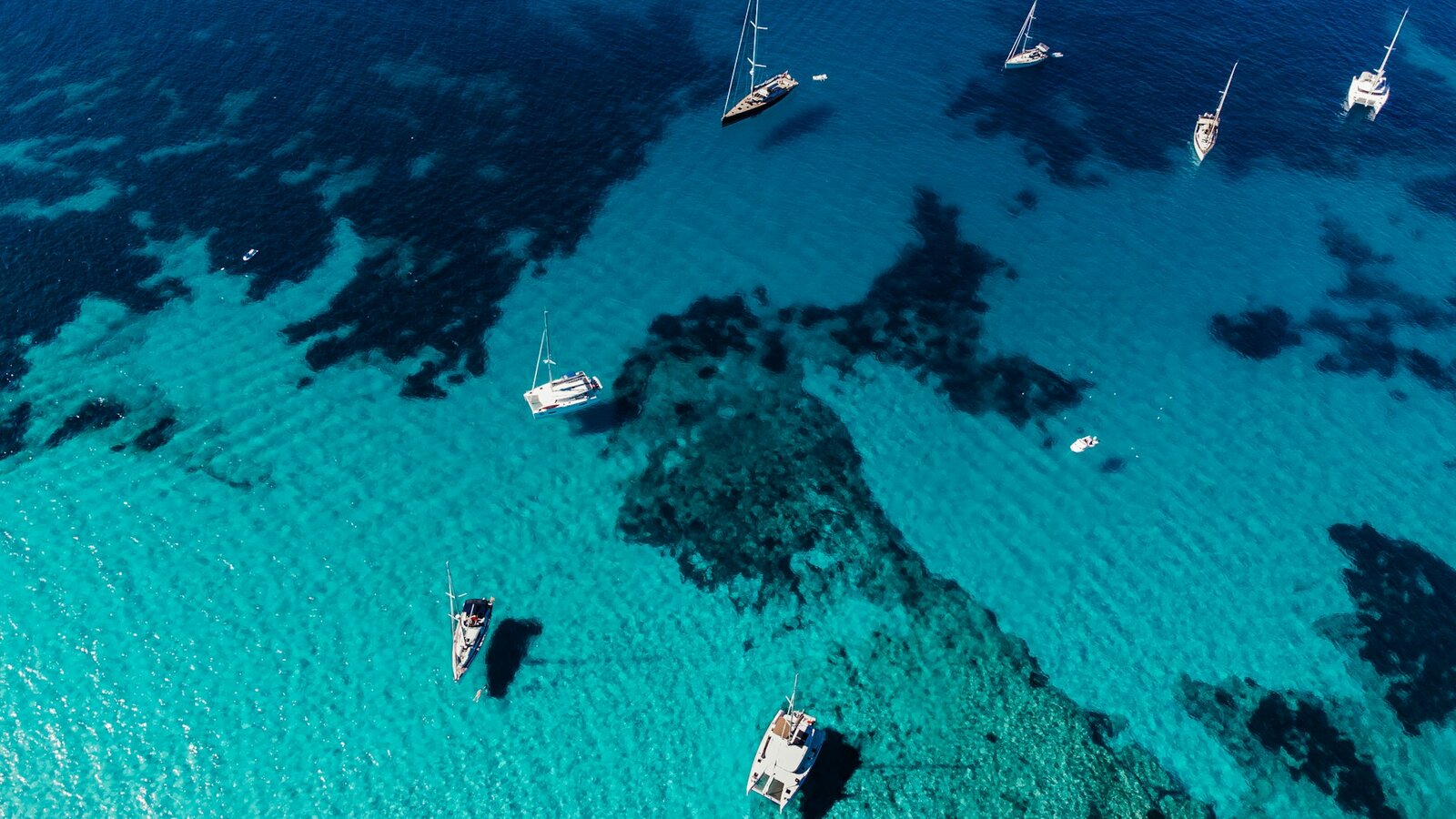
Search "Spain, July" and the same results page throws up the Costa Brava, Mallorca and Tenerife — three completely different holidays, not three prices for the same thing. In the north, in Catalonia, the sea is still cool in early summer and the flight is three hours; in the Balearics the water is warm but an eco-tax has applied since May; and the Canaries run on a different calendar altogether — Atlantic islands off the African coast you fly to not instead of a Greek summer, but instead of winter. The choice starts not with the hotel, but with the coast.
Choosing blind costs you a week of holiday and several thousand złoty. Below we break the Spanish coast into five regions — with water temperature, the flight from Warsaw, the cost of a trip for two, a note on the tourist tax, and a quick-choice block:
- First time in Spain → Costa Brava, Costa Blanca
- Family with children, value → Benidorm, Salou (PortAventura)
- Warm sea and a long season → Costa Blanca, the Balearics
- Culture and sea (Andalusia) → Costa del Sol
- Premium and nightlife → Ibiza, Marbella
- Calm and the best Balearic beaches → Menorca
- Atmosphere and photos → Tossa, Cadaqués
- Winter sun, an off-season break → the Canaries
- Where there's no tourist tax → Costa del Sol, Costa Blanca, the Canaries
- Compare everything → Comparison
Costa Brava and Costa Dorada (Catalonia)
Spain's most northerly coast and the closest to Poland: a direct flight to Barcelona or Girona takes about 3 hours. This is the cooler northern Mediterranean — the water warms later than in the south, comfortable swimming starts in the second half of June, and the air is milder than in Andalusia. "Brava" means "wild": the real Costa Brava is not broad beaches but rocky pine-fringed coves (calas). A key 2026 detail: Catalonia has a tourist tax, which rose on 1 April 2026 — outside Barcelona it's still a modest €0.80–4.50 per person per night, but worth building into the budget.
| Month | Air (day) | Night | Sea |
|---|---|---|---|
| May | +20–22°C | +12–14°C | +17–18°C |
| June | +25–27°C | +16–18°C | +20–22°C |
| July | +28–30°C | +19–21°C | +23–24°C |
| August | +28–31°C | +19–21°C | +24–25°C |
| September | +24–27°C | +16–18°C | +22–23°C |
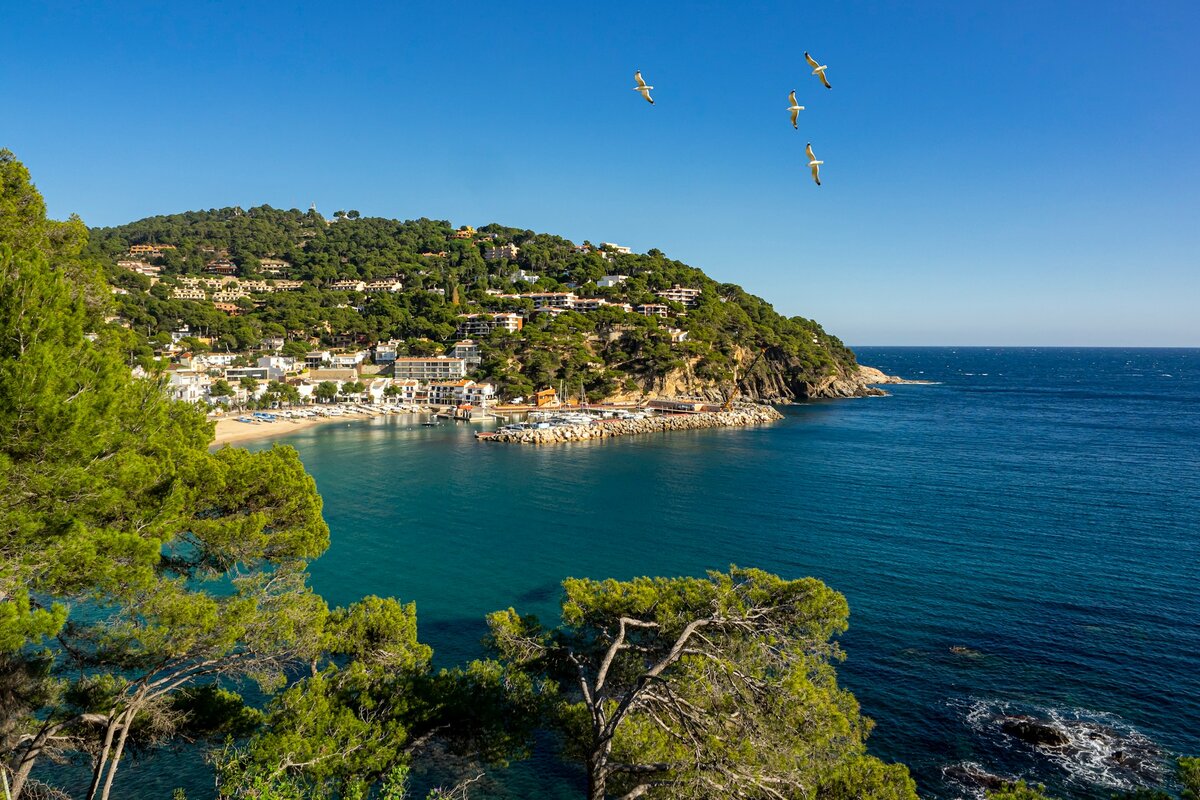
Lloret de Mar and around
"The coast's main package resort — and quiet coves 10 minutes away"
Lloret de Mar is the most heavily marketed Costa Brava resort: large hotels, a broad promenade, nightclubs and cheap All Inclusive. Many come for inexpensive sea and a party scene, unaware that 10–15 minutes along the coast the pebble-and-rock coves among the pines begin — the very reason to come to the Costa Brava at all. Nearby sit atmospheric Tossa de Mar, with a medieval fortress above the sea, and arty Cadaqués, with Dalí's house-museum on the Cap de Creus headland.
Flight from Warsaw: ~3 hrs to Barcelona or Girona + 1–1.5 hrs transfer
7 nights / 2 people: PLN 3,000–8,000
Tourist tax: yes, the regional Catalan tax (~€1–2 pp/night outside Barcelona)
Best season: June and September — sea already/still warm, fewer people; July–August is peak
Who is it for
A good choice for younger travellers and groups after nightlife on a moderate budget, and for those wanting to pair the sea with a day trip to Barcelona (1.5 hrs). Not worth it if you're after calm and broad sand: central Lloret is loud in summer, and the beaches are rocky-pebbly rather than sandy.
What to do
- Leave central Lloret for the Banys or Sa Boadella coves — 10–15 minutes on foot trades the crowd for clear water among the pines
- Go to Tossa de Mar (20 min) and climb the Vila Vella fortress above the sea — the best view of the coast
- Reach Cadaqués and Cap de Creus (1.5 hrs) — the wildest part of the Costa Brava and Dalí's house-museum in Portlligat
- Visit Barcelona by train or bus rather than by car — city parking is expensive and awkward
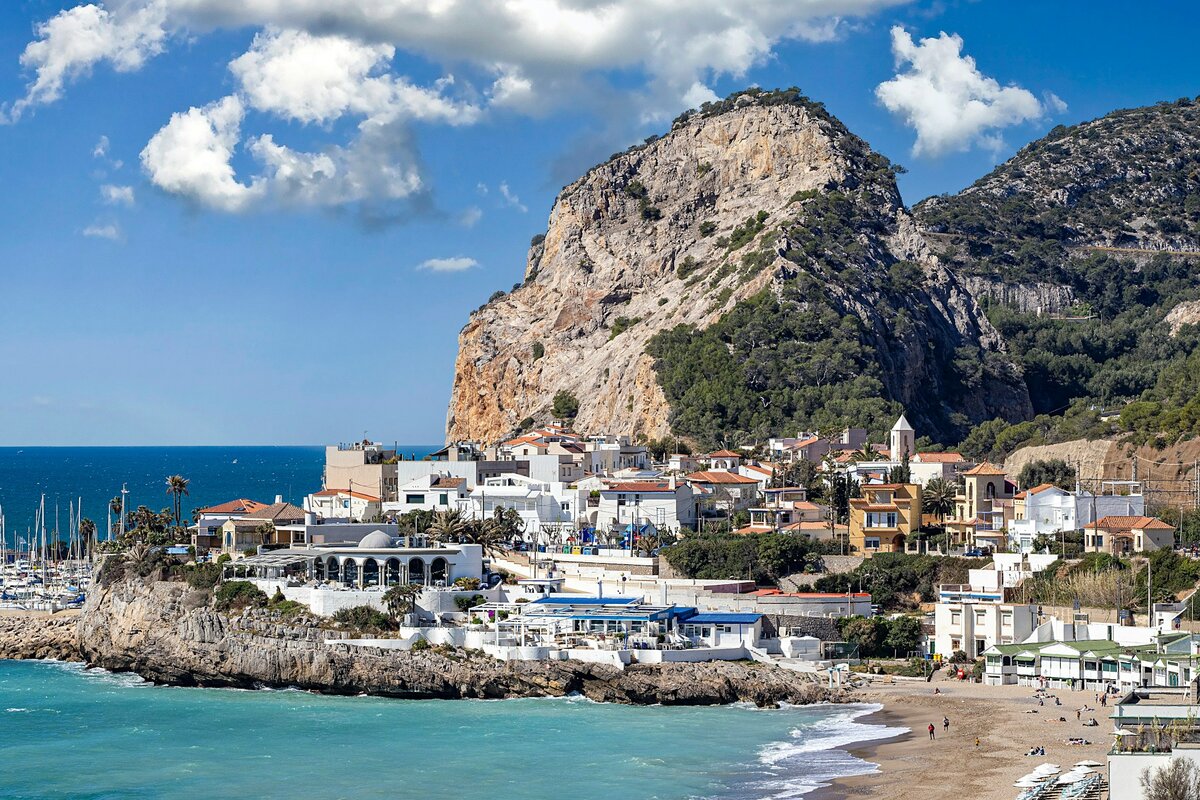
Salou and the Costa Dorada
"Sand and PortAventura — the coast for families with children"
South of Barcelona, Catalonia changes character: the Costa Dorada ("golden coast") is long, gently shelving sandy beaches, unlike the rocky Costa Brava. The hub of family holidays here is Salou, beside one of Europe's largest theme parks, PortAventura World, with its Ferrari Land zone. This is the most child-friendly stretch of the Catalan coast, with a shallow entry into the water and developed infrastructure.
Flight from Warsaw: ~3 hrs to Barcelona or Reus + ~1 hr transfer
7 nights / 2 people: PLN 3,000–7,500
Tourist tax: yes, the regional Catalan tax
Best season: June–September; for PortAventura, the whole warm half of the year
Who is it for
The best choice in Catalonia for families with children: a sandy beach, gentle sea and PortAventura right next door. Not worth it if you want authentic Spain and quiet — Salou is a typical mass resort without much local atmosphere, and at the height of summer it's densely packed.
What to do
- Set aside at least a full day for PortAventura World and buy tickets online in advance — there are queues at the gate
- Walk to the Salou lighthouse and quiet Cap Salou with its small coves
- Go to Tarragona (20 min) — a Roman amphitheatre by the sea and an aqueduct, UNESCO sites almost free of tourists
- Catch the evening musical fountains on the Salou promenade — free and easy with children
Costa Blanca (Valencia region)
The "white coast" around Alicante is one of Europe's sunniest corners (over 300 sunny days), with warm water and one of the longest swimming seasons on the mainland. The key practical advantage: the Valencia region has no tourist tax, and All Inclusive prices are among the most affordable in Spain. A direct flight to Alicante takes about 3 hours 40 minutes.
| Month | Air (day) | Night | Sea |
|---|---|---|---|
| May | +23–25°C | +14–16°C | +18–19°C |
| June | +28–30°C | +18–20°C | +22–23°C |
| July | +30–32°C | +21–23°C | +25–26°C |
| August | +31–33°C | +22–24°C | +26–27°C |
| September | +28–30°C | +19–21°C | +25–26°C |
Benidorm
"The Mediterranean Manhattan — dense, but good value"
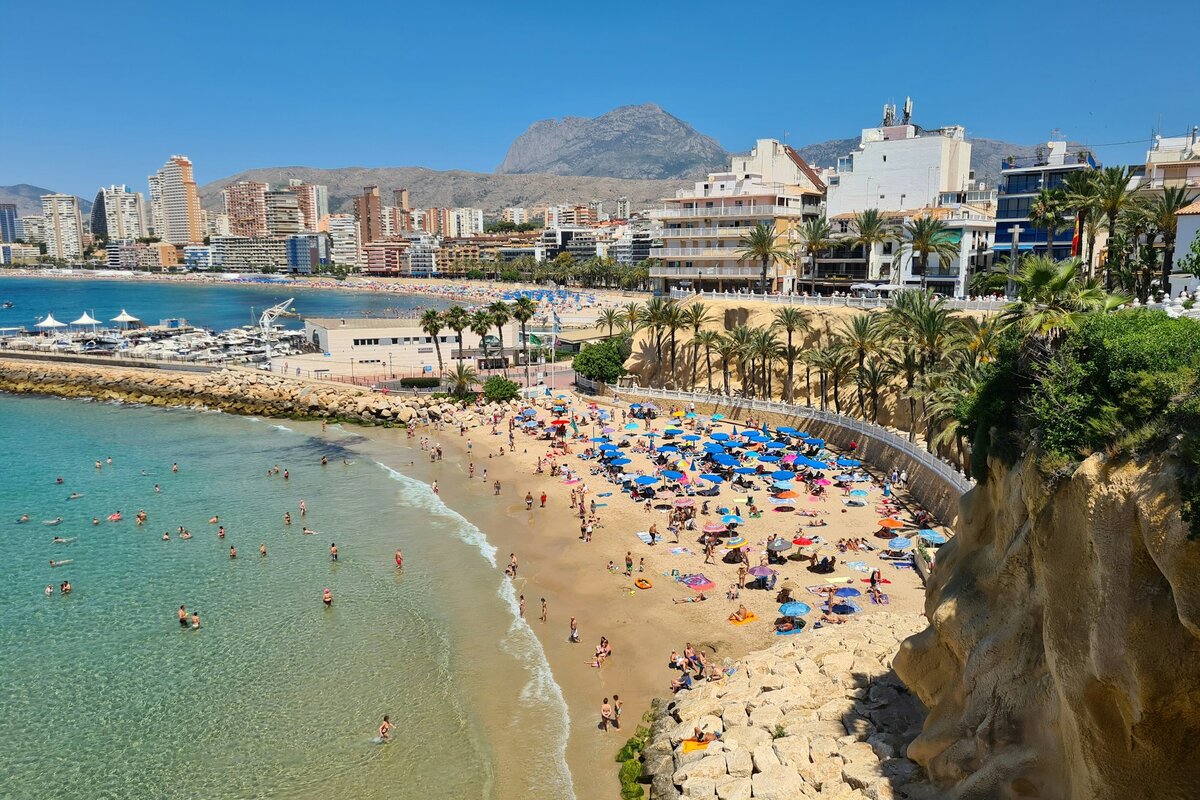
Benidorm is recognisable by the high-rises right on the beach — Spain's most "vertical" resort. Behind the towers is cool logic: two broad sandy bays (Levante and Poniente) with a gentle entry, a dense network of hotels and some of the best-value All Inclusive in the country. The season is long, the infrastructure for children and older guests is excellent, and the British and package crowd lends a "resort without surprises" feel.
Flight from Warsaw: ~3 hrs 40 min to Alicante + ~45 min transfer
7 nights / 2 people: PLN 3,000–7,500
Tourist tax: none
Best season: June and September for couples; all summer for families; the mild winter for older travellers
Who is it for
The best choice for families and anyone wanting reliable beach All Inclusive at a sensible price, with gentle sand and maximum amenities. Not worth it if you're after quiet, authentic Spain and intimacy: Benidorm is dense, loud and not about local colour at all — it's the holiday industry in its purest form.
What to do
- Choose between Levante beach (livelier, with bars) and Poniente (calmer, more family-oriented) to suit your style
- Climb to the Balcón del Mediterráneo viewpoint in the old town — free, the best view of both bays
- Go to Guadalest (40 min) — a clifftop fortress village above a turquoise reservoir
- Head to the Benidorm Island nature area or Cap Albir — snorkelling in clear water away from the town beach
Alicante and Calpe
"A city-resort and the Peñón de Ifach rock"
Alicante itself is an underrated option: a real Spanish city with the Santa Bárbara castle above the sea, an old quarter and the Postiguet town beach, not just an airport hub. To the north, at Calpe, the Peñón de Ifach rock (332 m) rises from the sea — the symbol of the Costa Blanca and a reserve with a trail to the top. Calpe and neighbouring Altea and Jávea are for those who want sea and character without Benidorm's density.
Flight from Warsaw: ~3 hrs 40 min to Alicante
7 nights / 2 people: PLN 3,200–8,000
Tourist tax: none
Best season: May–June and September — warm, without the August crush
Who is it for
For those who want to pair the beach with a living Spanish city (Alicante) or with nature and intimacy (Calpe, Altea). Not worth it for a big All Inclusive with entertainment programmes — that's concentrated more in Benidorm; here city hotels and apartments prevail.
What to do
- Climb the Santa Bárbara castle in Alicante at sunset — a view over the city and port, free entry
- Walk the trail up the Peñón de Ifach in Calpe early in the morning (numbers are capped — arrive early)
- Stroll through whitewashed old Altea with its blue-domed church
- Try a proper Valencian paella at lunchtime rather than the evening — that's how locals eat it
Costa del Sol (Andalusia)
The southern coast around Málaga pairs the sea with Spain's richest cultural programme: Granada with the Alhambra, Seville and Córdoba a few hours' drive away. The air here is the hottest of the mainland costas (+30–33°C in summer), but an honest caveat: the sea is cooler than on the Costa Blanca — the Alboran Sea by Gibraltar is fed by Atlantic water, and in July it's more often +22–24°C than +26. In return, Andalusia has no tourist tax, and Málaga itself has gone from a transit city to a full destination with the Picasso and Pompidou museums. To the west, on the Costa de la Luz (Cádiz, Tarifa), the Atlantic begins — wind, waves, surf and noticeably cooler water.
| Month | Air (day) | Night | Sea |
|---|---|---|---|
| May | +23–25°C | +14–16°C | +18–19°C |
| June | +27–29°C | +17–19°C | +20–22°C |
| July | +30–32°C | +20–22°C | +22–24°C |
| August | +31–33°C | +21–23°C | +23–25°C |
| September | +28–30°C | +19–21°C | +23–24°C |
Málaga
"The best base for anyone who wants both sea and culture"
Málaga is no longer just the gateway to the Costa del Sol: a historic centre with the Alcazaba fortress, the Picasso (his home city) and Pompidou museums, a strong food scene and the Malagueta town beach make it a destination in its own right. From here it's easy to reach Granada (1.5 hrs) and Seville (2.5 hrs). The swimming isn't the warmest on the coast, but no other costa matches it for cultural depth.
Flight from Warsaw: ~4 hrs to Málaga (direct)
7 nights / 2 people: PLN 3,500–9,000
Tourist tax: none
Best season: May–June and September–October — comfortable for both the beach and sightseeing
Who is it for
The best choice for those who won't lie on the beach for seven days straight and want culture, cities and food alongside the sea. Not worth it purely for swimming: the water on the Costa del Sol is cooler than the Costa Blanca or the Balearics, and the town Malagueta beach is not its main draw.
What to do
- Climb the Alcazaba and the Gibralfaro castle at sunset — a view over the port and the bullring
- Take a day trip to Granada for the Alhambra (book weeks ahead — entry is capped)
- Visit the Picasso museum in his home city, ideally on a weekday morning
- Eat espeto — sardines skewered and grilled over coals right on the beach, Málaga's signature dish
Marbella and Torremolinos
"Premium Marbella and affordable Torremolinos on one shore"
The Costa del Sol holds two poles. Marbella, with its Puerto Banús marina, is luxury: yachts, boutiques, golf and five-star hotels. Torremolinos and Benalmádena, the other way from Málaga, are mass family resorts with water parks and accessible prices. One shore, two completely different budgets and styles of holiday.
Flight from Warsaw: ~4 hrs to Málaga + 30–50 min transfer
7 nights / 2 people: Torremolinos PLN 3,500–8,000, Marbella PLN 6,000–16,000
Tourist tax: none
Best season: June and September; Marbella runs into the shoulder season thanks to golf
Who is it for
Torremolinos and Benalmádena suit families and anyone wanting Andalusia at a sensible price with water parks. Marbella is for those who value premium service and a status atmosphere. Not worth it to go to Marbella expecting a budget break, or to Torremolinos for quiet and authenticity: these are dense resort zones.
What to do
- Stroll the Puerto Banús marina in Marbella — even without shopping it's part of the local theatre
- Take the children to a water park in Torremolinos or Benalmádena
- Drive up to the white hill village of Mijas (20 min) — balconies overlooking the whole coast
- Go to Ronda (1 hr) — a town above a 100-metre gorge spanned by the Puente Nuevo bridge
The Balearics: Mallorca, Menorca, Ibiza
The Balearics offer the warmest and clearest water among Spain's "close" destinations (+25–26°C in summer) with a flight of just ~3 hours. But this is also a region with an eco-tax: all the islands levy the Sustainable Tourism Tax — €1–4 per person per night in high season (May–October), payable from age 16, with a 50% reduction from the ninth night. In July and August Mallorca and Ibiza are overloaded, and it's here that peaceful resident protests against overtourism take place — a matter of housing and rent, not tourist safety.
| Month | Air (day) | Night | Sea |
|---|---|---|---|
| May | +22–24°C | +13–15°C | +18–19°C |
| June | +27–29°C | +17–19°C | +21–23°C |
| July | +30–32°C | +20–22°C | +25–26°C |
| August | +31–33°C | +21–23°C | +26–27°C |
| September | +27–29°C | +18–20°C | +25–26°C |
Mallorca
"Two islands in one: the package south and the wild north"
Mallorca is the most all-round of the Balearics. Around the Bay of Palma sit mass resorts with All Inclusive (Magaluf, El Arenal), but the north and west hold a different Mallorca entirely: the Serra de Tramuntana mountains (UNESCO), coves of turquoise water and the villages of Valldemossa and Deià. Palma itself, with its Gothic La Seu cathedral, is one of the finest cities among the Mediterranean islands. 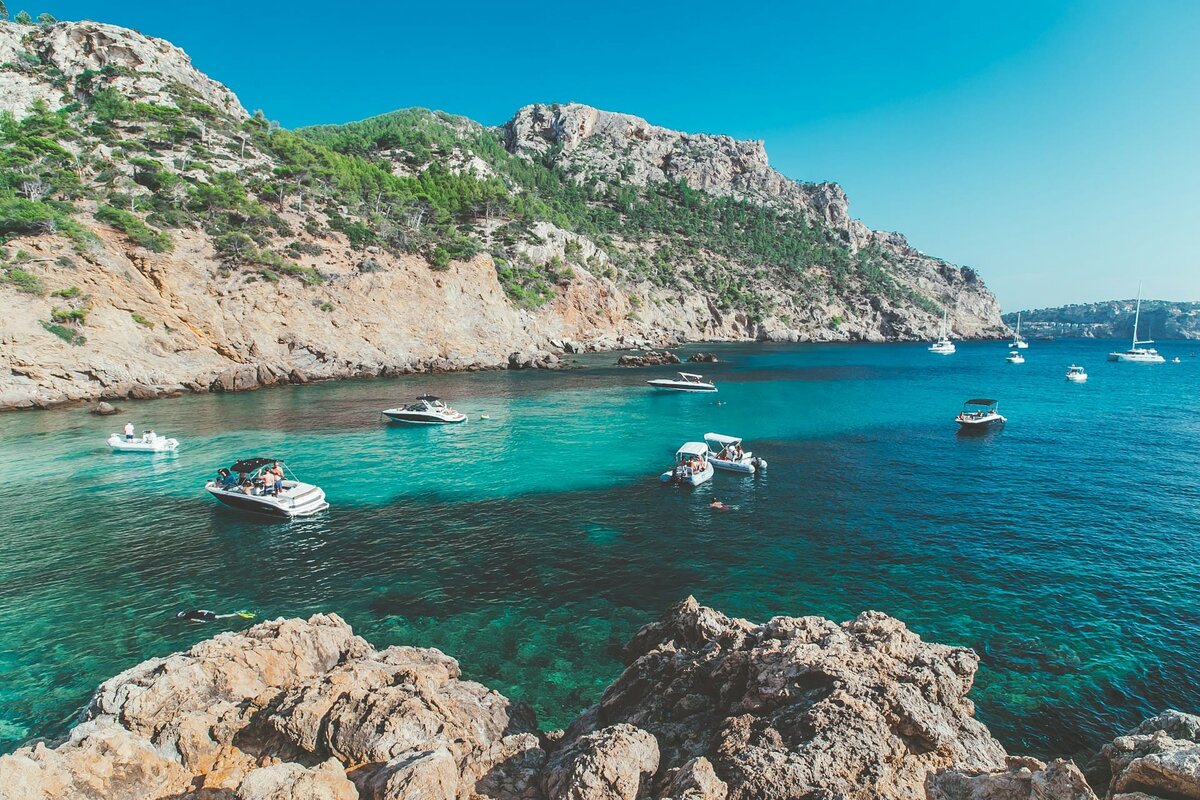
Flight from Warsaw: ~3 hrs to Palma (direct, including new LOT services)
7 nights / 2 people: PLN 3,500–10,000
Tourist tax: yes, eco-tax €1–4 pp/night (high season)
Best season: June and September — warm sea without the August crowd
Who is it for
It suits almost everyone — from families on All Inclusive to couples ready to hire a car and discover the northern island. Not worth it to head for the Magaluf zone if quiet matters: it's the epicentre of young drinking tourism. And think twice about July–August if you cope badly with crowds.
What to do
- Ride the vintage train from Palma to Sóller through the Tramuntana mountains
- Swim in the northern coves (Cala Tuent, Cala Sant Vicenç) rather than the crowded southern beaches
- Stop in Valldemossa — the charterhouse where Chopin and George Sand spent a winter
- Descend into the Drach caves at Porto Cristo for a concert by the underground lake
Menorca
"The finest Balearic coves and quiet instead of clubs"
Menorca is the calm sister of Mallorca and Ibiza: a UNESCO biosphere reserve, dozens of coves with white sand and turquoise water (Cala Mitjana, Macarella) and almost no club culture. Ideal for families and couples who want nature and beaches rather than nightlife. The downside — the best coves often require a walk, and a car is all but essential.
Ibiza
"The clubbing capital — and a surprisingly quiet north"
Ibiza is known as Europe's clubbing capital, with the priciest discos and beach parties. But the island has a second face: a quiet north (Sant Joan) with hippy markets, pine-fringed coves and peaceful hotels. The old town of Dalt Vila is a UNESCO site. In high season prices and occupancy soar, and you need to book well ahead. 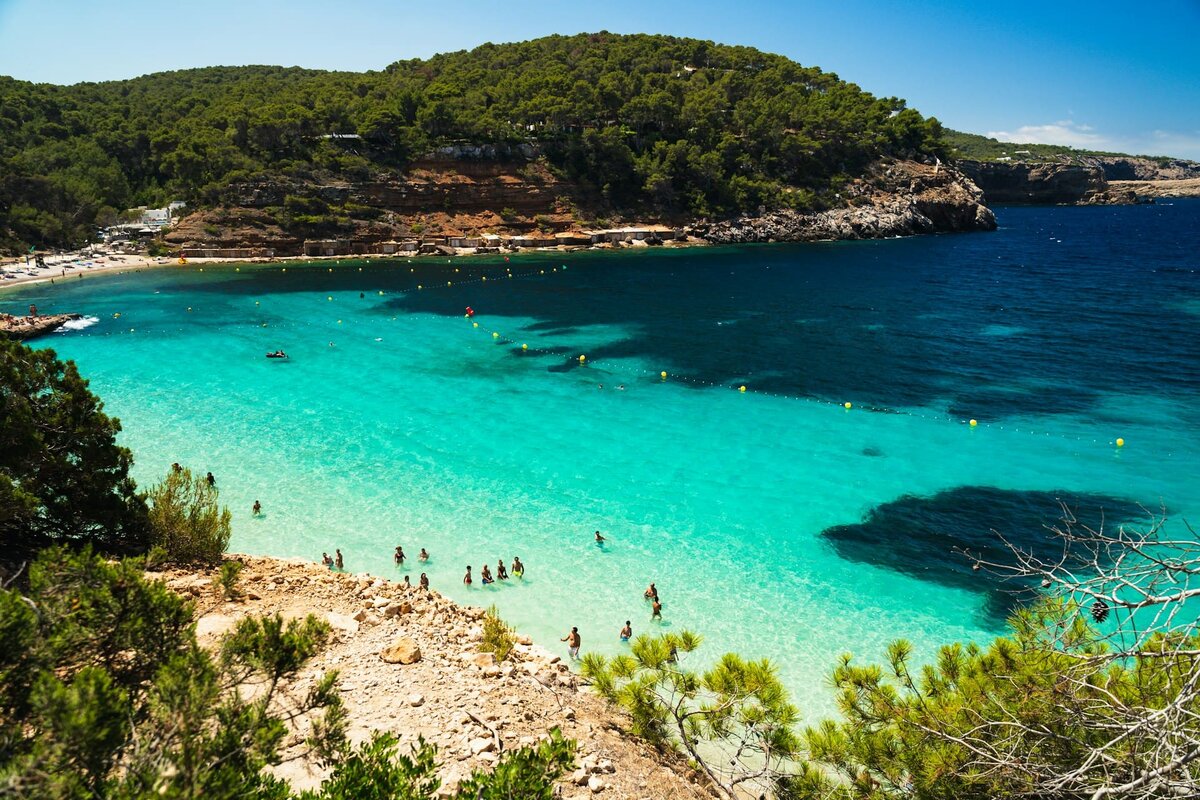
The Canary Islands: Tenerife, Gran Canaria, Fuerteventura, Lanzarote
The Canaries are a different world and a different season. These are Atlantic islands off the African coast with a subtropical climate where swimming is possible year-round, and the whole point is winter sun: in January it's +21–24°C in the air and +20°C in the water while Poland is freezing. The flight is the longest (5–5.5 hrs direct), but there's no general tourist tax in the Canaries (the exceptions are local — Mogán on Gran Canaria at €0.15/night, eco-fees to enter Tenerife's nature parks). An important nuance: on each island the north is cloudier and greener while the south is dry and sunny, so for guaranteed sun you choose the southern resorts.
| Season | Air (day) | Night | Sea |
|---|---|---|---|
| Winter (Dec–Feb) | +21–24°C | +15–17°C | +20–21°C |
| Spring (Mar–May) | +22–25°C | +16–18°C | +20–21°C |
| Summer (Jun–Aug) | +26–29°C | +19–21°C | +22–23°C |
| Autumn (Sep–Nov) | +25–28°C | +18–20°C | +22–23°C |
Tenerife
"The most varied island and the Teide volcano"
Tenerife combines beach holidays on the sunny south (Las Américas, Costa Adeje) with Spain's highest peak — the Teide volcano (3,718 m) in a UNESCO national park. In a single day you can go from the beach up to the lunar landscapes of the crater. The island's north is greener and cooler, with the town of Puerto de la Cruz and old La Laguna. The beaches are volcanic — the sand is often dark, with pale imported sand only in the southern resort zones. 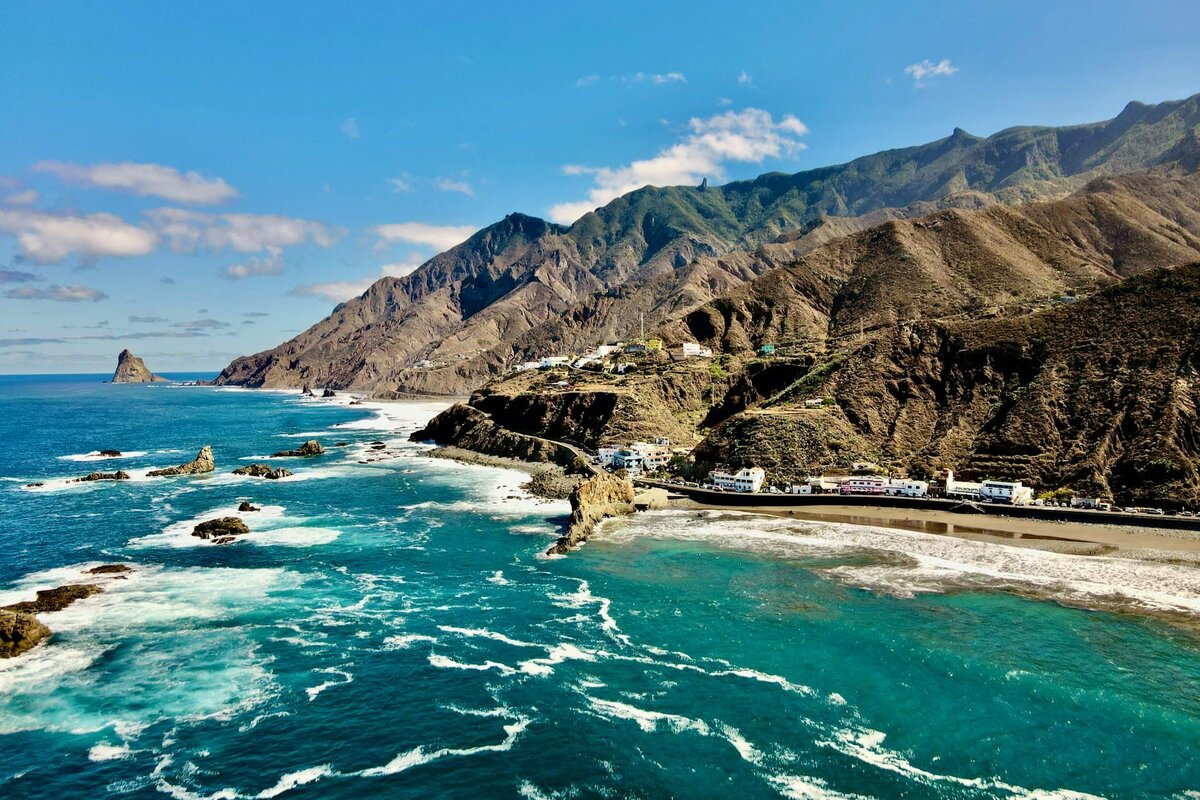
Flight from Warsaw: ~5–5.5 hrs (direct, including seasonal winter flights)
7 nights / 2 people: PLN 3,500–9,000 (winter can be cheaper than summer in the Mediterranean)
Tourist tax: no general tax; an eco-fee to enter nature parks (€3–15 pp)
Best season: year-round; for winter sun, November–March
Who is it for
The best choice for a winter holiday by the sea and for those who want to pair the beach with nature and hiking. Not worth it to head to the north of the island for guaranteed beach sun — it's cloudier there; for sun choose the south (Adeje, Las Américas).
What to do
- Go up to the Teide volcano (by car or cable car) — arrange a permit for the summit trail in advance
- Choose a hotel on the sunny south if the goal is beach and warmth without cloud
- Visit the Masca gorge and old La Laguna (UNESCO) on the green north
- Head out on the ocean to watch whales and dolphins — they live here year-round
Gran Canaria
"The Maspalomas dunes and a real city in Las Palmas"
Gran Canaria is a "continent in miniature": the sandy Maspalomas dunes in the south, a mountainous interior and the lively city of Las Palmas with its Las Canteras beach, where the water never drops below +19°C all year. The south is sunny and resort-focused; the north, with Las Palmas, is about city life and food. A good balance of beach, nature and city.
Fuerteventura and Lanzarote
"The best beaches and wind — versus volcanic landscapes"
Fuerteventura has the longest, palest sandy beaches in the Canaries (Corralejo, Sotavento) and a steady wind that makes it a windsurfing and kitesurfing capital; that same wind can spoil a calm day on the beach. Lanzarote is quieter and drier, with the Martian volcanic landscapes of the Timanfaya park and César Manrique's architecture, free of high-rise building. Both islands are for those who want the Canaries without the crush of southern Tenerife. 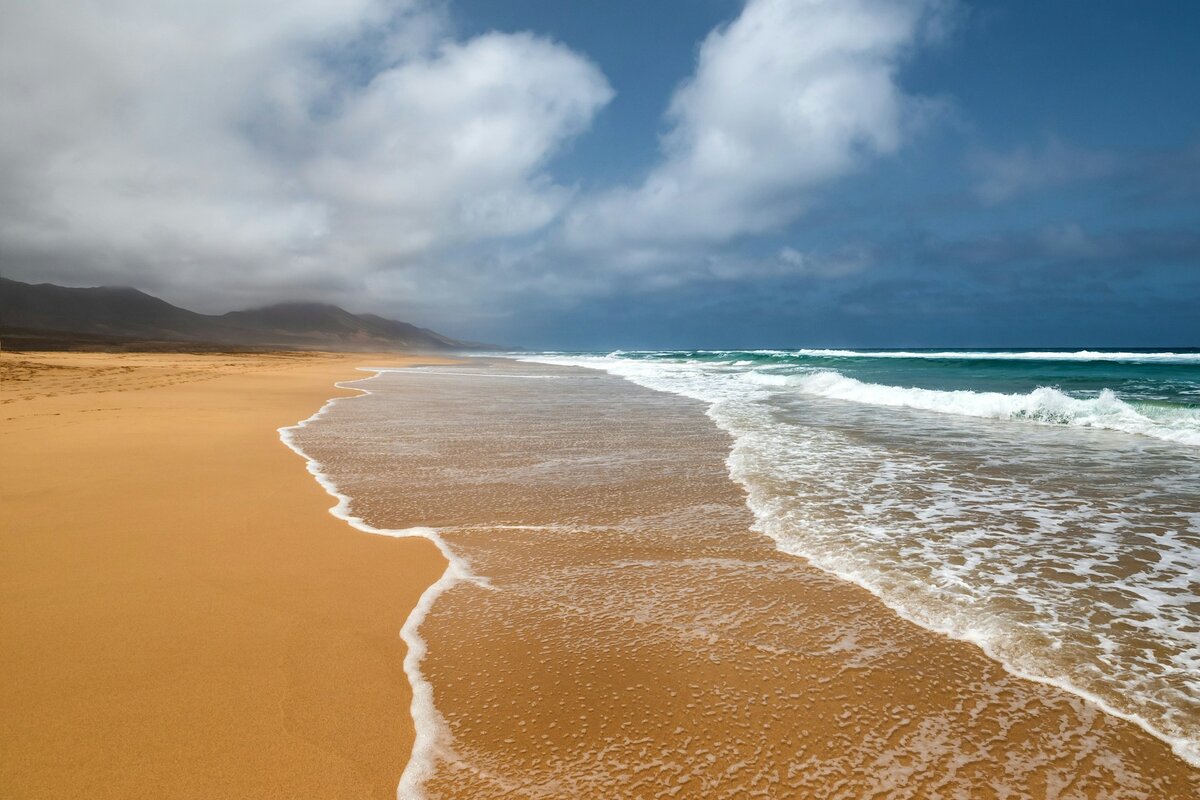
Quick comparison of regions
Summer on the mainland and the Balearics, year-round in the Canaries. Figures are indicative, a 7-night trip for two.
| Region | For whom | Sea (summer) | Flight from Warsaw | 7 nights / 2 people | Tourist tax |
|---|---|---|---|---|---|
| Costa Brava/Dorada | First time, younger travellers, families (Salou) | +23–25°C | ~3 hrs | PLN 3,000–8,000 | Yes |
| Costa Blanca | Families, value, long season | +25–26°C | ~3 hrs 40 min | PLN 3,000–7,500 | None |
| Costa del Sol | Culture + sea, premium | +22–24°C | ~4 hrs | PLN 3,500–9,000 | None |
| Balearics | Warm sea, beaches, nightlife | +25–26°C | ~3 hrs | PLN 3,500–10,000 | Yes |
| Canaries | Winter sun, year-round | +22–23°C | ~5–5.5 hrs | PLN 3,500–9,000 | None* |
For the warmest sea on a short flight, the Costa Blanca and the Balearics. For culture and Andalusian colour, the Costa del Sol. For the shortest flight with Barcelona on the doorstep, the Costa Brava. The Canaries stand apart: you go there not instead of a Greek summer, but instead of winter. *The Canaries have no general tax, but there are local eco-fees in places.
Pre-booking checklist:
- Choose the region before the resort: the north (Catalonia) is cooler and closer; the Costa Blanca is warmer and tax-free; Andalusia is culture; the Balearics have the best sea; the Canaries are a different season and ocean.
- Build the tourist tax into your budget if you're heading to Catalonia or the Balearics — over a week for two it adds up; the Costa del Sol, Costa Blanca and Canaries have none.
- In the Canaries, choose the sunny south of the island, not the green north, if the goal is beach and reliable sun.
- Check the beach type: the Costa Brava means rock and pebble coves, the Canaries volcanic dark sand; broad pale sand is the Costa Dorada, Costa Blanca and Fuerteventura.
- For Mallorca, Tenerife and the Costa Brava, budget for a hire car — the best coves and scenery are only reachable by car.
- Book the Balearics and Ibiza well ahead for July–August — the islands are overloaded and good hotels go early.
Common mistakes:
- Treating all of Spain as one destination. The Costa Brava in May is +17°C water, while the Canaries are +20°C year-round. The region changes everything.
- Going to the Costa del Sol purely to swim. The air is hot, but the sea is cooler than the Costa Blanca or the Balearics. It's a destination about culture, not the warmest water.
- Forgetting the tourist tax in Catalonia and the Balearics. The Catalan tax rose in 2026; the Balearic eco-tax is €1–4 per person per night. Over a week for two that's tens of euros.
- Flying to the Canaries in summer instead of the Mediterranean. In summer the Canary sea is cooler and the flight is longer. The Canaries' strength is winter, not July.
- Fearing the overtourism protests. The demonstrations in Barcelona, Mallorca and the Canaries are peaceful and about housing and rent, not tourist safety — no reason to cancel a trip.
- Expecting broad sand on the Costa Brava. There you'll find rocky coves; for long sand, head to the Costa Dorada, Costa Blanca or Fuerteventura.
Entering Spain: what to know
Spain is in the EU and the Schengen Area, and the Canary Islands are part of Schengen too. The requirements are the same for the mainland and all the islands.
- EU/EEA citizens: visa-free, on a valid national ID card or passport.
- Non-EU residents of Poland: entry requires a valid passport plus either a valid Schengen visa or a valid Polish residence permit. Because Spain is in the Schengen Area, a Polish residence permit allows a short tourist stay — including in Spain — without a separate Spanish visa. The residence permit does not replace a passport, and the details depend on nationality.
Rules can change, so confirm the current requirements for your document on official sources before travelling.
The verdict
Which Spanish coast should you choose?
If it's your first time and you want a safe bet — the Costa Blanca (warm sea, accessible prices, no tax) or the Costa Brava with Barcelona on the doorstep. For families with children — Benidorm, Salou or Torremolinos. For the warmest sea and beautiful coves — the Balearics, bearing the eco-tax and the crowds in mind. For culture and Andalusian colour — the Costa del Sol, based in Málaga. And choose the Canaries not instead of a Greek summer but instead of winter: it's the only part of Spain where you swim without a wetsuit in January. 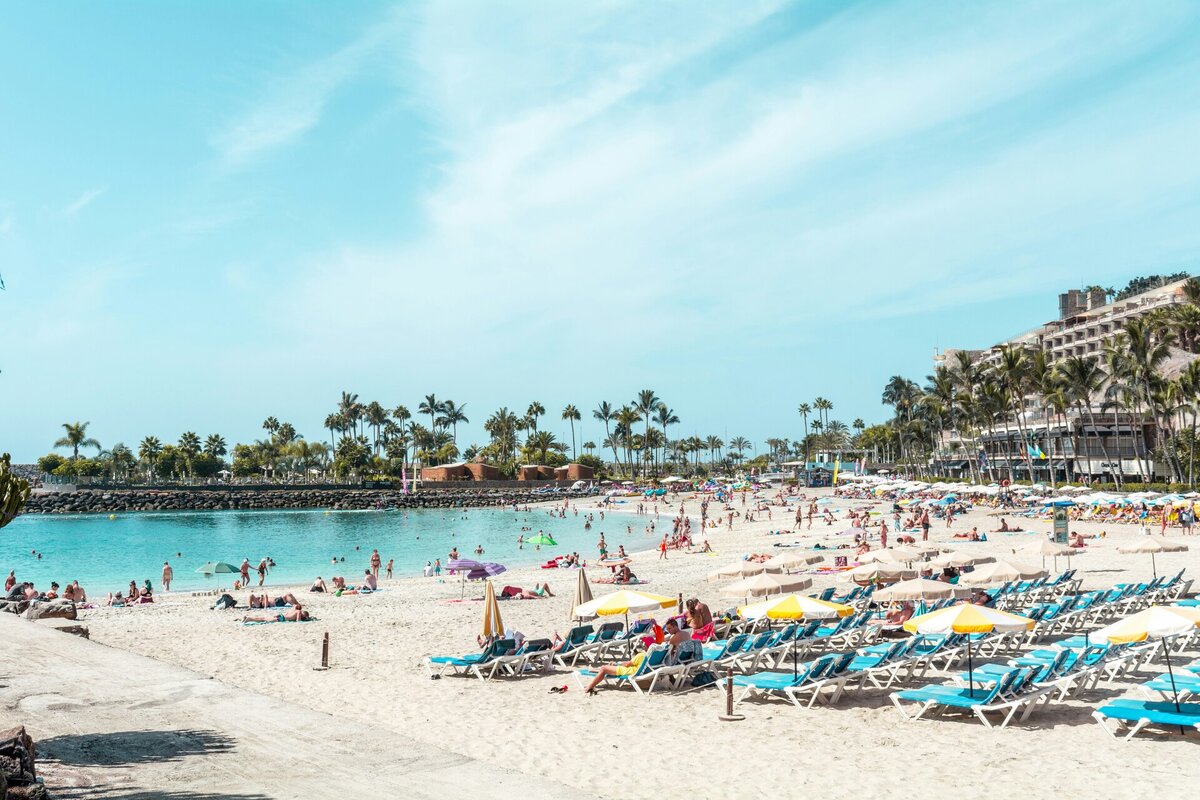
One last tip:
The best months for mainland Spain and the Balearics in 2026 are June and September: the sea is already or still warm, there are fewer people, prices are below August's, and the Balearic eco-tax doesn't bite the way it does at peak. Keep the Canaries for November–March, when the rest of Europe is freezing.



 Holidays


 Last minute
 Hotels


 Blog
Blog