Tunisia in August is not for everyone. It's the best destination for those going purely for warm sea and cheap All Inclusive, happy to sit by the pool from noon to five. And the worst for those who want to explore medinas, visit Carthage in the middle of the day and lead an active tourist lifestyle. The 6°C difference between Djerba and the mainland resorts completely changes the character of the holiday in August — so that's where we start.
- I want beach and warm sea → Resorts in August, Sea and water temperature
- I want sightseeing and culture → Excursions in the August heat
- Travelling with children → For families, Djerba
- Compare with alternatives → Tunisia vs other destinations
- Worried about jellyfish → Jellyfish: myths and reality
Weather in Tunisia in August — the numbers and what they feel like
August is the hottest month of the year for most Tunisian resorts. The key is not just the average temperature, but the daily rhythm it dictates.
| Parameter | Hammamet / Sousse / Monastir | Djerba | Tabarka (north) |
|---|---|---|---|
| Air temperature (daytime peak) | +37–42°C | +33–36°C | +29–32°C |
| Air temperature (morning/evening) | +28–30°C | +26–28°C | +22–25°C |
| Nights | +24–26°C | +23–25°C | +19–22°C |
| Sea | +27–28°C | +27–28°C | +25–26°C |
| Rain | None (0–2 mm) | None | Rare |
| Sunshine (hrs/day) | 11–12 | 11 | 10 |
A tourist's daily schedule in August
In practice, the comfortable hours are limited. From 7 to 10–11am — the best time for the beach and walks, the air hasn't yet turned scorching. From noon to 4–5pm — heat on the mainland hits its peak: being outside is exhausting even for people accustomed to hot climates. Best strategy: pool, air-conditioned room, rest. From 5 to 8–9pm — the sea becomes pleasant again, evening beaches come to life and promenades fill up. On Djerba this comfort window is wider — daytime heat is 5–6 degrees milder thanks to sea breezes from both sides of the island.
Sirocco — the factor nobody warns you about
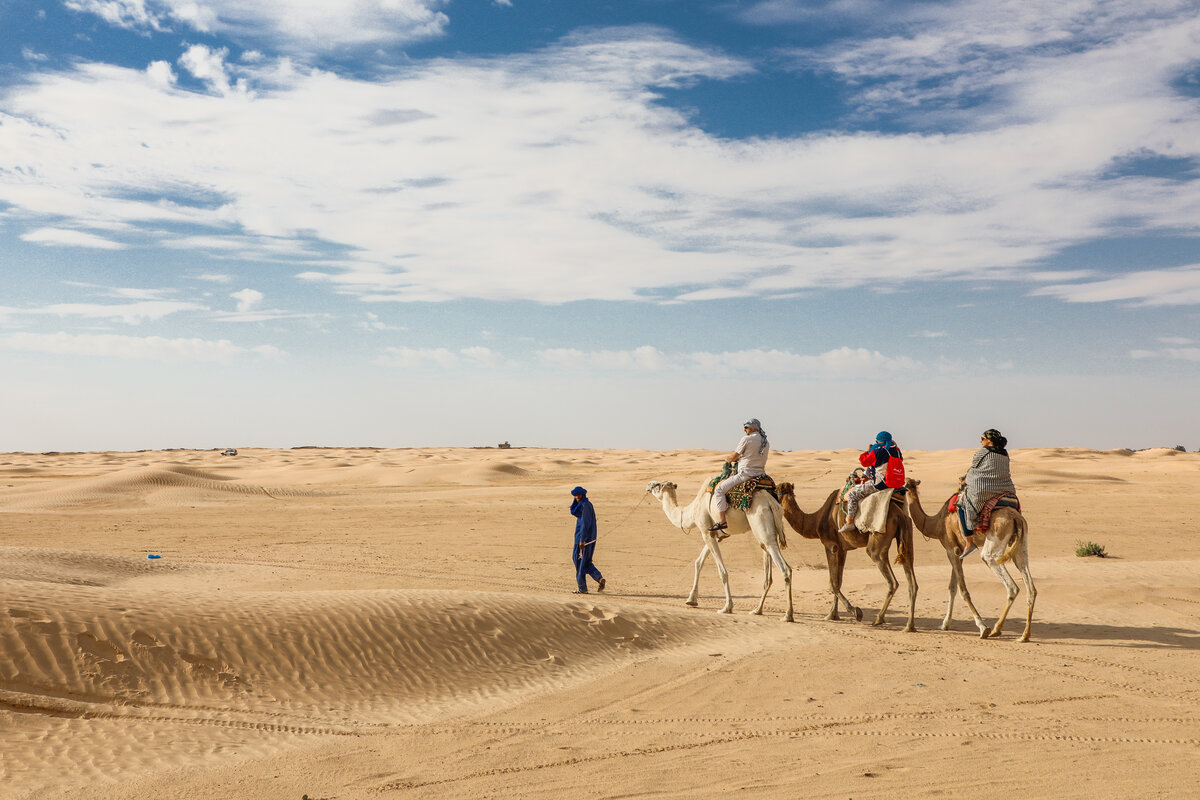
In August, a hot wind from the Sahara called the sirocco blows in from the south 3–5 times a month. It carries dust, pushes temperatures to +45°C and makes the air dry and heavy. It typically lasts 1–2 days before subsiding. There's no predicting it in advance — you simply have to accept it as part of the deal. When the sirocco arrives, swimming in the sea is the best relief: the water is cooler than the overheated air.
August vs other months: September in Tunisia is +32–35°C on the mainland, fewer jellyfish, sea just as warm (+26–27°C), prices slightly higher. June is +28–30°C, almost no jellyfish, sea still +23–24°C. If you can choose between August and September — September is objectively more comfortable with minimal price difference.
Jellyfish in Tunisia in August: myths and reality
"Tunisia in August is overrun with jellyfish" — one of the most common fears among tourists. Let's be straight: what's true, what's exaggerated, and what to actually do.
What's true
August is the peak of jellyfish season on the Tunisian coast. The sea reaches its maximum temperature (+27–28°C) and it's exactly this warm water that draws jellyfish to shore. Hammamet, Sousse and Monastir are the resorts with the highest jellyfish concentration in August. This isn't a guaranteed annual invasion, but the chance of an encounter is high. Tourist reviews from different years vary widely: some report seeing no jellyfish at all, while others say they couldn't enter the water for days at a stretch.
Species you may encounter
Four species are most commonly found on the Tunisian coast in August. Pelagia noctiluca — a small purple jellyfish, the most venomous species in the Mediterranean: the sting is painful and the rash can last several days. Cotylorhiza tuberculata — the "fried egg" jellyfish, large and dome-shaped, practically harmless to humans. Rhizostoma pulmo — barrel-shaped, large (up to 60 cm), stings moderately. Chrysaora hysoscella — the compass jellyfish, stings noticeably.
Where there are fewer jellyfish in August
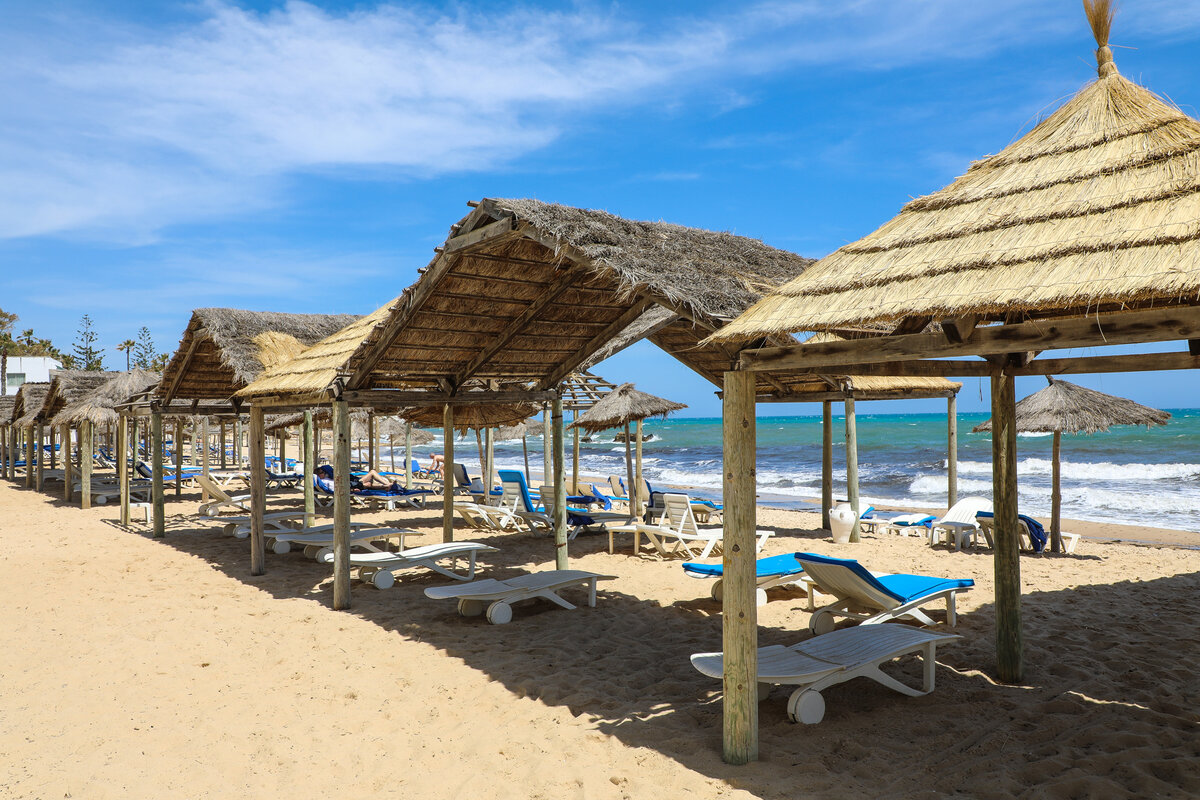
Djerba is clearly in a better position: statistical observations show that the jellyfish peak on the island falls in June, and in August there are significantly fewer than at mainland resorts. The enclosed lagoons and shallow waters along Djerba's northern coast further reduce the likelihood of an encounter. Tabarka in the north of the country — also fewer jellyfish, plus cooler water.
Myths: "jellyfish in Tunisia are venomous and life-threatening" — an exaggeration. Most species cause a painful but not dangerous sting. Those with allergies should carry antihistamine tablets. "Jellyfish are always everywhere" — also untrue: their appearance depends on currents and wind, and in one year Hammamet suffers while neighbouring Sousse is clear — or vice versa.
What to do if stung: don't rub the contact area, rinse with sea water (not fresh water), scrape off tentacle remnants with a blunt object. Antihistamine cream relieves itching. Don't use vinegar, ice or urine — popular advice that only worsens the sting.
Practical tip: before entering the water, ask hotel staff whether there are protective nets on the beach — many 4–5* hotels in Hammamet and Sousse install them during the season. The iMedJelly app tracks jellyfish conditions along the Tunisian coast in real time.
Tunisia's resorts in August — where is better
Five main zones with an honest assessment of each for an August trip.
Hammamet
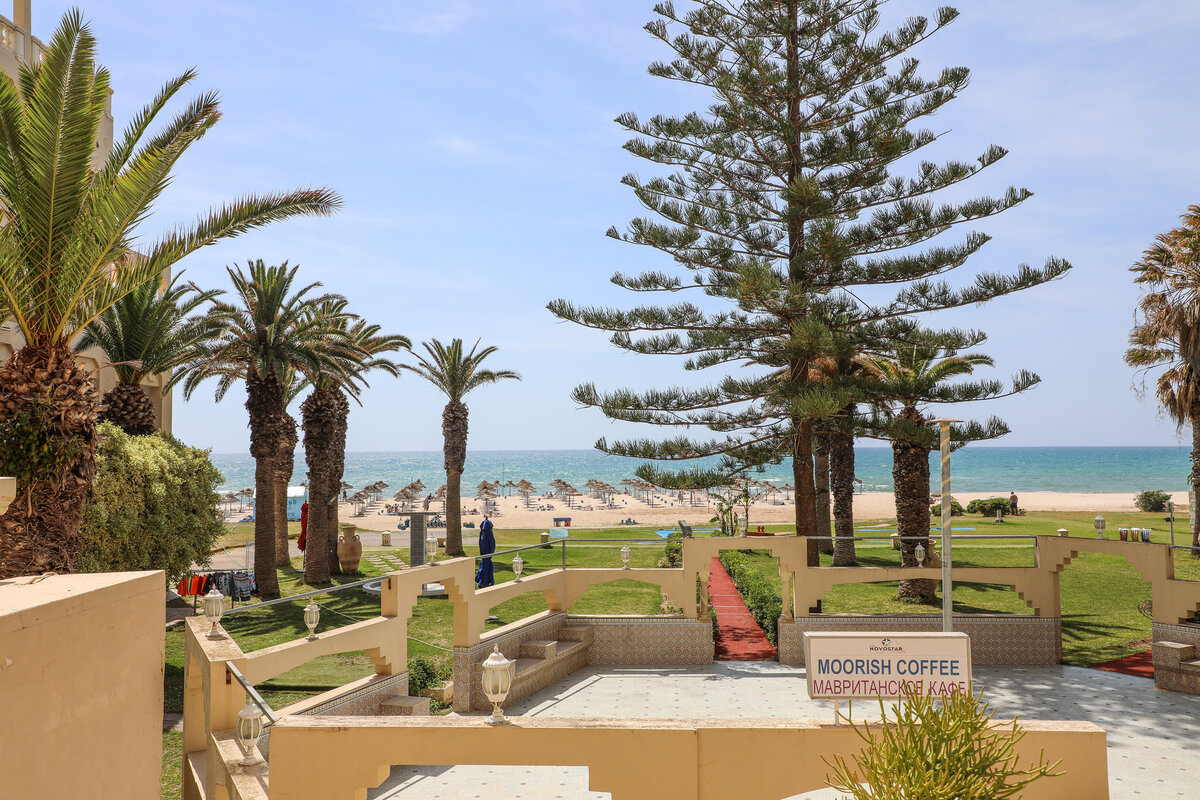
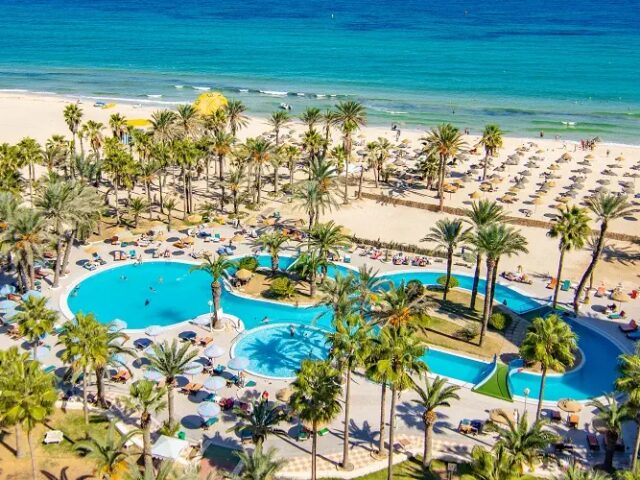
The country's main resort region and the first choice of most Polish tourists. Hammamet divides into two parts: Hammamet-Yasmine — a vast tourist zone north of town with waterparks, 4–5* hotels, marina and casino. Hammamet-Medina — the old town with a 12th-century fortress, market, restaurants with sea views. Beaches are wide, sandy and white. Proximity to the capital (60 km) makes Hammamet a convenient base for excursions to Carthage and Sidi Bou Said — but only in the morning hours.
In August — hot (+38–40°C), jellyfish likely, but the best hotel selection in the country and direct charters from most Polish cities.
Sousse / Port El Kantaoui
Sousse is Tunisia's second-largest tourist centre. Port El Kantaoui, 8 km to the north, is a well-kept artificial marina with yachts, restaurants and a fully tourist atmosphere. Sousse Medina is a UNESCO World Heritage Site, but in the August heat it's only comfortable to explore in the early morning. Sousse's main advantage is proximity to El Jem (1 hour away): a colossal Roman amphitheatre, the third largest in the world after the Colosseum. Easy to combine with an early morning trip.
In August — among the highest jellyfish concentrations in the country, heat at +38–41°C. Compensated by a wide choice of hotels and solid tourist infrastructure.
Monastir / Mahdia
Monastir is the main airport for Polish charter flights to Tunisia. The resort itself is small: the main attraction is the Ribat, a 7th-century fortress right on the sea, one of the best-preserved in North Africa. Monastir's beach is less famous than Hammamet's but perfectly decent. Mahdia, 60 km to the south, is the best option for those wanting Tunisia without tourist overload: quieter, more authentic, longer and less crowded beaches.
In August, Monastir ranks among the top three resorts for jellyfish concentration. Heat at +37–40°C. Active sightseeing — strictly before 11am only.
Djerba
The most comfortable choice in August among all Tunisian resorts. Djerba is an island connected to the mainland by a causeway, and sea breezes from both sides make the daytime heat 5–6 degrees milder than in Hammamet or Sousse. +33–36°C instead of +38–42°C is a meaningfully different level of physical comfort.
The island's northern shore is very shallow — the seabed drops away gently, ideal for children. The eastern shore is more open, with occasional waves. Houmt Souk is the island's authentic medina, nothing like the touristy medinas of the mainland: narrow alleyways, pottery workshops, teahouses. El-Ghriba Synagogue is one of the oldest active synagogues in the world, a place of pilgrimage for the Jewish community of North Africa. Statistically, Djerba has noticeably fewer jellyfish in August than the mainland.
Tabarka
An atypical Tunisia in the north-west of the country. +29–32°C in August — the lowest temperature of any Tunisian resort. Coral reefs and diving, pine forests in the hills behind the town, a Genoese fortress on a rock by the sea. Far fewer tourists than in the south. Downsides: less infrastructure and fewer hotels, harder to reach — only via Tunis-Carthage airport or by road.
The sea in Tunisia in August
Unlike the Atlantic off Portugal's coast, there are no unpleasant surprises with water temperature here. August is the peak warming of the Mediterranean along Tunisia's coastline.
- Water temperature: +27–28°C all along the coast — uniformly warm, the annual maximum.
- Waves: the Mediterranean is generally calmer than the Atlantic. Moderate surf on mainland beaches, near-flat calm on Djerba.
- Shallow water: Djerba's northern shore is exceptionally gradual — you walk 200–300 metres from the shoreline to reach waist depth. Perfect for children, frustrating for adult swimmers.
- Snorkelling and diving: visibility in the Mediterranean is moderate — 5–10 m, not the Red Sea or Maldives. Best diving in Tunisia is at Tabarka, with its coral reefs.
- Jellyfish: peak concentrations off Hammamet, Sousse and Monastir. See the section above for details.
Tunisia in August vs the competition
An honest comparison with the destinations competing for the same tourist from Poland in August.
| Destination | Sea | Air (daytime) | Flight from Warsaw | 7-night tour / 2 people |
|---|---|---|---|---|
| Tunisia — Hammamet / Sousse | +27–28°C | +38–42°C | ~3 hrs | 2,500–4,500 zł |
| Tunisia — Djerba | +27–28°C | +33–36°C | ~3 hrs | 2,800–5,000 zł |
| Turkey (Antalya) | +27–28°C | +33–35°C | ~3.5 hrs | 4,500–8,500 zł |
| Greece (Crete) | +25–26°C | +29–31°C | ~3 hrs | 5,500–10,000 zł |
| Egypt (Hurghada) | +28–29°C | +37–40°C | ~4.5 hrs | 3,500–6,000 zł |
| Bulgaria (Sunny Beach) | +24–25°C | +28–30°C | ~2.5 hrs | 2,800–5,000 zł |
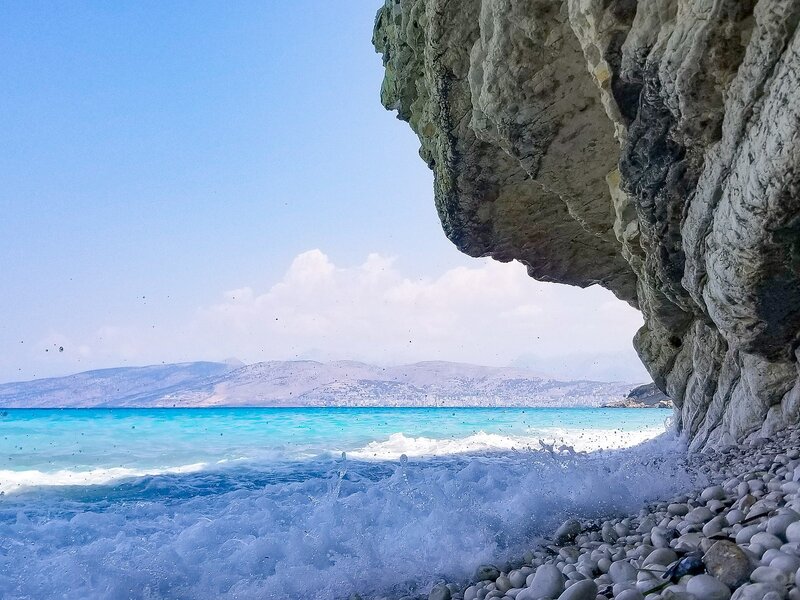
| Albania (Sarandë / Vlorë) | +25–26°C | +30–32°C | ~2.5 hrs | 2,500–4,500 zł |
Tunisia is the cheapest Mediterranean destination from Poland with the warmest water. The main drawback is the highest heat among all beach destinations: mainland resorts in August are 5–7 degrees hotter than Turkish Antalya. Djerba is comparable to Turkey for comfort at a substantially lower price. Albania is an interesting alternative for those who want cheap without extreme heat: +30–32°C, crystal-clear Ionian Sea, developing infrastructure. Bulgaria is the closest option with moderate prices, but noticeably cooler water (+24–25°C) and no exotic factor.
Excursions in August — what's realistic and what isn't
Heat dictates the rules. Everything involving walking in open spaces in August must be done strictly before 11am or after 5pm. Breaking this rule turns any excursion into a physical ordeal.
Carthage + Sidi Bou Said
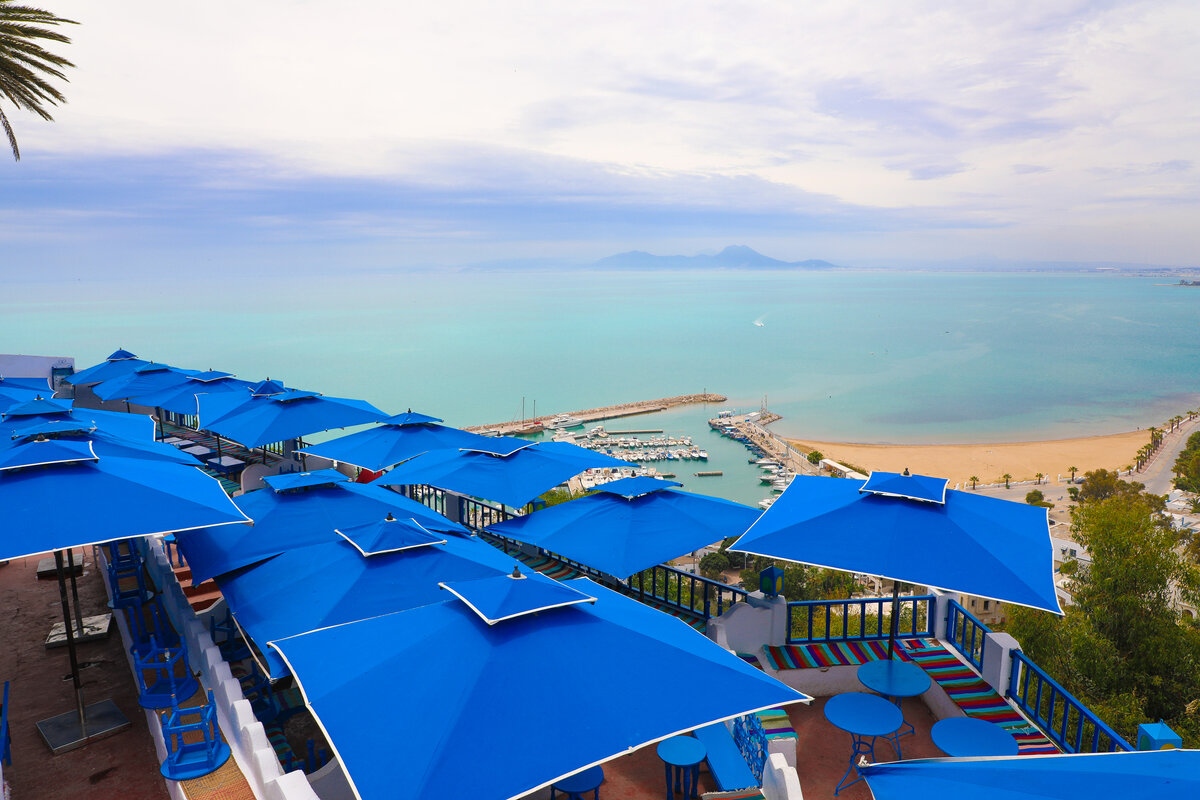
From Hammamet — 1.5 hours. You need to leave no later than 7–8am. Carthage — ruins of the Phoenician city and Roman civilisation, the Antonine Baths right on the sea, a tophet (Phoenician sanctuary), the National Museum of Carthage on Byrsa Hill. Sidi Bou Said — a white-and-blue town on a high cape above the Gulf of Tunis, the Nattes café with tea and shisha, one of the most beautiful views in the country. Both sites are best finished by 11am — after that, heat and crowds make the walk exhausting.
El Jem amphitheatre
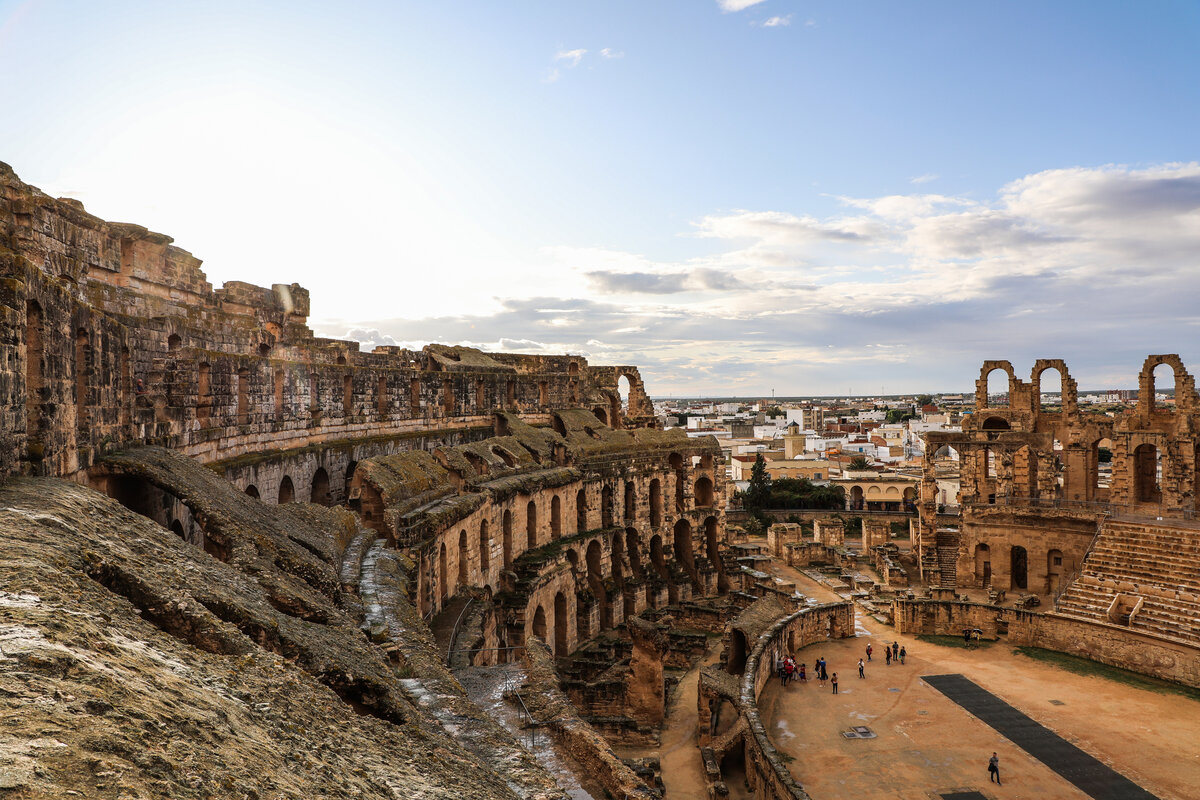
From Sousse — 1 hour. The third-largest amphitheatre in the world after the Colosseum and Capua, almost perfectly preserved. The interior is cooler — the limestone walls hold the shade well. Best time to visit: 8–10am. Worth combining with a visit to the small archaeological museum in the centre of El Jem.
Tunis Medina (capital)
One of the finest Arab medinas in North Africa, UNESCO-listed. Souk el-Attarine — the perfume market, Souk ech-Chaouachine — hatmakers, Zitouna Mosque at the heart of the medina. The only viable option in August is an evening stroll after 6–7pm, when the heat drops and the medina comes alive. At midday, the medina is a labyrinth without airflow — +42°C in the shade of its narrow alleys.
Sahara — two-day tour
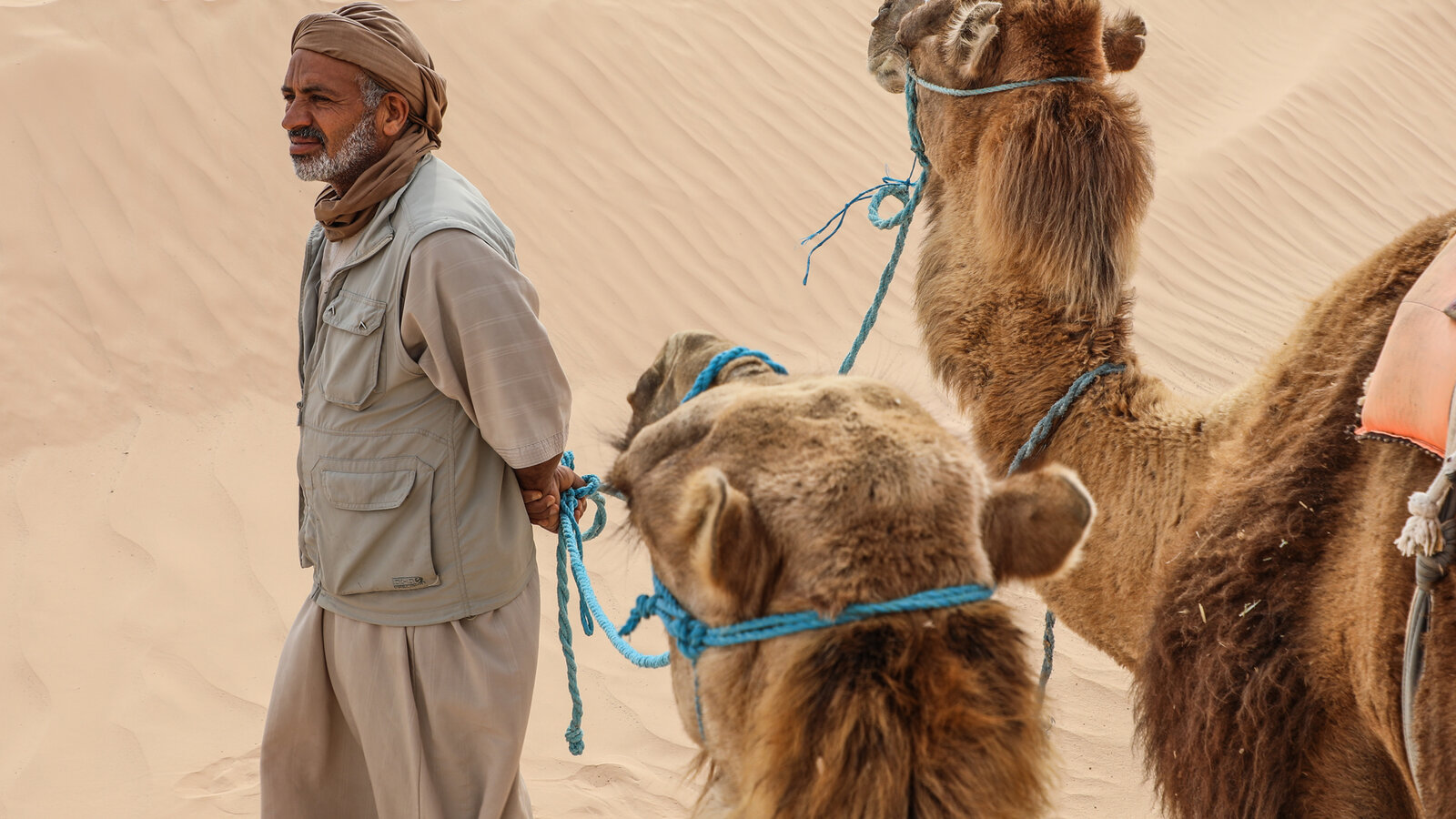
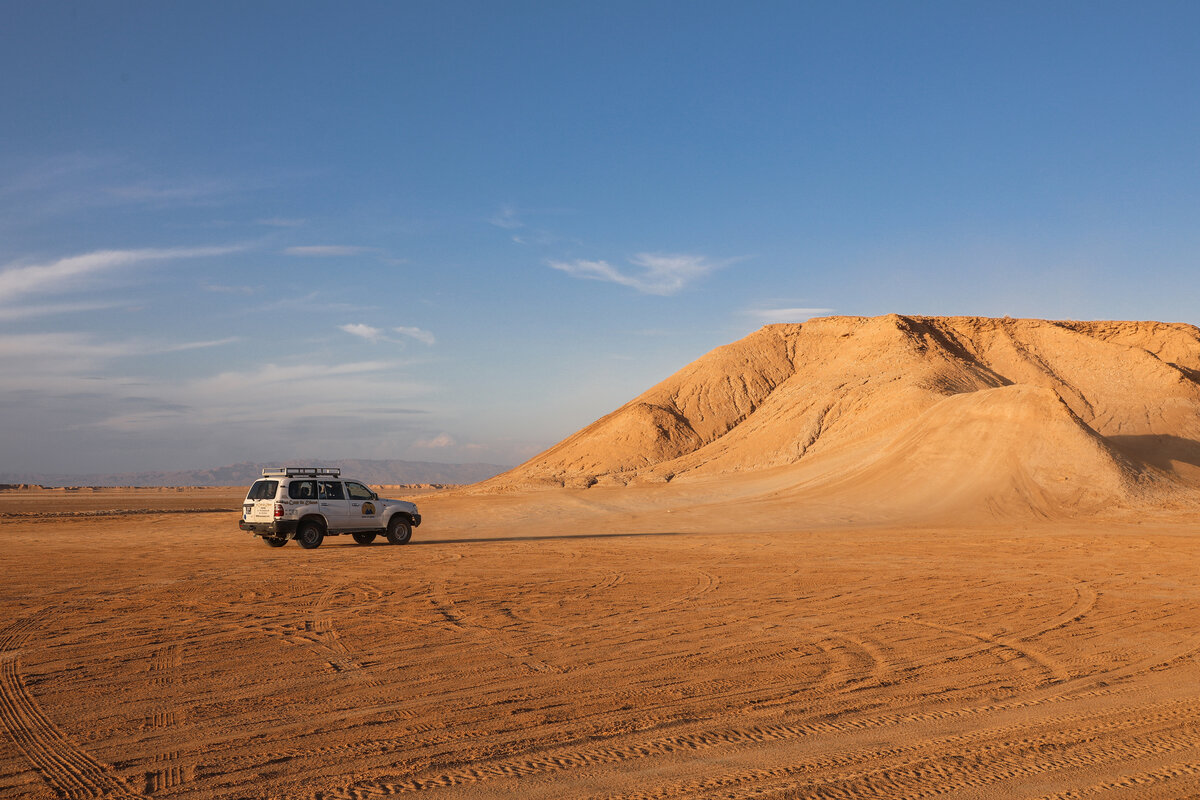
Douz, Matmata, Seldja Gorge, Tataouine — the standard route. In August the desert reaches +48–52°C in the middle of the day. It's extreme but doable — with the right logistics. The only sensible option: depart late in the evening, overnight in a Berber camp under the open sky, camel ride at dawn (+28–30°C), return before 10am. Matmata — underground Berber homes, some of which served as filming locations for George Lucas's Star Wars. For people who struggle with heat or have cardiovascular conditions — this tour in August is not recommended.
El-Ghriba Synagogue + Houmt Souk (Djerba)
One of the oldest active synagogues in the world — according to tradition, founded in 586 BC by refugees from the destroyed Jerusalem. Cool inside, can be visited at any time of day. Houmt Souk nearby — the authentic part of Djerba: potters, weavers, olive presses. This is the one excursion in August that can be done without watching the clock.
The golden rule for excursions in August: depart no later than 7–8am, return by noon. Or in the evening after 5:30–6pm. All other time — pool and air conditioning. Tour operators offer group excursions starting at 9–10am — that's already pushing it. Better to arrange individual transfers with an early start.
Who August in Tunisia suits — and who it doesn't
A good fit for
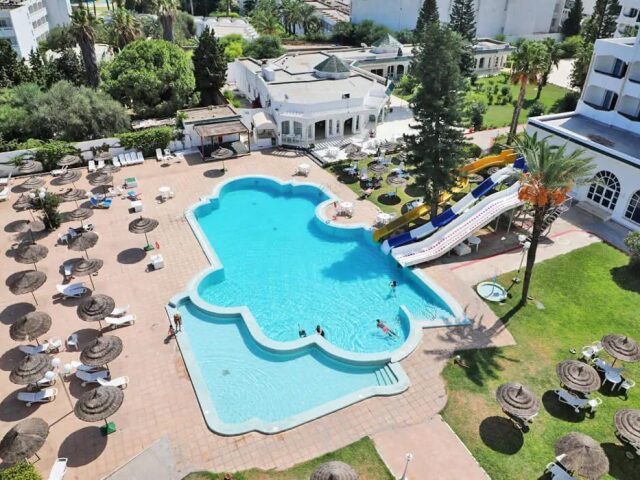
Families with children — provided they go to Djerba. Shallow warm sea, Aquayland waterparks, All Inclusive at 4–5* hotels, significantly fewer jellyfish in August than on the mainland, and heat 5–6°C milder. Sidi Maaref beach on the island's north shore is one of the best children's beaches in Tunisia.
Couples on their first affordable foreign holiday — warm sea, exotic atmosphere, new experiences, price roughly half that of Turkey. Hammamet or Djerba are the most obvious choices.
Those going purely for beach and All Inclusive — and willing to accept the heat as a given. In a good hotel with a large pool, shade and a cold bar, August in Tunisia is very manageable.
Not a good fit for
Active travellers — city walks, excursions in the heat, sightseeing at midday become an ordeal. If the main goal is culture and landmarks, April–May or October will be far more rewarding.
People with cardiovascular conditions — +40°C and high night-time humidity put serious strain on the body. Worth consulting a doctor before travelling.
Those expecting European-standard service and food — Tunisia is not Turkey in terms of hotel infrastructure quality. 4* hotels here tend to feel more like Turkish 3* stars. Exceptions exist, but you need to look for them.
Solo female travellers without experience in the Arab world — outside resort zones, heightened attention, aggressive bargaining in medinas and unfamiliar social norms are possible. In tourist areas it's less pronounced but doesn't disappear entirely.
Safety in Tunisia in 2026
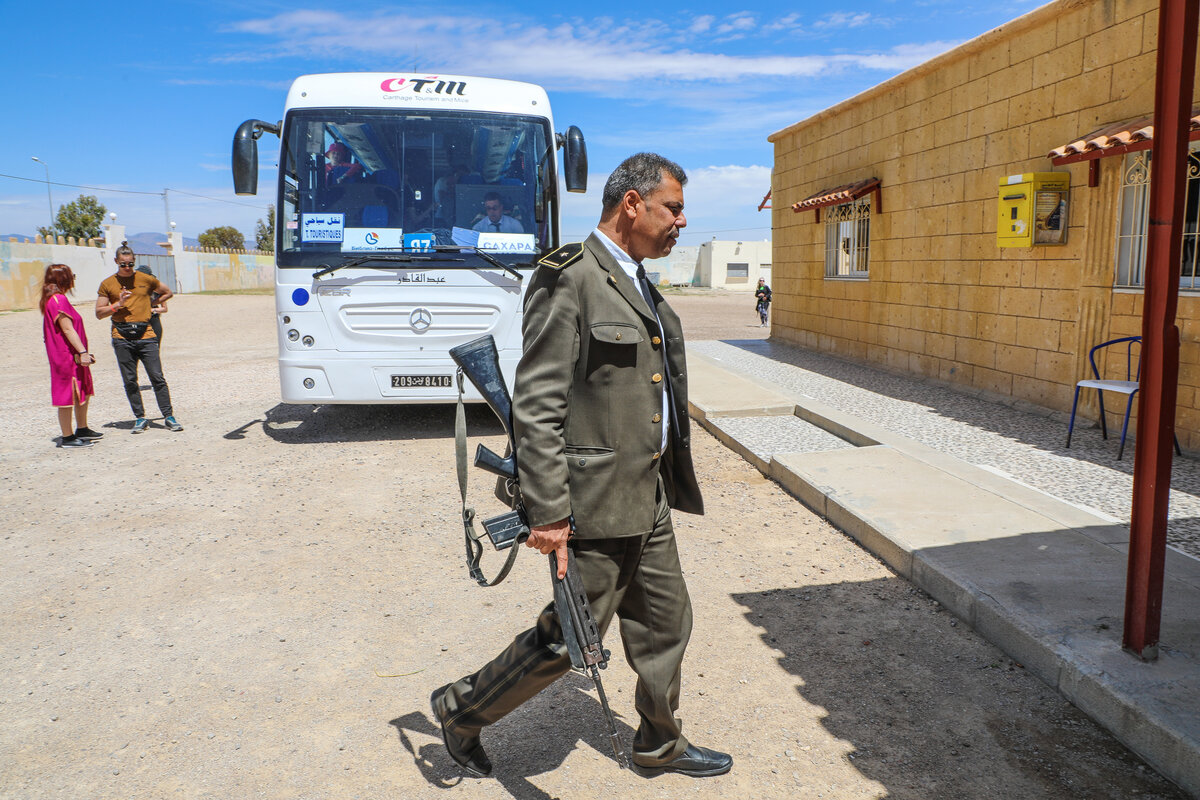
Following the terrorist attacks of 2015, Tunisian authorities radically strengthened security in tourist zones. Resort areas — Hammamet, Sousse, Monastir, Djerba — are now well protected: tourist police operate 24/7, hotels have their own security and metal detectors at the entrance.
The Polish Ministry of Foreign Affairs does not impose a travel ban on Tunisia; the standard advisory is "exercise increased caution." Real risk zones for independent travellers: border areas with Algeria to the west and Libya to the south-east, and the deep south (Tataouine and beyond). On tourist routes (Sahara via Douz), safety is ensured when travelling with a licensed tour operator.
The most common real problems tourists face: aggressive bargaining in medinas (normal, not threatening), pickpockets in crowds, taxi drivers without meters. In all cases, one simple rule applies: agree on a price in advance, don't follow strangers, don't accept anything offered "for free."
Visa and entry requirements
Poland and EU: visa-free entry for up to 90 days within a 180-day period.
Ukraine: visa-free entry for up to 90 days — passport control only, no additional documents required.
Belarus: visa-free entry for up to 21 days with a tourist voucher (hotel booking confirmation). Without a voucher — a visa is required. Check current requirements before travelling.
Important for all travellers: passport must be valid for at least 6 months beyond the entry date. Travel insurance is essential — recommended coverage from 50,000 EUR including medical evacuation. The Tunisian dinar (TND) cannot be exchanged outside the country — change money only at official banks and hotel exchange desks. Import and export of dinars is restricted by law.
Practical tips — what to pack, common mistakes
Essential items
- Sunscreen SPF 50+ — African sun in August burns fast and mercilessly, even in the water.
- Wide-brimmed hat — not a baseball cap, but a panama or sun hat that protects the neck and ears.
- Lightweight long-sleeved clothing — for mosques, medinas and evening walks outside the beach zone.
- Antihistamine cream and tablets — in case of jellyfish stings or sun allergy.
- Rehydration sachets — dehydration at +40°C with any activity sets in quickly, often unnoticed.
- Cash in EUR or USD — to exchange for dinars at the airport or hotel. Cards are not accepted in medinas.
Common mistakes
- Planning a Sahara excursion during daylight hours — +50°C in the desert in August is not a figure of speech. Dawn and early morning only.
- Drinking tap water — bottled only. Stomach problems are one of the most common medical issues for tourists in Tunisia.
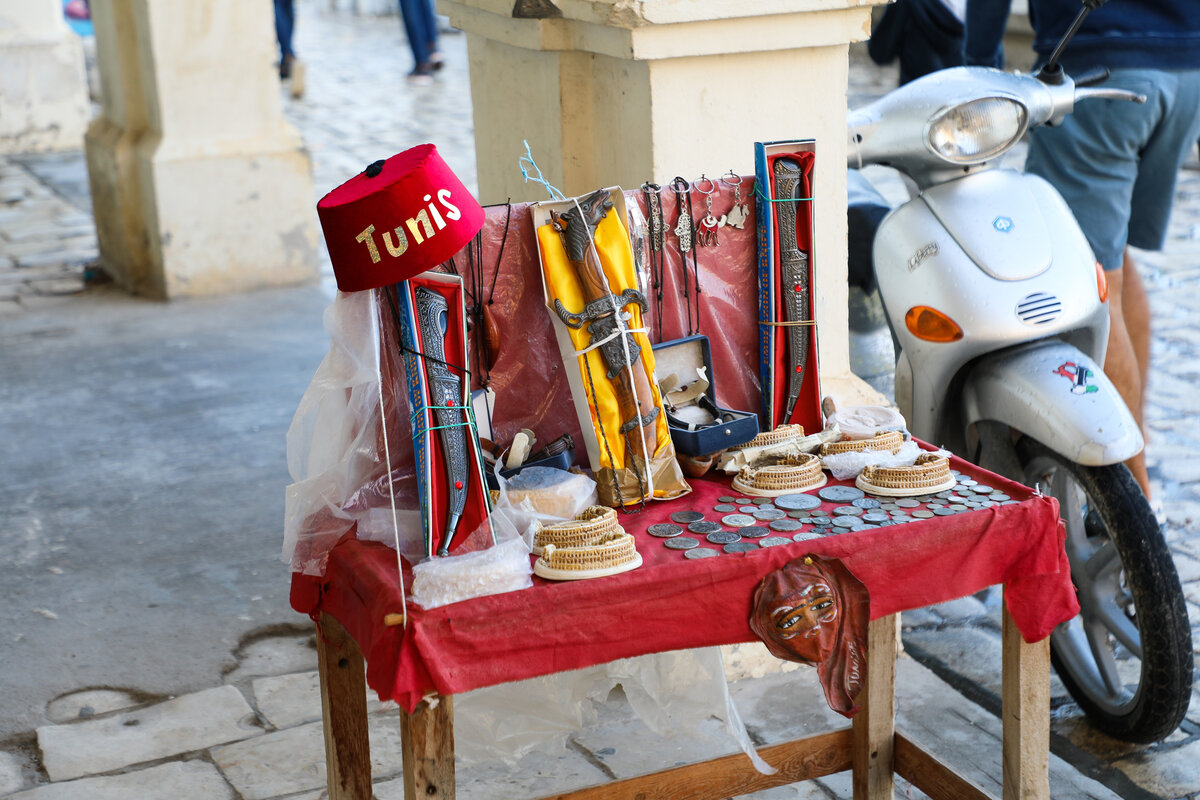
- Accepting "free tea" in a carpet shop — a classic sales technique using psychological pressure. There's no legal obligation, but walking out without buying is psychologically uncomfortable.
- Not bargaining at the market — the opening price for tourists is 3–5 times the real price. Bargaining is expected and respected.
- Going to the medina without cash — cards are rarely accepted, ATMs exist but are not everywhere.
- Not agreeing on transfer terms in advance — always agree on the taxi or transfer price before getting in the vehicle.
When to book and how much it costs
August is the peak of the Polish tourist season in Tunisia, but prices remain the lowest among Mediterranean destinations. Charter flights to Monastir depart from Warsaw, Kraków, Katowice, Gdańsk, Poznań and Wrocław.
Booking 4–6 weeks ahead — the optimal window: good hotel selection, normal prices without peak surcharges. 7-night / 2-person All Inclusive tours at 4*: 2,500–4,500 zł on the mainland, 2,800–5,000 zł on Djerba.
Last minute (1–2 weeks before departure) — Tunisia is arguably the world's best last-minute destination. Tour operators readily discount unsold inventory: a 7-night / 2-person All Inclusive 4* tour for 2,000–3,000 zł is genuinely achievable. The risk — less choice of resort and dates.
Early booking (3+ months ahead) — gives no particular price advantage: Tunisia doesn't sell out the way Greece or Italy does. Exception: a specific hotel that matters to you.
Is Tunisia in August worth it
Tunisia in August — honestly and directly: this is not a universal destination. The +38–42°C heat on the mainland is real, jellyfish in Hammamet and Sousse are probable, and midday excursions become a survival exercise. If the main goal of the trip is sightseeing and active travel, April, May or October will deliver incomparably more enjoyment.
But if the goal is warm sea, cheap All Inclusive and beach relaxation with an exotic flavour — Tunisia in August is the best value-for-money option from Poland. Djerba solves the heat and jellyfish problem better than anywhere else: +33–36°C instead of +40°C, shallow calm sea, an authentic island a few minutes from the hotel. Hammamet for those who need the best infrastructure and want to head out early to Carthage. Last minute works here like nowhere else: you can find a decent tour a week before departure at prices that simply don't exist in Turkey or Greece.

 Holidays


 Last minute
 Hotels


 Blog
Blog