
In the summer 2026 price lists, four countries line up on a clear ladder. The average week-long all-inclusive package departing Warsaw in the first week of August costs around PLN 3,900 per person in Bulgaria, around PLN 5,300 in Turkey, and — for the first time on record — over PLN 6,000 in Greece; Albania plays in Bulgaria's price league and was the only one of the four getting cheaper in 2026 while the rest set records. The answer looks ready-made. But the sticker is half the truth: behind the words "all inclusive" these countries hide four different products, and the cheapest package is not always the best value.
Below we compare an identical basket — 7 nights, two people, all-inclusive, a direct charter from Poland — across the four countries: what the formula actually includes, what the sea costs in June versus August, how long the flight takes, and which documents you need. At the end, a comparison table and verdicts by traveller profile.
- The lowest sticker price in Europe → Bulgaria
- The newcomer getting cheaper → Albania
- The most per złoty: ultra all-inclusive → Turkey
- The dearest — but it's Greece → Greece
- The warmest sea of the four → Turkey (Antalya)
- The shortest flight → Bulgaria, Albania
- Compare everything at once → Comparison
- Entry rules by passport → Entry rules
Bulgaria: the lowest sticker — and the first season on the euro
"Cheapest on paper, most modest in the glass"
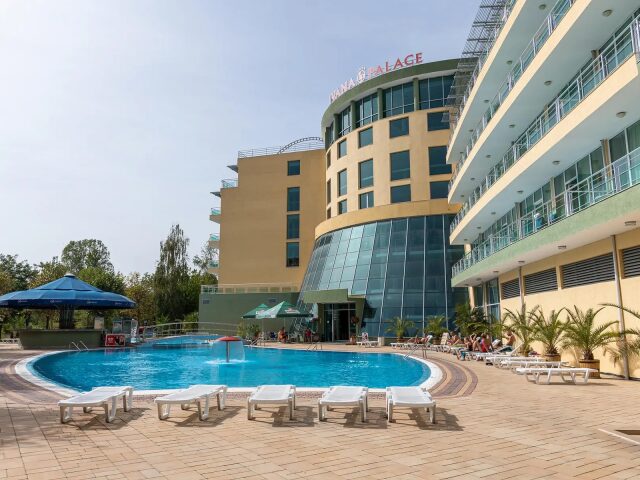
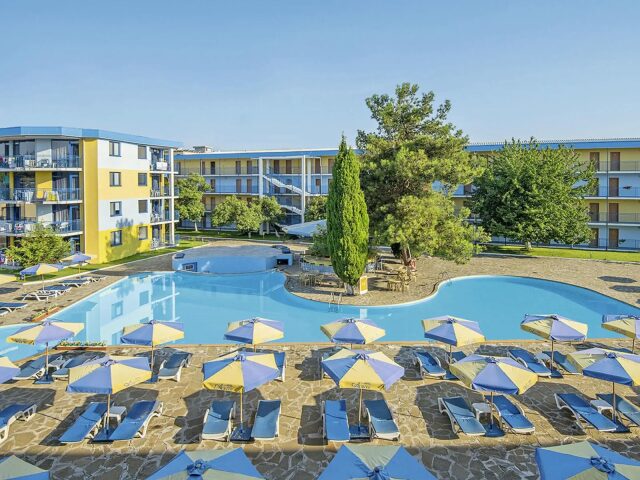
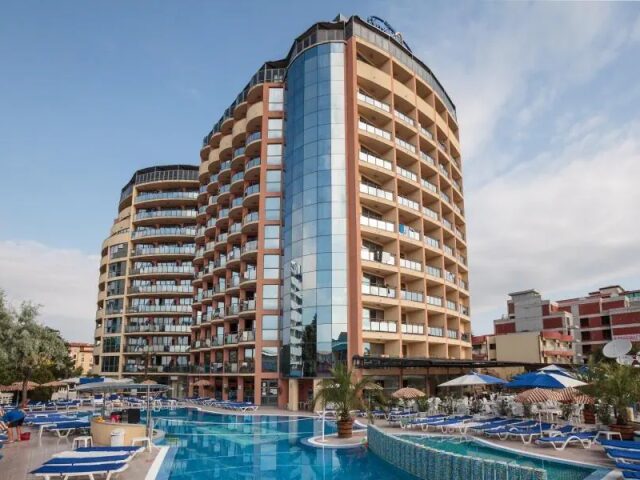
The Black Sea remains Europe's most affordable all-inclusive: week-long packages for two start from around PLN 3,800–4,000 in June, and five-star hotels around Golden Sands turn up below PLN 2,000 per person — figures that buy three stars in Greece. The flight to Burgas or Varna takes about 2 hours; it doesn't get shorter. The honest caveat concerns what's inside the formula: Bulgarian all-inclusive usually means a buffet and local drinks at set hours, without the 24-hour bars, à la carte restaurants and water parks of Turkish scale; four stars here and four stars in Antalya are different universes. And the 2026 news: from 1 January Bulgaria switched from the lev to the euro — Croatia's 2023 experience suggests the changeover tends to nudge local prices upwards, so the "pocket-money country" reputation is worth verifying rather than taking on faith.
| Period | Air (day) | Sea | Package, 7 nights / 2 people |
|---|---|---|---|
| June | +25–28°C | +21–23°C | PLN 3,800–7,000 |
| July–August | +28–31°C | +24–26°C | PLN 5,500–9,500 |
| September | +24–27°C | +23–24°C | PLN 4,000–7,500 |
Flight from Warsaw: ~2 hrs to Burgas or Varna — the shortest of the four
Average peak package (August): ~PLN 3,900 pp — the lowest of the four countries
Season: short — comfortable swimming from mid-June to early September
Currency: the euro since 1 January 2026 — watch for price rounding on the ground

Who is it for
The best choice when budget is criterion number one: families wanting a short flight, groups heading for Sunny Beach, anyone after a warm sea for minimal money. Not worth it if you expect the Turkish scale of the formula: the same words "all inclusive" here pour local wine to a timetable, not a midnight cocktail by a pool with slides. And skip May or late September for swimming — the Black Sea warms later and cools earlier than its neighbours.
Albania: the challenger getting cheaper while everyone else gets dearer
"Bulgarian prices, near-Greek sea, a formula still growing up"
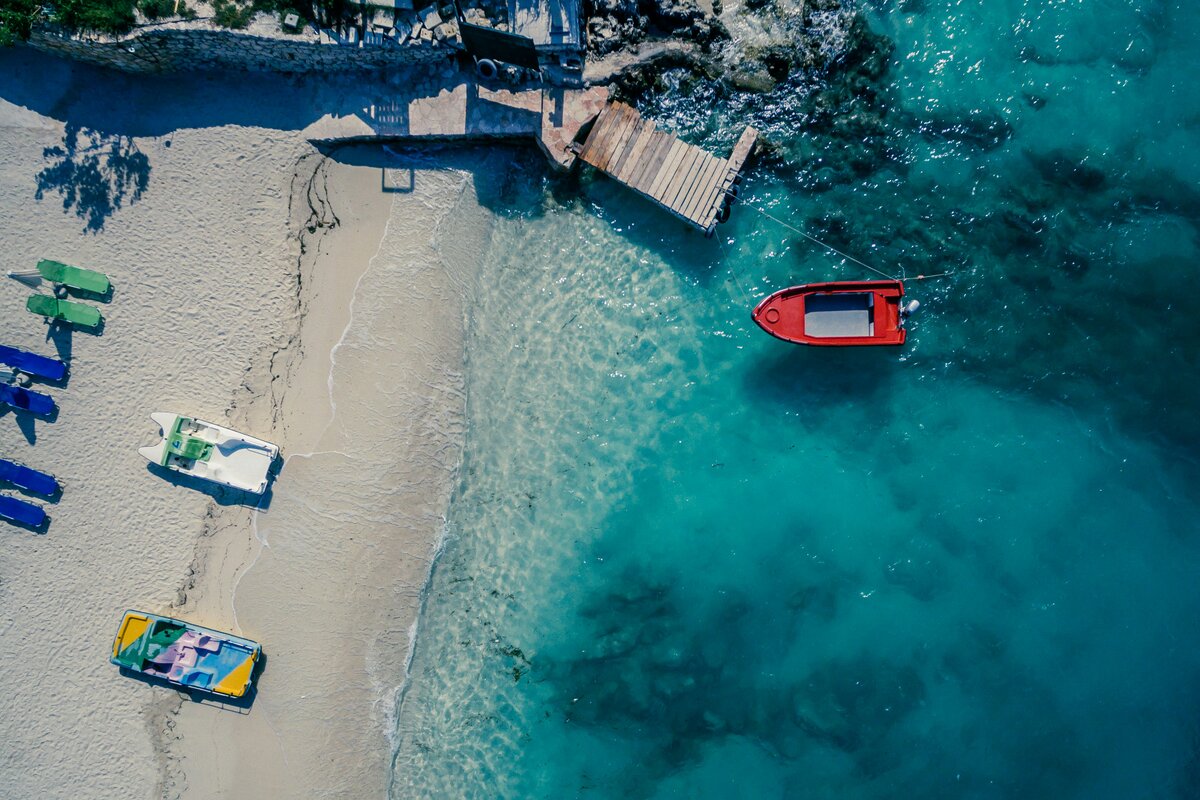
The only country of the four where 2026 price monitoring recorded falls rather than records: the hotel base is growing faster than demand, and operators are selling the Adriatic at Black Sea prices — packages from ~PLN 1,700 per person in June. The flight to Tirana takes about 2 hours 10 minutes, then 40–60 minutes to Durrës, where almost the entire all-inclusive base is concentrated. The honest caveat: the formula itself is young here. Genuine all-inclusive hotels are few, standards swing from "pleasantly surprised" to "a three-dish buffet", and the famous southern beaches — Ksamil, Saranda — are not package territory at all: they make more sense on a bed-and-breakfast basis. In return, on-the-ground prices are the lowest of the four: a taverna dinner for two runs €20–30 where Greece charges double.
| Period | Air (day) | Sea | Package, 7 nights / 2 people |
|---|---|---|---|
| June | +26–29°C | +22–23°C | PLN 3,400–7,000 |
| July–August | +29–32°C | +24–25°C | PLN 5,000–9,000 |
| September | +25–28°C | +23–24°C | PLN 3,800–7,000 |
Flight from Warsaw: ~2 hrs 10 min to Tirana + 40–60 min transfer to Durrës
Packages: from ~PLN 1,700 pp in June; the only one of the four getting cheaper in 2026
Season: June–September; the south (Ksamil) is warmer but isn't all-inclusive territory
On the ground: the lek, the lowest prices of the four; cash still matters
Who is it for
The choice for those who want a fresh destination on a Bulgarian budget and can accept that the service is still a work in progress in places: younger couples, curious travellers, families without inflated expectations of the entertainment programme. Not worth it for a polished ultra-all-inclusive machine — it doesn't exist here yet, and measuring Albania with a Turkish yardstick guarantees disappointment. If you want the turquoise south, take bed and breakfast and eat in the tavernas.
Turkey: not the cheapest sticker — the hardest-working złoty
"The benchmark formula: nobody pours this much for the money"
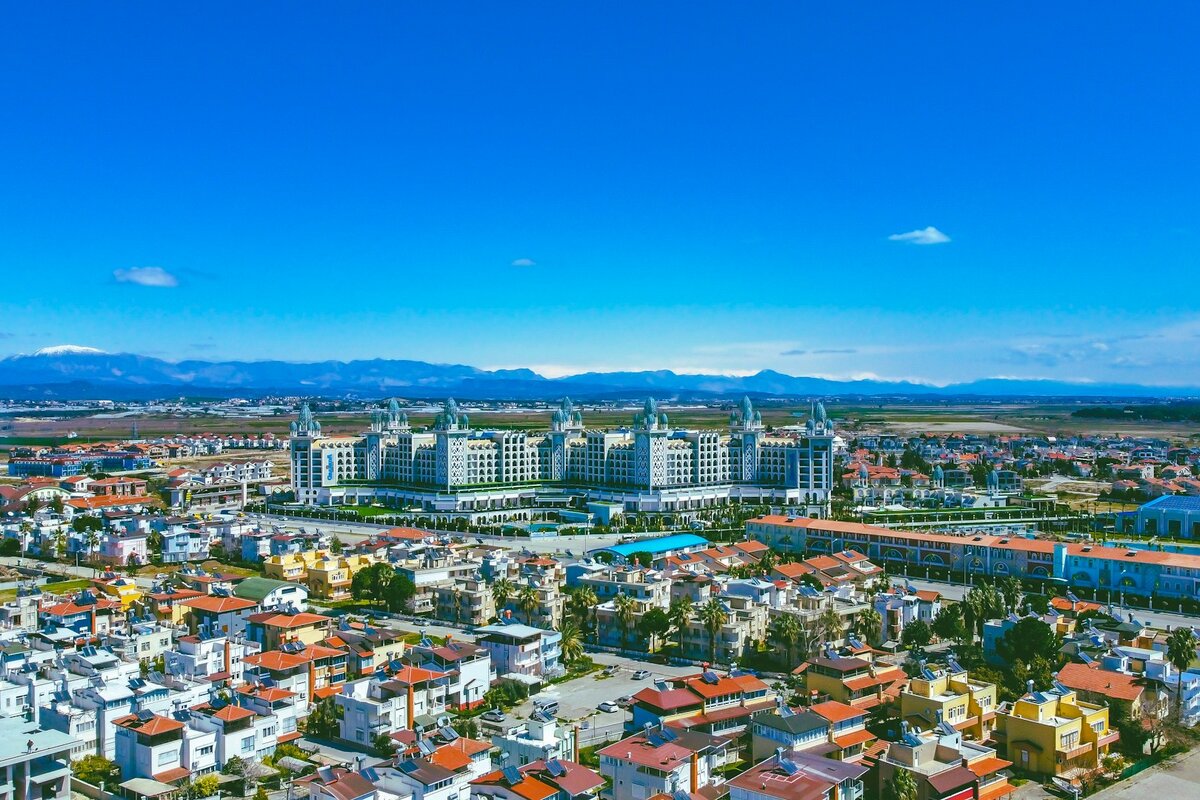
The average August package (~PLN 5,300 pp) is a third dearer than Bulgaria's, but comparing stickers head-on is a mistake: Turkish all-inclusive is the global benchmark of the formula. Round-the-clock bars, several à la carte restaurants included, on-site water parks, kids' clubs and entertainment of industrial polish — in Antalya, Side and Belek, five stars buy what twice the money can't in Europe. On top of that, in spring 2026 Turkey got cheaper four weeks running while Greece grew dearer, and the gap between them passed PLN 900 per person. The sea is the warmest of the four (+27–28°C in July) and the season the longest: in October the Mediterranean still holds +24–25°C when the Black Sea has already closed. The honest caveat: the "everything inside the hotel" concept is absorbing — many spend a week without seeing Turkey at all, and in July–August the Riviera runs past +33°C.
| Period | Air (day) | Sea | Package, 7 nights / 2 people |
|---|---|---|---|
| June | +29–32°C | +24–26°C | PLN 3,200–8,000 |
| July–August | +33–36°C | +27–28°C | PLN 7,000–12,000 |
| September–October | +27–31°C | +24–26°C | PLN 5,000–9,500 |
Flight from Warsaw: ~3 hrs 20–40 min to Antalya (also Bodrum, Dalaman)
Average peak package (August): ~PLN 5,300 pp; early booking and June markedly cheaper
Season: the longest — May–October, with the sea still +24–25°C in October
The formula: benchmark ultra all-inclusive — 24-hour bars, à la carte, water parks
Who is it for
The best option for families with children and anyone travelling for the hotel itself: on "what the formula delivers per złoty", Turkey has no competition. A sensible pick for the shoulder season too — October here is fully swimmable. Not worth it if a holiday means walking out of the gate to towns and tavernas: the Turkish Riviera concept is built around the hotel grounds, not the country. And weigh the July heat honestly if you're travelling with small children or handle +35°C badly.
Greece: the dearest — with the most honest justification for the price
"You pay not for the formula but for what's beyond the hotel gate"
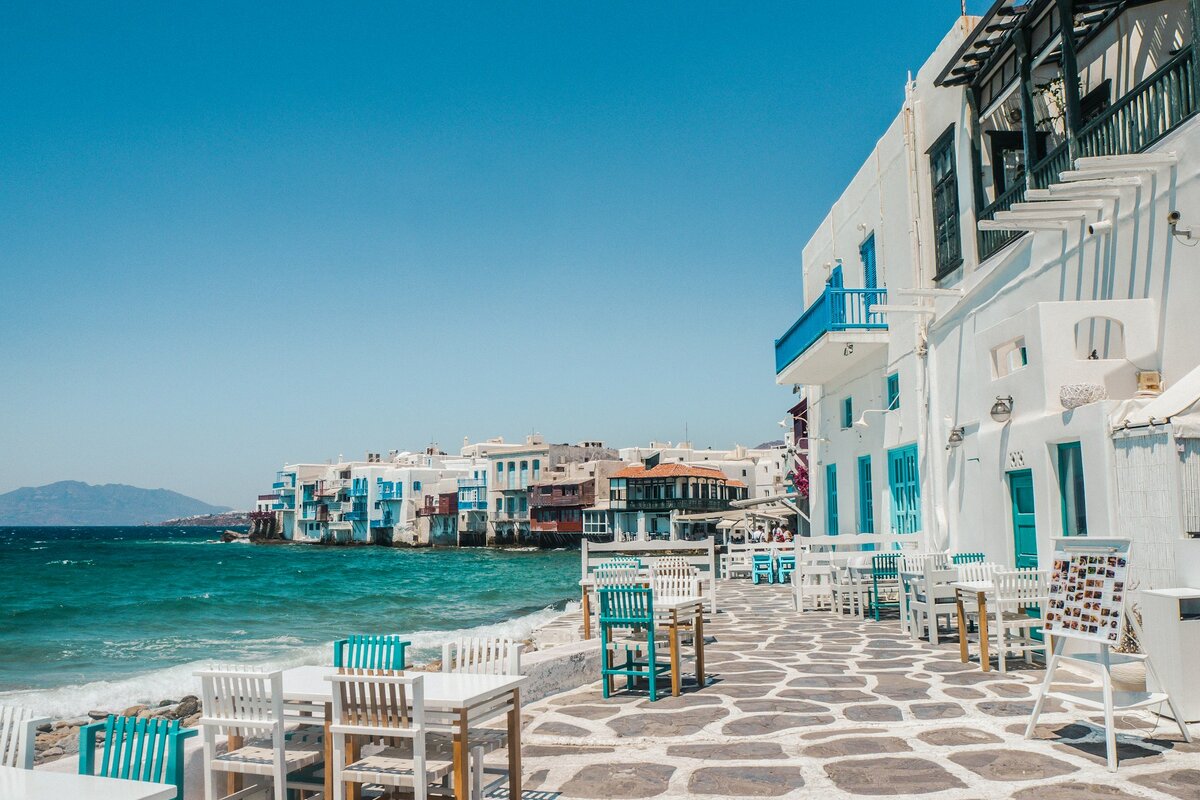
Summer 2026 made Greece the record-holder: the average package price broke PLN 6,000 per person for the first time — over PLN 900 more than Turkey and half as much again as Bulgaria. Yet Greek all-inclusive is more modest than Turkish: the emphasis is on the quality of the kitchen and local produce rather than the scale of the bar; the alcohol is usually local, à la carte comes at a supplement. Buying Greece for the formula itself is overpaying. Buying it for what surrounds the hotel is another matter: Crete, Rhodes and Corfu offer what none of the other three can — antiquity, islands, tavernas and landscapes that pull you out of the hotel every day. Plus a practical bonus: it's the EU and Schengen, so entry paperwork is the lightest of the four for residents of Poland.
| Period | Air (day) | Sea | Package, 7 nights / 2 people |
|---|---|---|---|
| June | +27–30°C | +22–24°C | PLN 3,400–9,000 |
| July–August | +30–34°C | +24–26°C | PLN 8,000–14,000 |
| September | +26–29°C | +24–25°C | PLN 5,500–10,000 |
Flight from Warsaw: 2 hrs 40 min (Corfu) – 3 hrs 30 min (Rhodes)
Average peak package (August): over PLN 6,000 pp — a record and the four's maximum
Season: May–October; September is the best sea-to-price ratio
The formula: quality over scale; à la carte and imported drinks often extra
Who is it for
The choice for those who need all-inclusive as a comfortable base camp rather than the point of the trip: couples and families who'll head out to beaches, ruins and tavernas get the richest holiday of the four here. Not worth it if the plan is a week inside the hotel grounds: for that scenario Greece charges Greek money and delivers less than Turkey, and the PLN 900+ per person gap goes to waste.
Comparison: four countries, one basket
The basket: 7 nights, two people, all-inclusive, a direct departure from Warsaw. Figures are indicative; "average peak" per price monitoring for the first week of August 2026.
| Country | From (June, 2 people) | Average peak (Aug, pp) | Sea (July) | Flight | Formula character |
|---|---|---|---|---|---|
| Bulgaria | from ~PLN 3,800 | ~PLN 3,900 | +24–26°C | ~2 hrs | Modest: buffet + local drinks at set hours |
| Albania | from ~PLN 3,400 | below Greece, falling | +24–25°C | ~2 hrs 10 min + transfer | Young: standards vary, base in Durrës |
| Turkey | from ~PLN 3,200 | ~PLN 5,300 | +27–28°C | ~3 hrs 20–40 min | Benchmark: ultra, 24-hr bars, water parks |
| Greece | from ~PLN 3,400 | >PLN 6,000 (record) | +24–26°C | 2 hrs 40 min – 3 hrs 30 min | Quality over scale; supplements common |
Verdicts by profile. The lowest budget at any cost — Bulgaria, with Albania breathing down its neck. The most formula per złoty, families, water parks — Turkey, and it isn't close. Novelty plus the lowest on-the-ground prices — Albania. A holiday where the hotel is merely a base — Greece, whose premium honestly pays for everything beyond the gate. And one piece of arithmetic covers all four: June and September run 25–45% below July–August for nearly the same sea everywhere except Bulgaria.
Pre-booking checklist:
- Decide first what you're buying: the formula (then Turkey), the sticker (Bulgaria/Albania), or the country around the hotel (Greece) — that determines where your złoty works hardest.
- Read the all-inclusive contents at the specific hotel, not the label: "ultra", "24h" and "soft" are not standardised — the same set carries different names at two hotels.
- Mind the star inflation: 4* in Turkey, Bulgaria and Albania are three different standards; trust recent reviews rather than star counts.
- Shift the dates to June or September — the same hotels at 25–45% less; check the sea temperature for Bulgaria, while for Turkey September–October is arguably the best time of all.
- Book Turkey early: in spring 2026 it was getting cheaper against a dearer Greece, and the best packages go first.
- Check your documents before paying — the four countries run three different entry regimes (details in the block below).
Common mistakes:
- Comparing countries by the sticker number alone. Bulgarian 4* and Turkish 4* are different products: a scheduled buffet in one, a water park and bars till dawn in the other. Cheaper on paper isn't better value in practice.
- Going to Albania for Turkish service. The formula there is two decades younger; Albania wins on prices and freshness, not on all-inclusive polish.
- Buying Greece for a week inside the hotel grounds. The Greek premium pays for the country around you; if you never leave the hotel, the same money buys visibly more in Turkey.
- Treating Bulgaria as "pocket money" out of habit. The euro has applied since January 2026 and local prices are catching up — budget a little more than the old reputation suggests.
- Insisting on July–August. The peak costs 25–45% more than June and September — for nearly the same sea (outside Bulgaria's early season).
- Assuming a residence card equals a passport. For Turkey and Albania, what decides entry is the nationality in your passport — check the rules for your specific document before booking.
Entry: four countries — three different regimes
Bulgaria and Greece are in the EU and the Schengen Area (Bulgaria fully since 2024–2025); Turkey and Albania are not, and their rules differ from each other.
- EU/EEA citizens: Bulgaria and Greece — entry on a national ID card or passport. Turkey — visa-free for up to 90 days on a passport or ID card. Albania — visa-free for up to 90 days, an ID card valid at least 3 months beyond departure suffices.
- Non-EU residents of Poland: for Bulgaria and Greece you need either a Schengen visa or a valid Polish residence permit — Schengen admits short stays on the permit without a separate visa. For Turkey and Albania, entry depends entirely on the nationality in your passport, not on Polish residence status; a notable quirk: Albania admits holders of a valid Schengen-state residence permit (or a used multiple-entry Schengen visa) without a visa — a rare case of a Polish residence permit working outside Schengen. You must leave no later than 3 days after the document expires.
Rules change — confirm the current requirements for your specific document with your tour operator or the country's official sources before booking.
The verdict
So where is all-inclusive cheapest in 2026?
On paper — Bulgaria, and if the brief is "a warm sea for minimum money on a short flight", that's the right answer, especially for families. On "what you get per złoty" — Turkey: the formula is so much richer that the one-third premium pays for itself by the first evening at the pool. Albania is the bet for those who want a fresh destination on a Bulgarian budget and will forgive a service still growing up. And Greece is the dearest — an honest price not for the buffet but for Crete, Rhodes and Corfu beyond the hotel gate: worth paying only if you plan to use that gate.
One last tip:
The most reliable saving in 2026 is not switching country but shifting dates: June and September run 25–45% below the peak in all four. And if Turkey is the target, book early: it was getting cheaper in spring against a dearer Greece, and with a PLN 900+ per person gap between them, the best hotels go fast.




 Holidays


 Last minute
 Hotels


 Blog
Blog