The most expensive mistake when choosing between Thailand and Vietnam is treating them as interchangeable. "Both Asian, both warm, both cheap" — and booking whichever is cheaper. That works about as well as choosing between Norway and Portugal on the grounds that "both are European". Thailand is Asia with a soft landing: tourist infrastructure at the level of a good European resort, English everywhere, food that's safe even for an unaccustomed stomach, and Grab-taxi instead of a language barrier. Vietnam is Asia unfiltered: 7 million motorbikes in Hanoi, three different climate zones in one country, street food as the national religion and one of the most beautiful cities in Asia — Hội An — that most tourists know absolutely nothing about. A trip to Thailand from Warsaw costs on average 20–35% more than one to Vietnam for a comparable hotel standard. But "cheaper" doesn't mean "easier" — and that's the whole difficulty of choosing.
We break both destinations down point by point. First — the most important thing that most articles gloss over: climate and seasons. The wrong month makes a trip bad regardless of the country. Quick-pick section for those who don't want to read everything:
- First trip to Asia, want it stress-free → Thailand
- Want real Asia, ready for intensity → Vietnam
- Beach and sea as the main goal → Thailand (subject to season)
- Family with children → Thailand
- Food as the main purpose of the trip → Vietnam
- Culture, history, architecture → Vietnam
- Yoga, wellness, spa → Thailand
- Nightlife → Thailand (Bangkok, Pattaya, Ko Phangan)
- Minimum budget → Vietnam
- Trekking and nature → both, but differently — see the seasons section
- Travel dates already fixed → read the seasons section first, then everything else
Seasons and Climate — Read Before Choosing a Country
"In the same November, northern Vietnam has +14°C and fog, southern Vietnam has +32°C and torrential rain, and Phuket has perfect beach weather. This isn't an exception — it's the norm"
Both destinations are vast and climatically non-uniform. Thailand from north to south — nearly 1,800 km and three completely different climate regimes. Vietnam — 1,650 km from north to south with three zones that can be in different seasons simultaneously. Planning a trip without accounting for this means risking a week of rain instead of beach, or routes closed due to a typhoon.
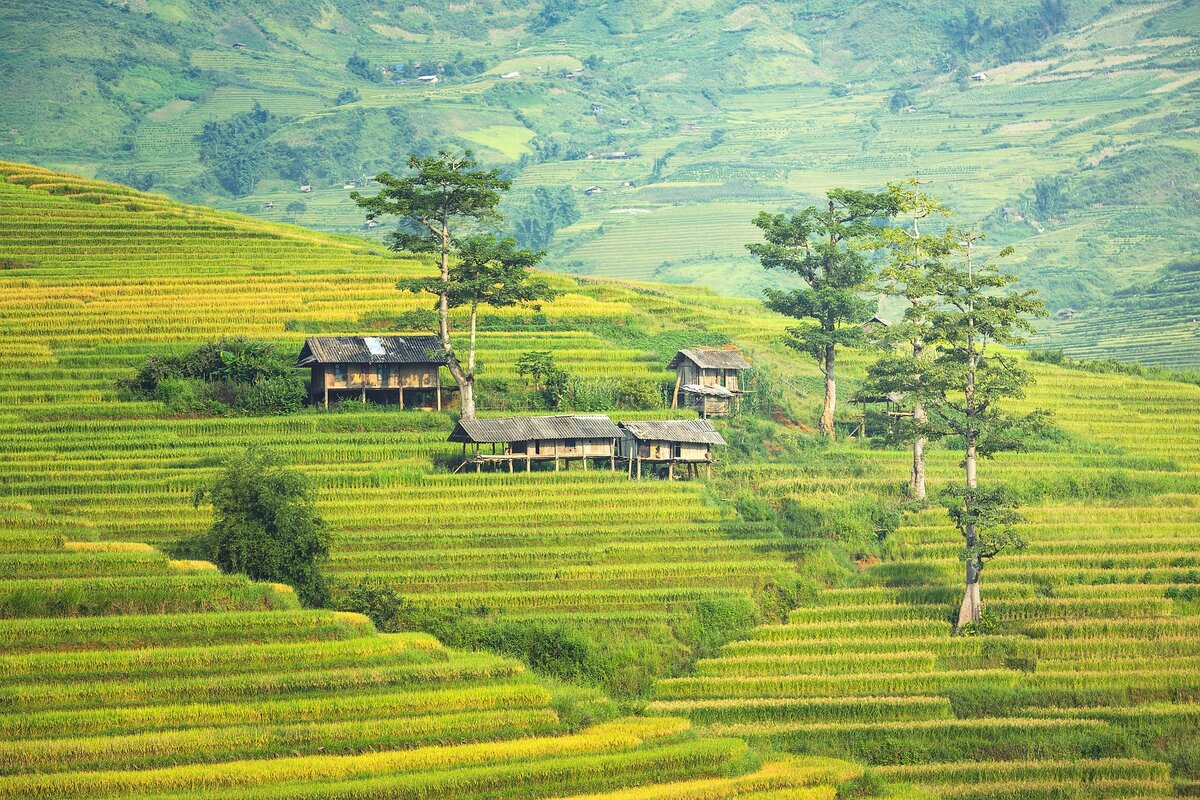
Vietnam: three climate zones
North (Hanoi, Ha Long Bay, Sa Pa): best season — March–April and October–November. December–February — cool and foggy, +14–18°C, Ha Long Bay often closed for cruises due to visibility. June–August — heat at +35–38°C and tropical downpours in the afternoon. September — typhoon risk.
Centre (Da Nang, Hội An, Huế): best season — February–August. September–December — typhoon and flood season: Hội An, one of the most beautiful cities in Asia, literally goes underwater in October–November — the historic centre floods to a depth of 0.5–1.5 metres. This happens every year and is not a rare natural disaster but a predictable seasonal feature.
South (Ho Chi Minh City, Phú Quốc, Nha Trang, Phan Thiết): best season — November–April. May–October — rainy season: downpours are usually short (1–2 hours in the afternoon), but Phú Quốc in rainy season means 2–3 metre waves and closed western beaches.
Thailand: two coastlines with different seasons
Andaman Sea (Phuket, Krabi, Ko Lanta, Ko Lipe): best season — November–April. May–October — rainy season: waves up to 3–4 metres, some beaches closed, some boat routes not operating. Phuket in June is not a beach holiday.
Gulf of Thailand (Ko Samui, Ko Tao, Ko Phangan): best season — December–September. October–November — this is the rainy season here, while Phuket is already dry. This matters: a tourist who chose Samui in November "because Phuket is nice then" ends up in the rain.
Bangkok and the north (Chiang Mai, Chiang Rai): operate year-round. November–February — ideal: +25–28°C, dry. March–May — unbearably hot season: +38–42°C in Bangkok, smog in Chiang Mai from field burning (March–April). June–October — rainy season, but for city sightseeing this is not critical.

Summary table: where to go — by month
| Month | Thailand (Phuket / Krabi) | Thailand (Ko Samui) | Thailand (Bangkok / Chiang Mai) | Vietnam (north) | Vietnam (centre) | Vietnam (south / Phú Quốc) |
|---|---|---|---|---|---|---|
| January | ✅ Excellent | ✅ Good | ✅ Excellent | ⚠️ Cool, foggy | ✅ Good | ✅ Excellent |
| February | ✅ Excellent | ✅ Good | ✅ Excellent | ⚠️ Cool | ✅ Excellent | ✅ Excellent |
| March | ✅ Excellent | ✅ Excellent | ⚠️ Hot (+35°C) | ✅ Excellent | ✅ Excellent | ✅ Good |
| April | ✅ Good | ✅ Excellent | ❌ Heat +40°C, Songkran | ✅ Excellent | ✅ Excellent | ⚠️ Rains beginning |
| May | ❌ Rainy season | ✅ Good | ⚠️ Rains starting | ✅ Good | ✅ Good | ❌ Rainy season |
| June | ❌ Rain, waves | ✅ Good | ⚠️ Rain | ⚠️ Hot, downpours | ✅ Good | ❌ Rain |
| July | ❌ Rain, waves | ✅ Good | ⚠️ Rain | ⚠️ Hot, downpours | ✅ Good | ❌ Rain |
| August | ❌ Rain | ✅ Good | ⚠️ Rain | ⚠️ Downpours | ⚠️ Last good month | ❌ Rain |
| September | ❌ Peak rains | ⚠️ Rains beginning | ⚠️ Rain | ⚠️ Typhoon risk | ❌ Typhoons | ❌ Rain |
| October | ⚠️ Transitional | ❌ Rainy season | ✅ Good | ✅ Excellent | ❌ Flooding in Hội An | ⚠️ Transitional |
| November | ✅ Excellent | ❌ Rain | ✅ Excellent | ✅ Excellent | ❌ Flood risk | ✅ Excellent |
| December | ✅ Excellent | ⚠️ Transitional | ✅ Excellent | ⚠️ Fog, cool | ✅ Good | ✅ Excellent |
Key takeaway on seasons: November–March is a safe season for most routes in both countries. April–October requires a precise understanding of which specific region you're going to. Don't blindly trust the phrase "it's nice there in winter" — "winter" in Thailand on Phuket and "winter" on Ko Samui are different months.
Thailand
"Asia with a soft landing — and that's not a criticism"
Thailand knows how to receive tourists comfortably. That's not a compliment or a reproach — it's a fact of infrastructure built over 50 years for international tourist flows. English is everywhere — even in street cafés. Grab works everywhere — a taxi app with a fixed price and no need to bargain. Street food in tourist zones is safe for a European stomach, unlike in some other countries in Southeast Asia. Bangkok is one of the best cities in the world for a first encounter with Asia: simultaneously chaotic, beautiful, gastronomically outstanding and completely manageable. In Thailand you can easily pick the wrong date or the wrong resort and still have a good time — because the infrastructure forgives planning mistakes. In Vietnam it doesn't.
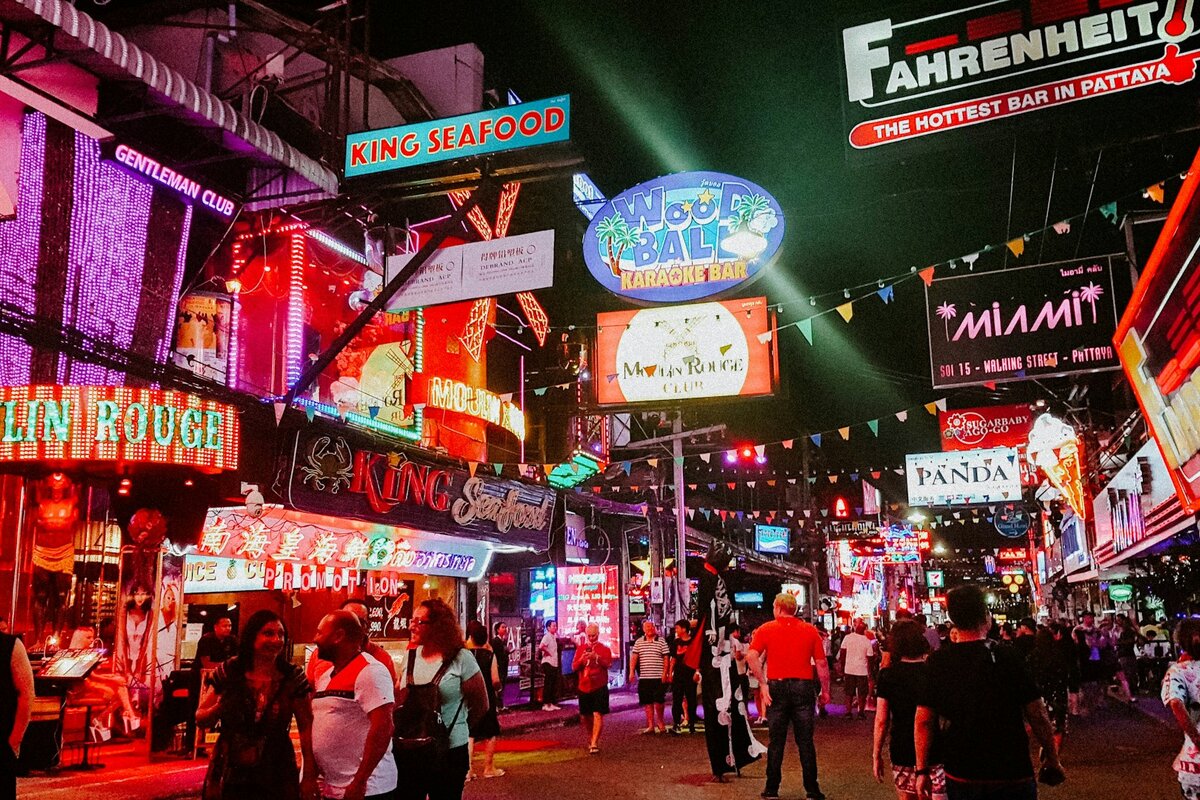
A separate word on nightlife, which most articles mention in passing. Bangkok is one of the few cities in the world where nightlife operates on several levels simultaneously: from the raw bars of Khao San Road to rooftop cocktail bars with views over the Chao Phraya from 60 floors up. Pattaya is a resort 2 hours from Bangkok with a reputation it has earned honestly: nightlife here runs around the clock, it's the most openly adult entertainment resort in Southeast Asia, and you should go there knowing exactly what you're looking for. Ko Phangan hosts the Full Moon Party once a month — a beach party at Hat Rin that draws up to 30,000 people; it's one of the most well-known mass events in the region.
| Period | Air temp. (Bangkok) | Sea temp. (Phuket) | Sea temp. (Ko Samui) | Sun/day |
|---|---|---|---|---|
| November | +29–32°C | +28–29°C | ⚠️ Rain | 8–9 hrs |
| January | +27–30°C | +27–28°C | +27–28°C | 9–10 hrs |
| March | +32–36°C | +28–29°C | +28–29°C | 10–11 hrs |
Flight from Warsaw: 11–14 hrs (usually 1 stopover — Dubai, Doha, Istanbul, Amsterdam; no direct flights. Emirates, Qatar Airways, Turkish Airlines, KLM)
7-night package / 2 people: 5,500–16,000 PLN (Phuket 4* All Inclusive — from 7,000 PLN; Bangkok + islands independently — from 5,500 PLN)
Best season: November–March (Phuket / Krabi); December–September (Ko Samui); November–February (Bangkok / Chiang Mai). Avoid March–May due to extreme heat in central Thailand
Who it suits
Thailand is the optimal choice for those going to Asia for the first time and not wanting to spend half their holiday adapting to the environment. Families with children will appreciate the shallow bays of Krabi and the children's facilities at large resort hotels on Phuket. Couples will find both a beach holiday and a cultural programme in Bangkok — all within a single trip. Wellness and spa enthusiasts come specifically here: a Thai massage in Chiang Mai for 300 baht (about 35 PLN) an hour is not a tourist attraction but a centuries-old medical tradition. Don't go if you're looking for authentic, untouched Asia away from tourists: in Thailand's tourist zones you'll meet more Europeans and Americans than on some Greek islands in July. And don't go to the Andaman coast beach resorts from May to October — that will be an expensive mistake.
What to do
- Spend an evening at Chatuchak Market in Bangkok on a weekday (not at the weekend when 200,000 people are there) — 15,000 stalls across 35 hectares, from antiques to live reptiles; the best place to understand what Thai trade actually looks like
- Take a tuk-tuk to Wat Arun at dawn — cross the Chao Phraya by ferry (~4 baht = ~0.50 PLN), climb the prang and catch sunrise over the river before 7 am while there are no tour groups yet
- Hire a moped in Chiang Mai and ride independently to Doi Suthep — a mountain temple at 1,080 metres above sea level with a view over the entire city; go early in the morning, 45 minutes by road, entry 30 baht
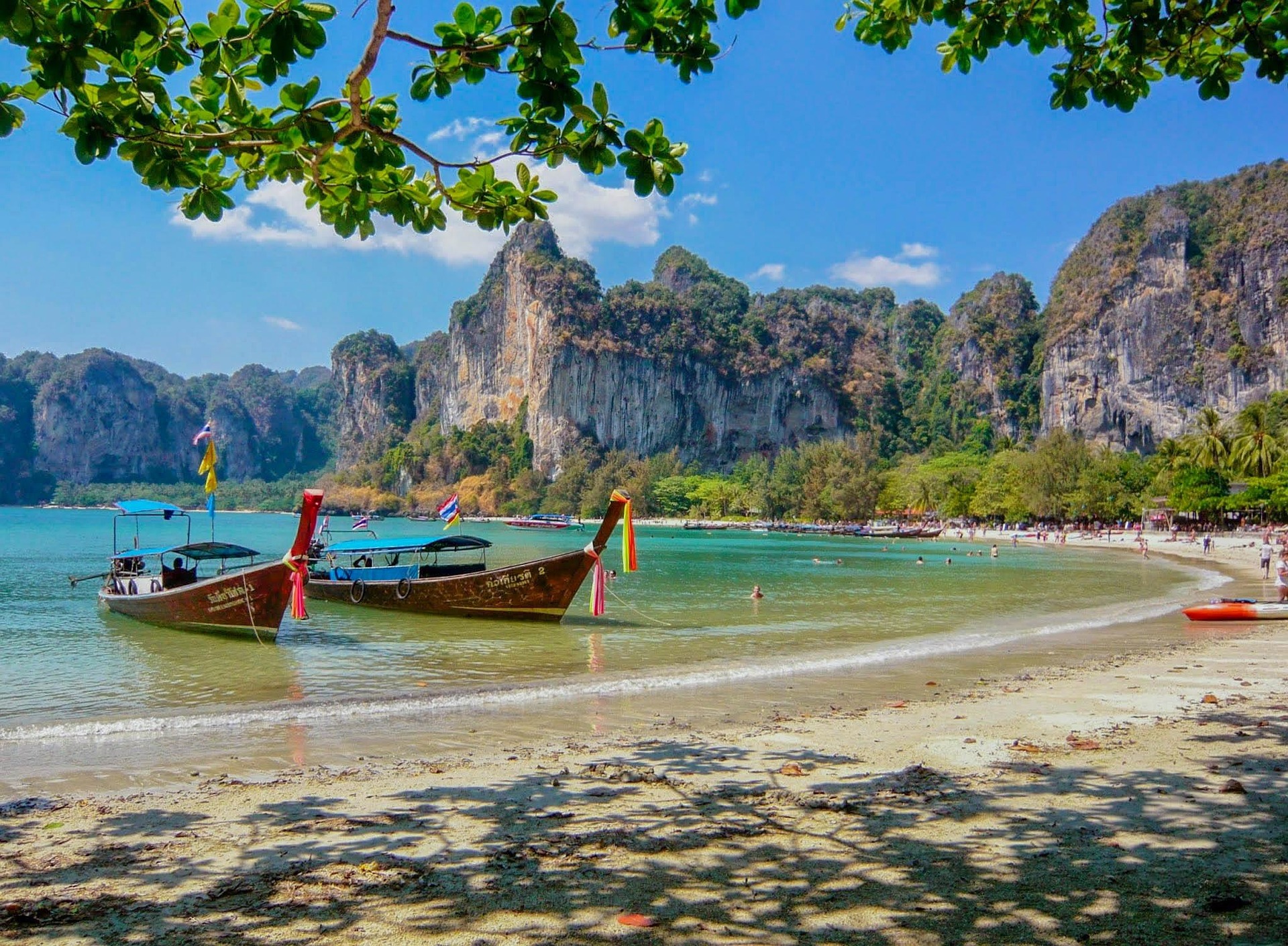
- Book a day trip to the Phi Phi Islands from Krabi at dawn (departure at 6 am) — the islands become packed by 10 am when all the ferries from Phuket arrive; at 6:30 am it's just fishermen and you
- Sign up for a Thai cooking class in Chiang Mai that includes a market visit — not hotel courses, but with the morning Warorot Market: first you choose ingredients with the chef, then you cook; cost ~500–700 baht (60–85 PLN)
Vietnam
"Asia without concessions to the tourist — and that's its greatest quality"
Vietnam doesn't adapt to the tourist. It simply exists, and you are a guest in it — a welcome one, but not the centre of the universe. It's harder, louder and more intense than most people expect after Thailand, and considerably more interesting. Hanoi — a capital of 8 million people and 7 million motorbikes — is a place where traffic rules exist more as a philosophical concept than an operating manual. To cross the road you need to move slowly, without stopping or speeding up: the stream of motorbikes flows around the pedestrian the way water flows around a stone. It sounds terrifying, works without fail and is one of the major cultural shocks of the first visit. Vietnamese cuisine is in the top five best in the world by most gastronomic rankings — and that's not an exaggeration: phở, bánh mì, bún bò Huế, cơm tấm, Hội An's white rose — every region of the country has its own cuisine, so distinct from the neighbouring one that it's a separate reason to plan your route around food.
Hội An — one of the most beautiful cities in Asia — has preserved its 15th–18th-century trading quarter almost intact: wooden merchant houses, a Japanese bridge from 1593, lanterns over the Thu Bồn River in the evenings. It's a UNESCO site that hasn't become an open-air museum — most of the historic buildings are still lived and worked in. Ha Long Bay with its 1,969 limestone islands in the Gulf of Tonkin is one of the few places on Earth that looks exactly like the photographs, and that's rare.
| Period | Air temp. (Hanoi) | Air temp. (Hội An) | Air temp. (Ho Chi Minh) | Sea temp. (Phú Quốc) |
|---|---|---|---|---|
| January | +16–18°C ⚠️ | +21–23°C ✅ | +28–31°C ✅ | +27–28°C ✅ |
| March–April | +22–26°C ✅ | +24–27°C ✅ | +30–33°C ✅ | +28–29°C ✅ |
| October–November | +20–24°C ✅ | ❌ Typhoons / flooding | +28–31°C ✅ | +28°C ✅ |
Flight from Warsaw: 13–17 hrs (1–2 stopovers; Qatar Airways via Doha, Turkish Airlines via Istanbul, Emirates via Dubai. No direct flights. To Hanoi or Ho Chi Minh City — different tickets, factor in your route direction)
7-night package / 2 people: 4,000–11,000 PLN (beach Phú Quốc 4* — from 4,500 PLN; Hanoi + Ha Long independently — from 4,000 PLN)
Best season: November–April (south and Phú Quốc); March–April and October–November (north, Hanoi, Ha Long); February–August (centre, Hội An, Da Nang). Never: October–November in Hội An, June–September on Phú Quốc
Who it suits
Vietnam is the choice for tourists for whom the intensity of the trip matters more than the comfort of the environment. Couples and solo travellers aged 25–45 who have already travelled around Europe and want impressions of a different scale. Food tourists who build their itinerary around eating rather than around the hotel. Photographers — Ha Long Bay at dawn, Sa Pa rice terraces in the blooming season (May–June), the lantern festival in Hội An at every full moon. Don't go if predictable logistics and minimum stress are important to you: Vietnam requires planning because the country is long and the route matters. Don't go with very young children under 5 either — intense traffic, noise and non-standard infrastructure create difficulties that the exoticism doesn't compensate for.
What to do
- Take the overnight train from Hanoi to Sa Pa (8 hours, ~25–35 USD, four-berth sleeper compartment) instead of the bus — you wake up in the mountains surrounded by rice terraces, and it's one of the best train wake-ups in Asia; from there a day's trekking to Hmong villages
- Book a two-day cruise of Ha Long Bay on a junk — not a day trip (too many boats, too little time) but an overnight on the water with kayaking through caves at dawn, before the tour groups arrive
- Spend an evening in Hội An without an organised tour — buy a lantern at the market (~10,000 dong = ~2 PLN), release it on the Thu Bồn River at the full moon and have dinner at a family restaurant on Nguyễn Thị Minh Khai street where the menu is handwritten
- Ride a motorbike from Hội An to the village of Trà Quế (~12 km) — that's where they make authentic white rose (bánh vạc), Hội An's signature dish, which in the town itself is one thing for tourists and here is something entirely different
- Get up at 5 am for Bến Thành Market in Ho Chi Minh City not to shop but to eat phở with local vendors before the main stalls open — at 5:30 am it's only Vietnamese people there, the price of a bowl is ~30,000 dong (6 PLN) and it's the best phở you'll eat in this city
Thailand vs Vietnam: comparison by criteria
| Criteria | Thailand | Vietnam |
|---|---|---|
| Ease of first visit | ★★★★★ — English everywhere, Grab, intuitive infrastructure | ★★★☆☆ — requires preparation, language barrier in provinces |
| Beach quality | ★★★★☆ — Krabi, Ko Lipe, Ko Tao | ★★★☆☆ — Phú Quốc is good, the rest more modest |
| Water clarity | ★★★★☆ — Ko Tao best in the region for diving | ★★★☆☆ — good but not outstanding |
| Gastronomy | ★★★★☆ — excellent street food, varied | ★★★★★ — one of the world's best cuisines, every region differs |
| History and culture | ★★★☆☆ — Buddhist temples, Chiang Mai, Ayutthaya | ★★★★★ — Hội An, Huế, Hanoi, Ha Long, war history |
| Nightlife | ★★★★★ — Bangkok, Pattaya, Full Moon Party on Ko Phangan | ★★☆☆☆ — exists in Ho Chi Minh and Hanoi, not comparable |
| Nature and trekking | ★★★★☆ — Chiang Mai, Doi Inthanon, islands | ★★★★☆ — Sa Pa, Ha Long, Phong Nha, Hà Giang |
| Families with children | ★★★★☆ — shallow beaches, hotel facilities | ★★★☆☆ — possible, but requires effort |
| Wellness and spa | ★★★★★ — Thai massage, retreats, traditional medicine | ★★☆☆☆ — available, but not the main reason to come |
| Climate complexity | ⚠️ Two coastlines with different seasons — need to know | ⚠️⚠️ Three zones, simultaneously different weather — critically important |
| Package tour price from Warsaw | 5,500–16,000 PLN / 7 nights / 2 people | 4,000–11,000 PLN / 7 nights / 2 people |
| Flight from Warsaw | 11–14 hrs (1 stopover) | 13–17 hrs (1–2 stopovers) |
| Minimum recommended duration | 10 days (Bangkok + one region) | 12–14 days (north or south, not the whole route) |

Common mistakes:
- Planning all of Vietnam in 10 days. The country is 1,650 km from north to south, and "quickly seeing everything" means spending a third of your holiday on planes and buses. The rule: either the north (Hanoi, Ha Long, Sa Pa), or the centre (Da Nang, Hội An, Huế), or the south (Ho Chi Minh City, Phú Quốc, Mekong Delta). All three regions in a week is not a trip — it's a marathon.
- Going to Phuket from May to October for the beach. The rainy season on Thailand's west coast is real: waves of 2–4 metres, some beaches closed with flags, ferries to the Phi Phi Islands cancelled. Tour operators keep selling packages — check the seasonality yourself.
- Choosing Ko Samui in November because "Phuket is nice then". November on Ko Samui is the rainy season. Thailand's two coastlines have opposite seasons, and not every tourist knows this.
- Allowing only one day in Bangkok as a transit stop. Bangkok is one of the best cities in Asia, and one day is only enough to regret the short visit. Minimum 2–3 days; ideally 4–5.
- Going to Hội An in October–November. The flood season in central Vietnam is not a metaphor. The historic centre you came to see may be underwater during those months. Every year. Predictably.
- Assuming Vietnam means a cheap flight. A Warsaw–Hanoi flight in peak season (December–January) is often more expensive than Warsaw–Bangkok due to fewer competing routes and more stopovers required.
- Not getting a Vietnam e-Visa in advance. The visa is issued online in 3–5 working days (~25 USD), but if you forget — you can't get it at the border. Thailand is simpler in this respect: most passports enter visa-free.
- Underestimating the heat in Bangkok in March–May. +40°C with 70% humidity and no wind is physically taxing. Walking around the Grand Palace at midday in April is a real heatstroke risk. All sightseeing should be planned for the morning before 10 am or evening after 5 pm.
Entry requirements
Thailand:
- Ukrainian citizens: visa-free entry for up to 60 days (since 2024). Passport must be valid for at least 6 months at the time of entry.
- Belarusian citizens: visa available on arrival at the airport (VOA). Permits a single-entry tourist stay of up to 15 days. Passport must be valid for at least 6 months from the return date and not more than 10 years old from the date of issue; at least 1 blank page required for the visa.
- Polish citizens: visa-free entry for up to 60 days.
Vietnam:
- Ukrainian citizens: e-Visa required. Applied for online at evisa.gov.vn, cost ~25 USD, processing time 3–5 working days, valid for 90 days (single or multiple entry).
- Belarusian citizens: visa-free entry for up to 30 days.
- Polish citizens: visa-free entry for up to 45 days (since August 2023).
Important: visa rules change. Before travelling, check the current conditions on official embassy websites or through your tour operator — especially for Ukrainian and Belarusian citizens, whose status in several countries has been reviewed in recent years.
Conclusion
Thailand or Vietnam — which to choose?
If you're going to Asia for the first time and aren't sure you're ready for an intense environment — choose Thailand. That doesn't mean "worse": it means you'll get an outstanding Asian experience without having to overcome logistical and cultural barriers at every turn. Bangkok alone is worth the trip. Krabi in January is one of the best places in the world for a beach holiday. Chiang Mai with its temples and cooking classes is a different, more meditative version of Thailand that most tourists miss.
If you've already been to Southeast Asia, or you're ready for intensity, or you're going for food and culture — Vietnam will give you more for less money. It's a country that changes you: you come back with stories about Hanoi intersections with no traffic lights, morning phở for 6 PLN, sunrise over Ha Long from the deck of a junk and Hội An in the glow of lanterns. Vietnam doesn't let go — in the sense that most people who go there go back.
Final tip on trip length:
Both destinations require a minimum of 10–12 days. With 7 nights you'll either get just one region (which is fine) or waste half your time on domestic flights. If you're choosing Vietnam for the first time — don't try to cover everything: pick one end of the country and get to know it properly. All of Vietnam is for the second trip.



 Holidays


 Last minute
 Hotels


 Blog
Blog