Two people book "an island in Greece" for August. The first heads to the Cyclades, among the whitewashed houses of Santorini or Naxos, and gets postcard views — plus the meltemi, the northerly wind that whips the beach and stirs up a swell at the height of summer. The second heads to Ionian Corfu or Zakynthos, where there's almost no wind, the water is turquoise and calm, and the hills are green. One word, "Greece" — but two different seas: the windy Aegean in the east and the quiet Ionian in the west. And wind is the factor that never shows up in a single promotional photo, even though it's often what determines how the holiday turns out.
Below we break Greece down by sea and island group — Crete in the south, the Dodecanese and Cyclades in the Aegean, the Ionian Islands in the west, and mainland Halkidiki — and explain what genuinely awaits at each: what's underfoot at the beach, how warm the sea runs, whether the wind blows, how long the flight from Poland takes, what a week costs, and what fee gets added to the bill in 2026. At the end: a comparison table, a checklist, common mistakes, and the visa section.
- The warmest sea and the longest season → Crete
- Sand, history and families → The Dodecanese (Rhodes, Kos)
- Views, atmosphere, romance → The Cyclades (Santorini, Mykonos)
- Calm sea and greenery → The Ionian (Corfu, Zakynthos)
- A short transfer and a budget → The mainland (Halkidiki)
- Clubs and younger travellers → Mykonos
- A calm family holiday → The Ionian Islands, Halkidiki
- Athens, Meteora, island-hopping → More than the sea
- Compare everything at once → Comparison
Two seas and the wind: when and where to go
The main thing to understand about Greece: the islands split between two seas with different temperaments. The Aegean, in the east and centre, means the Cyclades, the Dodecanese and the northern islands; the water runs a touch cooler, and in summer the meltemi blows — a northerly wind at its strongest in July–August, easing off by September. The Ionian, in the west, means Corfu, Zakynthos, Kefalonia and Lefkada; here it's noticeably calmer, greener and milder, with almost no wind at all. Separately there's the south — Crete and the southern Dodecanese, where it's warmest and the season runs longest.
| Month | Air (day) | Sea | Wind (Aegean) |
|---|---|---|---|
| May | +22–24°C | +19–20°C | Moderate |
| June | +26–28°C | +22–23°C | The meltemi starts |
| July | +29–31°C | +24–25°C | Blows nearly every day |
| August | +30–32°C | +25–26°C | Peak meltemi |
| September | +26–28°C | +24–25°C | Easing off, the best month |
| October | +22–24°C | +22–23°C | The season winds down |
Crete and the southern islands hold warm water into late October, while the Ionian coast, sheltered from the meltemi, stays comfortable for swimming even at the height of summer, when the Cyclades have a swell. On the money side: from April to October, Greece applies a climate crisis resilience fee — €2 to €15 per room per night, depending on the hotel's category. It's often not included in the package price and is paid locally, so factor it into the budget.
Crete: the warmest sea and the longest season
Greece's largest island is effectively four different holidays in one: western Chania with the best beaches (Balos, Elafonisi), central Rethymno and Heraklion with history and nightlife, and a quiet east with luxury Elounda. It has the longest season in the country (swimmable from May to October), two airports at opposite ends of the island, and the Palace of Knossos, the heart of Minoan civilisation. The island's south coast faces the Libyan Sea, the warmest in Greece. Crete is so large that choosing a resort here is inseparable from choosing an airport — getting that pairing wrong costs several hours of transfer. 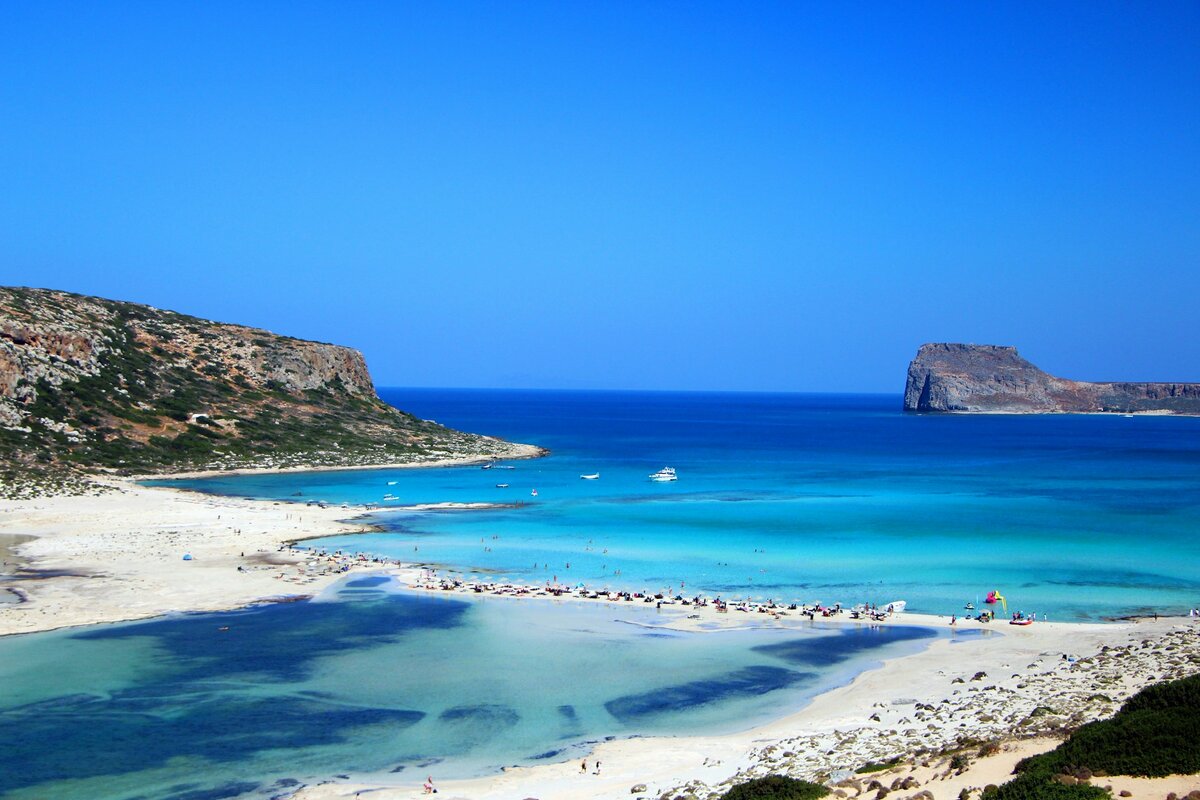
Sea: the warmest and longest-season in Greece, into October
Flight from Warsaw: ~3 hrs to Heraklion or Chania; choose the airport to match the region
7 nights / 2 people: PLN 3,500–9,000
Who is it for: anyone wanting everything at once — beaches, history, nature and a long season
Who is it for
The best choice for anyone wanting an all-round island for any request, unwilling to choose between beach, history and nature. It suits families, couples and fans of active holidays. Not worth it if you're planning to see the whole island from one hotel: 260km east to west isn't "the same area", and without a clear choice of region and airport, your holiday will disappear into travel.
The Dodecanese: Rhodes and Kos — sand, history and families
A group of islands in the south-eastern Aegean, off the coast of Turkey, with the second-longest season after Crete. Rhodes offers a medieval crusader town (a UNESCO site), long sandy and pebble beaches, well-developed infrastructure, and the resort of Lindos with its acropolis over the bay. Kos is flatter and more "bike-friendly", with wide sandy beaches and ancient ruins (the birthplace of Hippocrates). Both are geared towards a family beach holiday with history on the doorstep. The meltemi is felt here too, but the south and east coasts are sheltered from it. 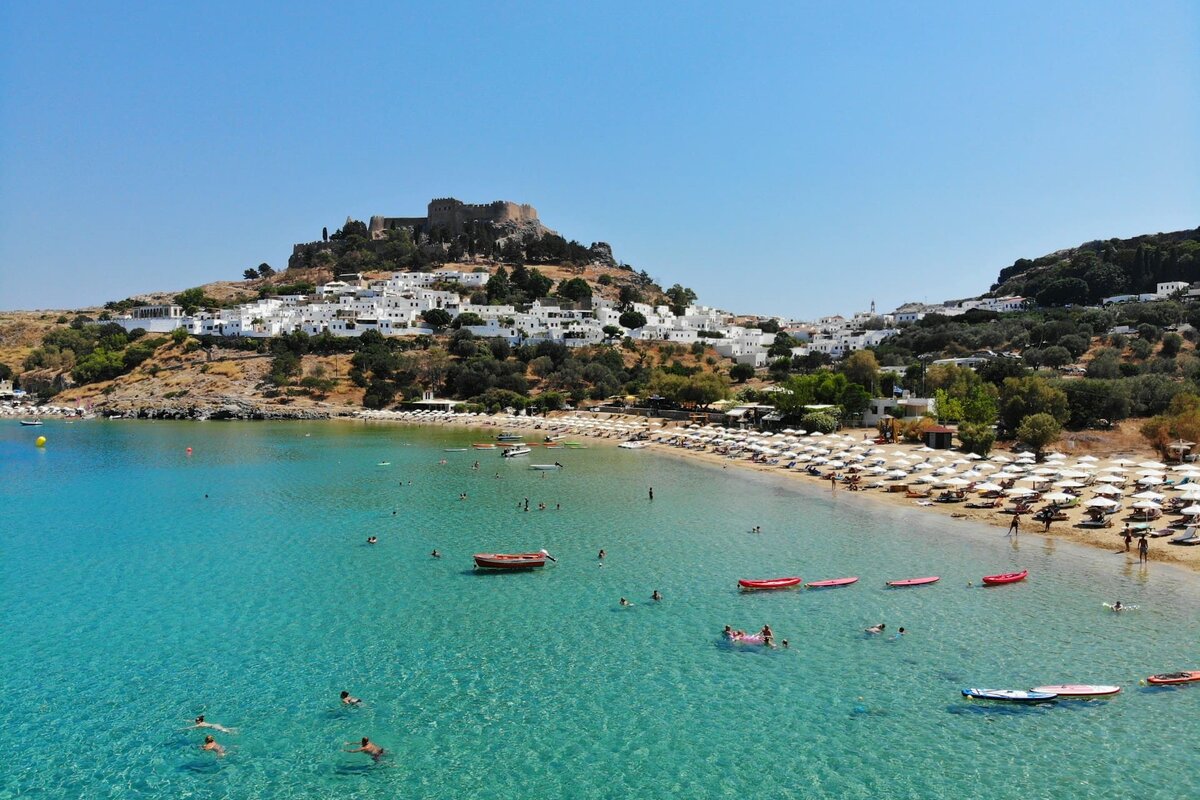
In front of the hotel: sand and sand-with-pebble; Kos has more wide sand, Rhodes more variety
Flight from Warsaw: ~2 hrs 40 min to Rhodes or Kos
7 nights / 2 people: PLN 3,500–8,500
Who is it for: families, history lovers, anyone wanting beach and history combined, and a long season
Who is it for
Ideal for families and anyone wanting to combine the beach with history without paying Cyclades-level prices for atmosphere. Rhodes if you want both nightlife and an old town; Kos if you want flat, wide beaches and calm. Not worth it if you're after seclusion and authenticity without the crowds: these are popular package destinations, and the main beaches get busy at peak season.
The Cyclades: Santorini, Mykonos, Naxos — views and atmosphere
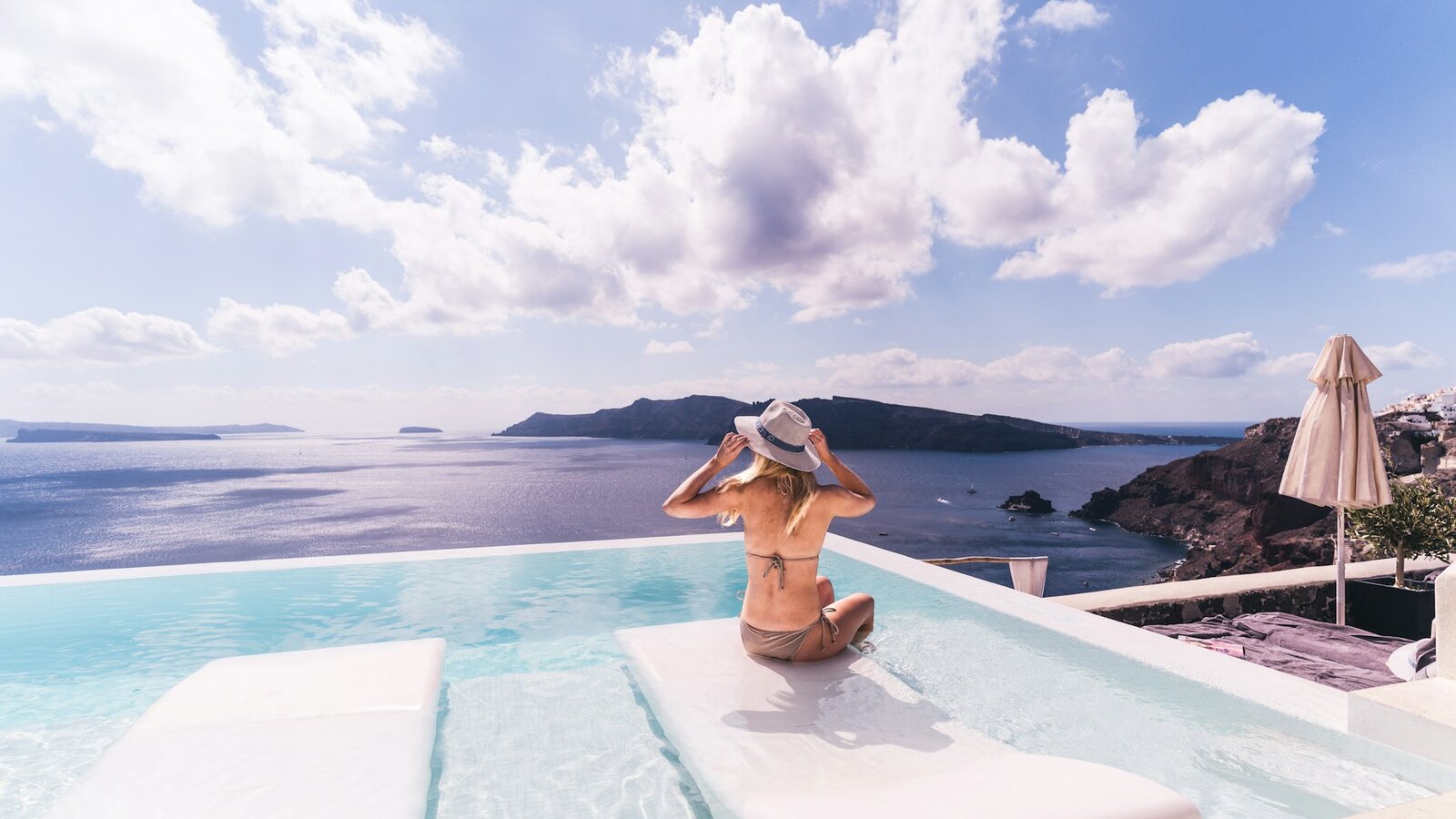
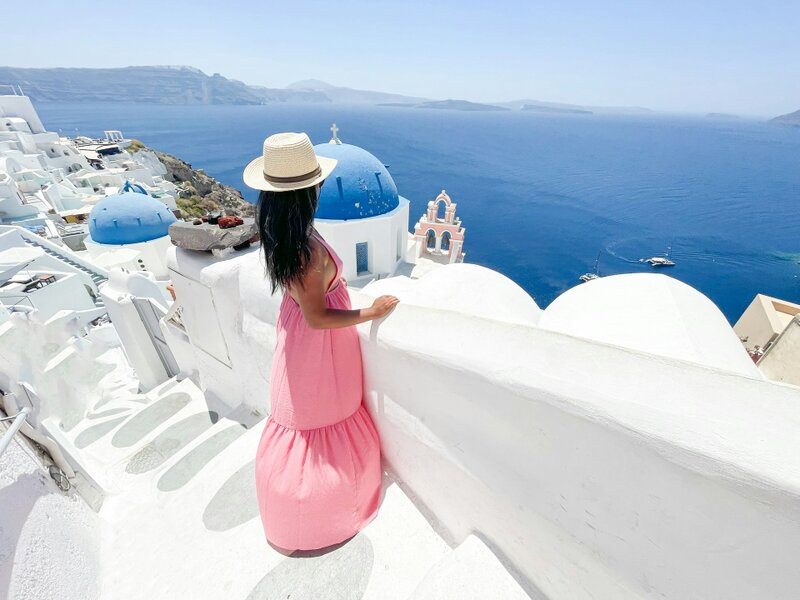
Greece's most "postcard" islands, in the centre of the Aegean: whitewashed cube houses, blue domes, a view over the caldera. But each plays a different role. Santorini means world-class views and sunsets, romance and high prices, but almost no beach conveyor: the beaches here are volcanic, black and red, and the island itself is about atmosphere, not a sun lounger. Mykonos is a cosmopolitan party scene, clubs and fashion, also expensive. Naxos and Paros are a more down-to-earth, "beach-focused" alternative with genuine sand and lower prices. The Cyclades' shared factor is the meltemi: in July–August the wind is noticeable here. 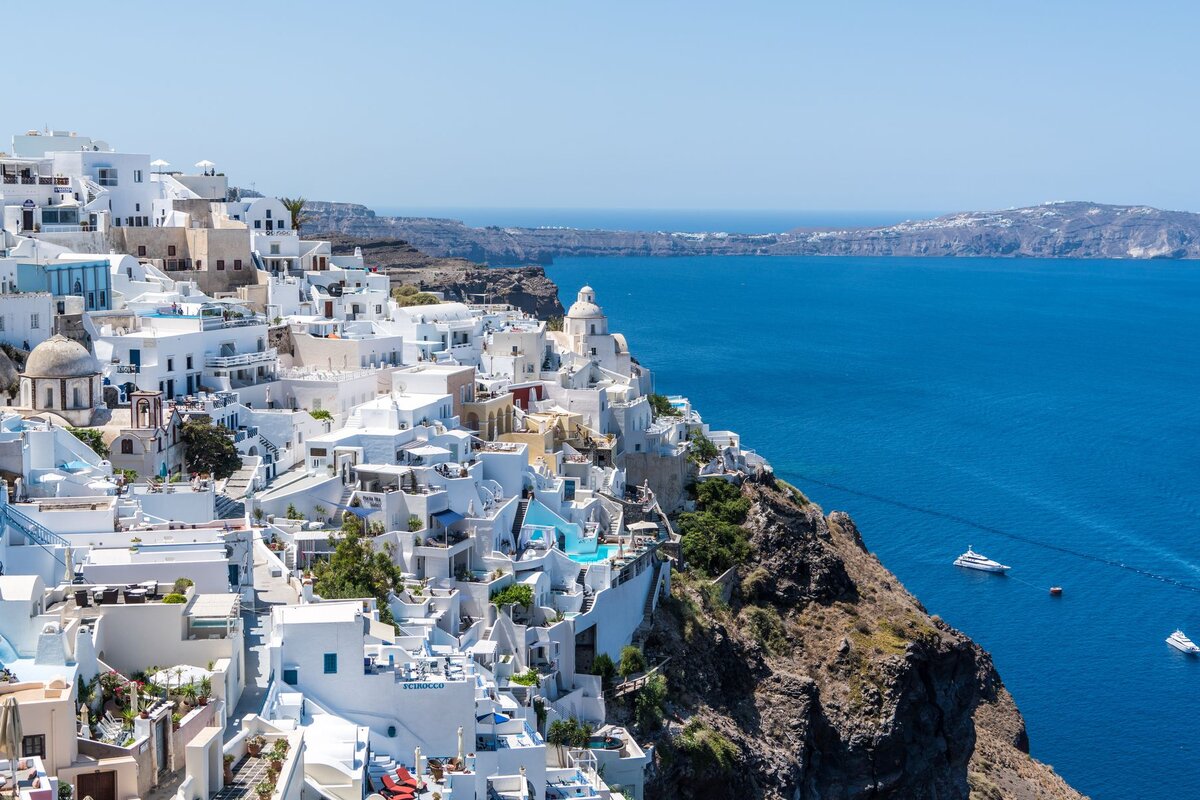
In front of the hotel: volcanic black beaches on Santorini; genuine sand on Naxos and Paros; coves and beach clubs on Mykonos
Flight from Warsaw: ~2 hrs 50 min to Santorini (seasonal) or with a connection via Athens
7 nights / 2 people: Santorini and Mykonos PLN 5,000–14,000; Naxos and Paros PLN 4,000–9,000
Who is it for: couples after views and romance (Santorini), the party scene (Mykonos), cheaper beach (Naxos, Paros)
Who is it for
Santorini suits couples and anyone travelling for the views and atmosphere rather than the beach. Mykonos suits the clubs and the fashionable scene. Naxos and Paros suit the Cycladic aesthetic with proper beaches at a reasonable price. Not worth it to go to Santorini or Mykonos for a classic all-inclusive beach holiday on a limited budget: Santorini's beaches are volcanic and modest, prices are high, and the island gets crowded with cruise-ship day-trippers at peak season. For a beach on the Cyclades, choose Naxos or Paros instead.
The Ionian Islands: Corfu, Zakynthos, Kefalonia — calm sea and greenery
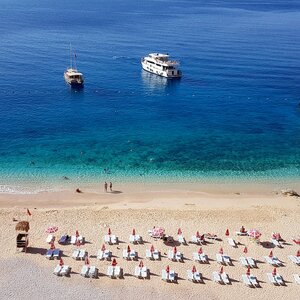
Greece's west coast is a different world: the islands here are noticeably greener, the climate milder, and the meltemi doesn't reach, so the sea stays calm and often turquoise. Corfu is the most developed, with a Venetian old town, olive groves and Italian influence. Zakynthos is famous for Navagio Beach, with its shipwreck in a white bay and caves, and for loggerhead turtles. Kefalonia offers dramatic Myrtos Beach and secluded coves. Lefkada is unique in being connected to the mainland by a bridge. It's Greece's best choice for anyone who values a quiet, calm sea. 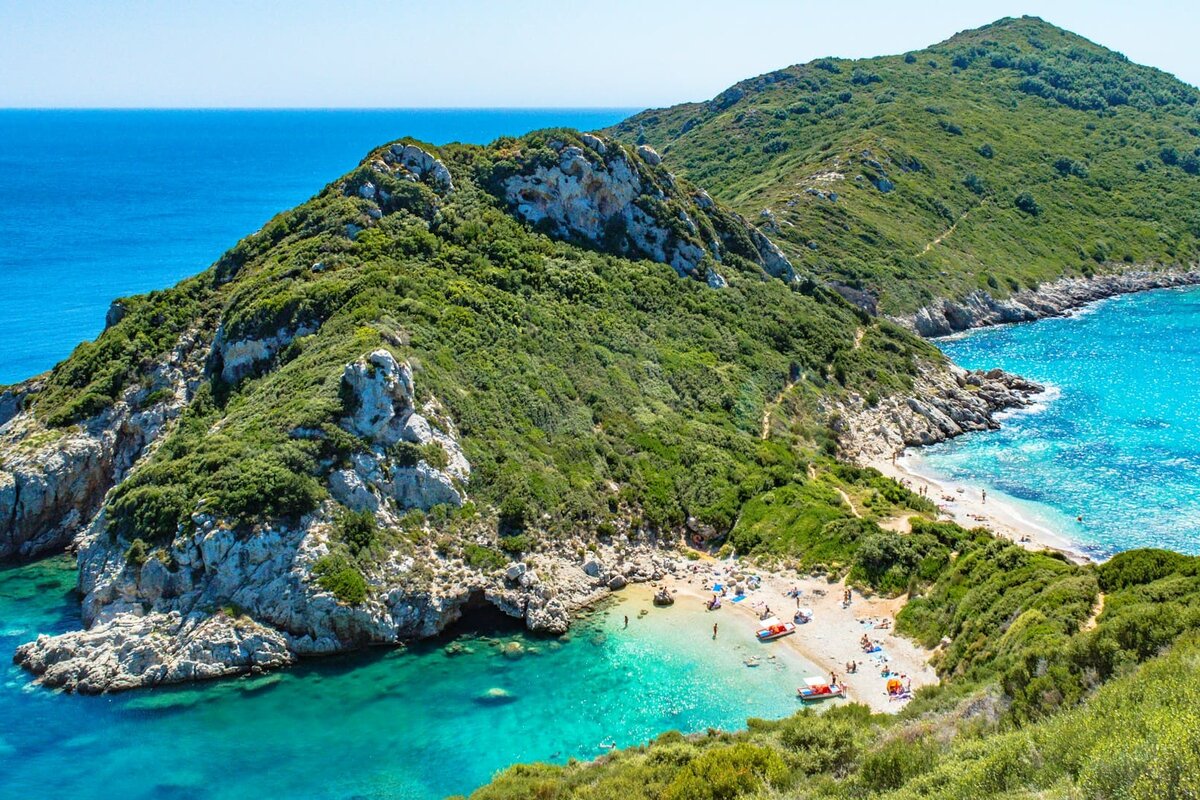
In front of the hotel: pebble and sandy coves with clear turquoise water; the sea is calmer than the Aegean
Flight from Warsaw: ~2 hrs 30 min to Corfu, ~2 hrs 50 min to Zakynthos
7 nights / 2 people: PLN 3,500–9,000
Who is it for: families with children, nature lovers, anyone tired of the wind, and lovers of calm sea
Who is it for
The best choice for families with children and anyone for whom calm sea without wind and swell matters, as well as nature lovers. Corfu if you want a town and variety; Zakynthos and Kefalonia for the most beautiful coves. Not worth it if you're expecting the Cyclades' aesthetic of whitewashed cubes and blue domes: the architecture here is Venetian-Italian instead, and the famous Navagio Beach on Zakynthos is only reachable by water and gets crowded with boats in season.
The mainland: Halkidiki and a short transfer
Mainland Greece's main beach destination is Halkidiki, a peninsula with three "fingers" south of Thessaloniki: Kassandra (the most developed and resort-focused), Sithonia (wilder and more scenic), and Athos (a monastic republic, closed to ordinary tourism). Halkidiki's advantage is pine trees down to the water, clean coves, and a very short transfer from Thessaloniki airport. Prices here often run below the islands', and Thessaloniki, with its history and food scene, is close by. Further south lies the Peloponnese, with ancient Olympia, Mycenae and fortresses, and near Athens, the Athens Riviera.
In front of the hotel: sand and fine pebble, pines by the water, clean coves; Sithonia's beaches are more scenic
Flight from Warsaw: ~2 hrs 20 min to Thessaloniki plus a short transfer to Halkidiki
7 nights / 2 people: PLN 3,300–8,000 — often better value than the islands
Who is it for: families, anyone who dislikes long transfers, and fans of "beach plus Thessaloniki"
Who is it for
A sensible choice for families and anyone wanting a short transfer, pine-fringed coves and lower prices than the islands, with easy trips into Thessaloniki and the mainland thrown in. Not worth it if you want island exoticism and atmosphere: this coast is beautiful but more "ordinary", without whitewashed towns or Cycladic views. For an island feel, choose Crete, the Cyclades or the Ionian instead.
More than the sea: Athens, Meteora and island-hopping
Greece is the cradle of European civilisation, and sticking to the beach here is especially a shame: almost any coast can be paired with a world-class cultural programme.
- Athens and the Acropolis. The Parthenon, the ancient Agora and the Acropolis Museum — essential, and easy to add before or after the islands; sightseeing is more comfortable in September than the summer heat.
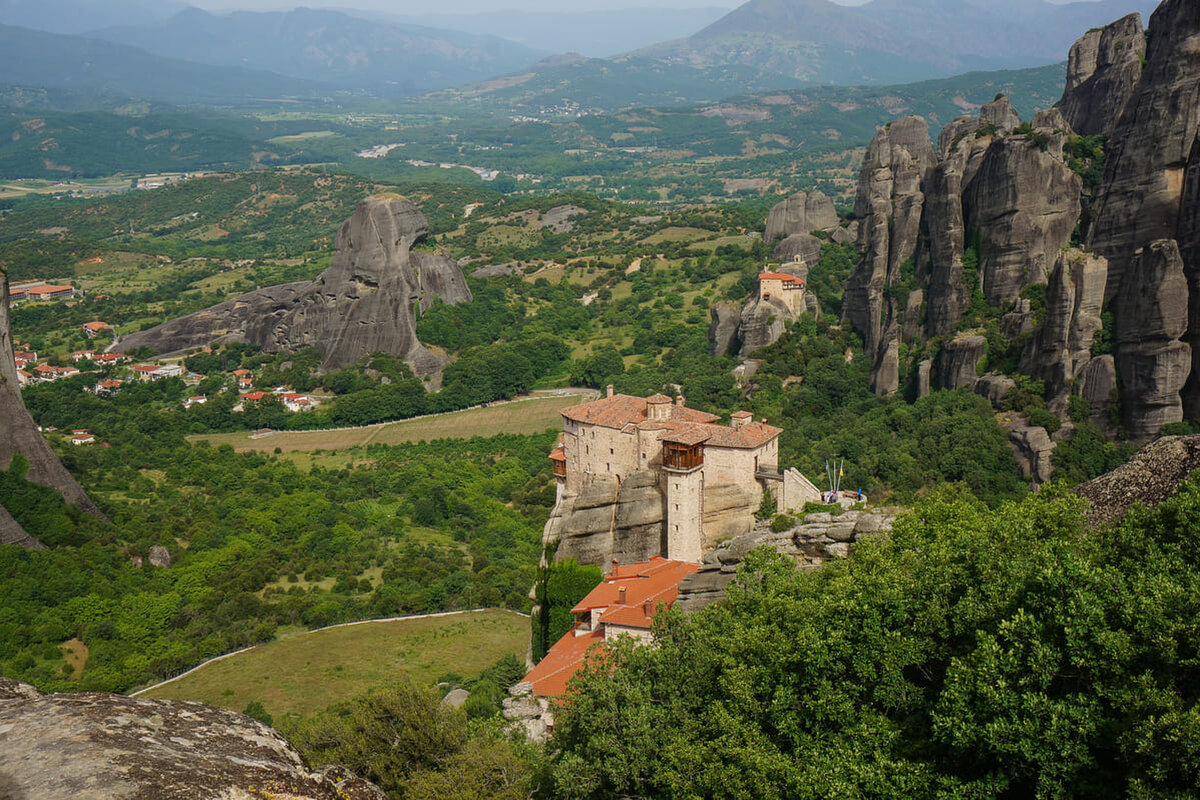
- Meteora. Monasteries perched atop sheer rock pillars in the centre of the mainland — one of Europe's most striking landscapes, a UNESCO site.
- Delphi. The ancient oracle on the slopes of Mount Parnassus — the centre of the ancient Greek world, a day trip from Athens.
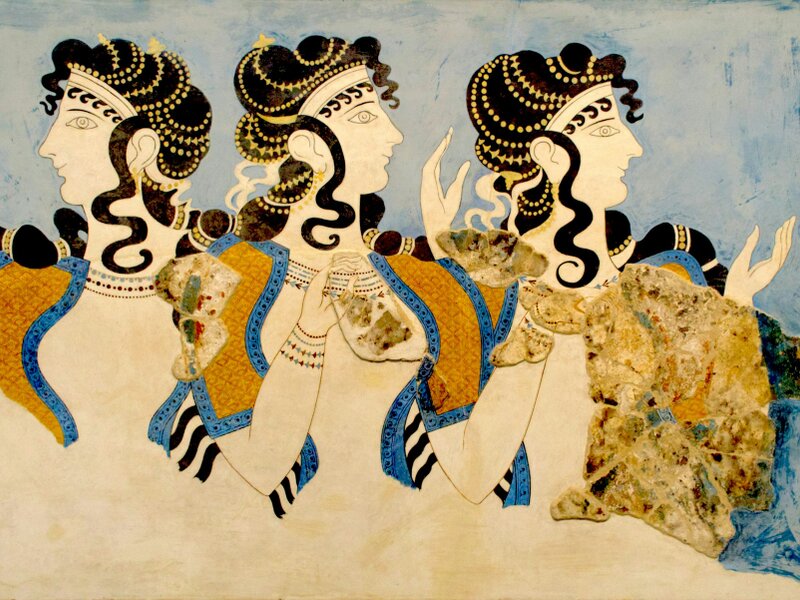
- Knossos on Crete. The 3,500-year-old heart of Minoan civilisation and the best collection of Minoan art at the Heraklion museum.
- Island-hopping. A ferry trip between islands in the same group (the Cyclades, for instance) — a way to see several Greeces in one trip.
 Quick comparison of Greece's resorts
Figures are indicative, for a 7-night trip for two departing Poland. The key columns are sea, wind and price: these, not the hotel's star rating, determine the character of the holiday.
| Destination | Sea | Wind | Who is it for | Beaches | 7 nights / 2 people |
|---|---|---|---|---|---|
| Crete | Warm, long season | Moderate | Everything at once, any request | Sand, pebble, lagoons | PLN 3,500–9,000 |
| Rhodes, Kos | Warm, long season | Present, south sheltered | Families, history | Sand and pebble | PLN 3,500–8,500 |
| Santorini, Mykonos | Aegean | Meltemi | Views, romance, the scene | Volcanic, modest | PLN 5,000–14,000 |
| Naxos, Paros | Aegean | Meltemi | Cyclades, cheaper, beach | Genuine sand | PLN 4,000–9,000 |
| Corfu, Zakynthos | Ionian, calm | Almost none | Families, nature, quiet | Turquoise coves | PLN 3,500–9,000 |
| Halkidiki | Aegean, sheltered | Light | Short transfer, budget | Pines, sand, coves | PLN 3,300–8,000 |
In short: for the warmest sea and versatility, Crete. For sand, history and a family holiday, Rhodes and Kos. For views and atmosphere, Santorini and Mykonos (but not the beach). For the Cycladic aesthetic with proper beaches, Naxos and Paros. For calm sea and greenery, the Ionian Islands. For a short transfer and price, Halkidiki. The golden rule: choose the sea first and settle the wind question, and only then the specific resort.
Pre-booking checklist:
- Choose the sea first: the windy Aegean (Cyclades, Dodecanese) or the calm Ionian (Corfu, Zakynthos). This decides more than the hotel's star rating.
- Factor in the meltemi: if you're travelling in July–August to the Cyclades and cope badly with wind and swell, choose the Ionian Islands or southern Crete instead.
- Check the beach type: Santorini's is volcanic and modest, not sandy; for genuine sand, choose Kos, Naxos or Rhodes.
- Build the climate fee into your budget: €2–15 per room per night from April to October, often paid locally and not included in the package price.
- Look at September: the sea is still warm, the meltemi eases, the heat is milder, prices and crowds run below August's, and in the south the season stretches into October.
- For Crete, choose the airport to match the region: the island is huge, and getting the pairing wrong costs several hours of transfer.
Common mistakes:
- Ignoring the wind. The meltemi on the Cyclades in August is the norm, not the exception; a photo of turquoise water doesn't show the swell and gusts that whip the beach.
- Going to Santorini for the beach. The island is about views and atmosphere; the beaches are volcanic and modest, and prices are high. For a beach, choose Naxos, Crete or the Dodecanese instead.
- Planning to see all of Crete from one hotel. 260km and two airports: without choosing a region, your holiday disappears into travel.
- Expecting Cycladic aesthetics from the Ionian Islands. The architecture here is Venetian-Italian and green, not whitewashed cubes and blue domes.
- Forgetting the climate fee. It's paid locally and adds up noticeably on a family holiday over a week; factor it in ahead of time.
- Treating Navagio Beach on Zakynthos as a beach outside your hotel. It's only reachable by water and gets crowded with boats in season — it's a photo stop, not somewhere to swim all day.
Entering Greece: the EU and Schengen
Greece is part of the EU and the Schengen Area, so the visa rules are the same across the whole country — the mainland and every island. Key changes this season: through 2026 the Schengen Area is progressively rolling out the automated Entry/Exit System (EES), which records biometric data on first entry, and by late 2026 the ETIAS pre-authorisation system is expected to launch for visa-free travellers from outside the EU.
- EU/EEA citizens, including Polish nationals: entry on a valid passport or national ID card, no visa, no limit on length of stay within EU rights.
- Non-EU residents of Poland: rules depend on nationality and residence status; a Polish residence permit grants the right to a short stay across Schengen, including Greece, without a separate Greek visa.
- Fees: a climate fee is added to accommodation costs (€2–15 per room per night from April to October), and the EES and ETIAS rules are being refined as they roll out, so confirm the current requirements with your tour operator or official sources before travelling.
The verdict
So where in Greece should you holiday?
Choose your sea first. If calm and warm, quiet water matter most, it's the Ionian Islands: Corfu, Zakynthos, Kefalonia, where the meltemi never reaches and the coves run turquoise. If you need the warmest sea and an all-round island, it's Crete, with the longest season and everything at once. For sand, history and a family holiday, the Dodecanese's Rhodes and Kos. For views, sunsets and atmosphere (but not the beach), Santorini and Mykonos; for Cycladic aesthetics with proper beaches at a reasonable price, Naxos and Paros. And for a short transfer, pine-fringed coves and a budget, mainland Halkidiki. 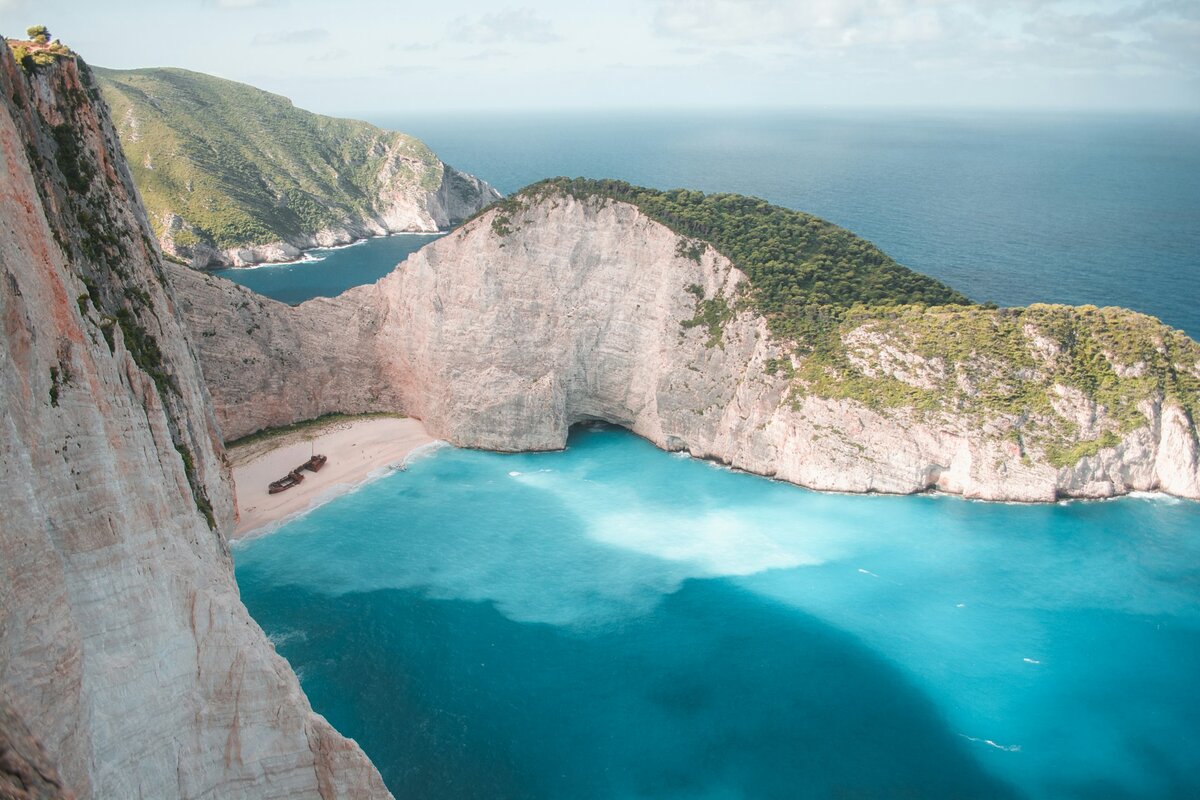
One last tip:
Don't choose an island from a single pretty photo: the turquoise cove in the frame could turn out to be a windy Cyclades beach in August, or Santorini's volcanic shore. Decide first which sea you need and how you handle wind, and half the islands will rule themselves out. And the best month for Greece is September: the sea is still warm, the meltemi eases, the heat backs off, and prices and crowds sit below peak.

 Holidays


 Last minute
 Hotels


 Blog
Blog