You can drive the whole Montenegrin coast in a couple of hours — but across those 100 kilometres the water in front of your hotel changes three times: first the still, almost lake-like Bay of Kotor, hemmed in by mountains; then the open pebble coves of the Budva Riviera; and in the far south, thirteen kilometres of genuine sand at Ulcinj. The country is small enough to see in full and varied enough that where you base yourself decides what kind of holiday you get. And one thing is worth knowing in advance: Sveti Stefan, the postcard island Montenegro is recognised by, is a private Aman resort — you can photograph it, but you can't set foot on it from the beach.
Below we break the coast down from north-west to south-east — from green Herceg Novi to sandy Ulcinj — and explain what really sets Kotor, Tivat, Budva and Petrovac apart, beyond a hotel's star rating: what's in front of the beach (pebbles, sand or a concrete platform), how warm the water is, how long the flight from Poland takes, and what a week costs. Separately: the mountains and Lake Skadar a couple of hours from the sea, the honest 2026 entry rules, and a quick-choice block:
- First time in Montenegro, everything to hand → Budva
- A "fjord" landscape and a UNESCO old town → Kotor
- Luxury, yachts and a marina → Tivat (Porto Montenegro)
- Quiet, greenery and spa → Herceg Novi
- Families with children, a gentle entry → Bečići, Petrovac
- Genuine sand → Ulcinj (Velika Plaža)
- A postcard in photos (but not a beach) → Sveti Stefan
- Nightlife → Budva
- Mountains instead of the sea → Durmitor
- Compare everything at once → Comparison
The Bay of Kotor: a bay that looks like a fjord
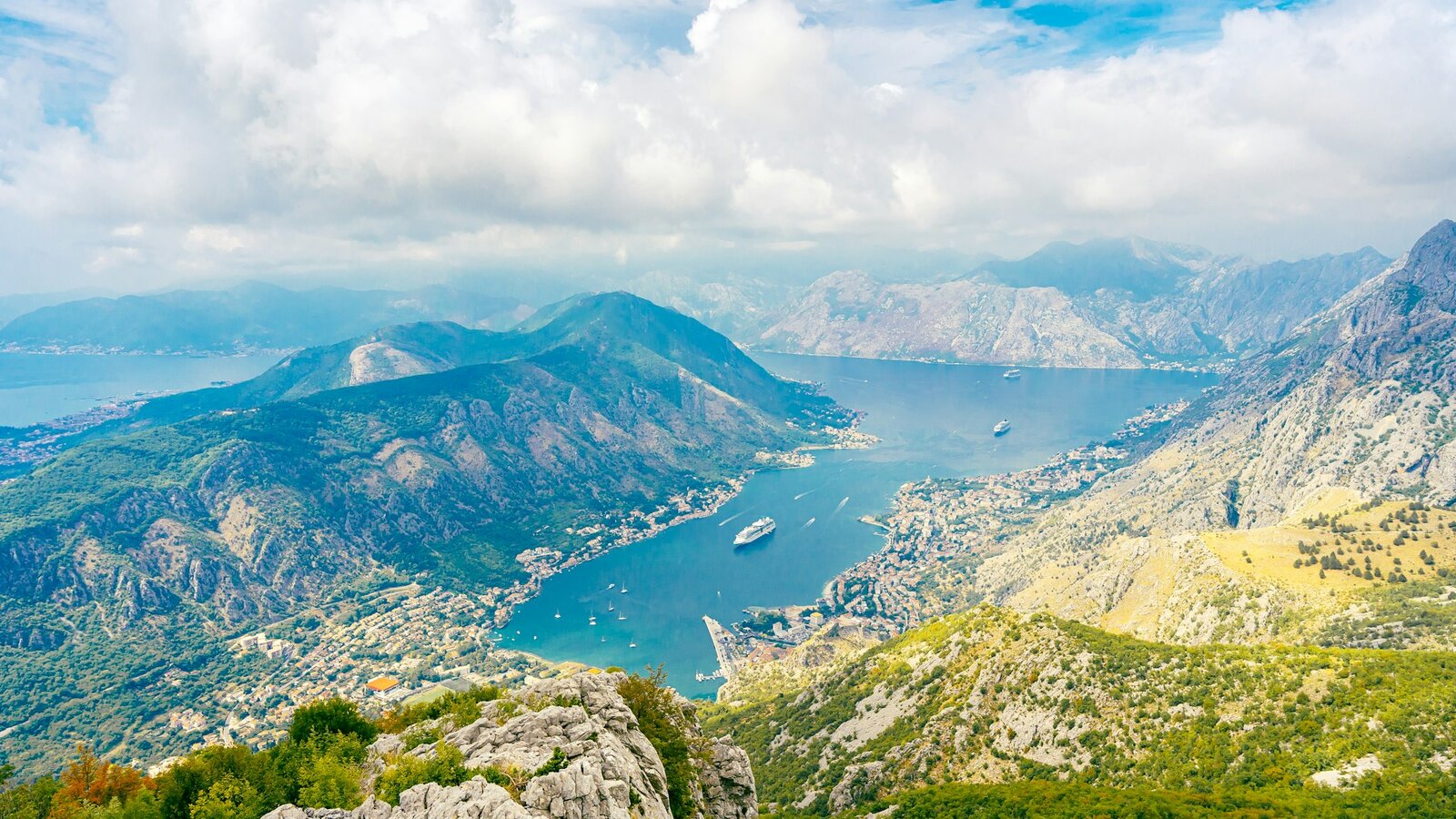
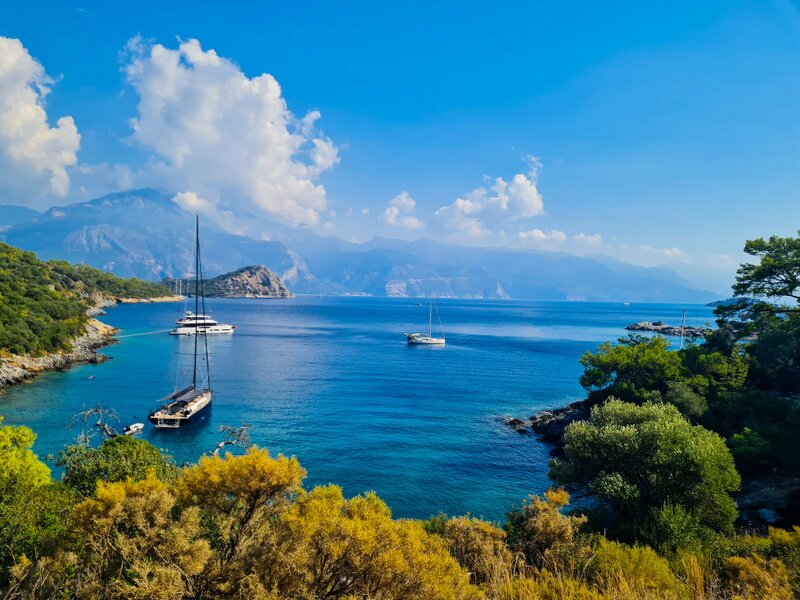
The most north-westerly stretch of coast is a deep, winding bay hemmed in by mountains and so enclosed that it's often wrongly called the Mediterranean's only fjord (geologically it isn't one, but it certainly looks the part). The water here is calmer than the open sea, the scenery more dramatic, but classic broad beaches are scarce: the shore is rocky, often with concrete platforms and jetties. You come here for the views, the history and the atmosphere, not a beach conveyor belt. The nearest airport, Tivat, sits right on the bay.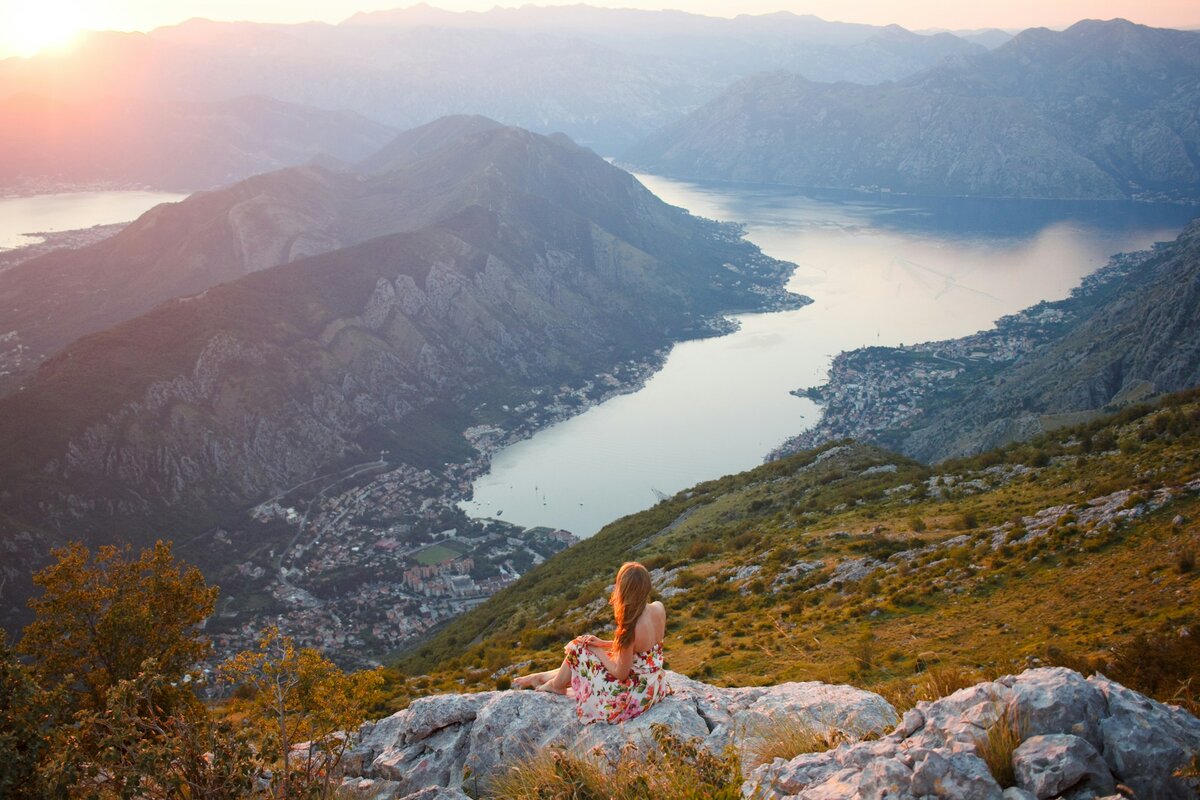
| Month | Air (day) | Sea |
|---|---|---|
| May | +20–23°C | +18–19°C |
| June | +25–28°C | +22–23°C |
| July | +29–32°C | +24–25°C |
| August | +30–33°C | +25–26°C |
| September | +25–28°C | +23–24°C |
Herceg Novi
"The green gateway to the bay — for a calm break and spa"
Right at the entrance to the bay stands a garden town: mimosas, palms, oleanders and staircases instead of level streets — Herceg Novi climbs the slope from its fortress down to the sea. The beaches are mostly concrete platforms and pebbles, but this is the historic centre of Montenegrin thalassotherapy: neighbouring Igalo has treated visitors with local mud and mineral water since Yugoslav times. The mood is calm and grown-up, without Budva's noise. Not worth it if you need a broad sandy beach and a gentle entry for small children — the lie of the town and shore works against you, and you'll more often swim off jetties.
In front of the hotel: concrete platforms and pebbles; no gentle sand
Flight from Warsaw: ~2 hrs to Tivat + ~30–40 min transfer (or via Dubrovnik, ~40 min)
7 nights / 2 people: PLN 3,000–7,000
Best season: June and September; the town works off-season too thanks to the spa
What to do
- Climb from the Sea Fortress through the old town to the Kanli Kula fortress — views over the whole entrance to the bay
- Take treatments in Igalo — one of the Adriatic's oldest thalasso centres
- Take a boat to the Blue Grotto (Plava Špilja) on the Luštica peninsula — glowing turquoise water in a cave
- Walk along the bay to neighbouring Risan and Perast — the most scenic part of Boka
Kotor
"A UNESCO old town deep in the bay — for the atmosphere, not the swimming"
At the bay's furthest point, beneath a sheer mountain, hides one of the Adriatic's finest medieval towns: Venetian walls, a maze of lanes and a fortress staircase of 1,350 steps up to the fort of St John above the rooftops. Kotor is UNESCO-listed and deservedly regarded as the country's leading cultural gem. But honestly, it's a base for experiences rather than the beach — there's effectively nowhere to swim in the town itself; the best spots on the water are in neighbouring Dobrota and Prčanj, also rocky. And a note on scale: at peak season cruise ships dock at the quay, and by day the old town turns into a corridor of people. Not worth it for a classic beach holiday — Kotor's strengths lie elsewhere.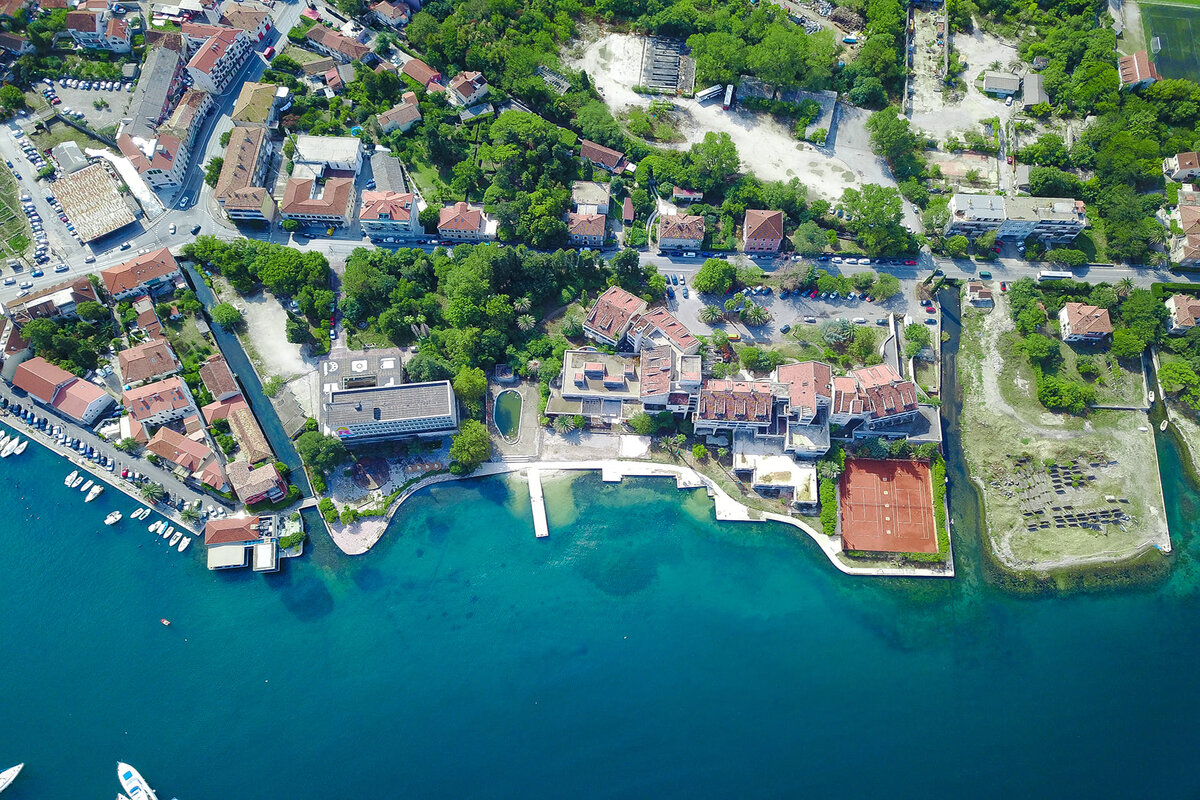
In front of the hotel: rocky shore and platforms in Dobrota/Prčanj; no swimming in the town itself
Flight from Warsaw: ~2 hrs to Tivat + ~20 min transfer
7 nights / 2 people: PLN 3,500–8,000
Best season: May–June and September; July–August brings daytime cruise crowds
What to do
- Climb the fortress staircase to the fort of St John early, before the heat and crowds — 1,350 steps and the best view of the bay
- Go to Perast and the man-made islet of Our Lady of the Rocks, with a church in the middle of the water
- Walk the old town without a map in the evening, once the cruise groups leave and it comes alive again
- Take a boat trip around the whole of Boka — the bay looks entirely different from the water
Tivat
"Porto Montenegro: yachts, brands and the shortest transfer"
Until recently an unremarkable naval town, Tivat has become the country's most glamorous address: on the site of the old base rose Porto Montenegro — a superyacht marina with boutiques, restaurants and five-star hotels. Tivat's airport is right here, so the transfer to your hotel can take minutes. The beaches around are pebbly, with managed beach clubs, while the Luštica peninsula opposite hides wilder coves. Not worth it if you're after a budget break or authentic Montenegrin life: Tivat is a showcase, prices here run above the national average, and it has less local colour than Kotor or Herceg Novi.
In front of the hotel: pebble beaches and beach clubs; wild coves on Luštica opposite
Flight from Warsaw: ~2 hrs to Tivat, transfer often 5–15 min
7 nights / 2 people: PLN 4,500–12,000
Best season: June–September; the marina stays alive off-season too
What to do
- Stroll the Porto Montenegro marina in the evening — superyachts and lit-up water are part of the local theatre, even without shopping
- Cross by boat to the Luštica peninsula for the clear-water coves of Žanjice and Mirište
- Visit the Porto Montenegro Naval Heritage Museum with a Yugoslav submarine at the quay
- Drive up to the mountain village of Gornja Lastva above Tivat — old stone houses and a view over the whole bay
The Budva Riviera: the country's beach heartland
Beyond the mountain that separates the bay from the open sea begins Montenegro's main beach zone — the Budva Riviera. This is where the beaches, hotels and tourists are most concentrated, and the water is no longer bay-calm but open sea, with waves. The beaches are mostly pebble, in places with fine gravel almost like sand, but there's no genuine sand here — for that you head further south. It's the coast's busiest stretch for infrastructure and life.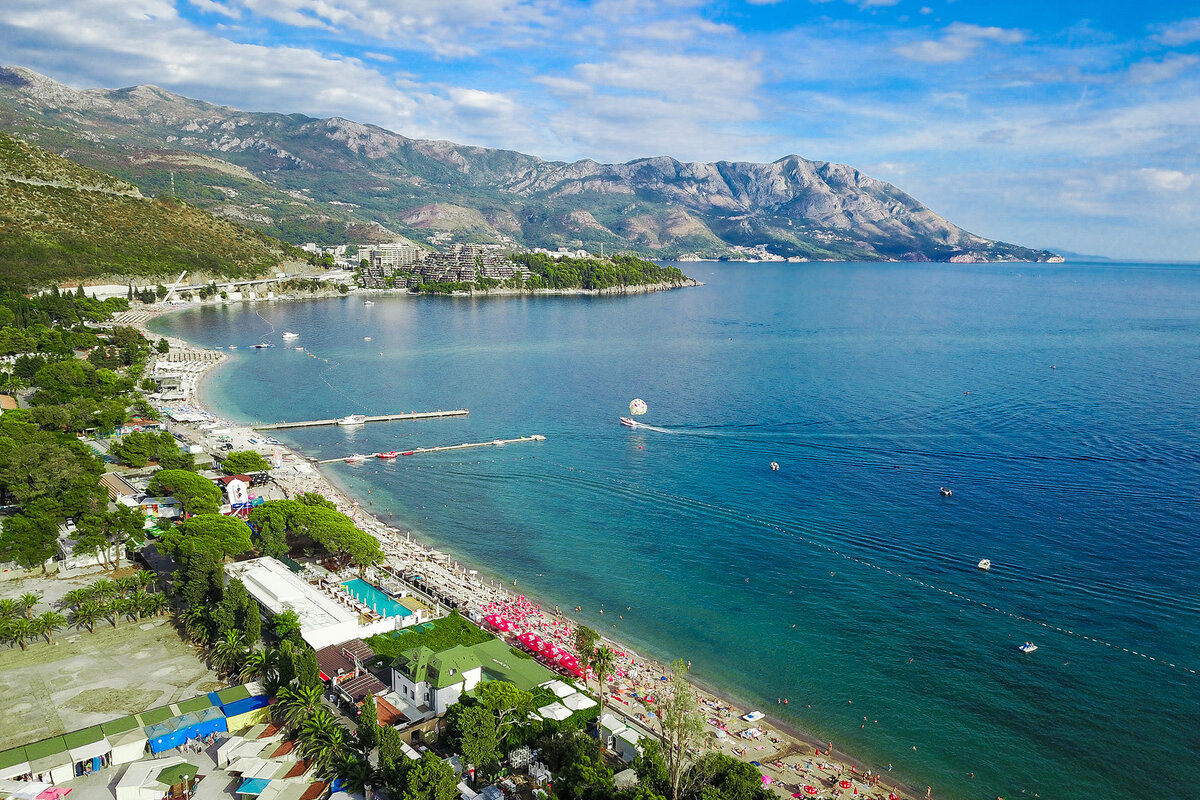
| Month | Air (day) | Sea |
|---|---|---|
| May | +20–23°C | +17–18°C |
| June | +25–28°C | +21–22°C |
| July | +29–32°C | +24–25°C |
| August | +30–33°C | +25–26°C |
| September | +25–28°C | +23–24°C |
Budva
"The all-round hub of the riviera — and the nightlife capital"
If Kotor is about history, Budva is about movement: a picturesque old town on a headland, dozens of beaches within walking distance, and the country's loudest nightlife with clubs along the promenade. It's a convenient base for reaching anywhere on the coast, the choice of hotels for any budget is the widest, and famous Sveti Stefan is next door. You pay for it in density: in July–August Budva is packed, the central beaches are cramped, and the music from the bars carries till morning. Not worth it if you want a quiet, intimate break — for calm, head to Petrovac or the south; Budva is about the maximum concentration of everything at once.
In front of the hotel: pebble beaches, cramped in the centre; the best are Mogren behind the old town
Flight from Warsaw: ~2 hrs to Tivat + ~40 min transfer
7 nights / 2 people: PLN 3,000–7,500
Best season: June and September; July–August is peak for crowds and prices
What to do
- Walk through Budva's old town to the citadel at sunset and descend to the Mogren beaches by the cliffside path
- Spend an evening in the promenade bars — the nightlife here is denser than anywhere else in the country
- Head to the viewpoint above Sveti Stefan for that classic shot of the island from above
- Take a boat trip along the riviera to beaches you can't reach on foot
Bečići and Rafailovići
"Budva's neighbours with a broad beach — but without the noise"
Just around the headland from Budva runs one of the riviera's longest and most comfortable beaches: a broad strip of fine pebble with a gentle entry, a promenade and large all-inclusive hotels. Bečići and neighbouring Rafailovići are the compromise for those who want Budva's infrastructure and a better beach but without the club noise at the window: it's 15 minutes on foot to Budva's old town along the shore path. Not worth it if you're after authentic, fishing-village Montenegro — this is a typical resort zone, built for mass tourism and dense in places.
In front of the hotel: broad fine pebble, gentle entry — one of the riviera's better family beaches
Flight from Warsaw: ~2 hrs to Tivat + ~45 min transfer
7 nights / 2 people: PLN 3,200–7,500
Best season: June–September; early and late summer are calmer for families
Sveti Stefan
"The country's most photographed spot — which you can film but not walk"
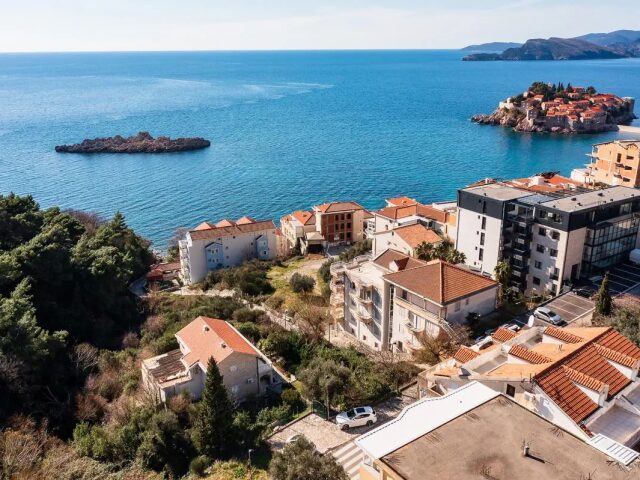
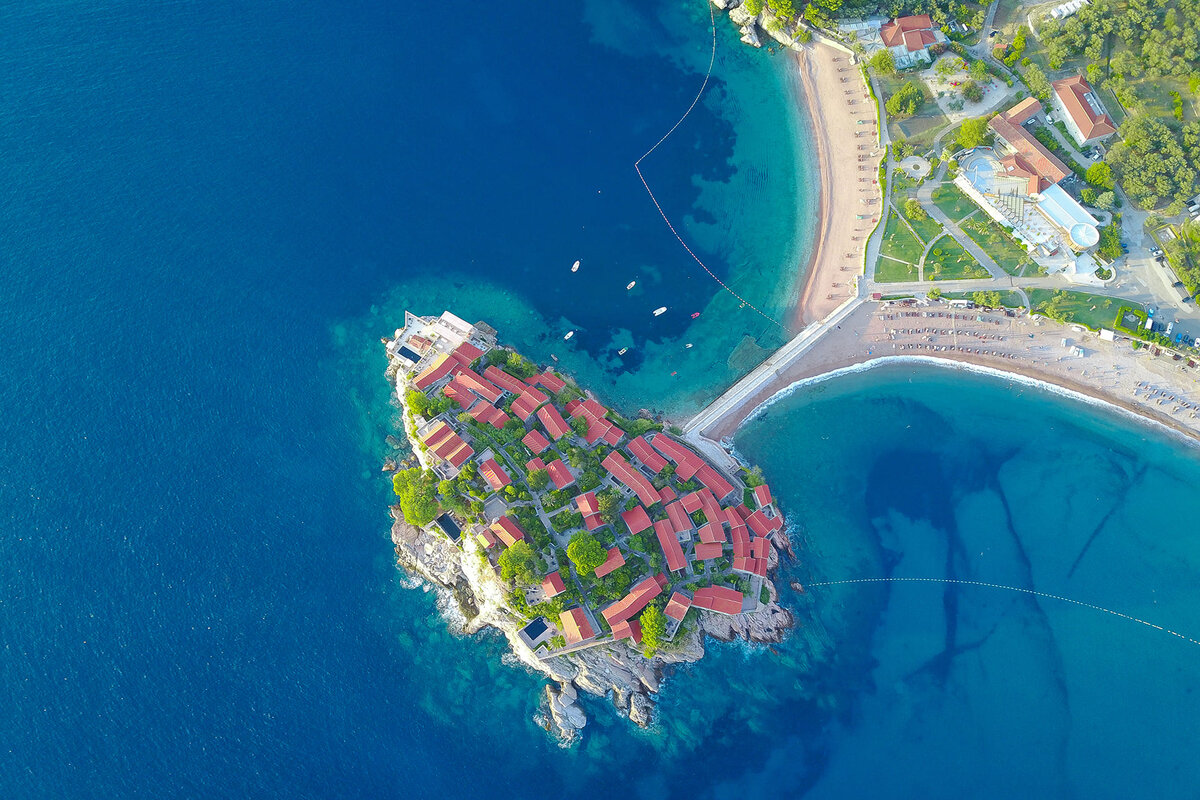 A tiny island linked to the shore by a narrow causeway and built up with the stone houses of a 15th-century fishing village, this is Montenegro's calling card. It's worth understanding what it is today: the entire island is occupied by the exclusive five-star Aman resort, which reopened to guests in summer 2026. You can set foot on the island itself only as a hotel guest; for everyone else, Sveti Stefan is a postcard view from the surrounding viewpoints and beaches. The beaches on either side of the causeway and neighbouring Miločer, with its "Queen's Beach", are among the country's most beautiful — but partly paid and with restricted access. Not worth planning a holiday on the assumption you'll walk the island itself — that option isn't open to the ordinary traveller.
Petrovac
"A quiet alternative to Budva — pines, reddish pebble-sand and intimacy"
Half an hour south of Budva hides a small resort at a completely different pace: a compact bay framed by pines, the old Venetian Kastio fortress on the promenade, and a fine reddish pebble-and-sand beach with a gentle entry. Petrovac has long been chosen by families and couples who want a calm break without Budva's noise but with the atmosphere intact. Nearby lie the secluded Lučice and Buljarica beaches. Not worth it if a wide choice of hotels, nightlife and restaurant variety matters to you — Petrovac is deliberately quiet and small, and that's the point.
In front of the hotel: fine reddish pebble-and-sand beach, gentle entry — easy with children
Flight from Warsaw: ~2 hrs to Tivat + ~50 min transfer
7 nights / 2 people: PLN 3,000–6,500
Best season: June–September; calmer than Budva in any month
The south: Bar and Ulcinj — the only real sand
The further south you go, the warmer the water, the lower the prices and the more sand there is. Bar is a port town with a ferry to Bari in Italy, olive groves (including, by legend, one of the world's oldest olive trees) and the Stari Bar fortress in the mountains above town; it's more of a transit, "local" resort than a showcase one, but inexpensive. And beyond it, right by the Albanian border, lies what people head south for when they want sand.
Ulcinj and Velika Plaža
"Thirteen kilometres of genuine sand and a different, almost Levantine character"
The southernmost and least typical resort of the country: Albanian and Eastern influences are strong here, a different language is spoken in the clifftop old town, and the coast finally turns to genuine sand. Velika Plaža is a continuous thirteen-kilometre strip of sand with a gentle entry and shallow, warm water — the warmest on the whole coast. Downstream on the Bojana river lies the island of Ada Bojana, with sandy beaches, fish restaurants on stilts and a well-known naturist beach; the constant wind has made this the country's kite- and windsurfing hub. Not worth it if you expect infrastructure on the level of Budva or Tivat: Ulcinj is simpler, run-down in places and further from the airports — but it's the only sandy option, and the best value.
In front of the hotel: genuine sand (Velika Plaža, Ada Bojana), gentle entry, the warmest water
Flight from Warsaw: ~2 hrs to Podgorica + ~1 hr transfer (or Tivat + ~1.5 hrs)
7 nights / 2 people: PLN 2,800–6,500 — among the coast's most affordable
Best season: June–September; for kiting on Ada Bojana, the windy summer months
What to do
- Spend a day on Velika Plaža — thirteen kilometres of sand, with room to spare even in August
- Take a kite- or windsurfing lesson on Ada Bojana — the steady wind is ideal for beginners
- Eat fish at a stilt restaurant over the Bojana river, where it's caught right by the tables
- Climb up to Ulcinj's clifftop old town above the sea — the coast's other, Eastern character
More than the sea: the mountains and Lake Skadar
Montenegro's trump card is that the high mountains are a couple of hours' drive from the beach, which makes a "sea plus mountains" trip possible within a single holiday. Three add-ons that pair well with the coast.
- Durmitor and Žabljak. A UNESCO national park of jagged peaks, glacial lakes (the main one is the "Black Lake") and the Tara River Canyon — the deepest in Europe (about 1,300 m). The town of Žabljak is the base for hiking and rafting, and in winter for affordable skiing. It's a 2.5–3.5-hour drive from the coast, but the scenery is worth it.
- Lake Skadar. The largest lake in the Balkans, on the Albanian border — a reserve with pelicans, water lilies and vineyards along its shores, ideal for a boat trip and a tasting of the local wine. Only about an hour from Budva or Bar.
- Lovćen. The country's symbolic mountain, with the Njegoš Mausoleum at the summit, from which on a clear day you can see almost all of Montenegro. It pairs logically with Kotor — the switchback road up is an attraction in itself.
Quick comparison of the resorts
Figures are indicative, for a 7-night trip for two. The key columns: what's in front of the beach and which airport is more convenient.
| Resort | In front of the beach | For whom | Sea (July) | 7 nights / 2 people |
|---|---|---|---|---|
| Herceg Novi | Platforms, pebbles | Quiet, spa | +24–25°C | PLN 3,000–7,000 |
| Kotor | Rocky shore | History, UNESCO | +24–25°C | PLN 3,500–8,000 |
| Tivat | Pebbles, beach clubs | Luxury, yachts | +24–25°C | PLN 4,500–12,000 |
| Budva | Pebbles | First time, nightlife | +24–25°C | PLN 3,000–7,500 |
| Bečići | Fine pebble | Families, broad beach | +24–25°C | PLN 3,200–7,500 |
| Petrovac | Reddish pebble/sand | Quiet, couples, families | +24–25°C | PLN 3,000–6,500 |
| Ulcinj | Genuine sand | Sand, kiting, value | +25–26°C | PLN 2,800–6,500 |
For genuine sand and a gentle entry — only the south, Ulcinj. For a "fjord" landscape and history — Boka: Kotor and Herceg Novi. For the most infrastructure and life — Budva, with quiet next door in Petrovac. For luxury — Tivat. And if you're unsure and it's your first time, Budva forgives a wrong choice better than the specialist resorts: from here you can realistically see almost the entire coast in a day.
Pre-booking checklist:
- Decide first: pebbles or sand. Genuine sand in Montenegro is essentially only in the south (Ulcinj, Ada Bojana); almost everywhere else it's pebbles, rocks or concrete platforms. For small children this is decisive.
- Check the water entry at the specific hotel: a "beach by the sea" in Boka often means a concrete jetty rather than a shore you can wade in from.
- Factor in the airport: Tivat is closer to Boka and the Budva Riviera, Podgorica to the south (Ulcinj) and the mountains. For Herceg Novi, Dubrovnik is sometimes more convenient.
- Budget for the tourist tax — a small sojourn tax of around €1 per person per night, usually added by the hotel; the country uses the euro despite being in neither the EU nor the eurozone.
- To combine sea and mountains, plan for a car: reaching Durmitor and Lovćen by bus is slow and awkward.
- Check the entry rules for your passport in advance: in 2026 Montenegro is aligning its visa regime with the EU, and for some nationalities the terms may change during the season (details in the block below).
Common mistakes:
- Expecting sandy beaches all along the coast. Sand is rare in Montenegro and almost all concentrated in the south. In Boka and on the Budva Riviera it's pebbles, rocks and platforms; if you're after sand, choose Ulcinj.
- Planning a beach holiday in Kotor. Kotor is magnificent as a town and a base for experiences, but there's effectively nowhere to swim — it's a choice for history, not the sea.
- Counting on a walk around Sveti Stefan island. The whole island is the private Aman resort; for the ordinary traveller it's only a view from afar, however postcard-perfect.
- Assuming the euro automatically means the EU and Schengen. Montenegro uses the euro unilaterally but belongs to neither the EU nor Schengen — and it has its own, separate entry rules.
- Coming to Kotor and Budva at the height of August for peace and quiet. Cruise ships and the peak season turn Kotor's old town and central Budva into a crowd; for calm, choose June, September, Petrovac or the south.
- Underestimating the distance to the mountains. "A couple of hours to Durmitor" is along mountain switchbacks; set aside a full day and don't try to squeeze the Tara Canyon into a short outing.
Entering Montenegro: what to know
Montenegro uses the euro but belongs to neither the EU nor the Schengen Area — it's an EU candidate country with its own entry rules. A Schengen visa or a Polish residence permit therefore does not in itself guarantee the right of entry: what matters is your nationality and passport. Important 2026 context: Montenegro has committed to aligning its visa regime with EU policy by the end of the third quarter of 2026, and for several nationalities visa-free travel may become visa-required during the season.
- EU/EEA citizens: visa-free entry for up to 90 days on a national ID card or passport valid at least 3 months beyond departure.
- Non-EU residents of Poland: entry is decided by the nationality in your passport, not by your Polish residence permit. Some nationalities (including Ukraine) enter visa-free; others — including those covered by the EU alignment — may become subject to a visa requirement during the 2026 season. Holders of a valid (used) Schengen visa are admitted to Montenegro for up to 30 days regardless of nationality, but this is a separate option, not a substitute for checking the rules for your own passport.
Rules change, so confirm the final requirements for your document on the official Montenegrin Ministry of Foreign Affairs sources or with your tour operator before travelling.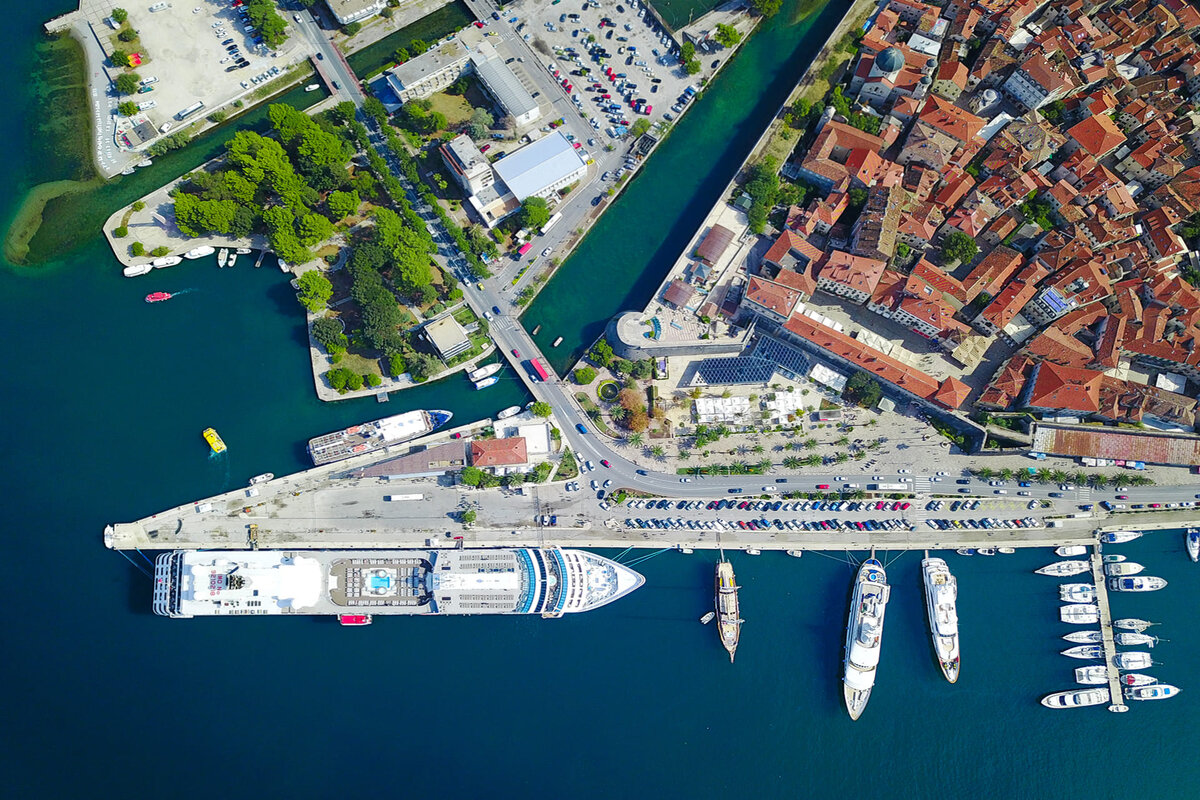
The verdict
Which Montenegrin resort should you choose?
If it's your first time and you want to see the most — base yourself in Budva: from here you can realistically reach Kotor, Sveti Stefan and the south all within a day. For genuine sand and a gentle entry with children — only Ulcinj in the south, which is also the best value. For a "fjord" landscape, history and atmosphere — Boka: Kotor for the old town, Herceg Novi for greenery and spa. For luxury and yachts — Tivat. For quiet next to the infrastructure — Petrovac or Bečići. And if you want more than the sea, set aside a day or two for Durmitor, Lake Skadar or Lovćen: in Montenegro, mountains and coast really can be combined in a single trip.
One last tip:
The best months are June and September: the sea at +23–25°C, the heat easing, and prices and crowds noticeably below August's, when cruise ships and the peak season overwhelm Kotor and Budva. And settle the main question in advance — pebbles or sand: it, not the hotel's star rating, will decide the character of your Montenegrin holiday.

 Holidays


 Last minute
 Hotels


 Blog
Blog