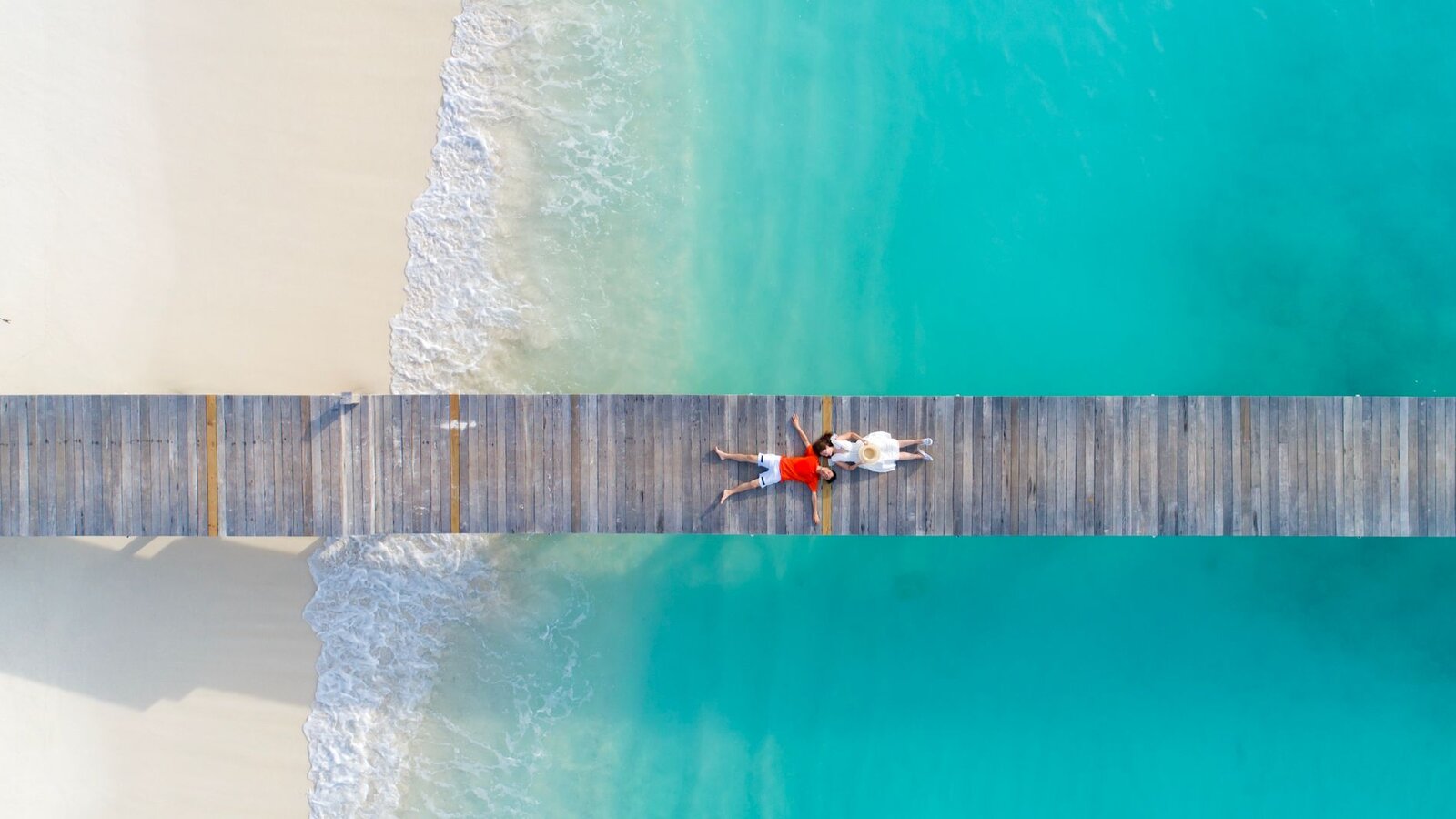
The most common mistake when planning a honeymoon is choosing the destination from a photo rather than the calendar. The Maldives are the number-one honeymoon destination, and at the same time the most common mistake for couples marrying in summer: from May to October the south-west monsoon brings rain and wind there. And most weddings fall precisely between June and September. This flips the whole logic of planning: with an ordinary holiday you pick the place first and fit the dates around it. With a honeymoon the date is fixed in advance by the wedding, and the only thing you can adjust is the destination.
That's why this guide is built the other way round from the usual "10 paradise spots" lists: we start with the month of your wedding and work out from it which destinations genuinely work in that window. Plus real price brackets for three budget levels, the passport question when you change your name - the most often skipped and the most costly in its consequences - and an answer to whether it's even worth flying the morning after the wedding.
- Start here: matching to the date → The wedding calendar
- A June, July or August wedding → Summer destinations
- An autumn or winter wedding → Winter destinations
- Short flight, lower budget → Europe and the near radius
- What it really costs → Three budget levels
- Name change and tickets → Passport and formalities
- Flying straight after the wedding → When to fly
- What hotel perks actually give → Honeymoon perks
- Comparison of destinations → Table
Start with the wedding date, not the photos
This is the one decision that genuinely orders the choice. The table below shows what works in a given month and what's better left for another time - not because the destination is worse, but because it falls in its weakest season then. 
| Wedding date | What works | What to avoid |
|---|---|---|
| June | Zanzibar, Bali, Greece, Italy, eastern Sri Lanka | Maldives, Caribbean (hurricane season begins), UAE |
| July | Zanzibar, Bali, Mauritius, Greece, Croatia | Maldives, Caribbean, Thailand (Andaman), UAE |
| August | Zanzibar, Bali, Seychelles, Greece, Italy | Maldives, Caribbean (hurricane peak), UAE |
| September | Greece, Italy, Bali, Zanzibar, Turkey | Caribbean, Maldives (until mid-month) |
| October-November | UAE, Oman, Thailand (from mid-October), Maldives late on | Greece and Italy (end of season), Bali |
| December-March | Maldives, Thailand, UAE, Sri Lanka (west), Mexico | Mauritius (cyclone risk), Southern Europe |
| April-May | Maldives, Greece, Italy, Sri Lanka (west), Japan | Zanzibar (long rains), UAE (heat already) |
If your wedding date falls in summer but you're dreaming of the Maldives, you have three options, and it's worth naming them plainly: choose a different destination, move the honeymoon to winter (an increasingly common practice - a summer wedding, a January trip), or go anyway and accept the rain risk in exchange for lower prices. There is no fourth option, though tour-operator marketing implies there is.
A June, July or August wedding: what works then
This is the most common scenario and also the one where it's easiest to get it wrong. The good news: there are plenty of destinations that fall in their best season in summer - they're just not the ones that show up most often in wedding inspiration. 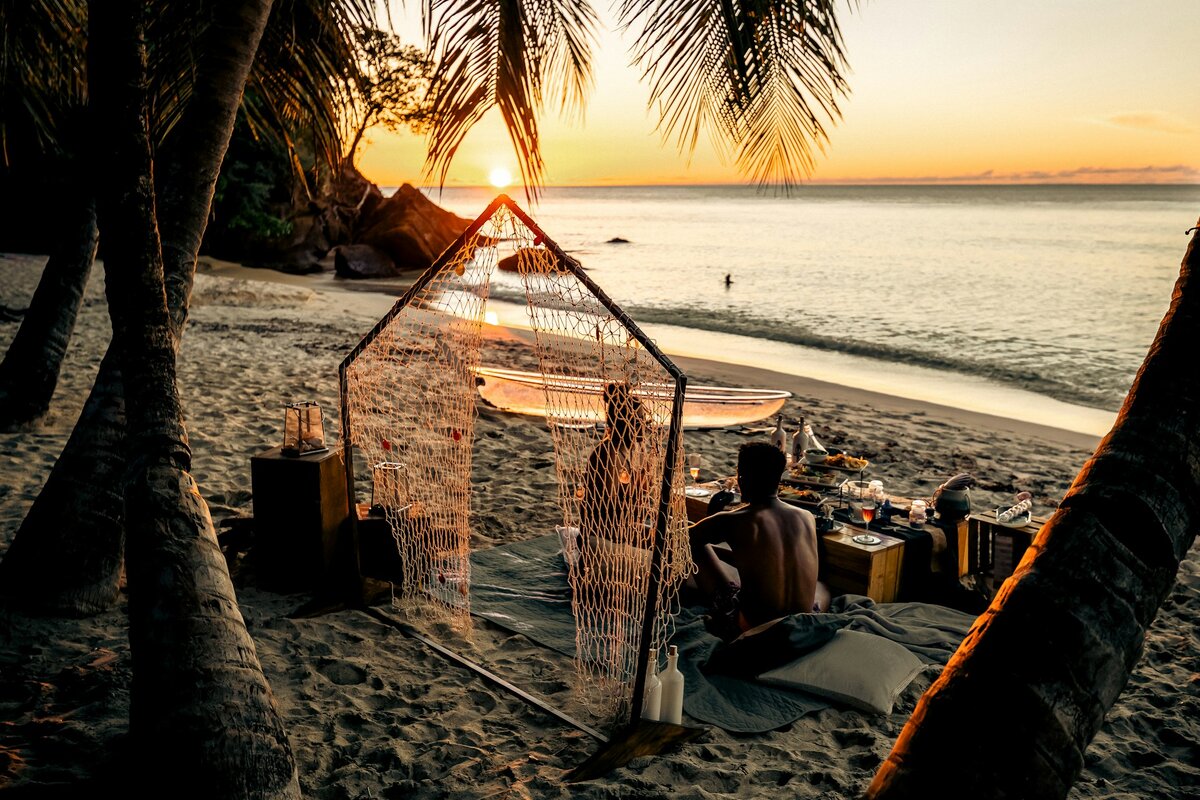
Zanzibar: June to October is the dry season there, which is exactly the best moment; flight from Warsaw around 9-10 hours, usually with one connection
Bali: dry season from April to October; the longest journey on this list (around 16-18 hours with a connection), but in July and August the weather lands perfectly
Seychelles and Mauritius: summer here is the southern hemisphere outside cyclone season - dry and stable, but windier and cooler than the brochure photos suggest
Sri Lanka: the island has two monsoons; in summer the east coast works (around Pasikuda and Trincomalee), not the more popular west
Who is it for
Zanzibar suits couples who want the classic "beach plus a good hotel" setup without a dozen-plus hours of flying and without the weather risk. Bali is better for those who want landscape, culture and a change of scene during the trip on top of the beach. It's not worth choosing Zanzibar if you expect to swim at any time of day: the east coast has large tidal swings, and at low tide the water retreats several hundred metres, which for some couples is a genuine disappointment. With Bali, meanwhile, you have to count the time honestly: on a trip shorter than 10 days, the journey and the time difference eat a significant part of the holiday.
What to do
- Check the tide calendar for the specific hotel in Zanzibar before booking - it's the difference between swimming off the beach and walking across exposed seabed.
- Split Bali into two bases: a few days inland around Ubud and the rest on the coast, rather than the whole stay in one place.
- Plan a Sri Lanka route from the east rather than the west if you're flying in July or August - the same island, but completely different weather.
- In the Seychelles and Mauritius, choose the sheltered side of the island; in summer the difference between coasts can be greater than the difference between hotels.
An autumn or winter wedding: when the Maldives open up
If you're marrying between October and March, or deliberately moving the trip to winter, you get access to destinations that fall out in summer. It's also the point where the honeymoon stops competing with the summer price peak in Europe.
Maldives: dry season from December to April - that's when the islands look the way they do in the photos that sell the destination all year round
UAE and Oman: a comfortable 25-28°C from November to March; in summer 45°C makes them practically useless for a honeymoon
Thailand: from mid-October the Andaman coast comes out of the monsoon and the marine parks reopen
Caribbean: hurricane season runs June to November, peaking in summer, so the safer window is December-April

Who is it for
The Maldives in winter are for couples for whom a honeymoon means calm, privacy and no need to plan anything: one hotel, one island, a week without decisions. It's not worth going there if you start craving stimulation after three days - on a small island there's nowhere to go, and any trip beyond the resort is a separately paid boat. Couples who like to explore more often come back happy from Thailand or Sri Lanka than from the Maldives, even though the latter photograph better.
Europe: a short flight and a realistic budget
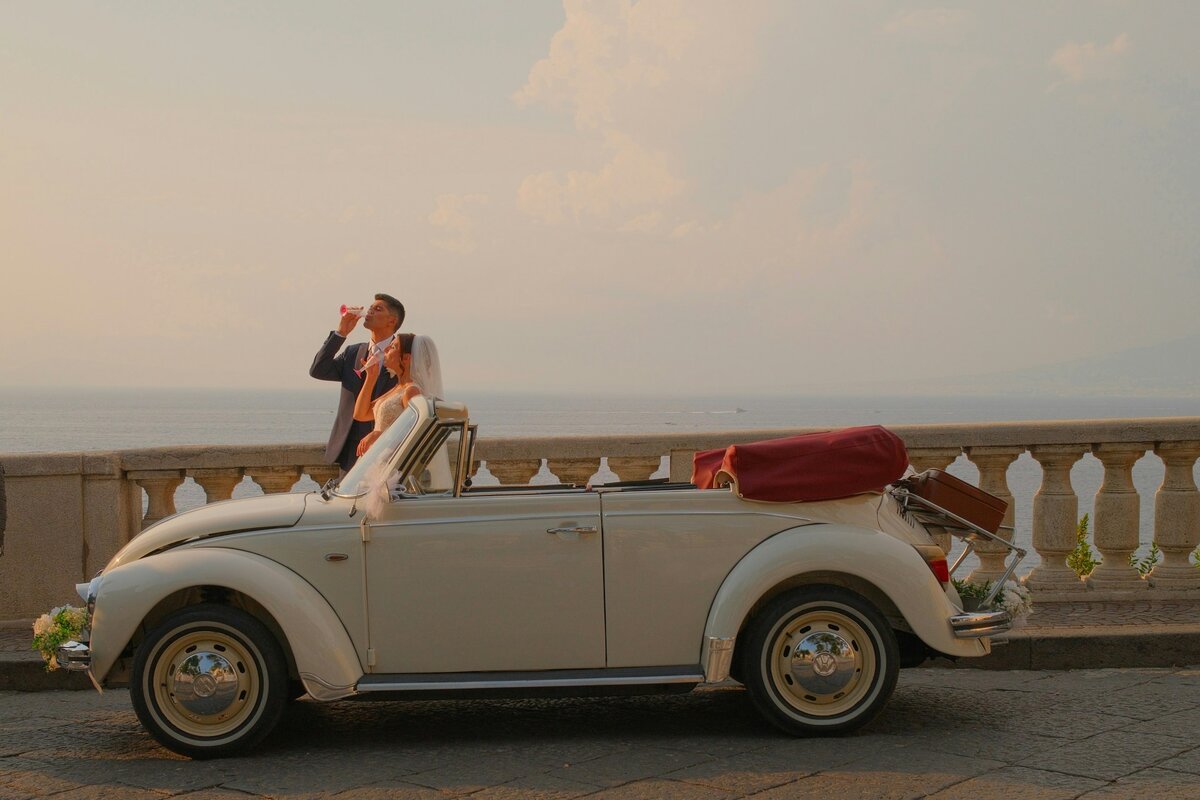
The option most often skipped in wedding round-ups, and with a summer wedding often the most sensible one. Greece, Italy and Croatia are in full season in July and August, the flight takes 2-3.5 hours, and the money saved can go into a noticeably better hotel than the same budget would buy on a long-haul destination.
There's a logistical argument too: after a wedding that usually ends at dawn, a three-hour flight with no time-zone change is a completely different matter from a dozen-plus hours in the air with a connection. Santorini and the Amalfi Coast have served honeymooning couples for decades and have it down to a fine art, but in August they're also the most expensive and crowded of the year - the smaller Cyclades, Zakynthos, Kefalonia or Puglia instead of Amalfi will be quieter and cheaper.
Who is it for
Southern Europe suits couples who want a good hotel, food and views without spending the whole budget on the flight itself, and those with a shorter holiday. It's not worth choosing if the honeymoon is meant to be a clear break from the everyday and a once-in-a-lifetime trip - Greece or Italy, for many couples, isn't the same experience as Bali or Zanzibar, and it's worth saying so before booking rather than after.
What it really costs: three levels
A honeymoon usually falls at the worst possible financial moment - right after the wedding. So honest brackets matter more than inspiration. The figures below are for two people, a week, and a flight from Poland.
Up to PLN 12,000: Greece, Italy, Croatia, Turkey in a good 4-5 star hotel; with long-haul at this budget you'll be compromising on standard
PLN 12,000-25,000: Zanzibar, Bali, Sri Lanka, Thailand, Mauritius - a full-fledged long-haul trip with a solid hotel
Above PLN 25,000: the Maldives with an overwater villa, the Seychelles, Polynesia; the upper limit is practically non-existent
Book ahead: the dates right after the July and August wedding Saturdays go fastest - realistically, book 6-9 months in advance
One note that saves more than any discount code: moving the departure two weeks from August to the second half of September cuts the cost of the same European trip by 25-40% and spoils nothing about the weather. For a honeymoon, which rarely starts the morning after the wedding anyway, it's the easiest saving in the whole plan.
Name change and tickets: the thing most often forgotten
This is the one part of a honeymoon that can end in being turned away at the airport, and most guides don't mention it at all. The rule is simple: the booking must match the document you're actually travelling on, not the name you'll be using in a month.
What to know if you're changing your name:
- Book under the name on your current document. If you're flying soon after the wedding on your existing passport, book the tickets and hotel under your maiden name - the details have to match at check-in.
- Don't collect the new document before you fly. Collecting a new passport invalidates the old one, and then a booking under the old name no longer matches a valid document.
- Watch the old passport's validity. After a name change, the old passport loses validity a set period after the marriage date (which varies by country) - you need to be back before that period ends.
- Check the six-month rule. Many non-EU countries require a passport valid for at least six months from the date of entry - with a document about to be invalidated by a name change, that can be a problem.
- Nationality matters separately. For non-EU nationals resident in Poland, the marriage and name change follow the rules of your country of citizenship, not Poland; check the timing and procedure for replacing your passport with your consulate or the relevant authority.
- Bring the marriage certificate. It helps with any document mismatches, and it's also what the hotel will ask for if you want to use the newlywed perks.
The simplest solution if the trip is right after the wedding: leave the documents untouched until you travel, book under your current details, return on time, and only then apply for replacements. If the honeymoon is pushed back by a few months, change the documents first and buy the tickets under the new name. Timing and rules depend on nationality and can change, so confirm the details in advance with the relevant authority or your consulate.
When to fly: the morning after the wedding or later
Flying the morning after the wedding looks good on paper and noticeably worse in practice. The wedding ends at dawn, you've had no sleep, and a flight with a connection in that state means you'll sleep through the first two days of the honeymoon. On destinations with a big time difference, jet lag is added on top.
- The safe option: flying 2-3 days after the wedding. Enough to catch up on sleep and sort things out, and the trip is still part of the same event.
- The financially sensible option: pushing it back 2-6 weeks. Lower prices, calmer logistics, and with a summer wedding often better weather at the destination.
- The weather option: moving it to a different season if the dream destination doesn't work in summer. A wedding in August, the Maldives in February - that's a normal scenario today, not a compromise.
- The debatable option: flying the same day. It only works with a short flight within Europe and a wedding that ends earlier than usual.
What newlywed hotel perks actually give you
It's worth setting expectations, because this is where marketing diverges from reality most. Flagging a honeymoon at booking usually brings small gestures: a bottle of sparkling wine, fruit or sweets in the room, bed decoration, sometimes a late check-out. A free upgrade to a suite does happen, but it's an exception that depends on occupancy, not a standard you can count on when planning.
In practice: flag the honeymoon at booking rather than at check-in, and have your marriage certificate with you - some hotels ask for it. If a specific room with a view matters to you, it's cheaper and more reliable to simply book it than to rely on the goodwill of reception.
Quick comparison of destinations
Figures are approximate, for two people for a week with a flight from Poland. 
| Destination | Best time | Flight from Warsaw | Budget 7 days / 2 people | Who it's for |
|---|---|---|---|---|
| Zanzibar | June-October | ~9-10hr with a connection | PLN 13,000-22,000 | Beach and hotel, summer wedding |
| Bali | April-October | ~16-18hr with a connection | PLN 15,000-25,000 | Beach plus landscape and culture |
| Maldives | December-April | ~10-12hr with a connection | PLN 20,000-45,000 | Calm, privacy, zero planning |
| Seychelles | Year-round, windier in summer | ~11-13hr with a connection | PLN 22,000-40,000 | Beaches and nature, higher budget |
| Mauritius | May-September | ~12-14hr with a connection | PLN 16,000-28,000 | Hotels and spas, summer wedding |
| Sri Lanka | East in summer, west in winter | ~11-13hr with a connection | PLN 12,000-20,000 | Sightseeing plus beach |
| Thailand | November-March | ~12-16hr with a connection | PLN 12,000-22,000 | Variety, winter wedding |
| Greece and Italy | May-September | 2-3.5hr direct | PLN 7,000-15,000 | Short flight, a better hotel for the money |
Checklist before booking:
- Decide the departure date relative to the wedding first, and only then the destination - the date is fixed, the destination isn't.
- Check the season at the destination for your specific month, not "in general": the Maldives in summer and the Maldives in winter are two different trips.
- Book under the name on the document you'll fly on, and don't collect a new passport before departure.
- Check that the passport meets the six-month validity rule for your chosen destination.
- For long-haul, count the length of the holiday honestly: on 7 days, a destination over 12 hours' flight loses its point.
- Flag the honeymoon at booking and bring the marriage certificate.
- Take out insurance covering water sports if you plan to dive - that's the most common exclusion in basic policies.
Common mistakes:
- The Maldives for a July or August wedding. It's monsoon season; the same hotel in February looks different from August, and the price difference is justified.
- The Caribbean at the peak of hurricane season. June to November, most intense in late summer - on a single week's holiday that's a risk that's hard to recover from.
- Flying the morning after the wedding to the other side of the world. You'll sleep through the first two days, and on a short trip that's a third of the honeymoon.
- Booking under the new name before changing documents. At check-in, what counts is matching the document you're actually travelling on.
- Forcing long-haul on a budget that can't carry it. A weaker hotel in the Maldives gives a worse experience than a very good hotel in Greece for the same money.
- Counting on a free upgrade. It's an exception that depends on occupancy; if a specific room matters, you have to book it.
The verdict
Which destination should you choose for a honeymoon?
The answer starts with the wedding date, not the photos. For a summer wedding, Zanzibar, Bali, and Mauritius and the Seychelles work best, and among the nearer options Greece and Italy, which on a short flight give you a better hotel for the same money. The Maldives, the UAE and the Caribbean are proposals for an autumn or winter wedding, or a deliberately postponed trip - and that postponement is the most sensible decision you can make with an August wedding. If the honeymoon is meant mainly as a rest after months of organising, a short flight and a smaller time difference will do more for you than an exotic destination name.
 One last piece of advice:
Deal with the documents before you choose the hotel. A booking that matches the passport you'll actually fly on, and not collecting a new document before departure, are two things that cost nothing but are the only part of this trip capable of stopping you at the border.








 Holidays


 Last minute


 Hotels


 Blog
Blog