Two people book the same four-star hotel "in Crete" for the same week. One flies into Chania and is at the hotel in twenty minutes; the other flies into Heraklion and spends three hours crossing the whole island to reach the same stretch of coast. The difference isn't luck or the price of the package — it's that Crete runs 260 kilometres from east to west with an airport at each end, and choosing a resort here is inseparable from choosing an airport. "Crete" on a tour listing isn't one destination; it's at least four: western lagoon beaches, central history and nightlife, a quiet upmarket east, and a wild, hot south.
Below we work the island by region from west to east — Chania, Rethymno, Heraklion, Lasithi — and explain what really sets Hersonissos, Elounda and Platanias apart beyond a hotel's star rating: what's underfoot at the beach, how warm the sea runs month by month, which of the two airports to fly into for a given resort, and what a week costs. Separately: gorges and Knossos as a counterweight to the beach, the southern coast where it's warmer and quieter, and the entry rules with 2026's changes factored in.
- The island's best beaches (Balos, Elafonisi) → Chania
- First time in Crete, everything at once → Rethymno, Heraklion
- Nightlife and clubs → Heraklion (Malia)
- Families with children, short transfer → Heraklion (Hersonissos)
- A Venetian old town with a beach next door → Rethymno, Chania
- Luxury, spa, a quiet east → Lasithi (Elounda)
- Calm and authenticity → Lasithi (Sitia)
- Warmer for longer and wild beaches → The south coast
- Mountains, gorges, Knossos → More than the sea
- Compare everything at once → Comparison
Climate and season: when to go and which airport
Crete has one of the longest swimming seasons in Greece: comfortable from mid-May to the end of October, and into early November on the south coast. The north coast, where almost all the resort infrastructure sits, is fairly uniform in climate from Chania to Agios Nikolaos — the table below applies to that whole stretch. The south coast, facing the Libyan Sea, runs a degree or two warmer and holds its season longer, covered separately below.
| Month | Air (day) | Sea | Sunshine/day |
|---|---|---|---|
| May | +22–24°C | +19–20°C | 10–11 hrs |
| June | +26–28°C | +22–23°C | 13 hrs |
| July | +28–31°C | +24–25°C | 13 hrs |
| August | +29–31°C | +25–26°C | 12 hrs |
| September | +26–28°C | +24–25°C | 11 hrs |
| October | +23–25°C | +22–23°C | 9–10 hrs |
Two airports: Heraklion (HER) in the centre and Chania (CHQ) in the west — pick your resort and airport as a pair
The new Kastelli airport: under construction, test flights possible by late 2026, but full launch is targeted for 2028 — you can't fly into it this season
Best season: June and September — warm sea, milder heat than August, prices and crowds below peak
Roads: the northern BOAK motorway has ongoing roadworks in places — build in extra transfer time
The practical takeaway behind this whole article: decide on the region first, then book a flight into the airport nearest to it. Getting that pairing wrong costs two to three hours of transfer each way — on an island this long, that's not a minor detail, it's a ruined first and last day of the holiday.
Chania: the island's west and its best beaches
The western region, with its own airport (CHQ), is the greenest, most scenic and most "beach-focused" part of the island. This is where the postcard lagoons that put Crete on world rankings are found: the pinkish sand of Elafonisi in the south-west, the Balos lagoon with its white seabed and three shades of turquoise on the north-western cape, and the long wild beach at Falassarna with the island's best sunsets. Chania town itself is a Venetian harbour with a lighthouse, a maze of lanes and a covered market — one of the most beautiful towns in Greece. The resort strip runs west of town through Agia Marina and Platanias. A notable 2026 detail: the west is moving firmly upmarket — new premium resorts have opened here, and the region's average price has risen with them. 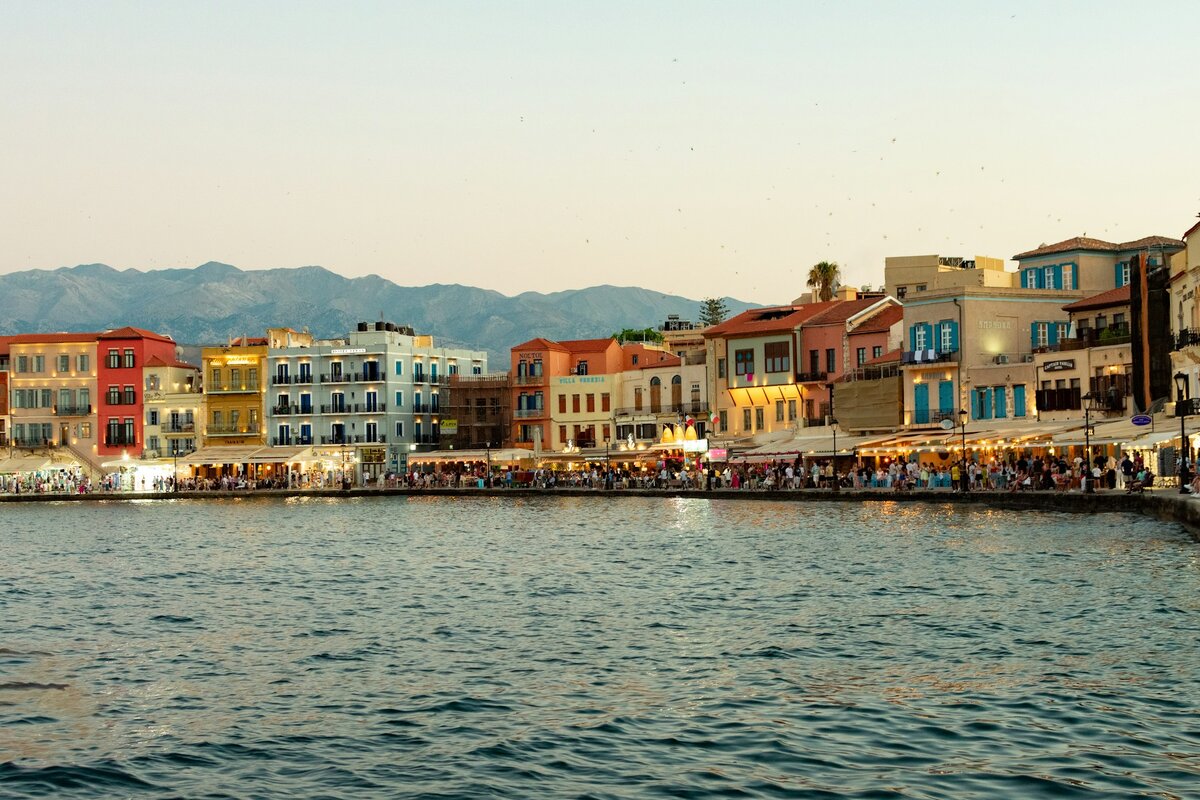
Airport: Chania (CHQ), 20–40 min transfer to the resorts; don't book a flight into Heraklion for this coast
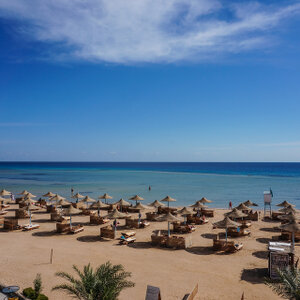
In front of the hotel: sand with pebble at Platanias; the famous beaches (Balos, Elafonisi) are day trips, not the hotel's own beach
7 nights / 2 people: PLN 3,800–9,500
Best season: May–June and September; in July–August, head to Balos and Elafonisi before 9am
Who is it for
The best choice for anyone travelling for the beaches and willing to hire a car: without one, Balos and Elafonisi are reachable only on scheduled organised excursions, and the whole point of the west is the freedom to drive to a wild cove yourself. It suits couples, town-lovers and independent travellers well. Not worth it if you're expecting a dream beach right outside the hotel and don't plan to hire a car: the beaches along the resort strip itself are decent but ordinary, and the ones from the photographs are an hour to ninety minutes away. And mind the airport pairing: flying into Heraklion for a hotel in Chania means a three-hour transfer — a classic mistake.
What to do
- Get to the Balos lagoon before 9am or after 5pm — by day the boats bring in the crowds, and the white seabed disappears under hundreds of people
- Visit Elafonisi on a weekday, not a weekend — the pink sand is genuine, but at peak season the car park fills by ten in the morning
- Walk Chania's Venetian harbour in the evening and eat in the quarter behind the lighthouse rather than on the front row of the waterfront
- Drive to Falassarna for sunset — one of the few beaches on the island that faces due west
Rethymno: the island's happy medium
Sitting almost exactly between the two airports (about an hour from each), Rethymno is the compromise that often turns out to be the most sensible choice. Rethymno town combines what people usually travel to two separate places for: a well-preserved Venetian old town with the Fortezza fortress, and a long sandy town beach right by the centre. East along the coast run the compact resorts of Panormo and Bali — pebble coves with smaller hotels, quieter and more low-key than the loud Heraklion centre. To the south, the region reaches the Libyan Sea: Plakias and the Preveli monastery with its palm-lined river mouth belong to a wilder, different Crete. The central position makes Rethymno a convenient base — both the west and the east are within reach of a single day trip. 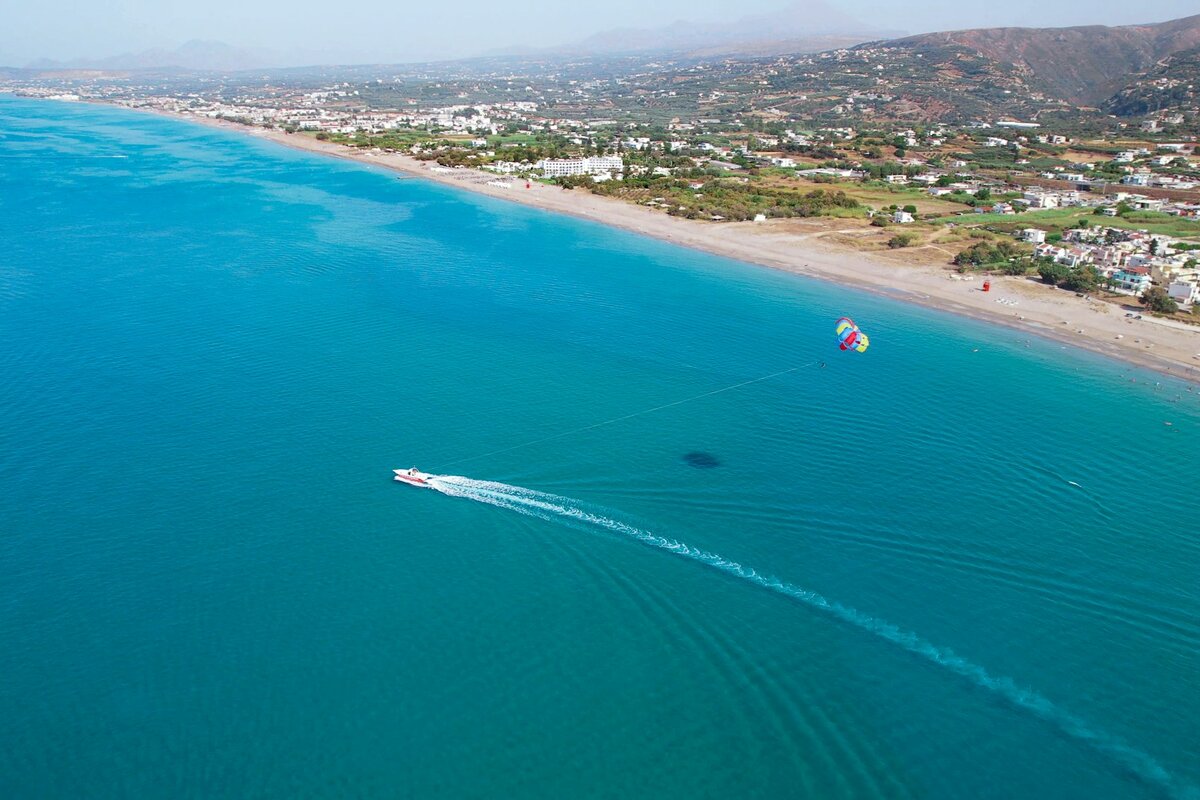
Airport: roughly equidistant from Chania (CHQ) and Heraklion (HER), about an hour from each
In front of the hotel: a long sandy beach in Rethymno town itself; pebble coves at Bali and Panormo
7 nights / 2 people: PLN 3,500–8,500
Best season: May–June and September–October; the old town is enjoyable in any weather
Who is it for
The ideal option for anyone who wants both a town and a beach and doesn't want to choose between east and west: from Rethymno you can genuinely see both Chania and Knossos during one holiday without relocating. It suits couples, families and first-time visitors who don't want to gamble on the wrong end of the island. Not worth it if you want a large resort zone with plenty of all-inclusive hotels and water parks: Rethymno is more modest in scale than Heraklion, and the town beach can get crowded and breezy in the afternoons in July.
What to do
- Climb up to the Fortezza fortress at sunset — the whole old town and the sea laid out from the height of the Venetian walls
- Head to the south coast, to Plakias and Preveli beach with its palm grove at the river mouth — the Libyan Sea runs warmer than the north
- Visit the mountain village of Argyroupoli with its springs and plane trees — a cool, trout-filled retreat on a hot afternoon
- Walk Rethymno's old town without a map and find the Turkish fountain and the minaret — traces of every era on the island packed into a couple of blocks
Heraklion: the centre, Knossos and nightlife
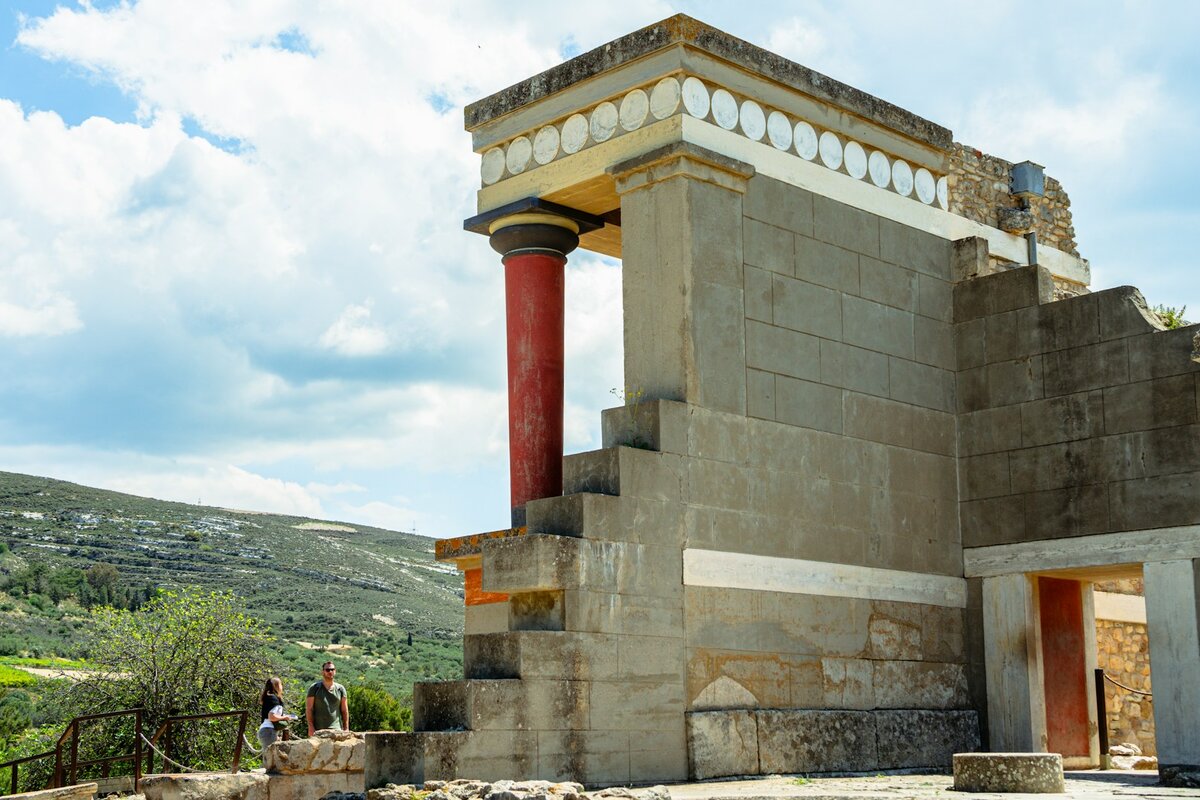
The central region, home to the island's main airport (HER), is the most developed, the busiest and the most varied in its internal geography. This is where most of the package hotels and the shortest transfers are concentrated, along with two resorts with opposite reputations. Hersonissos and neighbouring Stalis are a family zone of water parks, promenades and all-inclusive. Malia, a couple of kilometres on, is Crete's clubbing capital, where the music runs till dawn all summer. West of Heraklion, near Agia Pelagia, quieter coves are tucked away. And this is also the island's main cultural stop: the Palace of Knossos, the heart of Minoan civilisation, 30–40 minutes from the resorts. To the south, the region reaches Matala, with its cliffside caves and a beach that became legendary in the sixties. 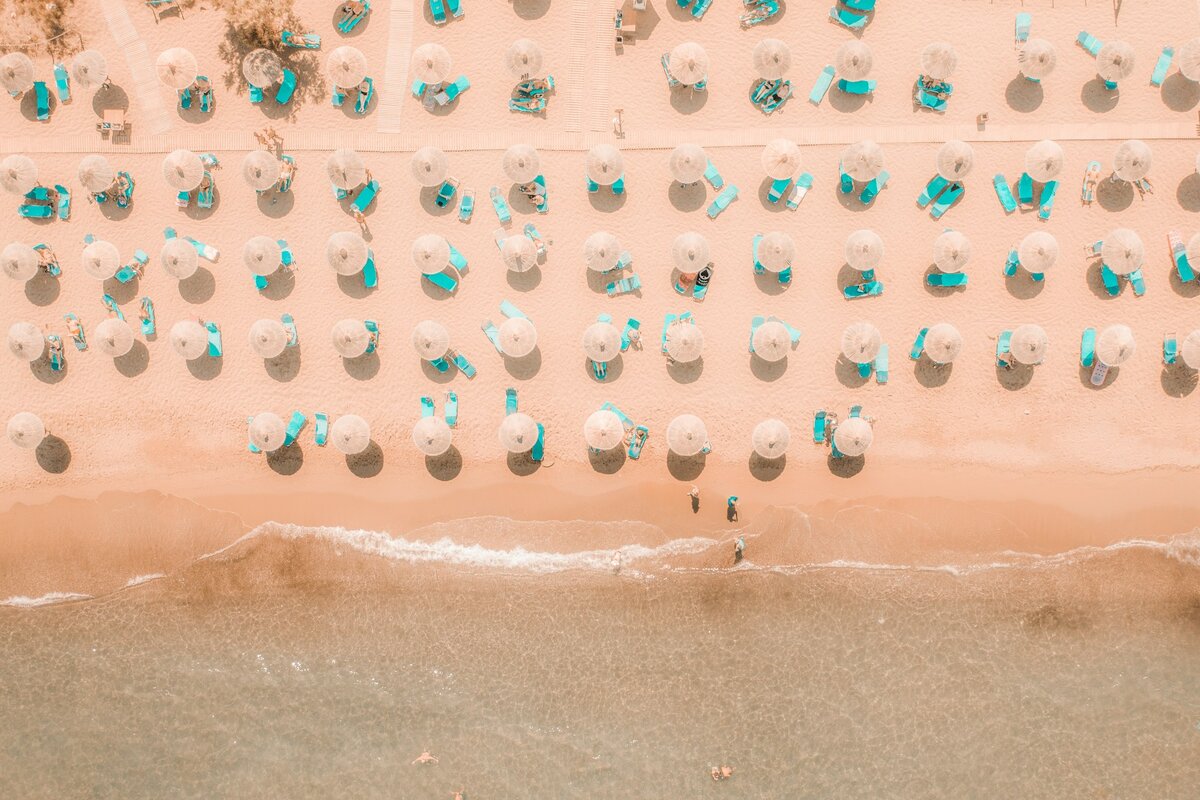
Airport: Heraklion (HER), 25–40 min transfer to Hersonissos and Malia — the shortest on the island
In front of the hotel: sand and sand-with-pebble; in places at Hersonissos the entry is over rock or a pontoon — check the specific hotel
7 nights / 2 people: PLN 3,300–8,000 — the widest choice by price
Best season: June and September; Malia and Hersonissos get packed in July–August
Who is it for
The best choice for families who value a short transfer after the flight, and for anyone travelling for maximum infrastructure: there are more water parks, restaurants and excursions here than in any other region. Younger travellers looking for nightlife have a straight road to Malia. Not worth it with small children if you're booking into Malia itself or the clubbing end of Hersonissos: the noise runs till morning, and that's not a side effect but the whole point of those places. Anyone after quiet and authenticity won't find it in central Heraklion either — it's the island's most touristy and built-up stretch.
What to do
- Arrive at the Palace of Knossos for its 8am opening — the 3,500-year-old heart of Minoan civilisation gets crowded with groups after 10:30
- Visit the Heraklion Archaeological Museum — the world's best collection of Minoan art, including the Phaistos Disc; in the heat it's also a welcome escape from the sun
- Head to the south coast at Matala — cliffside caves above the beach once home to a sixties hippie community, and a warm Libyan Sea
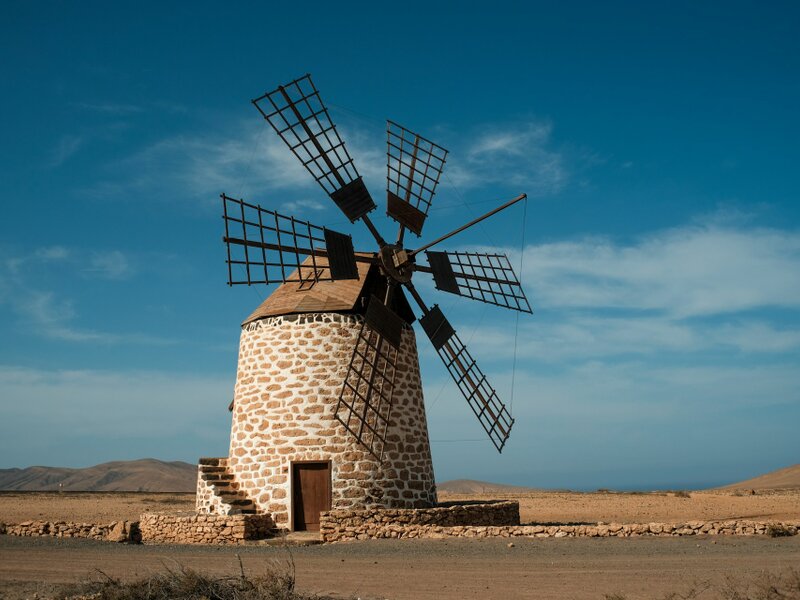
- Get up to the Lasithi Plateau with its windmills and the Cave of Zeus — 8–10 degrees cooler than the coast on a hot day
Lasithi: the island's east and its luxury address
The easternmost region is about calm, authenticity and the top price bracket. Its hub, Agios Nikolaos, sits on a scenic bay with a lake inside the town itself, and is generally considered Crete's most atmospheric resort town. Nearby, Elounda is the island's luxury address: five-star resorts with spas and villa pools cluster here, and people come for privacy and service rather than a bargain. Opposite Elounda lies the islet of Spinalonga, with its Venetian fortress and the history of Europe's last leper colony — one of the island's most powerful excursions. Further east, quiet Sitia and the palm beach at Vai — Europe's only natural date-palm grove — sit off the main tourist track. To the south, the region reaches Ierapetra, the southernmost town in Greece, where it's warmest and the season runs longest.
Airport: Heraklion (HER); transfer to Agios Nikolaos and Elounda around 1–1.5 hours
In front of the hotel: small coves, pebble and sand; Elounda's luxury hotels often have managed platforms and private entry points
7 nights / 2 people: PLN 4,000–14,000 — the upper tier, thanks to Elounda
Best season: June and September; in the south (Ierapetra) it stays warm into late October
Who is it for
Ideal for anyone wanting spa luxury and quiet (Elounda), or a calm, less crowded east (Sitia, Ierapetra), and for couples and repeat visitors who've already seen the "standard" centre. Not worth it if you want a budget holiday and a lively resort scene: Elounda is one of the most expensive addresses in Greece, and the east as a whole is quieter and further from the airport. Anyone counting on a wide choice of cheap all-inclusive hotels and nightlife will find it both pricey and rather dull here.
What to do
- Take a boat from Elounda or Plaka to Spinalonga island — a Venetian fortress and the history of the leper colony, one of Crete's most powerful excursions
- Walk out to Vai beach — Europe's only natural date-palm grove creates an almost tropical landscape
- Take an evening walk around Agios Nikolaos's Lake Voulismeni promenade — the island's most photogenic small town after sunset
- Drive down to Ierapetra in the south and take a boat to Chrissi islet, with its cedars and white sand — Europe's southernmost beach
More than the sea: gorges, Knossos and the mountains
Crete is the rare case where a week on the beach leaves you feeling you've missed something: the island offers mountains, gorges and history that its neighbours simply don't have. Worth adding to the beach time, whichever region you choose.
- Samaria Gorge. Europe's longest canyon (16 km), in the mountains of Chania in the south-west. The descent takes 5–6 hours, you need to start early, and it ends at the sea in the village of Agia Roumeli, from where a ferry brings you back. Not for everyone — it's a physically serious route, but it's the island's signature trek.
- The Palace of Knossos and the Heraklion museum. The centre of Minoan civilisation and the world's best collection of Minoan art — a must-see even for those indifferent to antiquity. Best done together, in the morning.
- Spinalonga. A fortress islet in the east with the history of the leper colony — an excursion that stays with you longer than any beach.
- The Lasithi Plateau and the Cave of Zeus. A mountain plain with windmills, said by legend to be Zeus's birthplace; cool air and a different Crete an hour from the coast.
- The south coast. Plakias, Matala, Ierapetra, Chrissi island — the Libyan Sea runs warmer than the north, the beaches are wilder, and there are noticeably fewer tourists.
 Quick comparison of Crete's regions
Figures are indicative, for a 7-night trip for two. The key column is the airport: the pairing of "region plus the right airport" is what determines how much of your time goes on the road.
| Region | Airport | Who is it for | Beaches | Sea (August) | 7 nights / 2 people |
|---|---|---|---|---|---|
| Chania (west) | Chania (CHQ) | Beaches, couples, car hire | The island's best (day trips) | +25–26°C | PLN 3,800–9,500 |
| Rethymno (centre) | CHQ or HER (~1 hr) | First-timers, town + beach | Sand in town, pebble in the coves | +25–26°C | PLN 3,500–8,500 |
| Heraklion (centre) | Heraklion (HER) | Families, nightlife, Knossos | Sand and pebble, short transfer | +25–26°C | PLN 3,300–8,000 |
| Lasithi (east) | Heraklion (HER), 1–1.5 hrs | Luxury, quiet, authenticity | Coves, pebble, private entry points | +25–26°C | PLN 4,000–14,000 |
By profile, briefly: for beaches and the freedom of a car, the west, Chania. First time and "everything at once" without relocating, the centre, Rethymno. Families, a short transfer, water parks and nightlife, Heraklion. Luxury, spa and a quiet east, Lasithi and Elounda. The sea is nearly identical right along the north coast — what genuinely differs, and what will shape your holiday, is the journey from the airport and the character of the resort, not the water temperature.
Pre-booking checklist:
- Choose the region first, then the flight to the nearest airport: Chania (CHQ) for the west, Heraklion (HER) for the centre and east. Getting the pairing wrong costs 2–3 hours of transfer each way.
- Check the beach type and water entry at the specific hotel: in Crete, "beachfront" at Hersonissos or Chania can often mean rock and a pontoon rather than a gentle sandy entry.
- Settle the car question in advance: the west's best beaches (Balos, Elafonisi) are only reachable on a fixed excursion schedule without one, and the whole point of these places is arriving early.
- Don't expect the famous lagoons to be your hotel's own beach: Balos and Elafonisi are almost always day trips, an hour to ninety minutes each way.
- Look at June and September: the sea holds +24–25°C, the heat is milder, prices and crowds sit below August, and the season runs into late October.
- Build in extra transfer time: the northern BOAK motorway has roadworks in places, and the journey can run longer than the map suggests.
Common mistakes:
- Flying into the wrong airport. A hotel in Chania with a flight into Heraklion means a three-hour drive across the whole island. Choose the airport for the region, not for the ticket price.
- Expecting postcard lagoons right outside the hotel. Balos and Elafonisi are day trips, not a resort's own beach. The beaches within the resort zones themselves are decent but ordinary, not "the photograph".
- Booking Malia with young children. It's the island's clubbing capital, with music till dawn. The same region's Hersonissos or Stalis offers family infrastructure without the night-time noise.
- Underestimating the island's size. 260 km east to west isn't "nearby". Planning Chania and Spinalonga from the same hotel without long drives simply won't work.
- Coming to Crete without a car and expecting to see the island. Public transport links the main towns along the north coast, but reaching beaches and villages without one is slow and awkward.
- Treating the Samaria Gorge as an easy stroll. It's a 16km, 5–6 hour descent, not a photo walk; it's not suitable for the elderly or with small children.
Entering Crete: Greece means the EU and Schengen
Crete is part of Greece, and so of the EU and the Schengen Area. Entry requirements are the same across the whole island and match the general Schengen rules. One notable change this season: through 2026 the Schengen Area is progressively rolling out the automated Entry/Exit System (EES) at external borders, which replaces passport stamps and records biometric data (fingerprints and a photo) on first entry. This can add to border-crossing times at peak season — build in some spare time.
- EU/EEA citizens, including Polish nationals: entry on a valid passport or national ID card, no visa, no limit on length of stay within EU rights.
- Ukrainian citizens: visa-free entry to Schengen, including Greece, for up to 90 days within any 180-day period, on a biometric passport. The passport must be valid for at least 3 months beyond the planned departure date. Keep track of your total days across the whole Schengen Area — the 90/180 rule applies to the zone as a whole, not per country.
- Belarusian citizens: a valid Schengen visa (Greek or any other multiple-entry Schengen visa) is required, or a valid Polish residence permit. A Polish residence permit grants the right to a short stay across Schengen, including Greece, without a separate Greek visa — unlike destinations outside Schengen, where it doesn't apply.
- General note: the details of how EES operates and the requirements are being refined as the system rolls out, so confirm the current rules for your specific passport with your tour operator or official sources before travelling.
The verdict
So which region of Crete should you choose?
If you're travelling for the beaches and willing to hire a car, it's the west, Chania: Balos, Elafonisi and Falassarna have no equal on the island, but they're day trips, not a beach outside the hotel. Flying to Crete for the first time and don't want to choose between east and west? The centre, Rethymno: a Venetian town, a sandy beach, and roughly equal distance to both ends of the island. Families, water-park fans and nightlife-seekers should look to Heraklion, with its short transfer and Knossos nearby; younger travellers head straight for Malia. For luxury, spa and quiet, it's the east, Elounda and Lasithi. And if you want more than the sea, set aside a day for the Samaria Gorge, Knossos or Spinalonga — in Crete the mountains and the history stand on equal footing with the beach. 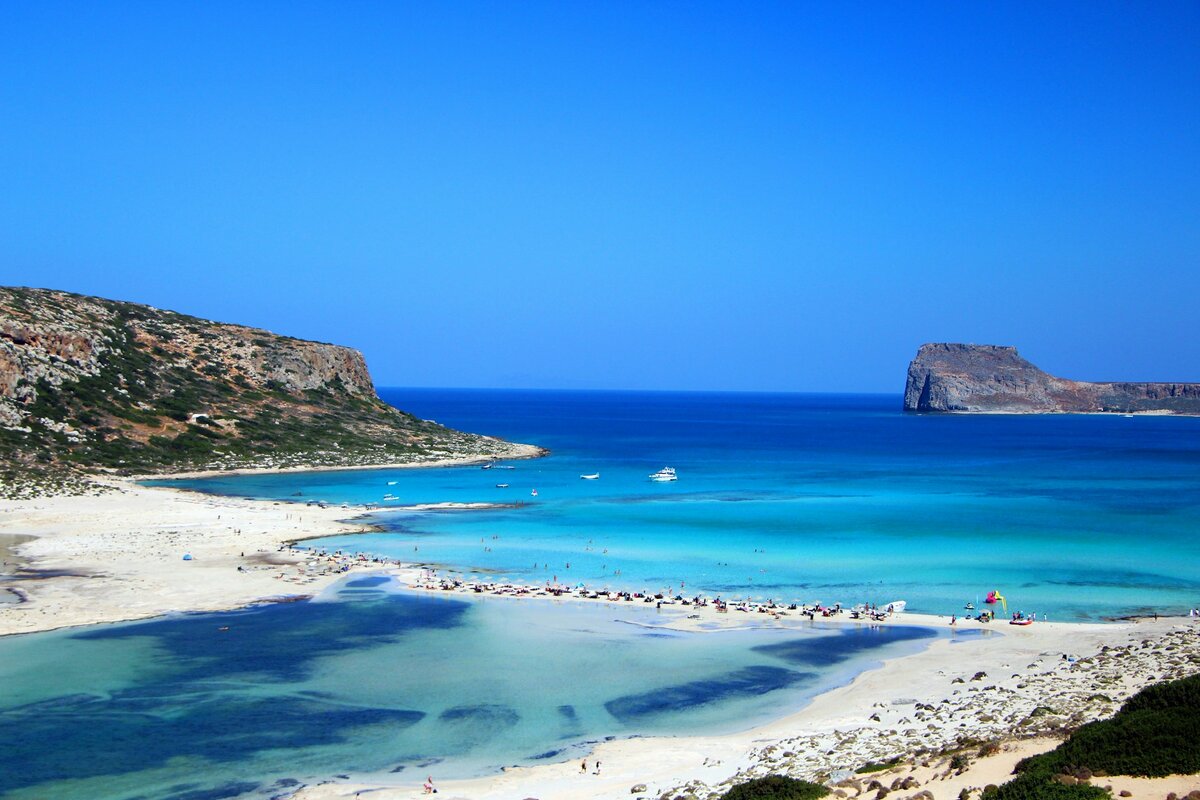
One last tip:
Settle two questions before booking — the region, and the airport that matches it, in that order. That pairing, the right end of the island plus the nearest airport, decides whether your holiday starts twenty minutes after landing or three hours later. And the best months are June and September: the sea holds +24–25°C, the heat is gentler than August, prices and crowds run noticeably lower, and the season in the south stretches into late October.

 Holidays


 Last minute


 Hotels


 Blog
Blog