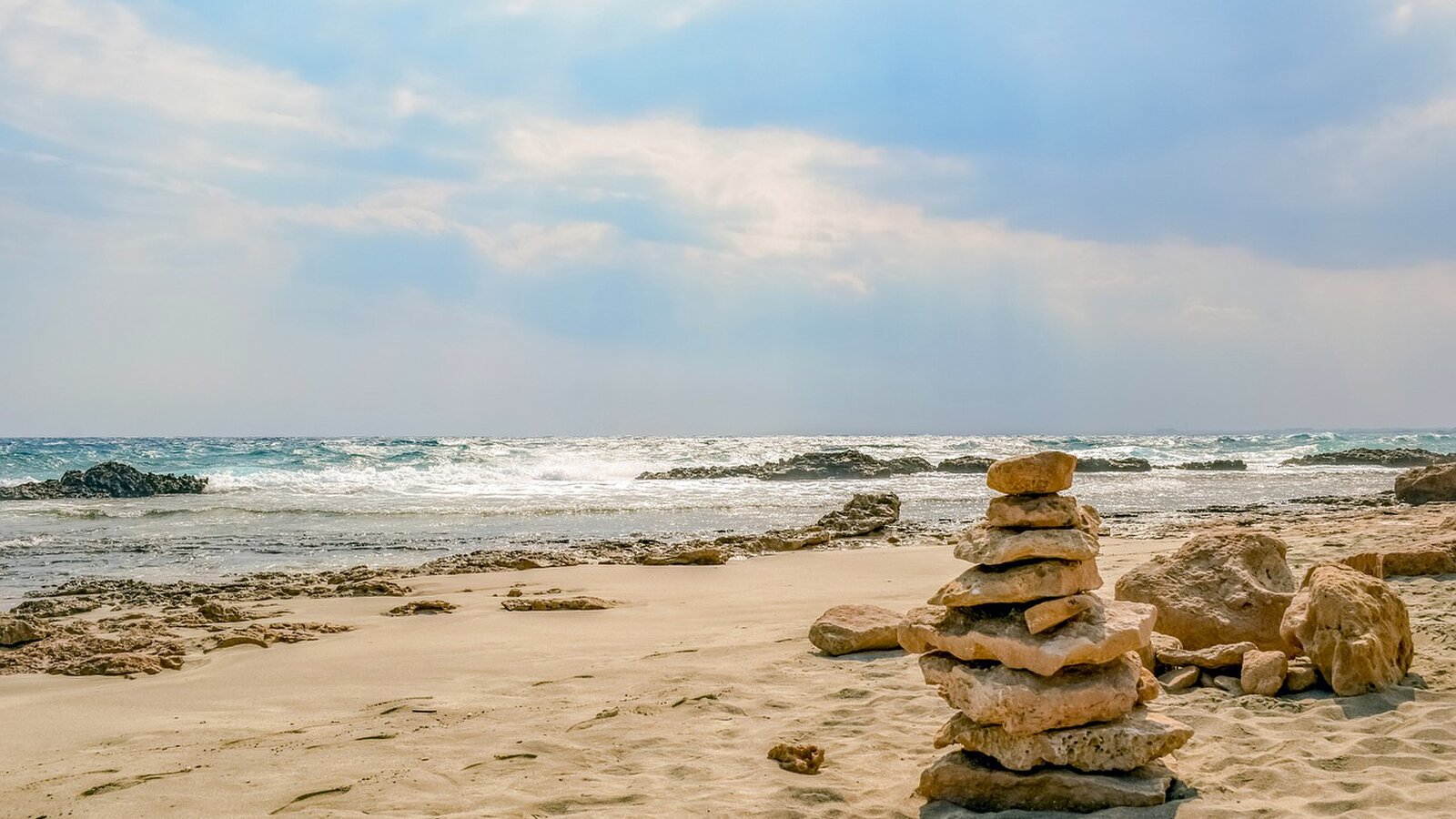
In late October, when Warsaw switches the heating on, the sea off Cyprus is still holding at +24°C — the swimming season here runs from May to November, a good month or six weeks longer than any Greek island. That alone explains why people come. But the island has a quirk that trips up more holidays than the weather ever does: the east and west coasts are two different beach experiences. In Ayia Napa and Protaras, fine white sand and a gentle entry make the case for bringing a two-year-old; in Pafos, where you go for mosaics and Aphrodite, you'll often be stepping into the sea over rocks and concrete steps. The same star rating buys a completely different result in these two places. 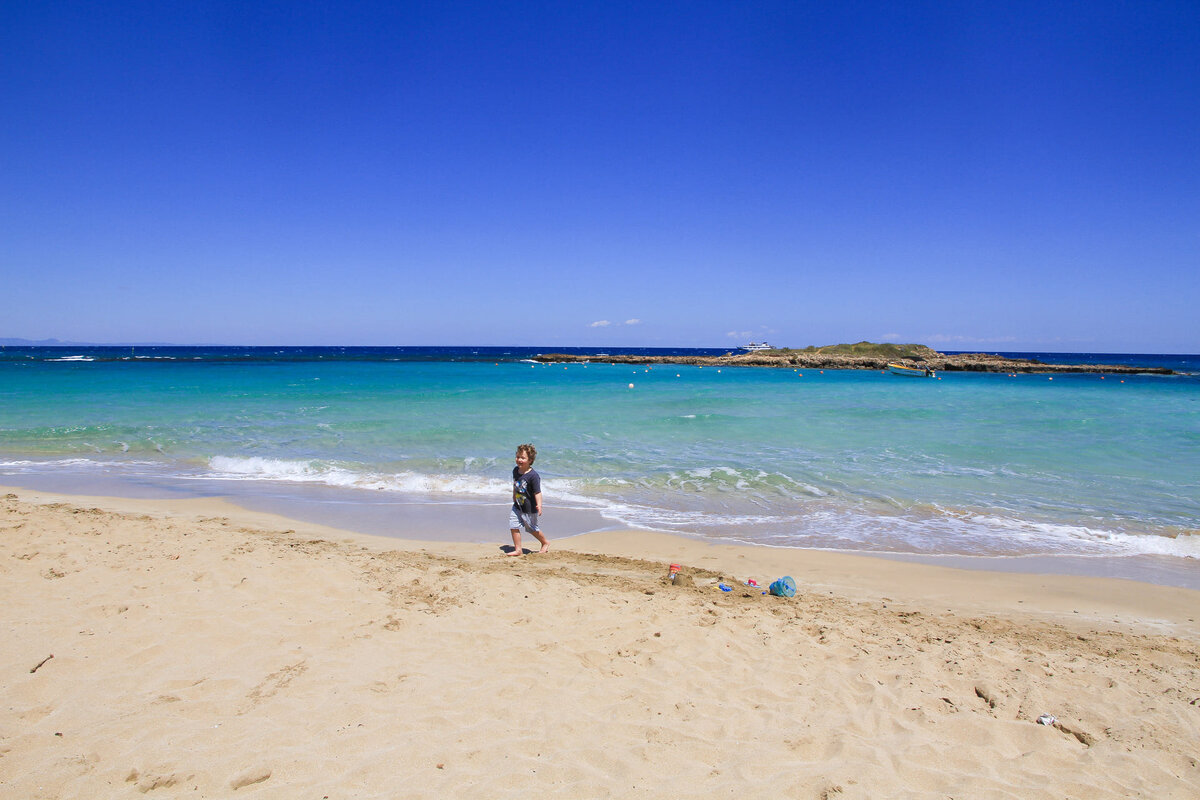
Below we work the coast from east to west — from sandy Ayia Napa to quiet Latchi by the Akamas peninsula — and explain what's actually waiting at the water: sand, pebbles or rock, how warm the sea runs month by month, how long the flight from Poland takes, and what a week for two costs. Separately: the Troodos mountains as a counterweight to the heat, an honest word on the island's northern part, and the entry rules — Cyprus is in the EU but not in Schengen, and the requirements here aren't the same as Greece's.
- White sand and a gentle entry for children → Protaras, Ayia Napa
- First time in Cyprus, everything close by → Larnaka
- Nightlife and clubs → Ayia Napa
- A proper town, restaurants and a marina → Limassol
- History, mosaics and archaeology → Pafos
- A quiet break and nature → Polis and Latchi
- Diving and snorkelling → Protaras (Cape Greco), Pafos
- Lower budget → Larnaka, Polis
- Cool air and mountains instead of the beach → Troodos
- What about the north of the island → The north
- Compare everything at once → Comparison
The east: Ayia Napa and Protaras — the sand you came for
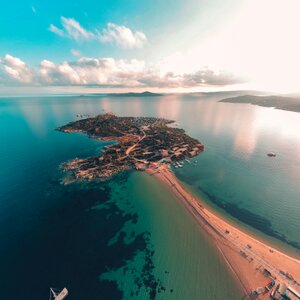
The south-eastern corner of the island, the Famagusta district, is the one part of Cyprus where sandy beaches are the rule rather than the exception. The sand here is pale and fine, the entry gentle, and the white seabed turns the water turquoise even under a cloudy sky. This is also where Cape Greco National Park begins — a rocky headland with clear water, sea caves and the island's best snorkelling. The nearest airport is Larnaka, 45–60 minutes by transfer.
| Month | Air (day) | Sea | Sunshine/day |
|---|---|---|---|
| May | +26–29°C | +21–22°C | 11–12 hrs |
| June | +30–32°C | +24–25°C | 13 hrs |
| July–August | +32–35°C | +27–28°C | 13 hrs |
| September | +29–32°C | +27°C | 11–12 hrs |
| October | +26–28°C | +24–25°C | 10 hrs |
| November | +22–24°C | +22–23°C | 9 hrs |
Ayia Napa
"The island's best sandy beaches and its loudest nightlife"
A resort with a double reputation, and both halves are earned. By day it's Nissi Beach, white sand and a shallow lagoon you can wade across knee-deep to the sandbar, plus a string of equally good beaches along the coast — Makronissos, Landa, Konnos. By night the centre around the square turns into a club zone that runs till dawn all summer. One useful detail: the districts differ more than the map suggests — hotels near Nissi and in the centre live on bar time, while Kapparis and Konnos a couple of kilometres east are genuinely calm, with the same sea. Not worth it if you're booking central Ayia Napa with small children in July or August: the noise runs till morning, and that's not a side effect of this part of the resort — it's the whole point. 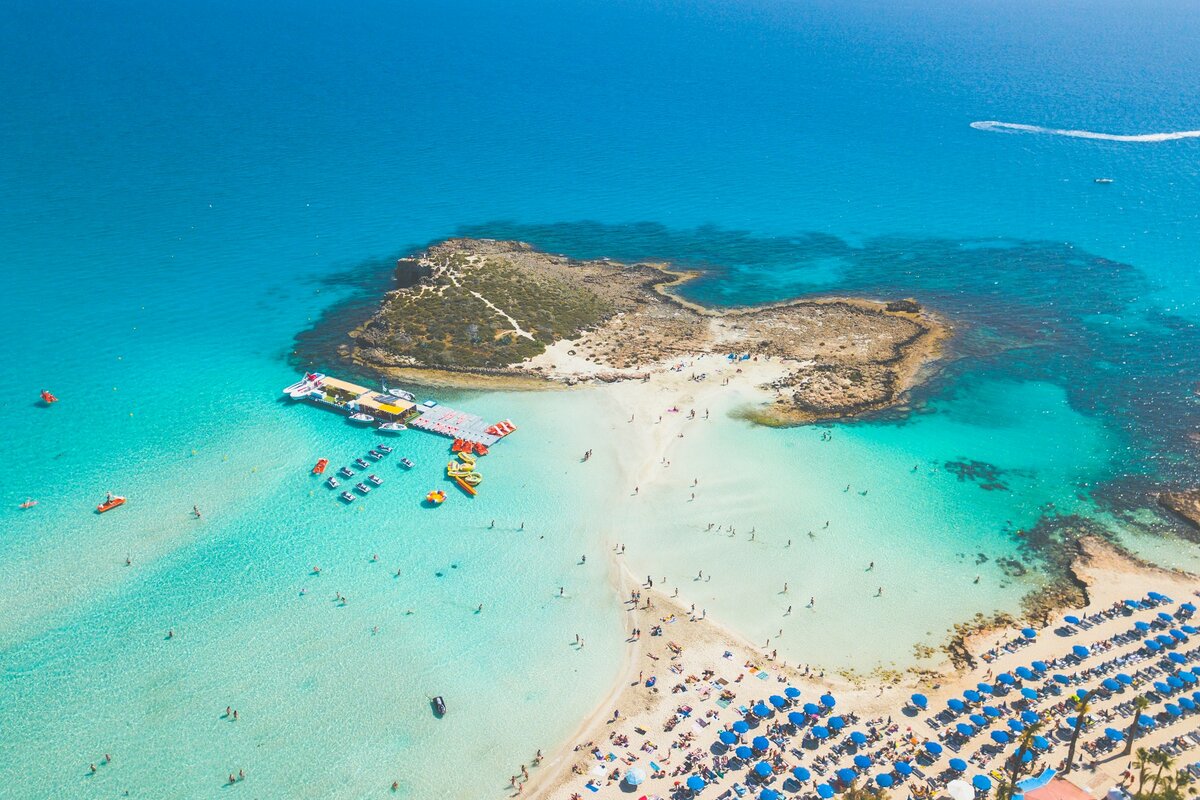
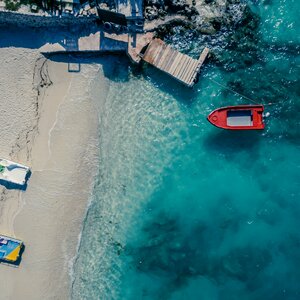
In front of the hotel: fine white sand, a very gentle entry — the island's best beaches
Flight from Warsaw: ~3 hrs 15 min to Larnaka + ~45–60 min transfer
7 nights / 2 people: PLN 4,500–10,000
Best season: June and September–October; July–August bring heat and the biggest crowds
What to do
- Get to Nissi Beach before 9am — sunbeds run out by mid-morning, and the lagoon is at its clearest in early light
- Take a boat trip to the sea caves at Cape Greco — you can only reach the grottoes and jump from the "Lovers' Bridge" from the water
- Walk the coastal path from Ayia Napa to Protaras — a signed route along the cliffs past empty coves
- Head to the old fishing harbour at Liopetri for a fish lunch — a working quay 15 minutes away, where the fish comes without the resort mark-up
Protaras
"The same water as Ayia Napa, in a family-friendly version"
A neighbouring resort ten kilometres on, running at a completely different pace: Fig Tree Bay regularly makes European beach rankings, the sand is just as white, the entry just as gentle, and in the evening the seafront brings restaurants, singing fountains and families with pushchairs instead of clubs. That's exactly why Protaras is usually the right answer for anyone who wanted Ayia Napa "for the beach, minus the noise". Nearby are Konnos and Loumas bays and the entrance to Cape Greco park. Not worth it if you want a town, restaurant variety beyond the resort seafront, and life after midnight: Protaras is compact and turns in early, and without a car your range here is limited. 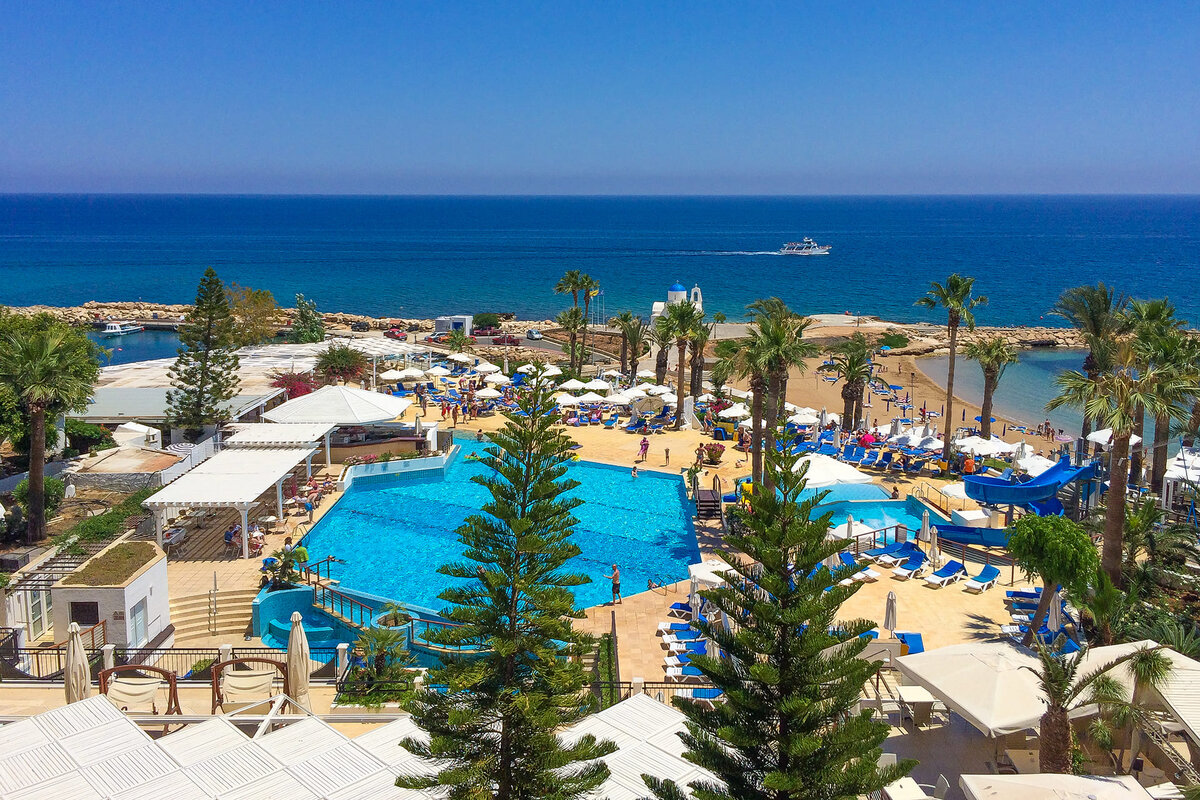
In front of the hotel: white sand, gentle entry, calm water — ideal with young children
Flight from Warsaw: ~3 hrs 15 min to Larnaka + ~1 hr transfer
7 nights / 2 people: PLN 4,500–9,500
Best season: May–June and September–October; the sea stays warm into November
What to do
- Claim a spot on Fig Tree Bay in the morning and retreat by midday — the beach offers almost no shade, so bring your own
- Climb to the Prophitis Ilias chapel on the hill above the resort — a view over the whole bay and the area's best sunset
- Snorkel in Konnos Bay at the edge of Cape Greco park — the water's clarity here is noticeably better than on the sandy beaches
- Head out at sunset to Kapparis Beach and the sea bridges — a stretch of coast the coach tours rarely reach
The south: Larnaka and Limassol — towns by the sea
The southern coast works differently: not resort villages but proper towns, where tourism sits alongside ordinary life. The beaches are darker and plainer than in the east — grey sand mixed with fine pebble — but the airport, shops, real restaurants and everyday services are all close at hand. It's the sensible choice for anyone who isn't planning to spend a week on one sunbed.
| Month | Air (day) | Sea | Sunshine/day |
|---|---|---|---|
| May | +26–29°C | +21–22°C | 11–12 hrs |
| June | +30–33°C | +24–25°C | 13 hrs |
| July–August | +33–36°C | +27–28°C | 13 hrs |
| September | +30–32°C | +27°C | 11–12 hrs |
| October | +26–29°C | +24–25°C | 10 hrs |
| November | +22–25°C | +22–23°C | 9 hrs |
Larnaka
"The easiest way onto the island: the airport is ten minutes from the seafront"
The town most flights from Poland land in, and an underrated resort in its own right: the airport sits barely 10–15 minutes from the centre, so arrival and departure days here aren't swallowed up by transfers. The Finikoudes promenade with its palm trees, the medieval fort, the Church of St Lazarus and a salt lake with wintering flamingos are all within walking distance. The beach is a town beach — grey sand, a gentle entry, nothing postcard-worthy. Hotel and food prices run noticeably below Ayia Napa and Limassol. Not worth it if you're expecting the white sand from Cyprus brochures — this is a working town's beach; for the postcard water, people head east from here, or out to the Blue Lagoon. 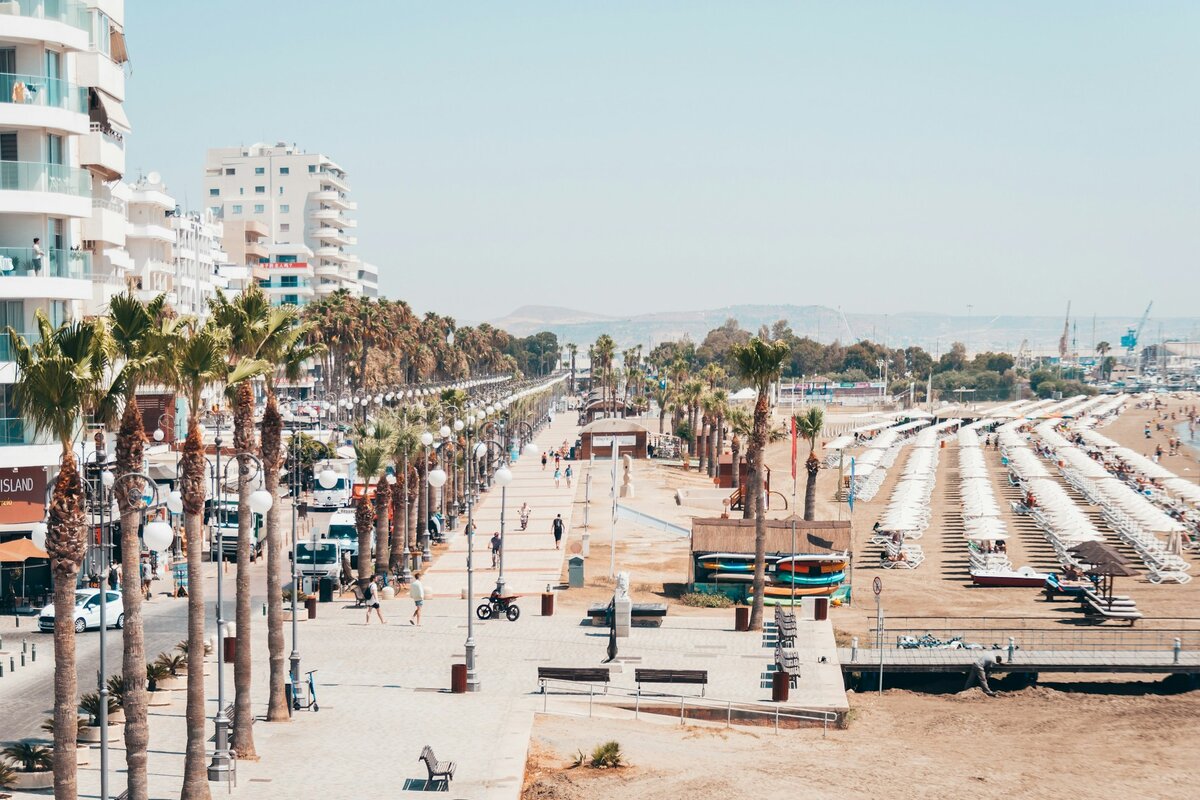
In front of the hotel: grey town beach, gentle entry; no picture-postcard views
Flight from Warsaw: ~3 hrs 15 min, transfer 10–15 min
7 nights / 2 people: PLN 4,000–8,500 — one of the island's most affordable bases
Best season: May–June and September–November; the town works year-round
What to do
- Dive the wreck of the Zenobia ferry — one of the world's ten best wreck-diving sites lies two kilometres off the port, with programmes for beginners too
- Walk the Finikoudes promenade in the evening and eat in the old Skala quarter rather than on the front row
- Visit the Hala Sultan Tekke mosque on the salt lake shore — one of the Mediterranean's principal Islamic shrines
- Take a car out for the day to the village of Lefkara — lacework, silverware and stone lanes an hour up in the hills
Limassol
"The most urban resort: a marina, restaurants and a life that doesn't stop with the season"
The country's second city and its business hub, where the sea comes with everything resorts usually lack: a marina full of yachts and restaurants, the long green Molos promenade, vineyards in the foothills and a nightlife that doesn't end when summer does. Hotels run in a strip for 15 kilometres, so "Limassol" on a tour listing can mean either the town centre or Germasogeia half an hour out — check the address before booking. The beaches are dark volcanic sand mixed with pebble; the water is clean, but the picture is far from turquoise. Not worth it if your top criterion is a dream beach and quiet: Limassol is loud and dense, and its strengths lie on land. It's also the most expensive base on the island. 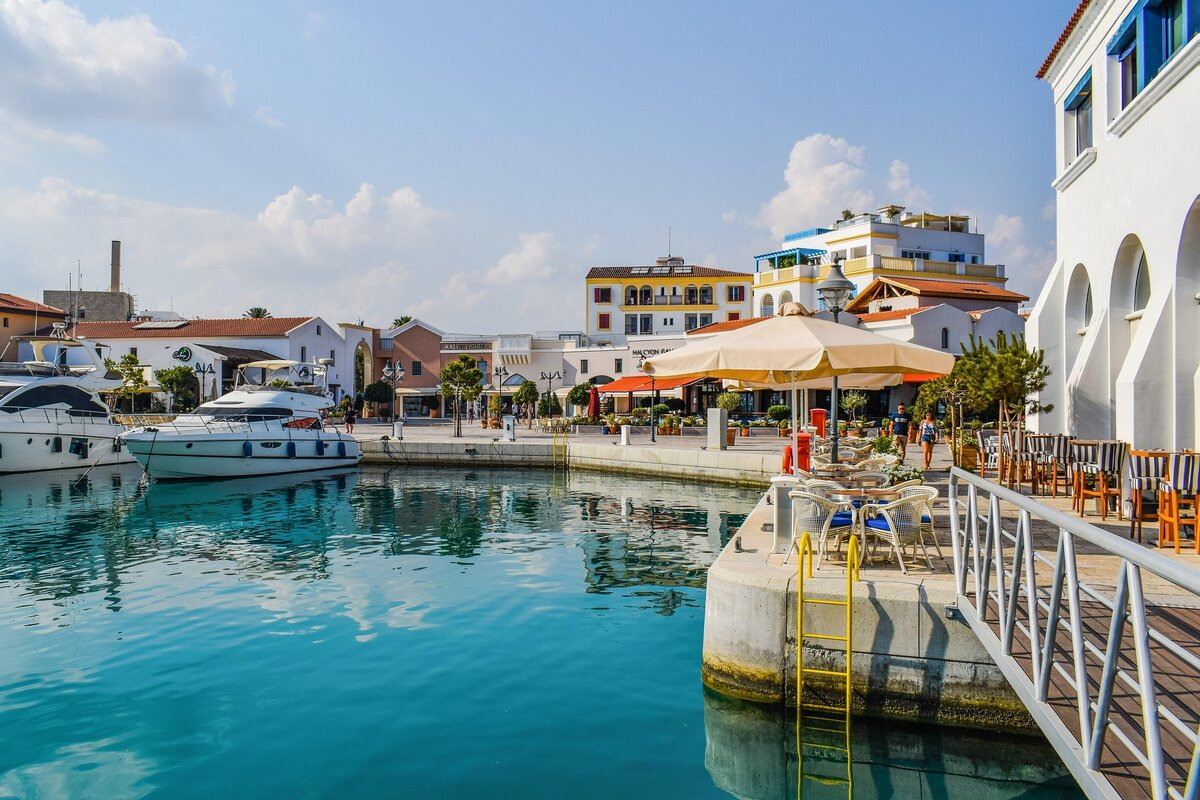
In front of the hotel: dark sand and pebble; the beach itself trails the east coast
Flight from Warsaw: ~3 hrs 15 min to Larnaka + ~45 min transfer
7 nights / 2 people: PLN 5,000–12,000 — the island's priciest resort
Best season: May–June and September–October; the town holds its own in winter too
What to do
- Eat at the marina and walk the Molos promenade to the old castle, where Richard the Lionheart was crowned
- Visit the wineries of Omodos and Koilani villages — the local xynisteri grape and Commandaria dessert wine, made here since the Crusades
- See ancient Kourion on its clifftop above the sea — a 2nd-century BC theatre with a coastal view, best at sunset
- Drive 25 minutes west to Aphrodite's Rock (Petra tou Romiou) — a pebble bay with the rock from the goddess's birth legend
The west: Pafos and the north-west — history and rock
The western coast is the greenest and the most "archaeological" part of the island, and also the rockiest. The sea here runs a degree or two cooler than the east, and the shore is more often rock, concrete platform or small pebble cove. In return you get a whole list of UNESCO sites, and further north the wild Akamas peninsula begins. Pafos airport takes some direct flights, saving an hour and a half of transfer.
| Month | Air (day) | Sea | Sunshine/day |
|---|---|---|---|
| May | +25–27°C | +20–21°C | 11–12 hrs |
| June | +28–31°C | +23–24°C | 13 hrs |
| July–August | +31–33°C | +26–27°C | 13 hrs |
| September | +29–31°C | +26°C | 11–12 hrs |
| October | +25–28°C | +24°C | 10 hrs |
| November | +21–24°C | +22°C | 9 hrs |
Pafos
"The island's leading archaeology — at the cost of its most debatable beaches"
The whole historic centre of Pafos is UNESCO-listed: Roman villas with 2nd–4th-century mosaics whose room-sized mythological scenes survive intact underfoot, the rock-cut "Tombs of the Kings", a medieval fort at the harbour. The town splits into two parts — upper Ktima, with ordinary town life, and lower Kato Pafos, touristy and by the water. And this is where the main disappointment for the unprepared hides: the municipal beach and most hotel frontages are rock, pebble and concrete steps into the sea, with genuine sand only starting at Coral Bay, 12 kilometres north. Not worth it for a beach holiday with small children unless your specific hotel sits directly on a sandy cove — check the beach type from photos, not from "beachfront" in the listing. 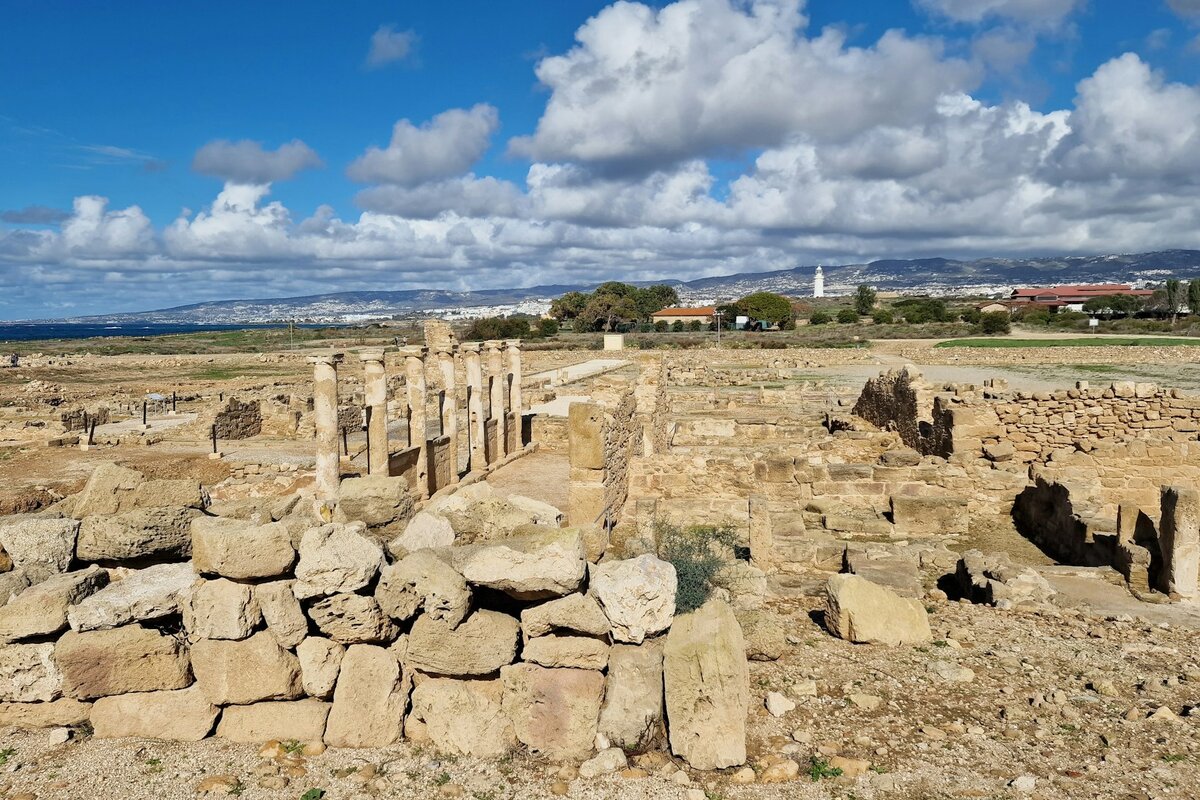
In front of the hotel: mostly rock, pebble and platforms; sand is at Coral Bay, 12 km away
Flight from Warsaw: ~3 hrs 30 min direct to Pafos (seasonal), or Larnaka + ~1.5 hrs
7 nights / 2 people: PLN 4,000–9,000
Best season: April–June and September–October; the west is at its greenest in spring
What to do
- Arrive at the Kato Pafos archaeological park at opening — the House of Dionysos mosaics read best in the low morning light, and the park offers almost no shade
- Descend into the Tombs of the Kings — underground colonnaded chambers cut into the rock for Hellenistic-era nobility
- Head to Lara Bay on the Akamas peninsula — a protected turtle-nesting beach reachable only by 4x4
- Eat in the hillside villages of Kato Dris or Tsada — resort pricing stops as soon as you climb into upper Pafos
Coral Bay and Peyia
"Pafos's answer in sand — twenty minutes from its mosaics"
A resort satellite north of Pafos, where proper golden sand finally appears in a bay sheltered by rock, with a gentle entry. The infrastructure is simpler than in town, but everything you need is there, and the archaeological parks are 20 minutes away by bus. It's also the most convenient base for heading out to Akamas and the Blue Lagoon. Not worth it if variety matters to you: Coral Bay is essentially one street of restaurants and one beach, which fills up completely in July and August.
Polis and Latchi
"The island's calmest corner — for anyone who doesn't need entertainment programmes"
The north-western tip: the small town of Polis, with a eucalyptus grove down to the water, the fishing harbour of Latchi with Cyprus's best fish tavernas, and the gateway to Akamas National Park and the Blue Lagoon, reached by boat or jeep. The sea here runs a touch cooler and often carries a wave; the beaches are pebble mixed with sand, and there's little in the way of large hotel complexes — mostly small guesthouses and apartments. Not worth it if you're expecting all-inclusive and evening entertainment: there's barely any of it here, and without a car the area is hard to use at all — Pafos airport is about an hour away.
In front of the hotel: pebble-and-sand beaches, water cooler and livelier than in the east
Flight from Warsaw: ~3 hrs 30 min to Pafos + ~1 hr transfer
7 nights / 2 people: PLN 4,000–8,000
Best season: May–June and September; some places close out of season
More than the sea: the Troodos mountains and villages
A mountain range rises at the island's centre, its highest point Mount Olympus at 1,952 m, and it amounts to a second Cyprus in its own right: pine forests, waterfalls, monasteries and temperatures 8–10 degrees below the coast. In summer people escape the heat up here; in winter short ski runs operate on the slopes — you genuinely can ski in the morning and swim in the sea by afternoon in Cyprus, though the ski resort itself is more of a curiosity than a serious sport.
- The UNESCO painted churches. Ten Byzantine churches of Troodos under joint UNESCO protection: plain barn-like structures with wooden roofs outside, 11th–15th-century frescoes almost untouched by restoration inside. The most accessible is the Church of Ayios Nikolaos tis Stegis near Kakopetria.
- Mountain villages. Kakopetria, Platres, Pedoulas, Omodos — stone houses, trout in the tavernas, cherries in May–June, and prices nothing like the coast.
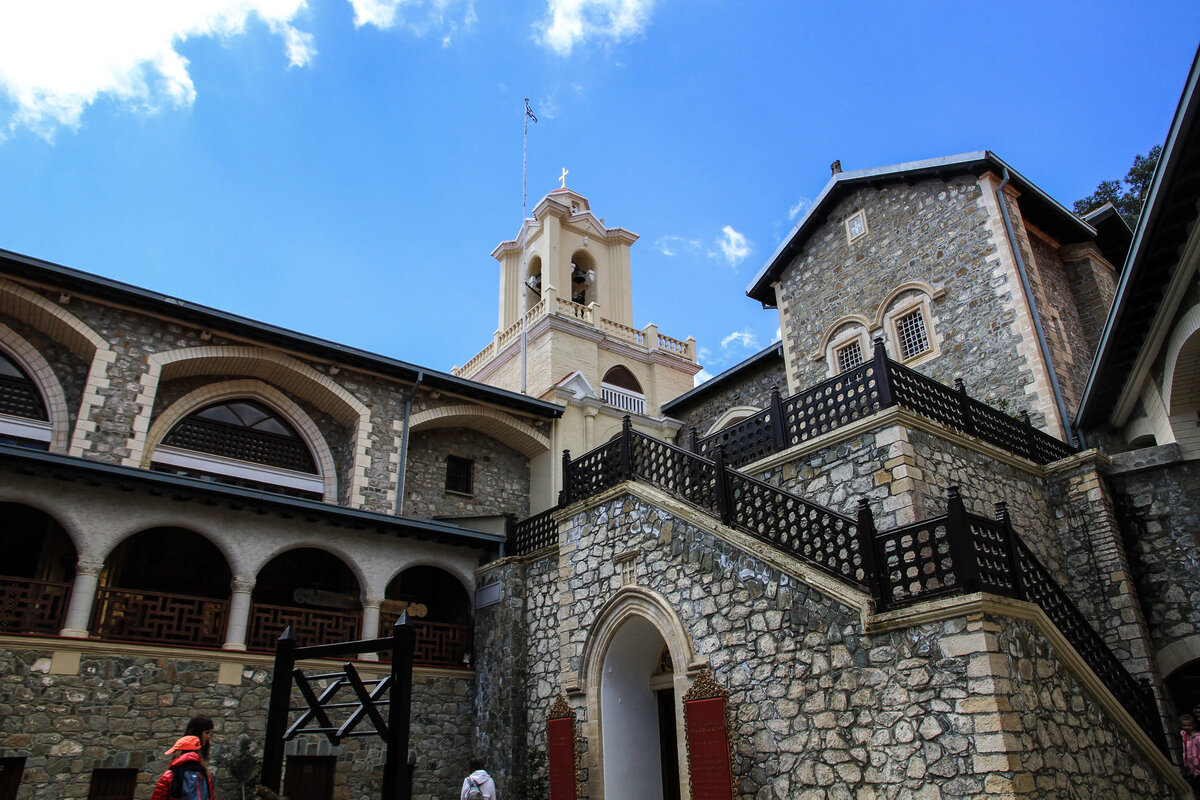
- Kykkos Monastery. The island's richest and most famous, founded in the 11th century; 40 minutes away is the tomb of Archbishop Makarios, Cyprus's first president, with a view over half the country.
The northern part of the island: what to know in advance
Cyprus has been divided since 1974: the southern part is the Republic of Cyprus, an EU member; the north is administered by a Turkish Cypriot authority recognised only by Turkey. This has practical implications for planning a trip.
Legal points of entry: the airports of Larnaka and Pafos, and the ports in the south. The Republic does not treat arrival at Ercan airport in the north as lawful entry to the island — this can cause problems when moving south or on subsequent trips.
Crossing checkpoints: you can cross from south to north and back through checkpoints (including in Nicosia) with a passport. Rules and checkpoint operation change, so it's worth confirming currency before you travel.
Car hire: insurance from a southern rental company generally doesn't cover the north; a separate policy is usually arranged at the crossing. Check the terms with your hire company in advance.
The practical upshot is simple: if you're flying on a package holiday from Poland, you'll almost certainly land in the south — and this whole guide follows the southern coast for that reason. Treat a trip north as a day excursion from your base, not as the foundation of the holiday.
Quick comparison of Cyprus resorts
Figures are indicative, for a 7-night trip for two departing Warsaw. The key column is what's underfoot at the beach — it usually does more to shape the holiday than anything else.
| Resort | Beach | Who is it for | Sea (August) | Transfer | 7 nights / 2 people |
|---|---|---|---|---|---|
| Ayia Napa | Fine white sand | Younger crowd, beach, clubs | +27–28°C | 45–60 min | PLN 4,500–10,000 |
| Protaras | Fine white sand | Families with children | +27–28°C | ~1 hr | PLN 4,500–9,500 |
| Larnaka | Grey sand, town beach | First-timers, budget, diving | +27–28°C | 10–15 min | PLN 4,000–8,500 |
| Limassol | Dark sand with pebble | Town, restaurants, wine | +27–28°C | ~45 min | PLN 5,000–12,000 |
| Pafos | Rock, pebble, platforms | History and archaeology | +26–27°C | direct flight or ~1.5 hrs | PLN 4,000–9,000 |
| Coral Bay | Golden sand | Beach near Pafos | +26–27°C | ~20 min from Pafos | PLN 4,200–9,000 |
| Polis and Latchi | Pebble with sand | Quiet, nature, fish | +26°C | ~1 hr from Pafos | PLN 4,000–8,000 |
In short: for sand and a gentle entry, the east — Protaras and Ayia Napa. For convenience and value, Larnaka. For a town, food and wine, Limassol. For history, Pafos, provided you check the specific hotel's beach first. For quiet, the north-west. The gap in sea temperature between east and west is modest; the gap in what you're stepping on to reach it is not. 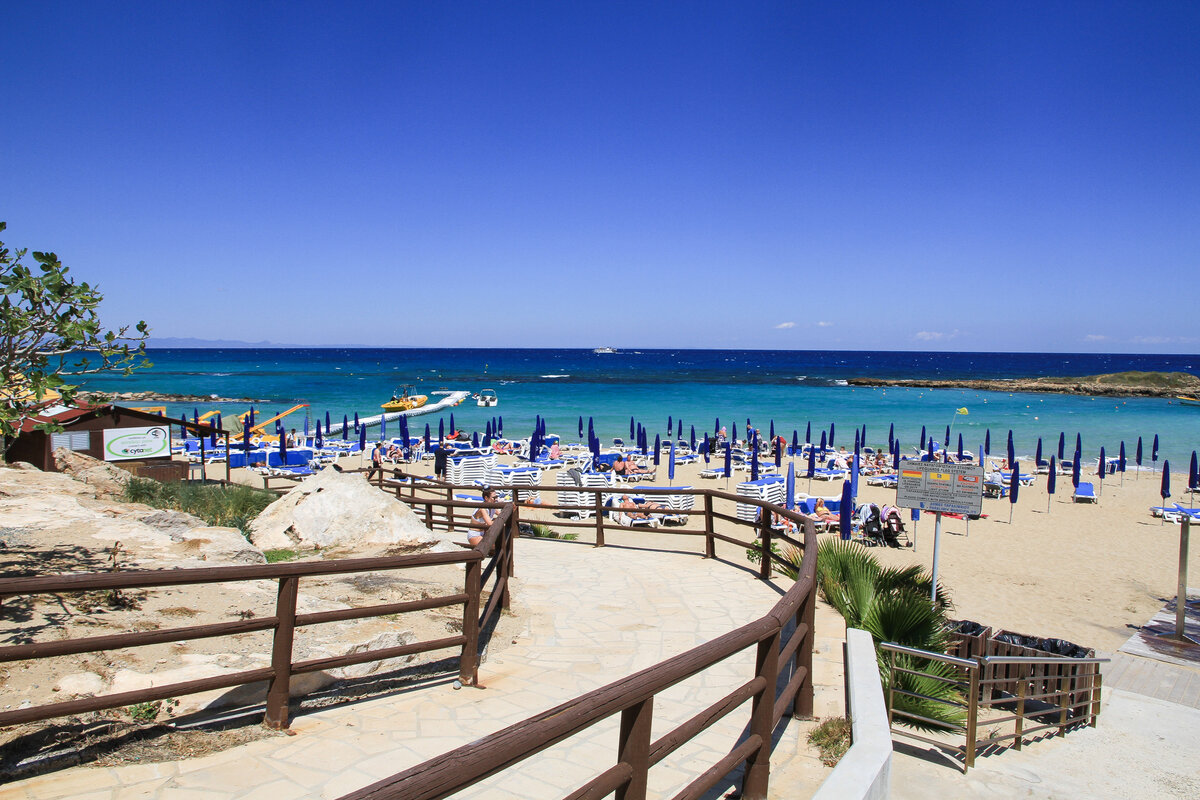
Pre-booking checklist:
- Establish the beach type at the specific hotel, not the resort: in Pafos and Limassol "beachfront" often means rock or a concrete staircase into the sea, not sand you can walk into.
- Compare airports: Larnaka is closer to the east and south, Pafos to the west. Get the pairing wrong and you're looking at 90 minutes to two hours of transfer each way.
- Plan on a car if you want to see the island: public transport between resorts is sparse, and driving is on the left — worth knowing if you haven't done it before.
- Take September and October seriously: the sea holds at +24–27°C, the heat eases, prices sit below August, and the season here runs into November.
- Check exactly what "Limassol" or "Pafos" means on your tour listing — the resort strips run 10–15 km, and the address decides whether you'll be walking or driving everywhere.
- Check the entry rules for your specific passport: Cyprus is in the EU but not in Schengen, and the requirements differ from Greece's (details in the block below).
Common mistakes:
- Booking Pafos for a beach holiday with children. The archaeology is world class, but the shore is mostly rock; the sand is at Coral Bay, and it's the better base if the beach is your priority.
- Staying in central Ayia Napa with young children. The club zone runs till dawn all summer. The same sand and sea exist in Kapparis, Konnos and Protaras — a few kilometres away and in an entirely different acoustic world.
- Assuming Cyprus is in Schengen. The island is in the EU but not, as of 2026, in the Schengen Area. Entry rules, visas and the day count run separately.
- Flying into Ercan airport in the north for a cheaper ticket. The Republic of Cyprus does not recognise this as lawful entry to the island, and the consequences can outlast a single holiday.
- Choosing July–August purely for warmth. The water is already warm by June and stays that way to the end of October, while the south can hit +35–36°C at the height of summer, turning sightseeing into an ordeal.
- Forgetting the left-hand drive. Cyprus is a former British colony, and the steering wheel sits on the right. Take your first turn out of a rental car park somewhere quiet, not straight onto a motorway.
Entering Cyprus: the rules aren't the same as Greece's
Cyprus is a member of the European Union but, as of 2026, is not part of the Schengen Area: accession is under discussion, with officials targeting 2027, and the island did not take part in the EU-wide Entry/Exit System (EES) rollout in spring 2026. The practical consequence is that Cyprus runs its own visa rules and its own separate stay-count, unrelated to the Schengen 90-day allowance. What decides entry is your nationality and passport.
- EU/EEA citizens, including Polish nationals: entry on a national ID card or passport, no visa required, no limit tied to the Schengen count.
- Non-EU residents of Poland: entry depends on the nationality in your passport, not on Polish residence status. Cyprus accepts entry on a valid Schengen visa, and also admits holders of a valid residence permit or category D national visa issued by an EU or Schengen state — meaning a Polish residence card does work here, unlike many destinations outside Schengen. Check the specific conditions and validity period in advance.
- General note: a Cyprus national visa is valid for Cyprus only and does not grant entry to Schengen states — and the reverse holds too, since the two systems are calculated separately. Requirements are shifting as the island moves toward Schengen accession, so confirm the current rules for your specific passport with your tour operator or Cyprus's official foreign ministry sources before booking.
The verdict
So which Cyprus resort should you choose?
If the beach is the point, it's the east every time: Protaras for families with children, Ayia Napa for those who want sand and nightlife both. If you want the shortest transfer and a lower price, Larnaka gives you both swimming and easy access to the rest of the island. If your holiday means restaurants, wine, a marina and a town around you, Limassol is the priciest option and the most grown-up one. If antiquity and mosaics matter most, take Pafos, but choose the hotel by its beach photo, not its star count. For quiet and fresh fish, Polis and Latchi; for cool air and frescoes, Troodos.
One last tip:
Don't default to July–August out of habit. Cyprus's real advantage over Greece and Turkey isn't the heat — it's the length of the season: the sea still holds +24–25°C in October and +22–23°C in the first half of November, with hotel prices and occupancy well below summer levels. The shoulder season here runs longer than anywhere else in the Mediterranean.

 Holidays


 Last minute
 Hotels


 Blog
Blog