Croatia is a country where the biggest mistake tourists make is not choosing the wrong hotel, but choosing the wrong region. The difference between Rovinj and Dubrovnik is as fundamental as the difference between Tuscany and Sicily: both beautiful, both in Croatia — but different climate, different prices, different kind of holiday. Since 2023 Croatia has been part of the Eurozone, and prices have risen by 15–25% in two years. Dubrovnik at peak season in 2026 is one of the most expensive resorts in the Mediterranean. Zadar, 45 minutes away by air, costs half as much.
The Croatian coast divides into three fundamentally different regions — Istria in the north, Kvarner in the middle and Dalmatia in the south — plus the islands, which operate by their own rules. Below are 10 resorts with temperatures, prices and a quick-pick section for those who don't want to read everything:
- First time in Croatia → Split, Poreč
- Family with children → Poreč, Makarska, Krk
- Romance and atmosphere → Rovinj, Šibenik
- History + sea → Split, Zadar, Dubrovnik
- Peace and nature → Opatija, Šibenik, Krk
- Nightlife and parties → Split, Hvar
- Budget under 4,000 PLN/person → Pula, Zadar, Poreč
- Most beautiful places regardless of price → Rovinj, Dubrovnik, Hvar
- Islands → Hvar, Brač, Korčula, Krk
- Nature + waterfalls → Šibenik (base for Krka and Plitvice Lakes)
Istria
The northernmost region of the Croatian coast — a peninsula surrounded by the Adriatic Sea on three sides. For several centuries Istria was under Venetian rule, and you can feel it in the architecture, the food (truffles, olive oil, wine) and the overall atmosphere: it is quieter, greener and slightly cooler here than in the south. The sea in Istria warms up later than in Dalmatia — comfortable swimming starts in mid-June, and in September the water is still 22–23°C. Direct flights from Warsaw go to Pula, the airport for the whole of Istria.
Rovinj
"The most beautiful town in Istria — and the most expensive"
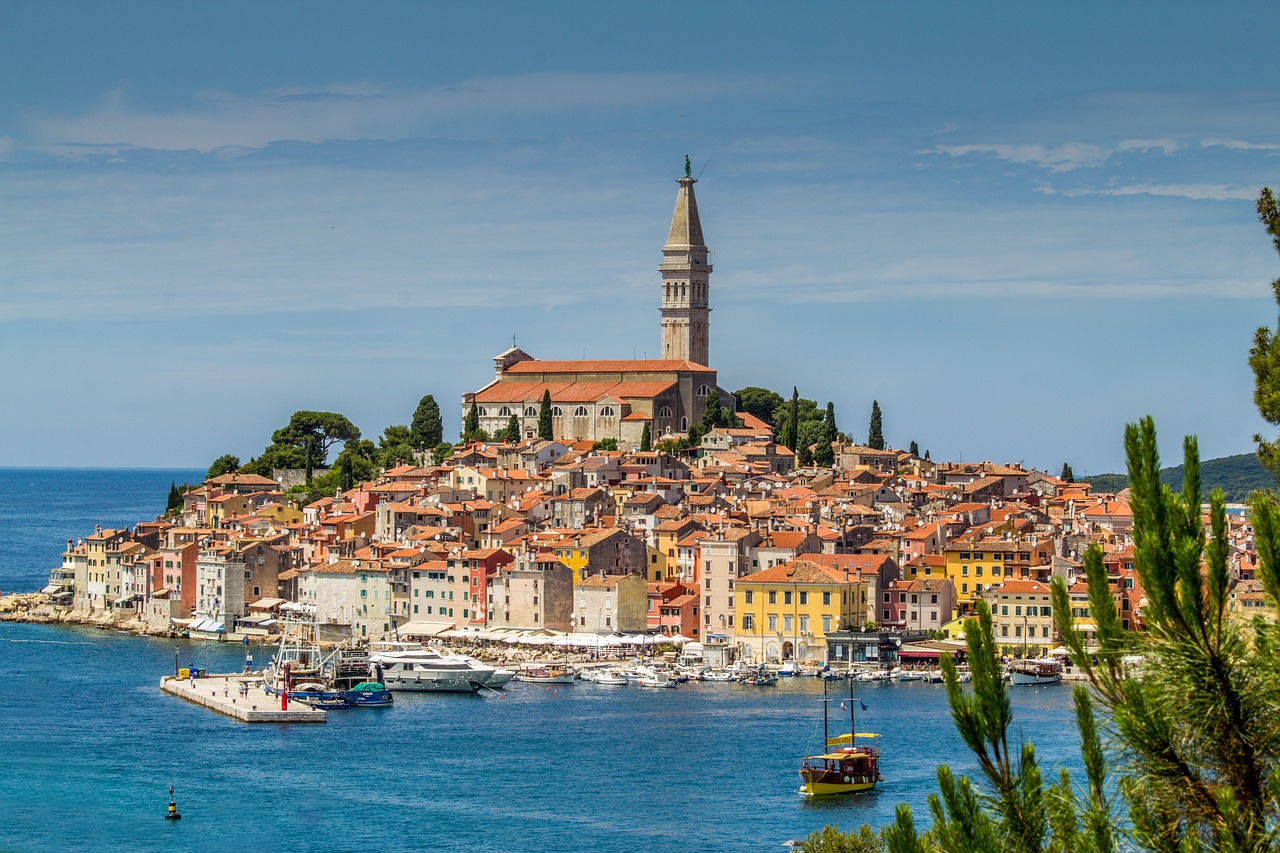
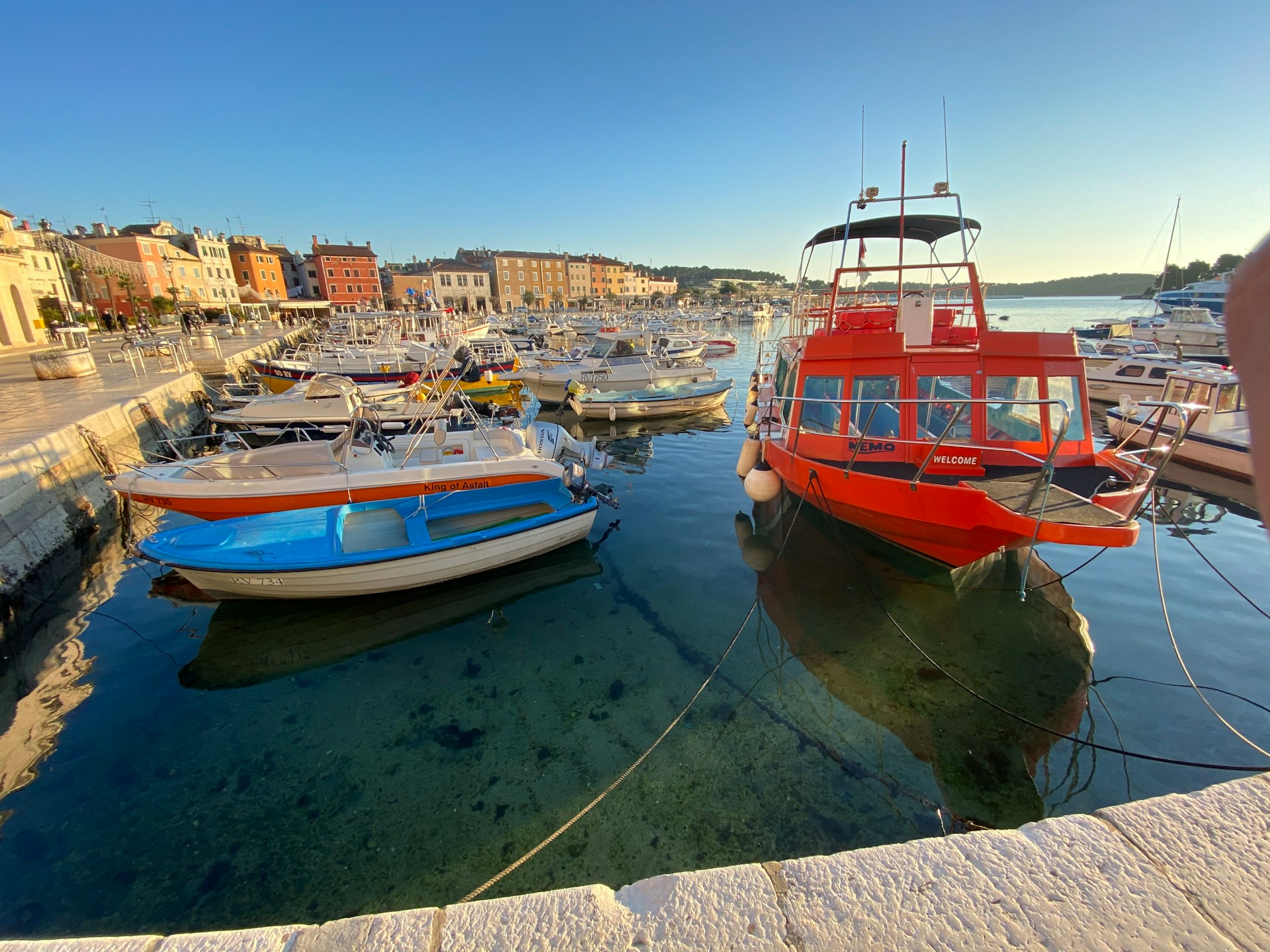
On a rocky peninsula above the sea stands an old town of colourful houses, a bell tower and narrow lanes climbing up to the Church of St Euphemia. Rovinj is postcard Croatia, and it knows it: prices here are the highest in Istria and good hotels book out months in advance. The beaches in the town itself are modest — rock and pebble. The best beaches are in the Zlatni Rt nature park, 15 minutes on foot, where pine forest meets clear water directly. Rovinj works well as a base for exploring Istria by hire car — Poreč (30 min), Pula (45 min), inland truffle villages (1 hr).
| Month | Air (day) | Night | Sea |
|---|---|---|---|
| May | +20–22°C | +12–14°C | +17–18°C |
| June | +25–27°C | +16–18°C | +20–22°C |
| July | +28–31°C | +19–21°C | +23–24°C |
| August | +29–32°C | +19–21°C | +24–25°C |
| September | +24–27°C | +15–17°C | +22–23°C |
Flight from Warsaw: ~2 hrs (direct charter or LOT/Ryanair to Pula + 45 min transfer)
7 nights / 2 people: 5,000–14,000 PLN — the highest prices in Istria
Prices on the ground: dinner 20–40 EUR/person, sunbed 15–25 EUR, taxi Rovinj–Pula ~35 EUR
Best season: June and September — fewer crowds, prices 20–30% lower; July–August — peak tourist season
Who is it for
The best choice for couples who value atmosphere: a beautiful old town, good restaurants, clear water in Zlatni Rt park and the ability to reach Tuscan-style Istrian villages in half an hour. For photographers and architecture lovers — the finest spot in Croatia. Not the right choice for families with young children (rocky beaches, steep lanes) or those on a tight budget — Rovinj gets more expensive every season.
What to do
- Climb to the Church of St Euphemia early in the morning (before 9:00) — panoramic views over the islands and old town with no one else around; by midday there are queues
- Take a boat to the uninhabited island of Sv. Katarina (5 min, ~5 EUR return) — small beach, pine trees, a café; a refuge from the city crowds at peak season
- Hire a bike and ride through Zlatni Rt park to Mulini and Lone beaches — 15–20 minutes from the centre, pebble coves among pine trees, the most beautiful beaches in the area
- Try Istrian truffles in the old town restaurants — truffle pasta here is significantly cheaper than in the Italian regions where they are harvested
Poreč
"The best choice for a first family holiday"
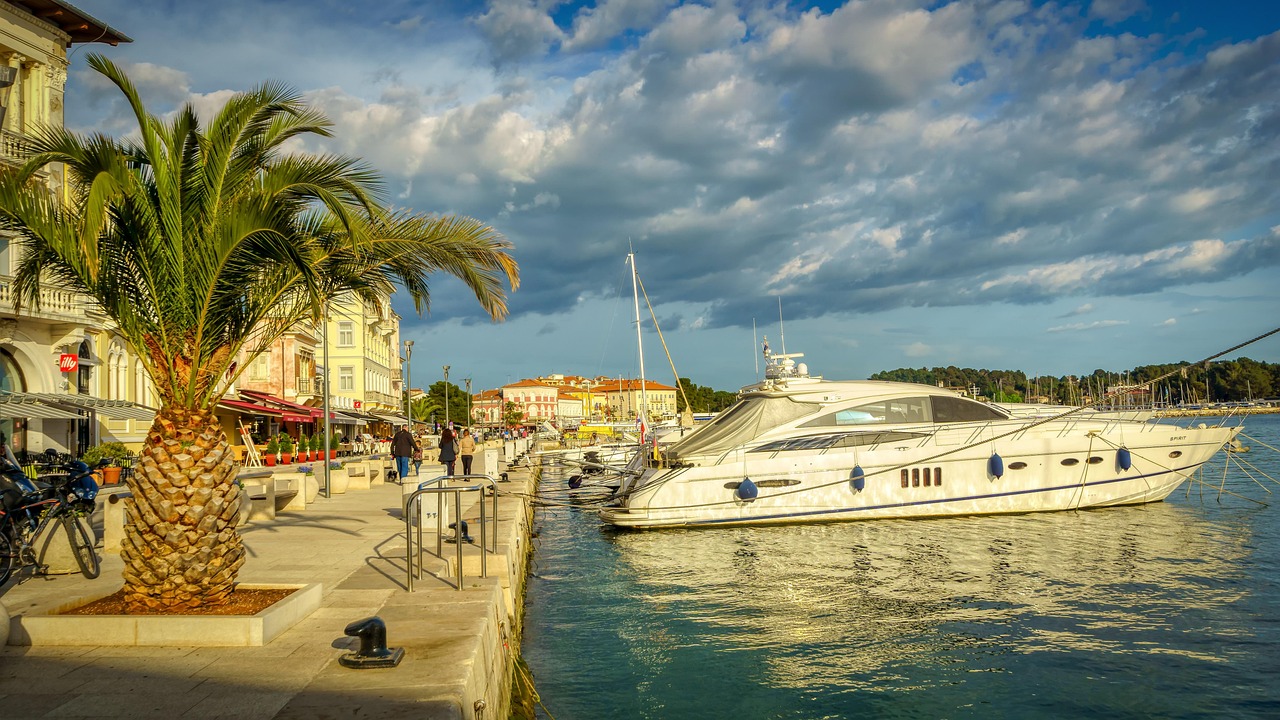
30 km north of Rovinj lies the most infrastructure-rich resort in Istria — with large hotel complexes, a long promenade, a water park, kids' clubs and everything a family holiday requires. Right in the town centre stands the 6th-century Euphrasian Basilica, a UNESCO World Heritage Site with mosaics often compared to those in Ravenna. Beaches in Poreč are mixed: some concrete and rocky along the promenade, but in the Plava Laguna and Zelena Laguna complexes (3–5 km from the centre) there are proper pebble beaches with a gentle entry into the water. It is the only resort in Istria where the All Inclusive format genuinely exists and works.
| Month | Air (day) | Night | Sea |
|---|---|---|---|
| May | +19–22°C | +11–13°C | +17–18°C |
| June | +24–27°C | +15–17°C | +20–22°C |
| July | +28–31°C | +18–20°C | +23–24°C |
| August | +28–31°C | +19–21°C | +24–25°C |
| September | +23–26°C | +14–16°C | +22–23°C |
Flight from Warsaw: ~2 hrs (direct to Pula + 1 hr transfer; or charter directly to Poreč)
7 nights / 2 people: 3,500–9,000 PLN — the best value for infrastructure in Istria
Prices on the ground: dinner 15–30 EUR/person, bike hire ~15 EUR/day, water park ~30 EUR/adult
Best season: June and September for couples; July–August for families with children — all facilities running at full capacity
Who is it for
The best choice in Istria for families with children aged 5–14: water park, kids' clubs, All Inclusive, gentle entry into the water at the Laguna complexes, and a lively historic centre just 10 minutes' walk away. A solid option for a first trip to Croatia — the most "tourist-ready" resort in Istria. Not the right choice if you want peace and authenticity: in July–August Poreč is very crowded, and the Laguna complexes are large, organised holiday machines with little of the actual Croatian atmosphere.
What to do
- Visit the Euphrasian Basilica (entry ~3 EUR) — 6th century, golden apse mosaics, UNESCO-listed; one of the finest early Christian buildings in Europe and almost no queues
- Take an excursion boat to the islands of Sv. Nikola and Sv. Juraj (~10 EUR) — quiet coves 10 minutes from the promenade, clearer water than at the shore
- Cycle to Rovinj along the coastal route (~30 km, hire ~15 EUR) — one of the most scenic cycling routes in Istria along the water's edge
- Visit the medieval hilltop town of Motovun (1 hr by car) — a fortress on a hilltop above vineyards, the best view across all of Istria and a truffle market below
Pula
"A Roman amphitheatre and the lowest prices in Istria"
At the very southern tip of the Istrian Peninsula stands a city with one of the largest surviving Roman amphitheatres in the world — 1st century AD, built for 20,000 spectators. Today it hosts concerts and film festivals. Pula is the airport city of the region, which is precisely why prices here are the most affordable — competition between hotels near a transport hub keeps rates in check. The beaches in Pula itself are modest, but 10–15 km to the west, around Medulin and Cape Kamenjak, lie some of the most beautiful and untouched coves in Istria — a nature reserve with clear water and almost no facilities.
| Month | Air (day) | Night | Sea |
|---|---|---|---|
| May | +19–22°C | +11–13°C | +17–19°C |
| June | +24–27°C | +15–17°C | +20–22°C |
| July | +28–31°C | +18–20°C | +23–24°C |
| August | +28–31°C | +18–21°C | +24–25°C |
| September | +23–26°C | +14–16°C | +22–23°C |
Flight from Warsaw: ~2 hrs (direct flight with LOT, Ryanair, Wizzair — daily in season)
7 nights / 2 people: 3,000–7,500 PLN — the most affordable option in Istria
Prices on the ground: dinner 12–25 EUR/person, amphitheatre entry 10 EUR, car hire from 35 EUR/day
Best season: June and September; in July–August the Pula Film Festival runs — evening events inside the amphitheatre
Who is it for
Pula is the best option for those who want Istria at a reasonable price and appreciate history: the Roman amphitheatre, the Arch of the Sergii, the Temple of Augustus — all within walking distance. Convenient as a base for hiring a car and touring all of Istria: Rovinj (45 min), Poreč (1 hr), Cape Kamenjak (15 min). Not the right choice if a beautiful beach right outside your hotel is the priority: the town beaches of Pula fall short of the resort zones of Rovinj and Poreč, and the truly stunning coves require a car.

What to do
- Visit the amphitheatre (entry 10 EUR) early morning or in the evening — far more impressive inside than out; if the Film Festival is on (July–August), book an evening screening under the open sky
- Cycle or take a taxi to Cape Kamenjak (15 min) — a nature reserve with dozens of wild coves, clear water, rock formations, entry ~7 EUR per car
- Walk around the Forum — the central square with the Temple of Augustus (1st century BC), museum entry 5 EUR; one of the best-preserved ancient squares on the Adriatic
- Take a boat to the Brijuni Peninsula — a national park with a safari and Roman villas, ferry from the waterfront ~25 EUR
Kvarner: Opatija and the Island of Krk
Between Istria and Dalmatia lies the Kvarner region — a bay sheltered from northern winds by the mountains. Kvarner was historically the resort of Austro-Hungarian aristocracy — hence the Secessionist villas, the palm-lined promenade and the general atmosphere of a prosperous early 20th-century European spa town. The sea here is cooler than in the south: in Opatija the water in July is 22–23°C compared to 25–26°C in Dubrovnik. On the other hand, this region has the longest bathing season by number of rain-free days, and the Učka mountain park, 10 minutes from Opatija, is one of the best hiking destinations in Croatia.
Opatija
"Austro-Hungarian elegance on the Croatian sea"
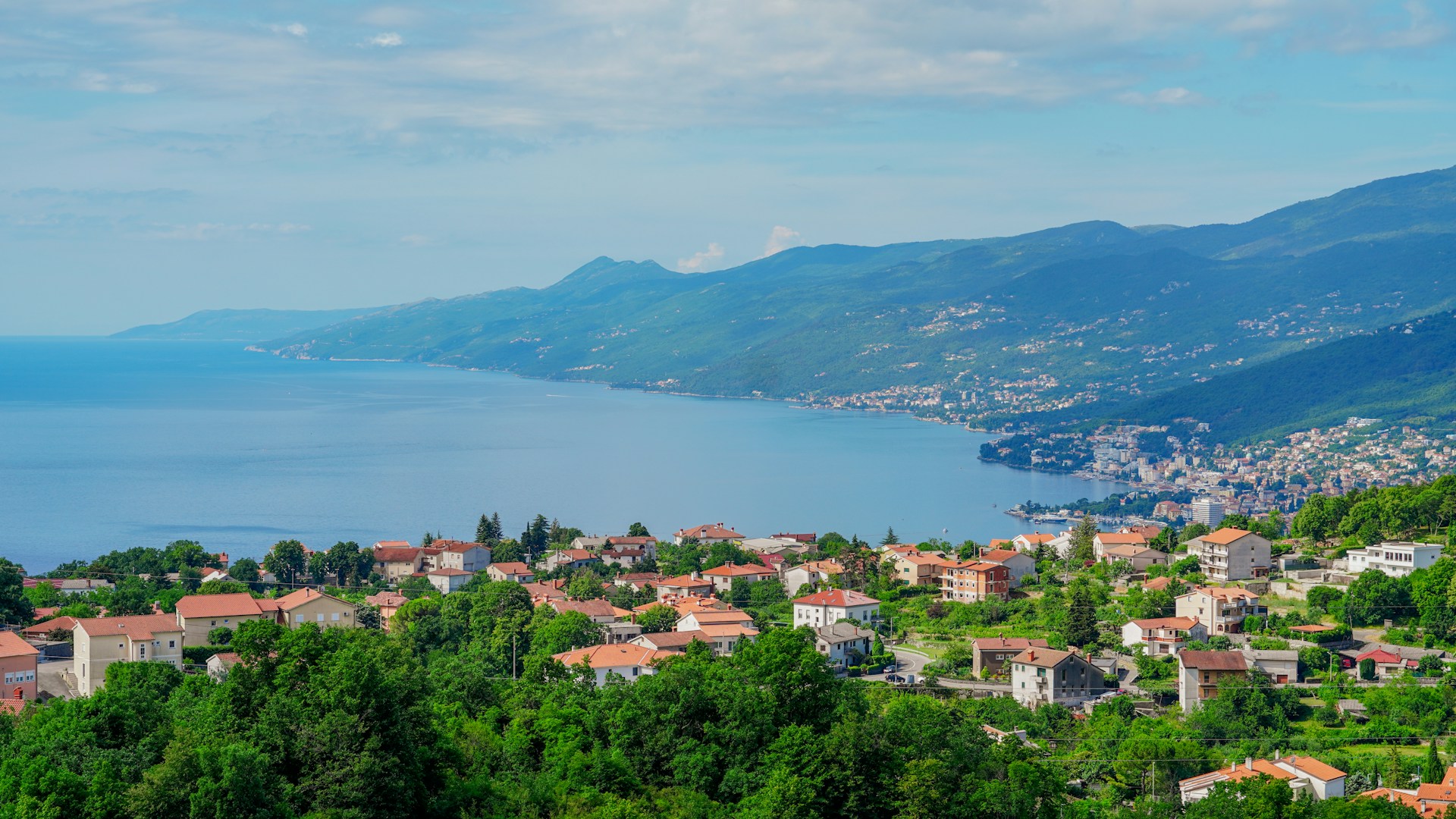
Croatia's first organised resort — opened in 1844 when these lands were part of the Austrian Empire. Along the shore stretches the 12-kilometre Lungomare promenade lined with palms and villas where Franz Joseph and Anton Chekhov once stayed. The beaches are mainly rocky with concrete platforms and wooden jetties — this is not Dalmatia. What Opatija offers instead is something found nowhere else on the Croatian coast: the atmosphere of an old European spa resort, with five-star hotels, fine dining restaurants and a complete absence of club culture.
| Month | Air (day) | Night | Sea |
|---|---|---|---|
| May | +18–21°C | +11–13°C | +16–18°C |
| June | +23–26°C | +15–17°C | +19–21°C |
| July | +27–30°C | +18–20°C | +22–23°C |
| August | +27–30°C | +18–20°C | +23–24°C |
| September | +22–25°C | +14–16°C | +21–22°C |
Flight from Warsaw: ~2 hrs (direct to Rijeka + 30 min transfer; or to Zagreb + 1.5 hrs transfer)
7 nights / 2 people: 4,000–12,000 PLN
Prices on the ground: dinner 20–45 EUR/person, beach platform entry 5–10 EUR, taxi to Rijeka ~15 EUR
Best season: May–June and September–October — Opatija works well in the shoulder season; August — hot and busy
Who is it for
Opatija is the choice for couples aged 35+ and those who have had their fill of typical beach holidays: long walks along the Lungomare, spa hotels with sea views, good restaurants and no club scene whatsoever. The only Croatian resort that works comfortably in May and October — mild climate and heated indoor pools in the hotels. Not the right choice for families with children who need a proper sandy or pebble beach, or for anyone looking for cheap All Inclusive — that format simply doesn't exist here.
What to do
- Walk the full Lungomare from Opatija to Lovran (12 km return) — a promenade along the cliffs lined with Belle Époque villas, fig trees overhanging the sea and small swimming coves
- Drive to Učka National Park (15 min by car) — hiking trails from 2 to 6 hours; on a clear day the summit offers views of the Kvarner islands and the Italian side of the Adriatic
- Take the ferry to Krk island (45 min from Rijeka) or drive across the bridge — the most accessible Kvarner island, with varied beaches and the medieval town of Krk
- Visit Rijeka (15 min by taxi) — Croatia's second city with a good historic centre, the Kortil market and a surprisingly interesting food scene
Krk Island
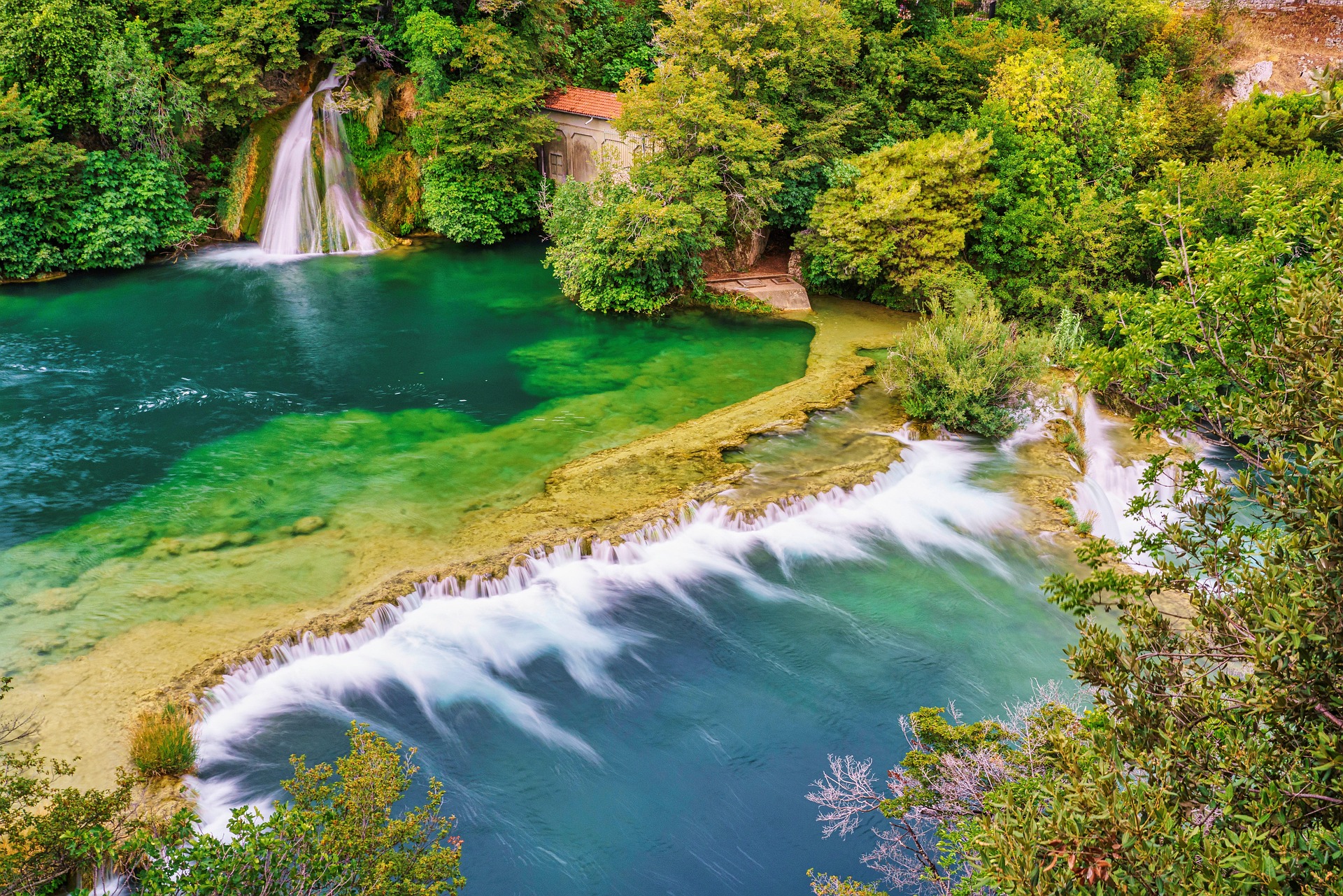
The only island in Croatia connected to the mainland by a bridge — and for that reason the most accessible and the most family-friendly. Rijeka airport sits directly on the island. The variety of beaches here is greater than on any other Kvarner island: the sandy beach of Baška in the south (one of the few sandy beaches in all of Croatia), pebble coves on the western shore, and the naturist campsite at Konobe. The medieval town of Krk on the western coast — Venetian walls, a 12th-century cathedral, narrow lanes. Krk works well for families with children and for those driving from Poland via Austria.
Dalmatia
The longest and most diverse region of the Croatian coast — from Zadar in the north to Dubrovnik in the south, around 400 km of coastline with hundreds of islands. Dalmatia is Croatia in its classic form: white stone towns above turquoise water, the scent of rosemary, light white wine and the Palace of Diocletian, inside whose walls people still live. The sea here is warmer than in Istria and Kvarner: in Dubrovnik the water in July reaches 25–26°C, and in September 24–25°C. Direct flights from Warsaw serve several airports — Zadar, Split and Dubrovnik.
Zadar
"Underrated — and that's exactly why it's the best"
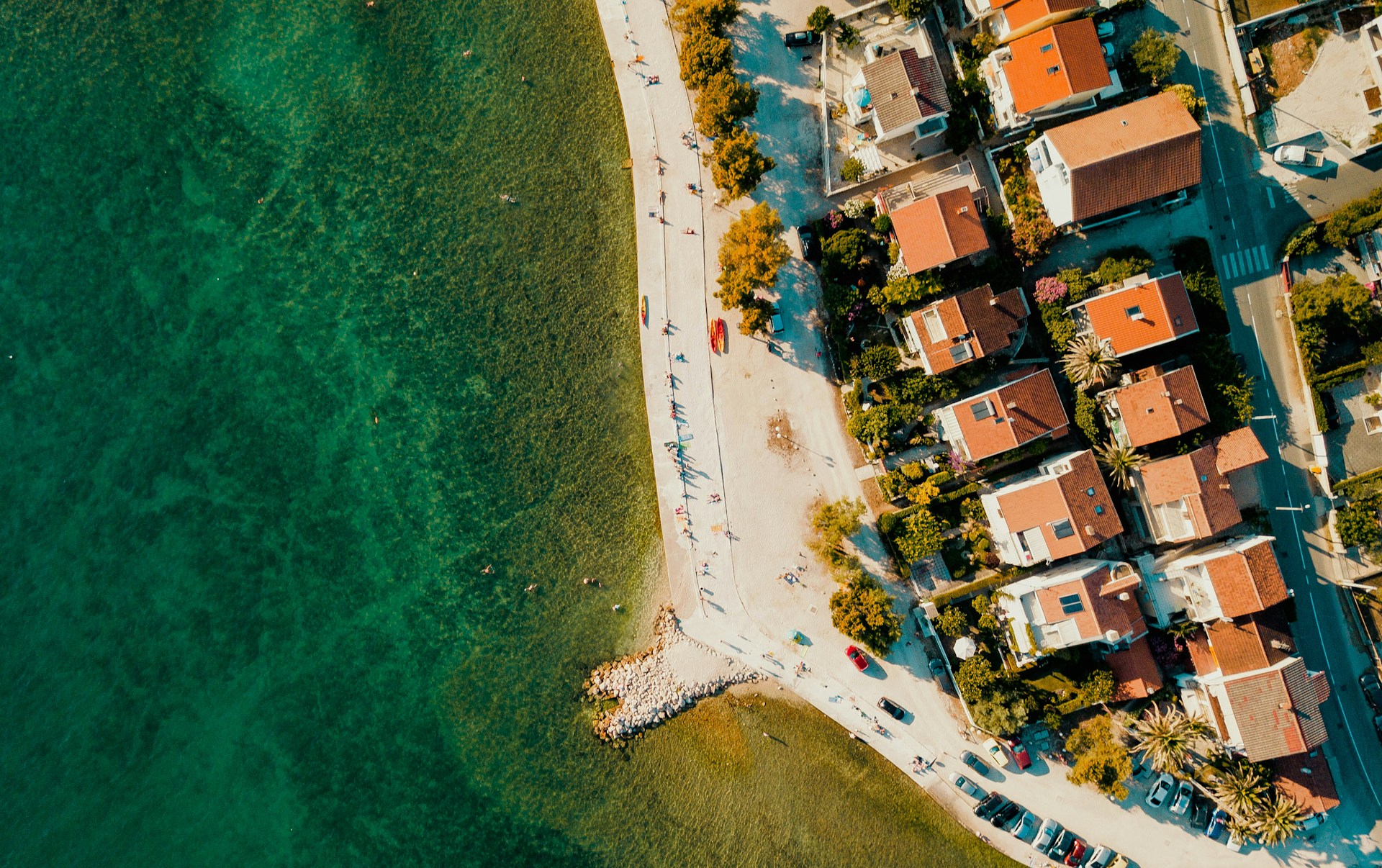
On a rocky peninsula jutting into the sea stands a city that Alfred Hitchcock once wrote had the most beautiful sunset in the world. Zadar is the only large historic city in Dalmatia that has not turned into a tourist attraction: real people live here, there is a market, residential streets inside the city walls and a university. Its two signature art installations — the Sea Organ (waves play music through pipes built into the harbour steps) and the Greeting to the Sun (a 22-metre glass disc that glows in rhythm with the setting sun) — are free and run around the clock. Prices are half those of Dubrovnik with comparable historical heritage.
| Month | Air (day) | Night | Sea |
|---|---|---|---|
| May | +21–23°C | +13–15°C | +18–20°C |
| June | +26–29°C | +17–19°C | +21–23°C |
| July | +30–33°C | +21–23°C | +24–25°C |
| August | +31–34°C | +21–23°C | +25–26°C |
| September | +26–28°C | +17–19°C | +23–25°C |
Flight from Warsaw: ~2.5 hrs (direct flight with Ryanair, Wizzair to Zadar)
7 nights / 2 people: 3,200–8,000 PLN — among the most affordable prices in Dalmatia
Prices on the ground: dinner 12–22 EUR/person, Krka National Park entry ~15 EUR, boat to the islands ~20 EUR
Best season: June and September; in September the sea is 23–25°C and the city moves at a normal pace
Who is it for
Zadar is the best base in Northern Dalmatia for those who want to combine beach time with day trips: Krka National Park (45 min), the Kornati Islands (2 hrs by boat), Plitvice Lakes National Park (1.5 hrs). A good fit for couples and travellers who have been to Croatia before and want to go beyond Dubrovnik. Not the right choice if a beach right outside your hotel is the priority: the town beaches of Zadar fall short of the resorts further south, and the best swimming spots require a boat trip or a drive.
What to do
- Come to the waterfront at sunset — the Sea Organ and the Greeting to the Sun are free and run 24 hours; the sunset over the Zadar Channel is one of the most photographed views in Croatia
- Take a day trip to Krka National Park (~15 EUR + transfer) — the Skradinski Buk cascade waterfalls; swimming at the base of the falls (partially restricted in 2024–2025 — check before visiting)
- Hire a boat or take a trip to the Zadar archipelago islands (Ugljan, Dugi Otok) — clear coves 30–60 minutes from the city that are never crowded with cruise ship passengers
- See the Church of St Donatus from the 9th century on the Roman Forum — the most unusual church in Croatia, octagonal, built directly over ancient foundations; entry 5 EUR
Šibenik
"Two UNESCO sites and the gateway to Krka"
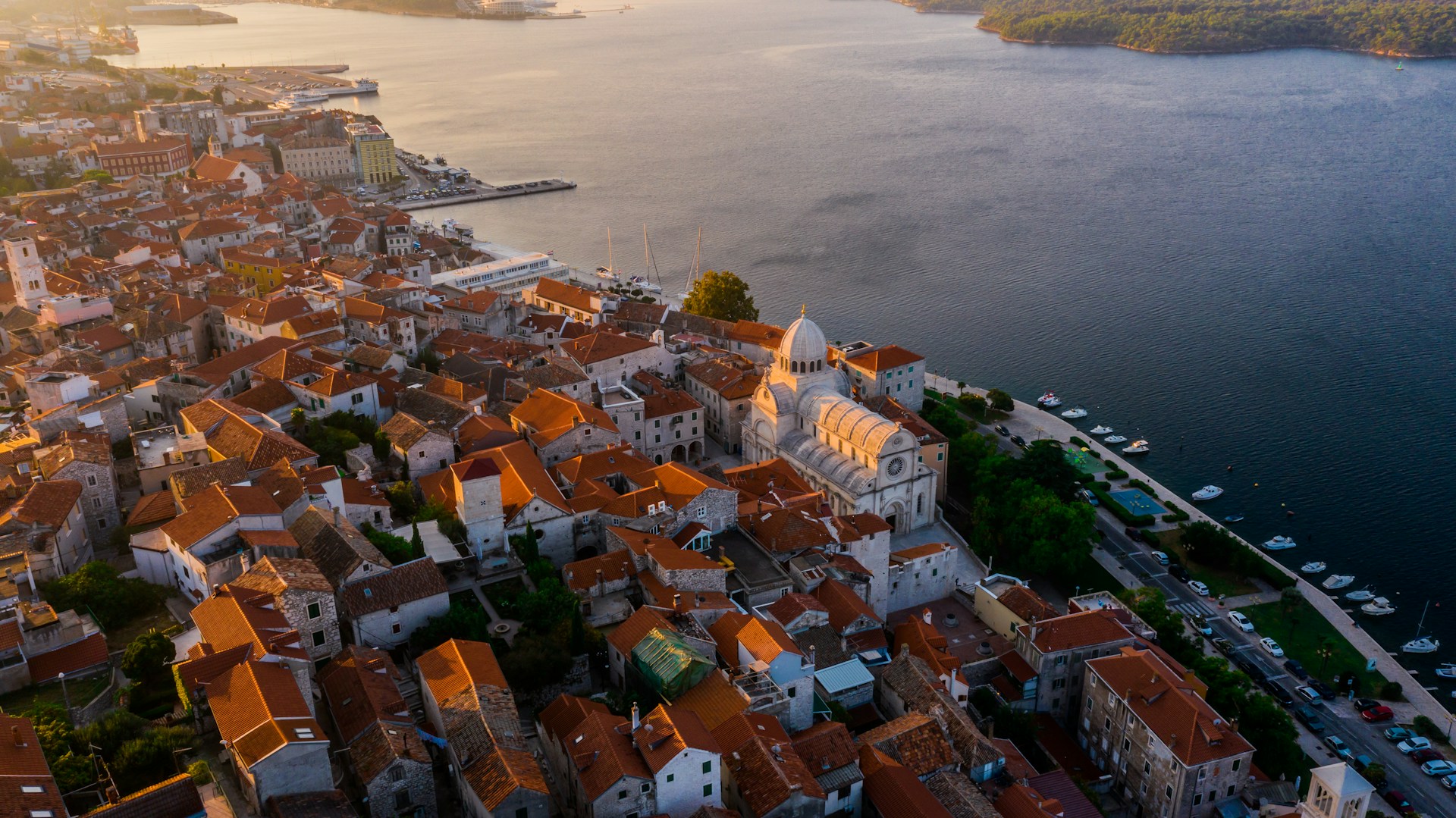
Between Zadar and Split, at the mouth of the Krka River, stands one of the few Croatian cities founded not by the Greeks or Romans but by the Croatians themselves, in the 11th century. Šibenik is the most overlooked historic city in Dalmatia: two UNESCO-listed sites (the cathedrals of St James and St Michael), hilltop fortresses with views of the islands, a lively fish market and almost no well-worn tourist paths. At the same time, Šibenik is the closest city to Krka National Park (15 min), making it the best base for those who want to combine culture, nature and sea. Beaches in the area are pebble coves on the Jaice Peninsula and on Zlarin island.
| Month | Air (day) | Night | Sea |
|---|---|---|---|
| May | +21–24°C | +13–15°C | +18–20°C |
| June | +26–29°C | +17–19°C | +21–23°C |
| July | +30–33°C | +21–23°C | +24–25°C |
| August | +31–34°C | +21–23°C | +25–26°C |
| September | +26–28°C | +17–19°C | +23–25°C |
Flight from Warsaw: ~2.5 hrs (direct to Split + 1 hr transfer; or to Zadar + 45 min)
7 nights / 2 people: 3,500–8,500 PLN
Prices on the ground: dinner 12–22 EUR/person, Krka entry ~15 EUR, boat to Kornati ~50 EUR/day
Best season: June and September — the optimal balance of warmth, prices and manageable crowds
Who is it for
Šibenik is the best choice for travellers for whom history and nature matter equally: two UNESCO cathedrals in the city, Krka 15 minutes away, the Šibenik archipelago islands half an hour by boat. Surprisingly good for couples looking for authentic Dalmatia without the tourist conveyor belt. Not the right choice if a beach next to the hotel matters — there is nowhere to swim in Šibenik itself, you need to travel for the beach.
What to do
- Visit the Cathedral of St James (entry 5 EUR) — 15th–16th century, the first cathedral in the world built entirely from stone with no wooden elements; a UNESCO site and a true masterpiece of Croatian Renaissance architecture
- Climb St Michael's Fortress (entry 5 EUR) — the best view of the city, the channel and the islands; the Šibenik Children's Festival is held here in summer
- Take a day trip to the Kornati Islands (~50 EUR) — an archipelago of 89 uninhabited islands, a national park and the most extraordinary seascape photography in Croatia
- Drive to Krka National Park (15 min, ~15 EUR entry) — and enter not through the main gate at Skradin but from the Roški Slap side, where there are half as many tourists with the same views
Split
"A living city inside a Roman palace"
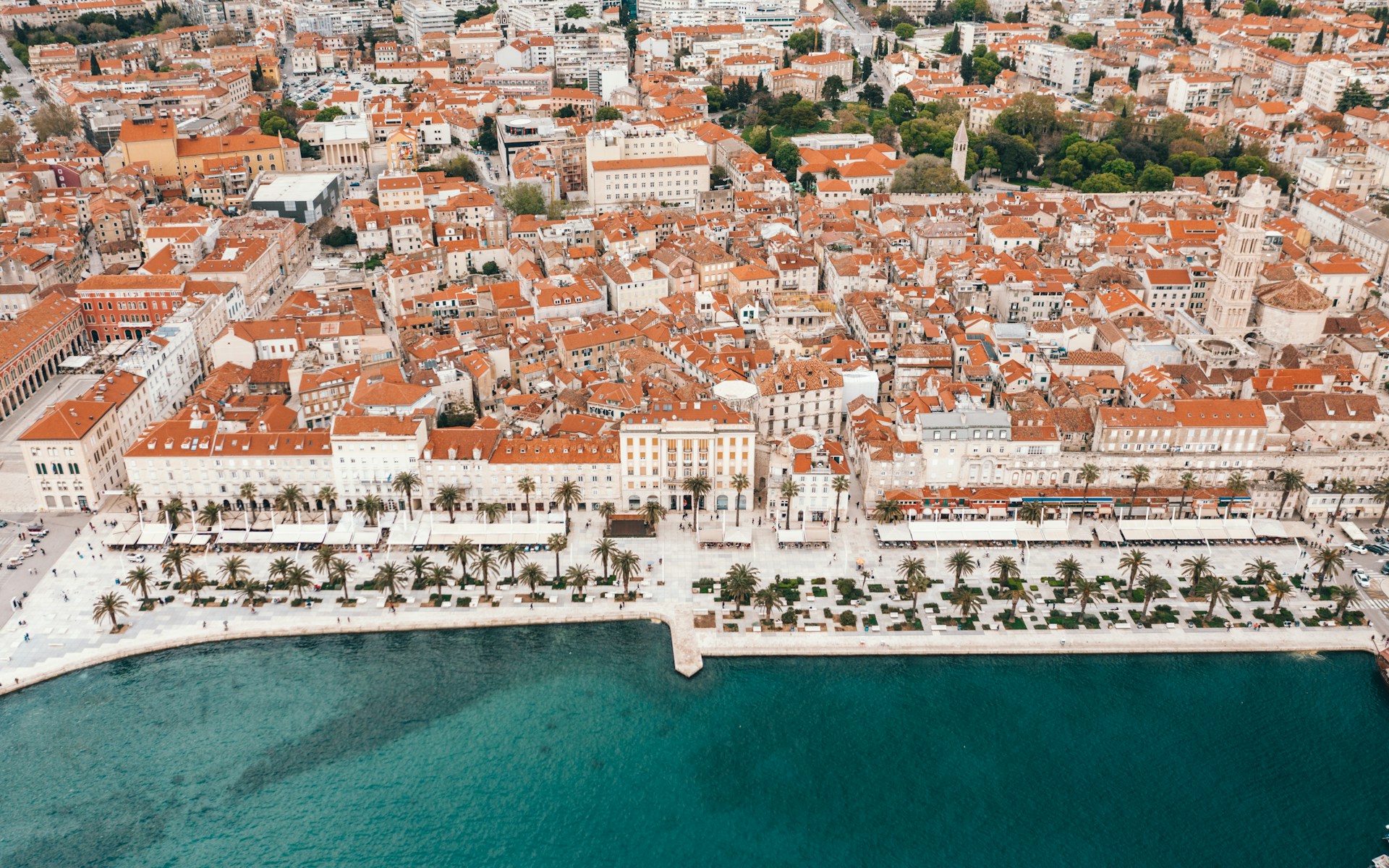
Diocletian's Palace is 1,700 years old. Inside its walls are cafés, bars, residential flats, hotels and an Orthodox church in what was once a pagan mausoleum. This is not a museum: it is a living city where people hang their washing between columns and argue at ancient gates. Split is Croatia's second largest city, the ferry hub for all the islands of Central Dalmatia and the most convenient base for Hvar (50 min by ferry), Brač (50 min) and Korčula (2.5 hrs). Prices are noticeably lower than Dubrovnik with no less historical richness. The beaches in Split itself include the long pebble Bačvice, famous for the local game of pucalo played in the shallows.
| Month | Air (day) | Night | Sea |
|---|---|---|---|
| May | +21–24°C | +13–15°C | +18–20°C |
| June | +27–30°C | +17–19°C | +21–23°C |
| July | +31–34°C | +22–24°C | +25–26°C |
| August | +32–35°C | +22–24°C | +25–26°C |
| September | +27–29°C | +17–19°C | +24–25°C |
Flight from Warsaw: ~2.5 hrs (direct flight with LOT, Ryanair, Wizzair — daily in season)
7 nights / 2 people: 4,000–11,000 PLN
Prices on the ground: dinner 15–30 EUR/person, Split–Hvar ferry ~6 EUR, taxi to Kašjuni beach ~10 EUR
Best season: June and September; in September the sea is 24–25°C and the city runs at a normal pace without August crowds
Who is it for
The best base in Croatia for those who want to combine history, sea and islands: from Split you can reach Hvar, Brač or Trogir in a single day. An excellent choice for a first trip to Croatia — everything is here and prices are moderate. Not the right choice if you want a quiet beach holiday: Split is a large city resort with nightlife, cruise ship tourists and constant movement. For real peace and quiet — head to the islands.
What to do
- Walk through Diocletian's Palace on your own at night — no guide, no map, just enter through the Golden Gate and come out at the harbour; at night the palace is empty and lit completely differently
- Climb Marjan Hill (30 min on foot from the centre) — a pine park above the city with the best view of Split and the islands; at the foot of the hill is Kašjuni beach with clear water and no cruise ship tourists
- Take the ferry to Hvar for a day (50 min, ~6 EUR) — walk the Old Town, drink local wine and return in the evening
- See Trogir (20 min by bus, ~2 EUR) — another UNESCO site 20 minutes from Split; a medieval town on an island connected by bridges to the mainland and Čiovo
Central Dalmatia Islands: Hvar, Brač, Korčula
Hvar — Croatia's most famous island and its most expensive. The Old Town of Hvar with its Venetian arsenal, lavender fields, yacht bars and nightclubs on the island of Sv. Klement. Crystal-clear water, pebble beaches. In July–August superyachts arrive and prices reach Riviera levels; ferries need to be booked ahead. Best season — June and September.
Brač — Zlatni Rat beach — the only beach in Croatia that changes shape depending on the wind. A white pebble spit extends 500 metres into the sea and shifts left or right with the waves. The island suits families and those who want good beaches without Hvar's glamour. Ferry from Split — 50 min, 6 EUR.
Korčula — the "little Dubrovnik" without the cruise ships. A medieval old town on a peninsula with stone towers, reputedly the birthplace of Marco Polo. Local wines Pošip and Grk from island vineyards. Quiet even in August. Ferry from Split — 2.5 hrs or a fast catamaran.
Makarska
"Family beach paradise beneath Mount Biokovo"
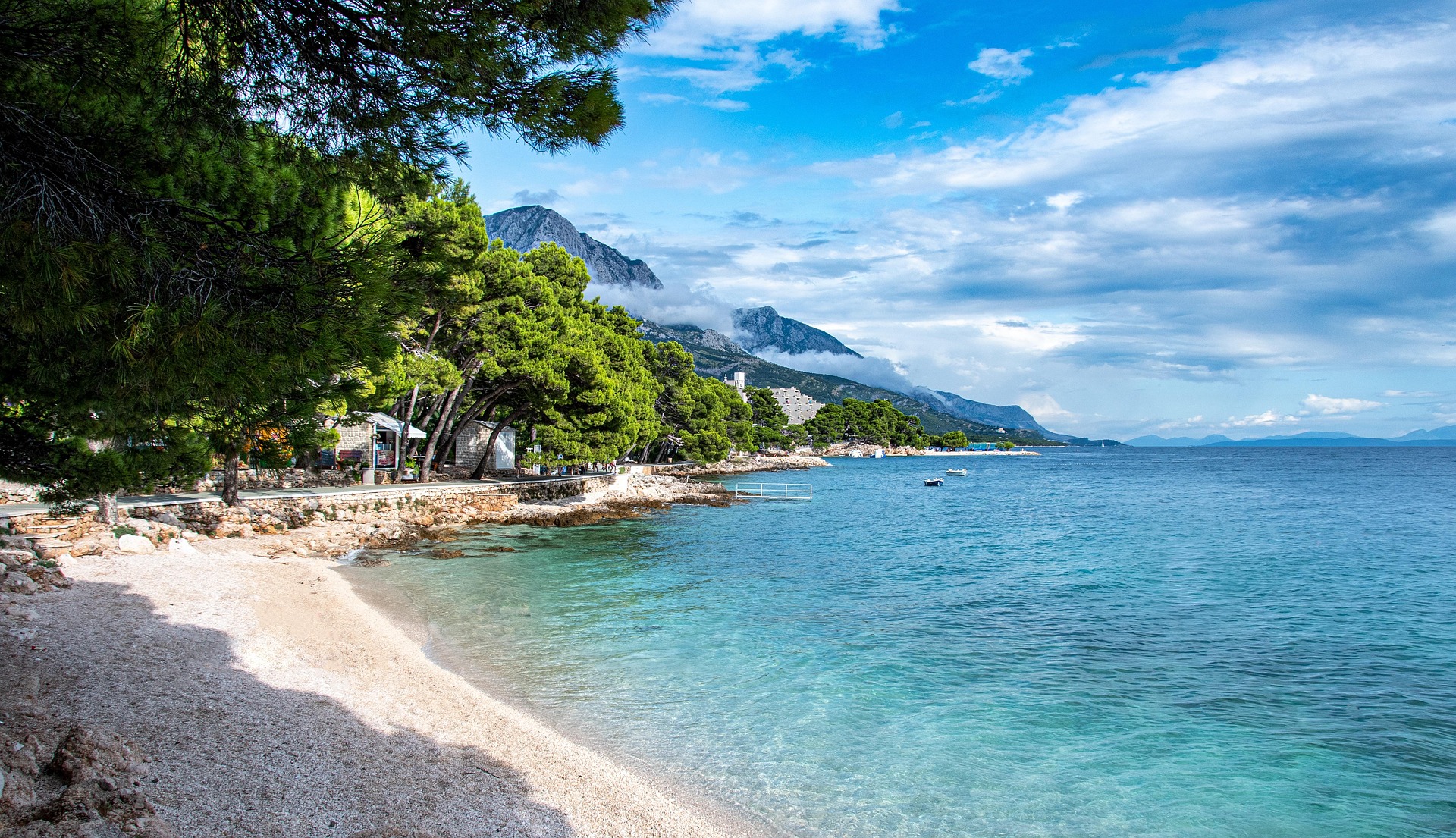
Between Split and Dubrovnik stretches the 60-kilometre Makarska Riviera — a long band of pebble beaches at the foot of the Biokovo mountain range. Makarska sits at the centre of this stretch: a wide pebble beach right along the promenade, a palm-lined boulevard, a row of restaurants along the waterfront and mountains rising behind. This is the most "package holiday" resort in Dalmatia — families from Poland, Germany and Austria come here for All Inclusive with kids' clubs and entertainers. One feature that sets Makarska apart from other Dalmatian resorts: the entry into the water is gradual and comfortable for children, and the Biokovo Skywalk — a glass platform over a cliff edge at 1,228 metres above sea level — is just 30 minutes away.
| Month | Air (day) | Night | Sea |
|---|---|---|---|
| May | +21–24°C | +13–15°C | +18–20°C |
| June | +27–30°C | +17–19°C | +21–23°C |
| July | +31–34°C | +21–23°C | +25–26°C |
| August | +32–35°C | +22–24°C | +25–27°C |
| September | +27–29°C | +17–19°C | +24–25°C |
Flight from Warsaw: ~2.5 hrs (direct to Split + ~1 hr transfer)
7 nights / 2 people: 3,500–9,000 PLN — good value for the level of infrastructure
Prices on the ground: dinner 12–25 EUR/person, sunbed 10–20 EUR, Biokovo Skywalk entry ~10 EUR
Best season: July–August — peak family season; June and September — fewer people and lower prices
Who is it for
The best choice in Dalmatia for families with children up to 14: a good beach right in town, full beach infrastructure, All Inclusive hotels with kids' clubs, and a lively promenade with restaurants for adults in the evening. Works well for those who want a classic beach holiday with a mountain backdrop. Not the right choice if you want a historic town and cultural programme: Makarska has no significant sights, and for history you need to go to Split (1 hr) or Dubrovnik (1.5 hrs).
What to do
- Drive up to the Biokovo Skywalk (30 min by car, entry ~10 EUR) — a glass platform at 1,228 metres above sea level with views of the islands of Hvar and Brač; from up here the sea looks painted
- Head to Brela beach (7 km north) — the most scenic beaches on the Riviera: pine trees right above the pebbles, clear water and the famous Brela Rock rising from the sea
- Take a boat to Hvar (1.5 hrs) or a bus to Split (1 hr) for a day trip to the island
- Walk the footpath above town to the fortress ruins — 40 minutes uphill, the best view of Makarska bay and the Biokovo mountain silhouette; the path is free and almost deserted
Dubrovnik
"The Pearl of the Adriatic — and Croatia's most overcrowded resort"
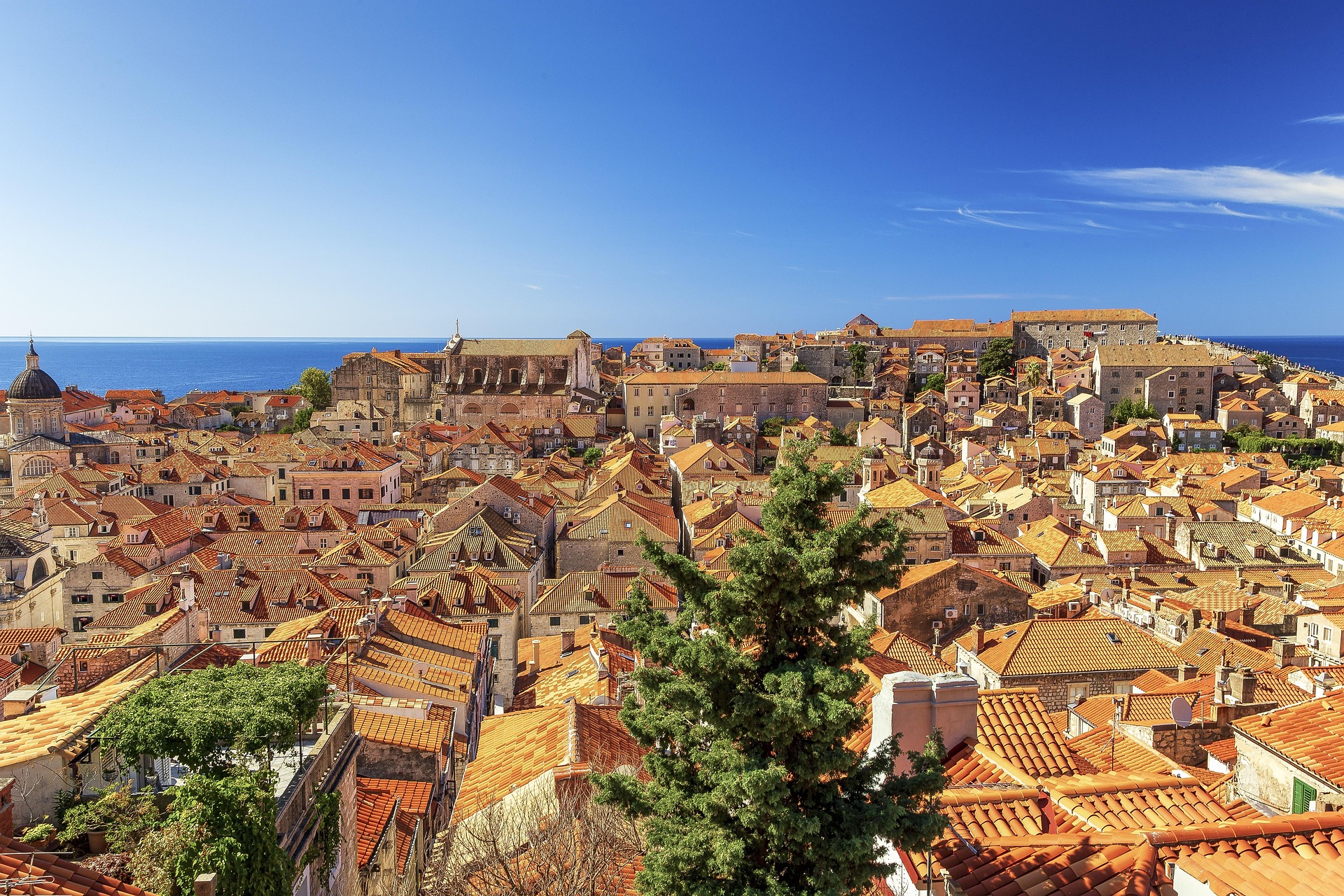
A medieval city behind ancient walls above turquoise water — a UNESCO World Heritage Site, the filming location for Game of Thrones and one of the most photographed cities in Europe. In July 2026, two to four cruise ships arrive in Dubrovnik every day: that is 10,000–15,000 extra tourists per day in an Old Town inhabited by 40,000 people. The city walls and the Stradun at 11am in August are a corridor of people, not a stroll. Yet Dubrovnik in May, October or late at night is a completely different place. And it remains one of the most beautiful cities in the Mediterranean — nothing in Croatia comes close in terms of the scale of its historical heritage.
| Month | Air (day) | Night | Sea |
|---|---|---|---|
| May | +22–25°C | +14–16°C | +19–21°C |
| June | +27–30°C | +18–20°C | +22–24°C |
| July | +31–34°C | +22–24°C | +25–26°C |
| August | +31–34°C | +22–24°C | +25–26°C |
| September | +27–29°C | +18–20°C | +24–25°C |
Flight from Warsaw: ~2 hrs (direct flight with LOT, Ryanair — daily in season)
7 nights / 2 people: 6,000–18,000 PLN — the highest prices in Croatia
Prices on the ground: dinner 25–50 EUR/person, city walls walk 35 EUR, taxi to airport ~35 EUR
Best season: May and October — half the tourists, prices 40% lower; July–August — peak crowds and peak prices
Who is it for
Dubrovnik is the only resort in Croatia worth visiting even if you don't particularly like beach holidays: for the walls, for the Stradun, for the view from Mount Srđ over the Old Town and the islands. Best suited to short breaks (3–4 days) in the shoulder season. Not the right choice for a main summer holiday in July–August: prices are at their maximum, the crowds are overwhelming and the beaches in the town itself are tiny and overrun. If you're going in summer, Dubrovnik is better used as a day trip from Makarska (1.5 hrs) or Kotor.
What to do
- Walk the city walls (entry 35 EUR, 2 km) at 8am — they open at 8:00 and by 10:00 there are already queues; the morning view of Pile Bay in side light is the definitive Dubrovnik photograph
- Take the cable car up Mount Srđ (~15 EUR return) — 412 metres above the city, panoramic views of the Old Town, the Elafiti Islands and, on a clear day, the coast of Montenegro
- Take a boat to Lokrum island (10 min, ~15 EUR return) — an uninhabited nature reserve 600 metres from the city walls, a naturist beach, a botanical garden, peacocks and no cruise ship tourists
- Come to the Old Town at 9pm — when the cruise passengers return to their ships, the streets empty and the Dubrovnik from the photographs finally appears
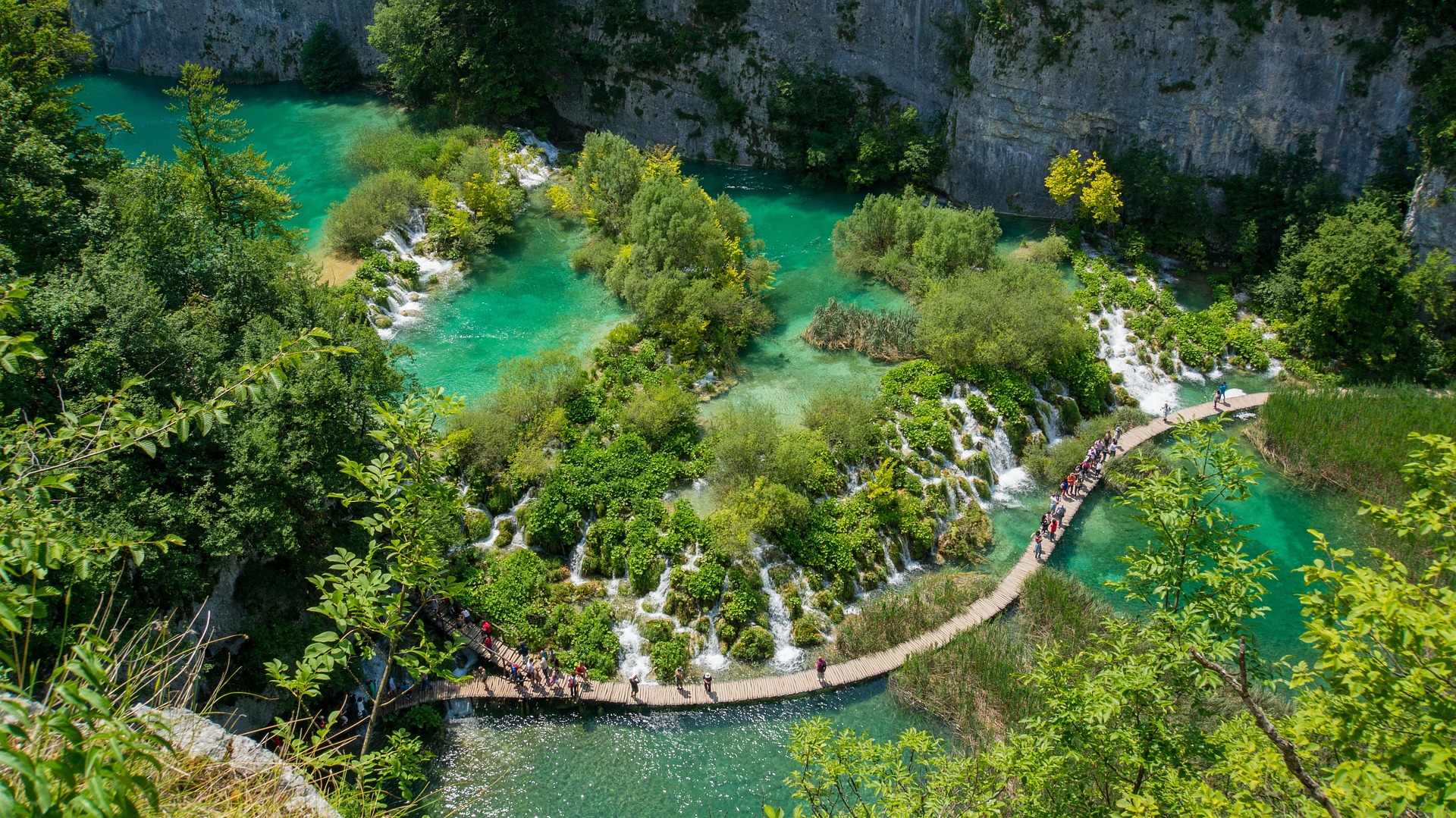
Bonus: Plitvice Lakes
"An essential stop from anywhere in Croatia"
A UNESCO National Park with 16 lakes, 90 waterfalls and wooden walkways above the water — Croatia's most visited natural attraction (over 1.5 million tourists a year). Distances to the park: from Zadar — 1.5 hrs, from Split — 2.5 hrs, from Zagreb — 2 hrs, from Dubrovnik — 4 hrs. Entry costs 10–40 EUR depending on the season (cheapest in May and September). The key advice: arrive between 7 and 8am or after 4pm — by 10am car parks are full and the footpaths become traffic jams. Swimming in the lakes is prohibited.
Quick comparison
| Resort | Region | Best for | Sea (July) | Beach type | 7 nights / 2 people |
|---|---|---|---|---|---|
| Rovinj | Istria | Couples, atmosphere | +23–24°C | Pebble/rock | 5,000–14,000 PLN |
| Poreč | Istria | Families, first-timers | +23–24°C | Pebble | 3,500–9,000 PLN |
| Pula | Istria | History, budget | +23–24°C | Pebble/rock | 3,000–7,500 PLN |
| Opatija | Kvarner | Couples 35+, spa | +22–23°C | Concrete/platforms | 4,000–12,000 PLN |
| Krk | Kvarner | Families, road trips | +22–23°C | Pebble/sand | 3,000–7,000 PLN |
| Zadar | Dalmatia | History + nature | +24–25°C | Pebble | 3,200–8,000 PLN |
| Šibenik | Dalmatia | Couples, UNESCO | +24–25°C | Pebble (surroundings) | 3,500–8,500 PLN |
| Split | Dalmatia | First-timers, islands | +25–26°C | Pebble | 4,000–11,000 PLN |
| Makarska | Dalmatia | Families, beach | +25–26°C | Pebble | 3,500–9,000 PLN |
| Dubrovnik | Dalmatia | Culture, couples | +25–26°C | Pebble/rock | 6,000–18,000 PLN |
Checklist before booking:
- Choose your region before choosing a town: Istria — greener, cooler, cheaper; Kvarner — intimate, elegant, good in the shoulder season; Dalmatia — warmer, more history, more islands.
- Bear in mind that Croatia has almost no sandy beaches — 95% of the coastline is pebble, rock or concrete platforms. Exceptions: Baška beach on Krk and Zlatni Rat on Brač.
- Plan ferries in advance: on popular routes (Split–Hvar, Split–Brač) in July–August ferries are overloaded, especially with a car. Car tickets are booked through Jadrolinija 30–60 days ahead.
- Factor in higher prices: Croatia joined the Eurozone in 2023. Compared to 2021–2022, restaurant and hotel prices have risen by 20–30%. Dubrovnik is now priced comparably to Barcelona or Nice.
- Hire a car in Istria and Kvarner — without one you see about 30% of what's available. In Dalmatia a car is useful for the Makarska Riviera and national parks; in Dubrovnik a car is more of a hindrance.
- Book Dubrovnik, Rovinj and Hvar 2–3 months ahead for July–August: good hotels in these three places sell out quickly and last-minute options are limited.
- No visa required: Polish and EU citizens — visa-free; Ukrainian citizens — visa-free for up to 90 days; Belarusian citizens — a Schengen visa is required, as Croatia has been part of the Schengen Area since January 2023.
Common mistakes:
- Going to Dubrovnik in July–August expecting peace and quiet. Two to four cruise ships a day means 10,000+ people in the Old Town until 5pm. If you want Dubrovnik without the crowds — go in May, October, or arrive on a late evening flight.
- Not booking ferry tickets with a car in advance. At peak season on the Split–Hvar route, waiting with a car can take 3–4 hours. Without a car you'll always find space; with a car, only with a booking.
- Expecting "cheap Croatia". Since 2023 it's a different country in terms of pricing. An average dinner for two in a Dubrovnik restaurant runs 80–100 EUR. In Zadar — 30–40 EUR. That's a meaningful difference when planning a budget.
- Ignoring Northern Dalmatia. Zadar and Šibenik offer the same water clarity and a richer excursion programme at half the price of Dubrovnik and one and a half times less than Split.
- Going to Plitvice in July–August without arriving early. The park opens at 7:00; by 9:30 the car parks are full. A guided tour from your hotel will get you there at 10:30 — right into the thick of it. Best option: drive yourself and be at the gate by 7:15.
- Underestimating the difference in water temperature. In Poreč in May the sea is 17–18°C — too cold for comfortable swimming. In Dubrovnik at the same time it's 19–21°C. If you're travelling in June, look at Dalmatia rather than Istria.
Entering Croatia — what you need to know
Since 1 January 2023, Croatia has been part of the Schengen Area and has adopted the euro. This matters: entry now requires a Schengen visa (or visa-free status under a Schengen agreement), not a separate Croatian visa.
- EU citizens (including Polish citizens): free entry on a valid passport or national ID card. No limit on length of stay.
- Important: if you are entering overland through Bosnia and Herzegovina or Montenegro — neither country is in the Schengen Area, and re-entering Croatia counts as a new entry into the Schengen Zone.
Summary
Which region and resort in Croatia should you choose?
If you're visiting Croatia for the first time, choose Split as your base: from here you can reach Hvar, Trogir or the Klis Fortress in a single day and return to Diocletian's Palace in the evening. If atmosphere and a beautiful town matter and you're prepared to pay — Rovinj in June, not August. Families with children — Poreč or Makarska: infrastructure, beach and kids' clubs without Dubrovnik prices. For history, nature and lower costs — Zadar or Šibenik, both of which remain undeservedly overlooked. Dubrovnik — absolutely, but in May or October, or at least late in the evening when the cruise ships have left.
Final tip:
The best month for Croatia in 2026 is September. The sea is 23–26°C depending on the region, tourist numbers are roughly half what they are in August, hotel prices drop by 25–40%, Plitvice Lakes entry costs 15 EUR instead of 40 EUR, and the whole country exhales after the summer marathon. The second good option is the second half of June: the sea in Dalmatia is already warm (21–23°C) and the season hasn't yet hit full stride.

 Holidays


 Last minute
 Hotels


 Blog
Blog