Two people book "Egypt, Red Sea, 5*, all inclusive" for the same week — and come home from different holidays. One put on fins every morning and swam along a coral reef twenty metres from the sunbed; the other waded forty metres through warm sandy shallows with a child in their arms. One country, one price — and completely different breaks. That's because in Egypt the key question isn't "north or south" but "what sits directly in front of your hotel": a living coral reef or a sandy lagoon. That, not the star rating, is where choosing a resort begins.
Two more factors decide the rest: the mainland coast with its hub in Hurghada versus the Sinai (Sharm and beyond), and the season — Egypt runs year-round, but summer on the coast means +38–40°C. Below: first, three questions that narrow the choice in a minute, then a season table, the fullest possible list of resorts from El Gouna to Taba Heights, common mistakes, and the entry rules including the free Sinai stamp. The quick-choice block is for those who don't want to read everything in order:
- House reef and snorkelling straight off the beach → Makadi Bay, Sahl Hasheesh, Marsa Alam
- Sandy entry and shallows for children → El Gouna, Hurghada
- First time in Egypt, everything to hand → Hurghada
- Quiet, pricier, canals and lagoons → El Gouna
- The best reefs, dugongs, turtles → Marsa Alam
- World-class diving → Sharm (Ras Mohammed), Marsa Alam, Dahab
- Younger crowd, laid-back, budget → Dahab
- Kite and windsurfing (wind) → Soma Bay/Safaga, El Gouna
- No visa needed (Sinai stamp) → Sharm, Dahab, Taba
- Compare everything at once → Comparison
Three questions that narrow the choice in a minute
Before you start browsing hotels, answer three questions. They cut away half the options and protect you from the biggest disappointment — when the "beach holiday" turns out on the ground to be something quite different from what you pictured.
Question 1. Reef under your fins or sand under your feet?
The Red Sea is famous for its coral, but not every beach is a reef, and not every reef is comfortable to swim from. There are three types of entry into the water, and everything depends on them:
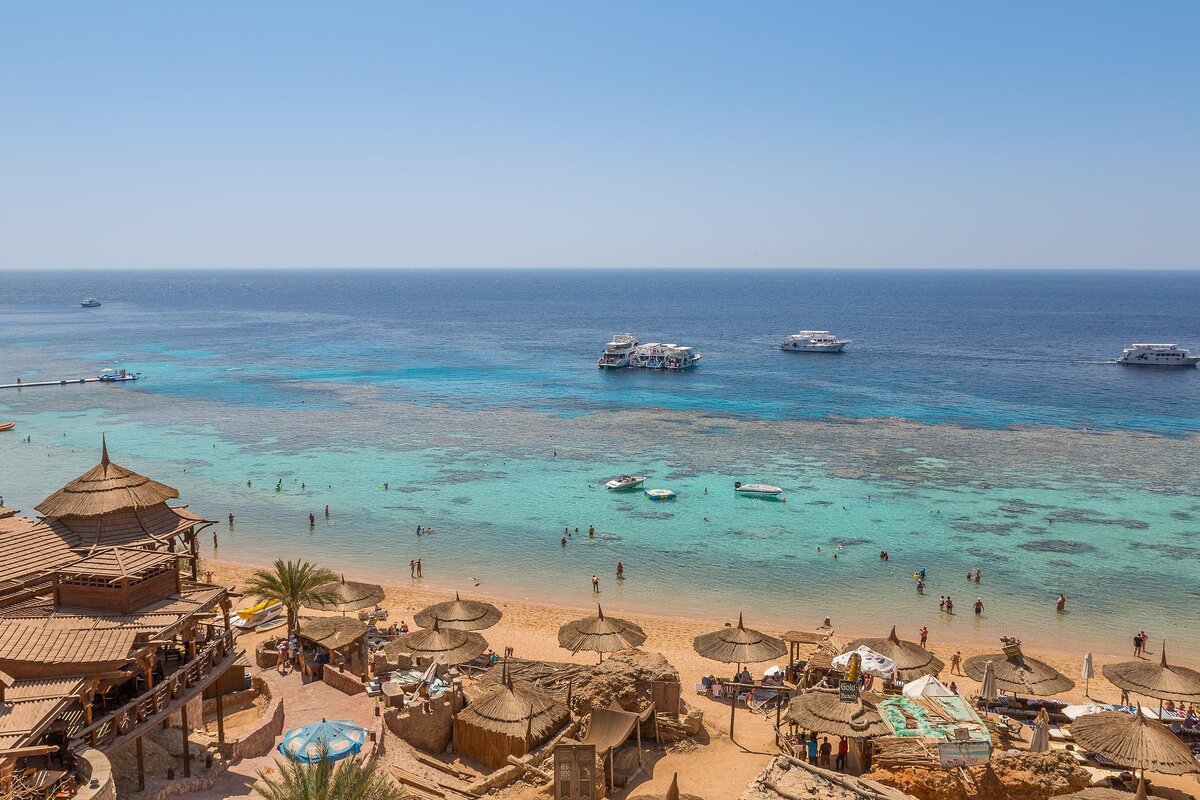
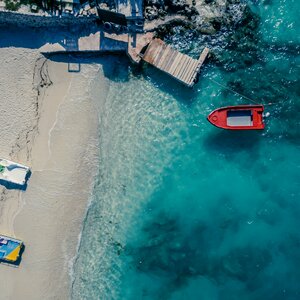
- House reef. The coral garden starts almost at the shore, and you usually enter via a jetty over the reef. Heaven for snorkelling and diving, but there'll be no wading in over gentle sand, and small children and weaker swimmers can find it awkward. This is Makadi Bay, Sahl Hasheesh, most Marsa Alam hotels, Sharm.
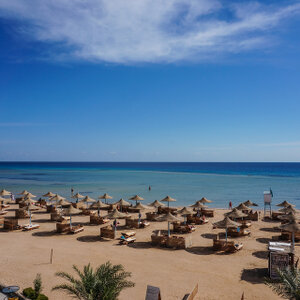
- Sandy lagoon. A gentle sandy entry, shallow for tens of metres, warm calm water. Ideal with children, but there's next to no living coral at the shore — you take a boat to reach the reef. This is El Gouna, much of Hurghada, and some of the Nabq lagoons in Sharm.
- Mixed format. A sandy paddling zone plus a house reef at the lagoon's edge with a jetty. The compromise for mixed groups. This is Soma Bay and selected hotels in the big hubs.
Question 2. Mainland (Hurghada) or Sinai (Sharm)?
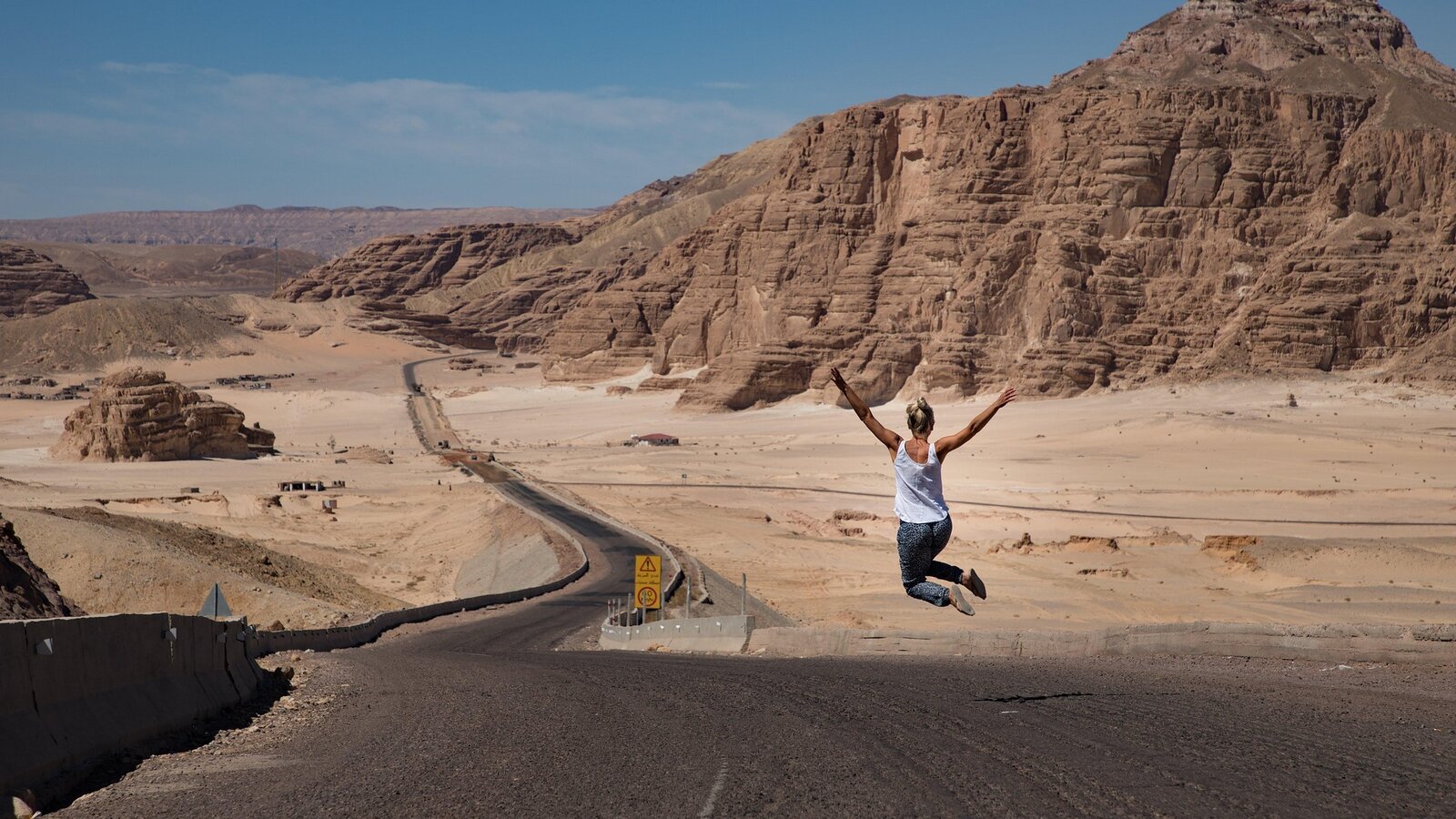
The Red Sea washes Egypt on two sides, and these are two different holidays. The mainland coast with its Hurghada hub means direct charters, proximity to Luxor and the Nile Valley, a wider choice of budget hotels — but also more wind around Hurghada and El Gouna. The Sinai Peninsula (Sharm el-Sheikh, Dahab, Taba) means bays sheltered from the wind, the best diving at Ras Mohammed, Mount Sinai and St Catherine's Monastery nearby, and — the key practical bonus — a free Sinai stamp instead of a paid visa, as long as you don't leave the Sinai. The flip side: on a Sinai stamp you can't pop over to Cairo for the pyramids or to Hurghada — that requires a full visa.
Question 3. When are you going — and are you ready for heat or wind?
Egypt operates 12 months a year, but "when" changes everything: the price, the crowds, the temperature, and even whether the beach is comfortable at midday. A guide by season:
| Season | Air (day) | Sea | Crowds and prices | The catch |
|---|---|---|---|---|
| Winter (Dec–Feb) | +21–24°C | +22–23°C | High season, pricier | Winter sun, but evenings are cool and windy, the water is bracing |
| Spring (Mar–May) | +26–33°C | +23–26°C | Moderate | The best balance of warmth and prices; occasional dusty khamsin winds |
| Summer (Jun–Sep) | +35–40°C | +27–29°C | Low international season, cheaper | The sea is perfect, but midday is scorching; air conditioning and shade save the day |
| Autumn (Oct–Nov) | +28–33°C | +26–27°C | Comfortable, moderate prices | Often the best month of the year — October |
In short: for winter sun, December–February (but pack a windbreaker for the evenings); for the ideal balance, October and April–May; for the lowest prices, summer — if you can handle the heat and the sea is what you're there for. A direct flight from Warsaw or the regional airports takes 3.5–4.5 hours depending on the destination airport.
The mainland coast: Hurghada and its "constellation" of resorts
Along the mainland shore around Hurghada's airport runs a whole chain of resorts — from a noisy city to gated premium bays. All sit 20–60 minutes' transfer from a single airport (HRG), yet the holidays they offer differ. Direct charters fly here from most Polish cities, and this is also the most convenient base for a day trip to Luxor.
Hurghada
"The universal way into Egypt — loud, cheap, everything close by"
The coast's largest resort city stretches for dozens of kilometres: the old Dahar district with its market, touristy Sakkala with its bars, and the new hotel zones to the south. The beaches here are mostly sandy or mixed, the entry usually gentle, and the living reef is found at the jetties and on boat trips to Giftun Island and the Mahmya lagoon. It's precisely this scale and competition that give Hurghada the most affordable prices and the widest choice of hotels for any budget. Not worth it if you're after quiet and unspoilt nature: this is a busy, at times chaotic city rather than a secluded bay, and on windy days the open beaches get choppy.
In front of the hotel: mostly sand and mixed entry; the reef is at the jetties and on island trips
Flight from Warsaw: ~4–4.5 hrs to Hurghada (HRG), transfer 10–40 min
7 nights / 2 people: PLN 2,800–7,000
Best season: October–April; summer is hot but cheap
What to do
- Take a boat to Giftun Island and the Mahmya lagoon — snorkelling over living reef you won't find at the city beaches
- Do a day trip to Luxor (3–4 hrs each way) — Karnak and the Valley of the Kings; you leave before dawn
- Wander the old Dahar district and its market — a real city, not just a hotel strip
- Take a kitesurfing lesson: the steady wind makes this coast one of the best places for beginners
El Gouna
"Egypt for people who don't like Egypt: canals, lagoons, order"
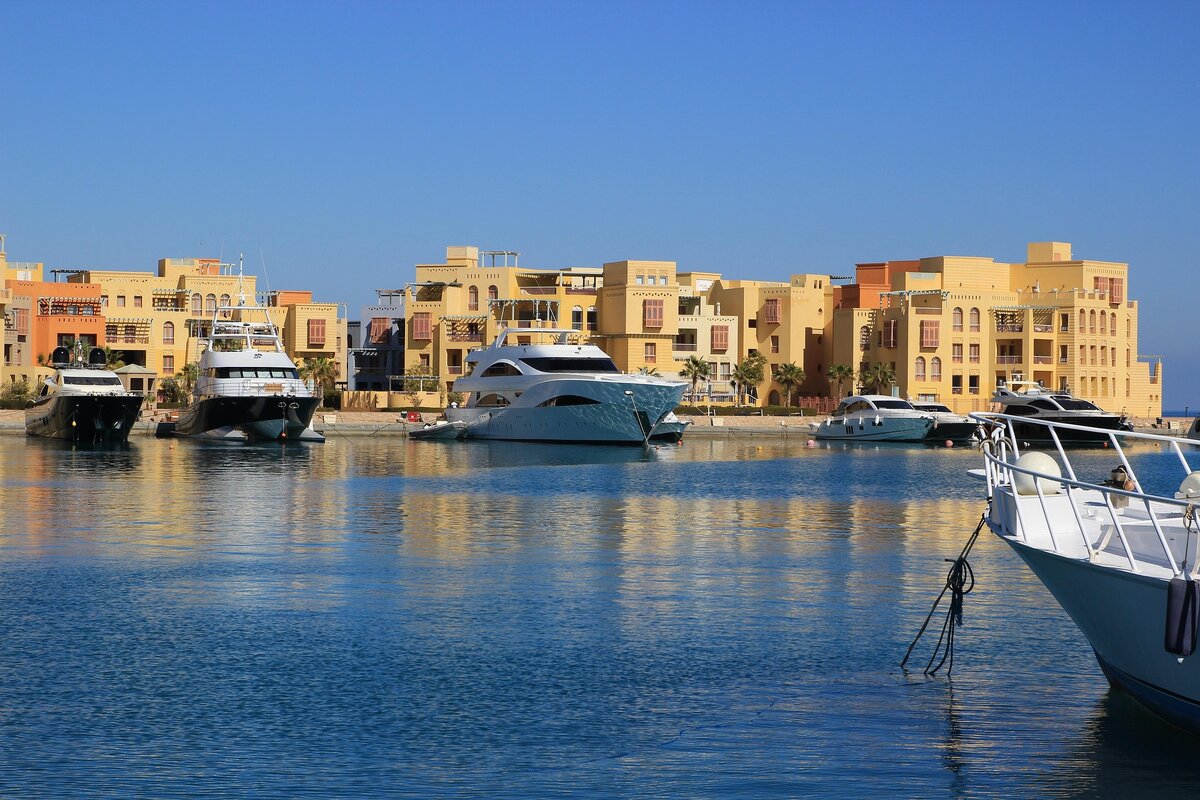
Half an hour north of Hurghada stands a resort built by a private developer on a system of islands and canals — with its own lagoons, a golf course, a marina and the tidy little towns of Abu Tig and Downtown. The beaches are sandy, the lagoon water calm and shallow, and evening life gathers in the marina bars rather than noisy clubs. You pay for it: El Gouna is noticeably pricier than neighbouring Hurghada. The living reef isn't at the shore here — boats take you out to it. Not worth it if you want a house reef off the sunbed or a budget break: El Gouna's strengths are its lagoons, infrastructure and atmosphere, not coral under a jetty.
In front of the hotel: sandy beaches and calm lagoons; the reef is on boat trips
Flight from Warsaw: ~4–4.5 hrs to Hurghada (HRG) + ~30 min transfer
7 nights / 2 people: PLN 4,500–12,000
Best season: October–May; windy — a plus for kitesurfers
What to do
- Take a water taxi between the islands and have dinner in the Abu Tig marina in the evening
- Try kitesurfing at a station on the shallow lagoon — ideal conditions for a first go
- Join a snorkelling trip to the Dolphin House reef — the coral the lagoons don't have
- Cycle around the little towns — El Gouna was designed for exactly that
Makadi Bay
"A house reef straight off the jetty — the Red Sea's snorkelling showcase"
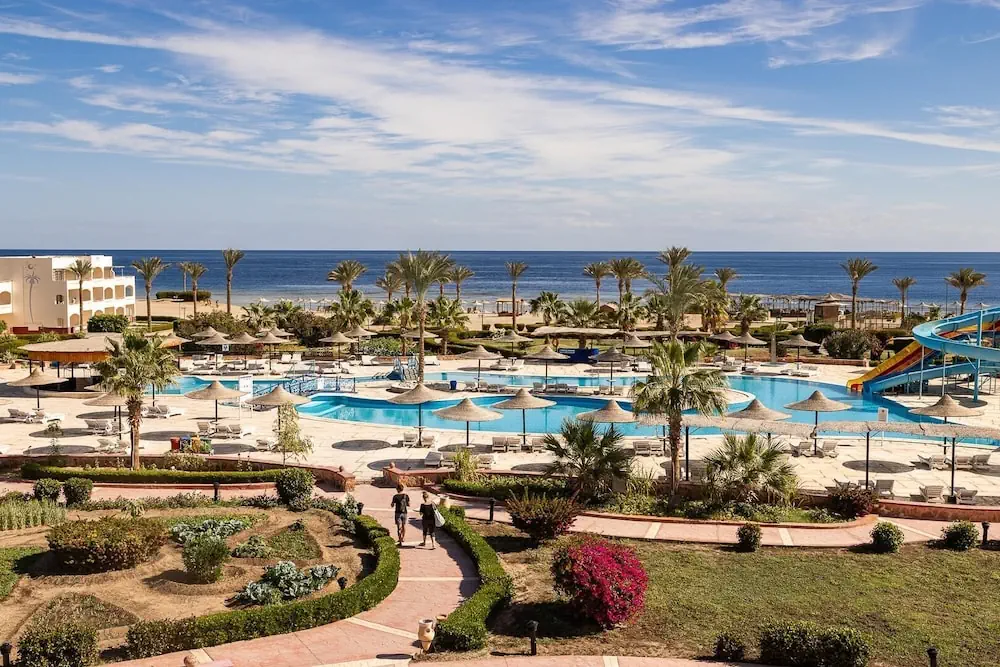
Thirty to forty minutes south of the airport lies an enclosed bay of large family hotels and, crucially, living house reefs by the shore. Jetties here lead straight out to the coral wall, and you can see butterflyfish, moray eels and shoals of anthias without getting into a boat. There's noticeably less wind than in Hurghada and the water is calmer. The format is big all-inclusives with water parks, so not worth it if you want an intimate boutique hotel or authentic Egyptian life beyond the gate: Makadi Bay is a self-contained resort zone, not a town.
In front of the hotel: house reef at the jetty (snorkelling from shore); a sandy paddling zone not everywhere
Flight from Warsaw: ~4–4.5 hrs to Hurghada (HRG) + ~40 min transfer
7 nights / 2 people: PLN 3,500–9,000
Best season: year-round; calmer for wind than Hurghada
Sahl Hasheesh
"A premium bay with coral walls and room to breathe"
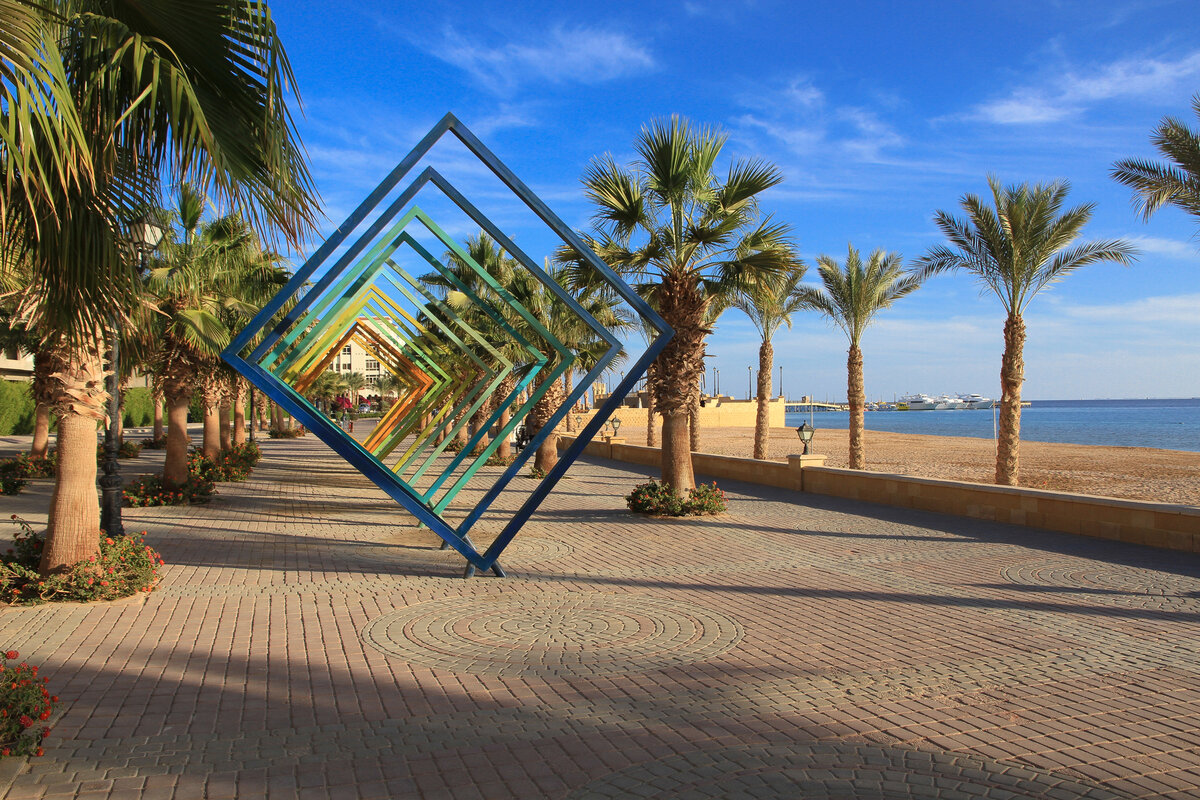
Further south spreads a newer, pricier zone: broad promenades, 5* hotels, a private marina and excellent house reefs with a sharp drop into the deep — a playground for divers and snorkellers. The beaches are sandy, but the way to the reef usually runs over a jetty. Everything here is about space and calm, not nightlife. Not worth it with small children who need long shallows: in places the depth comes quickly, and Sahl Hasheesh's element is precisely the reef.
In front of the hotel: house reef dropping into the deep; jetties
Flight from Warsaw: ~4–4.5 hrs to Hurghada (HRG) + ~30–40 min transfer
7 nights / 2 people: PLN 4,000–11,000
Best season: year-round; especially good in spring and autumn
Soma Bay and Safaga
"A long sandy lagoon plus a house reef — and world-class wind for kiting"
The Soma Bay peninsula south of Safaga offers a rare compromise: vast shallow sandy flats you can wade across for ages, and at the same time a famous house reef at the bay's edge, reached by a long jetty. Next door sits Safaga — less glamorous, more local, with a strong steady wind beloved of kite- and windsurfers, plus black therapeutic sand. That wind is both the plus and the minus here: don't expect a flat calm on the open beaches. Not worth it to come to Safaga for hotel polish — it's a base for sport and dive safaris rather than a showcase resort.
In front of the hotel: Soma Bay — sandy lagoon + house reef via jetty; Safaga — wind, reef, sport
Flight from Warsaw: ~4–4.5 hrs to Hurghada (HRG) + ~50–60 min transfer
7 nights / 2 people: PLN 3,500–9,500
Best season: year-round; for kiting — spring and summer
The deep south: Marsa Alam, Port Ghalib and El Quseir
The further south you go along the mainland shore, the cleaner the reefs and the fewer the people. Marsa Alam, with its own airport (RMF), opened this stretch to direct charters relatively recently, and nature here is still better preserved than in well-worn Hurghada. The water is on average slightly warmer and more stable, and the hotels' house reefs are among the best in the country. The price you pay is a longer airport transfer (often 40–90 minutes) and less "city" life around you.
Marsa Alam
"For the reefs, dugongs and turtles — not for the party"
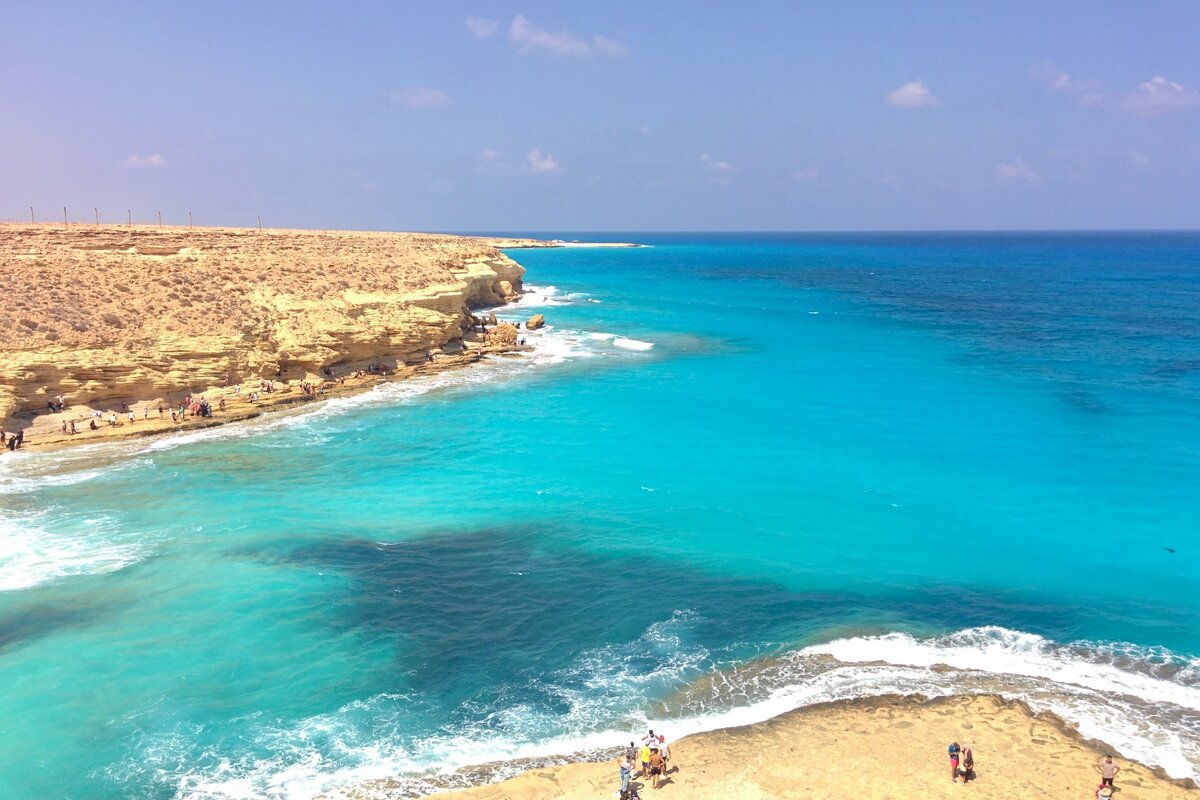
The coast south of the airport is the showcase of why people come to the Red Sea at all: coral gardens right by the hotels, bays with sea turtles and dugongs (Abu Dabbab, Marsa Mubarak), and the Sataya reef with dolphins on boat trips. The hotels stand scattered along a desert shore, so evenings here are quiet. Not worth it if you need rich infrastructure beyond the gate, shopping and nightlife, or if you handle a long drive from plane to hotel badly: the distances here are greater than in Hurghada.
In front of the hotel: the country's best house reefs; turtle and dugong bays nearby
Flight from Warsaw: ~4.5 hrs to Marsa Alam (RMF) + 20–90 min transfer
7 nights / 2 people: PLN 2,800–8,000
Best season: year-round; the south is warmer and more stable
What to do
- Snorkel in Abu Dabbab bay — a chance to meet a sea turtle or a rare dugong straight from the shore
- Take a trip to the Sataya reef (Dolphin House) — snorkelling alongside wild dolphins
- Head into the desert to the Bedouin at sunset — the south suits this better than crowded Hurghada
- Choose a hotel with a good house reef — here it genuinely is the main asset, not a bonus
Two neighbours with a different character stand nearby. Port Ghalib is a compact resort town with a marina right by Marsa Alam airport: handy for those who don't want a long transfer, with yachts and waterside restaurants. El Quseir to the north is an old port town with history and quiet eco-hotels — the choice for those who value intimacy and authenticity over entertainment programmes.
The Sinai: Sharm el-Sheikh, Dahab, Taba and Nuweiba
The Sinai Peninsula means bays sheltered by mountains, Egypt's most famous diving, and a free Sinai stamp instead of a paid visa as long as you don't leave the Sinai. You fly into Sharm el-Sheikh airport (SSH). The weather is a touch drier and more stable, the sea calmer, and the excursions aren't Luxor but Mount Sinai, St Catherine's Monastery and the Ras Mohammed reserve. The stamp's key drawback: it won't get you to Cairo, the pyramids or Hurghada — for that you need a full visa.
Sharm el-Sheikh
"The country's best reefs off the beach, and shelter from the wind"
The Sinai's resort capital is made up of very different districts. Naama Bay is the heart of the nightlife with its bars and promenade; Sharks Bay and Ras Nasrani have hotels with strong house reefs; Nabq offers calmer lagoons, but in places with shallows, seagrass and low tides. Nearby lies the Ras Mohammed reserve, one of the planet's finest dive sites. A bonus for the wallet: flying into the Sinai only, you don't need a visa — you get a free 15-day stamp. Not worth it if you plan to dash off to the pyramids for the day without arranging a full visa, or if you've picked a hotel in Nabq without checking the tides and the entry into the water — it's the most uneven district for beaches.
In front of the hotel: usually a house reef (Sharks Bay, Ras Nasrani); Nabq — lagoons, with caveats
Flight from Warsaw: ~3.5–4.5 hrs to Sharm el-Sheikh (SSH)
7 nights / 2 people: PLN 3,000–8,000
Visa: free 15-day Sinai stamp (no travel beyond the Sinai)
What to do
- Go diving or snorkelling at Ras Mohammed — one of the strongest reefs in the world
- Climb Mount Sinai overnight for the sunrise and look into St Catherine's Monastery
- Check your beach in advance by district: Sharks Bay and Ras Nasrani mean reef, Nabq means lagoons with tides
- Take a trip to the Coloured Canyon or quad-bike into the desert at sunset
Dahab
"Bedouin laid-backness, diving, and prices below Sharm's"
An hour and a half from Sharm's airport hides its complete opposite: a relaxed little town with cushions at the water's edge, small shops, and a reputation as a mecca for divers and kitesurfers. Here you'll find the famous Blue Hole for experienced divers and a shallow lagoon for novice kiters, and the atmosphere is unhurried, without giant all-inclusives. The hotels are simpler and cheaper than in Sharm, the crowd — independent travellers and the young. Not worth it if you need the classic five-star format with a water park and entertainers: Dahab's strength is precisely its intimacy and freedom, not hotel polish.
In front of the hotel: house reefs and a promenade; a shallow lagoon for kiting
Flight from Warsaw: ~3.5–4.5 hrs to Sharm (SSH) + ~1–1.5 hrs transfer
7 nights / 2 people: PLN 3,000–7,000
Visa: free 15-day Sinai stamp
Taba and Nuweiba
"The Sinai's quiet north, with mountains at the water's edge"
At the north of the Gulf of Aqaba, by the border with Israel and Jordan, lie the Sinai's most secluded resorts. Taba Heights is a compact resort zone with hotels at the foot of the mountains and a view of four countries at once from the heights. Nuweiba is quieter and simpler still — long empty beaches and Bedouin camps. People come here for silence and nature, not for buzz. Not worth it if developed infrastructure, shopping and restaurant variety matter to you: the choice here is more modest, and the transfer from Sharm noticeably longer. Direct charters to Taba's airport are irregular; most people come via Sharm.
And if you want more than the sea
The Red Sea means beach and reef, but not history. If the pyramids and antiquity call, there are three scenarios that combine well with the sea.
- Cairo and the pyramids + the Grand Egyptian Museum. Since 2025–2026 the Grand Egyptian Museum (GEM) by the Giza plateau has been fully open — the world's largest museum devoted to a single civilisation, with the complete Tutankhamun collection. A 2–3 day trip from Hurghada is realistic, or a separate block before or after the sea. Important: a Sinai stamp won't get you to Cairo — you need a full visa.
- A Nile cruise (Luxor — Aswan). The classic, with the temples of Karnak, the Valley of the Kings and Abu Simbel. The best months are October–April; in summer Luxor and Aswan hit +40–45°C. Combines with the sea in Hurghada.
- The Mediterranean: Marsa Matruh and Alexandria. A completely different Egypt — white sand and turquoise Mediterranean water, but the season is summer only (June–September), and the infrastructure caters mostly to locals. An option for those who want a beach without a reef and have already seen the Red Sea.
Quick comparison of the resorts
Figures are indicative, for a 7-night trip for two. The key columns: what's in front of the hotel and which airport you come through.
| Resort | In front of the hotel | Airport / flight | 7 nights / 2 people | For whom |
|---|---|---|---|---|
| Hurghada | Sand/mixed | HRG ~4–4.5 hrs | PLN 2,800–7,000 | First time, budget, everything close |
| El Gouna | Sand, lagoons | HRG + 30 min | PLN 4,500–12,000 | Quiet, pricier, kiting |
| Makadi Bay | House reef | HRG + 40 min | PLN 3,500–9,000 | Snorkelling, families |
| Sahl Hasheesh | House reef, depth | HRG + 30–40 min | PLN 4,000–11,000 | Premium, diving |
| Soma Bay / Safaga | Lagoon + reef, wind | HRG + 50–60 min | PLN 3,500–9,500 | Kiting, sport, mixed |
| Marsa Alam | The best house reefs | RMF ~4.5 hrs | PLN 2,800–8,000 | Reefs, dugongs, quiet |
| Sharm el-Sheikh | Reef (district matters) | SSH ~3.5–4.5 hrs | PLN 3,000–8,000 | Diving, no visa needed |
| Dahab | Reef + lagoon | SSH + 1–1.5 hrs | PLN 3,000–7,000 | Laid-back, diving, budget |
| Taba / Nuweiba | Reef, quiet | SSH/TCP, longer | PLN 3,000–7,500 | Seclusion, nature |
For a house reef off the sunbed — Makadi Bay, Sahl Hasheesh and Marsa Alam. For a sandy lagoon with children — El Gouna and parts of Hurghada. For diving and a free visa — the Sinai. For the best-preserved nature — the deep south. And if you're unsure and it's your first time — Hurghada forgives a hotel mistake more readily than the specialist resorts.
Pre-booking checklist:
- Decide first: reef or sand. This determines whether the holiday matches what you picture — check the water entry at the specific hotel, not just the resort.
- Check the seabed and the jetty: a "coral reef" sometimes means the only way into the water is via a walkway, which is awkward for small children and weaker swimmers.
- Factor in the wind: Hurghada, El Gouna and Safaga are windy (a plus for kiting, a minus for a still beach day); Makadi Bay, Sahl Hasheesh and Marsa Alam are calmer.
- Choose the season to suit you: winter — sun, but cool evenings and bracing water; summer — cheap, but +38–40°C; October and April–May — the golden mean.
- Settle the visa question early: Sinai only — the free stamp; the mainland (Hurghada, Marsa Alam) and any trips to Cairo/Luxor — a full visa.
- Take out travel insurance covering water activities if you plan to dive or snorkel at the reef.
Common mistakes:
- Booking "5* all inclusive" without looking at the water entry. A reef under a jetty and a sandy lagoon are different holidays. Half the disappointments with Egypt come from exactly this.
- Going to Sharm planning "a day trip to Cairo" on a Sinai stamp. The stamp won't let you out of the Sinai — for Cairo and the pyramids you need a full visa, arranged in advance.
- Planning long midday swims on an open Hurghada beach in winter. The days are sunny, but the evenings are cool and windy, and +22°C water is bracing; pack a windbreaker and pick a sheltered bay.
- Underestimating the summer heat. In July–August the coast hits +38–40°C. The sea is superb, but Luxor excursions and long daytime walks become an ordeal.
- Ignoring the swimming-zone rules. Rare shark incidents have occurred in open water in recent years — swim in the marked zones, don't go beyond the buoys, and don't feed the fish.
- Choosing Marsa Alam without allowing for the long transfer. The reefs here are the best, but the drive from airport to hotel can take 60–90 minutes — bear that in mind with children.
Entering Egypt: what to know
Virtually all foreign tourists need a visa for Egypt — what matters is your nationality and passport, not your residence documents: neither a Schengen visa nor a Polish residence permit plays any role here. Your passport must be valid for at least 6 months.
- The standard tourist visa: arranged online in advance (e-visa, about USD 25, up to 30 days) or on arrival at the airports of Hurghada, Sharm, Marsa Alam and Cairo. Since 1 March 2026 the visa on arrival has risen to about USD 30, payable in cash in dollars. The online visa spares you the airport queue. This applies to EU/EEA citizens too.
- The free Sinai stamp (Sinai Only): if you fly only into Sharm el-Sheikh airport and stay exclusively in the South Sinai resorts (Sharm, Dahab, Nuweiba, Taba) for up to 15 days, you can skip buying a visa — you receive a free stamp. It does not allow travel beyond the Sinai: not to Cairo, not to Luxor, not to Hurghada.
- Non-EU residents of Poland: also arrange an Egyptian visa according to their passport nationality (e-visa in advance or visa on arrival). Eligibility for the free Sinai stamp depends on nationality, so confirm it beforehand; when in doubt, the e-visa is the safer route. Rules and fees change, so check the current requirements for your passport on Egypt's official e-visa portal or with a consulate before travelling.
The verdict
Which Egyptian resort should you choose?
If it's your first time and you want a safe bet — Hurghada: cheap, everything close by, and it forgives a hotel mistake more readily than anywhere else. For snorkelling and a house reef off the sunbed — Makadi Bay or Sahl Hasheesh; for the best reefs and quiet — Marsa Alam. With children, for a calm sandy entry — El Gouna or a well-chosen sandy-beach hotel in Hurghada. For world-class diving without the visa fuss — Sharm and the Sinai, where the free stamp applies. For unhurried laid-backness on a budget — Dahab. And if you want to pair the sea with the pyramids and the new Grand Egyptian Museum — pick a mainland resort and budget for a separate visa for Cairo.
One last tip:
The best months for Egypt in 2026 are October, April and May: the sea at +26°C, the heat not yet or no longer punishing, prices moderate. Choose winter for the sun while Poland freezes — but be ready for cool, windy evenings and bracing water; and choose summer only if the sea itself and the low price matter more to you than walking about in full sun.

 Holidays


 Last minute
 Hotels


 Blog
Blog