In Tunisia you can have breakfast by the sea, reach the dunes of the Sahara by lunchtime, and stand inside a Roman amphitheatre that hosted gladiator fights almost 1,800 years ago by evening. It doesn't work that way in Greece, Croatia, Spain, or even neighbouring Egypt: there, the beach is one holiday and the desert or ancient ruins are a separate trip to a different point on the map. The country itself isn't uniform either: on the island of Djerba in the south the swimming season already starts in May, while on the mainland Sahel coast it only begins in June. And there's one detail that surprises almost every first-timer: the Tunisian dinar can't be brought into the country or taken back out — it's one of the most closed currencies in the world.
Below we break down Tunisia's coast from north to south — from green Tabarka to warm Djerba — and explain what actually sets Hammamet, Sousse, Monastir, Mahdia and the other resorts apart, beyond the hotel's star rating. Separately: what you can add to the beach — the Sahara, Carthage, or the amphitheatre at El Jem. And the honest practical details: how long the flight from Poland takes, what entry requirements look like, the resort tax, and what's actually going on with safety in the country in 2026.
- First time in Tunisia, a safe bet → Hammamet
- Wide hotel choice and value → Sousse, Monastir
- Quiet, authentic, no big resort zones → Mahdia
- Families with children, the warmest and longest sea → Djerba
- Thalassotherapy and spa → Hammamet, Sousse, Djerba
- Diving, golf and a completely different Tunisia → Tabarka
- Beach plus the Sahara in one trip → The Sahara
- Beach plus antiquity → Carthage and El Jem
- Nightlife → Sousse (Port El Kantaoui)
- Compare everything at once → Comparison
Tabarka: the green north for divers and golfers
"Coral, pine trees and jazz instead of palms and all-inclusive"
At the very north of the country, near the Algerian border, Tunisia looks nothing like its tourist photos: pine forests run straight down to a rocky shore, rainfall is many times higher than on the Sahel, and instead of loud hotel complexes there's a fishing town with a Genoese fortress on an island. Tabarka is the only place in the country with genuine coral: the local branch of red coral has been harvested here for centuries, and today the coastal reefs are one of the few spots in the Mediterranean where diving is interesting for more than just wrecks. A well-known golf course with sea and mountain views operates nearby, and in summer the town comes alive for a long-running jazz festival.
| Month | Air (day) | Night | Sea |
|---|---|---|---|
| May | +21–23°C | +13–15°C | +17–18°C |
| June | +25–27°C | +16–18°C | +20–21°C |
| July | +29–31°C | +19–21°C | +23–24°C |
| August | +30–32°C | +20–22°C | +24–25°C |
| September | +26–28°C | +17–19°C | +23–24°C |
Flight from Warsaw: direct charters are practically non-existent; usually via Tunis (TUN) or Enfidha (NBE), ~3 hrs, plus a 2–2.5 hr road transfer
7 nights / 2 people: PLN 2,800–6,000, with a noticeably smaller range of offers than the other resorts
Best season: June–September for the beach; a jazz festival in summer
Who is it for
Tabarka is a choice for divers, golf enthusiasts, and anyone who's already seen the standard Tunisian all-inclusive and wants something different from the country: greenery instead of palms, quiet instead of entertainment staff. Not worth it if you want a direct flight with no connections and a wide hotel choice: the logistics here are awkward and the number of package offers is noticeably smaller than in Hammamet or Sousse.
What to do
- Dive or snorkel the local coral reefs — visibility and seabed relief rare for the Mediterranean
- Play a round of golf on the course overlooking the sea and the Khroumirie mountains
- Visit the Genoese fortress on the rocky island connected to shore by a causeway
- Head into the Ain Draham mountains (40 minutes) — cork oaks and a climate that feels more like the foothills of the Alps than Africa
Hammamet and Cap Bon: Tunisia's showcase
"The genre classic — and precisely why it's a safe first choice"
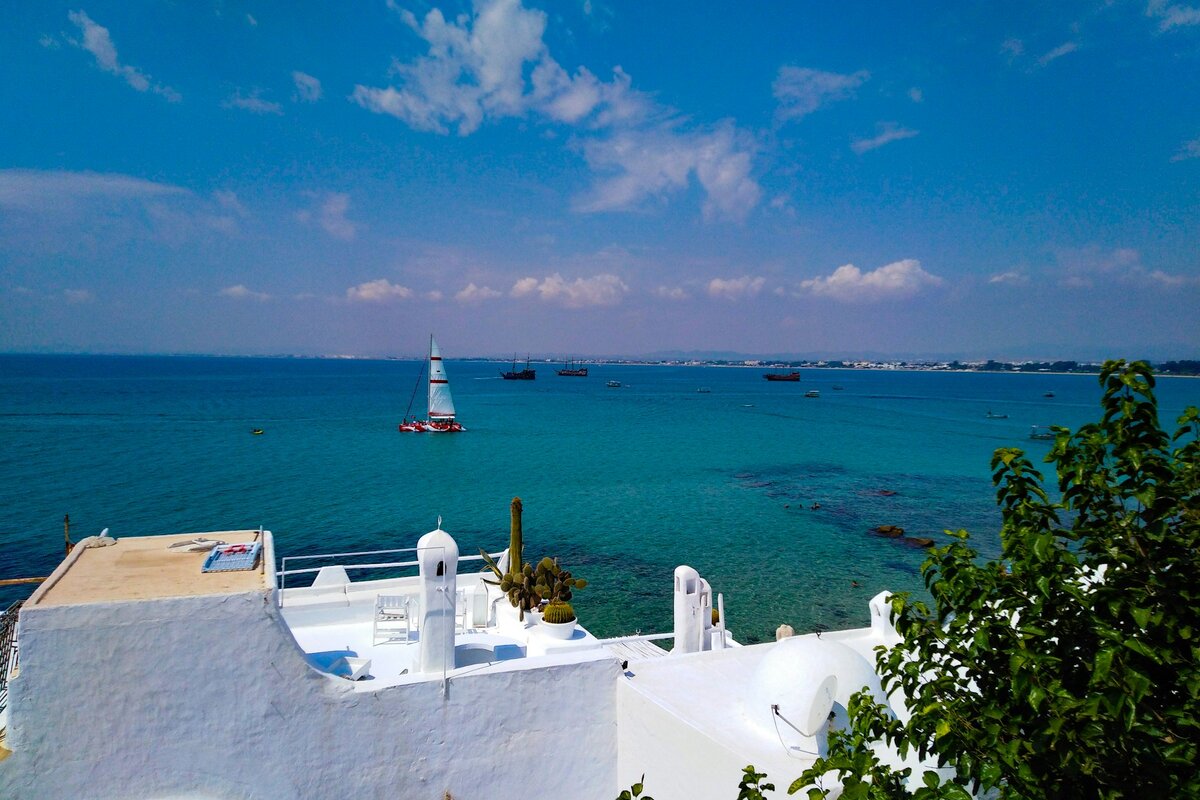
On the Cap Bon peninsula, half an hour from Enfidha airport, sits the resort where mass tourism to Tunisia began for many Europeans back in the 1960s. Hammamet's old medina is one of the most compact and lively in the country, with a fortress-kasbah right above the sea; a modern resort zone with broad sandy beaches and dozens of all-inclusive hotels has grown up around it. A few kilometres south lies Yasmine Hammamet — a newer, more orderly district with a marina, golf courses, and the country's highest concentration of five-star thalassotherapy hotels: Tunisia has long been one of the world's centres for this form of seawater spa, and there are more such centres per square kilometre here than anywhere else.
| Month | Air (day) | Night | Sea |
|---|---|---|---|
| May | +24–26°C | +14–16°C | +18–19°C |
| June | +28–30°C | +18–20°C | +21–22°C |
| July | +31–33°C | +21–23°C | +25–26°C |
| August | +32–34°C | +22–24°C | +26–27°C |
| September | +28–30°C | +19–21°C | +25–26°C |
Flight from Warsaw: ~2 hrs 45 min – 3 hrs 15 min to Enfidha (NBE), transfer 30–70 min
7 nights / 2 people: PLN 3,000–8,000, higher in Yasmine Hammamet and thalasso hotels
Best season: June and September — comfortable heat without the peak; July–August brings the Hammamet International Festival
Who is it for
The best option for anyone visiting Tunisia for the first time and wanting a tried-and-tested formula: a medina within walking distance, a broad sandy beach, a huge choice of hotels for any budget, and a short transfer from the airport. Yasmine Hammamet suits couples travelling specifically for thalassotherapy. Not worth it if dense resort development and large numbers of tourists bother you — Hammamet is one of the country's most heavily visited resorts, and in July–August you feel it everywhere.
What to do
- Walk through Hammamet's medina to the 15th-century kasbah on the cliff above the sea — go up in the morning before the souvenir shops open
- Book a thalassotherapy treatment at one of the Yasmine Hammamet hotels even if you're not staying there — many centres accept guests from other resorts
- Play a round of golf at one of the Yasmine Hammamet courses overlooking the bay
- Head to Nabeul (15 minutes) for the pottery market — the historic centre of Tunisian ceramics, cheaper and with more variety than the shops on the seafront
The Sahel: Sousse, Monastir and Mahdia — one coast, three different resorts
South of Cap Bon begins the Sahel — a historic coast of olive plantations now built up with three resorts that share almost identical climates but completely different characters: Sousse runs on nightlife and a UNESCO medina, Monastir is calmer and tied to the country's first president, and Mahdia remains largely untouched by mass tourism. The weather difference between them is minimal, so here's one shared table for all three:
| Month | Air (day) | Night | Sea |
|---|---|---|---|
| May | +23–25°C | +14–16°C | +18–19°C |
| June | +27–29°C | +18–20°C | +21–22°C |
| July | +30–32°C | +21–23°C | +25–26°C |
| August | +31–33°C | +22–24°C | +26–27°C |
| September | +27–29°C | +19–21°C | +25–26°C |
Sousse
"A UNESCO medina plus Tunisia's liveliest nightlife"
The country's third-largest city and the Sahel's main resort hub: Sousse's medina is one of the best-preserved in Tunisia, fully enclosed by 9th-century walls and UNESCO-listed together with the ribat fortress, which offers a view over the whole old town. North of the centre stretches Port El Kantaoui — a resort marina built from scratch in the 1970s with yachts, a golf course, and the highest concentration of nightclubs, operating almost like a town within a town. Sousse's beaches are broad and sandy, with a gentle entry along almost their entire length.
Flight from Warsaw: ~2 hrs 45 min – 3 hrs 20 min to Enfidha (NBE) or Monastir (MIR), transfer 20–45 min
7 nights / 2 people: PLN 2,500–6,500
Best season: June and September; July–August brings the Sousse International Festival with concerts
Who is it for
A good choice for those who want to combine the beach, an affordable price and a genuine medina with history, with bars and clubs in Port El Kantaoui in the evening. One of the best price-to-infrastructure ratios in the country. Not worth it if you need quiet: central Sousse is a dense resort city with heavy traffic and the highest concentration of tourists on the Sahel.
What to do
- Walk through Sousse's medina and climb the 8th-century ribat fortress — the view over the town and sea from the walls is worth it
- Visit the Sousse Archaeological Museum — the country's second most important collection of Roman mosaics after the Bardo Museum in Tunis
- Spend an evening in Port El Kantaoui: a marina full of yachts, waterside restaurants and clubs open late
- Take a day trip to El Jem (40–50 minutes) for the Roman amphitheatre — it's a more logical base for this than Djerba
Monastir
"Calmer than Sousse, with its own airport and a president's mausoleum"
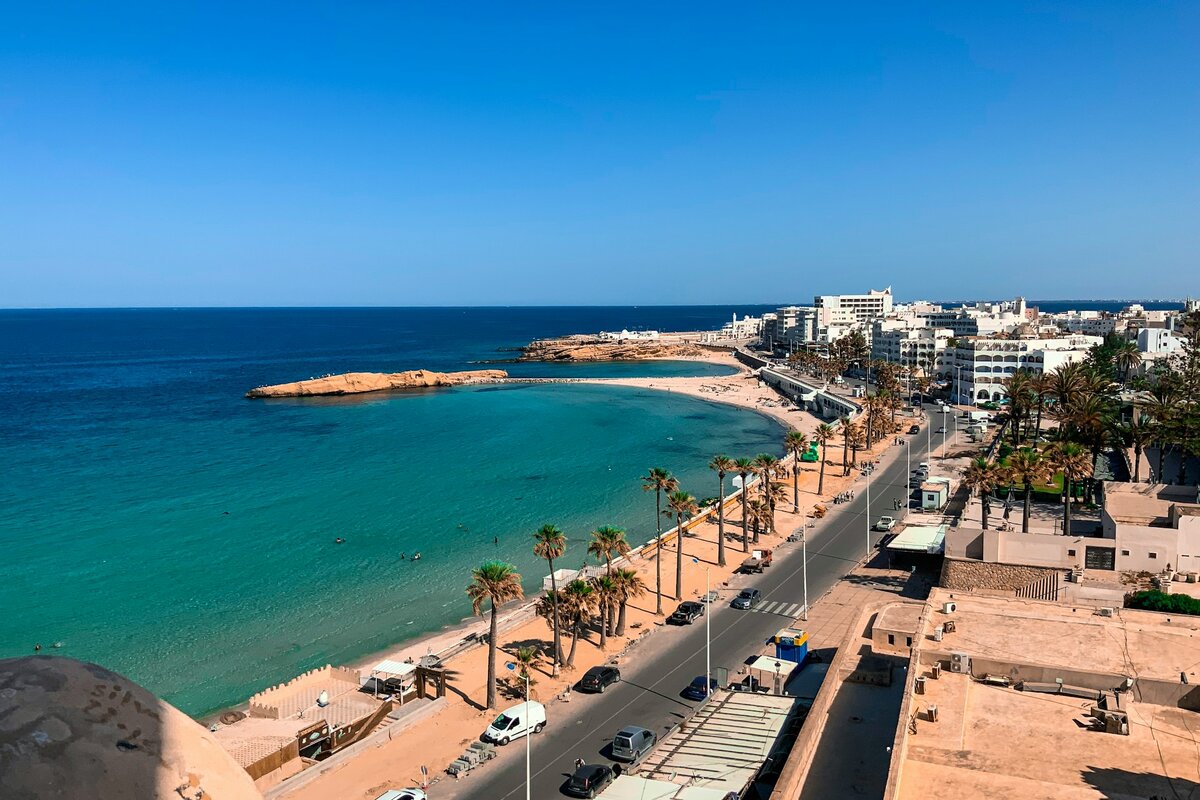
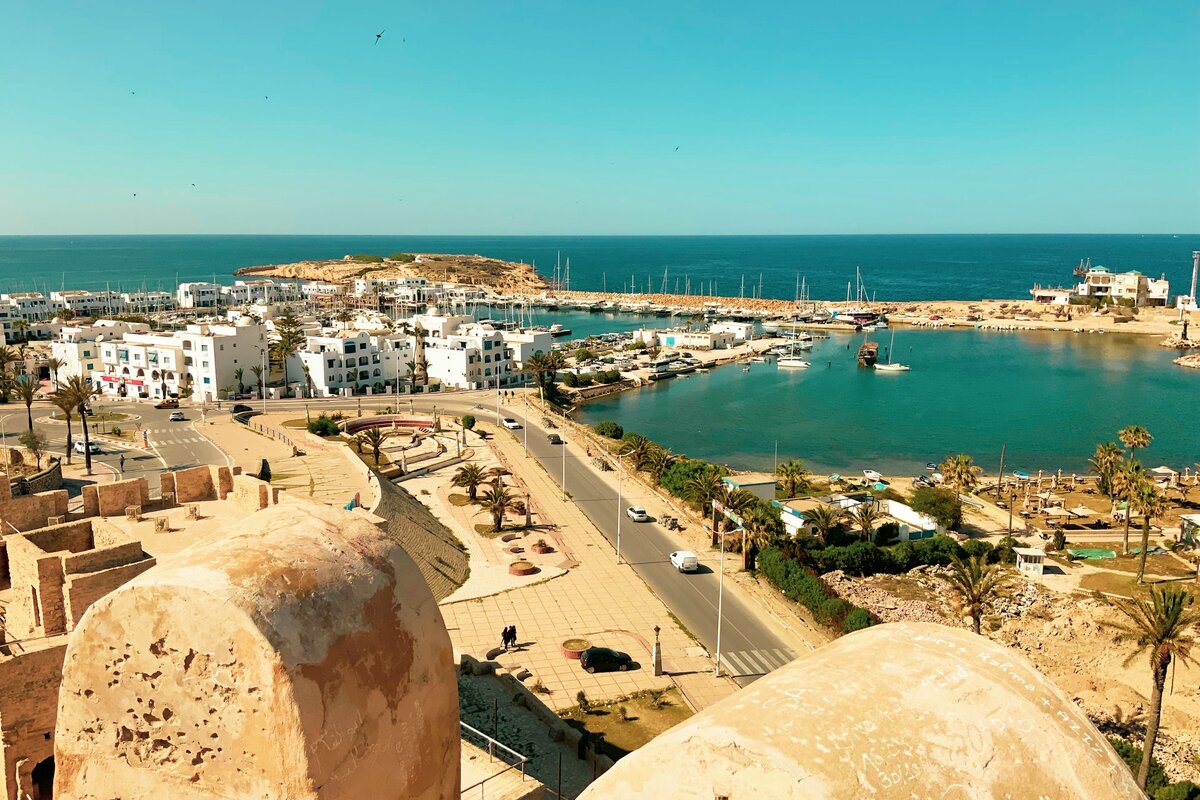
Twenty minutes south of Sousse lies the city where Habib Bourguiba, the first president of independent Tunisia, was born: his gold-domed mausoleum is one of the country's most recognisable buildings, built directly into a medieval ribat fortress on the shore. Monastir is noticeably calmer than neighbouring Sousse — fewer nightclubs, more family hotels — and its own international airport means many hotels barely need a transfer at all. A university campus and a town marina give Monastir a more local, less touristy feel than Hammamet's resort zones.
Flight from Warsaw: ~2 hrs 40 min – 3 hrs 10 min direct to Monastir (MIR), transfer often 10–20 min
7 nights / 2 people: PLN 2,800–6,500
Best season: June–September; May and October are milder but cooler for swimming
Who is it for
Suits those who want a beach holiday calmer than Sousse's but with a minimal gap between the plane steps and the sunbed — the airport sits almost within the town. Good for families and anyone who values a university-town feel over a fully touristy one. Not worth it for lively nightlife — on that front Monastir falls well short of Sousse and Port El Kantaoui.
What to do
- Visit the Bourguiba Mausoleum and the ribat fortress — one of Tunisia's most recognisable architectural ensembles
- Stroll Monastir's marina in the evening — more compact and calmer than Port El Kantaoui, but with the same waterfront atmosphere
- Walk to the beaches north of the centre — sandy, gently sloping, and less crowded than in Sousse
- Take a taxi to Sousse (20 minutes) for the evening if you want more buzz than Monastir itself offers
Mahdia
"A fishing town mass tourism hasn't fully reached yet"
An hour's drive south of Monastir lies a town that began as the fortified capital of the Fatimid caliphs in the 10th century and today lives chiefly off fishing — Mahdia remains one of the country's largest fishing ports. The peninsula with the medina at its tip is surrounded by sea on three sides, and the Great Mosque — a reconstructed copy of the 10th-century original — stands right by the Skifa el-Kahla fortress gate. The resort zone beyond the medina is more modest and lower-rise than in Sousse or Hammamet, and the beaches are among the country's most beautiful natural coves, with fine white sand.
Flight from Warsaw: ~2 hrs 45 min – 3 hrs 15 min to Monastir (MIR) + 45–60 min transfer
7 nights / 2 people: PLN 2,600–6,000
Best season: June–September; fewer tourists even at peak than in Sousse
Who is it for
A good choice for those who want a Tunisian beach without the density of the big resorts: the medina lives its own life, the port is full of genuine fishing boats, and tourist infrastructure doesn't overwhelm the town. Suits couples and anyone who's already been to Hammamet or Sousse and wants something more authentic. Not worth it if a wide choice of hotels, water parks and evening entertainment matters to you — the options here are noticeably narrower than elsewhere on the Sahel.
What to do
- Walk through the Skifa el-Kahla fortress gate into the medina and climb the walls for a view of two seas at once
- Visit the fishing port early in the morning as the boats return with their catch — the town's liveliest, least touristy scene
- Swim at the beach near the lighthouse — one of the cleanest on the Sahel
- Buy fresh fish on the quay and ask one of the port restaurants to cook it — a normal local practice, not a tourist trick
Djerba and the south: warm sea and a different culture
"Tunisia's Maldives" — and an island with its own religious history
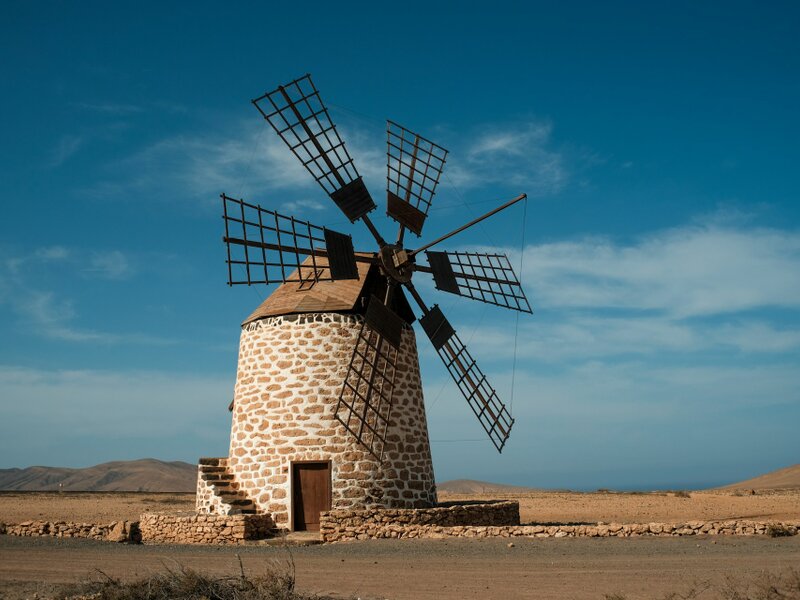
The southernmost of the country's major resorts is an island reachable by a causeway from the mainland or a short direct flight. The beaches here are the longest in the country — up to 1.5 km of clean, fine sand with a gentle entry well suited to children — and thanks to its more southerly latitude the swimming season starts a month earlier than on the Sahel and finishes later. Beyond the beach, Djerba is the only place in Tunisia with a living Jewish community: the El Ghriba synagogue in the village of Hara Sghira is among the oldest in Africa, and pilgrims from around the world gather here every spring. The island's whitewashed cube houses, windmills and olive groves look nothing like mainland architecture, and the Djerbahood district in the island's main town, Houmt Souk, is an open-air street art gallery where dozens of artists have painted the walls of abandoned houses.
| Month | Air (day) | Night | Sea |
|---|---|---|---|
| May | +25–27°C | +16–18°C | +20–21°C |
| June | +29–31°C | +20–22°C | +24–25°C |
| July | +32–34°C | +23–25°C | +26–27°C |
| August | +33–35°C | +24–26°C | +27–28°C |
| September | +29–31°C | +21–23°C | +26–27°C |
Flight from Warsaw: ~3 hrs 10 min – 3 hrs 45 min to the island (DJE), transfer often shorter than on the mainland
7 nights / 2 people: PLN 3,200–9,000, higher at thalasso hotels
Best season: May–October — the longest swimming season in the country
Who is it for
The best choice for families with children and anyone wanting the warmest, longest beach summer in Tunisia: wide sand, a gentle entry, large all-inclusive hotels with kids' clubs. Also good for those interested in more than just the beach — the island lives differently from the mainland. Not worth it if you want lively nightlife or a wide choice of excursions beyond the island: reaching mainland antiquity from Djerba means either a long drive or a separate flight.
What to do
- Visit the El Ghriba synagogue in Hara Sghira — the continent's oldest active Jewish place of worship, free entry but with an ID check
- Wander the Djerbahood street art district in Houmt Souk — hundreds of murals on residential walls, free at any time of day
- Visit the potters' village of Guellala — the island's centre of traditional ceramics, with working workshops
- Take a boat out to the reef off Cap Taguermess or to Flamingo Island for snorkelling and birdlife
Zarzis, 40 minutes south of Djerba on the mainland, is a quieter, noticeably less touristy alternative with a similar climate and its own olive groves along the shore: the choice for those who want the south of Tunisia without the island and without large hotel complexes. Holidays in Zarzis.
And if you want more than the sea
Tunisia is the only country in this series of guides where you can literally bolt the desert and antiquity onto the beach, without changing time zone and with barely any lost holiday days. Here are three scenarios that pair well with a beach stay.
- The Sahara: Tozeur, Douz, Matmata. From the coast to genuine desert is 3–5 hours by car or organised tour, depending on your starting point (closest from Djerba). Tozeur is an oasis town with date plantations and a maze of old brick architecture; Douz is known as the "gateway to the Sahara" — camel caravans set off from here into the Grand Erg Oriental; Matmata is a Berber village of cave dwellings dug directly into the rock, including the one that became Luke Skywalker's home in the first Star Wars film in 1977. The best time is spring and autumn; in summer the daytime desert heat turns the trip into an ordeal, and in winter the camp nights are cold. By law, trips into the desert and border regions of the south require a licensed guide — a condition automatically met on an organised tour.
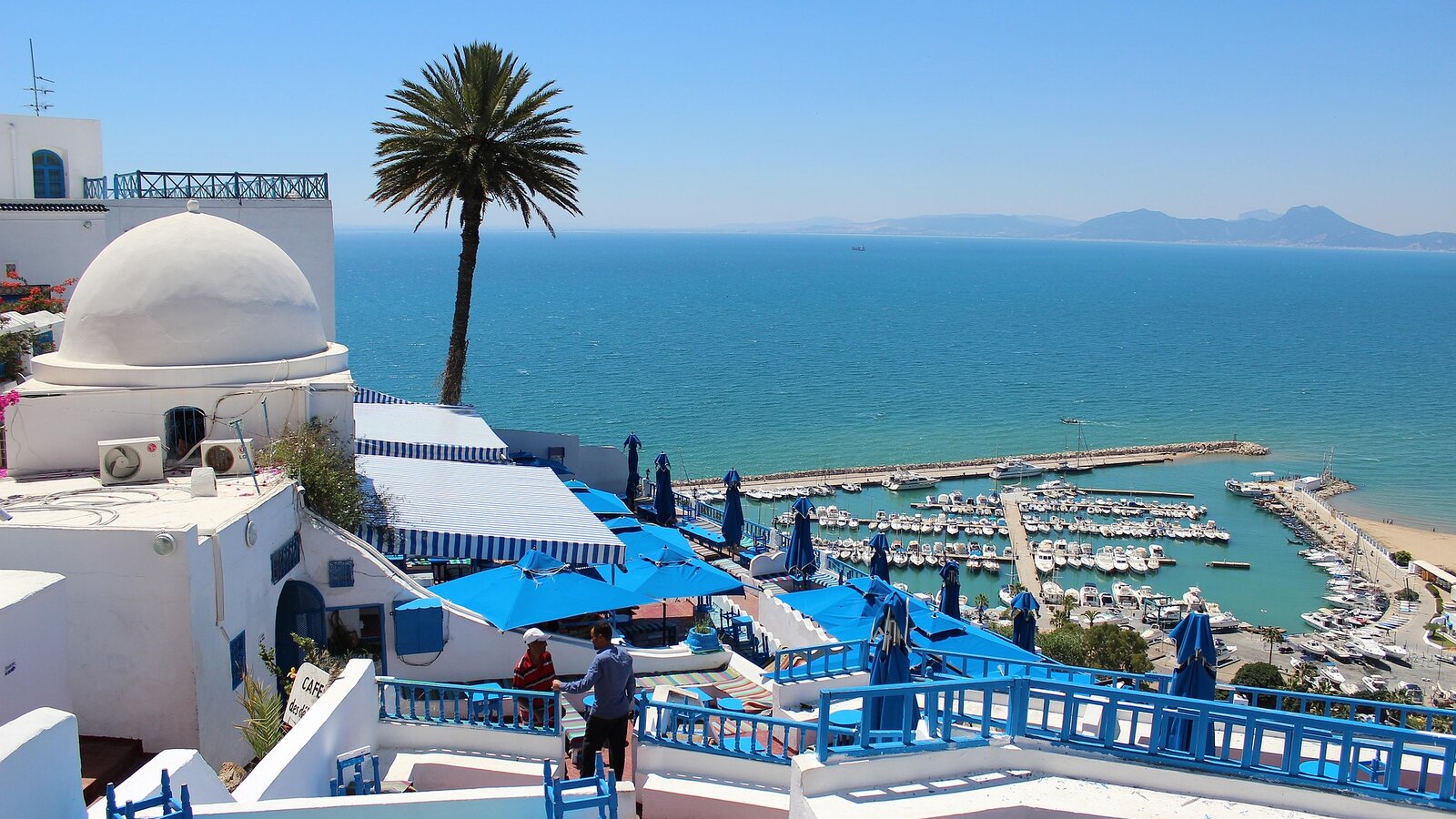
- Carthage, Tunis and Sidi Bou Said. The capital, home to the Bardo Museum with one of the world's richest collections of Roman mosaics, the ruins of ancient Carthage half an hour from the centre, and the whitewashed, blue-shuttered village of Sidi Bou Said on a clifftop above the bay — a popular combination for a one- or two-day trip from the Sahel coast, usually with an overnight stay in Tunis itself.
- The El Jem amphitheatre. One of the largest and best-preserved Roman amphitheatres outside Italy, built in the 3rd century and holding around 30,000 spectators — considerably more than the population of the Roman town of Thysdrus itself at the time. Closest from Sousse or Monastir (40–50 minutes), and in summer the International Symphonic Music Festival is staged right on the arena floor.
Quick comparison of the resorts
Figures are indicative, for a 7-night trip for two.
| Resort | For whom | Sea in August | Flight from Warsaw | 7 nights / 2 people | Best season |
|---|---|---|---|---|---|
| Tabarka | Diving, golf, quiet | +24–25°C | ~3 hrs + 2–2.5 hrs transfer | PLN 2,800–6,000 | June–September |
| Hammamet | First time, thalasso | +26–27°C | ~2 hrs 45 min – 3 hrs 15 min | PLN 3,000–8,000 | June, September |
| Sousse | Medina, nightlife | +26–27°C | ~2 hrs 45 min – 3 hrs 20 min | PLN 2,500–6,500 | June, September |
| Monastir | Calm, short transfer | +26–27°C | ~2 hrs 40 min – 3 hrs 10 min | PLN 2,800–6,500 | June–September |
| Mahdia | Authenticity, fishing town | +26–27°C | MIR + 45–60 min transfer | PLN 2,600–6,000 | June–September |
| Djerba | Families, warmest sea | +27–28°C | ~3 hrs 10 min – 3 hrs 45 min | PLN 3,200–9,000 | May–October |
| Zarzis | South without the island, value | +27–28°C | DJE + 40–60 min transfer | PLN 2,600–5,500 | May–October |
Pre-booking checklist:
- Choose the resort by character, not just the hotel's star rating: Hammamet is the all-round, tried-and-tested option, Sousse pairs a medina with nightlife, Monastir is calmer with a short transfer, Mahdia offers authenticity, Djerba has the warmest sea and a family format, Tabarka is diving and golf off the beaten track.
- Check entry requirements for your specific passport before booking — EU citizens enter visa-free, but for several non-EU nationalities the visa requirement depends entirely on the passport, not on Polish residency status.
- Exchange currency only on arrival — at a bank, hotel or airport — and keep the exchange receipt: without it you won't be able to change leftover dinars back into euros or dollars.
- Budget for the resort tax — 8–12 Tunisian dinars per person per night depending on the hotel's star rating, paid locally, capped at 10 nights.
- Plan the Sahara as a separate organised tour with a licensed guide rather than a self-drive trip — it's not just more convenient logistically, it's a legal requirement for the southern and border regions.
- Check your passport's validity — at least 6 months from your departure date — and that you have a few blank pages for stamps.
Common mistakes
- Treating all Tunisian resorts as interchangeable. Hammamet, Sousse and Djerba differ from each other more than the hotel photos suggest — the atmosphere, infrastructure and even the swimming season all vary.
- Trying to fit the Sahara into a single day from the mainland coast. Genuine desert is a minimum 3–4 hours each way from the Sahel; it's only closer from Djerba, and even from there it's a full day or two, not a quick excursion.
- Forgetting to exchange leftover dinars before flying home. Tunisian currency cannot be taken out in any amount — unexchanged money is simply confiscated at the border.
- Assuming entry rules are the same for every non-EU passport. The conditions differ in the details depending on nationality — check the current rules for your specific passport with the tour operator or consulate before booking.
- Planning a Sahara excursion for July–August. Daytime desert heat at the height of summer turns the trip into an ordeal rather than a pleasure — spring and autumn suit it far better.
- Walking around outside the resort zone in beachwear or drinking alcohol in the street. Alcohol is legal in hotels and licensed venues but not in public places; outside the hotel zones, dressing more modestly than on the beach is the norm.
Entering Tunisia: what to know
Tunisia is not part of the Schengen Area, so the rules are quite different from Greece, Croatia or Spain: what matters is your nationality and passport, not a Schengen visa or a Polish residence permit — neither has any bearing here.
- EU/EEA citizens: visa-free entry for up to 90 days on a valid passport (validity of at least 6 months from the departure date is advisable, though the formal requirement can be shorter).
- Non-EU residents of Poland: whether a visa is needed depends entirely on the nationality shown in your passport, not on your Polish residence permit or any residence document. A number of nationalities (including Ukraine, Belarus, and several other countries) can enter visa-free as part of an organised package tour with a round-trip charter flight and a hotel voucher; most other nationalities generally need to arrange a visa through a Tunisian consulate in advance.
Rules change, so confirm the final requirements for your specific passport and route with your tour operator or the Tunisian consulate before travelling.
 The verdict
Which Tunisian resort should you choose?
If it's your first time and you want a safe formula, choose Hammamet: a medina, a beach and a huge choice of hotels half an hour from the airport. For a UNESCO medina and nightlife, choose Sousse; for the same atmosphere but calmer, Monastir. For an authentic fishing town without the crowds, Mahdia. For families and anyone wanting the country's warmest, longest sea, Djerba — which also offers a culture quite unlike the mainland's. For divers and golfers who've already seen standard Tunisia, green Tabarka in the north. And if you're planning to pair the beach with the Sahara or Carthage, set aside a separate day or two for it: that works best from Djerba or the Sahel respectively.
One last tip:
The best time for most Tunisian resorts is June and September: the sea is already or still warm, the heat isn't punishing, and prices are noticeably below the July–August peak. Keep spring and autumn in mind separately for the Sahara, and feel free to add May and October for Djerba — thanks to its more southerly latitude, the swimming season there runs several weeks longer than on the rest of the coast.

 Holidays


 Last minute
 Hotels


 Blog
Blog