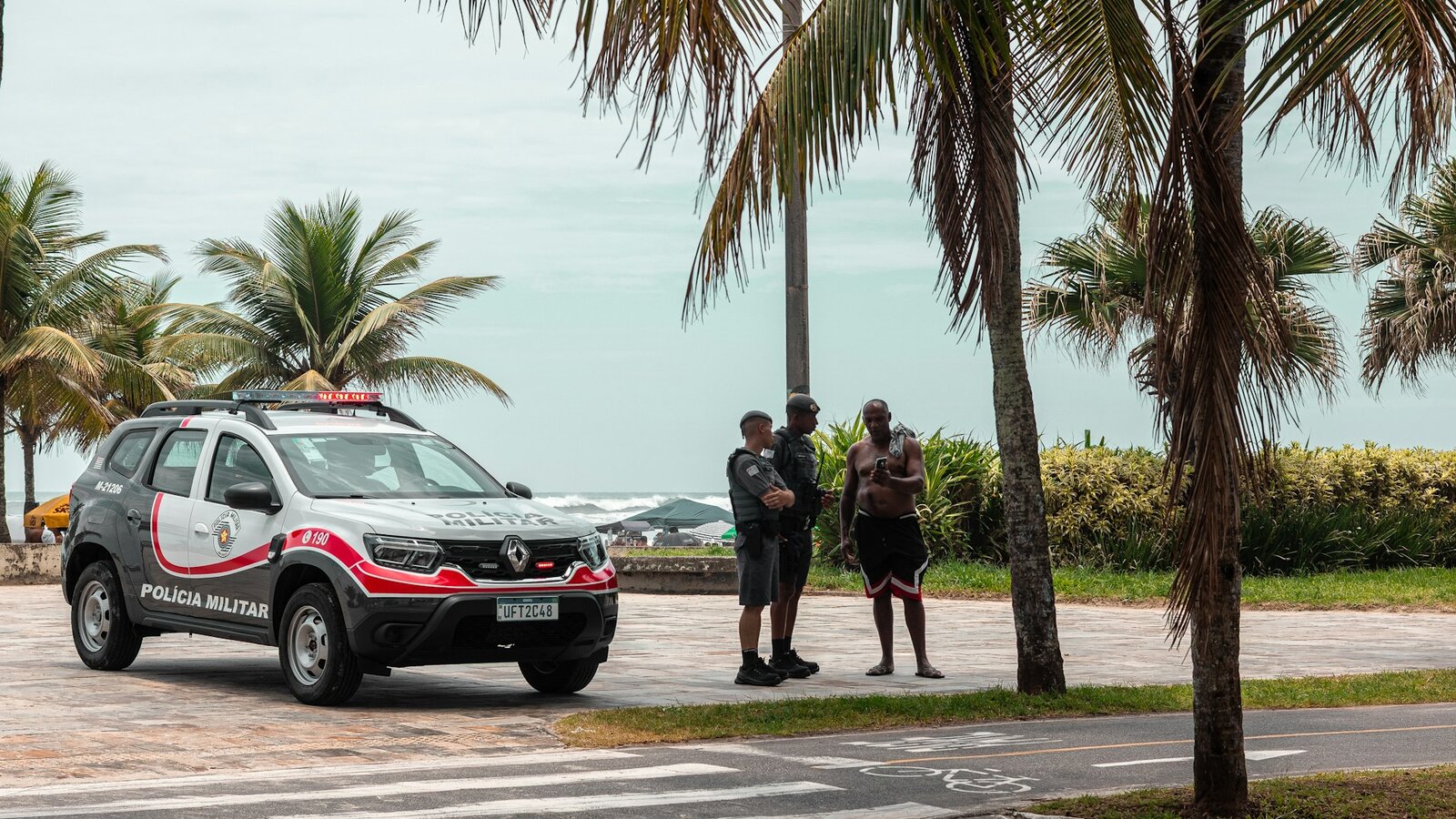
A European beach fine is almost never for something that looks like an offence. People get fined for a towel laid on the wrong mat, for a speaker playing music, for walking from the sea to the hotel in just a swimsuit, and for a parasol left on the sand at 8am to hold a spot. These are everyday actions that raise no questions at home, which is exactly why nobody checks them before travelling. The second feature is that these fines are usually issued on the spot, and belongings - a speaker, a parasol, a sunbed - can be confiscated immediately, with no negotiation and no discussion.
Below is a breakdown by type of situation rather than by country: what catches people out most often first, then the rarer cases. For each one: where it applies, what it costs, and exactly what counts as a violation. We've also gathered what's rarely mentioned elsewhere: taking sand and shells home, drones over the beach, camping overnight, plus tourist taxes, which aren't fines but are paid on the spot and rose in 2026. At the end: a summary table by country, a checklist, and what to do if you're actually stopped.
Table of contents
- Why there are more rules now
- Swimwear off the beach - the most common one
- Parasols, tents and towels: where the equipment itself is restricted
- Reserving a spot in the morning: fines and confiscation
- Smoking and vaping on the sand
- Music and speakers: the biggest sums
- Using the sea as a toilet: yes, that's fined too
- Animals on the beach
- What's rarely mentioned: sand, drones, tents
- Tourist taxes: not a fine, but you'll still pay
- What to do if you're fined
- Summary table by country
Why there are more rules now
The tightening of rules in recent years isn't a crackdown on tourists as such - it's a response to two specific problems. The first is the strain on coastal ecosystems: dunes, rare sand, seagrass beds, nesting sites. The second is friction with locals in overloaded resort towns, where the issue is no longer the number of visitors but their behaviour. That shapes the character of the rules: they don't regulate being on the beach, but specific actions - noise, litter, clothing in town, taking natural materials away.
The practical takeaway for a traveller is simple: the rules are set by municipalities, not countries, so they differ between neighbouring towns on the same coast and change from season to season. There's no universal rulebook, and the figures below should be treated as a guide - check the information boards at the entrance of the specific beach for exact rates; they exist almost everywhere and are usually duplicated in English.
Swimwear off the beach: the most common one
This tops the list by number of cases because the violation happens on the walk back to the hotel, not on the beach itself. The logic of municipalities: beachwear belongs on the beach and the promenade, not in town, a shop or a restaurant.
Sorrento, Italy: walking around town in a bikini or swim shorts can cost up to €500
Albufeira, Portugal: appearing in just a swimsuit outside the beach, hotel grounds or a pool - €300 to €1,500
Barcelona and Mallorca, Spain: entering shops and restaurants topless or in swimwear - a fine of up to €300
Split, Dubrovnik, Hvar, Croatia: walking around town bare-chested or in swimwear - up to €150 under public order rules
Nice, France: around €35 for appearing topless in town and around €38 for topless swimming where it's banned
Varenna on Lake Como, Italy: not a sea resort, but the same rule - up to €200 for a bare chest or swimwear in town
 It's worth understanding where the line falls. This isn't about a ban on topless sunbathing on the beach itself - in many countries that's legal and nobody's business. It's specifically about stepping outside the beach zone. In Malaga, the authorities went further and put up signs in English reminding visitors that the city's codes of conduct apply to them too - a direct sign that verbal warnings had stopped being enough.
The practical fix takes three seconds: keep a T-shirt and shorts, or a sarong, in your beach bag, and put them on the moment you leave the sand. That removes almost all the risk in this category.
Parasols, tents and towels: where the equipment itself is restricted
A less well-known category, and therefore more unpleasant: you turn up with your own parasol, and using it on this particular beach is restricted or banned to protect the natural environment.
- Punta Molentis, Villasimius, Sardinia. The use of parasols, tents and gazebos is restricted. Initially the beach allowed them only for older visitors and families with young children; after criticism the rule was softened to one parasol or tent per family or group, to be set up where beach staff indicate.
- La Pelosa, Sardinia. Towels can only be laid on a special mat that carries away less sand. Enforcement has tightened, with an on-the-spot fine of up to €100. The logic is direct: every kilogram of sand carried off on towels has to be made up for somehow.
- Greece, 251 beaches. A full ban on any construction or structures, including paid sunbeds, parasols and temporary wooden decking. For a tourist this means not a fine but a different kind of holiday: you bring your own kit and rely on yourself, since there'll be no infrastructure there at all.
It's worth remembering the flip side of the Greek rule too: on ordinary, unprotected beaches there's a right of free access to the shoreline, and beaches fully "bought up" by sunbeds shouldn't exist. If the path to the sea is physically blocked by rows of loungers with no free corridor, that's a violation on the part of the business, not you.
Reserving a spot in the morning: fines and confiscation
The habit of heading out at 7am, dropping a towel and going off for breakfast has become directly punishable in some places. A clear example is Calpe on the Costa Blanca: leaving belongings on the sand, including chairs, sunbeds and parasols, is banned there before 9:30am. The fine is €250, and the items themselves are removed by police and taken to a municipal storage facility. Equipment left unattended for more than three hours can also be cleared away.
This isn't an isolated case but a trend: similar restrictions are appearing at other Mediterranean resorts, since "reserving" with towels denies a spot to people who turn up at a normal time. The practical takeaway: belongings left unattended on the beach in Spain and Italy increasingly stand a chance of disappearing legally - not stolen, but removed by municipal services, and you'll have to collect them from storage.
Smoking and vaping on the sand
It's worth distinguishing national bans from local ones here, since travellers usually assume they're the same thing.
France: the only country with a nationwide beach smoking ban - in force since 1 July 2025, also covering parks, bus stops and areas near schools and pools. The fine is around €135, or around €90 if paid within two weeks
An important French nuance: e-cigarettes aren't mentioned in the ban, and café terraces are excluded - but local municipal rules can be stricter than the national one
Spain: a smoking and vaping ban applies on more than 600 beaches, including Barcelona, San Sebastián and many resorts in the Canary and Balearic Islands; these are regional and city decisions, not one national rule
Italy: bans have been introduced on the coasts of several regions, including Veneto, Emilia-Romagna, Sardinia and Puglia
 It's worth checking the sign at the entrance to the specific beach: in Spain and Italy, neighbouring beaches on the same coast can quite happily operate under different rules.
Music and speakers: the biggest sums here
Where the other points run to hundreds of euros, this one can run to thousands. In Portugal, portable speakers playing loudly and disturbing others have been banned on beaches by decision of the national maritime authority since 2023.
For individuals: €200 to €4,000
For organised groups: €2,000 to €36,000
On top of that: the speaker itself can be confiscated as the item of the violation
In practice: headphones solve the problem entirely; for a group of friends, this is potentially the most expensive beach fine in Europe
The rule seems excessive until you're sitting next to three speakers all playing something different. It's precisely because of complaints from both locals and tourists themselves that rules like this exist.
Using the sea as a toilet: yes, that's genuinely fined
A point many assume is a joke until they see the figure. In Vigo, in Spain's Galicia region, a €750 fine has applied since 2022 for relieving oneself on the beach or in the sea. In 2024 Marbella introduced a similar ban, covering 25 beaches in the municipality.
Leave the question of proving it aside - what matters is that the rule exists, is formally enforceable, and its logic is sanitary rather than moralistic. The practical takeaway is straightforward: most developed beaches have toilets and showers, and budgeting a couple of minutes to reach them is cheaper than explaining yourself to the local police.
Animals on the beach
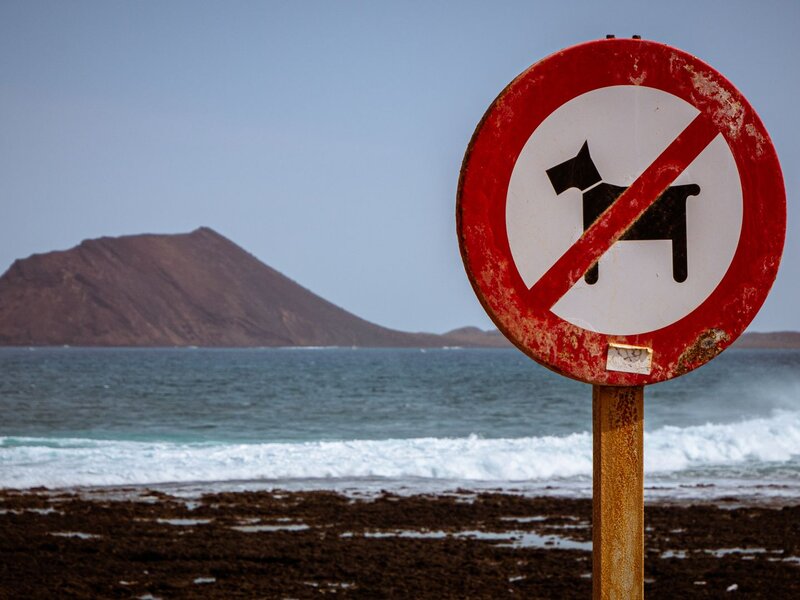
In high season, dogs are barred from many beaches in Italy, Spain, France and Croatia, especially stretches with a Blue Flag. In some places access is allowed only at certain times - early morning or late evening, when there are fewer people. Horses are also kept off most beaches in summer. 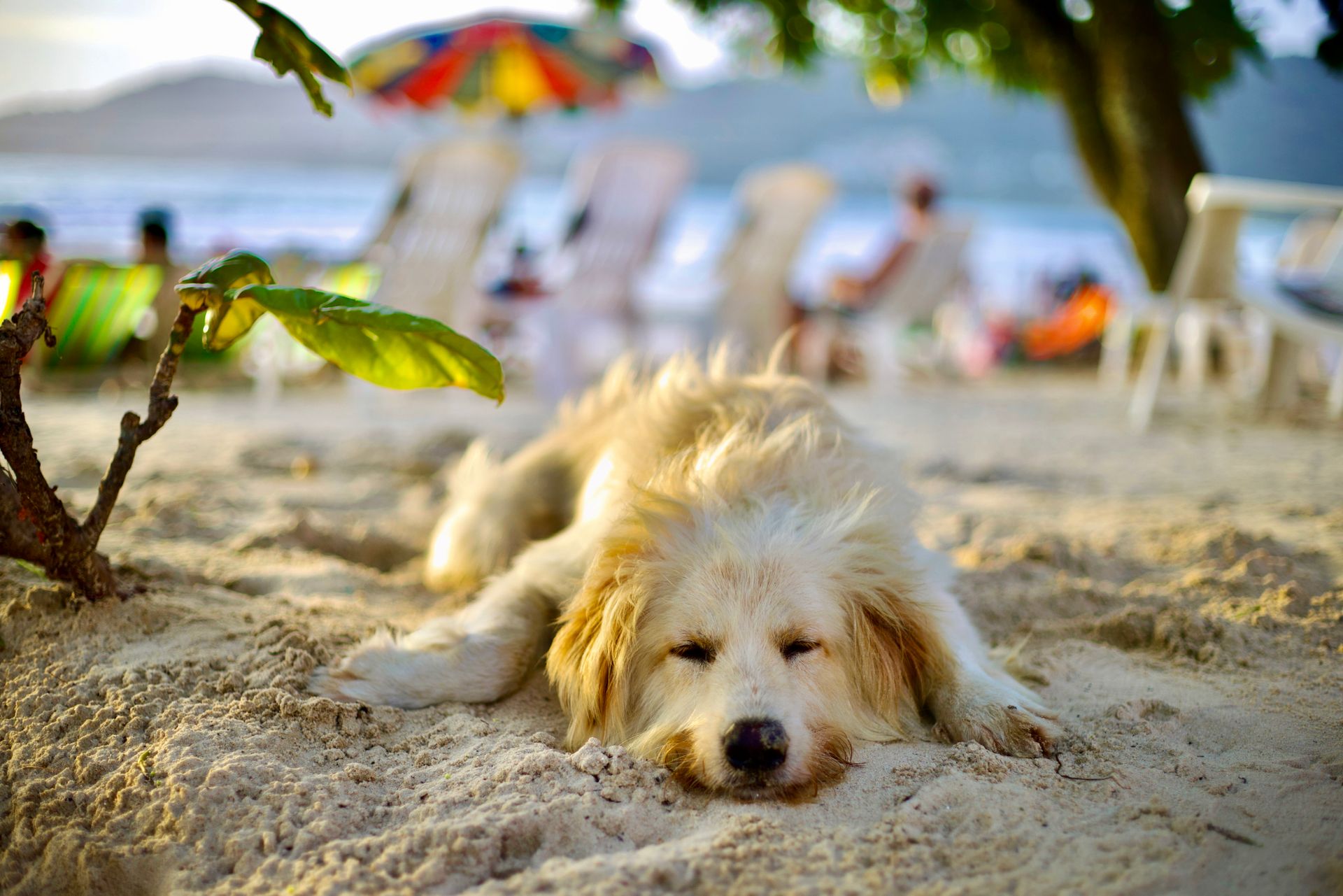
If you're travelling with a dog, look for specially designated dog beaches - in Italy these are called spiaggia per cani, and popular coasts have them in almost every major resort. Turning up with an animal on an ordinary beach in July or August is almost guaranteed to mean a conversation with a lifeguard or warden.
There's also a curiosity in this category that shows exactly where such rules come from. In Granville in Normandy, animals were banned from the beach back in 2009, after a touring circus bathed its elephants in the sea and they left rather tangible evidence behind. The rule didn't come from bureaucratic imagination - it came from a specific incident, like most of the points in this article.
What's rarely mentioned: sand, drones, tents
These points rarely make it into round-ups, but in terms of the sums and consequences involved they're more serious than many of the ones above. 
What else can ruin a holiday:
- Taking sand, shells and rocks home. On Sardinia this is the best known and most costly trap: sand from local beaches is protected by law, confiscations happen right at the airport during baggage checks, and the fines run into the hundreds and thousands of euros. Similar bans apply on other protected coastlines. A "handful as a souvenir" is legally the same as a bucketful here.
- Drones. Flying over beaches is restricted almost everywhere: both EU-wide rules and local bans apply, on top of the question of filming people without their consent. Over a crowded beach at the height of the season, there's generally no legal way to fly one.
- Tents and overnight camping. Banned in most resort zones in Spain, Italy, Croatia and Greece. Sleeping in a car by the sea is regulated separately and is also often banned outside campsites.
- Bonfires and barbecues. Southern Europe faces elevated fire risk in summer, and during dry periods open-flame bans become total, beaches included.
- Glass containers. Banned outright on many beaches, because of shards in the sand. This is the violation most readily fined, since it's visible from a distance.
- Litter and cigarette butts. A separate offence almost everywhere, and combined with a smoking ban the fines can sometimes stack.
Tourist taxes: not a fine, but you'll still pay
Strictly speaking this isn't a penalty, but it hits the holiday budget just as unexpectedly, since it's paid locally and isn't included in the package price. These figures rose noticeably in 2026.
Catalonia, Spain: rates rose from 1 April 2026; in Barcelona the combined total is around €8-12 per person per night depending on accommodation category, noticeably lower outside Barcelona. Charged for the first 7 nights, children under 16 exempt
The Balearic Islands: an eco-tax charged per person per night, at a higher rate in the high season from May to October, usually €1-4 depending on hotel category
Greece: a climate levy per room per night, the amount depending on accommodation category and season, with the highest rates from April to October
Italy: a city tax set by individual municipalities, with amounts varying from town to town; in resort areas it's paid at check-in
For a family of four over a week in Barcelona that's a noticeable sum on top of the booking, and it's better to know about it in advance than find out at reception. A separate cost on Italy's coasts is the paid lidos: access to a stretch of beach with a sunbed and parasol, charged separately, and pricier at the height of the season than visitors tend to expect.
What to do if you're fined
It's an unpleasant situation, but a manageable one if you understand how it works.
- Who issues it. Usually local police or municipal inspectors; on beaches, beach staff also log violations and call the police. Coast guards in Spain, Italy and Portugal have their own powers along the shore.
- Ask for documentation. A fine should come as a receipt or a formal notice with payment details. Legitimate EU fines are not paid in cash "on the spot, directly to the officer" - that's the first sign something's off.
- Check for an early-payment discount. Many countries offer a reduced rate if you pay within a short window: in France, for instance, the difference between prompt and standard payment is significant. This is a legal saving, not a negotiation.
- Don't argue on the spot. Appeals are a written procedure handled where the fine was issued; arguing on the beach doesn't help, and the language barrier works against you.
- Confiscated belongings. If a speaker, parasol or sunbed has been taken, find out the storage address and the return procedure straight away - you can usually collect them, but only during office hours and not from the beach.
- An unpaid fine doesn't disappear. The EU has mechanisms for enforcement through your country of residence, and it can resurface on a later entry. Ignoring the notice is a poor strategy.
Summary table by country
Figures are approximate and set locally, so check the signage at the specific beach.
| Country | Most commonly fined | Approximate amount |
|---|---|---|
| Spain | Swimwear in town, "reserving" a spot in the morning, smoking, using the sea as a toilet | €250-750, confiscation of belongings |
| Italy | Swimwear in town, a towel without a mat, parasol restrictions, taking sand | €100-500, considerably more for sand |
| Portugal | Speakers and loud music, swimwear off the beach | €200-4,000, up to €36,000 for groups |
| Croatia | Bare chest and swimwear in town | up to €150 |
| France | Smoking on the beach, topless outside permitted zones | €35-135 |
| Greece | Structures on protected beaches, blocked access to the sea | penalties mainly fall on businesses |
Checklist before a day at the beach:
- Read the sign at the beach entrance - the rules are set by the municipality, and the beach next door may have different ones.
- Keep a T-shirt and shorts, or a sarong, in your bag and put them on when you leave the sand: this closes off the most common category of fine.
- Listen to music through headphones - a speaker on the beach is potentially the most expensive fine going, especially for a group.
- Don't leave belongings to hold a spot: they can be legally removed to storage, with a fine on top.
- Don't take sand, shells or rocks home - on Sardinia this is checked at the airport.
- Budget for tourist taxes: they're paid locally, and in Catalonia they rose in 2026.
- With a dog, look for a specifically designated beach rather than an ordinary one: in summer, animals are barred almost everywhere.
Common mistakes:
- Assuming that if topless sunbathing is legal on the beach, it's fine in town too. The fine is specifically for stepping outside the beach zone, and that's a different matter.
- Assuming the rules are the same across a whole country. They're set by towns, and neighbouring resorts on the same coast can operate under different rules.
- Holding a spot with a towel early in the morning. In some resorts this is now directly punishable, with belongings taken to municipal storage.
- Bringing a speaker to the beach in Portugal. The upper limit of the fine exceeds the cost of the entire holiday.
- Taking a "handful of sand as a souvenir" from Sardinia. Legally that's the same as taking it by the bucketful, and it's checked on departure.
- Paying a fine in cash "directly". A legitimate fine comes as a receipt with payment details; anything else is a reason for caution.
The verdict
Is it worth worrying about?
No, if you understand the logic. Almost all of Europe's beach rules come down to three principles: don't disturb others with noise, don't take away what belongs to the coastline, and don't bring the beach format into town. Tourists get caught out not because they break the rules deliberately, but because these rules cover ordinary everyday actions and differ from one municipality to the next. The most common category is also the cheapest to avoid entirely: a T-shirt and shorts in the beach bag removes the risk completely.
One last piece of advice:
Spend thirty seconds reading the sign at the beach entrance on day one of the holiday. It lists everything that applies right there, usually with pictograms and in English, and it's the only genuinely reliable source - the rules are set by towns, not countries, and they change every season.




 Holidays


 Last minute


 Hotels


 Blog
Blog