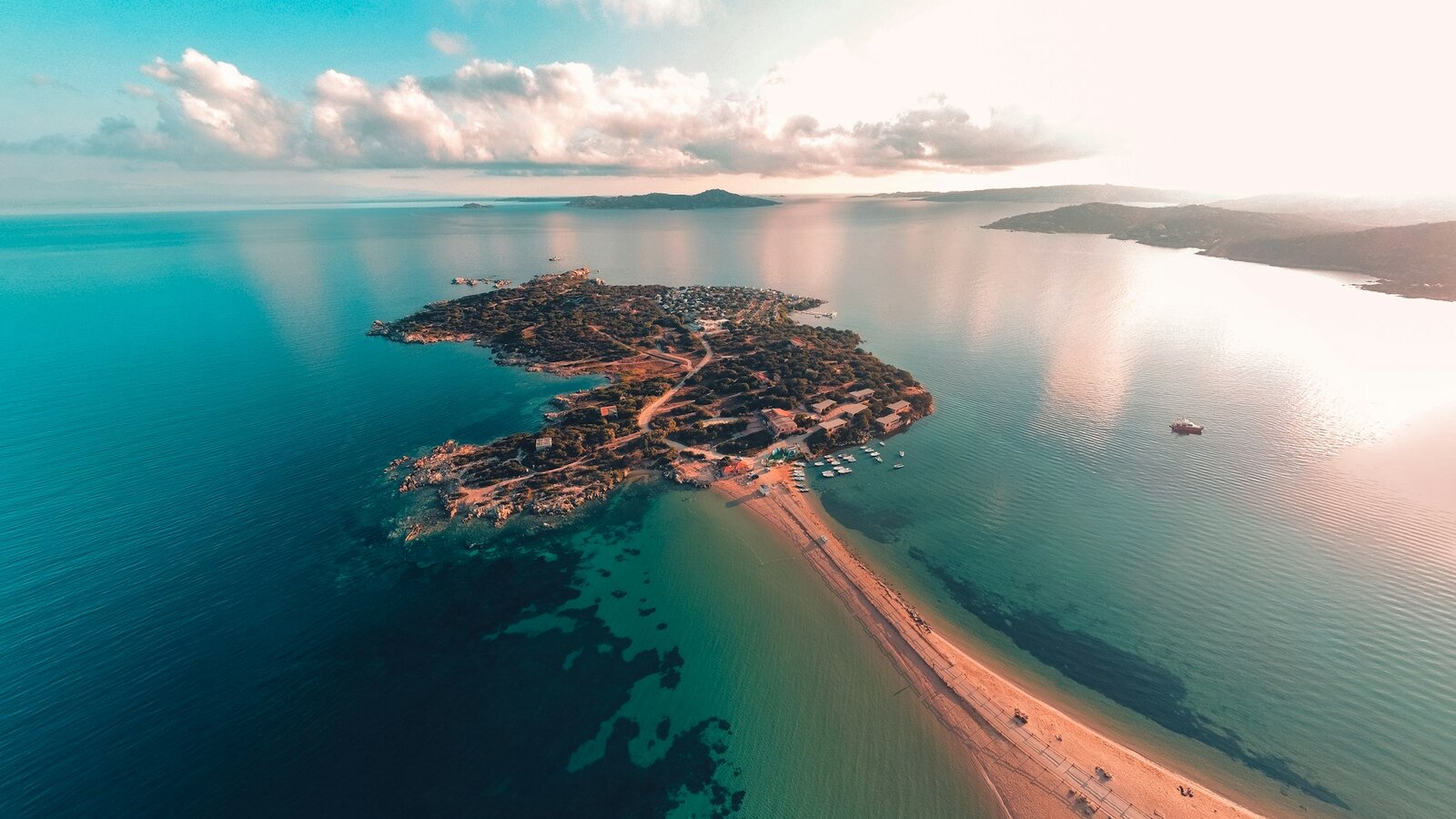
The most common mistake when choosing between Sicily and Sardinia is treating them as interchangeable. "Both Italian, both islands, both warm" — and booking by price. That's a bit like choosing between Kraków and Zakopane on the grounds that "both are in Poland". Sicily is above all a cultural layer cake: three thousand years of civilisations stacked on top of each other, Greek temples, Arab domes, street food and Etna on the horizon. Sardinia is a sea whose colour simply doesn't exist anywhere else in the Mediterranean, Bronze Age towers in the middle of a wild plateau, and Costa Smeralda with yachts the size of a small house. For the same hotel standard in July, a trip to Sardinia will cost 25–40% more than one to Sicily — and that's a fundamental difference when planning a budget.
We break both islands down point by point: climate at three points in the season, flight from Warsaw, tour prices and an honest answer — who should choose what. Quick-pick section for those who don't want to read everything:
- Best sea and beaches → Sardinia
- First time in Italy → Sicily
- Romance / honeymoon → Sardinia (north), Sicily (Taormina)
- Families with children → Sardinia (beaches) or Sicily (excursions)
- Young crowd and nightlife → Sardinia (Costa Smeralda, Cagliari)
- History and gastronomy → Sicily
- Quiet and untouched nature → Sardinia (interior and south)
- Diving and snorkelling → Sardinia (La Maddalena archipelago)
- Budget under 3,000 PLN/person → Sicily
- Premium 5*+ → Sardinia (Costa Smeralda)
Sicily
"Three thousand years of history, a volcano, street food and the sea as a bonus"
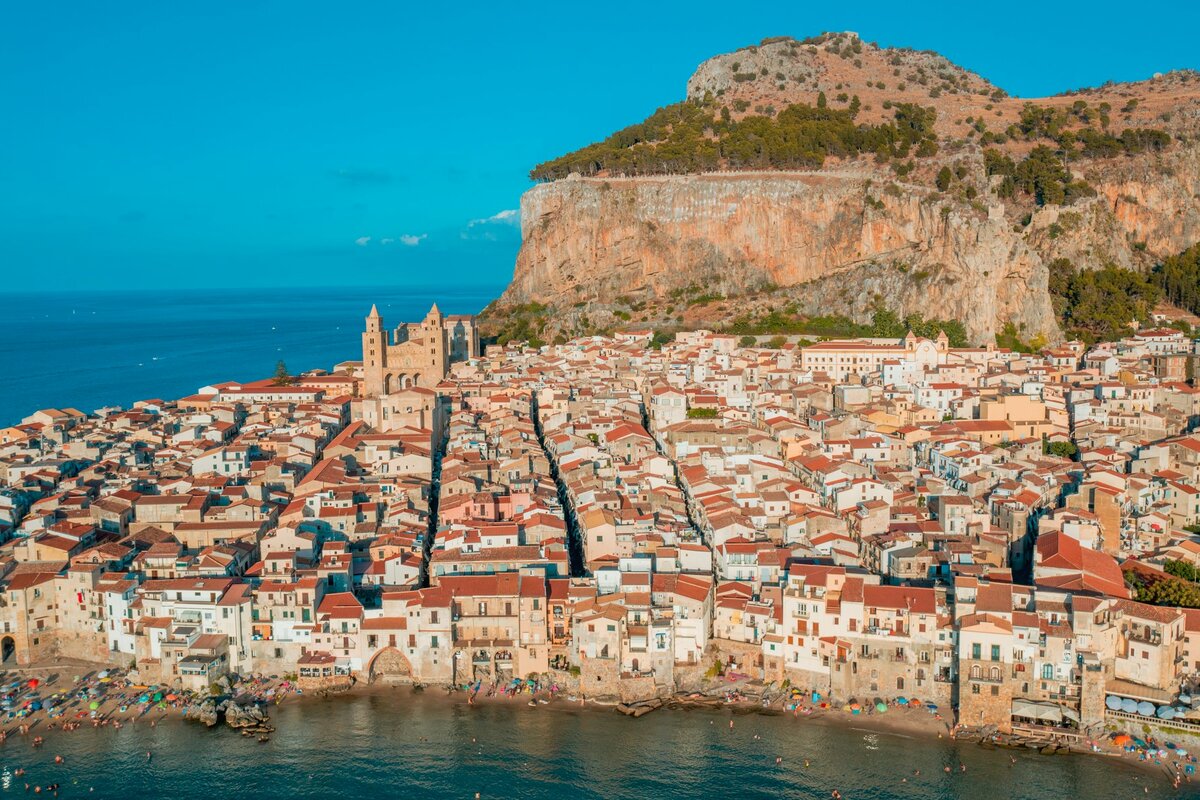
The largest island in the Mediterranean — 250 km from west to east — and that matters when choosing a hotel just as much as it does on Crete: Palermo and Syracuse are at opposite ends of the island, with nearly 3 hours of driving between them. Sicily is a place where the Greek temple at Agrigento is older than the Parthenon, the Arab quarter of Palermo sits next to a Norman cathedral, and street food — arancini, panelle, granita with whipped cream — is a fully legitimate part of the cultural experience, not a tourist snack. There are good beaches too: white sand on the western coast near Trapani, wild coves in the Aeolian Islands. But coming to Sicily only for the beach means you've missed the point of the island. Sea temperature in July — 25–26°C, in September 24–25°C. Direct flight from Warsaw to Palermo or Catania — 2 hours 40 minutes–3 hours.
| Period | Air temp. | Sea temp. | Sun/day |
|---|---|---|---|
| May | +21–24°C | +19–21°C | 9–10 hrs |
| July | +28–32°C | +25–26°C | 13–14 hrs |
| September | +25–28°C | +24–25°C | 10–11 hrs |
Flight from Warsaw: 2 hrs 40 min — 3 hrs (direct to Palermo or Catania, Ryanair, Wizzair, LOT)
7-night package / 2 people: 2,800–8,000 PLN (depending on hotel standard and region)
Best season: May–June (fewer tourists, comfortable temperatures), September–October (warm sea, twice as few tourists as August); July–August — peak heat up to +35–38°C in the south of the island
Who it suits
Sicily is the best choice for those who need substance from a holiday: something worth talking about afterwards, not just photos of a pool. It works perfectly for couples with different interests (one wants the beach, the other wants museums), for tourists visiting Italy for the first time who want more than Rome, and for families with school-age children for whom Etna and Greek ruins are more interesting than a waterpark. Don't go if your main goal is lying by crystal-clear sea in peace and quiet: that experience is on Sardinia. Sicily is loud, hot and intense — that's its nature, not a flaw.
What to do
- Climb Etna not with a tour group but with a local guide from the village of Nicolosi — routes to the 2002 lava fields take 3–4 hours and look like another planet; cost approx. 40–60 EUR/person, bus from Catania 1 hour
- Spend an evening at the Ballarò market in Palermo — Sicily's oldest street market has been running since the 10th century, and the island's best street food (stigghiola, pane ca meusa) is sold here, not at restaurants near the cathedral
- Get to the Valley of the Temples in Agrigento before 8:30 am — 5th-century BC Greek temples in full light without tourists look completely different than they do at midday; entry €12, taxi from Agrigento 15 minutes
- Take a day ferry to the Aeolian Islands from Milazzo (1.5–2 hours) — Lipari or Vulcano; on Vulcano you can bathe in thermal mud pools right by the sea, entry free, the sulphur smell is a complimentary bonus
- Spend a night in Syracuse and walk the island of Ortygia on foot after 10 pm — this 0.45 km² patch of land where Archimedes lived looks at night like the set of a historical film. That's not a metaphor.
Sardinia
"Europe's most blue sea, nuragic towers and Costa Smeralda"
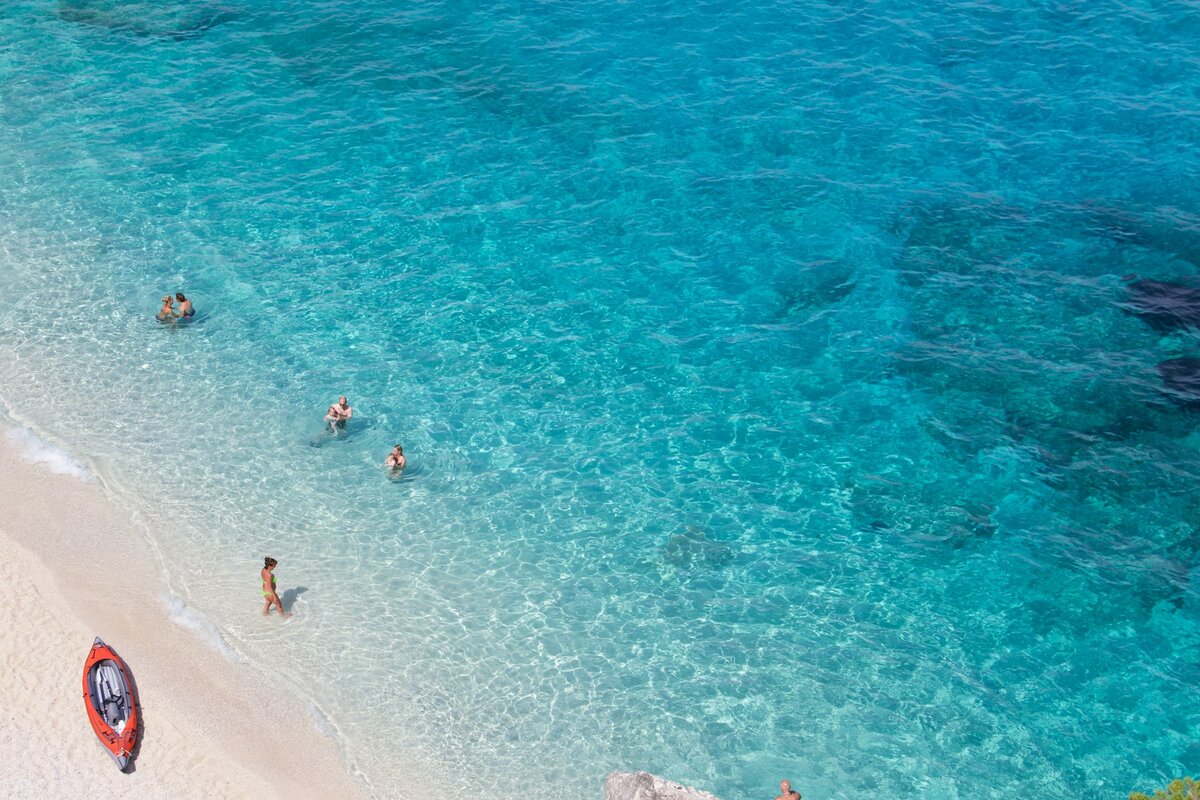
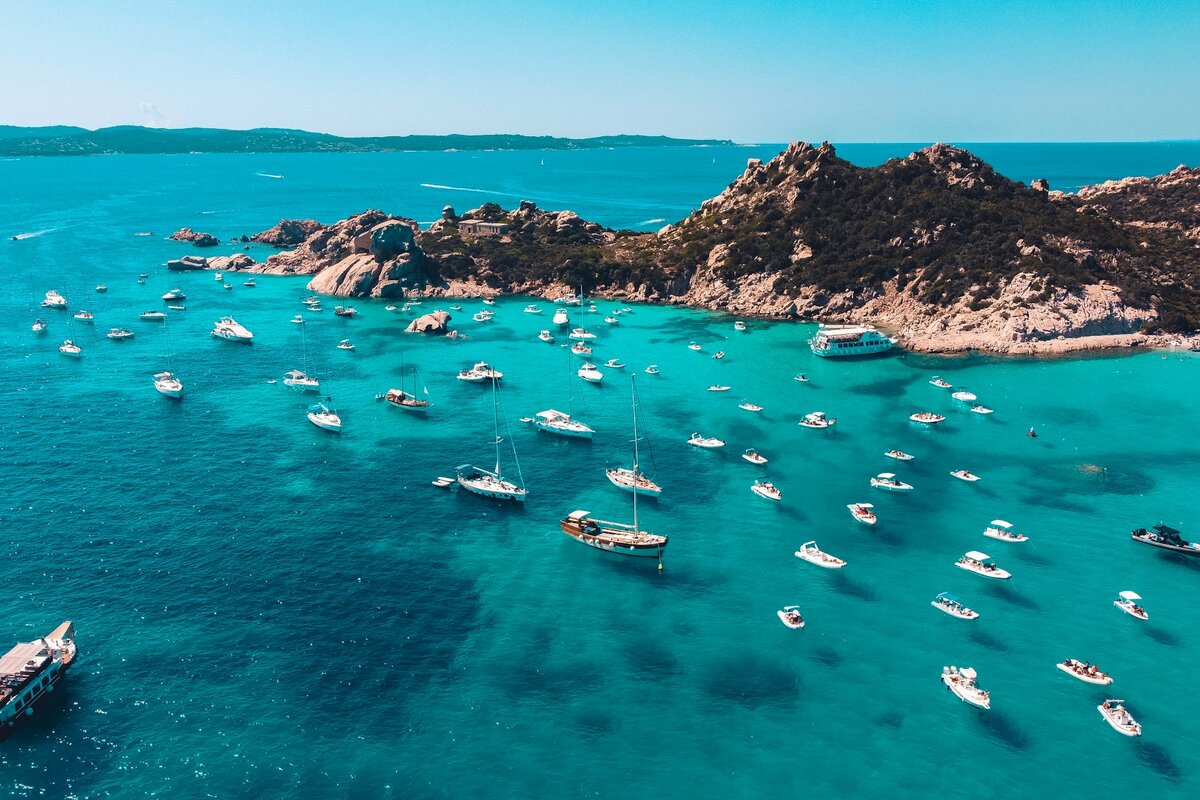
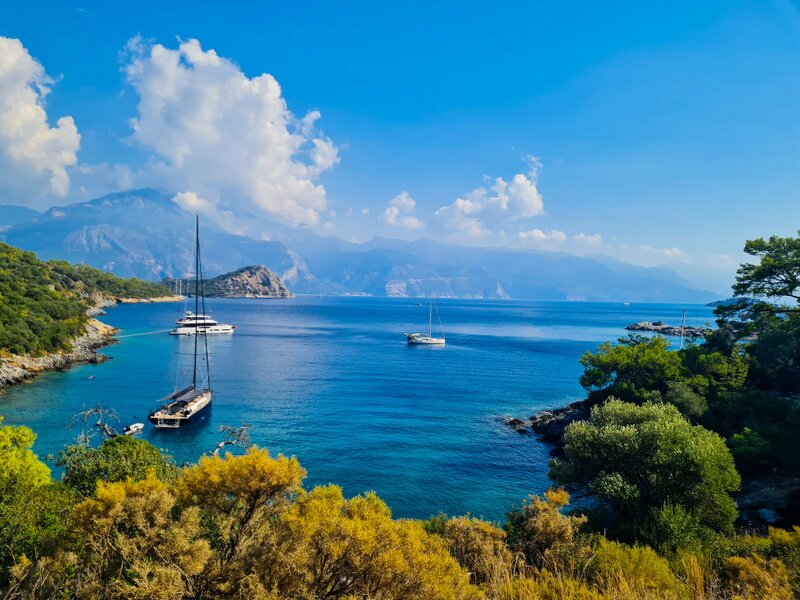
Sardinia — the second-largest island in the Mediterranean — exists in two parallel realities that tourists rarely combine. The first: Costa Smeralda in the north-east — one of Europe's most expensive resort areas, yachts, boutiques, 5* hotels with private jetties and Spiaggia del Principe beach, regularly named the best in Europe. The second: inland Sardinia — the Barbagia mountain plateau with villages where shepherds herd sheep in costumes that haven't changed in 500 years, Bronze Age nuragic towers in the middle of a wild plateau, and not a single tourist coach. The sea in the north of the island in the Emerald Coast bay is not Photoshop: the water colour comes from the geology of the seabed, and it's so unreal that people come specifically to check it's true. Sea temperature in July 25–26°C. Direct flights from Warsaw to Cagliari or Olbia — 2 hours 30 minutes–2 hours 50 minutes.
| Period | Air temp. | Sea temp. | Sun/day |
|---|---|---|---|
| May | +20–23°C | +18–20°C | 9–10 hrs |
| July | +28–32°C | +25–26°C | 13–14 hrs |
| September | +24–27°C | +23–25°C | 10–11 hrs |
Flight from Warsaw: 2 hrs 30 min — 2 hrs 50 min (direct to Cagliari or Olbia, Ryanair, Wizzair)
7-night package / 2 people: 3,500–15,000 PLN (Costa Smeralda — from 10,000 PLN; south and centre of the island — significantly cheaper)
Best season: June (sea already warm, prices 25–30% lower than August), September (ideal: air 25–26°C, warm sea, few tourists); August — peak prices and the Italian national holiday (Ferragosto)
Who it suits
Sardinia is the choice for those who value the sea over excursions and nature over city life. Families with children will appreciate the shallow bays with clear water on the west coast (Gulf of Oristano, beaches near Alghero). Couples looking for romance without Santorini prices will find it in the north of the island — at sunset in Castelsardo or in the coves of the La Maddalena archipelago. Divers and snorkellers come specifically for La Maddalena: visibility of 25–30 metres and underwater rocks covered in gorgonians. Don't go if a packed cultural programme every day matters to you: world-class architectural and historical sites are few on Sardinia, the nuragic towers are impressive, but this is not Syracuse or the Valley of the Temples.
What to do
- Hire a boat (no licence required, up to 40 hp) in Palau and explore the La Maddalena archipelago on your own — Spiaggia Rosa with pink sand (from coral particles), clear water in the coves of Caprera island and no tourist trails in sight
- Drive up to the village of Bosa in the Barbagia mountains — one of the island's best producers of pecorino cheese and authentic Sardinian food with no translated menu; the road is winding, but the views make up for it
- Visit the nuraghe Su Nuraxi near Barumini early in the morning — Bronze Age towers (1,500 BC), a UNESCO World Heritage site and one of the most significant prehistoric monuments in Europe; guided tours only, approx. €15, best on weekdays
- Snorkel at Cala Maninella beach north of Alghero — underwater rocks with gorgonians at a depth of 4–6 metres, accessible without diving equipment; mask and fins for hire right on the beach
- Try bottarga (grey mullet roe) and local vernaccia in the fishing village of Cabras — produced here since the 14th century, and this is the only place in the world where it's made this way: not a sauce or a garnish, but a dish in its own right
Sicily vs Sardinia: comparison by criteria
| Criteria | Sicily | Sardinia |
|---|---|---|
| Beach quality | ★★★☆☆ — good, but not the main reason to come | ★★★★★ — among the best in Europe |
| Water clarity | ★★★☆☆ | ★★★★★ — exceptional visibility of 20–30 m |
| History and culture | ★★★★★ — Greeks, Arabs, Normans, Baroque | ★★☆☆☆ — nuragic towers, and that's essentially it |
| Gastronomy | ★★★★★ — one of Italy's best regional cuisines | ★★★☆☆ — pecorino, bottarga, suckling pig; good but niche |
| Diving and snorkelling | ★★★☆☆ — good around the Aeolian Islands | ★★★★★ — La Maddalena, one of the best in the Mediterranean |
| Nightlife | ★★★☆☆ — Palermo, Catania, Taormina | ★★★★☆ — Costa Smeralda (Porto Cervo), Cagliari |
| Families with children | ★★★☆☆ — plenty to see, less for swimming | ★★★★☆ — shallow bays, safe beaches |
| Peace and seclusion | ★★☆☆☆ — a loud and intense island | ★★★★☆ — inland areas are almost deserted |
| Prices | Average — 25–40% cheaper than Sardinia | Above average — Costa Smeralda is 2–3× pricier than Sicily |
| Flight from Warsaw | 2 hrs 40 min — 3 hrs (direct) | 2 hrs 30 min — 2 hrs 50 min (direct) |
| Package 7 nights/2 people | 2,800–8,000 PLN | 3,500–15,000 PLN |
| Best season | May–June, September–October | June, September |
Common mistakes:
- Going to Sicily purely for the beaches. The beaches in the west (San Vito Lo Capo) are genuinely good, but the island's logistics aren't built around "arrive and lie by the water". Sicily demands movement, car hire and tolerance for +35°C heat in July–August. If you just want sea — Sardinia does it better.
- Ignoring how big Sicily is. The island is 250 km long. A hotel near Palermo and a day trip to Syracuse is nearly 3 hours' drive each way. When choosing a base, decide upfront: western part (Palermo, Trapani, Agrigento) or eastern (Catania, Taormina, Syracuse).
- Booking Costa Smeralda in August without bracing for the prices. August is the Italian national holiday (Ferragosto): hotels at 100% capacity, prices at their peak, beaches like rush-hour public transport. June or early September is an entirely different story.
- Expecting an authentic fishing village on Costa Smeralda. Porto Cervo is Monaco on a coastline. If you want old Sardinia with fishermen and laundry on the line, head to the south or the Barbagia mountains — not to the north of the island.
- Going to Sardinia in May expecting to swim properly. Water in May — 18–20°C — is too cold for most people. Sicily warms up slightly faster due to its more southerly position, but the swimming season doesn't really get going on either island until June.
- Underestimating the heat in Sicily in July–August. In the south of the island the air reaches +38–40°C with the dry African scirocco wind. Walking around the Valley of the Temples at midday in those conditions is a real heatstroke risk. All sightseeing needs to be planned for the morning, before 10 am.
Entry requirements for Italy
Italy is a member of the European Union and the Schengen Area. Entry requirements are the same for mainland Italy, Sicily and Sardinia.
- Ukrainian citizens: visa-free entry to the Schengen Area (including Italy) for up to 90 days within any 180-day period, on the basis of a biometric passport. The passport must be valid for at least 3 months after the intended departure date from Italy. It's important to track the total number of days spent in the Schengen Area over the previous 180 days — the 90/180 rule applies cumulatively across the whole zone.
- Belarusian citizens: entry to Italy requires a valid Schengen visa (Italian or any other multiple-entry Schengen visa) or a valid residence permit in Poland (karta pobytu). A Polish residence permit grants the right to short-term stays in the Schengen Area — including Italy — without a separate Italian visa.
Conclusion
Sicily or Sardinia — which to choose?
Put simply: Sicily is for those who need a holiday to be about something; Sardinia is for those who need a holiday to be beautiful. Sicily doesn't let go: in a week you'll move through three thousand years of history, eat the best granita of your life, stand on the edge of an active volcano and drink wine in a Norman courtyard. Sardinia doesn't rush: turquoise water, white sand, olive trees and complete silence — if that's what you need after a difficult year, this is the place.
Going to Italy for the first time — choose Sicily: it delivers a richer cultural and gastronomic experience at a lower cost. Already done Rome, Florence, the Amalfi Coast — time for Sardinia, and ideally not Costa Smeralda, but somewhere a little further from the glossy brochures.
Final tip:
On both islands, the best month is September: the sea is 24–25°C, there are twice as few tourists as in August, prices are 20–30% lower, and the light is such that every photo looks like it's from a magazine. On Sicily in September there's also the harvest: the east of the island is picking grapes at that time, and getting into a small producer's tasting is easier and cheaper than at any other point in the year.

 Holidays


 Last minute
 Hotels


 Blog
Blog