The most common mistake when choosing a Greek island is booking based on a photo: Santorini on Instagram and Santorini with kids at a volcanic black-sand beach are two completely different realities. The difference in character between Crete and Rhodes is comparable to the difference between Italy and Spain: the climate is similar, but everything else is different. At the same time, the price of a July holiday with the same hotel standard can vary by 40–60% depending on the island and the dates.
Choosing at random means risking a week of your holiday. Below we cover 10 Greek islands with sea temperatures at three points in the season, flight time from Warsaw, holiday costs, and a quick-pick section for those who don't want to read everything:
- Best beaches + warm sea → Crete, Rhodes, Zakynthos
- First time in Greece → Crete, Corfu
- Romance / honeymoon → Santorini, Zakynthos
- Nightlife and parties → Mykonos, Corfu (Kavos)
- Family with children → Crete, Rhodes, Kos
- Peace, nature, no crowds → Samos, Kefalonia, Lefkada
- History and culture → Rhodes (Old Town), Crete (Knossos)
- Diving and water sports → Zakynthos, Lefkada, Rhodes
- Budget under 3 000 PLN/person → Corfu, Kos, Samos
- Premium 5*+ → Santorini, Mykonos
Crete
"The biggest and most diverse"
The only Greek island where the difference between west and east is greater than the difference between some countries. Elafonisi beach in the west with its pinkish sand and 24°C water, and the loud resorts of Hersonissos in the north with nightclubs and 4* All Inclusive – these are two completely different holidays on one island that stretches 260 km. Getting from one end to the other takes 5 hours – an important factor when choosing a hotel. In May the water is already 20–21°C, in July it warms to 25–26°C, and in September it stays at 24–25°C – one of the longest swimming seasons among Greek islands. Direct flight from Warsaw to Crete: 3 hours 20 minutes.
| Period | Air | Sea | Sun/day |
|---|---|---|---|
| May | +22–24°C | +20–21°C | 10–11 hrs |
| July | +27–29°C | +25–26°C | 13 hrs |
| September | +25–27°C | +24–25°C | 11 hrs |
Flight from Warsaw: 3 hrs 20 min (direct, LOT, Wizzair, Ryanair)
7 nights / 2 people: 3,500–9,000 PLN (depending on hotel standard and season)
Best season: May–June (fewer tourists, prices 20–30% lower), September (warm sea, heat has eased)
Who is it for
The best choice for those visiting Greece for the first time who want everything at once: good beaches, history (Knossos Palace, Heraklion), mountain scenery and local cuisine. Crete works equally well for families with children, couples and groups. Not the right choice if you want a small, intimate island where everything is walkable – Crete is large, and without a car you're limited to a 10–15 km radius from your hotel. Renting a car here isn't optional – it's essential.
What to do
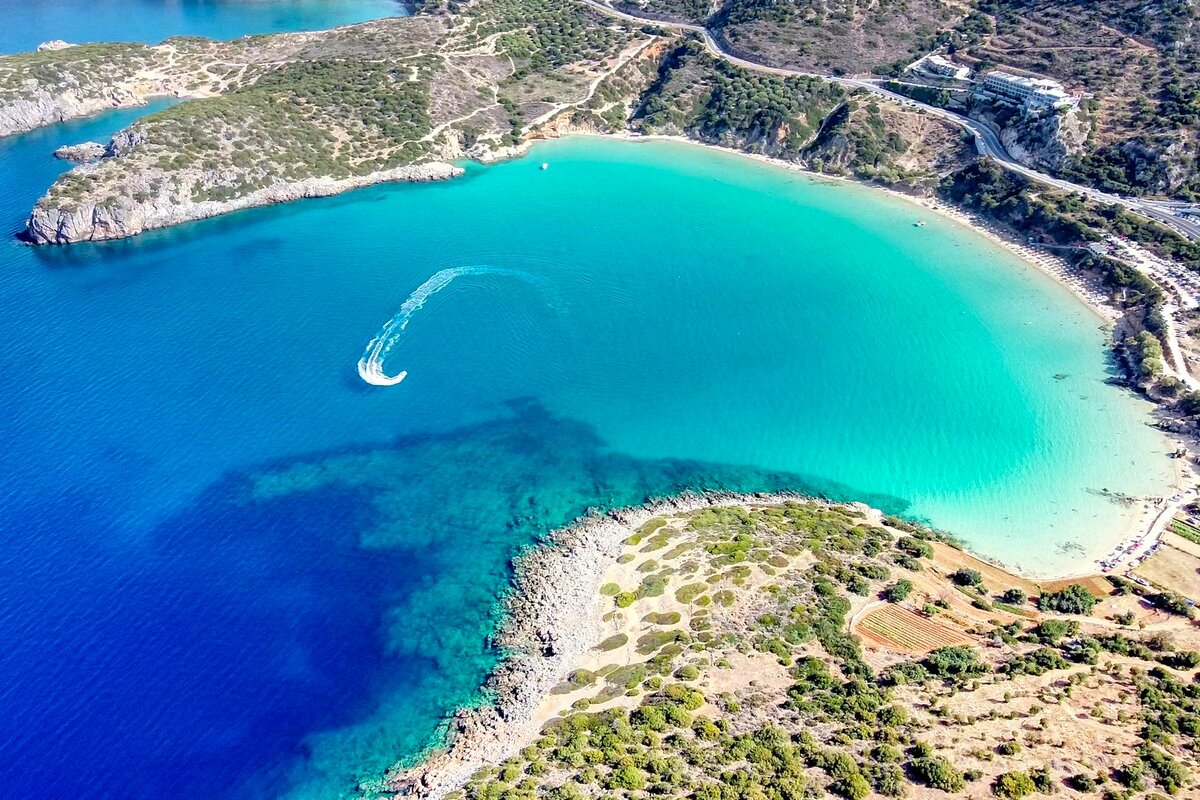
- Head to Balos beach at the far west of the island (only accessible by boat or 4WD – the road is technically private but passable) – a lagoon with a white shell-sand floor and water in three shades of blue
- Walk the Samaria Gorge (16 km, the longest canyon in Europe) – start early in the morning; the exit is at the seaside village of Agia Roumeli, from where a ferry takes you back
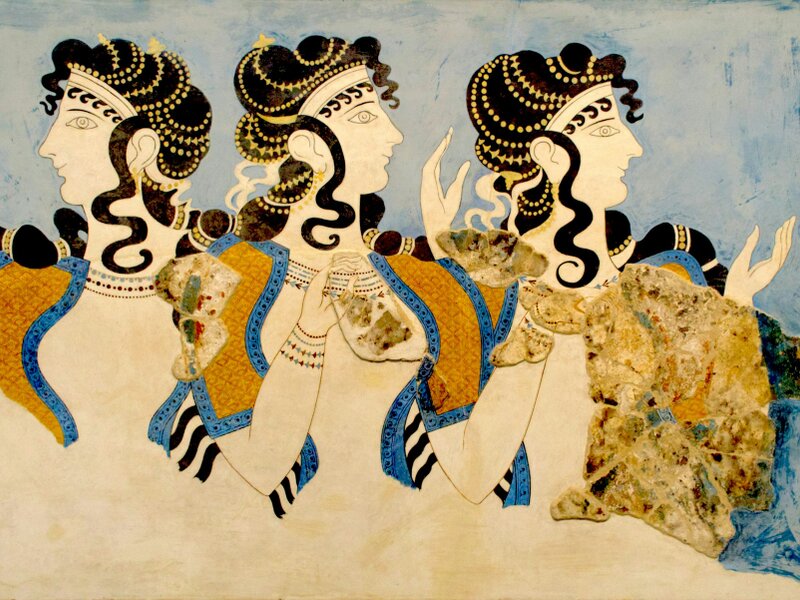
- Visit Knossos Palace early in the morning (opens at 8:00) – the heart of the 3,500-year-old Minoan civilisation; after 10:30 it gets very crowded
- Drive to the village of Anogia in the Ida mountains – the best Cretan graviera cheese is made here and served with fresh honey at an unmarked taverna
- Rent a catamaran from Rethymno at sunset (2–3 hours, ~40–55 EUR) – most tourists skip this, yet it's one of the most beautiful sights on the island
Rhodes
"History, sunshine and the finest Old Town in the Aegean"
Around 300 sunny days a year – not a marketing slogan but a climatic fact: Rhodes ranks among the top three sunniest places in Europe. Sea temperature in July: 25–26°C, in September 24°C. But the island's defining feature, rarely mentioned in most reviews, is its Old Town – a living medieval quarter covering 2 km², entirely enclosed by 14th-century walls, with working tavernas and residential homes inside. It is a UNESCO World Heritage Site that is simultaneously a real city, not an open-air museum. Direct flight from Warsaw: 3 hours 30 minutes.
| Period | Air | Sea | Sun/day |
|---|---|---|---|
| May | +22–24°C | +20–21°C | 11 hrs |
| July | +28–31°C | +25–26°C | 14 hrs |
| September | +25–27°C | +23–24°C | 11 hrs |
Flight from Warsaw: 3 hrs 30 min (direct)
7 nights / 2 people: 3,800–9,500 PLN
Best season: May–June and September–October; July–August – very hot (+30–33°C), maximum tourist numbers
Who is it for
The optimal choice for those who want a balance between beach and cultural sightseeing. Families with children will appreciate the large water park in Faliraki (one of the biggest in Greece). Couples with an interest in history can spend 2–3 days in the Old Town alone and not exhaust it. Not the right choice if your main goal is peace and unspoilt nature: Rhodes is a large, well-developed tourist island with about as much seclusion as Kraków in July.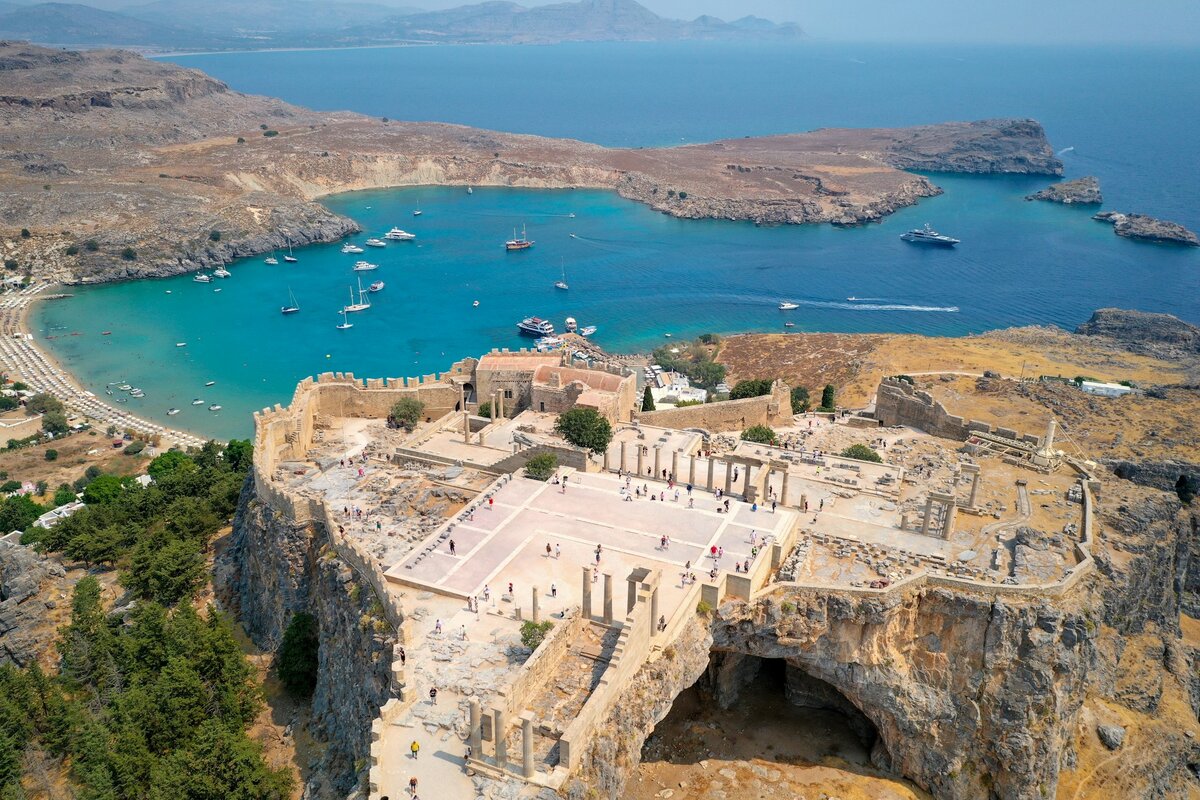
What to do
- Spend an evening in Rhodes Old Town – find a taverna on Socratous Street not in the tourist section, but behind the city walls in the residential Agios Panteleimon quarter
- Drive to the village of Lindos (50 km from the city) and climb to the acropolis – views over the bay from 116 metres; go before 9:00, after that it's scorching and queues form
- Visit the Valley of the Butterflies (Petaloudes) – in July–August thousands of jersey tiger moths live here; entry 5 EUR, 20-minute taxi ride from the resorts
- Take a day trip to the island of Symi (1.5-hour ferry) – neoclassical pastel-coloured houses above the harbour, squid at a waterside taverna, and almost no tourists after 16:00
- Try moussaka in a restaurant in the village of Embonas – the wine-making capital of Rhodes that organised tours never reach
Kos
"Family-friendly, affordable and with views of Turkey"
One of the most underrated islands in the Aegean: flat terrain (you can cycle around half the island), long sandy beaches, water at 25–26°C in July, and holiday prices 15–20% lower on average than Crete or Rhodes. The Turkish resort of Bodrum is just 19 kilometres away by sea – the ferry takes 30 minutes, and with a valid Schengen visa or Ukrainian passport it makes for a full day trip to another country straight from your holiday. One detail worth knowing: bicycles on Kos are not a tourist novelty but the main mode of transport for locals, and rental costs just 5–8 EUR a day.
| Period | Air | Sea | Sun/day |
|---|---|---|---|
| May | +21–23°C | +19–20°C | 10 hrs |
| July | +28–31°C | +25–26°C | 14 hrs |
| September | +25–27°C | +23–24°C | 11 hrs |
Flight from Warsaw: 3 hrs 40 min (direct, charters)
7 nights / 2 people: 3,000–7,000 PLN
Best season: June–September; May – the sea is a little cool for swimming
Who is it for
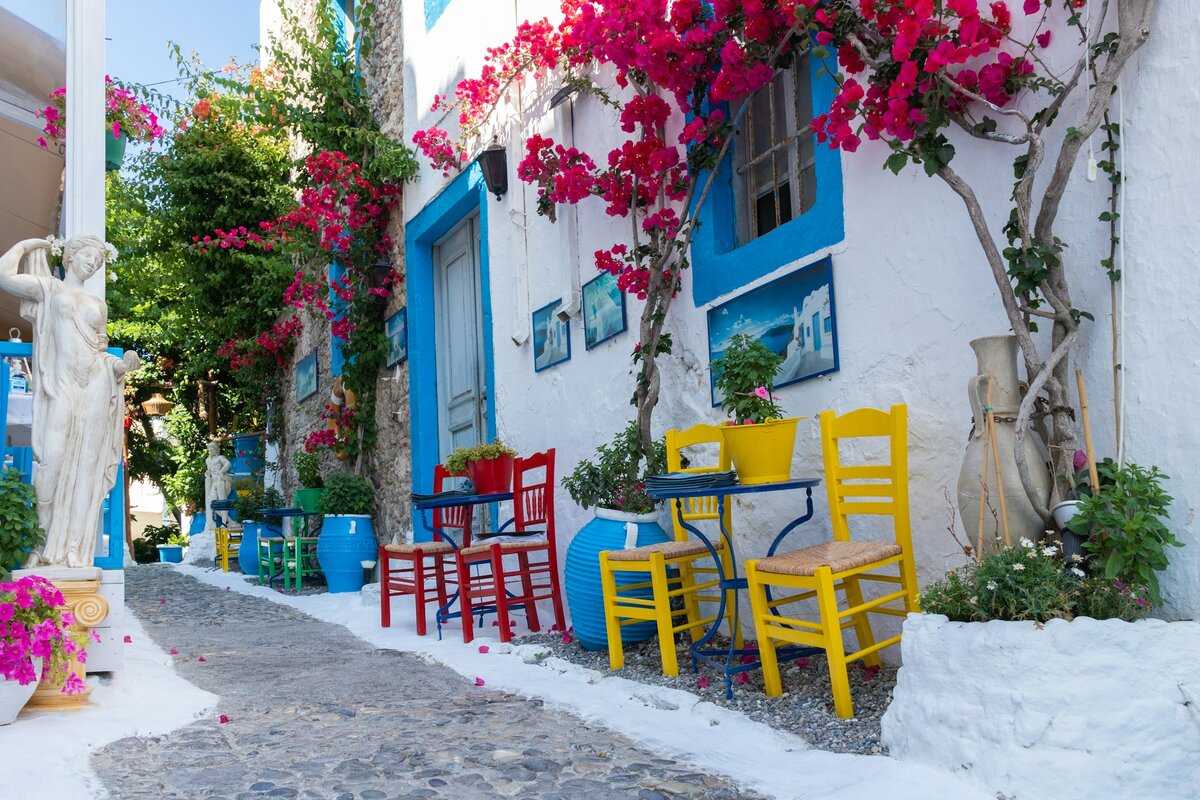
The best choice for families with children aged 5–14: a flat island with cycle paths, wide beaches with no sudden drop-offs, and well-developed All Inclusive infrastructure at several large resorts. A solid option for a first trip to Greece on a limited budget. Not the right choice if dramatic scenery is important to you: Kos is flat and green, with no cliffs or breathtaking vistas – that's simply not its forte.
What to do
- Take the ferry to Bodrum (Turkey) for the day – 30 minutes, ~20–30 EUR/person, spice market, mosque and a completely different cuisine; Ukrainian citizens enter visa-free, Belarusian citizens need a Turkish e-visa
- Cycle to the Asklepion – the ancient healing temple of Hippocrates on a hill 4 km from the town, entry 8 EUR
- Eat fresh fish at a taverna in the mountain village of Zia – the only place on the island with any coolness at a July midday
- Take a windsurfing lesson at Mastichari beach – the constant wind makes it one of the best spots for beginners in Greece
Zakynthos
"Turtles, cliffs and the best dive sites in the Ionian Sea"
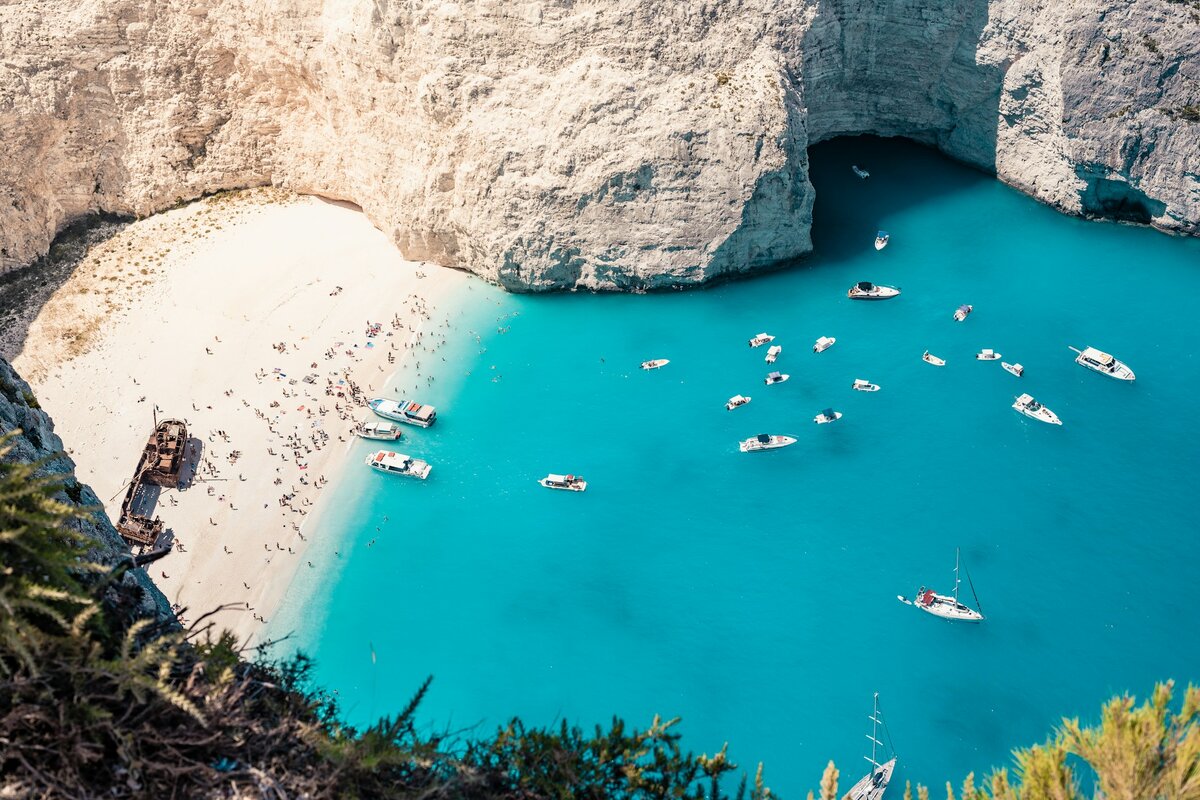
The small island of Zakynthos (40 × 20 km) has two completely different faces. The western coast – sheer white cliffs up to 200 metres high, turquoise coves accessible only by water, and the famous Shipwreck Bay (Navagio) with a rusting smuggler's wreck on a white-sand beach. The eastern coast – wide sandy beaches, resorts and nesting grounds of Caretta Caretta sea turtles: Gerakas beach is one of the largest nesting sites in the Mediterranean, and from June to August a turtle on the beach at night is not a rarity but an everyday occurrence. Direct flight from Warsaw: 3 hours.
| Period | Air | Sea | Sun/day |
|---|---|---|---|
| May | +21–23°C | +19–21°C | 10 hrs |
| July | +28–30°C | +24–25°C | 13–14 hrs |
| September | +24–26°C | +23–24°C | 11 hrs |
Flight from Warsaw: 3 hrs (direct, charters)
7 nights / 2 people: 3,500–8,000 PLN
Best season: June–September; turtles on the beaches from mid-June
Who is it for
Zakynthos is the choice for couples who want picture-postcard beauty and romance without Santorini prices. Divers and snorkellers will love the crystal-clear water of the western coves (visibility 20–25 m) and the Blue Caves grottoes on the northern tip of the island. Not the right choice if All Inclusive with a large hotel complex is a priority: most hotels on the island are small 3–4 star properties, and All Inclusive here is the exception, not the rule.
What to do
- Book a boat trip to Shipwreck Bay (Navagio) – there's no land access, only by water; trips ~25–35 EUR, set out early in the morning before dozens of boats arrive
- Snorkel at the Blue Caves on Cape Skinari – between 10:00 and 11:00 the light inside the grottoes turns the water into glowing turquoise
- Visit Gerakas beach at night with an eco guide (organised tours ~20 EUR) – in July–August turtles lay their eggs right at the water's edge
- Swim at Xigia beach – the water here is saturated with sulphur from underwater springs and tastes like mineral water; the effect on skin is real, the smell less so
Corfu
"The greenest and most varied"
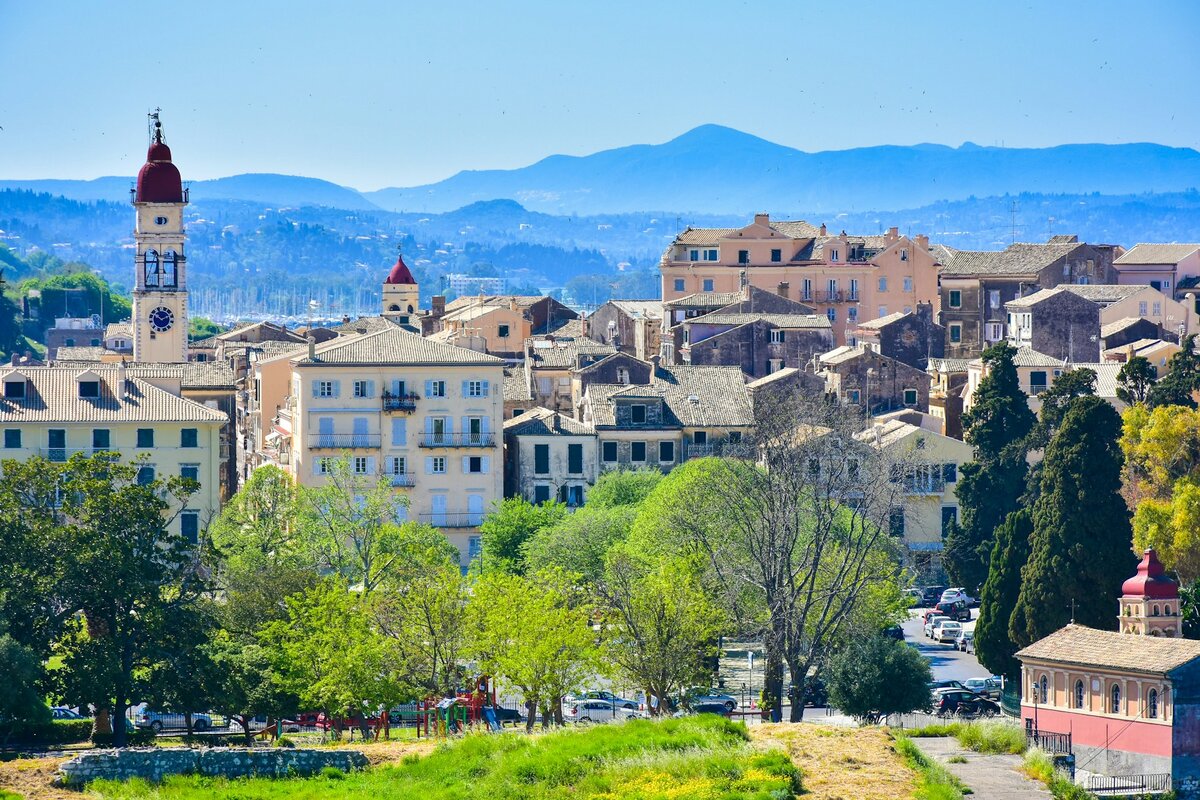
Corfu receives twice as much rainfall as most Greek islands – hence the lush vegetation, olive groves and hilly terrain that is unusual for a beach resort. The capital Kerkyra is one of the most beautiful cities in Greece: Venetian architecture, two 16th-century fortresses, cobbled streets just 2 metres wide and a market selling fresh figs and kumquats. Sea temperature in July: 25°C, in September 24°C. A small fact not found in any tourist brochure: Corfu is the only Greek island where orchestras still play in the squares of the Old Town on Sundays – a tradition left over from Venetian rule. Direct flight from Warsaw: 2 hours 40 minutes.
| Period | Air | Sea | Sun/day |
|---|---|---|---|
| May | +20–22°C | +19–20°C | 9–10 hrs |
| July | +27–30°C | +24–25°C | 13–14 hrs |
| September | +23–26°C | +23–24°C | 10–11 hrs |
Flight from Warsaw: 2 hrs 40 min (direct, one of the shortest flights to Greece)
7 nights / 2 people: 2,800–7,000 PLN
Best season: June–September; May – at its greenest, but the sea is cooler
Who is it for
The best choice for those who want Greece with a European urban dimension: good food, architecture, museums – and a beach 30 minutes away. Corfu works well for couples who don't want to spend the whole holiday by the pool, and for travellers visiting Greece for the second time. The village of Kavos in the south of the island is a young party resort with loud music until 6 am; families with children should avoid this part of the island when booking. Not the right choice if you're looking for a quiet, intimate island – there are a lot of tourists here, especially from the UK, and in July it can feel more like a British seaside resort than a Greek one.
What to do
- Spend half a day in Kerkyra Old Town – walk the Liston (the main arcaded street) at 8 am, before coffee costs 6 EUR
- Find the Canal d'Amour near the village of Sidari – a narrow rocky channel with turquoise water; legend has it that a couple who swim through it together will stay together forever
- Take a day trip to Paxos and Antipaxos (2 hours by ferry) – Voutoumi Bay on Antipaxos makes every top-10 list of Mediterranean beaches, yet most Corfu tourists never get there
- Rent a scooter and head to the Korision lagoon in the south – a protected lagoon with pink flamingos that 90% of visitors to the island never discover
Kefalonia
"Nature without compromise"
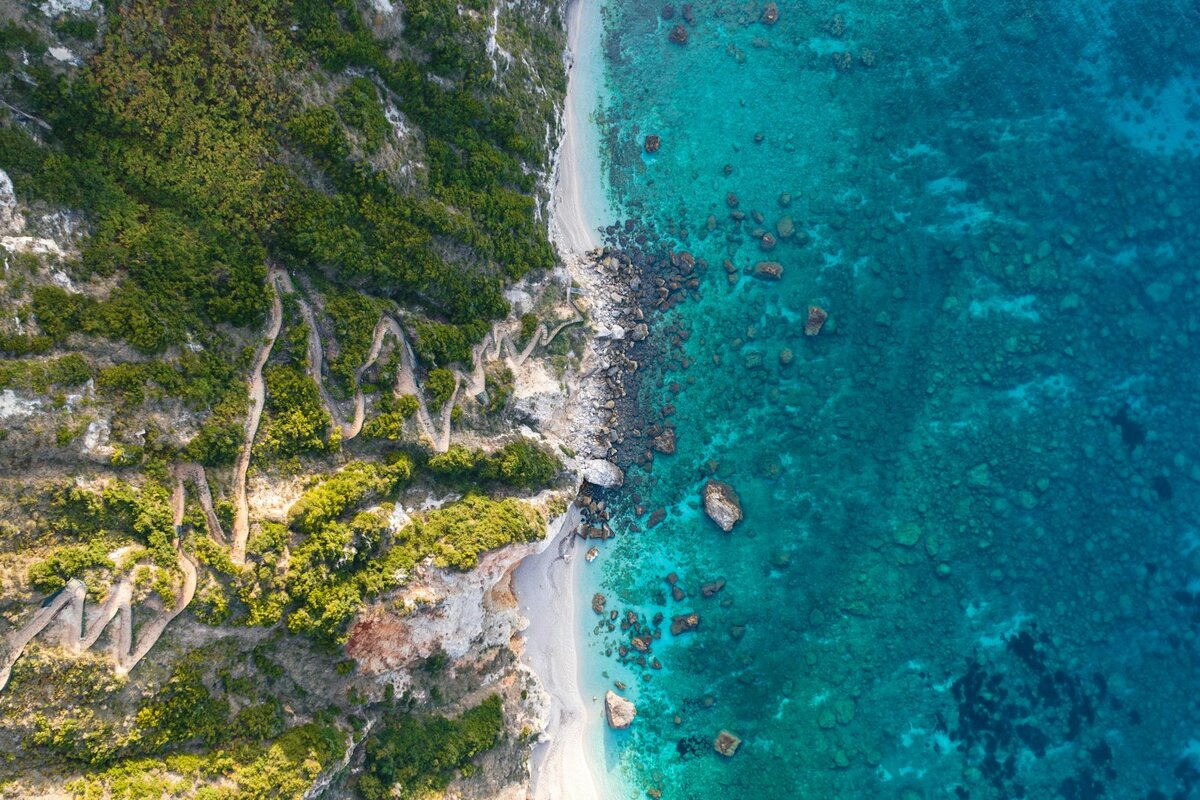
The largest of the Ionian Islands (773 km²), Kefalonia is simultaneously one of the least commercially developed: no mega-resorts, no conventional All Inclusive hotels, no noise. Myrtos beach – the one with white pebbles and indigo-coloured water – regularly appears in top-5 European beach rankings in major publications, but it sits in a bay with no infrastructure whatsoever: no sun loungers, no taverna, no toilets – just cliffs and water. Sea temperature in July: 24–25°C. Kefalonia was devastated by a 1953 earthquake and rebuilt from scratch – which means less traditional Greek architecture than on Corfu, but untouched, pristine nature. Direct flight from Warsaw: around 3 hours (charters, not daily).
| Period | Air | Sea | Sun/day |
|---|---|---|---|
| May | +19–22°C | +18–20°C | 9–10 hrs |
| July | +27–30°C | +24–25°C | 13–14 hrs |
| September | +23–25°C | +23–24°C | 10–11 hrs |
Flight from Warsaw: ~3 hrs (charters, limited schedule – check availability in advance)
7 nights / 2 people: 3,200–7,500 PLN
Best season: June–September; July–August – the sunniest months
Who is it for
Kefalonia is the choice for travellers who value natural beauty over tourist infrastructure. Couples, travellers aged 35+ and those who have already done the "standard" Greek islands and want something less developed. Not the right choice if All Inclusive or a lively nightlife scene is important – neither exists here, and that's entirely intentional.
What to do
- Head down to Myrtos beach in the early morning – by 10:00 there is nowhere left to park; the road is a switchback, with 15 minutes on foot to the bottom
- Visit the Drogarati Cave – a vast stalactite chamber with concert-hall acoustics (concerts are genuinely held here sometimes)
- Take a boat to Melissani Lake – an underground lake in a cave with a collapsed ceiling, daylight falling directly onto the water; best light between 11:00 and 13:00
- Try the local white Robola wine in the village of Omala – produced exclusively on Kefalonia and almost impossible to find outside the island
Samos
"Quiet island for those tired of standard resorts"
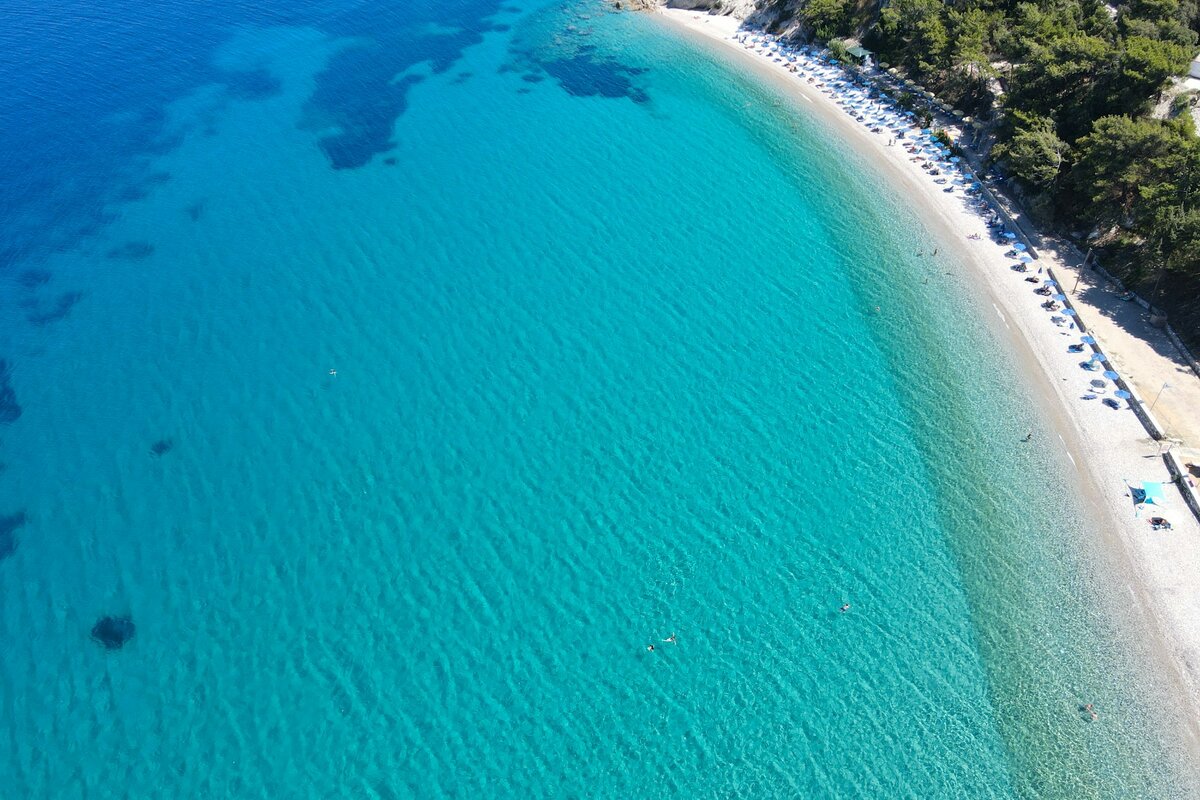
Samos lies just 1.5 kilometres from the Turkish coast – the closest Greek island to Asia Minor – and you can feel it: the food, vegetation and pace of life are subtly different. The island is covered with vineyards growing Muscat, one of the oldest grape varieties in the Mediterranean. Tsamados beach, with its pebbles, crystal-clear water and surrounding pine trees, looks like an illustration from a 1970s book about Greece. There are few direct flights from Warsaw – more often you'll connect through Athens (4–5 hours total), which filters the type of traveller naturally: people come here deliberately, not because they stumbled on a cheap deal.
| Period | Air | Sea | Sun/day |
|---|---|---|---|
| May | +20–22°C | +18–20°C | 10 hrs |
| July | +27–30°C | +24–25°C | 13–14 hrs |
| September | +23–25°C | +22–24°C | 10–11 hrs |
Flight from Warsaw: 4–5 hrs (usually via Athens; occasional direct charters)
7 nights / 2 people: 2,800–6,500 PLN
Best season: June–September; September is particularly good – warm, very few tourists
Who is it for
Samos suits those who value authenticity over infrastructure: local tavernas with no English menu, fishing villages, no buffet restaurants with entertainment shows. A great fit for couples aged 35+ and those looking for their second or third Greek island after the "main" ones. Not the right choice if you need plenty of activities and entertainment, or if you're travelling with children who expect water parks and animation teams.
What to do
- Visit the Eupalinos Tunnel – a 6th-century BC aqueduct drilled through a mountain from both sides simultaneously, meeting with 1-metre precision; a UNESCO site that almost nobody knows
- Try Muscat wine directly at the cooperative in Mytilinioi – production has been running since 1934, tasting is free
- Drive to the village of Manolates – the highest village on the island (600 m), with views of the Turkish coast and the best lamb on Samos
- Take a ferry-taxi to Kusadasi (Turkey) for the day – 45 minutes, a town with a large market and the ruins of Ephesus 17 km away
Santorini
"Stunning, but not for a beach holiday"
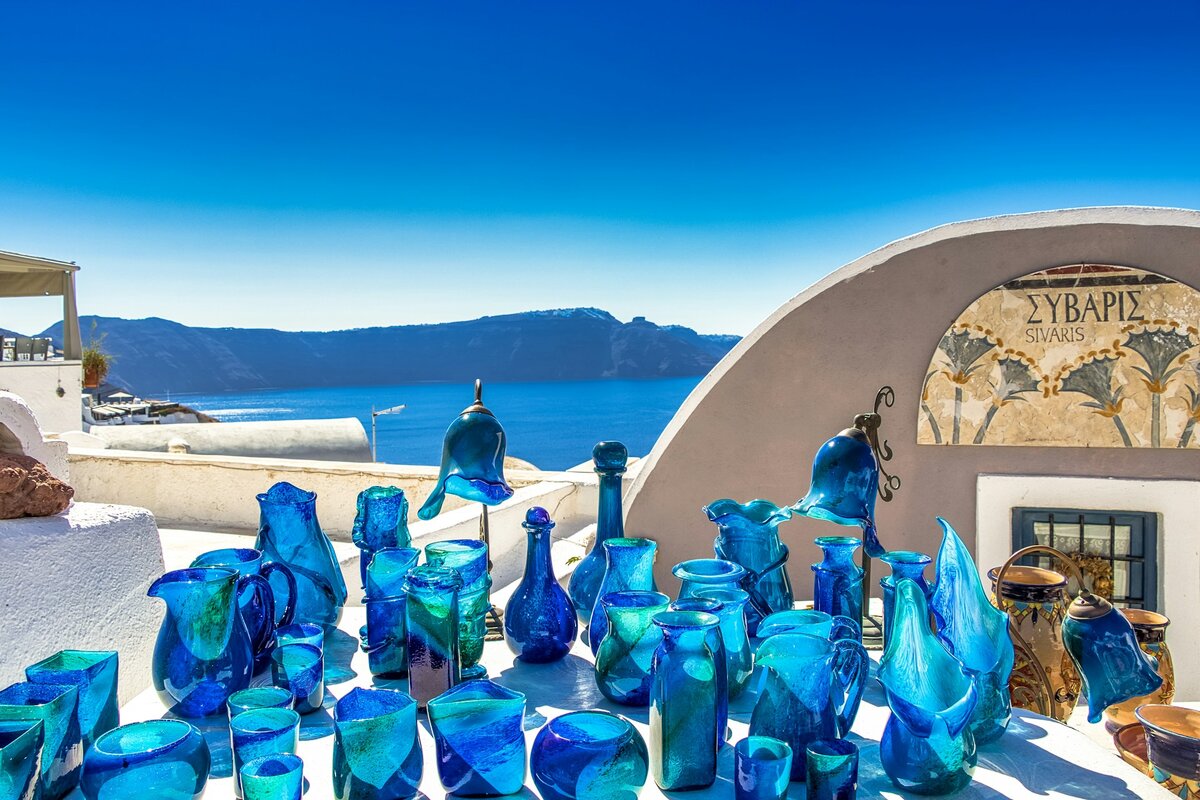
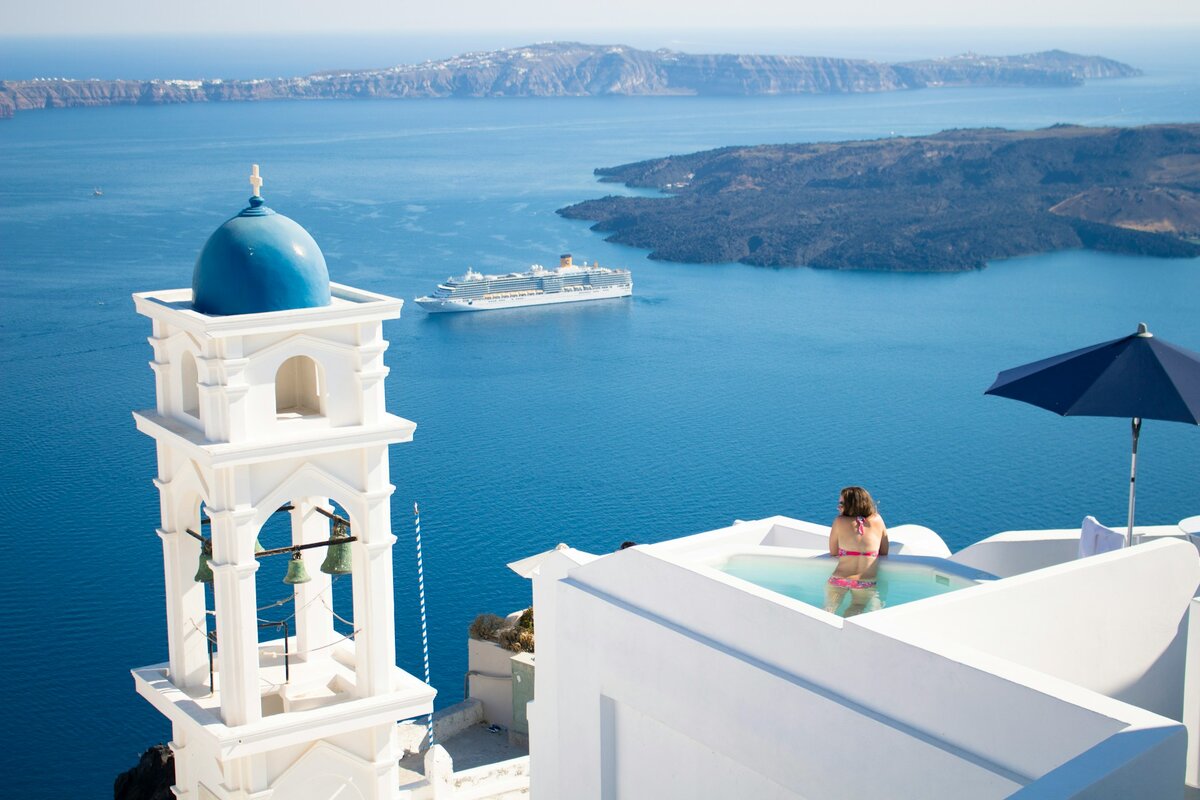
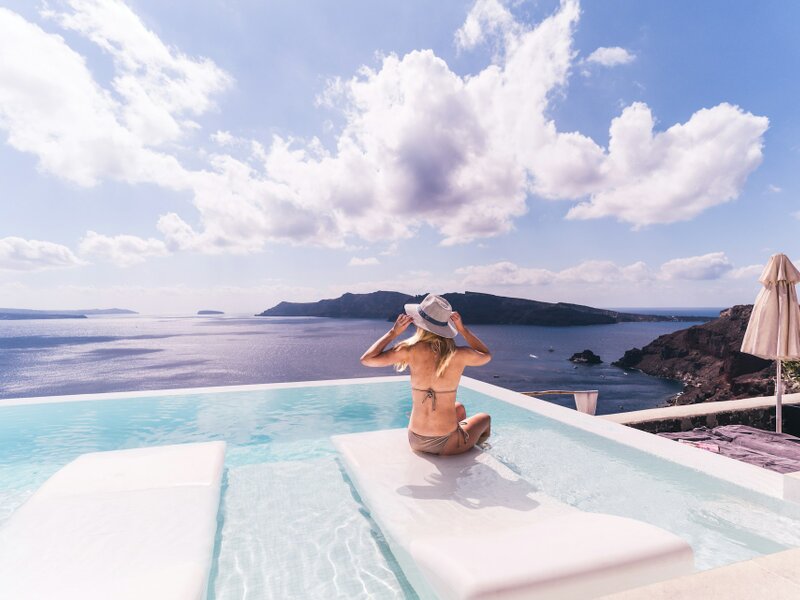
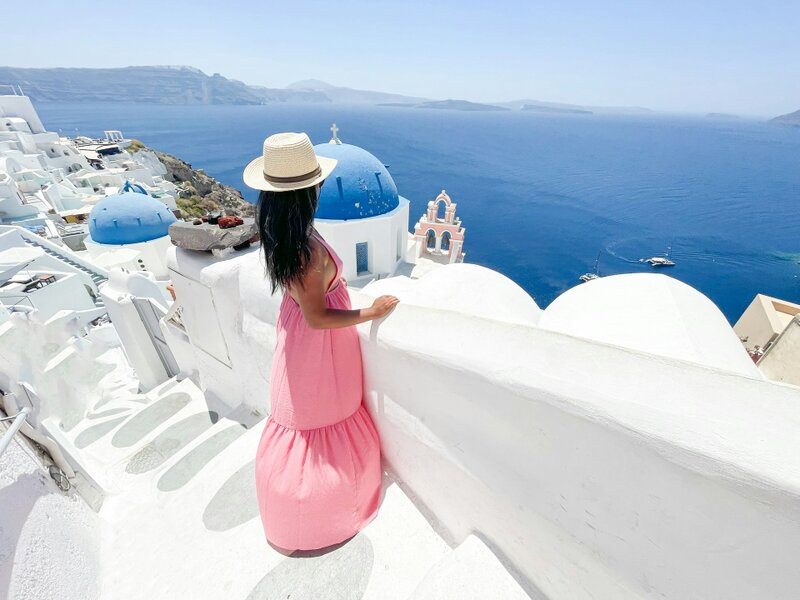
The most photographed Greek island and simultaneously one of the most overrated places for a beach holiday. The beaches here are volcanic: black or red sand (basalt and pumice) that heats up to unbearable temperatures; the water reaches 24–25°C in July – that part is good – but getting to the beaches from most hotels is not straightforward. What people actually come for: white houses with blue domes perched on 300-metre cliffs, views over the volcanic caldera and the sunset in Oia – one of the most famous sunsets in the world. For that very view, in August a queue of 2,000 people forms at the viewing platform.
| Period | Air | Sea | Sun/day |
|---|---|---|---|
| May | +19–22°C | +18–20°C | 10 hrs |
| July | +26–29°C | +24–25°C | 13–14 hrs |
| September | +23–26°C | +23–24°C | 10–11 hrs |
Flight from Warsaw: 4–5 hrs (via Athens; no direct flights, or occasional regional departures)
7 nights / 2 people: 6,000–20,000 PLN (hotel with caldera view – from 10,000 PLN)
Best season: May or October – beautiful, fewer crowds; July–August – peak prices and congestion
Who is it for
Santorini is the choice for a honeymoon, a romantic trip or for those for whom the aesthetics of a place matter more than the sea. Couples who want beautiful photographs, dinner above the caldera and wine from the local Assyrtiko grape – for them the island is exactly as it looks on Instagram. Not the right choice for families with children, budget travellers, or anyone whose main goal is lying on the beach: the island's transport logistics are awkward, the beaches are black and scorching, and prices are 2–3 times the Greek average.
What to do
- Watch the sunset not from Oia (where the crowds gather), but from the viewing point in Imerovigli – the same view, half the people
- Take a trip to the active volcano Nea Kameni (30-minute boat ride, 30-minute climb) – walking across hot lava in your swimwear is strange but unforgettable
- Visit the Akrotiri excavations – a Minoan city buried in ash a thousand years before Pompeii; one of the finest archaeological sites in Greece and one of the least talked about
- Try Assyrtiko white wine at the Santo Wines vineyard – vines on Santorini live for 500–700 years due to the unique volcanic soil; the local wine is like nothing else
- Hire an ATV (quad bike) instead of a car – faster, cheaper, and lets you stop anywhere; ~25–35 EUR per day
Mykonos
"Parties, design hotels and above-average prices"
Mykonos is the most expensive Greek island – and one of the most expensive resorts in Europe full stop: dinner for two at a good restaurant is 80–120 EUR, a sunbed on a popular beach is 20–30 EUR a day, a cocktail at a waterfront bar is 18–22 EUR. In return you get some of the best beach clubs in the Mediterranean, design hotels with sea views, an LGBTQ+-friendly atmosphere and a non-stop party from May to October. Sea temperature in July: 24–25°C. One practical note: wind on Mykonos in summer is the norm, not the exception; Psarou and Paraga beaches are windy almost every day, and blowing sand is a real problem for anyone focused purely on sunbathing.
| Period | Air | Sea | Sun/day |
|---|---|---|---|
| May | +19–22°C | +18–20°C | 10 hrs |
| July | +26–28°C | +24–25°C | 13–14 hrs |
| September | +23–25°C | +23–24°C | 10–11 hrs |
Flight from Warsaw: 4–5 hrs (via Athens; virtually no direct flights)
7 nights / 2 people: 7,000–22,000 PLN (there is no budget option here)
Best season: June or September – warm, cheaper, fewer people; August – peak prices and maximum events
Who is it for
Mykonos is for young travellers and those for whom a party atmosphere, fashionable venues and the chance to spot a celebrity on the beach are what it's all about. LGBTQ+ visitors, young couples and travellers with an above-average budget. Not the right choice for families with children (minimal family infrastructure), travellers with a budget under 5,000 PLN per person for a week (it simply won't be enough), or anyone looking for peace and quiet or an authentic Greek village experience.
What to do
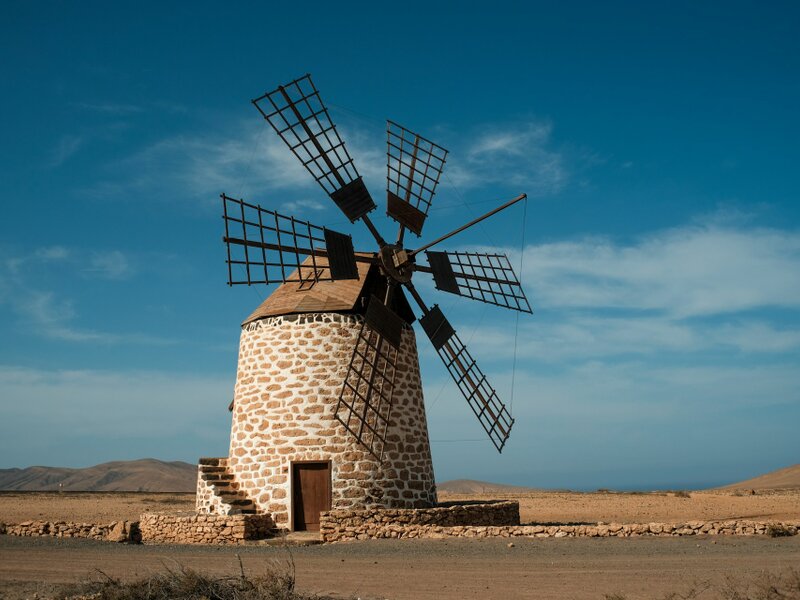
- Walk through Chora (the island's capital) early in the morning – the narrow lanes, whitewashed walls and windmills before 8:00 look like a postcard; after that, like a shopping centre
- Head to Elia beach – the longest on the island and relatively uncrowded compared to Super Paradise
- Take a day ferry to Delos (30 minutes) – the sacred island of Apollo, one of the most significant archaeological sites in Greece, and not a single hotel – just history
- Have dinner at a fish restaurant in the village of Tourlos rather than in Chora – same produce, prices 30–40% lower
Lefkada
"Almost like the Caribbean, but in the Ionian Sea"
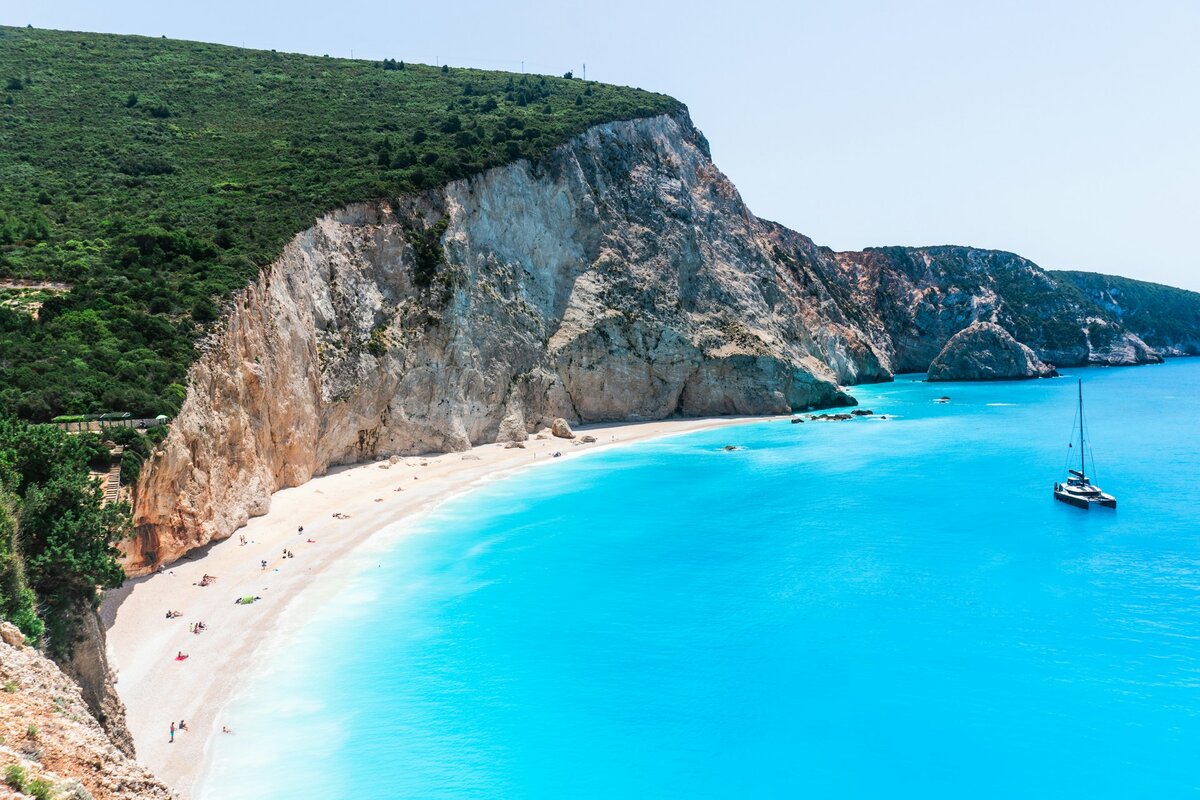
Technically Lefkada is a peninsula: it is connected to mainland Greece by a narrow canal with a drawbridge, and you can reach it without a ferry. Porto Katsiki beach on the south-west of the island – white cliffs, white sand and water in five shades of blue – regularly appears in European top-3 beach lists. That's not an exaggeration. Yet Lefkada remains little known among tourists from Poland – there are few direct charter flights and the island is poorly represented in tour operator catalogues. Sea temperature in July: 25°C. Lefkada is the world capital of windsurfing: Vassiliki bay hosts world tour windsurfing events in August, and the wind is so reliable that professionals call it the "Lefkada Express".
| Period | Air | Sea | Sun/day |
|---|---|---|---|
| May | +20–22°C | +18–20°C | 9–10 hrs |
| July | +28–30°C | +24–25°C | 13–14 hrs |
| September | +23–25°C | +22–24°C | 10–11 hrs |
Flight from Warsaw: 3 hrs (direct charters to Preveza, 30-min transfer; or via Athens)
7 nights / 2 people: 3,000–7,500 PLN
Best season: June–September; for windsurfing – July–August
Who is it for
Lefkada is ideal for those who want Santorini's beauty without Santorini's prices and crowds, and for lovers of active water sports. A great fit for couples who appreciate stunning scenery, and for experienced travellers who have already ticked off the "must-see" islands. Not the right choice if a large All Inclusive resort with an entertainment programme is important – Lefkada has almost none of that; most hotels are small and family-run.
What to do
- Descend to Porto Katsiki beach – the road is a switchback, 200 steps down, no shade; bring water and arrive before 9:00 or after 17:00
- Take a windsurfing or kitesurfing lesson in Vassiliki bay – the best place for beginners in the Mediterranean thanks to the reliable afternoon wind
- Rent a motorboat (no licence required, up to 30 hp) and explore the coves of the western coast yourself – Kavali and Gialos beaches are accessible only from the water
- Have dinner in the village of Agios Nikitas in the north – a car-free fishing village with octopus hanging out to dry and no tourist markup on the menu
Entry requirements for Greece
Greece is a member of the European Union and the Schengen Area. Entry requirements are identical for all Greek islands without exception.
- EU / EEA citizens (including Polish citizens): entry with a valid national ID card or passport. No visa required.
Quick comparison
| Island | Best for | Sea (July) | Flight from Warsaw | 7 nights / 2 people | Best season |
|---|---|---|---|---|---|
| Crete | First-timers, families, couples | +25–26°C | 3 hrs 20 min (direct) | 3,500–9,000 PLN | May–June, September |
| Rhodes | Beach + history, families | +25–26°C | 3 hrs 30 min (direct) | 3,800–9,500 PLN | May–June, September |
| Kos | Families, budget | +25–26°C | 3 hrs 40 min (direct) | 3,000–7,000 PLN | June–September |
| Zakynthos | Couples, divers | +24–25°C | 3 hrs (direct) | 3,500–8,000 PLN | June–September |
| Corfu | First-timers, culture | +24–25°C | 2 hrs 40 min (direct) | 2,800–7,000 PLN | June–September |
| Kefalonia | Nature, couples 35+ | +24–25°C | ~3 hrs (charter) | 3,200–7,500 PLN | July–September |
| Samos | Quiet, authentic | +24–25°C | 4–5 hrs (via Athens) | 2,800–6,500 PLN | June–September |
| Santorini | Romance, honeymoon | +24–25°C | 4–5 hrs (via Athens) | 6,000–20,000 PLN | May, October |
| Mykonos | Party, nightlife, premium | +24–25°C | 4–5 hrs (via Athens) | 7,000–22,000 PLN | June–September |
| Lefkada | Sports, nature, couples | +24–25°C | 3 hrs (charter to Preveza) | 3,000–7,500 PLN | June–September |
Checklist before booking:
- Define your priorities: sea and beach → Crete, Rhodes, Kos; views and atmosphere → Santorini; nightlife → Mykonos; peace and quiet → Samos, Kefalonia.
- Check the beach type at the specific hotel: sand, pebbles or rocks with a jetty – these feel very different and matter greatly for children and older travellers.
- Check the distance from the hotel to the nearest beach – in Greece "by the sea" can sometimes mean 800 metres along a mountain path.
- Check for direct flights: Crete, Rhodes, Kos, Zakynthos, Corfu – direct flights from Warsaw; Santorini, Mykonos, Samos – connection via Athens in most cases.
- For Crete: find out which end of the island the hotel is on – this determines where you can realistically go without a 5-hour drive.
- Check your insurance: a standard travel policy should cover water sports if you plan to dive or kitesurf.
Common mistakes:
- Booking Santorini for a beach holiday. The beaches are black and scalding (volcanic basalt), getting to them is inconvenient, and prices are 2–3 times the Greek average. Santorini is about the view and the atmosphere, not the sea.
- Underestimating the size of Crete. The island is 260 km long and the drive from west to east takes 5 hours. A hotel near Heraklion and Elafonisi beach are not "in the same area" – they are at opposite ends of the island.
- Taking children to Mykonos. The island is geared towards young adult and LGBTQ+ tourism. Children's entertainment, water parks and family hotels are virtually non-existent.
- Choosing August in Santorini without booking 4–6 months ahead. Hotels with a caldera view are fully booked from the previous October. Last-minute simply does not work here.
- Ignoring which side of the island the hotel is on. On Corfu – the north (quiet) versus Kavos (club zone). On Crete – the south coast (wild, no infrastructure) versus the north (resorts, airport). This is a fundamental difference.
- Forgetting about the wind on Mykonos and Santorini. In July–August the strong meltemi wind is the norm across the Aegean. Sand blows on exposed beaches and some ferry routes are cancelled.
Summary
Which Greek island should you choose?
If you're visiting Greece for the first time and don't know where to start – choose Crete: it's the largest, most varied island, and it forgives any mistakes in your choice of resort better than a small island would. Rhodes – if you want a beach plus a serious historical programme: the Old Town is so good that some visitors spend half their holiday there without getting bored. Santorini – only if the goal is romance or a honeymoon and the budget allows it; with children or on a tight budget, it's the wrong choice. Mykonos – if a party atmosphere is what you're after and you're prepared for above-Mediterranean prices. For those who have already visited the "standard" list – Kefalonia, Lefkada and Samos offer Greece in a more authentic and less touristy state.
Final tip:
The best season for most Greek islands is not August but September: the sea is still warm at 23–24°C, there are half as many tourists, and prices are 20–30% lower than in August.

 Holidays


 Last minute
 Hotels


 Blog
Blog